



Development work rarely follows a straight line. Priorities shift, dependencies surface, and teams learn more as work moves forward. Annual, fixed budgets struggle to keep pace with that reality.
Agile budgeting addresses this gap by aligning funding with delivery. Budgets are reviewed regularly, adjusted as priorities change, and tied more closely to progress and outcomes. That approach gives teams room to adapt and gives leaders clearer visibility into how resources support delivery.
This guide explains what agile budgeting is, the frameworks teams use today, and how to implement the approach in modern development environments.
Key takeaways
- Agile budgeting aligns funding with delivery cycles instead of fixed annual plans
- Iterative reviews reduce financial risk by surfacing issues earlier
- Multiple agile budgeting frameworks support different team structures and maturity levels
- Successful implementation depends on cadence, visibility, and shared ownership
- Platforms that connect planning and delivery make agile budgeting easier to sustain
What is agile budgeting?
Agile budgeting applies Agile principles to financial planning by funding work iteratively and reviewing budgets on a regular cadence.
Instead of locking budgets at the start of the year, agile budgeting treats funding as something teams revisit as work progresses. Budget decisions happen alongside delivery, using current information rather than assumptions made months earlier.
In a traditional budgeting model, scope, timelines, and costs are defined upfront and revisited infrequently. That approach works best when work is predictable. Development work rarely is. Requirements evolve, technical complexity becomes clearer, and priorities shift as teams learn more from each sprint.
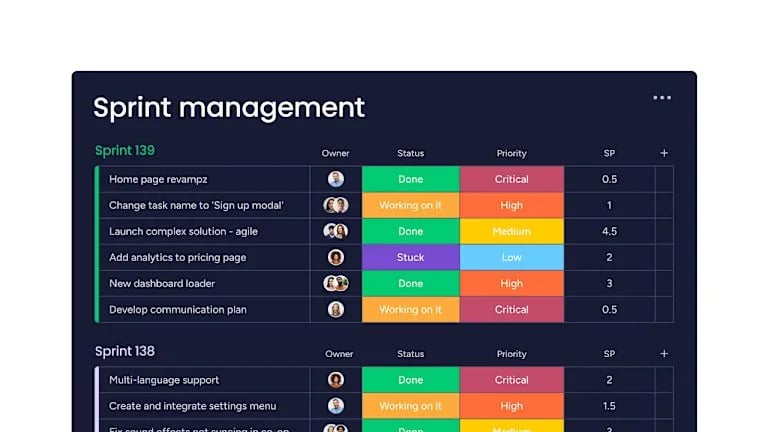
Agile budgeting shifts the focus from fixed annual plans to ongoing value delivery. Budgets are reviewed in shorter cycles that reflect how development teams operate day to day. If priorities change, funding can adjust earlier. If delivery accelerates, teams can redirect resources without waiting for a formal reset.
Frequent review cycles matter because cost and progress are closely linked in development work. When teams review both together, they surface risks sooner and make tradeoffs with more context. That visibility supports better decisions across engineering, product, and leadership — without adding friction to the work itself.
Agile budgeting vs traditional budgeting methods
Agile budgeting and traditional budgeting differ most in how they handle uncertainty. For development leaders, that difference shows up in risk exposure, visibility into progress, and the ability to adapt without disruption.
Traditional waterfall budgeting relies on decisions made upfront:
- Fixed budgets are approved before work begins
- Limited review points, often quarterly or annually
- Higher risk when the scope, timelines, or dependencies change
This approach assumes work can be planned accurately in advance. When reality diverges from the plan, teams have fewer options. Budget discussions often happen after issues surface, rather than alongside delivery.
Agile budgeting takes a more flexible approach:
- Funding allocated iteratively
- Regular reviews tied to sprints or delivery cycles
- Adjustments informed by real delivery data
Instead of locking in assumptions early, agile budgeting creates space to respond as teams learn more. Progress and spend are reviewed together, which helps surface risks sooner and supports faster course correction.
For leadership, the distinction comes down to control through visibility rather than control through restriction. Traditional budgeting limits change to manage risk. Agile budgeting manages risk by making change visible and actionable earlier. That shift supports better decisions without slowing teams down.
Core principles of agile budgeting frameworks
Agile budgeting frameworks share a common foundation. These principles guide how funding decisions evolve as work progresses and help teams apply agile budgeting consistently across the organization.
- Iterative funding and review cycles: Review budgets on a cadence that mirrors delivery. This keeps financial planning aligned with progress and highlights risks earlier, when adjustments are easier to make.
- Value-based prioritization over static scope: Direct funding toward outcomes that matter now. Shifting priorities shouldn’t require reworking an annual plan when delivery data already points to higher-impact work.
- Transparency across teams and leadership: Make budget status, progress, and tradeoffs visible to the people making decisions. Shared visibility speeds alignment and reduces friction during reviews.
- Shared ownership between delivery and finance: Distribute responsibility across roles. Delivery teams contribute insight from the work itself, and finance partners provide guardrails that maintain discipline.
- Continuous alignment with business outcomes: Tie funding decisions back to goals. Regular check-ins keep budgets aligned with results rather than just activity.
These principles create a stable foundation. With them in place, teams can apply different frameworks without confusion or drift.
Learn more: Budget formulas
Key agile budgeting frameworks
Agile budgeting frameworks translate principles into practice. Each framework supports different organizational needs, levels of complexity, and planning styles. The right choice depends on how teams deliver work and how often priorities shift.
Rolling-wave budgeting
Agile budgeting frameworks translate principles into practice. Each framework supports different organizational needs, levels of complexity, and planning styles. The right choice depends on how teams deliver work and how often priorities shift.
Sprint-based budgeting
Sprint-based budgeting aligns budget reviews directly with development sprints. Teams review progress, spend, and upcoming needs at the end of each sprint or sprint cycle. This model works well for organizations that run consistent Agile or Scrum practices and want to more closely connect financial planning to execution without adding new review layers.
Lean portfolio funding
Lean portfolio funding allocates budgets to value streams rather than to individual projects. Funding supports strategic initiatives rather than fixed deliverables. This model suits organizations that manage multiple products or platforms, where priorities shift across teams.
Capacity-based funding
Capacity-based funding allocates budgets to teams rather than predefined outputs. Teams receive funding based on delivery capacity, with priorities adjusted as conditions change. This approach works best when teams are stable, and backlogs evolve continuously.
Choosing the right framework to start with
Most organizations don’t adopt agile budgeting all at once. Starting with a framework that matches current operating habits reduces friction.
- Teams already working in sprints often begin with sprint-based budgeting
- Organizations managing multiple products benefit from lean portfolio funding
- Stable teams with ongoing backlogs often adopt capacity-based funding
- Environments with frequent change lean toward rolling-wave budgeting
Frameworks can evolve over time as teams mature and priorities shift.
7 steps to implement agile budgeting
Agile budgeting works best when it follows a clear, repeatable process. These steps build on familiar Agile practices and help leaders introduce flexibility without losing financial discipline.
1. Align budgeting cycles with development sprints
Budget reviews should follow the same rhythm as delivery. When financial check-ins align with sprints or delivery cycles, teams can assess progress and cost together, using current information.
2. Define budget ownership and decision rights
Clear ownership prevents confusion. Establish who can recommend changes, who approves adjustments, and how decisions are documented. Shared ownership between delivery leaders and finance helps maintain accountability and balance.
3. Establish regular budget review checkpoints
Frequent, lightweight reviews surface issues earlier. These checkpoints focus on trends, risks, and upcoming needs rather than detailed reconciliation.
4. Prioritize work based on value, not sunk cost
Agile budgeting supports changing direction when priorities shift. Funding decisions should reflect current value rather than past investment, even when work is already underway.
5. Track spend and progress in real time
Timely visibility into delivery and cost helps teams respond sooner. When progress and spend are reviewed together, tradeoffs become clearer and decisions move faster.
6. Adjust funding based on delivery signals
Use actual delivery data to guide funding changes. Delays, accelerations, and scope shifts all provide signals that budgets should adapt.
7. Use quarterly business reviews to recalibrate priorities
Quarterly business reviews provide a natural point to step back. Teams and leadership can assess outcomes, revisit assumptions, and realign funding with business goals.
Together, these steps turn agile budgeting from a set of ideas into an operating model. They create consistency across teams and give leaders a straightforward way to guide funding decisions as work evolves.
Learn more: AI budget overrun agent
Why agile budgeting improves delivery outcomes
Capacity-based funding allocates budgets to teams rather than predefined outputs. Teams receive funding based on delivery capacity, with priorities adjusted as conditions change. This approach works best when teams are stable, and backlogs evolve continuously.
- Faster delivery with fewer delays: Regular budget reviews aligned to delivery cycles help teams surface blockers earlier. Funding decisions keep pace with progress, which reduces delays caused by mid-cycle approvals or late-stage rework.
- Reduced financial risk through early signals: Frequent checkpoints highlight changes in burn rate, capacity trends, or forecast drift sooner. Teams can respond while adjustments remain manageable.
- Clearer alignment between funding and delivery: Agile budget management keeps financial planning close to execution. Funding decisions reflect current priorities and delivery data rather than plans created far in advance.
- More focused quarterly business reviews: Smaller, ongoing reviews improve quarterly business reviews by reducing reconciliation work and sharpening prioritization discussions. Leaders spend less time validating numbers and more time deciding what to fund next.
- Stronger ownership across development teams: When budgets are discussed regularly and transparently, teams understand constraints.
Common agile budgeting challenges and how teams address them
Agile budgeting introduces change, and change often raises questions. These challenges are common, especially in larger organizations, but they’re manageable with the right approach.
- Unclear budget ownership: Agile budgeting can feel ambiguous when responsibility isn’t defined. Clear governance solves this without adding control layers. Decision rights should be explicit, with shared accountability between delivery and finance.
- Fixed budgets or contracts: Agile budgeting can work within fixed funding models. The key is flexibility in scope and sequencing. Teams adjust what gets delivered, not the total budget, based on evolving priorities.
- Resistance to change: Shifting budgeting practices takes time. Many teams start with pilots or phased rollouts to build confidence and refine processes before expanding the approach.
- Limited visibility into progress and spend: Manual reporting creates gaps and delays. Shared, up-to-date views of progress and cost help teams and leaders stay aligned without relying on status meetings or spreadsheets.
Although these challenges are real, they don’t block adoption. Most organizations address them incrementally, learning and adjusting as they go. That steady approach keeps momentum high and reduces disruption.
What agile budgeting requires from modern platforms
Agile budgeting breaks down when the systems that support it remain static. Spreadsheets, disconnected tools, and rigid planning systems struggle to keep pace with iterative work. Updates lag behind reality, visibility is fragmented, and budget conversations drift away from delivery.
Rigid systems also slow teams down. When tracking spend requires manual updates or extra reporting layers, teams lose time and leaders lose confidence in the data. Budget reviews turn into reconciliation exercises instead of decision-making moments.
Agile budgeting depends on visibility that keeps up with execution. Teams need to see progress and resourcing as work unfolds, without adding overhead or interrupting delivery. Leadership needs access to the same signals, without relying on status meetings or custom reports.
That level of clarity comes from connecting budgeting, planning, and delivery in one place. When roadmap priorities, sprint progress, and resourcing signals live together, budget decisions stay grounded in reality. Tradeoffs become easier to evaluate, and adjustments happen sooner, when they matter most.
Platforms that support agile budgeting focus less on enforcing rigid processes and more on enabling teams to work their way — with shared context, consistent data, and room to adapt.
Turn agile budgeting into a repeatable operating model with monday dev
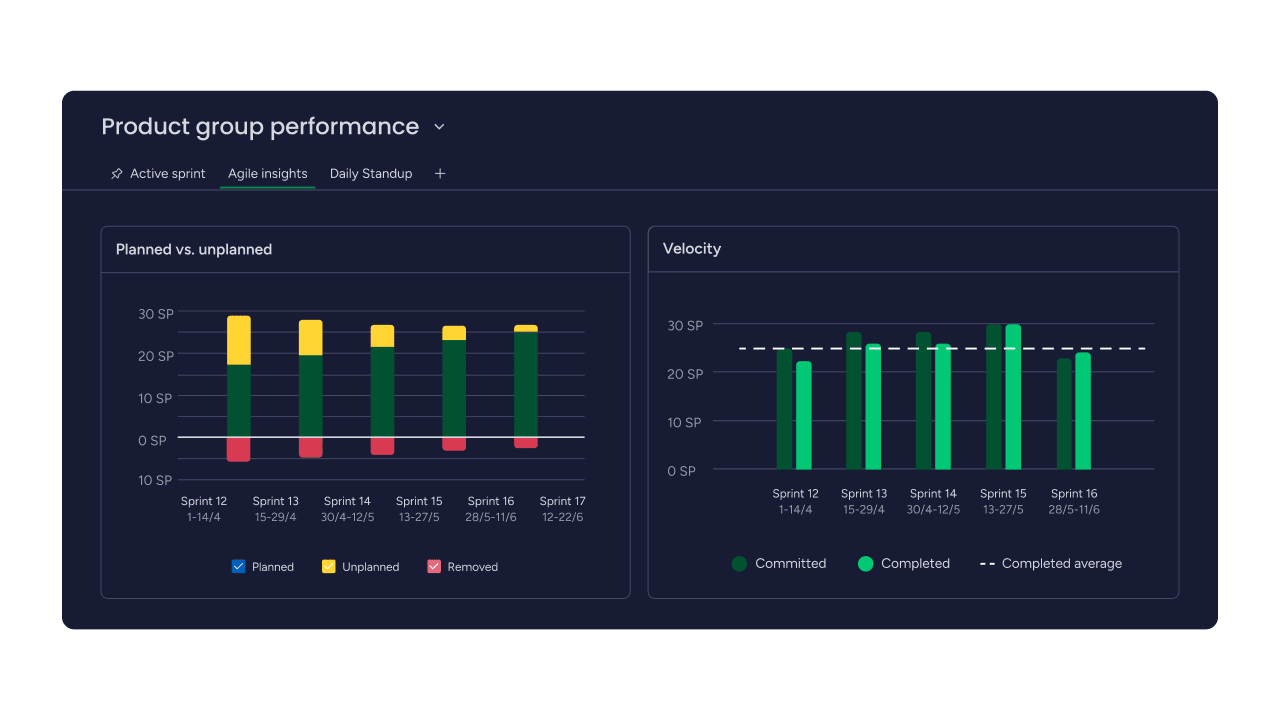
Agile budgeting depends on execution signals staying close to delivery. monday dev helps development organizations connect funding decisions to real work without adding friction or forcing teams into rigid processes.
Support team ownership without fragmenting visibility
Development teams work in different ways. Some run strict sprints. Others blend Agile and Kanban. The monday dev platform supports this flexibility while keeping budgeting conversations grounded in shared data.
Teams manage sprint cycles, backlog priorities, and delivery milestones in workflows that reflect how they operate. Budget reviews stay aligned with those workflows, allowing funding to evolve alongside delivery rather than trailing behind it.
Connect sprint-level progress to portfolio-level funding decisions
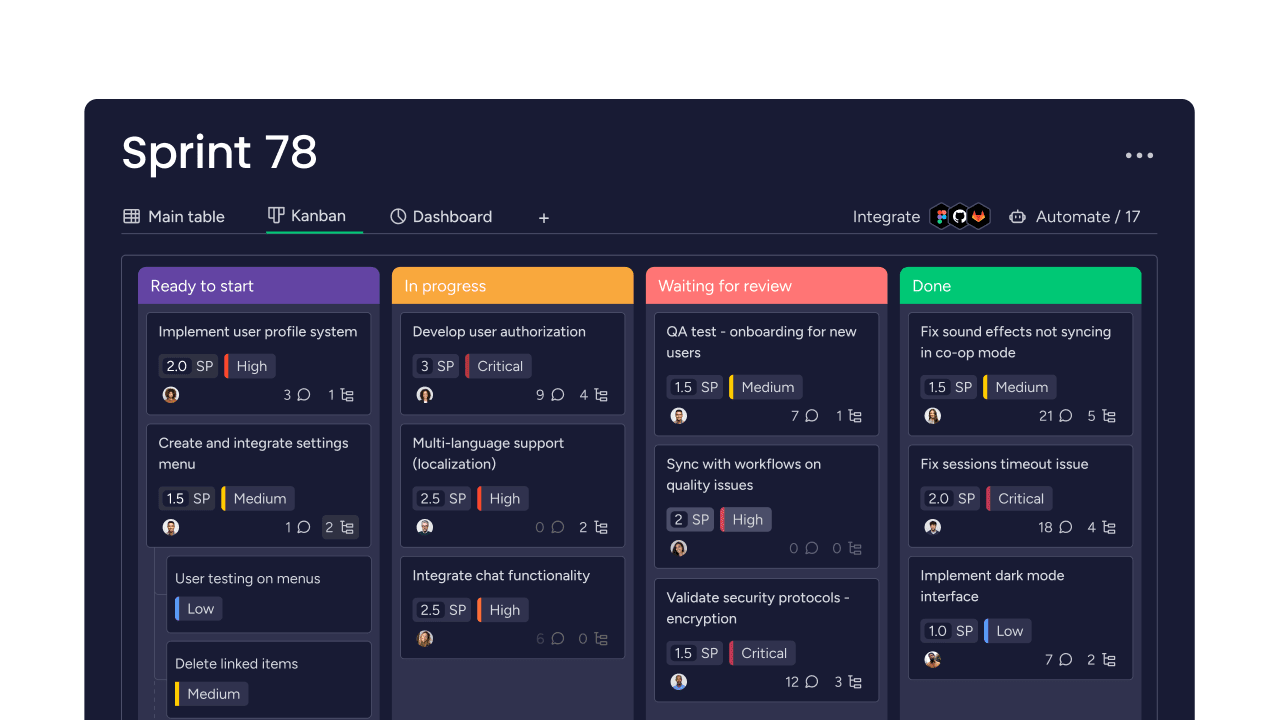
Agile budgeting requires visibility at multiple levels. Teams need to understand progress and resourcing sprint by sprint. Leaders need insight into how funding supports broader initiatives across teams and products.
With monday dev, these views come together without manual reporting. Sprint-level signals show where work is moving or slowing. Portfolio-level views highlight where funding supports outcomes and where attention is needed.
Keep financial planning aligned with delivery cadence
Budget discussions lose value when they fall out of sync with execution. monday dev helps teams review progress, priorities, and resourcing on the same cadence as delivery.
This shared rhythm improves quarterly business reviews by providing clearer funding signals and fewer open questions before those conversations begin.
Reduce friction between engineering, product, and leadership
Agile budgeting works when everyone operates from the same information. monday dev brings engineering, product, and leadership into a shared environment where progress, priorities, and resourcing remain visible without interrupting work.
Teams stay focused on delivery. Leaders stay informed without micromanagement. Budget decisions happen closer to the work itself.
Move from agile budgeting theory to confident execution
gile budgeting helps development organizations adapt funding as work evolves. Reviews happen on a predictable cadence. Tradeoffs surface earlier. Decisions reflect current delivery signals rather than outdated assumptions.
That approach becomes sustainable when budgeting, planning, and delivery operate as one system. monday dev provides the execution layer that supports this connection, giving teams room to adapt and leaders the clarity needed to guide priorities.
With the right foundation in place, agile budgeting shifts from a concept to a consistent way of working that supports steadier delivery and clearer decisions as priorities change.
Get started with your agile budgeting efforts today with monday dev.
FAQs
How does agile budgeting differ from traditional budgeting processes?
Agile budgeting uses frequent reviews and iterative funding instead of fixed annual plans. This allows budgets to adapt as priorities and delivery conditions change.
How does budgeting work in agile teams?
Budgets are reviewed on a regular cadence, often aligned with sprints or delivery cycles. Funding decisions are based on current progress and priorities rather than upfront assumptions.
What are the best agile budgeting frameworks?
Common frameworks include rolling-wave budgeting, sprint-based budgeting, lean portfolio funding, and capacity-based funding. Each supports different levels of scale and organizational maturity.
Can agile budgeting work with fixed contracts?
Yes. Agile budgeting can operate within fixed funding by keeping scope and sequencing flexible while the total budget remains unchanged.
How long does it take to implement agile budgeting?
Many teams start seeing benefits within one or two planning cycles. Full adoption typically happens gradually as processes and review habits mature.

 Get started