


Deadlines slip, meetings pile up, and progress still feels uneven. Even with capable people in the room, work can drift into silos, with each person focused on their piece rather than the bigger picture. It is a common situation, especially as work grows more complex and fast moving. The issue is rarely talent, it is how well people actually connect, coordinate, and move forward together.
What makes this more important now is how quickly teams are expected to adapt. Priorities shift, tools evolve, and expectations keep rising. Without strong team dynamics, even simple projects start to feel heavy and slow. When those dynamics click, though, work becomes clearer, faster, and far more satisfying for everyone involved.
In the sections below, this guide uncovers what truly makes a team effective in 2026. This article also explores the key characteristics that turn a group of individuals into a unit that delivers consistently, while also assessing how modern ways of working are reshaping collaboration.
Key takeaways
- Shared goals create real alignment: Teams perform best when everyone works toward a common outcome, reinforcing mutual accountability and reducing siloed effort.
- Trust and psychological safety unlock performance: Consistent follow through, openness about mistakes, and safe environments for speaking up enable stronger collaboration and better decision making.
- Clear roles and transparent communication reduce friction: Defined ownership combined with accessible, real time information ensures faster decisions, fewer misunderstandings, and smoother execution.
- Data and continuous improvement sustain momentum: High performing teams rely on visible metrics, regular retrospectives, and ongoing learning to refine how they work and adapt quickly.
- Technology and AI enhance coordination and scale teamwork: Platforms like monday work management, along with automation and AI driven insights, reduce administrative overhead and help teams focus on strategic, high value work.
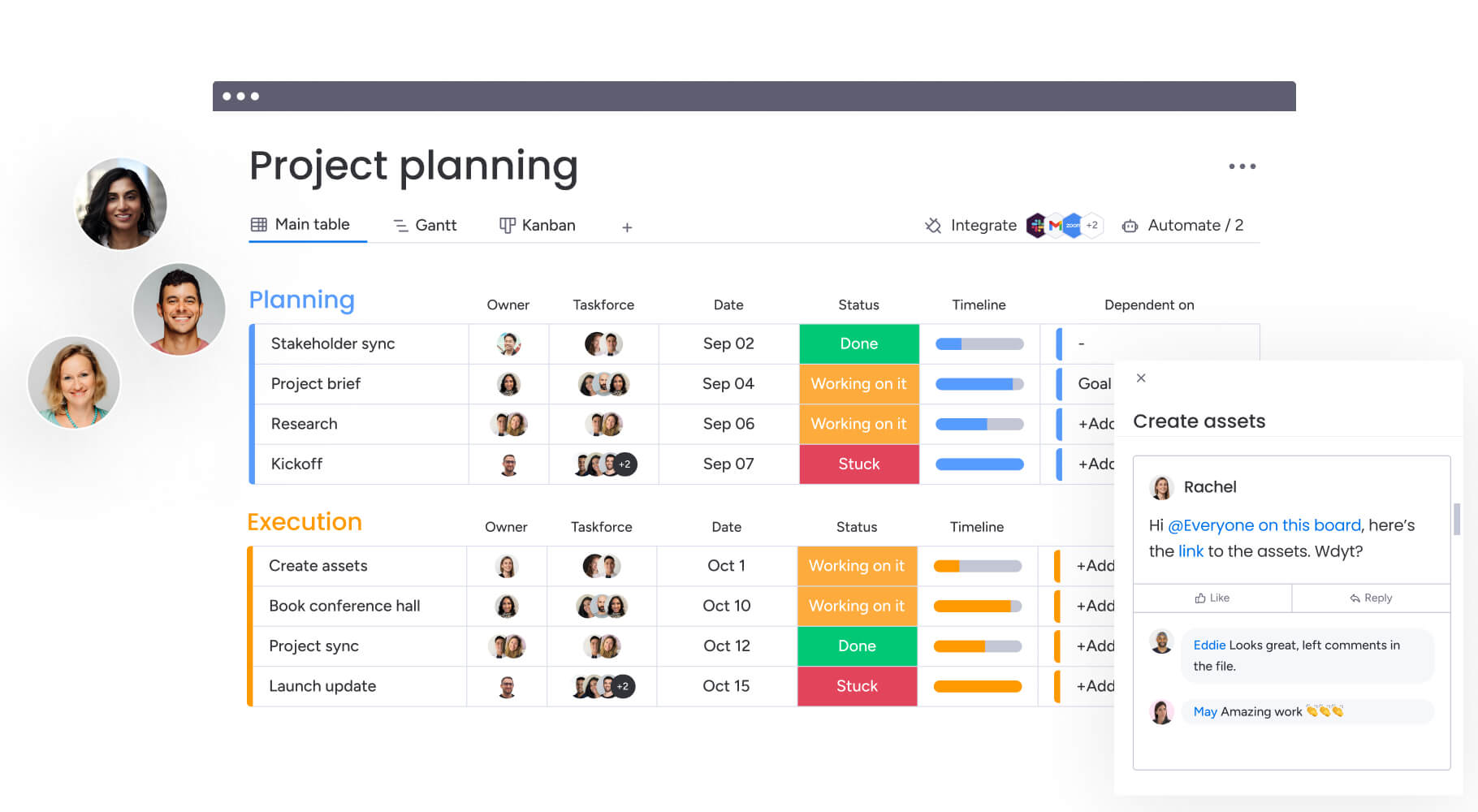
What makes a team different from a working group?
A team is more than people working alongside each other. In working groups, individuals focus on their own tasks and come together occasionally to share updates. In teams, progress depends on how well everyone works toward the same outcome, with each contribution shaping what comes next.
The table below shows how this difference influences goals, accountability, leadership, and results in everyday work.
| Aspect | Working group | Team |
|---|---|---|
| Goal focus | Individual goals come first | Shared goals drive all activity |
| Work approach | Independent work with periodic updates | Interdependent work requiring constant collaboration |
| Accountability | Individual responsibility for specific deliverables | Mutual accountability for collective outcomes |
| Leadership | Single leader directs individual contributors | Shared leadership based on expertise and context |
| Results | Sum of individual contributions | Collective output that exceeds the sum of individual contributions |
Shared goals that unite individual efforts
In a working group, each person focuses on their own targets, and coordination happens only when needed. However, a team works toward one shared outcome where success depends on everyone contributing in sync. Because of this, priorities feel clearer and more connected.
As a result, people naturally start thinking beyond their own tasks. You begin to see how your work fits into the bigger picture, which reduces silos and improves overall flow. That shift turns isolated effort into meaningful progress.
To make this alignment work in practice:
- Unified vision: Every member clearly understands how their work contributes to the overall goal.
- Contextual awareness: People see how their output impacts other functions, such as how development affects a product launch.
- Strategic consistency: Daily decisions stay aligned with the team’s direction, not just individual preferences.
When these elements are visible and easy to track, alignment becomes part of everyday work instead of something you revisit in meetings.
Mutual accountability for collective success
Accountability looks very different depending on the structure you choose. In working groups, responsibility stays tied to individual tasks, and progress is often reported upward. In teams, responsibility shifts across peers, which changes how people show up.
Because of this, conversations move from checking status to solving problems together. Instead of asking who finished what, the focus becomes what needs to happen next to move forward. That shared responsibility builds trust and momentum.
Strong team accountability shows up through:
- Peer reliability: Members actively support one another instead of waiting to be asked.
- Outcome ownership: The entire team stands behind the final result, not just their piece of it.
- Proactive support: People step in early when something slows down, preventing bigger issues later.
Over time, this approach reduces blame and increases ownership across the board.
Interdependence that creates synergy
Teams rely on interdependence, which means each person’s work connects directly to someone else’s progress. Unlike working groups, where tasks are mostly separate, team workflows are tightly linked. That connection is where stronger outcomes begin to take shape.
At the same time, this setup encourages deeper collaboration. Different perspectives come together, ideas get challenged, and solutions improve as they pass between people. You are not just combining effort, you are refining it at every step.
This kind of collaboration leads to:
- Better problem solving: Multiple viewpoints uncover issues that one person might miss.
- Stronger outputs: Each handoff improves the quality of the work.
- More balanced decisions: Tradeoffs are considered from technical, business, and user angles.
Because of this, teams often produce results that go beyond what individuals could achieve alone.
Try monday work managementIn a working group, each person focuses on their own targets, and coordination happens only when needed. However, a team works toward one shared outcome where success depends on everyone contributing in sync.
Why high-performing teams drive business results
Organizations that prioritize team dynamics over keeping people busy see real improvements in speed, quality, and resilience. Research shows that healthy, aligned organizations deliver triple the performance of unhealthy organizations while achieving double the resilience. The shift from managing resources to enabling teams unlocks results that rigid hierarchies can’t touch.
3X greater efficiency through collaboration
When collaboration is clear and consistent, it removes unnecessary friction. Teams that operate this way avoid duplicate work and reduce the need for constant check ins. As a result, progress becomes easier to track and maintain.
Because everyone understands dependencies, work flows more naturally from one step to the next. Decisions also happen faster since the right people are already involved at the right time.
Here is how teams achieve these gains:
- Reduced redundancy: Visibility into work prevents people from repeating the same tasks.
- Faster decisions: Clear ownership and processes shorten decision cycles.
- Smoother handoffs: Deliverables arrive complete, which limits rework and delays.
Over time, these small improvements lead to noticeable gains in speed and consistency.
Higher innovation and problem-solving capacity
Innovation tends to grow in environments where people feel safe to share ideas and challenge assumptions. Teams naturally support this because they bring together different skills and perspectives. Working groups, on the other hand, often lack that level of interaction.
Because of this diversity, teams can explore problems from multiple angles at once. Ideas evolve quickly, and feedback loops help refine them without slowing progress. That makes it easier to move from concept to solution.
Strong team innovation depends on:
- Cognitive diversity: Different backgrounds and expertise lead to more complete solutions.
- Rapid iteration: Ideas are tested and improved quickly through continuous feedback.
- Breakthrough thinking: Open discussions make it easier to question assumptions and improve outcomes.
In the end, this environment supports not just better ideas, but better execution of those ideas.
Stronger employee engagement and retention
Your day to day experience at work is shaped far more by your team than by your salary or title. When you feel connected to the people around you and see the impact of your work, you are far more likely to stay. That sense of belonging builds consistency, motivation, and long term commitment.
High performing teams meet a deeper need for connection and purpose. As a result, burnout drops and retention improves. At the same time, you learn faster by working closely with others than through formal training. Strong team bonds also act as a buffer during stressful periods or organizational change.

8 characteristics that make teams successful
Strong teams are not built on guesswork. Research points to eight clear traits that consistently drive performance. When you understand these behaviors, you gain a practical path to improve how your team works together.
1. Trust built through consistent actions
Trust is not created through one time gestures. It grows when people consistently do what they say they will do. Over time, this reliability creates confidence that teammates will follow through and support each other.
At the same time, trust deepens when people admit mistakes and knowledge gaps. This signals honesty and builds psychological safety. As a result, team members begin to assume positive intent, even during disagreements.
Trust requires:
- Reliability: Consistent follow through on commitments builds confidence over time.
- Vulnerability: Openly admitting gaps or mistakes shows that honesty matters more than appearances.
- Benevolence: Assuming positive intent keeps interactions constructive, even in tense moments.
2. Transparent communication across all levels
Transparency is about making information accessible by default, not just available when asked. When teams openly share progress, context, and challenges, alignment becomes easier and faster.
Instead of relying on private messages or scattered updates, effective teams keep everything visible in shared spaces. This way, issues surface early and feedback becomes more direct and useful.
monday work management supports this by keeping updates, files, and decisions in one place. As a result, everyone works from the same source of truth without chasing information.
3. Defined roles with clear accountability
Clarity around ownership removes confusion and speeds up decision making. When everyone knows who is responsible for what, work moves forward without hesitation.
This does not mean rigid job descriptions. Instead, teams define who owns decisions at any given moment and adjust roles as needed. What matters is that these shifts are always clear and visible.
Effective role definition includes:
- Decision authority: Clear ownership of decisions prevents delays and second guessing.
- Boundary definition: Understanding where autonomy begins and ends reduces overlap.
- Dynamic assignment: Roles adapt to changing needs, while staying clearly defined.
4. Psychological safety for risk-taking
But what does it take for a team to feel safe enough to take interpersonal risks? The answer is psychological safety, which is the strongest driver of learning and innovation. Research confirms that psychological safety reduces burnout, with each 1-point increase in psychological safety predicting an 8.745-point reduction in burnout scores.
When safety is present, disagreements focus on finding the right answer, not on winning arguments. Mistakes are treated as learning moments, which helps the team grow faster and avoid repeating them.
Psychological safety requires:
- Voice: Freedom to share ideas and concerns without hesitation.
- Constructive conflict: Disagreements focused on truth, not personal criticism.
- Failure recovery: Mistakes used as learning opportunities, not reasons for blame.
5. Data-driven decision making
Effective teams base decisions on objective reality, not hierarchy or opinion. They balance hard metrics with qualitative insights to handle complexity. Studies demonstrate that role clarity and shared purpose are the strongest correlates of top-team performance, with role definition showing a 0.74 correlation to team effectiveness.
When key data is visible to everyone, it creates a shared understanding of progress. Teams can then test ideas, learn quickly, and adjust without relying on assumptions.
With monday work management, teams use real time dashboards to track progress, resources, and goals. This clarity reduces guesswork and keeps decisions grounded in reality.
6. Continuous learning and adaptation
High performing teams do not wait for direction to improve. Instead, they regularly reflect on what is working and what needs to change.
Through consistent review and documentation, they avoid repeating mistakes. At the same time, they build flexibility by sharing knowledge and developing new skills across the team.
Structured reflection includes:
- Retrospectives: Regular sessions to identify improvements and take action.
- Knowledge transfer: Documenting lessons so they are not lost.
- Skill fluidity: Cross training to strengthen team resilience.
7. Cross-functional collaboration excellence
Teams rarely succeed in isolation. Progress often depends on how well they work with other departments. That is where collaboration across functions becomes essential.
Strong teams take time to understand the needs and constraints of others. They also translate technical work into business outcomes, making alignment easier across the organization.
Cross functional success depends on:
- Stakeholder empathy: Understanding what other teams need and what limits them.
- Translation skills: Turning technical goals into clear business value.
- Network activation: Using relationships to remove blockers and move faster.
8. Technology-enabled coordination
Coordination should not rely on constant meetings or manual updates. Instead, technology should handle routine processes so people can focus on meaningful work.
When work is centralized, teams avoid version confusion and wasted time searching for information. Automation also ensures consistency without adding extra effort.
monday work management provides this structure through shared workflows, centralized documentation, and automation. As a result, coordination becomes smoother and more scalable.
How AI transforms what makes a great team
AI is changing how teams operate by taking over repetitive work and surfacing useful insights. This allows people to focus more on strategy, creativity, and decision making.
Instead of replacing human effort, AI supports it. It acts as an extension of the team, helping everyone work more effectively without increasing workload.
Digital workers as team force multipliers
AI driven components can take on specific responsibilities such as data processing or scheduling. This expands what a team can handle without adding more people.
They also surface relevant insights during discussions, which improves decision quality. At the same time, they handle routine monitoring, allowing team members to step away and recharge.
Automated workflows that reduce friction
Manual coordination slows teams down. Automation removes that friction by routing work and information where it needs to go.
Tasks can be assigned based on capacity, while workflows can trigger automatically from events. This keeps work moving without constant oversight.
Teams benefit through:
- Smart routing: Assigning work based on availability and expertise.
- Contextual triggers: Starting workflows based on real time events.
- Compliance by design: Ensuring processes are followed without manual checks.
Predictive insights for proactive management
Instead of reacting to problems, teams can anticipate them. Predictive insights highlight risks early, giving teams time to act.
Patterns in data reveal which projects may fall behind or where resources are stretched too thin. This allows adjustments before issues grow.
monday work management supports this with Portfolio Risk Insights, helping teams spot and address risks before they escalate.
Try monday work management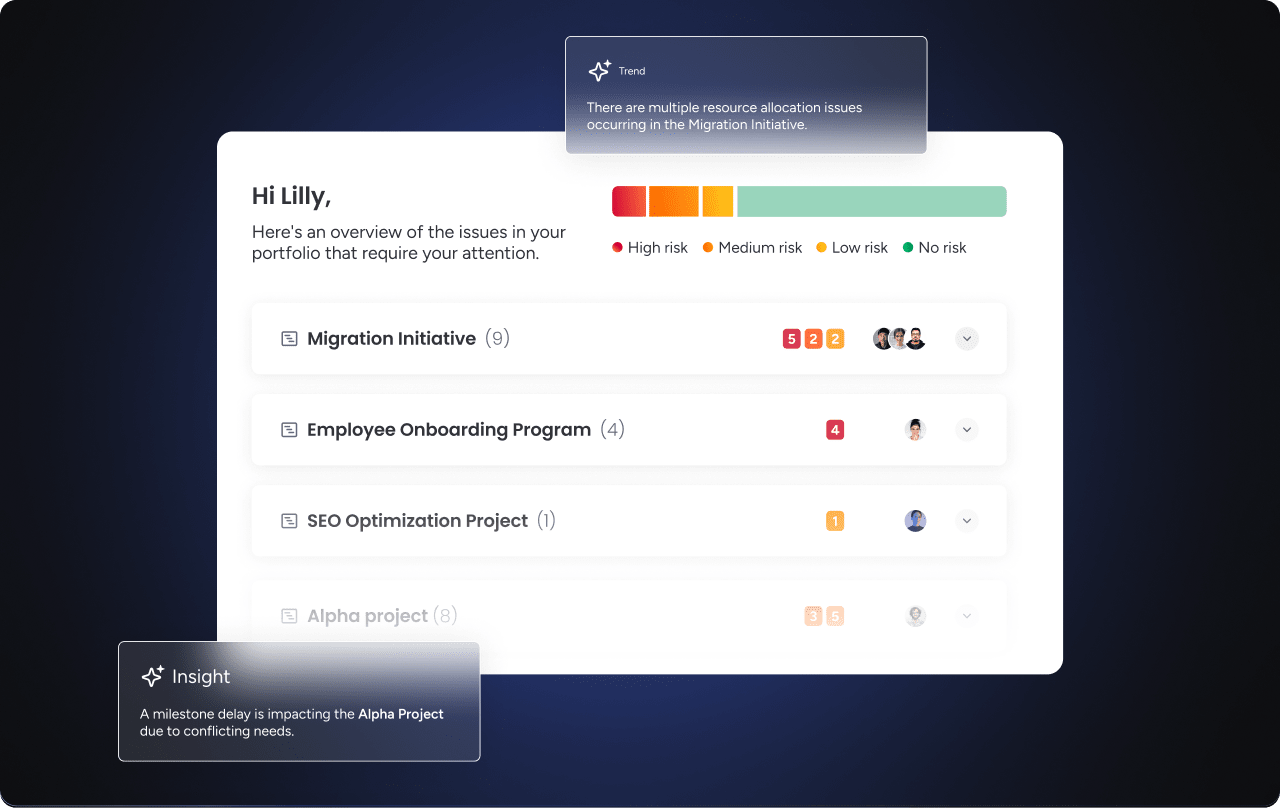
5 steps to build these team characteristics
Building a strong team takes intention and consistency. You need both structure and habits that support better ways of working. Each step below builds on the previous one to create lasting improvement.
1. Assess your team’s current health
Start by understanding where your team stands today. Combine performance data with feedback to get a clear picture.
Use surveys to measure psychological safety and review delivery metrics to identify bottlenecks. This helps you focus on the areas that need the most attention.
2. Define operating agreements
Next, align on how the team will work together. Clear expectations prevent confusion and reduce friction.
Document decision making processes, communication norms, and conflict resolution approaches. This creates consistency and removes guesswork.
3. Implement structured communication rhythms
Replace random interruptions with predictable touchpoints. This keeps everyone aligned without overwhelming the team.
Daily check ins support coordination, weekly reviews help adjust priorities, and monthly retrospectives drive improvement.
4. Measure progress with objective metrics
Track both outcomes and team health. This ensures that how work gets done is valued alongside results.
Metrics such as decision time, engagement levels, and completion rates provide useful signals for improvement.
5. Iterate based on performance data
Use what you learn to refine how the team operates. Treat team dynamics as something you continuously improve.
Review data regularly, identify gaps, and test small changes. Over time, these adjustments lead to stronger performance.

Measuring what makes a strong team work
Understanding how your team performs is not just about tracking outcomes, it is about knowing what drives those outcomes. When you measure the right signals, you can spot issues early and make informed decisions. As a result, your investment in team development becomes easier to justify and improve over time.
A well-rounded scorecard combines early indicators of team health with performance results. This balance helps you act before problems escalate while also confirming what is working. In addition, it creates a clear link between team behavior and business impact.
Real time indicators that reveal how your team is performing
To manage performance effectively, you need visibility into what is happening right now. Real time insights help you stay proactive instead of reacting after delays or issues appear. That is why focusing on a few meaningful indicators can make a significant difference.
Here are some metrics that give you a clear view of daily performance:
- Flow metrics: Cycle time and throughput show how quickly work moves and how much your team delivers.
- Engagement signals: Participation rates reflect how actively your team contributes and collaborates.
- Blocker frequency: The number of stalled tasks highlights friction points that slow progress.
With monday work management, you can track these metrics through customizable dashboards. This means you get instant visibility without relying on manual updates, so your team always works with accurate data.
Early warning signs to address quickly
Performance rarely drops overnight, instead, it declines through small signals that are easy to miss. Recognizing these patterns early helps you step in before they affect results.
For example, a drop in communication often points to reduced psychological safety. At the same time, frequent overtime or reliance on individual effort suggests gaps in your process. You might also notice more private messages replacing open discussions, which can signal a breakdown in shared trust.
Addressing these signs early helps you maintain momentum and protect team morale.
Benchmarking against high-performing teams
Measuring your team in isolation only tells part of the story. To understand where you truly stand, you need context from both internal and external comparisons.
Start by comparing similar teams within your organization to identify patterns and outliers. Then, use industry benchmarks to evaluate whether your expectations around speed and quality are realistic. As a result, you gain a clearer view of where to improve and what success looks like.
To manage performance effectively, you need visibility into what is happening right now. Real time insights help you stay proactive instead of reacting after delays or issues appear.

“monday.com has been a life-changer. It gives us transparency, accountability, and a centralized place to manage projects across the globe".
Kendra Seier | Project Manager
“monday.com is the link that holds our business together — connecting our support office and stores with the visibility to move fast, stay consistent, and understand the impact on revenue.”
Duncan McHugh | Chief Operations OfficerCreate stronger alignment with monday work management
As teamwork becomes more interconnected, maintaining clarity across priorities, responsibilities, and progress becomes harder. Without shared visibility, even strong teams can lose momentum as work fragments across tools, conversations, and functions.
monday work management provides a structured foundation that keeps work connected, transparent, and aligned to business priorities. By bringing projects, communication, and progress into one place, teams gain the clarity needed to coordinate effectively, adapt faster, and stay focused on meaningful outcomes.
- Shared visibility: Centralized boards, dashboards, and status updates give everyone a clear view of priorities, progress, and risks, which reduces confusion and helps teams stay aligned on the work that matters most.
- Clear accountability: Defined ownership at the item, project, and workflow level makes responsibilities easier to track, so teams can move work forward without uncertainty about who is making decisions or handling next steps.
- Better prioritization: Workload views, timelines, and portfolio level reporting help teams balance capacity against business goals, which makes it easier to focus on the highest value work and adjust when priorities shift.
- Faster coordination: Automations, structured workflows, and integrations reduce manual follow ups and scattered communication, so teams can manage handoffs more smoothly and spend less time on administrative effort.
- Stronger decision making: Real time reporting and AI supported insights help teams spot blockers, monitor progress, and respond earlier to risks, which supports more consistent execution without adding unnecessary complexity.
When these capabilities are built into daily work, teams gain a clearer path from individual tasks to strategic outcomes. The result is stronger alignment, better efficiency, and more measurable impact across the business.
Try monday work management
 Get started