

In many organizations, the term “project” gets used inconsistently. When someone mentions “the Q4 project” in a meeting, different team members may interpret this differently — some thinking of the website redesign, others the office relocation, and still others the new product launch. This ambiguity reflects a common challenge: many teams lack a clear, shared definition of what qualifies as a project versus regular operational work.
Understanding what constitutes a project is essential for organizational success. Projects drive growth, innovation, and transformation across organizations. They enable companies to launch products, upgrade systems, enter new markets, and adapt to evolving conditions. Without a shared understanding of project fundamentals, teams risk applying inappropriate approaches, missing deadlines, and misallocating resources.
We’ll walk through the core characteristics that define any project, how projects differ from daily operations, and the frameworks that support effective project management. You’ll learn why projects drive organizational growth, examine real examples from different industries, and discover practical strategies to transform complexity into structured execution.
Key takeaways
- Master the five core project traits to avoid common pitfalls: Every successful project has a temporary timeline, unique outcomes, defined scope, dedicated resources, and structured phases that guide execution.
- Choose the right management approach based on project type: Strategic initiatives need executive sponsorship, customer delivery projects focus on satisfaction, internal improvements target efficiency, and compliance projects prioritize risk avoidance.
- Transform project chaos into visibility with a Work OS: Centralize planning, tracking, and collaboration in one platform with features like AI-powered risk detection, visual Gantt charts, and real-time dashboards.
- Follow the 5-phase lifecycle to stay on track: Move systematically through initiation, planning, execution, monitoring, and closure to ensure projects deliver intended value and capture lessons for future success.
- Distinguish projects from operations to allocate resources correctly: monday work management helps teams separate temporary projects from ongoing business activities, preventing mixed approaches and wasted effort.
What is a project?

A project is a temporary effort with a specific start and end date, designed to create a unique outcome. Unlike ongoing operations that maintain daily business activities, projects exist to deliver something new, whether that is a product launch, system upgrade, or organizational change.
Projects take organizations from where they are to where they want to be. They create something new, for example, a mobile app, a restructured department, or a global conference. The structure stays the same: a start date, an end date, and a specific deliverable that moves the business forward.
The modern project definition
Every project relies on two essential elements: distinct boundaries and a specific deliverable. The timeline might span from a two-week marketing sprint to a multi-year enterprise transformation, but these core requirements never change.
Nevertheless, modern project management demands cross-functional collaboration. Marketing, IT, legal, and operations teams now work together rather than in isolation. That’s what separates modern project work from the old siloed approach. Organizations need project management methodologies and platforms that bridge these gaps and keep everyone aligned toward shared objectives.
Why projects drive business success
Projects are how organizations grow and adapt. Operations keep the business running and projects push it forward. They enable companies to respond to market changes, adopt new technologies, and enhance customer experiences.
In fact, two-thirds of organizations have redesigned their operating models in the past two years, demonstrating how widespread project-driven transformation has become.
When teams understand why projects matter, they can fight for resources and get executive buy-in. Projects actually do three things:
- Strategic alignment: Projects turn leadership’s vision into real work that moves toward long-term goals.
- Competitive advantage: New products and faster service set you apart from competitors.
- Risk management: Structured projects contain the risks of change, so you can innovate without breaking what already works.
Projects take organizations from where they are to where they want to be. They create something new, for example, a mobile app, a restructured department, or a global conference.
5 core characteristics every project shares
Spot these traits and you’ll know which management approach to use and how to allocate resources. Every project, no matter the industry or size, has five core traits that separate it from routine work.
1. Temporary timeline with defined beginning and end
Every project operates within a finite window. It begins when a charter is approved and concludes once objectives are met or the project is terminated. This fixed deadline creates the necessary urgency for progress tracking.
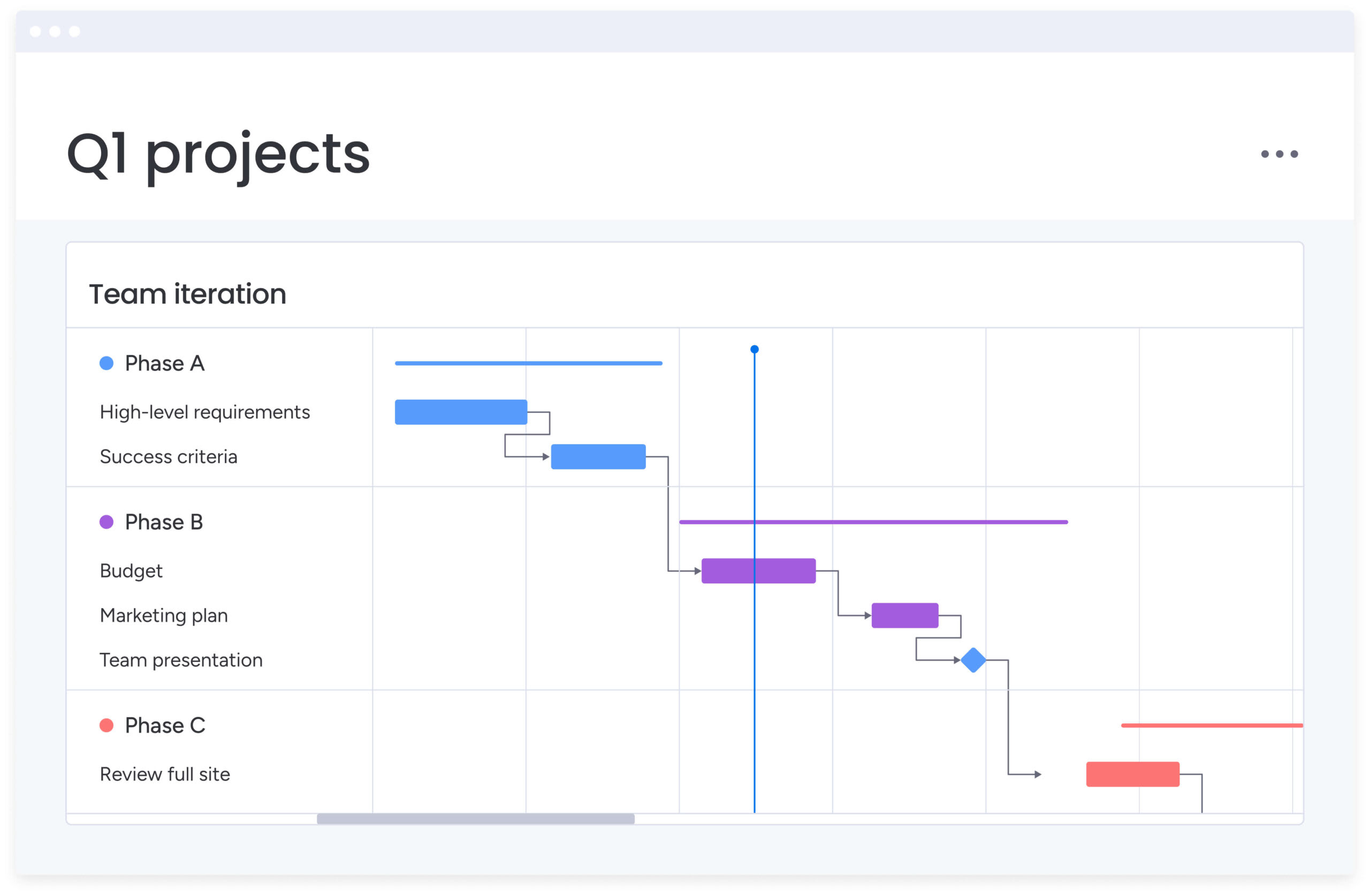
Unlike ongoing operations, project teams are dynamic — they dissolve or transition to new initiatives once the goal is reached. Using platforms like monday work management, teams can visualize these lifecycles through Gantt charts, making it simple to manage milestones and dependencies.
2. Unique outcomes that create specific value
Projects are designed to produce a deliverable that is distinct from previous work. Even in repetitive industries like construction, every project faces unique soil conditions, blueprints, or client demands. In the modern knowledge economy, unique outcomes include:
- New software integrations: Connecting existing platforms to improve data flow and reporting across departments.
- Revised employee handbooks: Updating internal policies, benefits, and guidelines to reflect current organizational standards.
- Targeted marketing campaigns: Developing specific messaging, creative assets, and distribution strategies for a new product launch.
That uniqueness brings uncertainty and risk, which is exactly what project management methodologies handle. Each project creates something that hasn’t existed before in that exact form.
3. Scope and measurable objectives
Scope defines project boundaries: what’s included and what’s excluded. Projects require specific, measurable objectives to determine success. These objectives guide decisions and prevent scope creep, when uncontrolled additions drain focus and resources.
Without defined scope, requirements balloon, budgets drain, and delivery delays — all without adding real value.
4. Dedicated resources and cross-functional teams
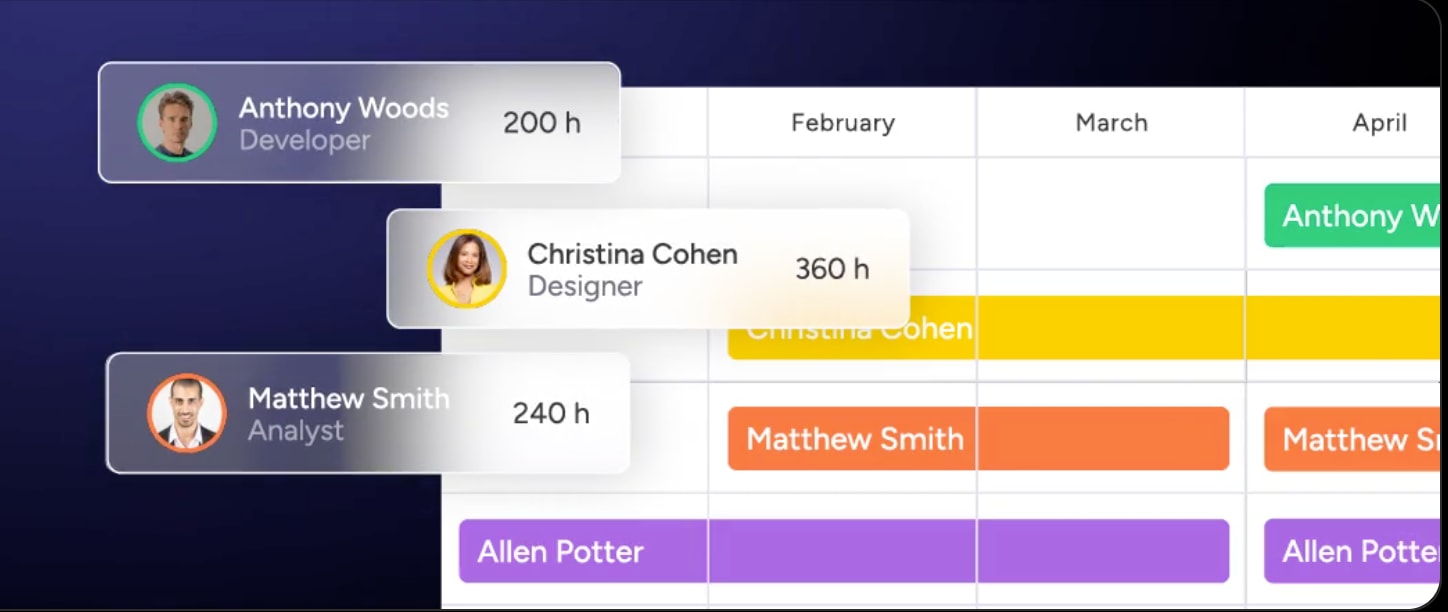
Projects rely on the temporary assignment of people, capital, and equipment. In today’s matrix organizations, team members often report to functional managers while dedicating specific hours to a project manager.
This cross-functional approach taps into diverse expertise but requires elite communication to balance competing priorities. Features like the Workload View help managers distribute tasks fairly and adapt quickly when priorities shift.
5. Progressive development through structured phases
Projects unfold through deliberate steps rather than chaotic bursts. Plans get more detailed as you learn more. Projects follow a lifecycle moving from initiation through planning to execution and closure.
This approach builds in checkpoints where stakeholders review progress and approve next steps, keeping projects on track with business needs.
How projects differ from operations and processes
Knowing the difference between projects and operations matters when you’re managing resources. Misclassifying work leads to using wrong approaches and metrics, making it critical to understand the difference between process management and project management.
Managing repetitive processes as projects creates unnecessary overhead, while treating complex projects as routine operations invites failure.
Projects transform while operations sustain
Projects and operations serve fundamentally different purposes in your organization:
| Feature | Project | Operations |
|---|---|---|
| Primary goal | Create something new (change) | Sustain the business (continuity) |
| Duration | Temporary (start and end) | Ongoing (indefinite) |
| Outcome | Unique deliverable | Repetitive output |
| Risk profile | Higher risk, higher uncertainty | Lower risk, predictable |
| Budgeting | Lump sum or capital expenditure | Annual operating budget |
| Team structure | Dynamic, cross-functional teams | Static, functional departments |
Projects drive change, while operations keep things stable. Operations involve repetitive activities required to run the business, such as manufacturing products, processing payroll, or answering support tickets. Projects improve those operations or create new capabilities. Designing a new customer portal is a project; answering tickets within that portal is operations.
Key distinctions that define project work
Know these differences and you’ll allocate resources better and set realistic expectations:
- Timeline and finality: Projects conclude when objectives are met. Operations continue until business models change or functions are outsourced.
- Resource allocation: Project resources are borrowed or temporarily assigned. Operational resources are permanent department fixtures.
- Success metrics: Project success is measured by delivering scope on time and within budget. Operational success focuses on efficiency, volume, and quality standards over time.
When to choose project management over process management
Use project management when work involves high stakes, teams from different departments, and unique outcomes. If an initiative requires coordination between three departments with a strict deadline, it’s a project.
If work is repetitive, documented, and performed by the same people daily, it requires process management. Organizations use monday work management to bridge this gap, managing both dynamic projects and standardized workflows within a single platform.
4 types of projects driving organizations forward
Projects vary significantly in intent and execution. Categorize projects and you’ll know which ones to prioritize and how to govern and resource them. Know these categories and you’ll pick the right methodology and metrics for each project type.
1. Strategic initiative projects
Strategic projects are high-stakes initiatives directly tied to long-term organizational goals. These projects usually need big budgets and executive backing.
Examples include:
- Entering new international markets: Expanding operations, logistics, and sales into a new global territory.
- Acquiring competitors: Integrating a new company, its assets, and its workforce into the existing organizational structure.
- Company rebranding initiatives: Developing a new visual identity, messaging strategy, and brand positioning across all channels.
When strategic projects fail, your market position takes a hit — so risk management and stakeholder alignment matter.
2. Customer delivery projects
These client-facing projects bring in revenue or deliver value directly to customers. They’re common in service industries like consulting, marketing agencies, and construction.
Marketing agencies launching client campaigns or software shops building custom applications execute customer delivery projects. Success means happy clients, contracts met, and profit.
3. Internal improvement projects
Internal projects focus on operational efficiency and employee experience. These initiatives fix broken processes, upgrade platforms, or restructure teams.
Common examples include:
- CRM migrations: Transitioning customer data and sales workflows to a new platform to improve team performance.
- Hybrid work policy implementations: Developing the infrastructure, schedules, and communication protocols for a flexible workforce.
- Supply chain optimization: Redesigning logistics and procurement processes to reduce lead times and operational costs.
They don’t bring in revenue directly, but they cut costs and help you deliver more value.
4. Compliance and regulatory projects
Compliance projects are mandatory initiatives driven by external legal requirements. These projects often have immovable deadlines and strict scope requirements.
Examples include GDPR data privacy updates, safety standard retrofitting, or financial reporting implementations. The goal is avoiding risk and staying legal, not innovating.
Project examples that shape modern business
Real examples show how project definitions play out in actual work. These examples show how different organizations use project principles across industries to get results.
Digital transformation and AI implementation projects
More organizations now treat technology adoption as full projects, not just IT tasks. Consider a retail company implementing AI-driven inventory management.
The project involves:
- Vendor selection: Identifying and auditing third-party providers to find the best fit for organizational needs.
- Software integration: Connecting new AI capabilities with legacy systems to ensure data consistency across departments.
- Staff training: Developing educational modules to help employees master new technical capabilities.
- Solution rollout: Launching the system across regional warehouses to transition from testing to full-scale operations.
The unique outcome is an automated, intelligent supply chain.
Product development and launch projects
Bringing new products to market represents the quintessential project. For SaaS companies, this involves beta launch projects.
The scope includes:
- Feature coding: Developing the technical architecture and user interface for the new solution.
- User acceptance testing: Gathering feedback from initial testers to ensure the product meets functional requirements.
- Marketing asset creation: Designing campaigns and content to generate awareness and demand.
- Sales team training: Equipping the sales organization with the knowledge needed to communicate the product’s value.
The project ends when the product goes live and transitions to customer success and support teams.
Infrastructure and system upgrade projects
Infrastructure projects provide business continuity foundations. Corporate headquarters relocations exemplify this type.
These projects require coordinating lease negotiations, office layout design, physical moving management, and IT infrastructure setup. The timeline is fixed, budget is set, and the outcome is a fully functional workspace in a new location.
Organizational change and culture projects
Culture initiatives are projects dealing with human behavior. Diversity, Equity, and Inclusion (DEI) rollouts demonstrate this category.
These projects might involve:
- Hiring practice audits: Reviewing existing recruitment workflows to identify and remove systemic biases.
- Training module development: Creating educational resources focused on cultural competency and inclusive leadership.
- Employee resource groups: Establishing internal communities that support diverse perspectives and foster belonging.
- Diversity targets: Setting measurable objectives to track progress toward organizational representation goals.
Deliverables are new policies and training programs, with timelines spanning several quarters.
The 5-phase project lifecycle framework
Every project follows a lifecycle, whether you use Agile, Waterfall, or Hybrid. This framework structures execution and builds in checkpoints at the right times. Know these phases and you’ll see what’s coming and allocate resources better.
Phase 1: project initiation and business case
The lifecycle begins with defining the “why.” During initiation, project sponsors identify business needs or opportunities.
Key activities include:
- Conducting feasibility studies: Evaluating the technical, financial, and operational viability of the proposed initiative.
- Identifying stakeholders: Determining which individuals or departments will be impacted by the project outcomes.
- Creating Project Charters: Drafting the formal document that gives project managers authority to use organizational resources.
Establishing a robust business case during this phase prevents the organization from pursuing misaligned goals, as a project without a validated foundation should not proceed past this point.
Phase 2: detailed planning and resource allocation
Planning builds your project roadmap by defining granular scope, creating Work Breakdown Structures, and developing schedules. Resource planning determines specifically who does what and when, while risk management plans anticipate potential roadblocks before they occur.
This phase culminates in a Project Management Plan that guides execution, often enhanced by AI-suggested phases and dependencies within monday work management.
Phase 3: execution and team coordination
Execution is where the primary work happens — developers write code, marketers design assets, and contractors build structures. Project managers shift into coordination roles to ensure teams have necessary resources, remove blockers, and facilitate constant communication.
As the most active stage, this phase typically consumes the largest portion of the project’s budget and human capital.
Phase 4: monitoring progress and managing risks
Monitoring occurs alongside execution to track how performance stacks up against the initial plan. Project managers review KPIs regarding budget, timeline, and quality to take corrective action if the project drifts off course.
Real-time dashboards provide the visibility needed to spot trends and intervene before deadlines slip.
Phase 5: project closure and value realization
Closure wraps up the project by delivering final outputs, releasing resources, and closing contracts. Teams conduct post-mortems or lessons-learned sessions to document successes and areas for improvement.
Sharing these insights ensures the organization improves with every project, turning completed work into institutional knowledge.
The lifecycle begins with defining the “why.” During initiation, project sponsors identify business needs or opportunities.
What it really means to work on projects
Project work extends beyond those with “Manager” titles. In today’s workplaces, almost everyone works on projects — shaping their careers and daily work. Know your role and you’ll contribute better and advance faster.
Your role in the project ecosystem
Individuals play various roles within project ecosystems. Know these roles and you’ll have clearer accountability and better communication:
- Project sponsor: Champions projects at executive levels and removes high-level obstacles.
- Core team members: Execute daily activities and create deliverables.
- Subject matter experts: Provide specific knowledge at critical junctures.
- Stakeholders: Those affected by project outcomes whose needs require management.
Essential project skills for career growth
Thriving in project environments requires specific soft skills. Communication matters most — you need to translate technical details for business stakeholders. Adaptability helps you shift when requirements change without losing speed.
Time management keeps your work in sync with the overall schedule. Collaboration helps teams work through friction instead of letting it stall progress.
Navigating project challenges and changes
Projects almost never go exactly as planned. Requirements shift, budgets get cut, and key team members leave.
Good project contributors expect changes instead of fighting them. Navigation involves:
- Focusing on core objectives: Prioritizing the primary project goals rather than maintaining rigid adherence to a plan that no longer fits the reality of the situation.
- Proactive communication: Ensuring all stakeholders are informed of shifts immediately to manage expectations and adjust resources accordingly.
- Flagging risks early: Identifying potential bottlenecks or resource gaps before they become crises that stall the entire workflow.
7 steps to successfully manage any project
Managing projects well means balancing structure with flexibility. These steps work across departments and portfolios, giving you a framework that adapts while keeping quality consistent.
Step 1: define crystal-clear project goals
Start with clear, precise goals. Goals must be Specific, Measurable, Achievable, Relevant, and Time-bound (SMART). Teams need to know what they’re building and why it matters.
Get stakeholders aligned on goals early and you’ll avoid conflicts during execution.
Step 2: assemble your project team
The right mix of skills determines how fast your project moves. This involves:
- Identifying necessary expertise: Pinpointing the specific technical and creative skills required to deliver the project scope.
- Securing functional manager commitments: Negotiating for team member availability to prevent resource conflicts between departments.
- Establishing roles using RACI charts: Defining who is Responsible, Accountable, Consulted, and Informed for every major deliverable.
Everyone needs to know who makes which decisions from the start.
Step 3: create a realistic project plan
Plans aren’t just deadlines — they’re your delivery strategy. This involves breaking scope into manageable activities, estimating durations, and identifying dependencies.
Therefore, build realistic plans that account for what your team can actually handle — and add buffers. Teams use Gantt charts on monday work management to visualize dependencies and track scope, schedule, and milestones.
Step 4: establish communication rhythms
Information flow keeps projects alive. Establishing rhythm involves:
- Setting up regular stand-ups: Holding brief, daily check-ins to identify blockers and align on immediate priorities.
- Scheduling status meetings: Reviewing high-level progress and budget health with project sponsors on a weekly or bi-weekly basis.
- Creating reporting cadences: Defining when and how performance data is distributed to ensure transparency across all levels of the organization.
- Determining communication platforms: Distinguishing which solutions serve daily collaboration versus those used for formal documentation and version control.
Communicate consistently and you’ll keep stakeholders engaged and avoid surprises.
Step 5: monitor progress with real-time data
Manage with data, not guesses. This involves tracking completion, budget burn rates, and resource utilization.
Real-time dashboards visualize data, allowing project managers to spot trends and intervene before deadlines slip. monday work management dashboards automatically display live project data for insights on budget, goals, schedules, and resources.
Step 6: adapt to changes without losing momentum
Manage changes proactively. When scope changes are requested, they’re evaluated for time, cost, and quality impact.
Formal change control makes stakeholders weigh trade-offs before approving new requirements — protecting teams from burnout and scope creep.
Step 7: deliver value and document lessons learned
The final step makes sure projects deliver value through quality assurance and user testing.
After delivery, document what you learned so the organization doesn’t repeat the same mistakes.
Change project chaos into visibility with monday work management

Projects fail when information is fragmented and data is disconnected — not from lack of effort. When information is scattered across spreadsheets, emails, and chat apps, you lose visibility. Addressing those issues, monday work management centralizes every project lifecycle aspect into a single, collaborative Work OS.
The platform upgrades traditional project management with capabilities like:
| Feature | Traditional approaches | monday work management |
|---|---|---|
| Visibility | Siloed in emails/spreadsheets | Centralized, real-time dashboards |
| Planning | Static, manual Gantt charts | Interactive Gantt and Kanban views |
| Collaboration | Disconnected from work | Contextual communication on items |
| Automation | Requires coding or IT support | No-code, custom automations |
| Insights | Retroactive reporting | AI-powered, predictive risk analysis |
AI-powered risk detection across project portfolios
AI-powered risk detection comes built into monday work management, analyzing project data to identify potential risks before timelines are derailed. AI-Powered Risk Insights scans all project boards, quickly flagging potential issues by severity.
This lets project managers catch and fix issues early. Teams instantly know which projects need urgent attention without manually combing through data.
Visual project planning that teams love
The platform supports diverse working styles through multiple data views. Project managers use Gantt charts for waterfall planning and dependency tracking, while creative teams might prefer Kanban boards or Calendar views.
This flexibility lets every stakeholder see plans in a way that works for them — boosting adoption and accuracy.
Automated workflows that save hours weekly
Routine administrative activities often consume valuable project time. monday work management automates these processes, such as:
- Assigning items based on status changes: Moving a project from “Planning” to “Execution” automatically triggers owner assignments for the next set of deliverables.
- Sending deadline reminders: Notifying team members of upcoming milestones forty-eight hours in advance to prevent schedule slippage.
- Notifying stakeholders when milestones are reached: Keeping executive sponsors informed through automated alerts the moment a key project phase is completed.
Automate the admin work and teams can focus on execution that matters.
Real-time dashboards for instant decision making
Dashboards in monday work management aggregate data from multiple boards into high-level views. Executives see all strategic initiative statuses at a glance, tracking budget versus actuals and overall progress.
These dashboards update in real time, cutting manual reporting and keeping decisions based on current data.
Native integration with your existing stack
Projects rarely happen in isolation. The platform integrates with essential business applications like Slack, Microsoft Teams, Jira, and Salesforce.
This connectivity ensures data flows freely between systems, creating unified truth sources without forcing teams to abandon specialized applications they rely on for specific activities.

“monday.com has been a life-changer. It gives us transparency, accountability, and a centralized place to manage projects across the globe".
Kendra Seier | Project Manager
“monday.com is the link that holds our business together — connecting our support office and stores with the visibility to move fast, stay consistent, and understand the impact on revenue.”
Duncan McHugh | Chief Operations OfficerTurn project knowledge into competitive advantage
Projects are the defining units of modern work. They’re the means by which organizations innovate, adapt, and deliver value. Mastering project management — understanding characteristics, lifecycle, and necessary frameworks — empowers teams to navigate complexity with confidence.
The difference between successful and struggling organizations often comes down to project execution. Teams that can consistently deliver on time, within budget, and with quality outcomes create sustainable competitive advantages. This requires more than good intentions; it demands systematic approaches, the right platforms, and cultures that embrace both structure and adaptability.
By combining proven methodologies with a unified platform like monday work management, organizations transform scattered efforts into coordinated execution, ensuring every initiative contributes to the broader vision of success.
Frequently asked questions
How do you define a project in simple terms?
In simple terms, a project is a temporary effort with a start and end date, designed to create a unique product, service, or result. It differs from ongoing operations, which focus on repetitive, permanent work.
What are the 5 main characteristics of a project?
The five core characteristics are a temporary timeline, unique outcomes, defined scope and objectives, dedicated resources, and progressive development through phases. These traits distinguish projects from routine business processes.
What's the difference between a project and a single work item?
A project is a collection of activities aimed at a larger goal, requiring planning and multiple steps. A task is a single unit of work to be accomplished, often serving as a building block within a project.
How long should a typical project last?
There's no standard duration for projects. A project can last from a few weeks to several years depending on its scope and complexity. However, all projects must have a defined endpoint to be classified as such.
Can operational work become a project?
Yes, if operational work requires a significant overhaul or improvement, that initiative becomes a project. For example, processing payroll is operations, but implementing a new payroll software system is a project.
What makes a project successful beyond delivery?
True project success involves delivering the intended business value and satisfying stakeholder needs, not just meeting time and budget constraints. It also includes capturing lessons learned to improve future performance.

 Get started