


Many organizations invest significant time and resources in creating video content that seems perfect on paper. The concepts are strong, production quality is high, and teams feel confident about launching campaigns. Then the results arrive: moderate view counts, minimal engagement, few qualified leads, and questions from leadership about return on investment.
This scenario occurs frequently because video is often treated as a creative project rather than a structured business tool. A video marketing strategy shifts this perspective. It provides a framework that connects each piece of content to measurable business outcomes, ensuring videos not only reach audiences but guide prospects through the funnel, build trust, and contribute to revenue growth.
This guide explains the seven essential steps for building a video marketing strategy that produces results in 2026. Readers will learn how to set measurable objectives, understand their audience, select the right distribution channels, plan content for each stage of the buyer journey, and create production workflows that scale efficiently.
Key takeaways
- Define clear objectives and KPIs: set measurable goals for each video to ensure content drives real business results rather than just views.
- Understand your audience deeply: research viewing habits, content preferences, and platform behavior to create videos that resonate at every stage of the customer journey.
- Focus on strategic platform selection: prioritize 2-3 platforms where your audience is most active to maximize engagement and return on investment.
- Diversify video types across the funnel: use explainer videos, product demos, testimonials, and educational content to guide prospects from awareness to decision-making.
- Centralize workflow with monday work management: streamline production, approvals, and performance tracking in a unified workspace to scale video marketing efficiently.
What is video marketing strategy?
 At its core, a video marketing strategy connects every video you produce to measurable business outcomes — transforming creative content into a system that consistently drives leads, engagement, and sales. This approach requires a structured framework that aligns video creation with your business objectives, whether that means generating leads, boosting customer engagement, or accelerating sales cycles.
A strong video marketing strategy integrates four core elements that work together to deliver impact:
- Audience targeting: understanding who consumes your content and identifying the specific problems they need solved.
- Content planning: creating a reliable pipeline of videos that balance brand storytelling with performance objectives.
- Platform optimization: adapting formats and distribution methods to match the channels your audience prefers.
- Performance measurement: linking video metrics to concrete results such as lead quality and customer retention.
What distinguishes strategic video marketing from random video production is predictable results. A software company may use tutorial videos to reduce support tickets by 40%, while a consulting firm leverages thought leadership videos to shorten sales cycles. These results emerge when video fulfills a clearly defined purpose within a larger business strategy.
Why video marketing is essential for business growth
Video communicates differently than other content formats. It delivers messages faster than text, fosters emotional connections that static content cannot, and encourages viewers to take action when they might otherwise scroll past. Understanding these advantages helps teams justify the budget and resources video requires.
The business impact of video marketing spans four key areas that directly influence revenue and brand strength:
| Impact on your organization | |
|---|---|
| Engagement and recognition | Video captures attention 5x faster than text and creates stronger brand recall, with research showing that a 10% increase in average consumer "focus" is associated with a 17% increase in spend across media |
| SEO and visibility | Pages with video rank higher in search results, driving more organic traffic |
| Conversion rates | Product videos give buyers confidence to purchase, reducing decision friction |
| Trust and authenticity | Seeing faces and hearing voices builds the psychological trust needed for B2B transactions |
Video transforms interest into action by anticipating questions before they arise. It demonstrates value in a format that feels personal and immediate, bridging the gap between consideration and purchase. Aligning video production schedules with campaign calendars ensures content reaches audiences during peak engagement times. This coordination shifts video from a creative exercise into a measurable business driver.
Step 1: build your video marketing foundation with 6 key components
Six building blocks create a video strategy that drives results. Each component reinforces the next, establishing a system that grows alongside your business. Together, they turn creative ideas into videos that generate measurable outcomes you can report to leadership.
1. Defined objectives and measurable KPIs
Success begins with clear definitions of winning. Objectives should connect directly to business goals, not vague aspirations like “more views.”
- Specific targets: generate 500 qualified leads from Q3 product videos.
- Measurable outcomes: track conversion rates, not just view counts.
- Time-bound goals: set quarterly milestones to maintain momentum.
2. Well-defined target audience
Your audience isn’t just data points on a spreadsheet. Dig deeper: Do they watch with sound off during commutes? Are they researching solutions after hours? These behavior patterns matter more than age brackets.
- Behavioral patterns: do they watch with sound on or off?
- Content preferences: short social clips or long-form tutorials?
- Platform habits: linkedIn during work hours or YouTube for research?
3. Strategic platform selection
Focus on two to three platforms where your audience actively engages, rather than spreading resources too thin.
4. Comprehensive content framework
Define the mix of educational, promotional, and entertaining videos that nurture leads through the funnel. This framework enables steady production without creative burnout.
5. Resource and budget planning
High-quality video production requires realistic allocation of talent, technology, and time to execute effectively without overextending teams.
6. Performance measurement system
Track progress against KPIs to create a feedback loop that informs creative direction and optimizes distribution in real time.
B2B and B2C strategies differ significantly in how they approach these components:
| Component | B2B strategy focus | B2C strategy focus |
|---|---|---|
| Primary objective | Lead generation and education | Brand awareness and direct sales |
| Content tone | Professional, value-driven | Emotional, entertaining |
| Sales cycle | Long, multi-touchpoint | Short, impulse-driven |
| Key platforms | LinkedIn, YouTube, webinars | Instagram, TikTok, YouTube |
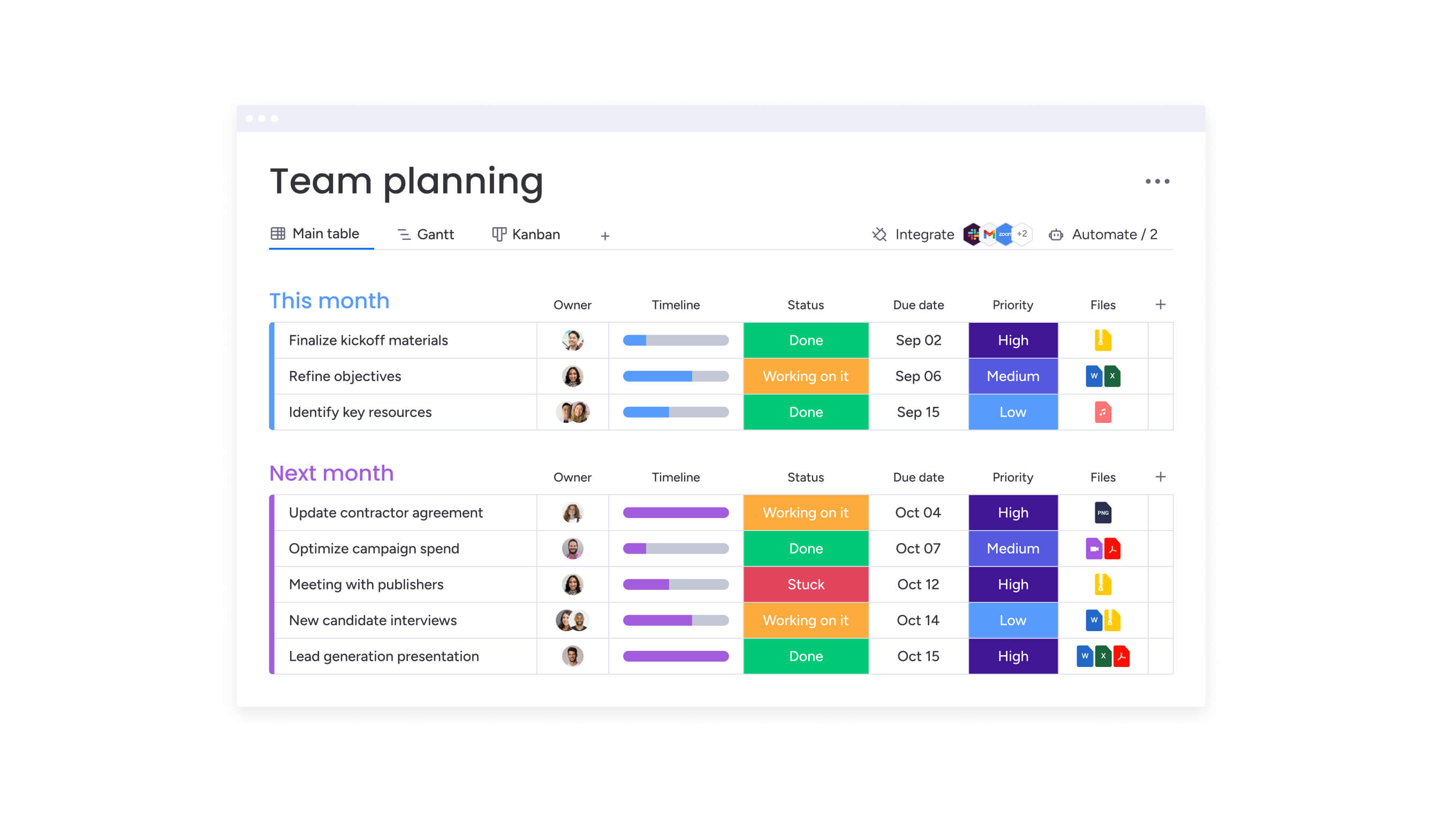
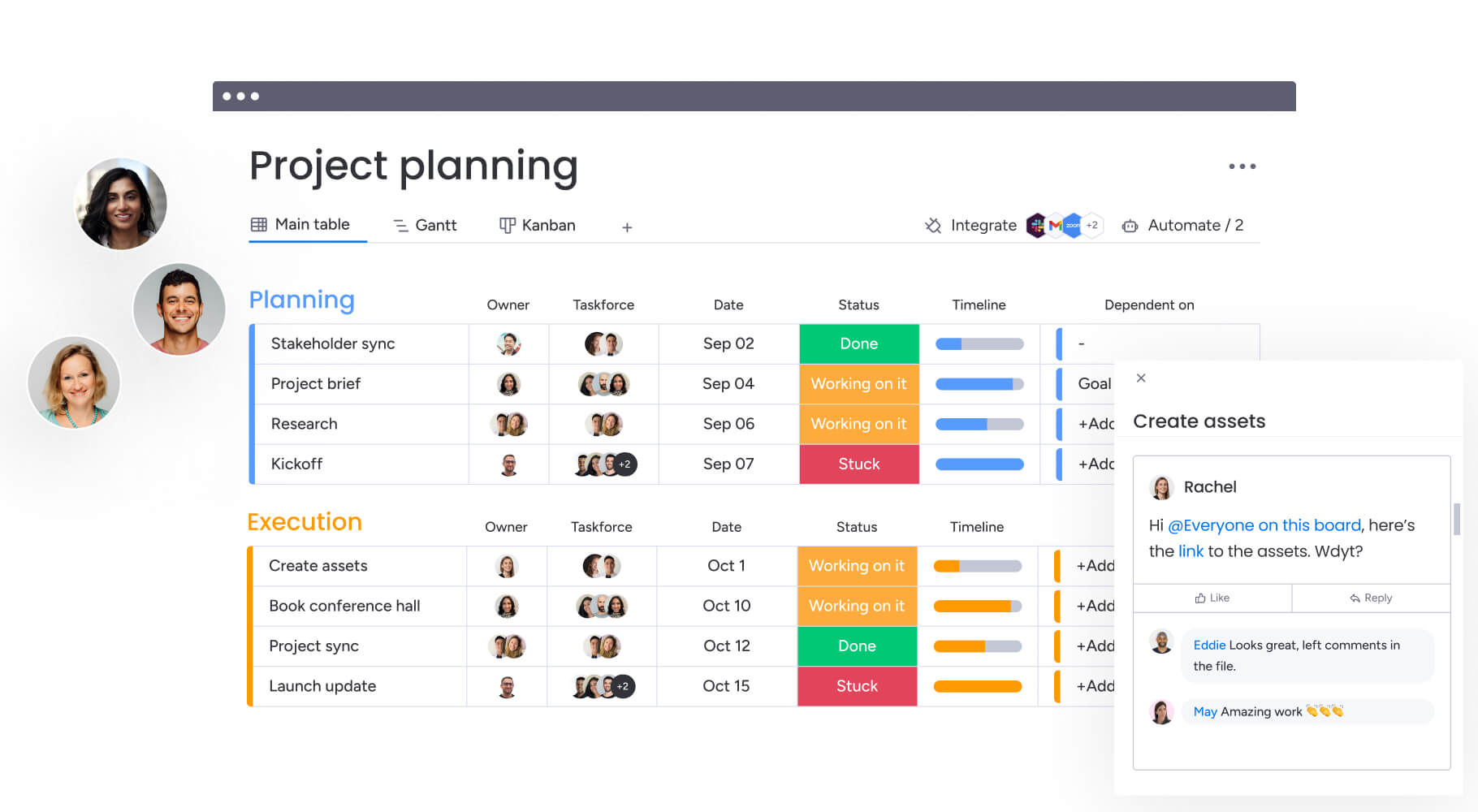
Visualizing connections between budget, content, and performance metrics in a unified workspace ensures all components work together effectively. Modern platforms like monday work management allow teams to track these relationships in one central environment.
Try monday work management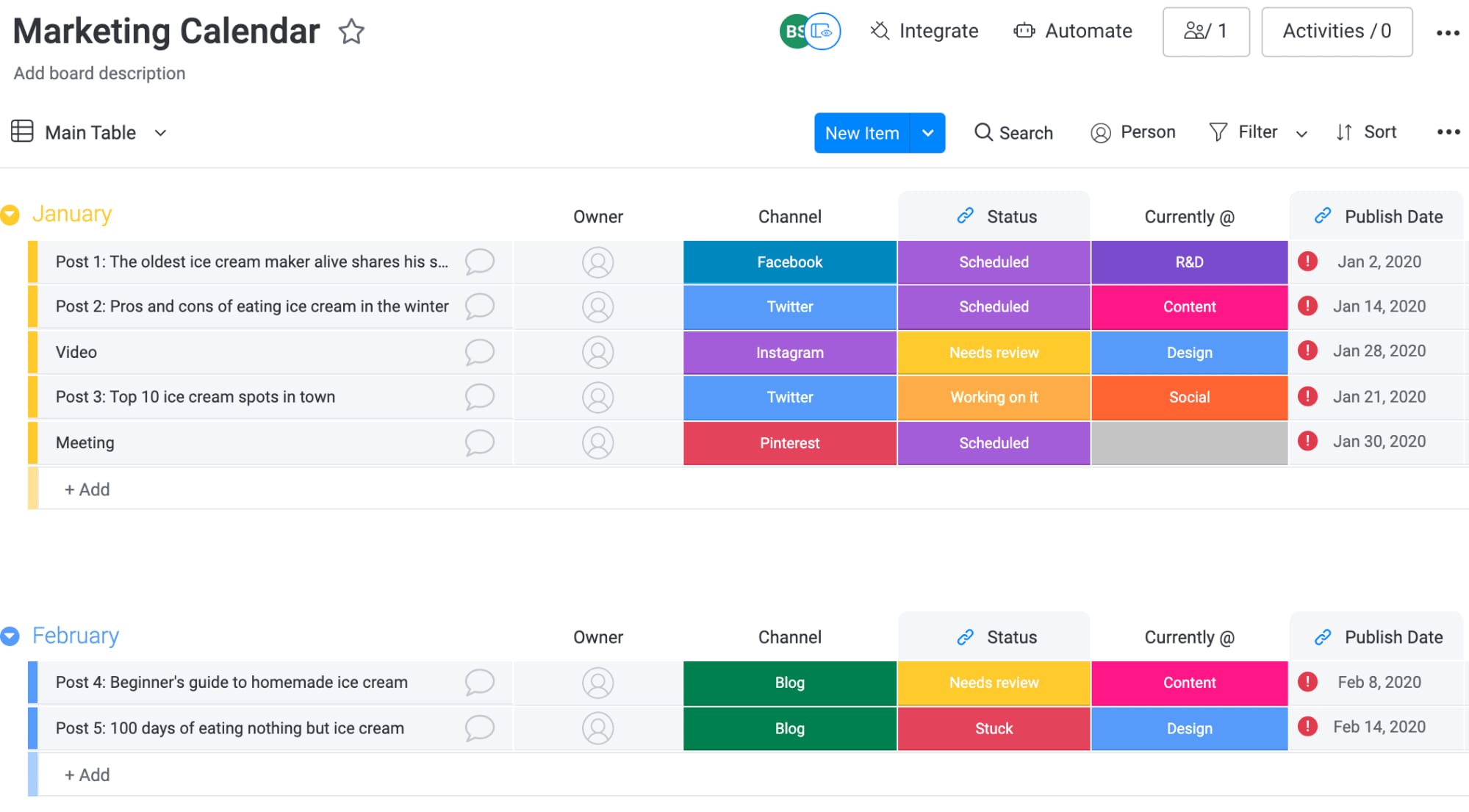
Step 2: set SMART goals for video marketing success
Video marketing goals should align with organizational objectives to ensure creative efforts contribute to company-wide success. The SMART framework converts abstract desires into actionable targets that deliver measurable business impact.
A SMART goal could be: generate 500 qualified leads from the Q3 product launch video series by September 30th, rather than “get more views.” Specific goals allow teams to plan content, distribution, and measurement with clarity.
Different business objectives require distinct KPIs:
- Awareness goals: reach, impressions, and brand lift indicate how effectively videos introduce your brand.
- Engagement goals: watch time, shares, and comments signal content resonance.
- Conversion goals: click-through rates, leads generated, and customer acquisition cost measure ROI.
| Content type | Primary goal | Critical KPIs |
|---|---|---|
| Brand commercial | Awareness | Reach, impressions, ad recall |
| Explainer video | Education | Watch time, completion rate |
| Product demo | Conversion | Click-through rate, sign-ups |
| Customer testimonial | Trust building | Conversion rate, time on page |
| Social short | Engagement | Shares, saves, comments |
Dashboards in modern platforms like monday work management give leadership visibility into KPIs in real time, showing how video content drives business outcomes without manual reporting.
Step 3: research and understand your video marketing audience
Research creates a detailed view of real viewers — who they are, how they watch, and what content engages them. This knowledge helps create videos tailored to each stage of the buyer journey, from discovery to decision.
Effective audience research methods:
- Platform analytics: retention graphs and demographic data reveal viewer behavior and drop-off points.
- Social listening: monitor forums and comment sections to uncover trending topics and questions.
- Customer interviews: ask current customers which videos would have helped during their buying journey.
| Journey stage | Audience mindset | Ideal content type |
|---|---|---|
| Awareness | "I have a problem" | Educational how-to, industry trends |
| Consideration | "What are my options?" | Product comparison, explainer video |
| Decision | "Why should I choose you?" | Case study, demo, testimonial |
| Retention | "How do I maximize value?" | Advanced tutorials, feature updates |
Centralizing audience insights in tools like monday docs ensures all teams have access to profiles, enabling consistent content alignment with target personas.
Step 4: choose the best platforms for video distribution
Selecting platforms strategically ensures investment in channels where audiences engage most. Viewer behavior differs widely across platforms, making tailored content essential.
| Platform | Primary audience | Content format | Best for |
|---|---|---|---|
| YouTube | High-intent searchers | Horizontal, long-form | SEO, education, brand depth |
| B2B professionals | Native video, documents | Lead generation, thought leadership | |
| TikTok/Reels | Gen Z, Millennials | Vertical, short-form | Brand awareness, viral reach |
| Website | High-intent prospects | Embedded players | Conversion, product education |
Platform-specific considerations:
- YouTube for discovery: optimized for evergreen educational content and SEO.
- Short-form for trends: TikTok and Reels require attention-grabbing first seconds to leverage algorithmic reach.
- LinkedIn for B2B: professional context makes it ideal for thought leadership and lead generation.
- Emerging platforms: testing new channels offers first-mover advantages before saturation.
Teams using modern platforms like monday work management can track platform-specific requirements and deadlines in unified views, keeping multi-channel video strategies organized and efficient.
Try monday work management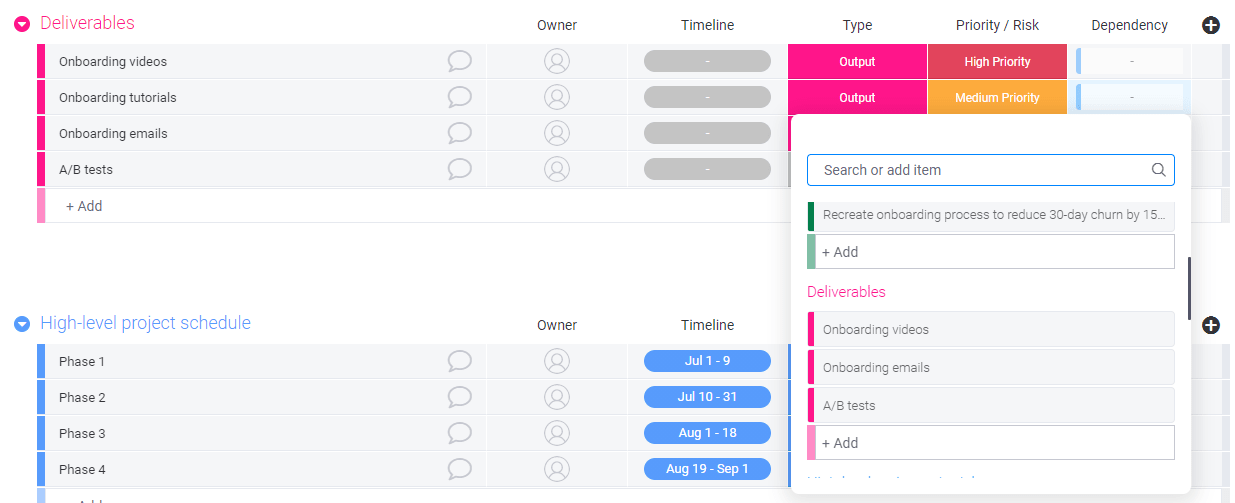
Step 5: select video types that generate results
Different video types serve different stages of the customer journey. Someone discovering your brand needs content that introduces value, while someone ready to purchase needs proof and guidance. Including this variety in your plan keeps prospects moving forward and engaged.
- Explainer videos: simplify complex concepts into digestible narratives. These awareness-stage assets quickly establish your value proposition.
- Product demonstrations: show your product in action, highlighting key features and functionality. Consideration-stage videos prove capability and usefulness.
- Customer testimonials: provide social proof through authentic customer stories. Decision-stage assets build crucial trust.
- Behind-the-scenes content: humanize your brand by showing company culture. These assets foster connection and strengthen employer branding.
- Educational tutorials: offer utility by solving specific problems. These videos drive SEO traffic and position your brand as an authority.
- Live videos and webinars: create real-time engagement through deep-dive education and Q&A sessions.
- User-generated content: leverage community-created content for authentic validation and expanded reach.
- AI-enhanced personalized videos: deliver customized messages at scale for sales outreach or customer onboarding.
| Production complexity | Resource requirement | ROI timeline | |
|---|---|---|---|
| Explainer | Medium | Script, animation/talent | Medium-term |
| Testimonial | High | Location, crew, editing | Long-term value |
| Live video | Low | Streaming setup, host | Immediate |
| UGC | Low | Curation, permissions | Immediate |
| Product demo | Medium | Screen capture, voiceover | Short-term |
Teams coordinate these varied formats on monday work management using templates that standardize processes while preserving creative flexibility.
Step 6: create a video content marketing strategy
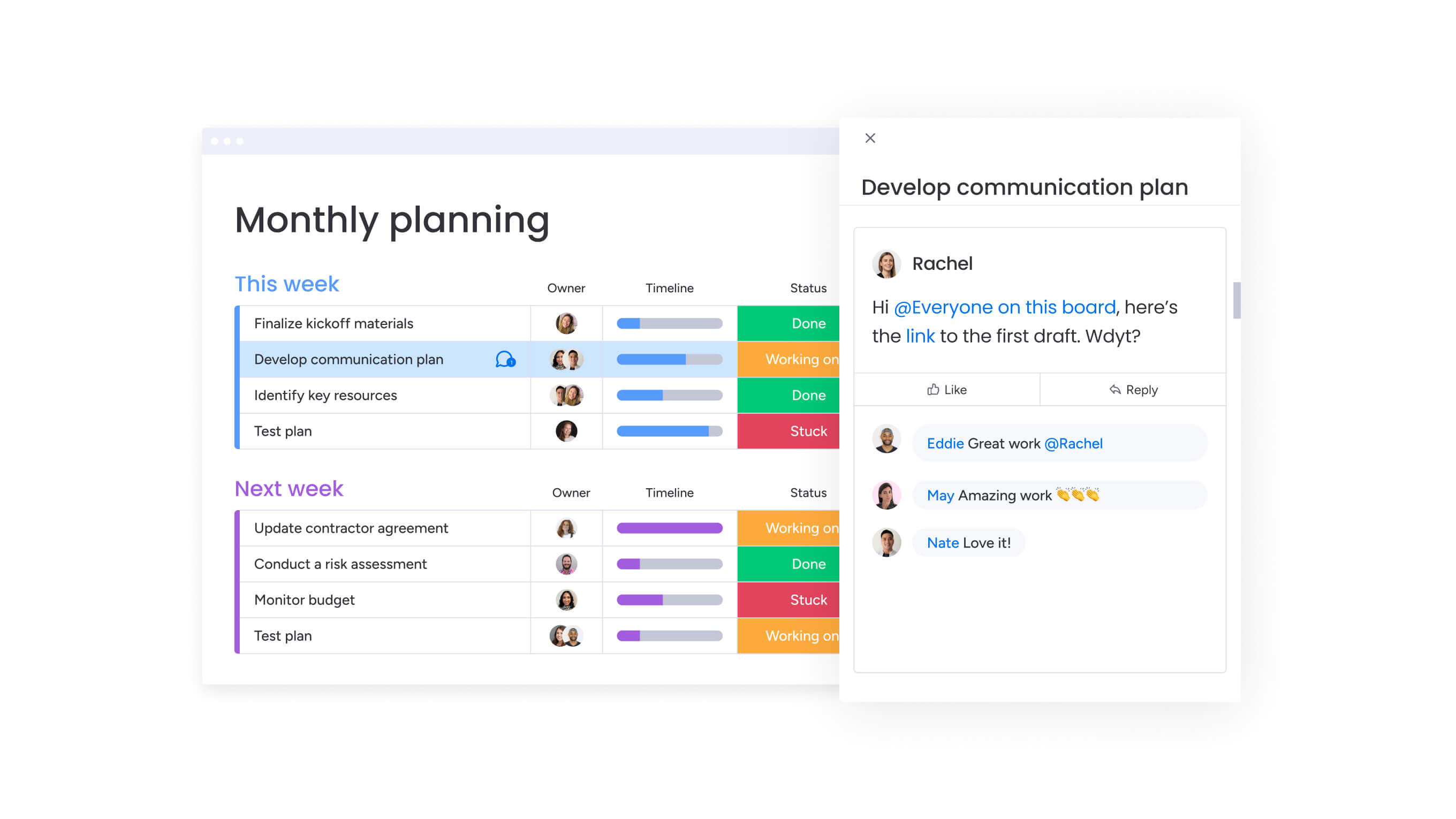 A well-defined content strategy prevents the “what should we make next?” panic. Start with three to five themes your brand can credibly own, then expand these into dozens of specific video ideas. This approach prevents creative fatigue while keeping your audience engaged.
Balancing promotional content, educational material, and entertainment in your content calendar ensures audience interest without burnout. Consider these foundational elements of your creative strategy:
- Content pillars: define three to five core topics that establish brand authority.
- Publishing cadence: set realistic schedules that maintain algorithmic favor.
- AI ideation: use AI ideation to generate topic variations and identify content gaps.
| Month | Theme focus | Key asset | Support assets |
|---|---|---|---|
| Month 1 | Education | Industry guide | 4x tips clips, 2x infographics |
| Month 2 | Product | Feature deep dive | 4x demos, 2x user tips |
| Month 3 | Proof | Customer case study | 4x testimonials, 1x webinar |
Teams using monday work management build content calendars directly into workflows, connecting each concept to production timelines, assigned owners, and publication dates.
Step 7: build an efficient video production workflow
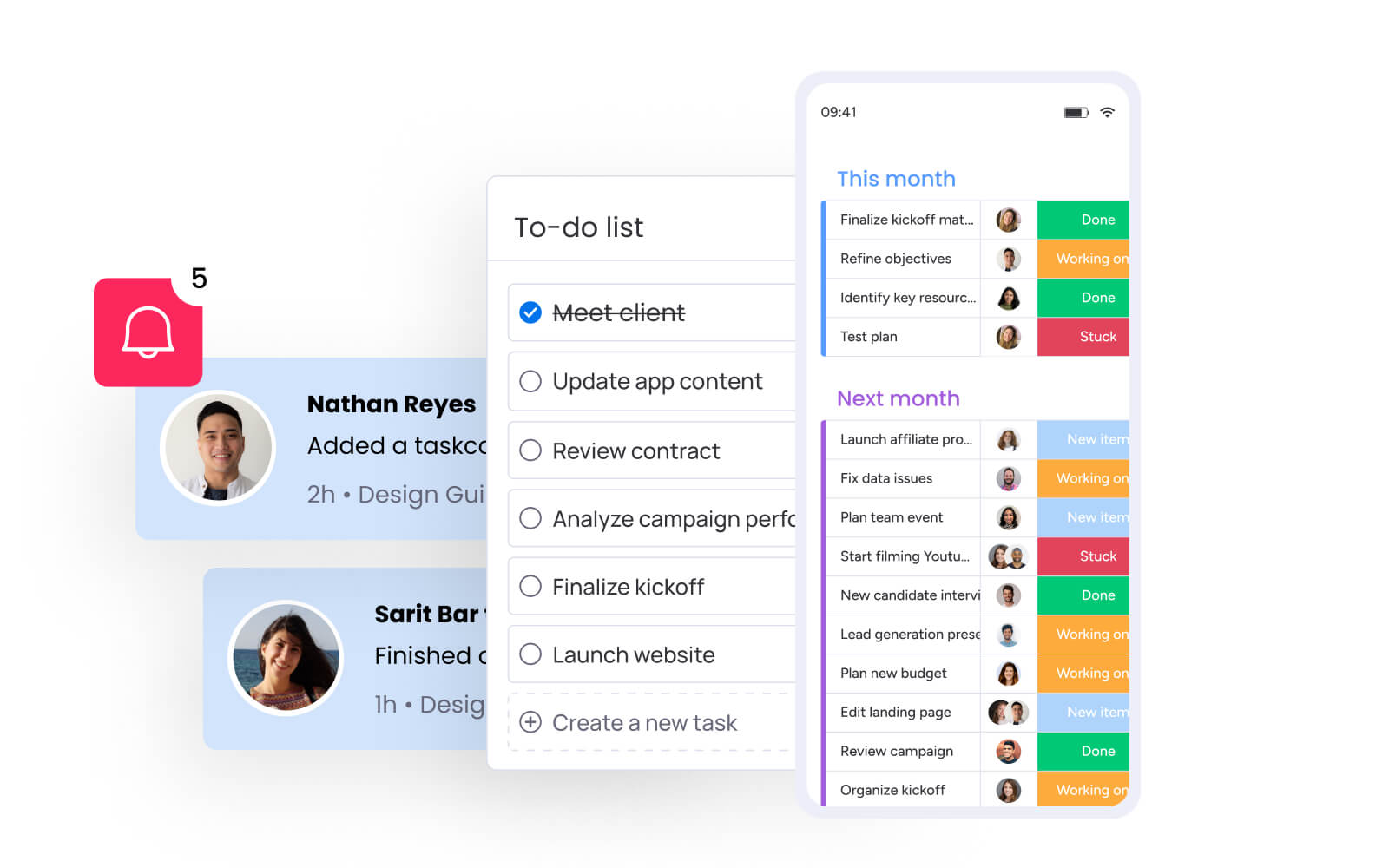
The difference between last-minute video creation and a streamlined content machine lies in workflow. Four phases make up the production cycle, and each needs a clear management approach to prevent bottlenecks and maintain quality.
- Streamlining pre-production: concept development, scripting, and resource allocation define vision. Detailed planning prevents costly reshoots.
- Managing production: efficient scheduling of equipment, talent, and locations maximizes production days.
- Optimizing post-production: editing, sound design, and color correction require consistent naming conventions and version control.
- Creating approval systems: structured review cycles reduce bottlenecks, ensuring actionable feedback without delays.
| Video type | Pre-production | Production | Post-production | Total time |
|---|---|---|---|---|
| Social short | 1-2 days | 2-4 hours | 1 day | 3-4 days |
| Product demo | 1 week | 1 day | 3-5 days | 2 weeks |
| High-end ad | 2-3 weeks | 2-3 days | 2-3 weeks | 6-8 weeks |
Teams using monday work management employ automations to move projects through stages automatically, notifying stakeholders when approvals are needed and creating distribution tasks once masters are ready.
Streamline your video marketing strategy with monday work management
Modern platforms like monday work management serve as a video command center, connecting big-picture strategy with daily execution. This approach addresses the common chaos teams face when scaling video production, enabling consistent delivery without compromising creativity.
Centralizing video project management: organize all projects, campaigns, and assets within unified workspaces. Track assignments, deadlines, and versions with clear visibility across creative teams, marketing managers, and executives, ensuring alignment at every stage.
Automating production workflows: reduce manual friction by implementing workflows that move projects through stages, send approval notifications, and create distribution tasks automatically. AI Blocks categorize content and summarize performance reports instantly, saving time and improving accuracy.
Enabling real-time collaboration: workdocs facilitate collaborative scriptwriting and creative brief development. Integrations connect Adobe Creative Cloud, Dropbox, and Slack directly into workflows, streamlining feedback loops and asset sharing.
Managing resources with AI insights: visual workload and resource management features highlight team capacity and equipment availability. AI identifies bottlenecks before they delay production, enabling managers to reallocate work proactively and maintain schedules.
Using templates to scale campaigns: standardized templates for different video types accelerate project setup while maintaining quality. Templates ensure that critical steps, from SEO optimization to legal review, are completed consistently across campaigns.
| Feature | monday work management | Spreadsheets | Basic platforms |
|---|---|---|---|
| Workflow automation | Custom triggers | None | Limited |
| Asset collaboration | Integrated proofs | None | Basic |
| Resource management | Visual workload | Manual | Limited |
| Scalability | Templates and AI | Low | Medium |
| Integrations | Deep creative platforms | None | Standard |
Transform video chaos into strategic growth
Effective video marketing relies on more than creativity; it requires systems that turn ideas into measurable results. Aligning creative storytelling with structured processes transforms video from a creative wild card into a reliable growth engine.
Moving from one-off projects to a streamlined system removes delays, improves quality, and proves the value of your content. By clarifying objectives, understanding audiences, optimizing platforms, and leveraging AI, teams can develop strategies that consistently deliver measurable outcomes.
Modern platforms like monday work management unify video efforts on a single platform. From defining success metrics to tracking performance with dashboards and AI-powered insights, teams can work faster, reduce risk, and achieve consistent results at scale.
Try monday work managementFrequently asked questions
How much should I budget for video marketing?
Video marketing budgets vary depending on goals and quality standards. Allocating 12–15% of your total marketing budget to video is a common benchmark, covering production costs, talent, equipment, and paid distribution to ensure comprehensive execution.
What is the ideal length for marketing videos?
Video length depends on platform and intent. Keep social media awareness videos under 60 seconds, product explainers around two minutes, and educational content or webinars between eight and fifteen minutes for optimal engagement.
How often should I publish new video content?
Consistency matters more than frequency. A sustainable target is one to two high-quality long-form videos per week, supported by three to five short-form clips to maintain daily visibility across platforms.
Which video marketing metrics are most important?
Metrics should align with your goals. Track watch time and retention for engagement, click-through rate for traffic, and conversion rate for sales or lead generation to measure video marketing impact accurately.
How can small businesses compete with video marketing?
Small businesses compete through authenticity, niche expertise, and agility. Using smartphones and AI editing software, they can produce high-value content without large budgets, emphasizing genuine connections over production value.
How does monday work management help with video strategy?
Effective video strategy requires centralized management of the entire production lifecycle. Features like production workflow templates, visual resource management, and automation connect strategy with execution. This integrated approach helps teams scale video marketing efficiently while maintaining quality and meeting deadlines.

 Get started