

While teams routinely log hours, the actual trajectory of that time and its specific contribution to the bottom line, frequently remains obscured. In high-velocity environments, “busyness” often masks inefficiencies where high-output effort is swallowed by low-impact tasks. Without a granular view of how time is distributed between strategic initiatives and maintenance work, organizations risk misallocating their most finite resource.
Time management apps bridge this visibility gap. The right platform captures minutes and links them directly to meaningful outcomes. Daily effort connects to project milestones, productivity patterns emerge, and leaders gain the clarity needed to allocate resources with confidence. When time data integrates seamlessly with workflows, it transforms from an administrative burden into a strategic asset.
What follows is an examination of 14 time management apps, spanning simple focus timers to enterprise platforms that connect every hour to tangible results. The analysis explores distinguishing features, the role of AI in reshaping time intelligence, and how to align the right solution with specific organizational needs.
Key takeaways
- Connect time to business outcomes: advanced platforms like monday.com map every hour to project milestones and strategic objectives, transforming raw data into actionable intelligence that drives resource decisions.
- Leverage AI to eliminate administrative drag: intelligent automation categorizes time entries, generates executive summaries, and predicts resource needs, freeing teams to focus on execution rather than manual reporting.
- Align tools with your workflow DNA: the right solution mirrors your operational reality, whether you’re managing complex portfolios, protecting deep work, or scaling enterprise operations across departments.
- Integrate time tracking into execution platforms: embedding time management within your Work OS eliminates context switching and creates a single source of truth that links daily effort to tangible results.
- Build compliance into every workflow automatically: ensure marketing materials pass required legal reviews before publication while maintaining complete audit trails for regulatory requirements.
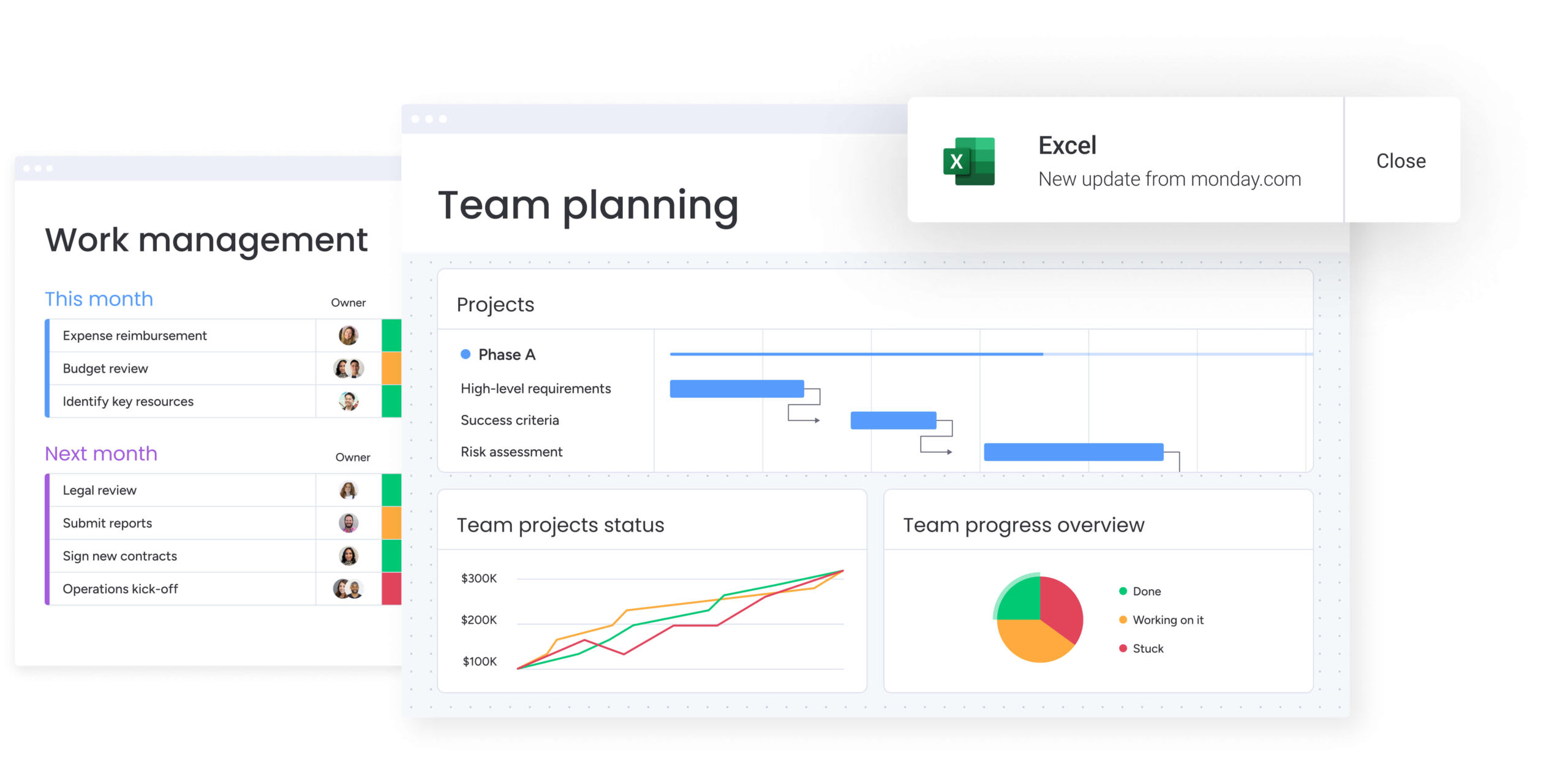
Time tracking has moved way past digital stopwatches. Advanced time management platforms connect individual work directly to company strategy. Time isn’t just a metric anymore. It’s a strategic asset.
Distributed teams toggle between projects and apps constantly, losing momentum with every switch. This fragmentation hides the link between daily work and real results. Leaders can’t see how their resources drive outcomes. Without visibility into where time goes, you can’t measure real progress.
Connect time to real business outcomes
Tracking hours helps. Understanding their impact changes everything. The goal isn’t tallying hours; it’s understanding how they move the business forward. Advanced platforms show you what’s really happening, not just hours logged.
These systems spot productivity patterns and show where your team’s effort pays off most. They map time expenditure directly to project milestones and organizational objectives, offering a clear lens for decision-making. Raw data becomes a guide for data-driven decisions.
Capabilities that drive performance
Passive tools record what happened. Active platforms help you shape what’s next. The right software sharpens team focus and gives leaders real visibility. Here’s what separates powerful platforms from basic applications:
- Automated time capture: removes the friction of manual entry by tracking work in the background and suggesting categories, freeing teams to concentrate on execution.
- AI-powered insights: parses time data to automatically allocate it to the correct client or project, ensuring records remain pristine without human intervention.
- Unified integrations: bridges the gap between project management and communication tools, establishing a single source of truth for all workflows.
- Predictive analytics: leverages historical performance to forecast timelines and resource requirements, allowing you to spot bottlenecks before they derail progress.
These features make data useful, so time tracking stops being just another administrative chore.
The strategic advantage of intelligent time management
The right solution aligns effort with expectations and delivers real impact. Estimates get sharper. Resource decisions shift from gut feel to real data. Leaders gain the ability to monitor workload distribution, preventing burnout while ensuring talent is focused on high-priority initiatives.
This visibility changes how teams operate. Leaders can spot what drives value and what drains resources, making portfolio decisions smarter. With advanced solutions like monday.com, for example, time tracking is embedded directly into the workflow. Execution and strategy connect in one place, giving teams the strategic insight to move fast.
14 best time management apps that transform how teams work
Leading time management applications deliver more than simple minute tracking: they provide clear visibility into how effort translates to measurable outcomes. The market spans a wide spectrum, from focused productivity timers to comprehensive enterprise platforms that offer granular insight into time allocation across complex workflows.
Selecting the appropriate solution requires careful consideration of team size, operational workflows, and integration requirements. This analysis provides a framework for identifying platforms that align with specific organizational objectives.
These solutions transform time from a passive metric into an actively managed strategic resource.
1. monday.com
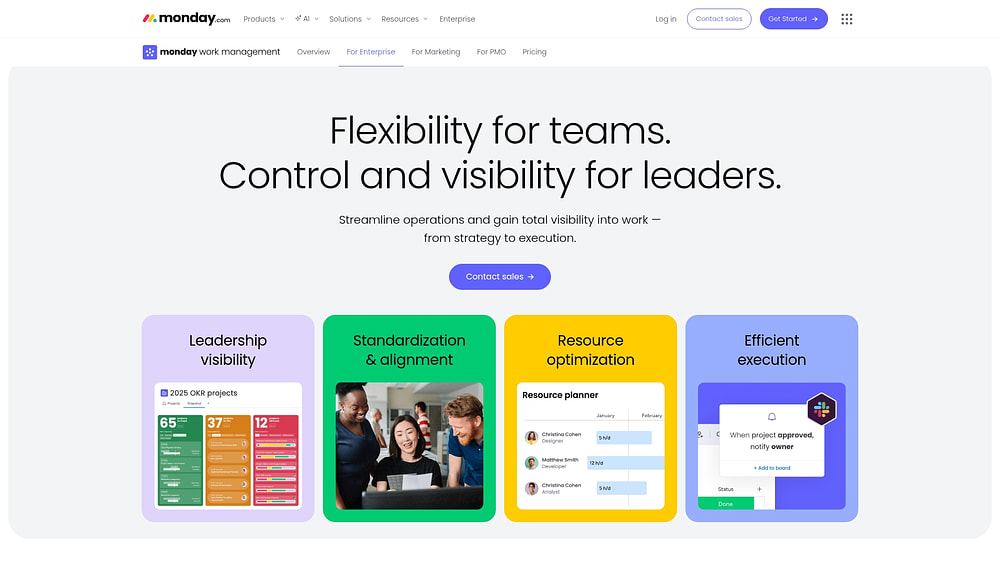
Activity logs transform into real business intelligence with monday.com. By housing time tracking alongside project plans, dependencies, and status updates, the platform allows leaders to correlate effort with delivery instantly. All your data is centralized in one system. One system tracks progress, workload, and billable hours.
Example:
Built for teams managing complex projects where time data drives strategy and resource decisions.
Picture a PMO running 50+ projects. They need a reliable view of time expenditure by program and early warnings regarding delivery risks. Time tracking connects to work items, Gantt milestones, and dashboards — stakeholders see exactly where time goes and what it produces.
Key features:
- Contextual time tracking: team members log time directly on work items, keeping effort data tied to ownership, deadlines, and status.
- Executive visibility: project metrics roll up into portfolio-level dashboards, allowing leadership to review progress and resourcing without demanding manual status reports.
- Actionable planning controls: features like Gantt charts, milestones, and critical path analysis pair “hours spent” with schedule impact.
Pricing:
- Free: up to two seats.
- Basic: $9/seat/month (billed annually).
- Standard: $12/seat/month (billed annually).
- Pro: $19/seat/month (billed annually).
- Enterprise: custom pricing with advanced governance features.
- Annual billing: saves 18% compared to monthly plans.
- AI credits: available at $0.01 per credit after trial allocation.
Advanced AI features:
- AI blocks for categorization: the “Categorize” feature labels time-related notes by type, urgency, or sentiment to maintain consistency.
- Summarize for executive insights: converts granular updates into concise weekly summaries that leaders can digest in seconds.
- Automated data extraction: “Extract Info with AI” pulls structured details from PDFs, text columns, and images directly into board columns for analysis.
Automations:
- Approval workflows: routes timesheets for review, nudges owners before cutoffs, and alerts stakeholders upon milestone completion.
- Standardized execution: launches new initiatives with pre-built boards and automation templates, ensuring reporting remains uniform across projects.
- Reporting cadence: automates stakeholder updates by generating recurring status requests attached to the work.
Integrations:
- Collaboration tools: connects with Microsoft Teams and Slack to bring updates and decisions into the flow of work.
- Email and calendar: Gmail and Outlook integrations convert emails into actionable items, linking follow-through to the original record.
- Specialized time tools: connects with Toggl or Harvest for teams needing dedicated time sources alongside monday.com.
Time management app features:
- Embedded tracking: logging time where work happens supports reliable reporting and higher adoption rates.
- Outcome-focused dashboards: leaders combine time signals with schedules and milestones to identify which initiatives consume the most capacity.
- Scalable oversight: supports portfolio-level visibility, including dashboards capable of analyzing hundreds of projects simultaneously.
Why it stands out:
- Leadership visibility: delivers portfolio reporting and executive summaries that keep decision-makers aligned.
- Industry recognition: monday.com is recognized as a Leader in the 2025 Magic QuadrantTM.
- Enterprise governance: supports regulated teams with IP restrictions, 2FA, SSO, BYOK, and tenant-level encryption.
2. My Hours
My Hours focuses on compliance, balancing simple tracking with serious security. It’s built for teams that need audit-ready records without invasive monitoring. Built by Spica International, it brings enterprise-level security to small and mid-sized teams.

Example:
Teams needing reliable time tracking backed by built-in approvals, audit trails, and strict compliance features.
Key features:
- Structured project hierarchy: organizes work across Client → Project → Task levels with capacity targets for clear resource planning.
- Supervisor approvals: enables timesheet and log-level reviews with automatic period locking to maintain data integrity.
- Microsoft ecosystem integration: connects seamlessly with Teams, Power BI templates, and Entra SSO for unified workflows.
Pricing:
- Free: $0 for up to five users; includes unlimited projects and basic reporting.
- Pro: $8/month per user (annual) or $9/month (monthly); adds approvals, audit logs, and budgets.
- Enterprise: custom pricing; includes dedicated support, mandatory SSO, and custom integrations.
- Annual billing: provides savings; volume discounts available for nonprofits and large teams.
Considerations:
- Compliance features gated by tier: essential capabilities like audit logging require the Pro plan.
- Limited customization on lower tiers: custom fields are capped at two per entity unless upgrading to Enterprise.
3. Clockify
Clockify offers full tracking with unlimited users on its free plan. It serves as a robust entry point for teams of any size, combining multiple capture methods with detailed reporting. It’s a solid pick for companies that need analytics without big upfront costs.

Example:
Teams requiring detailed tracking, profitability analysis, and workforce management with minimal cost barriers.
Key features:
- Versatile tracking options: timers, manual entry, weekly timesheets, and kiosk mode.
- Custom report builders: analyze project profitability and productivity with flexible reporting tools.
- Billing and resource planning: features for approvals, resource planning, and calendar sync.
Pricing:
- Free: unlimited users/projects with core tracking.
- Basic: $3.99/user/month (annual); adds bulk editing and audit capabilities.
- Standard: $5.49/user/month (annual); adds time-off management and invoicing.
- Pro: $7.99/user/month (annual); adds scheduling, expenses, and GPS.
- Enterprise: $11.99/user/month (annual); adds SSO and enhanced security.
- Kiosk users: billed separately.
Considerations:
- Payroll connectivity: often involves manual exports.
- Mobile experience: may be limiting for field workers relying solely on smartphones.
4. Toggl Track
Toggl Track focuses on speed and privacy; time data becomes insight, not surveillance. It’s built for teams that want productivity insights without invasive tracking. Trust and simplicity drive the design.

Example:
Teams needing profitability analysis and workload management while maintaining a privacy-first culture.
Key features:
- One-click tracking: captures time with cross-device sync and calendar integration for seamless logging.
- Multi-level billable rates: enables revenue analysis and margin optimization across different client tiers.
- Visual dashboards: compares team capacity against scheduled hours to identify resource gaps.
Pricing:
- Free: $0 (up to five users).
- Starter: $9/month per user (annual); adds billable rates.
- Premium: $18/month per user (annual); adds profitability analysis and approvals.
- Enterprise: custom pricing.
Considerations:
- Basic project management: advanced planning requires a separate product (Toggl Focus).
- One-way integrations: may limit closed-loop automation capabilities.
5. Todoist
Todoist is built for speed. Instead of time logging, it focuses on fast task capture and smart organization. Natural language processing lets 50 million users capture work items instantly, which proves that a simple list works.

Example:
Individuals and teams needing instant task capture and cross-device synchronization for personal and collaborative lists.
Key features:
- Natural language input: automatically parses details from phrases like “meeting tomorrow at 2pm” for instant task creation.
- Project templates and delegation: supports team collaboration with shared workflows and task assignment.
- Time blocking integrations: connects with calendars to schedule focused work sessions.
Pricing:
- Beginner (Free): five personal projects.
- Pro: $5/month (annual).
- Business: $8/user/month (annual).
Considerations:
- Limited project complexity: lacks Gantt charts or complex dependencies without third-party tools.
- Single calendar provider: integration is limited to one provider at a time.
6. TickTick
TickTick sits between a simple checklist and a full day planner. It combines project management with Pomodoro timers: plan, execute, and track habits in one place.

Example:
Small teams and individuals seeking a unified tool for tasks, habits, and Pomodoro-style focus tracking.
Key features:
- Flexible views: List, Calendar, Kanban, and Timeline options for different work styles.
- Integrated Pomodoro timer: built-in focus sessions with detailed session statistics.
- Habit tracking: monitor streaks and build consistent routines over time.
Pricing:
- Free: core tasks with limited views.
- Premium: $35.99/year ($3.99/month).
- Education: 25% discount on annual plans.
Considerations:
- Lacks dedicated business tiers: no admin controls or enterprise governance features.
- Limited collaboration: shared lists may not scale for complex multi-team projects.
7. Notion
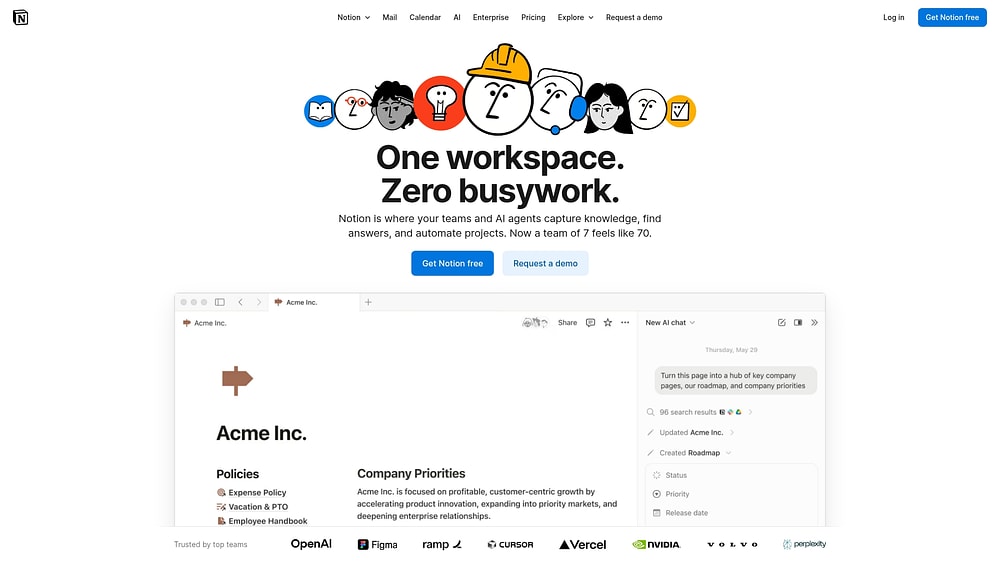
If pre-packaged solutions feel too rigid, Notion offers a blank canvas. Its flexible workspace allows teams to build custom databases and templates, making it the go-to choice for those who want to design a time tracking system that fits their specific workflow DNA.
Example:
Teams that prioritize customization and have the expertise to build tailored systems integrating documentation and projects.
Key features:
- Custom databases: build relations and formulas for tailored time analysis and reporting.
- Extensive template gallery: access community-sourced systems to accelerate setup and adoption.
- Automation via Notion AI: leverage integrations for categorization and reporting workflows.
Pricing:
- Free: core workspace with limited blocks.
- Plus: $10/member/month (annual).
- Business: $20/member/month (annual); adds SAML SSO.
- Enterprise: custom pricing.
Considerations:
- Steep learning curve: database construction requires time and technical familiarity.
- Performance limitations: large databases may experience lag during complex operations.
8. Motion
Motion tackles the problem of “calendar Tetris” by using AI to manage your schedule proactively. It targets busy professionals who need their day reorganized automatically as priorities shift. Instead of manually shuffling blocks of time, users let the software optimize their agenda based on deadlines and urgency.

Example:
Executives and high-performance teams wanting hands-off schedule optimization to maintain focus on high-impact work.
Key features:
- AI Scheduling: auto-places tasks based on priority and deadlines.
- Dynamic Replanning: reorganizes the day instantly when conflicts arise.
- Unified Suite: merges projects, meetings, and time tracking.
Pricing:
- Pro AI: $19/seat/month (annual).
- Business AI: $29/seat/month (annual).
- Enterprise: custom pricing.
- Free Trial: seven days.
Considerations:
- AI-driven workflow: requires adapting to an AI-driven workflow.
- Mobile experience: the mobile app acts more as a companion than a standalone tool.
9. Trello
Visual thinkers often gravitate toward Trello’s card-based system. It keeps project management simple and intuitive, integrating time tracking through a vast library of Power-Ups. This approach allows teams to add time logging capabilities without complicating the core Kanban experience.

Example:
Teams wanting visual project management with time tracking added via extensions.
Key features:
- Kanban boards: provides immediate status visibility across workflows.
- Time tracking via Power-Ups: integrates with tools like Harvest and Toggl for time capture.
- Butler automation: triggers actions based on card changes to streamline repetitive tasks.
Pricing:
- Free: up to ten collaborators.
- Standard: $5/user/month (annual).
- Premium: $10/user/month (annual); adds advanced views.
- Enterprise: $17.50/user/month (annual).
Considerations:
- Complex dependencies: usually require external tools for advanced project management.
- Time tracking as an add-on: not a native core feature, requiring third-party Power-Ups.
10. Asana
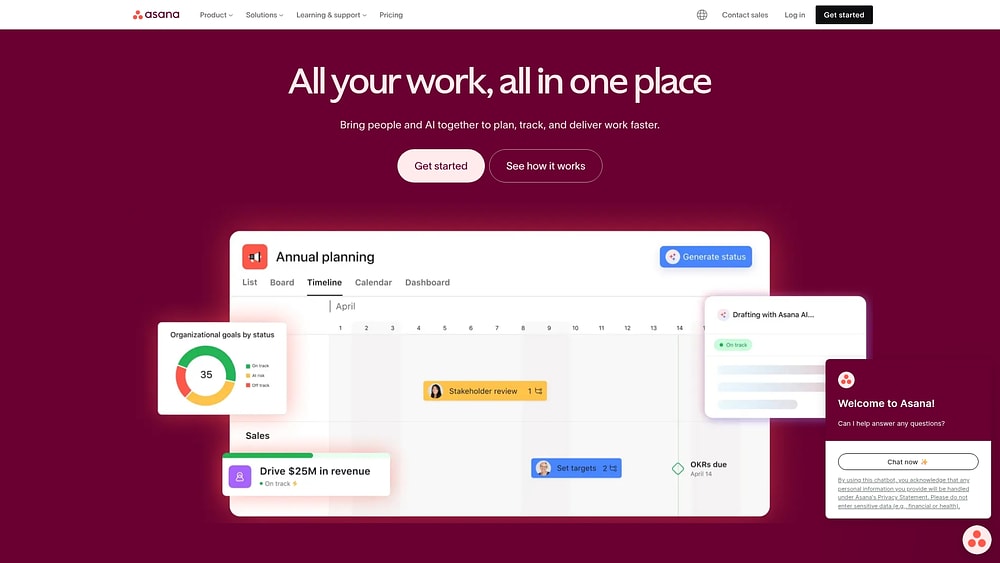
Asana connects the dots between daily grind and high-level strategy using its Work Graph architecture. It serves cross-departmental teams that require robust project management alongside integrated time tracking. With features designed for scale, it supports everything from small groups to Fortune 100 enterprises.
Example:
Teams needing comprehensive project management with goal alignment and native time tracking.
Key features:
- Diverse views: List, Board, and Timeline options with dependencies for flexible project visualization.
- Work Graph model: allows tasks to live in multiple projects simultaneously for cross-functional collaboration.
- AI Studio: provides workflow automation and insights to streamline repetitive processes.
Pricing:
- Personal: free (up to two users).
- Starter: $10.99/user/month (annual).
- Advanced: $24.99/user/month (annual); includes native time tracking.
- Enterprise: custom pricing.
Considerations:
- Advanced security requirements: SAML and enterprise-grade features require higher-tier plans.
- Mobile limitations: timeline editing on mobile is limited compared to desktop functionality.
11. Sunsama
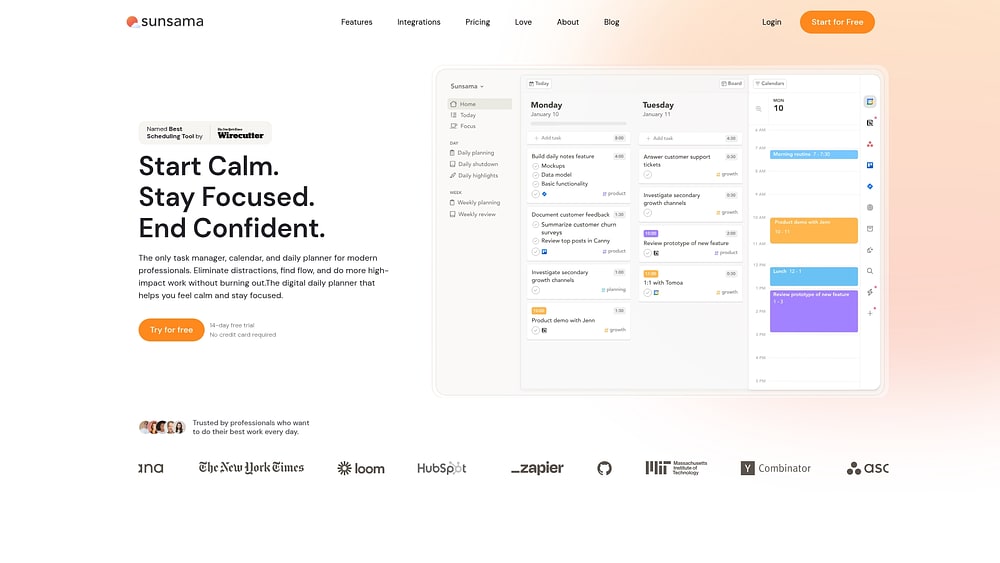
Sunsama takes a mindful approach to productivity, emphasizing intentional planning over speed. It guides users through daily rituals of timeboxing and reflection, helping professionals maintain work-life balance. The platform is less about managing complex project hierarchies and more about ensuring today’s work is realistic and achievable.
Example:
Professionals seeking structured daily planning and better work-life balance through deliberate time allocation.
Key features:
- Guided planning: step-by-step rituals for scheduling and review.
- Time boxing: integrates with calendars to visualize planned vs. actual time.
- Reflection: end-of-day reviews to foster continuous improvement.
Pricing:
- Individual/Team: $16/month (annual).
- Enterprise: custom pricing.
- Free Trial: 14 days.
Considerations:
- Long-range planning limitations: not designed for complex project planning.
- Private calendar: the built-in calendar lacks sharing features.
12. Forest App
Forest App proves that productivity doesn’t have to be boring. By gamifying the act of staying focused, it helps individuals conquer digital distractions. Users grow virtual trees by resisting their phones, creating a sense of reward and accountability that has resonated with over 10 million users worldwide.

Example:
Individuals wanting to reduce smartphone distractions through gamified focus sessions.
Key features:
- Gamified focus sessions: virtual tree planting tied to focus timers that reward sustained attention.
- Customizable controls: allow-lists and deep focus modes to tailor distraction management.
- Social accountability: group challenges and leaderboards to foster collective productivity.
Pricing:
- Free: basic timer and planting features.
- Premium: one-time purchase (price varies by region).
- Add-ons: in-app purchases for extra content.
Considerations:
- Narrow scope: limited to focus timing with no project management capabilities.
- Platform limitations:iOS restrictions reduce the effectiveness of app blocking features.
13. RescueTime
RescueTime operates in the background, providing a reality check on digital habits. It combines passive monitoring with active distraction blocking, making it a powerful ally for knowledge workers who need accurate accounting of their day without manual input. With billions of hours logged, it offers data-driven insights into where time actually goes.

Example:
Professionals seeking automated insights into digital usage and proactive focus management.
Key features:
- Focus Zones: detects deep work windows and blocks distractions automatically.
- Auto-Timesheets: AI converts activity logs into project-ready reports without manual input.
- Productivity Analytics: categorizes apps and sites to reveal usage patterns and productivity trends.
Pricing:
- Solo: $7/month (annual).
- Solo+: $12/month (annual); adds timesheets.
- Team: $10/user/month (annual).
- Lite: free (limited).
Considerations:
- Browser-based blocking: less robust than OS-level blocking capabilities.
- iOS tracking limitations: restricted due to Apple’s privacy policies.
14. Google Calendar
Google Calendar remains the backbone of scheduling for millions of organizations. Its deep integration with Google Workspace makes it the default choice for teams prioritizing seamless coordination and security. While simple on the surface, its ubiquity and reliability create a frictionless environment for internal and external collaboration.

Example:
Teams embedded in Google Workspace needing reliable scheduling and coordination without additional software overhead.
Key features:
- Workspace integration: seamlessly connects with Gmail, Meet, and Drive for unified collaboration.
- Shared calendars: enables team visibility and resource booking across departments.
- Smart scheduling: suggests meeting times based on availability and automatically adds video conferencing links.
Pricing:
- Personal: free with Google account.
- Business Starter: $6/user/month (annual); includes custom email and 30GB storage.
- Business Standard: $12/user/month (annual); adds enhanced security and 2TB storage.
- Business Plus: $18/user/month (annual); includes advanced security and compliance features.
- Enterprise: custom pricing with enhanced controls.
Considerations:
- No native time tracking: requires third-party integrations for detailed time logging and analysis.
- Limited project management: focuses on scheduling rather than task dependencies or workflow automation.
How does AI move your team beyond time tracking?
Artificial intelligence is turning time management from a reactive chore into a proactive strategy. Rather than simply logging what happened yesterday, AI-driven systems learn from your team’s behavior to optimize tomorrow’s schedule. Imagine a platform that identifies bottlenecks before they materialize and adjusts workflows to maintain momentum.
This shift reduces administrative drag while deepening your understanding of operations. AI manages the logistics (scheduling, prioritization, and resource planning) across complex portfolios. Consequently, your team gains the freedom to focus on high-impact execution rather than manual coordination.
Orchestrate work with intelligent automation
Smart automation organizes work in ways a simple to-do list never could. By analyzing deadlines, dependencies, and availability, AI determines the most effective sequence for execution. It views the entire landscape, understanding how individual tasks influence broader goals.
Adaptability is key. When delays occur, the system instantly recalibrates dependent timelines, keeping schedules grounded in reality. It can even recommend the ideal team member for a task based on their specific skills and current bandwidth.
Plan ahead with predictive resource allocation
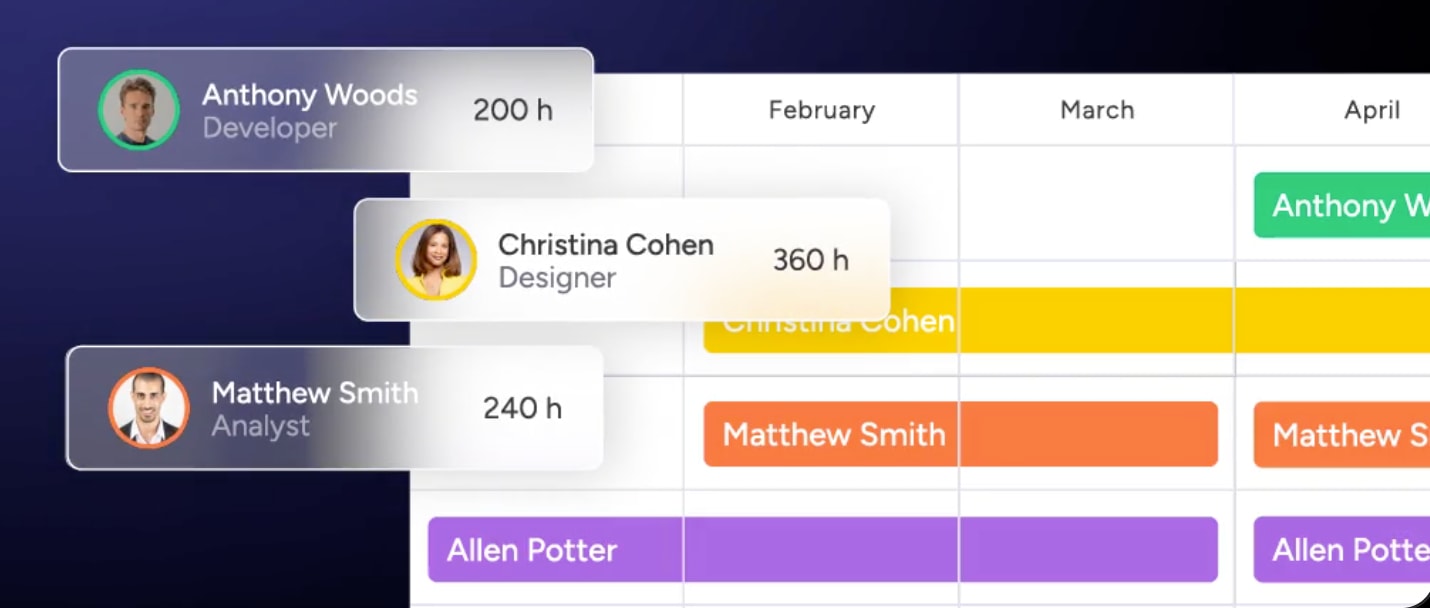
Accurate project estimation doesn’t have to be a guessing game. AI leverages historical data to predict time requirements and assign resources with precision. It scans capacity and upcoming workloads to flag potential gaps before they evolve into crises.
Within platforms like monday.com, for instance, AI automates categorization and generates insights without requiring technical expertise. This elevates the team from basic automation to proactive orchestration, where the software anticipates needs and proposes the smartest path forward.
Turn automated insights into action
Data is useless without direction. AI converts raw time logs into a roadmap for improvement, spotting productivity trends and pinpointing activities that drain resources. These are the subtle inefficiencies that manual analysis often misses.
Reports generated by AI offer more than just a summary of hours; they provide strategic assessments of project health and team performance. The value lies in receiving specific, actionable guidance that improves how work gets done.
Choosing time management apps for different work styles
Selecting a platform isn’t about features in a vacuum; it’s about alignment with your team’s reality. A tool designed for personal focus won’t support an enterprise needing cross-departmental workflows. Success comes from choosing a solution that mirrors your operational patterns rather than forcing you into a rigid structure.
Finding the right fit starts with identifying your primary objective. Are you managing complex portfolios, protecting deep work, or scaling operations? Clarifying your use case ensures you invest in a tool that grows with your ambition.
For teams managing complex projects

Multi-faceted projects require more than a stopwatch; they demand a connection between time invested and strategic outcomes. You need a high-level view of progress that doesn’t sacrifice granular detail. Look for capabilities that handle dynamic workloads:
- Project hierarchy: organize tracking across programs and sub-items to visualize connections.
- Dependency management: see how delays ripple through timelines to make proactive adjustments.
- Resource allocation: balance workloads by viewing who is working on what across the entire portfolio.
Teams using solutions like monday.com gain a unified perspective. The platform empowers leaders to manage dependencies and resources, providing the confidence to steer large-scale initiatives from inception to delivery.
For individuals maximizing deep work
For the individual contributor, the priority is protecting flow. The aim is to establish a rhythm that fosters concentration without adding administrative overhead. The ideal tool should facilitate focus, not distraction. Key features include:
- Time blocking: reserve dedicated sessions in your calendar that are immune to external bookings.
- Focus modes: silence notifications to maintain attention on critical workflows.
- Personal analytics: review time expenditure to uncover opportunities for smarter working habits.
For organizations scaling operations
Growth demands scalability. As an organization expands, it requires centralized governance, robust security, and seamless integration with existing ecosystems. The goal is to establish a consistent operational standard. A scalable platform delivers:
- Centralized administration: control access, permissions, and governance from a single hub.
- Compliance and security: protect data with audit trails and enterprise-grade security standards.
- Deep integrations: link work management with HR, finance, and BI systems to create a single source of truth.
Why does monday.com lead the time management evolution?
Is your time data trapped in a silo, divorced from business impact? For many, tracking is a compliance task that generates ignored reports. The objective is to elevate time from a metric to a strategic asset that guides critical decisions.
This requires a fundamental pivot: connecting effort directly to outcomes. Time management shouldn’t be a side process; it must be woven into the fabric of planning, execution, and collaboration. Integrated in this way, time becomes a lever for growth.
This shift is facilitated by monday.com. By embedding time tracking within the Work OS teams already use for project planning and collaboration, the platform eliminates context switching and ties every minute to a tangible goal. Leaders gain a direct line of sight from investment to result, enabling data-driven planning. This integration turns an administrative burden into a competitive advantage.
Connect time directly to your strategy
True intelligence isn’t about counting hours; it’s about making them count. Integrating time management into your execution platform unlocks strategic alignment that standalone tools cannot match.
With monday.com, leaders can visualize exactly how resources are deployed across the portfolio. This holistic perspective answers the critical question: are teams focusing on the right priorities?
- Portfolio-level visibility: aggregate data to see resource distribution across strategic initiatives.
- Strategic alignment: link time spent to OKRs, ensuring daily work advances the organization’s mission.
- Resource optimization: use real-time data to plan capacity and resolve allocation conflicts before they cause delays.
Automate time intelligence with AI
Imagine deriving deep insights without hours of manual analysis. AI blocks in monday.com integrate intelligence directly into workflows. These features automate categorization, summarize updates, and extract data, turning raw inputs into actionable strategy.
This democratizes analysis, allowing every team to optimize its performance. You can sort entries, generate productivity reports, or pull data from documents without writing code. It’s about minimizing administration to maximize execution.
Build custom time workflows that grow with you
Your business is unique, and your software should reflect that. A flexible, no-code environment in monday.com lets you design processes that fit your specific needs. This adaptability ensures the platform scales from a single team to a global enterprise.
Construct the exact workflows you require with custom boards and automation recipes. Create reminders, route approvals, and integrate with finance or HR tools. The platform molds to your methodology, supporting your growth rather than constraining it.
| Feature | monday work management | Traditional time tracking apps | Project management platforms |
|---|---|---|---|
| Integration approach | Natively integrated into the Work OS, connecting time to projects, portfolios, and strategy | Standalone platform focused on logging hours; requires separate integrations | Time tracking as an add-on feature with limited connection to broader work orchestration |
| AI capabilities | AI blocks for automated categorization, insight generation, and optimization accessible to all users | Limited or no AI features, relying on manual categorization and basic reporting | Basic task automation with little to no time intelligence |
| Scalability | Enterprise-ready with portfolio management, cross-departmental visibility, and robust governance | Designed for individuals or small teams with limited portfolio capabilities | Scales at the project level without comprehensive enterprise features |
| Customization | No-code workflow builder for creating tailored time management processes without technical expertise | Fixed time tracking structure with minimal customization options | Limited customization focused on project templates rather than core workflows |
| Strategic alignment | Directly connects time investment to business goals, OKRs, and portfolio-level strategy | Time data is isolated from strategic planning and business objectives | Project-focused with a weak connection to high-level organizational goals |

“monday.com has been a life-changer. It gives us transparency, accountability, and a centralized place to manage projects across the globe".
Kendra Seier | Project Manager
“monday.com is the link that holds our business together — connecting our support office and stores with the visibility to move fast, stay consistent, and understand the impact on revenue.”
Duncan McHugh | Chief Operations OfficerTurn time into your competitive advantage
Effective time management has evolved beyond clocking in; it is now about gaining the visibility to steer the organization toward its goals. By adopting a platform that links data to execution, leaders can abandon guesswork in favor of real-time operational intelligence.
Whether the goal is optimizing resources, automating admin work with AI, or gaining better visibility into portfolio health, the right solution aligns effort with outcomes. This alignment reduces burnout, enhances predictability, and ensures every hour contributes to the bigger picture.
Prioritize a system that scales with your complexity and integrates into your existing workflows. Taking control of how your organization invests its time is the first step toward building a more efficient, transparent, and high-performing business.
Frequently asked questions
Which time management app works best for distributed teams?
The best time management apps for distributed teams offer real-time synchronization, mobile access, and features that support asynchronous collaboration. They provide a unified view of work across different locations and time zones.
Can time management apps integrate with existing project management platforms?
Yes, most time management apps integrate with project management platforms using native connections and APIs. This ensures time data flows seamlessly across your organization's existing systems.
What's the typical ROI of implementing time management apps?
The typical ROI from a time management app comes from improved project estimation, better resource utilization, and reduced administrative overhead. Specific returns depend on your organization's size, complexity, and platform integration.
How do AI-powered time management apps ensure data security?
AI-powered time management apps ensure data security using enterprise-grade encryption, role-based access controls, and compliance with standards like SOC 2 and GDPR. These measures protect data privacy while enabling intelligent features.
Which free time management app options are available for small teams?
Free time management apps for small teams often include options like Clockify and Toggl Track for core time tracking and scheduling. Paid plans are typically required for advanced reporting and automation.
Do time management apps support integration with existing business workflows?
Yes, time management apps support business workflow integration via APIs and native connections. This connects time tracking with systems for invoicing, payroll, and project management to prevent data silos.

 Get started