


Some teams hit the ground running after planning meetings, only to watch collaboration unravel just weeks later. Decisions take forever, and progress slows even though everyone is working hard. That’s because effective teamwork isn’t just about shared goals; it’s about practiced ways of working together that hold up when pressure spikes.
Good collaboration isn’t accidental. Meticulously chosen team-building activities give people ways to practice communication, build trust, and create shared habits that make daily work smoother.
Below, this article explores practical activities that fit into busy schedules, work across locations, and strengthen how teams connect, solve problems, and keep projects moving forward. Whether in the same room or spread across time zones, these ideas help teams become more coordinated, confident, and resilient.
Key takeaways
- Structured activities strengthen collaboration: Purposeful team building exercises improve communication, trust, and problem-solving skills, helping teams perform more effectively under pressure.
- Quick, consistent engagement beats occasional events: Short daily or weekly activities, such as check-ins or mini problem-solving sessions, build stronger connections than infrequent, lengthy gatherings.
- Inclusive design enhances participation: Activities that accommodate different personality types, work styles, and locations ensure all team members can contribute meaningfully, boosting overall cohesion.
- Measurement drives impact: Tracking collaboration metrics like project cycle time, conflict resolution speed, and employee retention allows organizations to connect team-building initiatives directly to business outcomes.
- Integration with monday work management supports scaling: Embedding team building into workflows, using dashboards to monitor participation and progress, helps standardize successful exercises and maintain consistent team engagement across departments.
What are team-building activities?
Team-building activities are structured exercises that help teams communicate better, collaborate effectively, and build trust. Unlike casual social events, these activities are designed to create measurable improvements in how teams work together, solve problems, and achieve goals. They focus on lasting impact, not just temporary morale boosts.
While a pizza party might make everyone happy for a day, a well-crafted problem-solving exercise strengthens resilience. It equips teams to handle unexpected challenges, ensuring progress even under pressure. One creates memories, the other drives real business results.
How does team building work in modern workplaces?
Team building has moved far beyond trust falls and icebreakers. Distributed teams, asynchronous communication, and cross-functional projects demand activities that strengthen collaboration rather than just interpersonal connections.
With teams spread across time zones, interaction needs intentional design. The focus is on bridging digital platforms with human connection so hybrid teams can remain cohesive while tackling complex projects and shifting priorities.
With teams spread across time zones, interaction needs intentional design.
5 key benefits of corporate team building
Investing in structured team-building activities delivers benefits that go beyond employee satisfaction. It directly impacts how teams perform and how businesses succeed:
- Accelerated decision velocity: Teams with high psychological safety spend less time second-guessing and more time executing, reducing the cycle time from idea to action.
- Reduced operational silos: Cross-functional activities break down barriers between departments, so information flows freely instead of getting stuck at departmental borders.
- Enhanced project resilience: Teams that practice problem-solving together adapt faster to scope changes and keep moving.
- Improved employee retention: Professionals stay where they feel connected to their peers and valued for what they bring.
- Faster conflict resolution: Shared communication norms help teams address disagreements constructively before they become blockers.
5 categories of team-building activities
Not all team-building activities serve the same purpose. Some are designed to build energy quickly, while others strengthen communication habits or improve how teams approach complex problems. Grouping activities by category makes it easier to select the right approach based on what your team needs most right now.
The table below highlights five common categories, along with the primary focus of each and when they are most effective. Using a mix of these approaches helps teams build collaboration skills consistently, rather than relying on one-off activities that lose impact over time.
| Category | Primary focus | Best use case |
|---|---|---|
| Quick activities | Momentum and energy | Daily stand-ups, transition times, busy periods |
| Communication | Feedback and alignment | Teams with misalignment or interpersonal friction |
| Problem-solving | Innovation and logic | Project kick-offs, strategy sessions, complex challenges |
| Virtual/remote | Connection and inclusion | Distributed teams bridging digital distance |
| Cross-functional | Alignment and empathy | Inter-departmental initiatives requiring diverse perspectives |
Why structured team building improves collaboration?
Structured exercises break down barriers that slow teams and limit innovation. By stepping outside immediate project work, colleagues learn to trust and understand each other. These activities act as a safe environment to experiment with communication styles, uncover strengths, and resolve conflicts without real-world stakes.
Building trust and psychological safety
Psychological safety, the belief that speaking up won’t lead to punishment, is one of the strongest predictors of team performance. Teams that feel safe share ideas early, admit mistakes, and explore innovative solutions without fear.
Activities that encourage openness and vulnerability allow people to contribute freely. This environment promotes continuous improvement because team members focus on solving problems rather than protecting themselves.
How does team building strengthen communication?
Communication breakdowns rarely come from a lack of platforms or software. They happen because teams don’t understand how different members process and share information. Team building activities reveal the diverse communication styles in a group and help teams spot who processes information verbally versus analytically.
These exercises help teams establish a common language and agreed-upon protocols for feedback. This makes it easier to interpret intent in daily messages and prevents misinterpretation and friction that derail projects.
Making team building engaging and inclusive
Effective team building activities balance engagement with accessibility so every team member can participate meaningfully, regardless of location, work style, or comfort level. The most successful activities have a few key traits that encourage universal participation and genuine connection.
Activities should offer multiple ways to participate so introverts and extroverts can contribute equally. They should work across different time zones and schedules through asynchronous options. Most importantly, they should connect to real work challenges instead of feeling like arbitrary exercises.
Inclusive design means considering physical limitations, language differences, and cultural sensitivities. The goal is to create experiences where everyone feels valued and can contribute what they bring.
15 quick team-building activities for busy teams
High-impact teams don’t always have the luxury of multi-day off-sites. These activities take 15 minutes or less and fit easily into existing meetings or workflows. The key to their effectiveness isn’t duration but consistency; regular, brief touchpoints build stronger connections than occasional lengthy events.
Energy and momentum builders
- Daily stand-up plus (10 min): Add a non-work “traffic light” check-in where team members share their energy levels using red, yellow, or green indicators before diving into work updates. This builds immediate empathy and context for work capacity.
- One-word check-ins (5 min): Everyone describes their current state regarding a project using a single word. This provides an instant pulse check on team alignment and stress levels.
- Team energy pulse checks (5 min): Team members rate their bandwidth from 1-10, allowing managers to redistribute work proactively.
Recognition and appreciation activities
- Two-minute appreciation round (2 min): One person becomes the focus while team members spend two minutes sharing specific appreciation for their recent work. This reinforces positive behavior and recognition.
- Quick win celebrations (10 min): Team members share one small professional victory from the last 24 hours. This shifts focus from remaining work to progress made.
- Virtual recognition wall (ongoing): Create a shared digital space where team members post kudos notes throughout the week. This creates a permanent record of positive feedback.
Problem-solving and skill sharing
- Problem swap session (15 min): Team members write down current blockers, swap papers with peers, and offer fresh perspectives or solutions. This leverages collective intelligence for immediate challenges.
- 60-second skill shares (10 min): One person teaches a keyboard shortcut, platform tip, or productivity hack in under a minute. This upskills the team efficiently while giving individuals spotlight time.
- Flash brainstorm challenge (10 min): Present a random object and have the team list 20 alternative uses in five minutes. This warms up divergent thinking before strategy sessions.
Connection and rapport building
- Speed networking rounds (10 min): Break into pairs for two-minute conversations on non-work topics, rotating partners each round. This rapidly builds rapport across the entire group.
- Virtual coffee connections (15 min): Randomly pair team members for 15-minute video calls with no agenda beyond catching up. This replicates water cooler moments for remote teams.
- Collaborative playlist building (ongoing): Team members add songs to shared playlists for different moods or occasions. This creates a shared auditory environment, even remotely.
Engagement and feedback activities
- Rapid fire questions (5 min): A moderator asks quick binary questions like “Coffee or tea?” and the team answers simultaneously. This highlights similarities and differences in a fun, low-pressure way.
- Team trivia lightning (10 min): Five questions about company history, industry facts, or team preferences engage the brain differently than work activities.
- Speed feedback sessions (15 min): Pairs exchange one thing to keep doing and one thing to adjust regarding recent projects. This reduces fear around performance conversations.
10 communication activities that build stronger teams
Communication forms the foundation of effective collaboration. These activities go beyond simple conversation and help teams practice active listening, feedback delivery, and reading non-verbal cues. Organizations using structured communication exercises report improved project alignment and reduced misunderstandings.
The following activities help teams develop shared communication protocols and understand individual preferences:
Foundation building exercises
- Active listening workshops (45 min): Teams practice listening to understand rather than respond, with pairs mirroring back what they heard before adding their thoughts.
- Team charter development (60 min): Groups collectively draft documents defining their values, communication norms, and decision-making protocols.
- Communication style assessments (30 min): Using frameworks like DISC or Myers-Briggs, team members identify default styles and map approaches for working together.
Interactive communication practice
- Collaborative story building (20 min): One person starts a story with a sentence, and others add on, enforcing adaptability and accepting contributions.
- Feedback circle practice (40 min): Structured forums where each member receives balanced, positive, and constructive feedback.
- Conflict resolution role play (45 min): Teams act out common friction points and practice specific resolution frameworks.
Alignment and transparency activities
- Transparent goal setting (45 min): Team members publicly share quarterly goals and identify where they need support.
- Cross-team updates (30 min): Representatives from different departments present current focus areas and challenges.
- Team language building (30 min): Groups define glossaries of internal terms and acronyms, ensuring everyone speaks the same operational language.
- Virtual water cooler sessions (30 min): Open video channels for drop-in conversation, recreating serendipitous information exchange.
8 problem-solving activities that drive innovation
These activities help teams approach challenges in a more structured and thoughtful way. At the same time, they encourage different perspectives and make decision-making more collaborative. As a result, teams don’t just solve problems faster; they also build stronger habits that improve execution, reduce risks, and support innovation over time.
Problem-solving activities work best when they mirror real workplace challenges:
1. Strategic thinking exercises
- Business challenge competitions (90 min): Teams receive real company problems and pitch solutions, developing strategic thinking under pressure.
- Scenario planning exercises (60 min): Teams discuss “what if” scenarios to build resilience and strategic foresight.
- Decision-making simulations (45 min): Groups make consensus decisions with limited information, highlighting risk tolerance and negotiation dynamics.
2. Process improvement activities
- Process improvement sprints (60 min): Groups map inefficient workflows and collectively redesign them for operational efficiency.
- Root cause analysis games (45 min): Teams receive failure scenarios and use techniques like “five Whys” to find sources.
- Design thinking sessions (two hours): Structured workshops moving from empathy to ideation to prototyping teach user-centric problem-solving.
3. Creative collaboration exercises
- Virtual escape rooms (60 min): Teams solve logic puzzles requiring role assignment, information sharing, and collective deduction.
- Innovation hackathons (half-day): Dedicated time for building or designing something new outside the roadmap fosters creativity.
7 virtual team-building activities for remote teams
Remote teams don’t have the advantage of spontaneous interactions. Because of this, connections and collaboration need to be created intentionally. These activities use digital formats to bring people together in a way that feels natural and engaging.
Virtual team building addresses the unique challenges of distributed work:
1. Digital engagement activities
- Online team gaming sessions: Browser-based multiplayer games build camaraderie through friendly competition with low technical barriers.
- Digital scavenger hunts: Teams race to find items in their homes or specific information online, encouraging resourcefulness.
- Remote workshop facilitation: Digital whiteboards for collaborative brainstorming teach effective visual collaboration.
2. Social connection builders
- Virtual team lunches: Company-sponsored meal delivery where teams eat together on video, focusing on social bonding.
- Global culture exchanges: Team members present on local culture, food, or holidays, building inclusivity in global organizations.
3. Inclusive participation formats
- Hybrid meeting activities: Exercises designed to include both in-room and remote participants equally.
- Asynchronous team challenges: Fitness or reading challenges tracked over months allow participation across time zones.
How to make virtual meetings more engaging?
Virtual meetings can easily feel repetitive. However, small changes can make a noticeable difference in how people participate and stay focused.
Start by adding short, interactive moments like quick icebreakers or “show your view” prompts. Then, use polls to gather opinions in real time and keep everyone involved. Rotating meeting leadership also brings fresh energy and different perspectives.
On top of that, introducing small surprises, like a guest speaker or a quick skill-sharing session, can make meetings feel less routine and more collaborative.
Try monday work management5 cross-functional team-building exercises
When teams work in silos, progress slows, and opportunities get missed. Cross-functional activities help bridge these gaps by encouraging collaboration across departments.
Cross-functional exercises require careful design to address departmental differences:
- Department exchange programs: Employees shadow colleagues in different departments for a day, creating deep empathy for other roles’ constraints.
- Integrated project simulations: Mixed teams from sales, product, and customer success work on mock product launches, highlighting interdependencies.
- Stakeholder journey mapping: Teams map project lifecycles from different stakeholder perspectives, revealing where handoffs fail.
- Cross-team innovation labs: Mixed groups tackle company-wide strategic issues, leveraging cognitive diversity.
- Shared OKR workshops: Departments review goals together to identify conflicts and synergies, ensuring aligned success.
Team building activities by group size
Team size quietly shapes how people interact, participate, and stay engaged. What works for a small, close-knit group won’t always translate to a larger team with more moving parts. That’s why choosing the right format matters just as much as the activity itself.
Below, we break down how team-building approaches shift with size, along with what to focus on in each case to keep collaboration natural and effective.
1. Small teams (under 10 people)
Small groups benefit from high intimacy and easier coordination, allowing for deeper vulnerability and complex discussions. The best activities for this size include personal user manuals, deep-dive retrospectives, and escape rooms where every member plays a critical role. Focus on ensuring dominant personalities don’t overshadow quieter members.
2. Medium teams (10-30 people)
Medium teams require a balance between intimacy and structure. Activities must be scalable while maintaining personal connection. World Café discussions, speed networking, and hackathons work well here. Break the main group into sub-groups of 4-5 for activities, then reconvene to share insights.
3. Large groups (over 30 people)
Large groups face challenges in maintaining attention and logistical control. Activities must be highly structured and scalable. Town hall polls, scavenger hunts, and company trivia prove effective. Focus shifts from deep interpersonal bonding to creating shared culture and energy. Technology becomes essential for managing interactions and aggregating responses efficiently.
AI-enabled team building activities
Artificial intelligence offers new avenues for collaboration, providing personalized insights and facilitating complex simulations. These activities prepare teams for the AI-augmented workplace while building collaboration skills.
Modern AI capabilities enable sophisticated team-building experiences:
- AI collaboration training: Teams learn to use AI as a teammate, developing prompt engineering and AI-literacy skills together.
- Human-AI workflow design: Groups map workflows to identify where AI assists and where human judgment remains essential.
- Prompt engineering workshops: Competitive exercises to generate the best AI output for specific activities democratize technical skills.
- AI ethics discussions: Structured debates on ethical AI use in your industry align teams on moral guidelines and risk compliance.
- Future of work simulations: AI-generated scenarios challenge teams to adapt to rapid market changes, testing strategic agility.
How to measure team-building success?
Team building becomes valuable when it leads to real improvements. That’s why measuring outcomes is just as important as running the activities themselves.
Instead of focusing only on participation, tracking collaboration outcomes gives a clearer picture of impact.
Key metrics to monitor
Tracking the right data points helps organizations understand the correlation between team dynamics and performance. Key metrics provide visibility into collaboration health:
- Project cycle time: Faster execution often indicates improved trust and decision speed.
- Cross-functional handoff time: Reductions signal stronger inter-departmental relationships.
- Employee Net Promoter Score: Higher scores correlate with strong team cohesion.
- Meeting effectiveness ratings: Collaborative teams have more productive, focused meetings.
- Conflict resolution speed: Time from disagreement to alignment.
- Innovation rate: Number of new ideas generated and implemented.
Pre and post assessments
Establishing baselines proves ROI. Survey teams on trust levels, role clarity, and communication ease before programs begin. Post-activity assessments should repeat these questions to measure shifts in sentiment and behavior, rather than just asking about event satisfaction.
Continuous pulse surveys
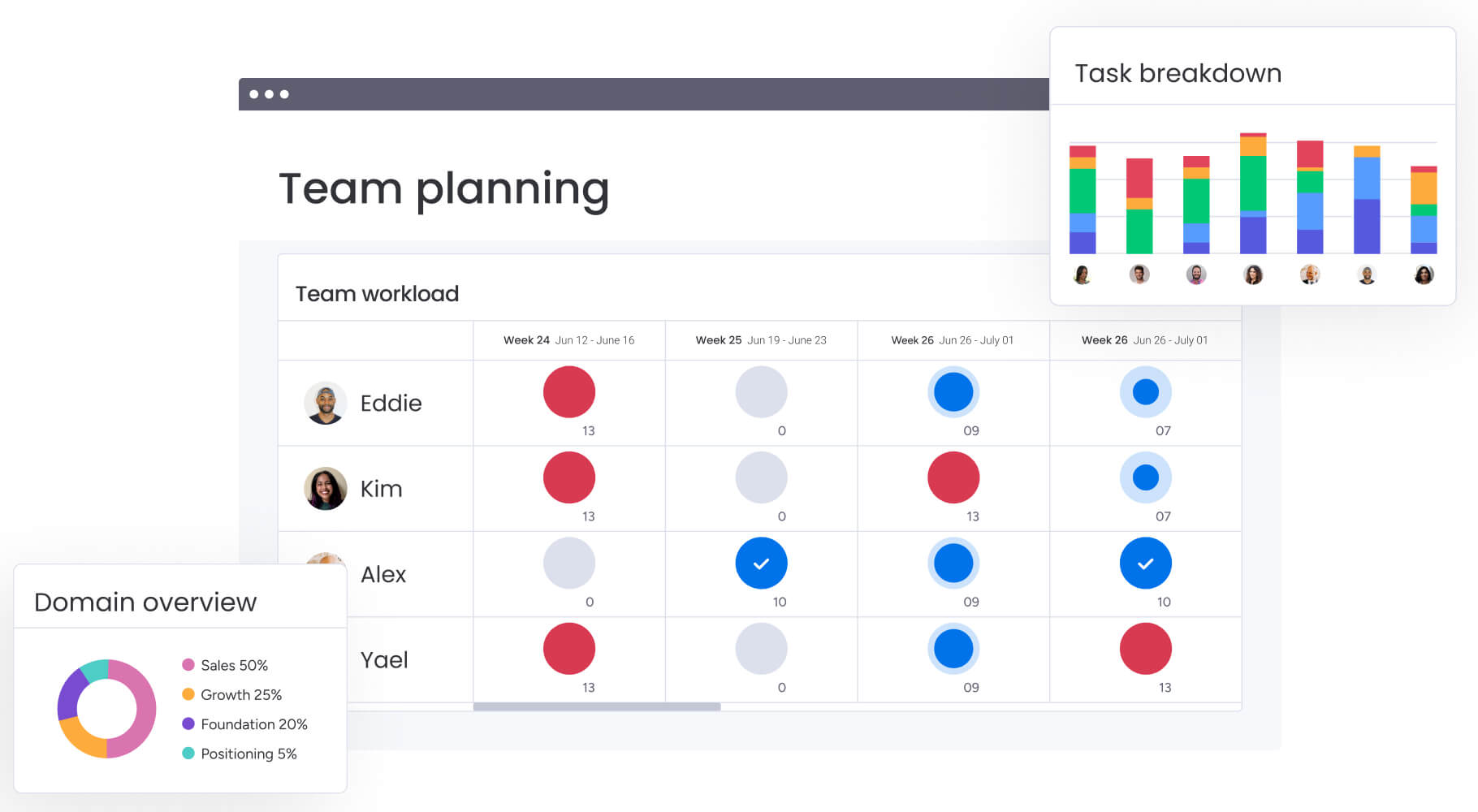
Regular, lightweight measurement captures trends that annual surveys miss. Weekly three-question surveys track team energy, alignment, and connectedness. Digital platforms automate distribution and analysis, providing managers with real-time visibility into team health.
Long-term impact tracking
True transformation takes time. Monitor leading indicators like communication frequency and pulse survey trends alongside lagging indicators like project success rates and retention. Successful team-building strategies show sustained upward trends in collaboration metrics over quarters.
Make team building part of everyday work with monday work management
Team building delivers the greatest impact when it becomes part of everyday execution, not something separate from it. When collaboration habits are embedded directly into workflows, teams build trust, improve communication, and stay aligned without needing constant reset moments.
monday work management helps organizations operationalize team building so it supports real work outcomes, not just team morale.
- Scattered collaboration becomes connected workflows: Conversations, updates, and feedback live in one shared workspace, giving teams consistent visibility and reinforcing shared ways of working.
- Occasional activities become repeatable processes: Teams can standardize retrospectives, check-ins, and feedback loops as structured workflows that scale across departments.
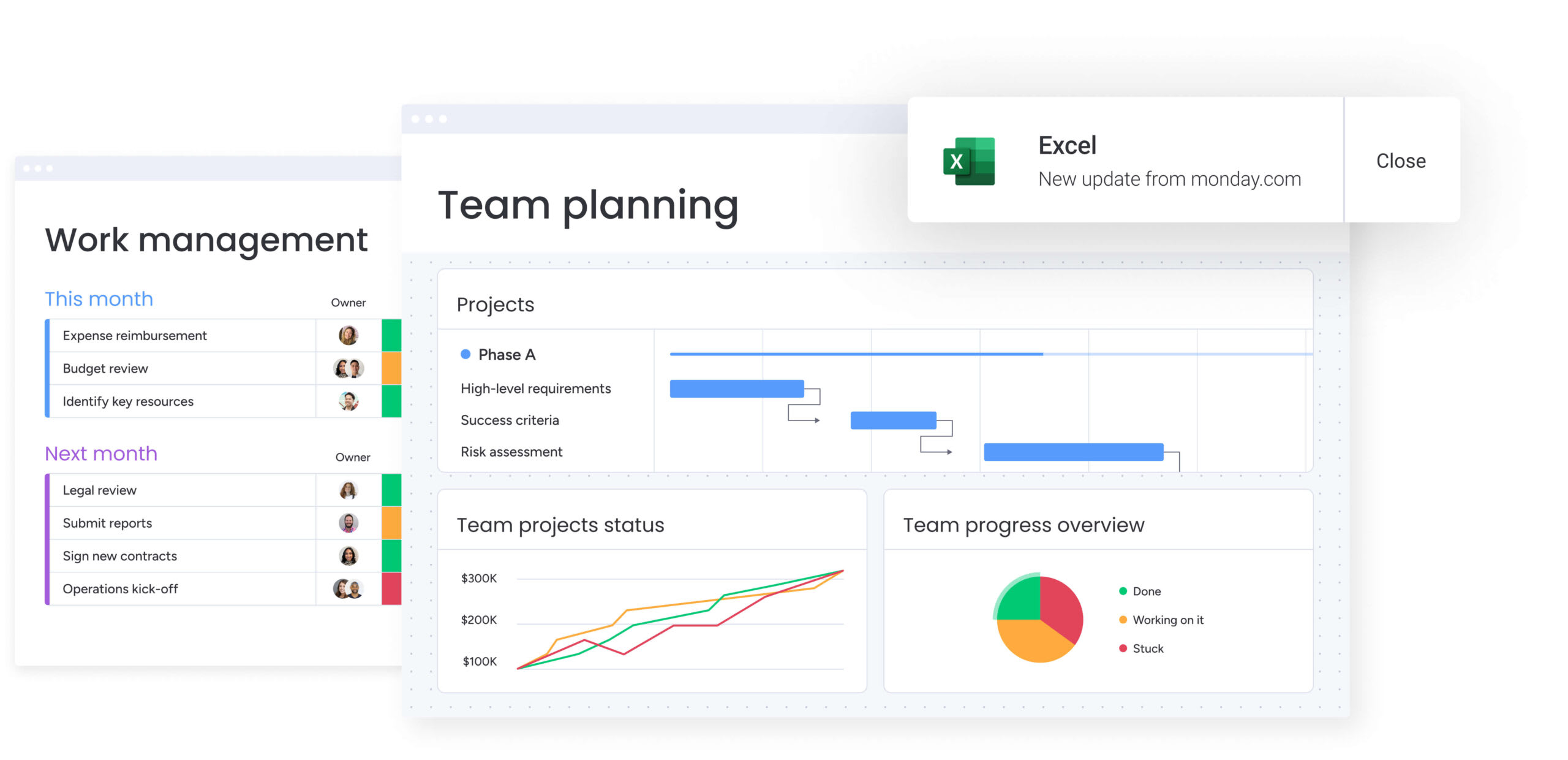
- Limited insight becomes clear collaboration signals: Dashboards surface participation trends, workload balance, and engagement patterns so leaders understand what strengthens alignment.
- Manual coordination becomes automated consistency: Automations maintain recurring touchpoints and reminders, helping teams sustain collaboration habits without extra admin work.
By embedding team-building practices directly into daily workflows, teams build stronger communication patterns over time. The result is more consistent alignment, faster decision-making, and collaboration that improves naturally as work scales.

“monday.com has been a life-changer. It gives us transparency, accountability, and a centralized place to manage projects across the globe".
Kendra Seier | Project Manager
“monday.com is the link that holds our business together — connecting our support office and stores with the visibility to move fast, stay consistent, and understand the impact on revenue.”
Duncan McHugh | Chief Operations OfficerFrequently asked questions
How often should we schedule team-building activities?
The ideal frequency for team-building activities depends on their type. Quick syncs should occur daily or weekly, while deep-dive workshops work best quarterly or semi-annually to maintain momentum without causing fatigue.
What are the best activities for introverted team members?
Activities allowing preparation time, written contributions, or small-group interactions like problem swaps or asynchronous recognition prove most effective for ensuring introverts feel comfortable and included.
Can team building happen during regular work hours?
Team building should occur during paid work hours to signal that the organization values collaboration as a core part of the job, not an extracurricular obligation.
What budget should we allocate for team building?
Organizations typically allocate 1-5% of total payroll for development and culture initiatives, ensuring resources for both low-cost internal activities and professionally facilitated events.
How do we know if our team needs intervention?
Signs requiring intervention include increased conflict, silence during meetings, missed deadlines due to poor handoffs, or the formation of cliques that exclude others.
What activities work in use case hybrid teams?
Digital-first activities where everyone logs in individually level the playing field, ensuring remote employees participate equally in games, workshops, or discussions.

 Get started