



In the past, quality was a final checkpoint before release, a gate that teams had to pass through. But today’s development cycles are too fast for that model. When shipping new code daily or weekly, teams cannot afford a quality bottleneck that slows everyone down. Delivering reliable software at speed requires a new approach, one that builds confidence without creating friction.
This is where effective software quality assurance (SQA) comes in. It’s a proactive system for building quality into products from day one, not just inspecting them at the end. SQA focuses on preventing defects by improving how teams work together. It establishes clear standards and processes so everyone knows what quality looks like and how to achieve it consistently.
This guide walks through the fundamentals of modern SQA. It explores the core components of a strong quality program, proven best practices for agile teams, and how to measure success.
Without further ado, let’s begin.
Key takeaways
- Shift quality left to save time and money: catching bugs during development costs far less than fixing them in production, so build quality checks into every step of your process.
- Focus on prevention, not just detection: software quality assurance prevents defects by improving how teams work together, while quality control only finds problems after they happen.
- Unify your entire quality process: thanks to platforms like monday dev, custom workflows, real-time dashboards, and unified workspaces let dev, QA, and business teams collaborate seamlessly without switching between tools.
- Automate repetitive testing but keep humans in the loop: AI and automation handle routine processes like regression testing, but human judgment remains essential for complex scenarios and strategic decisions.
- Track metrics that drive action, not vanity numbers: measure defect rates, cycle time, and customer impact to identify real problems and optimize your quality processes continuously.
What is software quality assurance?
Software quality assurance (SQA) is a systematic approach to ensuring software meets defined quality standards throughout development. It focuses on preventing defects through established processes, standards, and checkpoints rather than just finding bugs at the end.
SQA represents a fundamental shift in approach: building quality into software from the initial stages of development. While quality control identifies problems after they occur, SQA prevents them by establishing robust processes and standards. This distinction mirrors the difference between inspecting finished products and designing a production system that systematically minimizes defects.
What does software quality assurance encompass?
SQA encompasses all activities that ensure software development processes, methods, and work products comply with defined standards. This includes everything from code reviews and testing protocols to documentation standards and team training.
The goal is simple: deliver reliable software that meets user needs while minimizing defects and rework. SQA achieves this by establishing clear quality criteria, implementing systematic reviews, and continuously improving development processes.
Why quality matters in modern software development
Poor software quality directly impacts your bottom line. According to a 2002 report from the U.S. National Institute of Standards and Technology (NIST) titled “The Economic Impacts of Inadequate Infrastructure for Software Testing,” software bugs cost the U.S. economy approximately $59.5 billion annually.
Unfortunately, bugs discovered in production cost exponentially more to fix than those caught during development. A single critical defect can damage customer trust, trigger expensive emergency fixes, and derail your product roadmap.
Quality software drives business success in three key ways:
- Customer retention: users stick with products that work reliably without crashes or data loss.
- Reduced costs: finding bugs early prevents expensive production fixes and support tickets.
- Competitive advantage: consistent quality builds market reputation and makes winning new business easier.
The evolution from traditional to AI-driven SQA
Traditional SQA relied on manual processes, lengthy documentation, and rigid phase gates. Teams spent weeks writing test plans and waiting for formal approvals. This worked when software shipped annually, but can’t keep pace with today’s continuous delivery demands.
Modern SQA embraces automation, continuous testing, and AI-powered insights. A Harvard Business Review study found that organizations using automated testing as part of their SQA process reported a 30% reduction in post-release defects compared to those relying primarily on manual testing.
Instead of testing at the end, teams now integrate quality checks throughout development. Automated tests run with every code commit. AI predicts where bugs are likely to occur. Real-time dashboards show quality metrics instantly.
Modern solutions like monday dev enable this modern approach by providing flexible workflows that adapt to any methodology. Teams can embed quality gates, automate test tracking, and visualize quality metrics without the bureaucracy of traditional SQA.
Understanding SQA vs quality control vs software testing
Before you build a stronger quality strategy, it helps to understand how SQA, quality control, and software testing actually differ. These terms are often used interchangeably, but they play very different roles in how teams prevent issues, detect defects, and validate behavior.
Quality assurance in software development
SQA is proactive and preventive. It establishes the rules before development begins: coding standards, review protocols, testing requirements, and documentation practices. SQA asks: “How can we build software correctly from the start?”
For example, SQA might define that all code requires peer review before merging. This prevents defects by catching issues early when they’re cheap to fix.
Key differences between QA and QC
Quality control focuses on the product itself, not the process. QC specialists verify completed work meets standards through inspections and validation. While SQA prevents defects, QC detects them.
The distinction matters because it shapes how you build your quality strategy. Both SQA and QC aim to improve your final product, but they work at different stages and focus on different things. Here’s how their roles break down in practice:
- SQA: implements automated build pipelines that enforce coding standards.
- QC: performs manual inspections on completed features.
- SQA: defines testing requirements for all new features.
- QC: executes acceptance tests to verify requirements are met.
Where does software testing fit in your quality strategy?
Software testing is a specific QC activity that validates software behavior through execution. Testers run the software under various conditions to find bugs and verify functionality. Testing provides direct evidence that requirements are met.
Testing is just one component of a broader quality strategy. SQA establishes the foundation, QC verifies outputs meet standards, and testing validates the software actually works. monday dev supports all three by allowing teams to document standards, track checkpoints, and manage testing in one unified workspace.
Core components of software quality assurance
Building an effective SQA program requires more than good intentions; it demands concrete systems that teams can follow consistently. The strongest quality programs share four foundational components that work together to prevent defects and maintain standards. These elements create a framework that makes quality measurable, repeatable, and sustainable as your organization grows.
Standards and compliance frameworks
Standards provide objective criteria for evaluating quality. Whether you follow industry standards like ISO 9001 or create internal coding conventions, standards ensure everyone shares the same quality expectations.
Popular frameworks serve different needs:
- ISO 9001: general quality management suitable for any organization.
- CMMI: detailed roadmap for improving software development maturity.
- ISO/IEC 25010: focuses on software product quality characteristics.
- Automotive SPICE: industry-specific standards for automotive software.
Process documentation and workflows
Clear documentation transforms standards into actionable steps. When teams understand the established workflow, quality becomes predictable rather than dependent on individual knowledge.
Key workflows to document include:
- Requirements management: how you capture, track, and update software requirements.
- Change management: how you propose, approve, and implement changes.
- Defect tracking: how you log, prioritize, and resolve bugs.
Review and audit systems
Reviews provide independent verification that standards are being followed. Different review types serve different purposes:
- Code reviews: catch bugs before they propagate through the system.
- Design reviews: ensure architectural decisions align with quality goals.
- Process audits: identify opportunities for process improvement.
Team training and development
Skills alone aren’t enough; teams need ongoing training to stay current. Essential SQA skills include test automation, requirements analysis, risk assessment, and effective communication.
Invest in training that builds both technical capabilities and soft skills. The ability to write automated tests matters, but so does the ability to influence stakeholders and advocate for quality.
How to implement software quality assurance: a 4-step framework
Building an effective SQA program doesn’t happen overnight. It requires a structured approach that balances thoroughness with practicality.
The following four-step framework provides a clear roadmap for establishing quality assurance practices that scale with your team and adapt to your unique development environment.
Step 1: define quality requirements
Quality requirements establish measurable criteria beyond functional specifications. Instead of vague statements like “the system should be fast,” specify “response time must be under 200 milliseconds.”
Involve stakeholders early to align requirements with business objectives. Product managers, customers, and operations teams all have perspectives on quality. Gathering these upfront prevents surprises later.
Step 2: design quality processes
Quality processes integrate checkpoints into each development phase. Visual workflow diagrams help everyone understand when quality activities happen and who’s responsible.
Balance rigor with speed. Overly bureaucratic processes encourage workarounds, while insufficient processes allow issues to slip through. The right balance depends on your context.
Using flexible platforms like monday dev, you can map these workflows visually and create templates to ensure consistency across all projects.
Step 3: execute quality controls
Quality controls include both automated and manual activities. Prioritize automation for repetitive tasks like regression testing. This frees people to focus on exploratory testing and architectural reviews.
Implement controls at multiple stages:
- Unit tests: catch issues in individual components.
- Integration tests: verify components work together.
- End-to-end tests: validate complete user workflows.
Step 4: measure and optimize
Track metrics that drive action, not vanity metrics that look good but don’t change behavior. Essential metrics include defect rates, test coverage, and cycle time.
Use data to identify patterns and optimize processes. If defects cluster in certain components, investigate root causes. If cycle time increases, look for bottlenecks in quality processes.

"monday dev empowered us to optimize our GTM approach, resulting in faster, more dependable deliveries"
Steven Hamrell | Director of Product Management
"monday dev empowers us to manage the entire development process on one platform so we can speed up product delivery and improve customer satisfaction"
Mitchel Hudson | Head of Technology
"We're operating in an open, deep trusting, transparent environment with no silos of information. It's about completely opening access to everyone who needs it."
Alan Schmoll | Executive Vice President, Vistra Platform7 software quality assurance best practices
Understanding SQA principles is one thing, but putting them into practice is another. The following seven best practices represent proven strategies that high-performing teams use to maintain quality without sacrificing speed.
These aren’t theoretical ideals but practical approaches you can implement immediately, regardless of your team size or development methodology.
1. Implement shift-left testing
Moving quality activities earlier catches defects when they’re cheapest to fix. A bug caught during code review takes minutes to address. The same bug in production might require hours of debugging and emergency patches.
Integrate testing into the earliest development stages. Developers should run tests locally before committing code. Automated pipelines should run comprehensive test suites on every commit.
2. Automate regression testing
Manual regression testing quickly becomes impractical as applications grow. Automation allows tests to run frequently without additional cost, providing confidence that changes haven’t broken existing functionality.
High-impact tests to automate first:
- Unit tests: verify individual components.
- API tests: validate service interfaces.
- Smoke tests: check critical functionality.
- User journey tests: ensure key workflows still work.
3. Enable continuous quality monitoring
Real-time monitoring surfaces issues immediately rather than waiting for scheduled reports. Key metrics to track include build status, code coverage, error rates, and performance metrics.
Dashboards provided by platforms like monday dev visualize quality metrics from multiple sources, making it easy to spot trends and respond to problems quickly.
4. Foster cross-team collaboration
When quality is everyone’s responsibility, the entire team works together to maintain high standards. Break down silos through regular cross-functional standups, shared documentation, and integrated communication channels.
5. Use risk-based quality planning
Not all code carries equal risk. A bug in payment processing is more critical than one in an admin feature. Assess features for business criticality and technical complexity, then allocate quality resources accordingly.
6. Track real-time quality metrics
Different metric categories reveal different aspects of quality:
- Process efficiency: cycle time, test automation rate, build success rate.
- Defect tracking: defect density, escaped defects, mean time to detect.
- Customer impact: customer-reported issues, satisfaction scores.
- Release performance: deployment frequency, failure rate, rollback frequency.
7. Conduct regular quality reviews
Scheduled reviews highlight successes and improvement areas. Standard agendas include reviewing metrics, discussing incidents, and identifying process enhancements.
Ask focused questions: What quality issues did we encounter? What patterns emerge in our defects? What one improvement would have the biggest impact?
Implementing SQA in Agile and DevOps
Modern development methodologies like Agile and DevOps demand quality practices that keep pace with rapid iteration cycles. Traditional quality gates that slow down releases don’t work when teams ship multiple times per day. Instead, successful teams embed quality directly into their workflows, making it a natural part of every sprint and deployment rather than a separate phase that creates bottlenecks.
To integrate SQA seamlessly into Agile and DevOps environments:
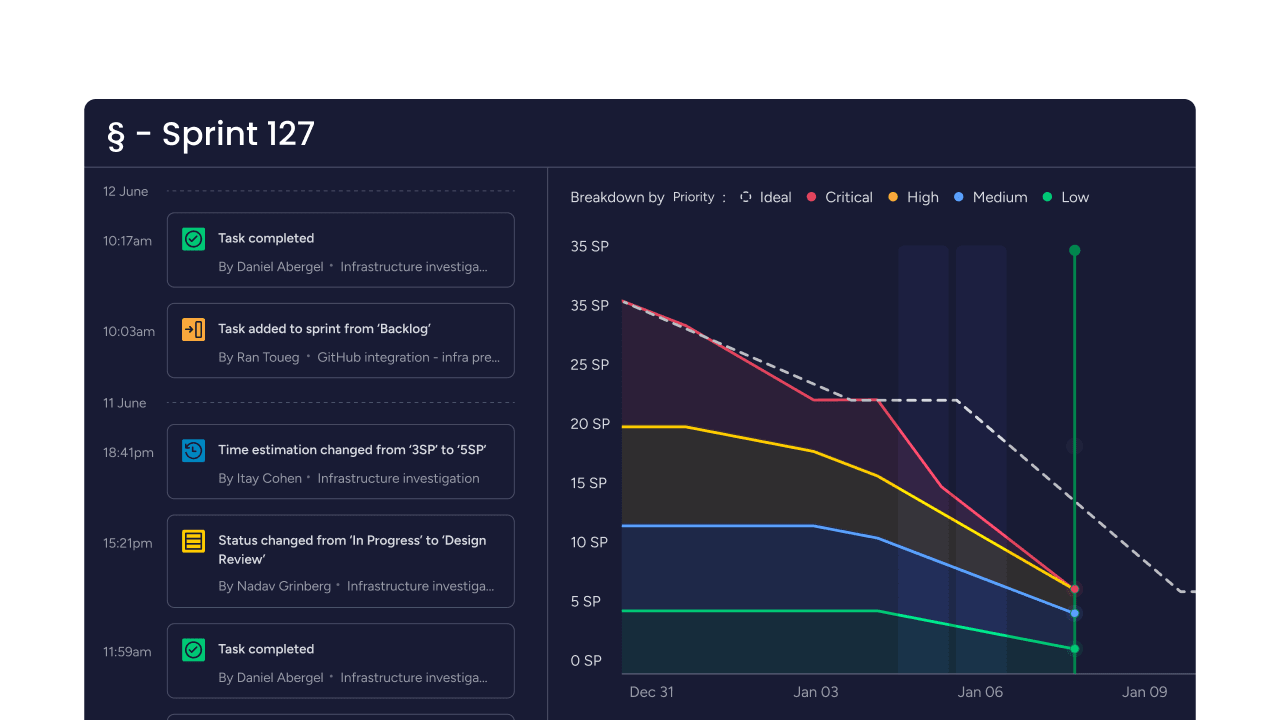
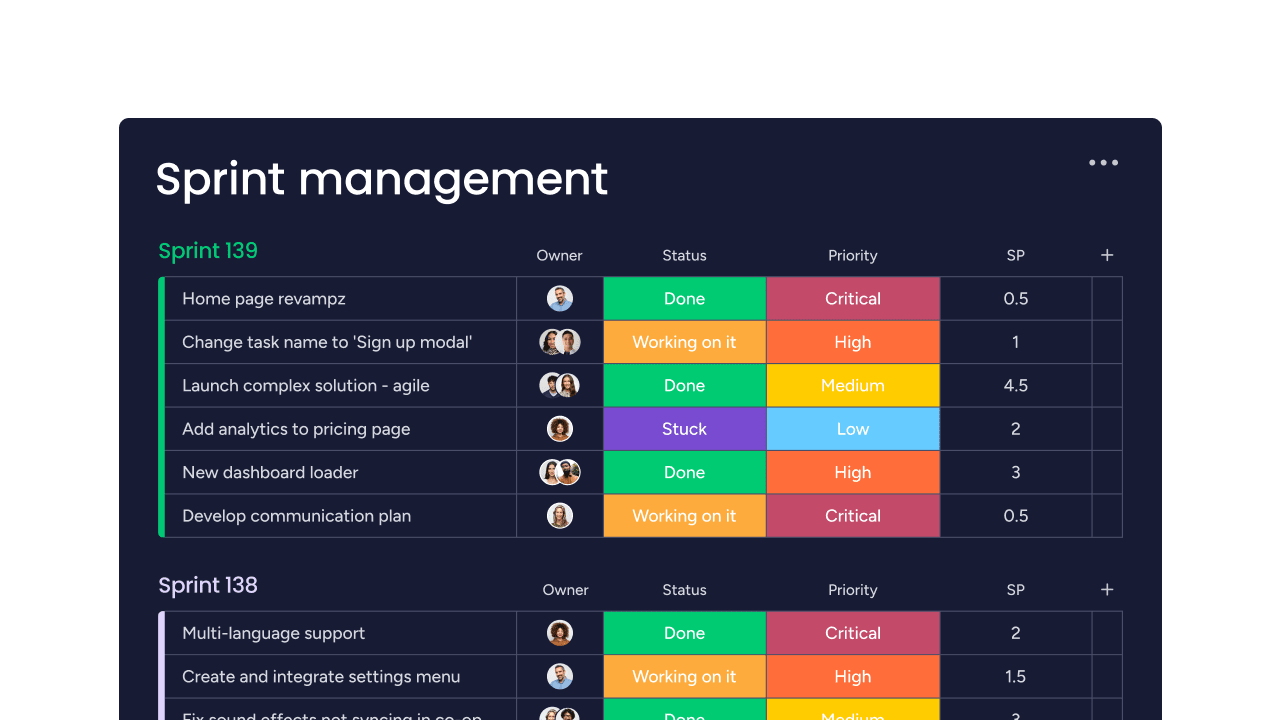
- Quality integration in sprint planning: make quality visible by planning it alongside feature work. Allocate story points to test automation, code reviews, and exploratory testing. Track quality work in shared backlogs and burndown charts. monday dev’s sprint planning capabilities let teams plan all work together, with automation ensuring quality tasks are created automatically when features are added.
- Continuous testing in CI/CD pipelines: automated tests run at multiple pipeline stages with defined pass/fail criteria. Unit tests block bad commits. Integration tests prevent broken builds from reaching staging. End-to-end tests gate production deployments. This layered approach catches issues at the right time without slowing down delivery.
- Managing distributed QA teams: distributed teams need extra coordination effort. Daily virtual standups, centralized documentation, and shared dashboards keep everyone aligned despite physical separation. monday dev’s unified workspace enables seamless collaboration across locations, letting team members see what others are working on and access all quality information in one place.
AI-powered test generation
AI analyzes application behavior to generate test cases automatically. Tools like Testim and mabl create tests that complement manual efforts, particularly for regression testing.
The benefit is speed: AI generates hundreds of tests in the time it takes to write a handful manually. Human review ensures generated tests remain meaningful and maintainable.
Predictive quality analytics
AI identifies patterns in historical data to predict future issues. A 2025 Reuters Technology report highlights that 78% of surveyed enterprises now use AI-driven tools for software testing and quality assurance, with 62% reporting measurable improvements in test coverage and defect identification. By analyzing defect clustering and change frequency, teams can focus testing on high-risk areas.
Testing AI and autonomous systems
AI-driven software requires new testing approaches. Model validation pipelines verify accuracy and check for bias. Adversarial testing deliberately tries to fool AI systems to identify weaknesses.
Essential software quality platforms and frameworks
The right tools transform quality assurance from a manual bottleneck into a streamlined system that scales with your team. Modern SQA platforms provide the infrastructure to manage test cases, automate repetitive tasks, and visualize quality metrics in real time. Rather than cobbling together disconnected tools, leading teams build their quality operations on integrated platforms that connect testing, tracking, and analytics in one unified workspace.
The following frameworks and systems represent the foundation of effective quality programs.
Test management systems
Core features include test case creation, requirement traceability, execution tracking, and reporting. monday dev offers customizable workflows that adapt to any testing approach. TestRail excels at detailed reporting. Zephyr integrates tightly with Jira.
Choose based on your needs. For flexibility and customization, monday dev provides the most adaptable foundation.
Automation frameworks
Framework selection depends on technology stack and team expertise:
- Selenium: widely used for web automation with moderate learning curve.
- Cypress: developer-friendly JavaScript framework with easy setup.
- Playwright: advanced features with support for multiple languages.
- Appium: essential for mobile testing but steeper learning curve.
Quality dashboards and analytics
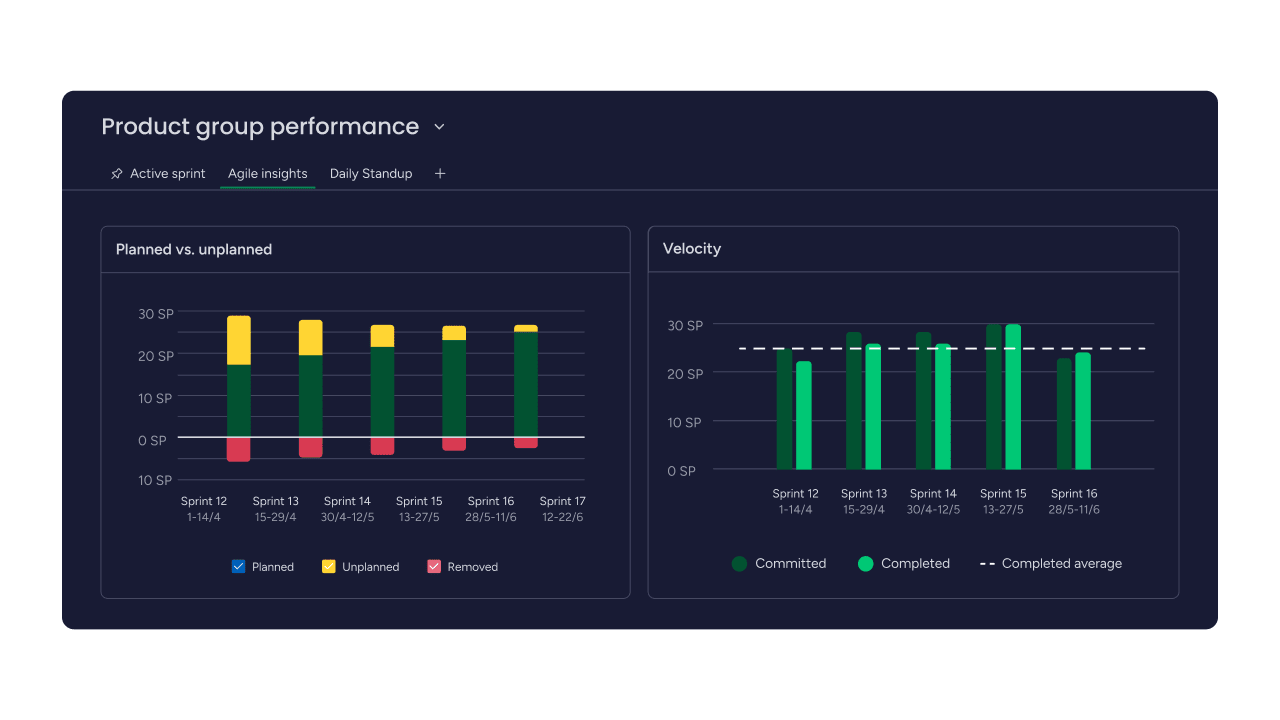
Effective dashboards provide real-time updates, customizable metrics, and clear visualizations. monday dev’s integrated dashboards pull data directly from boards, eliminating manual updates.
Measuring quality success with metrics and KPIs
Quality assurance only matters if you can measure its impact. Without concrete metrics, quality remains subjective; a matter of opinion rather than evidence. The right metrics transform quality from an abstract goal into a measurable outcome that drives continuous improvement.
Critical SQA metrics to track
Essential metrics grouped by category:
- Process efficiency: how smoothly quality activities flow.
- Defect tracking: how many issues occur and resolution speed.
- Customer impact: real-world quality effects on users.
- Release performance: how quality affects delivery speed.
How to build actionable quality dashboards
Design dashboards with clear objectives. Limit scope to critical KPIs. Use visual cues for quick insights. Ensure real-time updates.
Common mistakes include tracking too many metrics, using ambiguous definitions, or creating dashboards that don’t drive action.
Demonstrating quality ROI to leadership
Connect quality metrics to business value. Show how reduced defect density lowers support costs. Demonstrate how faster cycle times accelerate revenue. Use before-and-after comparisons to prove impact.
Overcoming software quality challenges
Even the most well-designed quality assurance programs encounter obstacles. As teams grow, technologies evolve, and delivery expectations intensify, new challenges emerge that can undermine your quality efforts. The difference between teams that maintain high standards and those that struggle often comes down to how effectively they address three fundamental challenges:
Breaking down team silos
Siloed teams struggle with miscommunication and duplicated effort. Solutions include cross-functional squads, joint retrospectives, and shared documentation.
“Three amigos” sessions bring developers, testers, and product owners together for early alignment.
Scaling quality processes effectively
Growing teams need modular workflows, standardized templates, and automated toolchains. Frameworks like SAFe provide structure for scaling.
Solutions like monday dev enable consistent practices across distributed teams through centralized workflows and dashboards.
Balancing release speed with quality
Speed pressure can undermine quality without proactive management. Feature toggles, canary releases, and automated rollbacks allow fast releases while minimizing risk.
Embed quality checkpoints in CI/CD pipelines to ensure speed doesn’t sacrifice reliability.
Ehance your software quality today with monday dev
Quality improves when your tools, teams, and processes work in sync. The sophisticated monday dev platform provides the foundation to build consistent workflows and track every step in one workspace.
Custom quality workflows that work your way
The platform’s flexible Work OS lets you build quality workflows that match your exact processes.
Design custom boards with tailored columns for test status, severity levels, and environment tracking. Add conditional approval steps that route critical bugs to senior engineers automatically. Integrate risk assessment matrices directly into your sprint planning boards. Use automation recipes to trigger handoffs between dev, QA, and operations teams without manual coordination.
Complete visibility without slowing teams down
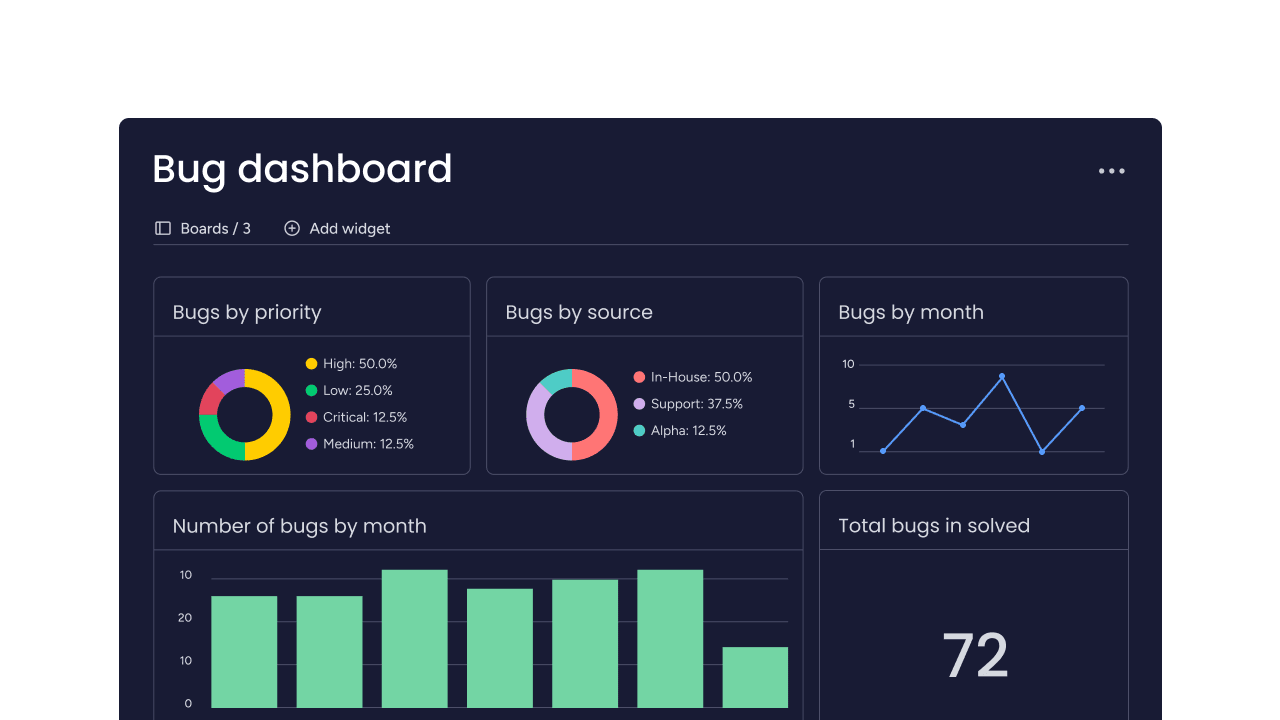
Real-time dashboards pull live data from all your quality boards, giving managers instant insights into test coverage, defect trends, and release readiness without interrupting the team. Customize widgets to display the metrics that matter most — defect density by sprint, test automation coverage, or cycle time from bug report to resolution.
Further, set up automated reports that deliver quality summaries to stakeholders on your schedule. Teams stay informed through activity feeds and @mentions that surface critical updates exactly when they’re needed, eliminating status meetings and manual check-ins.
Unified platform for dev, QA, and business teams
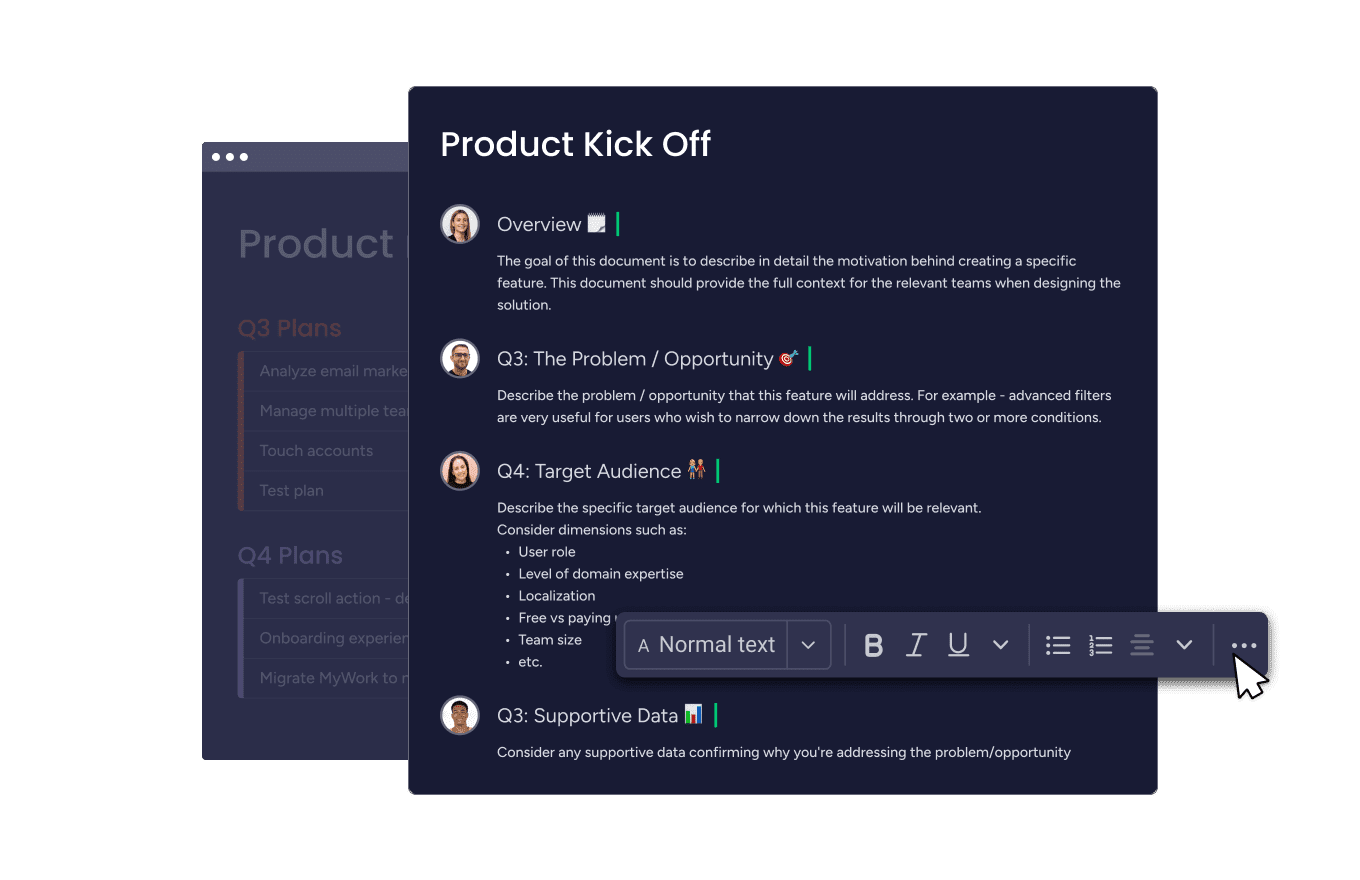
Bring everyone into a single workspace where developers track features, QA manages test cases, and product teams monitor release readiness, all on connected boards that update in real time. Link user stories directly to test cases and bug reports, creating full traceability from requirement to deployment. Use integrated docs to maintain testing standards and runbooks alongside your work.
Finally, with monday dev you can connect to 200+ integrations including GitHub, Jira, Slack, and your CI/CD tools to centralize quality data without forcing teams to abandon their preferred tools.
Frequently asked questions
Is software quality assurance harder than coding?
Software quality assurance and coding require different skill sets: SQA demands strong analytical thinking, communication abilities, and process orientation, making it equally challenging and valuable as software development.
What skills do software quality assurance engineers need?
Essential skills for SQA engineers include analytical thinking for root cause analysis, technical proficiency in test automation, effective communication for cross-team collaboration, attention to detail for finding subtle issues, and adaptability to learn new tools and methodologies.
How much do quality assurance professionals earn?
Quality assurance professionals typically earn competitive salaries that vary by experience, location, industry, and technical expertise, with compensation often comparable to software developers in similar roles.
Can AI replace human quality assurance professionals?
AI enhances QA efficiency and coverage but cannot replace the critical thinking, judgment, and contextual understanding that human professionals provide; AI and humans work best together as complementary forces.
What certifications advance software quality assurance careers?
Valuable certifications for SQA professionals include ISTQB for foundational testing knowledge, CSTE for comprehensive testing expertise, CSQA for quality analyst skills, and AWS Certified DevOps Engineer for cloud and automation proficiency.
How do you transition from manual to automated software testing?
Transitioning from manual to automated testing involves assessing current processes, selecting appropriate automation tools, developing technical skills, and incrementally automating high-impact test cases while maintaining manual testing for exploratory and complex scenarios.

 Get started