

You’ve crushed your goals all year, but when review season hits, staring at a blank page can make those wins feel distant. It is difficult to condense twelve months of hard work into a few paragraphs without losing the nuance of your contributions. Most employees end up scrambling to remember specific achievements, often settling for vague descriptions that don’t do their effort justice.
A strong self-evaluation is more than just HR paperwork; it is your most powerful tool for advocating for a promotion or raise. This document allows you to tell your professional story and provide your manager with the concrete “ammunition” needed to fight for your advancement. When done correctly, your self-assessment transforms a standard check-in into a strategic conversation about your value and future.
This guide is your roadmap to turning scattered wins into a document that gets results. We’ll break down a proven 7-step writing process to help you own your narrative and explore how the right technology can track your impact in real time. Stop dreading the blank page and start building the career you deserve by creating a self-evaluation that is impossible to ignore.
Key takeaways
- Track wins year-round, not just at review time: Document achievements and metrics as they happen to avoid memory gaps and build a complete performance story.
- Connect your work to actual business impact: Replace vague statements like “improved processes” with concrete results like “reduced processing time by 20%.”
- Use self evaluations to drive compensation conversations: Your detailed assessment gives managers the evidence they need to advocate for your raise or promotion.
- Turn static reviews into dynamic performance tracking: monday work management automates achievement logging and connects daily work to annual goals, eliminating year-end scrambling.
- Balance wins with growth areas (aim for 70/30): Show confidence in your accomplishments while demonstrating self-awareness about development opportunities.
What is a self evaluation for performance reviews?
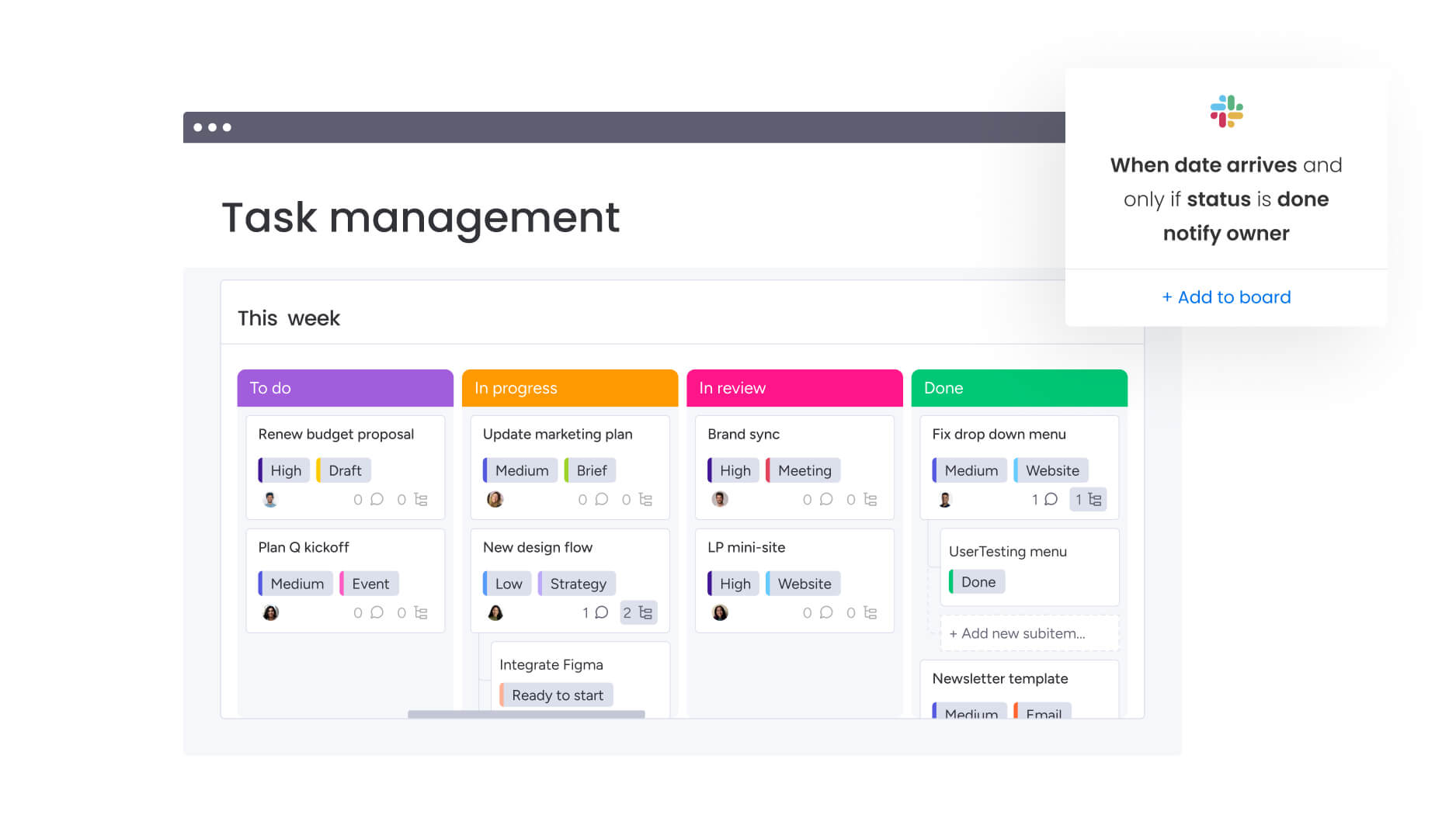
A self evaluation is where you document your performance, wins, and growth areas over the review period. It’s your chance to reflect on what you’ve done and share your side before sitting down with your manager.
Unlike manager-led assessments that focus on external observations, self evaluations capture your internal view of the work — the effort behind the results, challenges you navigated, and progress that might otherwise go unnoticed. This documentation proves especially critical given that 26% of employees report receiving no formal feedback on their performance in the past year. This document becomes part of your official review, so the final assessment includes both your manager’s view and yours.
Most organizations schedule self evaluations annually or bi-annually, with employees completing them one to two weeks before the formal performance review meeting. This gives managers time to review your input before the actual performance discussion.
Employee self assessment vs manager evaluation
While these two documents work in tandem, they serve distinct strategic purposes in the review cycle. Recognizing the differences in these perspectives allows you to tailor your input so that it perfectly complements, rather than simply repeats, your manager’s observations.
| Aspect | Employee self assessment | Manager evaluation |
|---|---|---|
| Primary perspective | Internal view focusing on effort, challenges overcome, and personal growth | External view focusing on outcomes, business impact, and comparative performance |
| Key objective | Advocate for career advancement and highlight unseen contributions | Validate performance against standards and determine compensation |
| Scope of input | Limited to your direct experience and personal tracking | Includes feedback from peers, partners, and leadership |
| Outcome focus | Identifies personal development needs and career aspirations | Determines promotions, salary adjustments, and succession planning |
Ultimately, the self-evaluation lets you own your story, while the manager evaluation validates it objectively. By highlighting the grit and strategy behind your work, you give your manager the context they need to accurately assess your measurable impact.
When to complete your self performance review
Timing matters if you want your self evaluation to land. The deadline usually hits 1-2 weeks before your review, but you should start prepping way earlier.
Therefore, begin collecting data year-round to avoid recency bias — that tendency to remember only the last month’s work. Start drafting 3-4 weeks out so you have time to think and polish.
Key timing considerations include:
- Year-round data collection: Document achievements immediately after major project completions while details and metrics remain fresh.
- Draft preparation: Begin writing 3-4 weeks before the deadline to allow time for reflection and refinement.
- Submission alignment: Most submissions align with fiscal or calendar year-end, coinciding with budget planning for raises and promotions.
Tracking all year prevents the year-end scramble and makes sure you don’t miss anything.
Why self evaluations impact your career success
Self evaluations create a permanent record of work that might otherwise get lost in the day-to-day. When promotion decisions go to committee, your self evaluation speaks for you. This becomes particularly important considering that only about one-third of critical roles are backed by a succession plan, making documented self-advocacy essential for career advancement. It gives managers the specifics they need to fight for your promotion.
A strong evaluation shows you’re mature about your work and understand how it ties to business goals. Leadership teams use these documents for current reviews and to spot high-potential people for future roles.
Direct link to performance ratings
The quality of your self evaluation directly affects your final rating. As managers with big teams can’t remember every win or metric from the year, your detailed self assessment fills those gaps and gives evidence for higher ratings.
Vague submissions force managers to rely on memory, which usually means average ratings. Specific examples and numbers give your manager what they need to push for top ratings.
How self reviews affect compensation
Comp committees need data before they’ll approve raises, bonuses, or equity. Your self evaluation makes the business case for what you cost the company.
By directly linking your daily contributions to revenue growth, cost savings, or significant efficiency gains, you provide the financial evidence managers need to secure budget approvals. This documentation proves especially critical in organizations with strict salary bands, where promotion disparities persist — for every 100 men promoted to manager, only 93 women and just 74 women of color are promoted.
Moving to the upper end of a salary band or breaking through to a new level requires undeniable proof that your value exceeds the baseline requirements of your current role.
Career development through self assessment
Honest self-assessment drives growth by showing the gap between where you are and where you want to be. When you name specific skills you need or areas you want to explore, you unlock training budgets and mentorship.
This transforms the review from backward-looking critique into forward-looking roadmap. Clear development goals often lead to stretch assignments or lateral moves that expand your skills and value.
A strong evaluation shows you’re mature about your work and understand how it ties to business goals. Leadership teams use these documents for current reviews and to spot high-potential people for future roles.
Essential components of an employee self evaluation template
A strong template guides you through a complete narrative of your performance. It ensures you cover both your quantitative results and your qualitative development. The following sections are essential for telling your full story.
- Goals and achievements: Retrospective comparison of objectives set versus actual outcomes.
- Skills and competencies: Analysis of behaviors and technical abilities applied to your work.
- Areas for growth: Strategic identification of development needs aligned with future business requirements.
- Future development: Forward-looking plan outlining resources and steps to reach the next level.
Goals and achievements section
This section grounds your evaluation with hard numbers. List specific objectives from the start of the cycle and detail results achieved against them. Use hard data — percentages, dollar amounts, timeframes — to prove success.
For qualitative roles, document completed projects, process implementations, and stakeholder satisfaction levels. Also connect individual outputs directly to team or company KPIs, demonstrating alignment with organizational strategy. This narrative shows not just what you accomplished, but how it mattered to the business.
Skills and competencies assessment
Competency assessment evaluates the behaviors and expertise you applied to achieve goals. This typically uses rating scales (Developing, Proficient, Advanced) supported by specific examples of each skill in action.
Cover technical proficiency relevant to your role alongside universal capabilities like communication, adaptability, and problem-solving. The evidence you provide distinguishes between someone who simply hits targets and someone who elevates the team’s overall capability through their approach.
Areas for professional growth
Identifying growth areas demonstrates self-awareness rather than weakness. Frame skill gaps as opportunities that will benefit the organization. Distinguish between remedial needs (skills for your current role) and developmental needs (skills for your next role).
Focus language on “enhancing,” “expanding,” or “strengthening” capabilities. This signals a proactive approach to continuous improvement rather than defensive acknowledgment of shortcomings.
Future development planning
Your development plan translates growth areas into actionable steps. Outline specific training, certifications, mentorships, or project exposures you’re requesting for the upcoming cycle. Establish SMART goals for personal development to ensure accountability.
This section invites your manager to partner in your growth, shifting the dynamic from supervision to sponsorship. Make it easy for them to support you by being specific about what you need.
7 steps to write your self evaluation
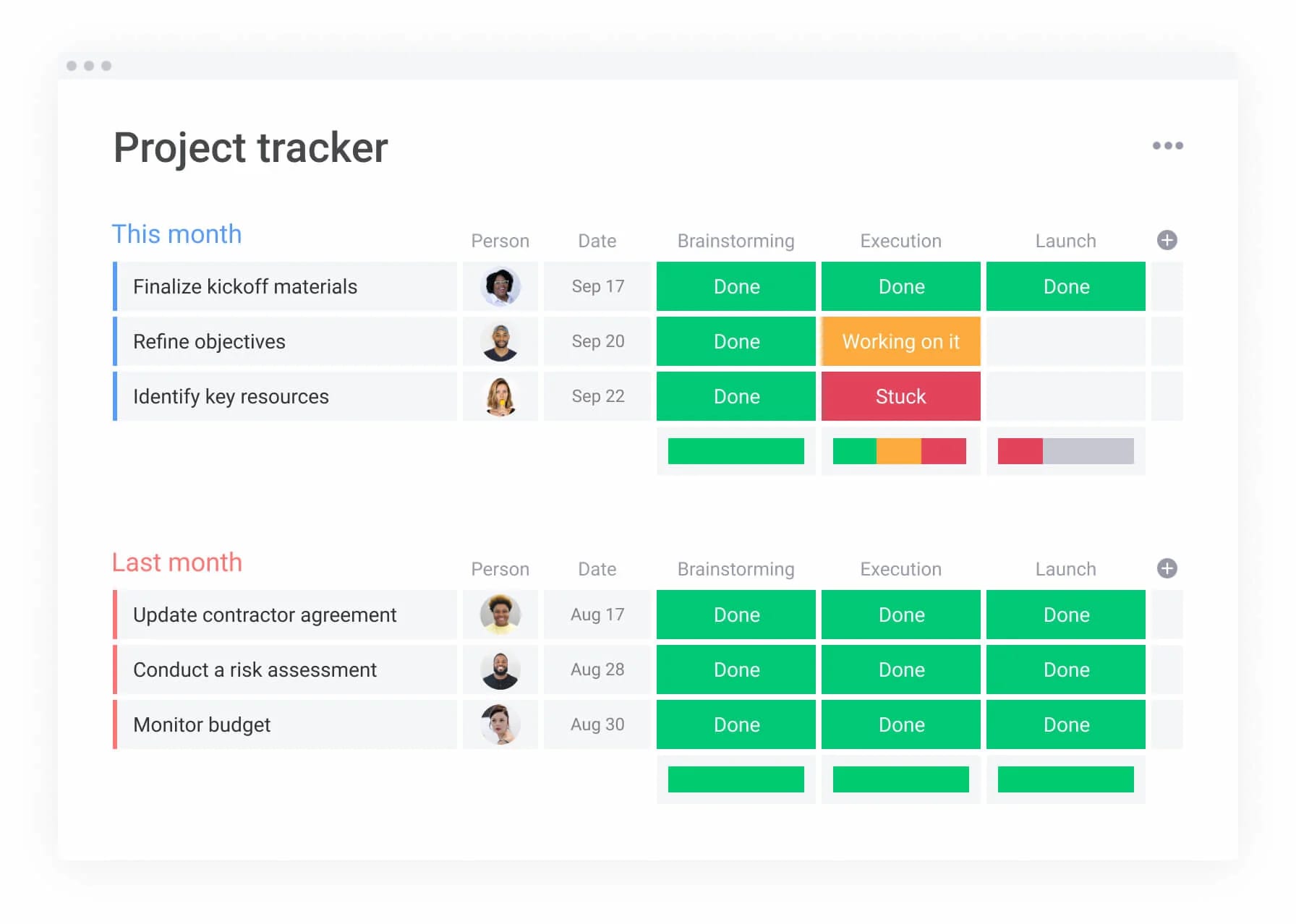
Writing a compelling self evaluation requires systematic preparation and strategic communication. Organizations using platforms like monday work management can track these steps as a project, ensuring nothing gets missed. Follow this proven process to create an evaluation that showcases your value and drives career advancement.
Step 1: collect your performance data
Begin by gathering concrete evidence of your work. Review calendars, email folders, project management platforms, and communication channels to reconstruct the year’s activities.
Relevant data points include:
- Project completions: List of delivered work with dates and outcomes.
- Client feedback: Compliments, testimonials, or satisfaction scores.
- Performance metrics: Sales figures, efficiency improvements, quality scores.
- Problem resolution: Issues identified and solved with measurable impact.
This raw material forms your evaluation’s factual foundation, eliminating reliance on memory and reducing recency bias.
Step 2: review job expectations and annual goals
Alignment ensures your evaluation addresses actual measurement criteria. Revisit your original job description and goals from the previous review. Then identify where your role evolved or expanded beyond original scope.
Reference specific language from these documents to demonstrate understanding of your core mandate. This shows you grasp not just what you did, but how it fulfilled expectations.
Step 3: document measurable achievements
Transform activities into business value by converting generic tasks into outcomes that prove your impact. By calculating the actual results of the work documented in Step 1, you create an indisputable case for your performance.
- “Managed the project”: “Delivered project X two weeks early, saving $5k in resources”.
- “Improved processes”: “Reduced processing time by 20% through workflow optimization”.
- “Supported the team”: “Mentored three junior members, improving team productivity by 15%”.
Every claim needs backing from your collected data. For roles without direct revenue metrics, focus on quantifying volume, accuracy, speed, and satisfaction.
Step 4: assess your skills and capabilities
Compare current performance against role-specific competency frameworks. Rate proficiency levels honestly and select instances that prove those ratings.
Address both technical skills (software proficiency, analytical methods, industry knowledge) and behavioral competencies (leadership, collaboration, innovation). And when previous feedback highlighted gaps, show responsiveness to that coaching.
Step 5: identify growth opportunities
Select 2-3 specific areas where improvement yields the highest return for your role and team. Remember that this isn’t confession of failure but proposal for optimization.
Focus on skills that would remove bottlenecks or unlock new capabilities for your department. Be strategic — choose development areas that align with organizational priorities and your career trajectory.
Step 6: gather stakeholder feedback
Solicit informal input from peers, cross-functional partners, and direct reports. This outside perspective validates your self-assessment and provides examples your manager may not have witnessed.
By synthesizing these viewpoints, you can effectively demonstrate your collaborative impact and organizational influence through specific quotes or situations that prove your broader contribution.
Step 7: align with company objectives
Connect individual performance to organizational priorities. Use your company’s internal language and key themes to frame your work. If the organization emphasized “operational excellence” or “customer obsession,” show how your achievements supported these initiatives.
This final polish proves you’re not just a good performer, but a strategic asset who understands and drives business goals.
Self evaluation questions for every performance area
Structured questions prompt deeper reflection and generate detailed, evidence-based content for your evaluation. Use these to guide your writing across different performance dimensions and ensure you capture the full scope of your contributions.
Core job performance questions
These questions help you articulate your fundamental contributions and impact:
- Goal achievement: Which three goals did I exceed this year, and what was the specific business impact?
- Problem solving: What significant challenge did I overcome, and what process did I use?
- Quality standards: How has my work quality improved compared to the previous review period?
- Scope expansion: What responsibilities did I take on outside my original job description?
- Strategic alignment: How did my daily performance support department metrics?
Professional skills assessment
Evaluate your technical and soft skill development with these prompts:
- Technical growth: What new technical skills have I acquired and applied this year?
- Critical thinking: Where did I use advanced problem-solving to resolve critical issues?
- Adaptability: How did I demonstrate flexibility during organizational changes?
- Next-level readiness: What training do I need to perform at the next level?
- Priority management: How effectively did I manage time and work during peak periods?
Team collaboration and communication
Assess your interpersonal effectiveness and team contribution:
- Team contribution: How did I contribute to colleague or team success this year?
- Conflict resolution: When did I successfully manage difficult conversations?
- Knowledge sharing: How proactively did I share expertise with cross-functional partners?
- Communication clarity: What improvements enhanced team alignment?
- Inclusive culture: How did I support a diverse and welcoming team environment?
Leadership and innovation
Capture your strategic thinking and initiative:
- Process optimization: What improvements resulted in efficiency gains or cost savings?
- Mentorship: How have I developed or guided junior team members?
- Proactive ownership: When did I take initiative without being asked?
- Strategic influence: How did I affect decisions without formal authority?
- Innovation: What new ideas did I propose that were successfully implemented?
Self evaluation examples by professional role
Seeing role-specific examples helps you understand how to quantify and articulate value in your function. These samples demonstrate effective ways to present achievements across different departments and provide concrete templates you can adapt for your own evaluation.
Marketing manager self assessment template
Marketing professionals can highlight campaign performance, lead generation, and cross-functional collaboration:
- Key achievement: “Led Q3 product launch campaign, generating 25% more qualified leads year-over-year with 4.5% conversion rate versus 3% target”.
- Skill application: “Used advanced analytics to optimize ad spend in real-time, reducing customer acquisition cost by 15%”.
- Collaboration: “Partnered with Sales to refine lead scoring models, improving handoff efficiency and pipeline quality”.
- Growth area: “Developing deeper technical SEO expertise to reduce agency dependence”.
HR professional self evaluation form
In a similar vein, HR team members can emphasize process improvements, employee impact, and compliance:
- Key achievement: “Redesigned onboarding process, reducing time-to-productivity by 30% and improving 90-day retention from 82% to 94%”.
- Skill application: “Resolved three complex employee relations issues through skilled mediation, preventing legal escalation”.
- Collaboration: “Facilitated inclusive leadership workshops for 85% of management staff”.
- Growth area: “Pursuing compensation analysis certification for upcoming salary restructuring”.
Operations team self review template
Operations professionals can showcase efficiency gains, cost savings, and process optimization:
- Key achievement: “Streamlined vendor procurement workflow, cutting approval time from 14 to four days and securing $20k in volume discounts”.
- Skill application: “Implemented inventory tracking system, eliminating manual data entry errors”.
- Collaboration: “Coordinated with Finance and Logistics for 100% inventory accuracy during year-end audit”.
- Growth area: “Seeking Six Sigma training to identify additional waste reduction opportunities”.
Finance professional performance review
Finally, finance team members can highlight accuracy improvements, strategic insights, and stakeholder education:
- Key achievement: “Managed budget planning for three departments, identifying $150k in redundant software spend”.
- Skill application: “Built dynamic financial models reducing monthly forecasting time by 40%”.
- Collaboration: “Trained department heads on budget management, reducing variance reporting errors by 90%”.
- Growth area: “Improving data visualization skills for executive presentations”.
Best practices for effective self evaluations
High-impact self evaluations share characteristics that make them persuasive and easy for managers to process. These practices elevate your document from formality to strategic career tool and ensure your contributions receive proper recognition.
Follow these guidelines to strengthen your self evaluation:
- Use data and specific examples: Replace vague claims with quantified results. “Improved efficiency” becomes “reduced processing time by 20%”.
- Balance accomplishments with development: Maintain a 70/30 split between achievements and growth areas to show confidence without arrogance.
- Write action-oriented statements: Start sentences with strong verbs like “orchestrated,” “delivered,” or “negotiated” rather than passive phrases.
- Connect individual impact to team success: Frame personal wins by showing how they helped the team succeed.
Continuous and technology-enabled performance documentation

Traditional once-a-year documentation is giving way to continuous, technology-enabled performance tracking. Organizations now create living records of performance that evolve throughout the year, making evaluations more accurate and less burdensome when review time arrives.
Continuous performance tracking methods
Performance tracking happens daily or weekly rather than annually. Employees tag completed work as wins or milestones immediately upon completion, creating an achievement repository that grows organically.
Regular one-on-one notes get archived and tagged for easy retrieval during review time. This eliminates memory gaps and reduces administrative burden when evaluations are due.
Digital collaboration for 360-degree feedback
Platforms like monday work management democratize feedback collection. Instead of formal HR surveys, employees request and store feedback on specific deliverables instantly. Recognition in public channels gets saved to performance boards.
This creates a multi-perspective view including peer, subordinate, and cross-functional input — providing a more complete picture than manager observation alone.
Real-time achievement documentation
Achievement logging integrates directly into workflow. When projects reach completion, automation can prompt brief reflections on outcomes, ROI, or lessons learned. These micro-entries accumulate into detailed portfolios.
Real-time documentation captures specific metrics and nuances that would be forgotten months later. The result is richer, more accurate self evaluations.
AI-powered performance insights
AI assists in synthesizing performance data by analyzing project information to identify trends, summarize outcomes, and categorize achievements automatically. AI helps employees articulate impact through data-driven summaries of their work.
This technology handles data organization, allowing employees to focus on crafting their narrative rather than hunting for information.
Performance tracking happens daily or weekly rather than annually. Employees tag completed work as wins or milestones immediately upon completion, creating an achievement repository that grows organically.
Build dynamic self evaluations with monday work management

Strategic organizations use monday work management to transform self-evaluations from static documents into dynamic, year-round performance engines. By leveraging this platform, teams can connect daily execution to annual review criteria, making performance management an integral part of work rather than an administrative afterthought.
| Aspect | Traditional approach | monday work management approach |
|---|---|---|
| Documentation | Manual recall at year-end | Automated tracking of completed work and milestones |
| Feedback | Infrequent formal surveys | Real-time feedback on specific deliverables |
| Data analysis | Subjective descriptions | Dashboards visualizing KPIs and metrics |
| Goal alignment | Goals in separate HR documents | Goals connected to daily project boards |
| Review preparation | Hours digging through emails | AI-generated summaries of activity |
From static templates to living performance records
The platform replaces blank-page anxiety with populated boards of accomplishments. Work executed and tracked within the system builds the performance record automatically. A dedicated performance board aggregates high-impact items, creating a portfolio that’s always ready for review.
Automated achievement tracking
Automation rules eliminate manual logging. When project phases complete, the system can copy items to achievement logs with dates and relevant metrics. This ensures every contribution gets captured, no matter how small.
For example, employees no longer wonder about their February accomplishments — the system preserves history with perfect accuracy.
Collaborative review workflows
The review process becomes transparent conversation. Managers and employees collaborate on the same board, adding comments and context throughout the year. This continuous alignment eliminates year-end surprises.
Stakeholders provide input on specific deliverables directly within work context, making feedback specific and relevant.
AI capabilities for performance analysis
AI features elevate evaluation quality. The platform can summarize complex project threads into concise achievement statements, categorize work by competency themes, and extract hard numbers from project boards.
These capabilities help identify dominant strengths and ensure evaluations are data-rich and professionally articulated.
Connect daily work to annual reviews
The platform bridges strategy and execution by linking high-level goals to individual work items. monday work management visualizes the direct line between daily output and company objectives.
This visibility empowers employees to write strategic, impact-focused self evaluations that demonstrate ROI to the organization.

“monday.com has been a life-changer. It gives us transparency, accountability, and a centralized place to manage projects across the globe".
Kendra Seier | Project Manager
“monday.com is the link that holds our business together — connecting our support office and stores with the visibility to move fast, stay consistent, and understand the impact on revenue.”
Duncan McHugh | Chief Operations OfficerTake control of your professional growth
Self evaluations represent more than annual paperwork — they’re strategic documents that shape your career trajectory. When you approach them with intention and preparation, they become powerful advocates for your professional growth and compensation advancement.
The shift toward continuous performance tracking eliminates the stress of year-end memory reconstruction. By documenting achievements in real-time and gathering stakeholder feedback throughout the year, you create a comprehensive record that tells your complete professional story.
Technology-enabled performance management drives higher engagement and more meaningful feedback. This fosters a culture of regular performance conversations, which is why many teams now rely on monday work management to maintain these living records of success.
The content in this article is provided for informational purposes only and, to the best of monday.com‘s knowledge, the information provided in this article is accurate and up-to-date at the time of publication. That said, monday.com encourages readers to verify all information directly.
Frequently asked questions
How long should my self evaluation be?
A self evaluation should typically range between two to three pages or approximately 1,000 to 1,500 words. This length provides enough detail to cover key achievements without overwhelming the reviewer.
Can I use AI to help write my self evaluation?
AI can effectively organize thoughts, refine phrasing, and summarize data for your self evaluation. The final content must remain an authentic reflection of your personal experiences and insights.
Should I mention salary expectations in my self evaluation?
Self evaluations should focus strictly on performance, impact, and growth. Compensation discussions belong in a separate, dedicated conversation with your manager.
How far back should my self evaluation cover?
Your evaluation must cover the entire designated review period, usually twelve months. Highlight your most recent trajectory and growth to show current standing and momentum.
What if I don't have measurable achievements to include?
Qualitative successes work well when hard metrics aren't available. Document process improvements, successful collaborations, problem-solving examples, and skill acquisition as evidence of value.
How do I evaluate soft skills in my self assessment?
Evaluate soft skills by describing specific scenarios where communication, leadership, or adaptability directly influenced a positive business outcome. Connect the skill to tangible results.
How does monday work management improve self evaluation accuracy?
The platform captures project completions, goal progress, and feedback in real-time throughout the year. This provides an objective, comprehensive data set that eliminates reliance on memory and ensures accuracy.

 Get started