

In 2026, organizations are approving hundreds of projects simultaneously. Budgets are locked, teams are assigned, and leadership expects results. However, with so many initiatives in motion, a single vendor bankruptcy, critical skill shortage, or regulatory shift can cascade into multiple delayed launches — threatening not just individual projects, but the success of the entire portfolio.
The challenge has shifted from managing isolated project risks to understanding how risks connect, compound, and potentially jeopardize organizational strategy. Project portfolio risk management (PPRM) is the practice of identifying, analyzing, and mitigating risks across an entire collection of projects, treating the portfolio as an interconnected system rather than a set of independent initiatives. When implemented effectively, it protects strategic value, prevents cascade failures, and provides executives with the visibility needed to make timely trade-offs as market conditions change.
This guide outlines how PPRM can be scaled across 100+ projects — from building enterprise risk registers and mapping cross-project dependencies to implementing predictive analytics that provide early warnings before risks materialize. It covers the five critical risk types that commonly threaten large portfolios, presents a seven-step framework for systematic risk governance, and explores modern approaches for real-time visibility across complex project ecosystems.
Key takeaways
- Portfolio risk management protects the entire investment portfolio: it identifies, analyzes, and mitigates risks that can cascade across multiple projects, not just individual initiatives.
- Strategic and operational risks differ: project-level risks focus on execution, while portfolio-level risks focus on strategic alignment, resource constraints, and long-term business impact.
- Five critical risk types require attention: resource bottlenecks, strategic misalignment, financial interdependencies, technology integration failures, and cross-project dependencies are the most common portfolio-wide threats.
- Real-time visibility and predictive analytics improve decision-making: continuous monitoring, AI-driven early warning systems, and correlation mapping help leadership anticipate and respond to emerging risks.
- Connected work management platforms enable scalable risk oversight: tools like monday work management aggregate risk data across hundreds of projects, visualize dependencies, and support automated response strategies.

Portfolio risk management is the practice of identifying, analyzing, and mitigating risks before they spread across an organization’s full collection of projects and programs. Unlike project risk management, which focuses on the delivery of individual initiatives, portfolio risk management safeguards the aggregate value of the organization’s investments. It ensures the organization can absorb disruptions, respond to market changes, and maintain operational continuity even when individual projects face challenges.
Risk management has evolved from static spreadsheets to AI-powered platforms that predict potential issues in real time. Where PMOs once relied on quarterly reviews of disconnected spreadsheets, modern systems provide centralized data and predictive analytics for immediate visibility. This approach enables C-suite leaders to anticipate risks rather than react to failures after they occur.
Revenue protection: identify market alignment risks early to prevent investment in initiatives that may not deliver value.
Strategic agility: gain visibility to pivot resources efficiently when external conditions shift.
Operational stability: prevent cascading failures that strain shared resources needed for high-priority projects.
The strategic definition of portfolio risk management
Modern portfolio risk management emphasizes how risks interconnect and compound, rather than focusing on isolated issues. It aggregates data from multiple sources to provide a holistic view of organizational health. Risks are prioritized based on strategic impact — such as market share or transformation goals — rather than merely project deadlines. The emphasis moves from completing projects on time to achieving the intended business value amid uncertainty.
How portfolio risk management evolved from manual to AI-driven
Understanding the evolution of risk management technology clarifies where organizations are today and what is needed to advance.
Era 1 — decentralized spreadsheets: risk registers existed on individual drives, were updated inconsistently, and rarely consolidated.
Era 2 — centralized databases: cloud-based project portfolio management platforms collected data in one place but required manual input and analysis.
Era 3 — connected ecosystems: API integrations linked financial, HR, and project data for a more comprehensive view.
Era 4 — AI-driven prediction: current systems leverage machine learning to analyze historical trends, identify early warning patterns, and alert leaders before risks materialize.
Business impact of effective portfolio risk management
Directors and VPs focus on portfolio risk management for two primary reasons: it protects capital and ensures reliable execution. Managing risk at scale makes results more predictable — fewer surprises, more control.
It provides early visibility into project health, ensuring status reports reflect actual progress and allowing leaders to intervene proactively.
Quantifying risk in financial terms enables executives to make informed trade-offs, such as delaying a lower-priority project to secure a critical program’s success.
Portfolio vs. project risk management: understanding the critical differences
Both project and portfolio risk management are essential, but they operate at different scales and address distinct challenges.
| Feature | Project risk management | Portfolio risk management |
|---|---|---|
| Primary scope | Single project deliverables and timeline | Aggregate strategic value and organizational health |
| Risk horizon | Short to medium-term (project lifecycle) | Long-term (strategic planning cycles) |
| Key stakeholders | Project managers, team leads | C-suite, PMO directors, investment committees |
| Risk types | Scope creep, technical bugs, vendor delays | Market shifts, resource scarcity, strategic misalignment |
| Success metric | On-time, on-budget delivery | ROI maximization and strategic alignment |
Project risk management is tactical, focused on execution. Portfolio risk management is strategic, focused on investment value. Confusing the two risks operational distraction and missed organizational threats.
Scope and scale distinctions
Project risk management operates within a defined boundary: the project charter. Project managers address risks affecting the project’s critical path.
Portfolio risk management has no such boundaries. It considers how a delay in Project A affects resource availability for Project B and funding for Project C. At the enterprise level, considerations include market shifts, regulatory changes, and capacity limits — factors no single project manager can fully control.
Risk cascading effects across projects
The most damaging risks are those that cascade from one project to another. A minor issue in a foundational initiative can trigger a chain reaction.
Shared resource bottlenecks: a two-week delay in a platform migration extends DevOps involvement, leaving three product teams without necessary engineering support.
Technology dependencies: a security vulnerability in a core library halts development across twelve applications simultaneously.
Regulatory shifts: changes in data privacy laws affect compliance requirements for every customer-facing project, requiring immediate, synchronized adjustments.
Strategic vs. operational risk focus
Operational risks can often be addressed with execution adjustments — hiring temporary staff, switching vendors, or adjusting deadlines. Strategic risks require leadership decisions.
Portfolio risk management focuses on these strategic threats: whether the portfolio is overexposed to high-risk innovation, over-leveraged in a shrinking market, or misaligned with broader objectives. Operational risks slow progress; strategic risks can undermine the organization’s relevance.
Modern platforms like monday work management bring portfolio risk data together, enabling teams to monitor interdependencies, visualize emerging threats, and coordinate responses efficiently across initiatives.
Try monday work management
Portfolio-level risks differ from day-to-day operational challenges. These five categories represent systemic threats visible only when you zoom out to the organizational level. Recognizing each type helps enterprises allocate resources and attention to the risks that matter most.
1. Resource and capacity risks
Portfolio resource risk extends beyond someone calling in sick. It concerns having insufficient people to deliver on committed work. Recent data shows that 30% of UK trading businesses reported labour costs as a factor for considering price rises in January 2026, highlighting how resource pressures create portfolio-wide financial impacts.
The most common resource challenges include:
- Skill shortages: specialized talent is unavailable, creating bottlenecks across multiple initiatives.
- Competing priorities: several major programs launch simultaneously, requiring the same marketing team and risking burnout and quality decline.
- Capacity planning failures: projects are approved based on budget alone without verifying human availability, resulting in funded but undeliverable work.
2. Strategic misalignment risks
Misalignment occurs when the portfolio drifts from organizational objectives. This risk manifests in several ways:
- Strategy drift: projects make scope changes that cumulatively move offerings away from the intended market strategy.
- Zombie projects: initiatives continue consuming resources even after the market opportunity has disappeared or the corporate strategy has shifted.
- Fragmented focus: portfolios contain too many small, disconnected projects that fail to advance top-level goals.
3. Financial portfolio risks
Financial risk reflects how funding and cash flow intersect across projects. Interdependencies mean that cost overruns in a flagship initiative can force freezes on discretionary spending for other work.
Watch for these patterns:
- Funding competition: critical enablers are underfunded in favor of short-term, visible wins.
- Currency and inflation impacts: shifts in ROI calculations require reevaluating multiple project investments.
- Cash flow dependencies: delayed revenue from one project constrains funding for subsequent initiatives.
4. Technology integration risks
Technology risk compounds quickly across portfolios. Technical debt grows when projects take shortcuts to meet deadlines, creating stability issues that can halt development. The scale of this challenge is evident in public sector portfolios, where California alone reports $7.85 billion in statewide IT investment planned over the next five years, requiring active monthly portfolio management to prevent systemic failures.
Common integration challenges include:
- Platform migrations: delays create compatibility issues for projects relying on shared data.
- API dependencies: changes to central APIs disrupt integrations, turning routine maintenance into a portfolio-wide emergency.
- Legacy system constraints: outdated infrastructure limits the speed and scope of innovation across multiple initiatives.
5. Cross-project dependency risks
Dependencies connect portfolio initiatives like invisible tripwires. Sequential blockers prevent one project from starting until another finishes, meaning any delay cascades across the roadmap.
High-impact dependency issues include:
- Shared deliverables: multiple projects rely on a single compliance audit. A failed audit blocks all associated projects.
- Resource handoffs: design delays leave engineering idle, then overloaded when designs arrive, wasting budget.
- Technology foundations: core platform delays impact every application built on those services.
Scaling risk management requires moving beyond manual interviews and aggregating data automatically. The goal is a dynamic risk map that updates as work progresses, creating enterprise-wide visibility and enabling proactive mitigation. Modern platforms like monday work management can bring these insights together, giving teams real-time visibility and helping ensure strategic and operational alignment.
Creating your enterprise risk register
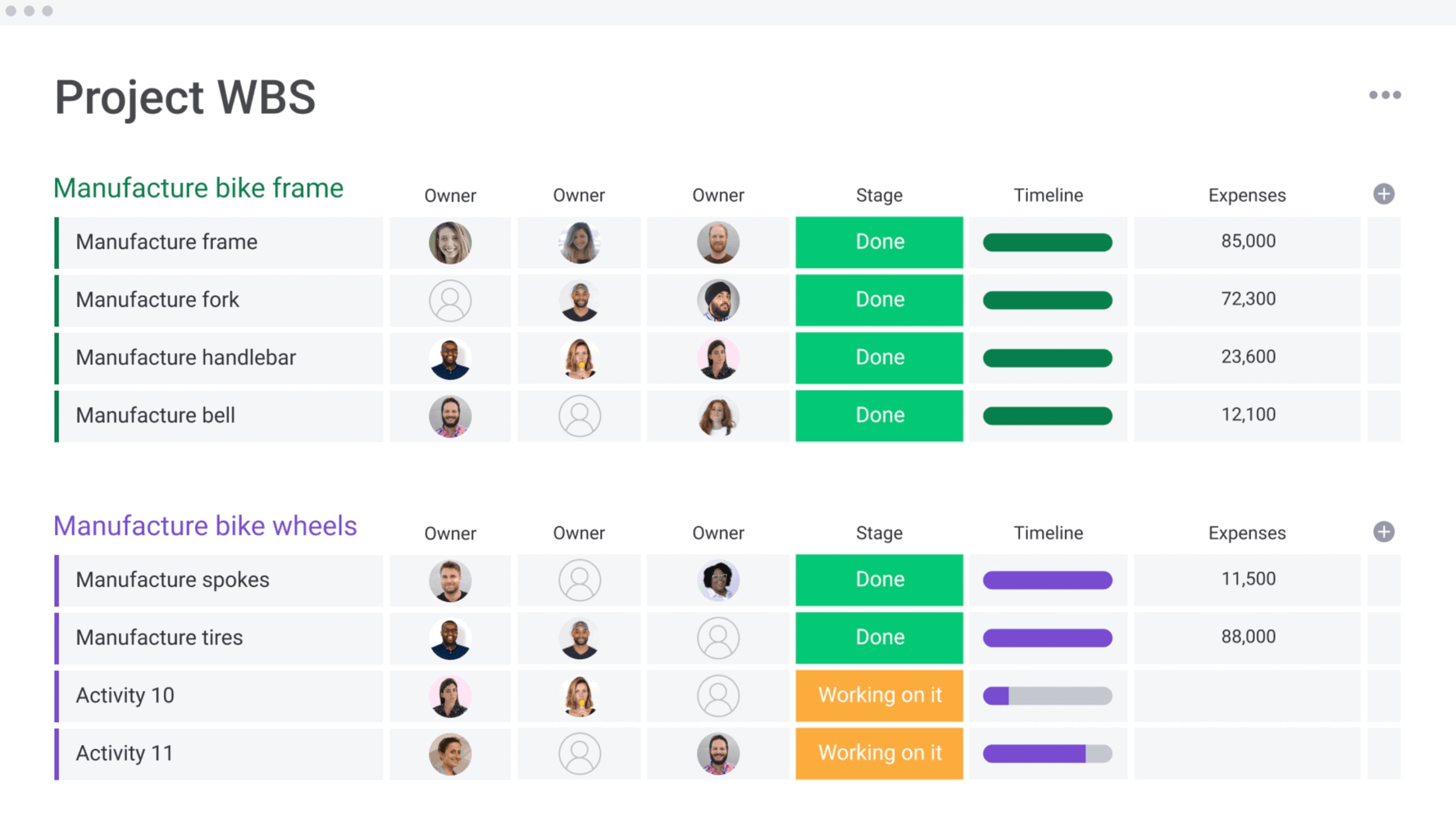
Your enterprise risk register should function as a live database, not a static document. It consolidates risks from individual project boards into a master view. With a connected Work OS, organizations can pull risk items directly from project plans into the master register, eliminating duplicate entry and maintaining consistent data.
The most effective enterprise risk registers share three features:
- Standardized categorization: Risks are tagged by type (financial, technical, resource) and strategic pillar.
- Normalized scoring: A “high” severity has the same meaning for a marketing project as it does for an IT initiative.
- Ownership assignment: Every portfolio-level risk is assigned to a senior leader, ensuring clear accountability.
Visualizing risk correlations and dependencies
Visualization highlights which projects are single points of failure, turning raw data into actionable decisions. Three visualization approaches provide clarity:
- Dependency graphs: Illustrate projects that connect multiple initiatives, revealing potential cascade points.
- Risk heat maps: Plot probability against impact, allowing executives to quickly identify “red zone” risks requiring immediate attention.
- Correlation analysis: Reveal hidden links, such as clusters of high risks tied to a specific vendor or technology stack.
Setting up early warning systems
Early warning systems allow teams to act before issues escalate. Automated triggers flag risks when a project’s cost performance index falls below 0.9 or when three or more critical path activities are delayed. Key elements include:
- Threshold-based alerts: Notify the PMO director only when aggregate risk exposure in a program exceeds defined tolerance.
- Trend detection: Use AI algorithms to identify when risk creation accelerates, signaling a deteriorating project environment before deadlines are missed.
- Predictive analytics: Teams using monday work management can leverage Portfolio Risk Insights to scan all project boards, flagging potential risks by severity and enabling instant notification to project owners with context and mitigation guidance.
7 steps to scalable portfolio risk management
This framework provides a clear path to mature risk management that grows with your project portfolio. Each step builds on the last, allowing your system to scale as complexity increases.
Step 1: establish enterprise risk governance
Governance sets the rules for decision-making. It defines who can accept risks, who needs visibility, and how approvals are handled. A Risk Committee, typically made up of senior leaders, meets regularly to review the portfolio’s risk profile. Done correctly, risk management becomes a strategic function with executive support rather than administrative overhead.
Step 2: standardize risk classifications
A common language is essential for scale. Standardization defines what qualifies as a “critical” risk versus a “high” risk and creates a universal taxonomy across categories such as market, operational, or legal risks. This consistency allows the PMO to compare risks across the organization. Managed templates on a Work OS standardize processes across hundreds of projects while allowing teams to adapt to evolving business needs.
Step 3: deploy portfolio-wide risk assessments
Regular assessment cycles ensure no project is overlooked. Instead of ad-hoc reporting, the PMO uses automated prompts to collect monthly risk updates from project managers. Templates simplify reporting, improving compliance and ensuring cleaner data.
Step 4: set dynamic risk thresholds
Static thresholds cannot keep pace with changing market conditions. Organizations adjust risk tolerance based on strategic value. An “innovation horizon” project might tolerate technical risk but not regulatory risk, while a “core infrastructure” project might have zero tolerance for stability issues. Automated systems adjust thresholds according to overall portfolio health.
Step 5: build automated response strategies
Predefined “plays” accelerate response times. When specific risks arise, such as a key vendor bankruptcy, the system triggers a standard response plan, including activating backup vendors or freezing related payments. Automation enables fast, consistent reactions and minimizes potential damage.
Step 6: implement real-time monitoring
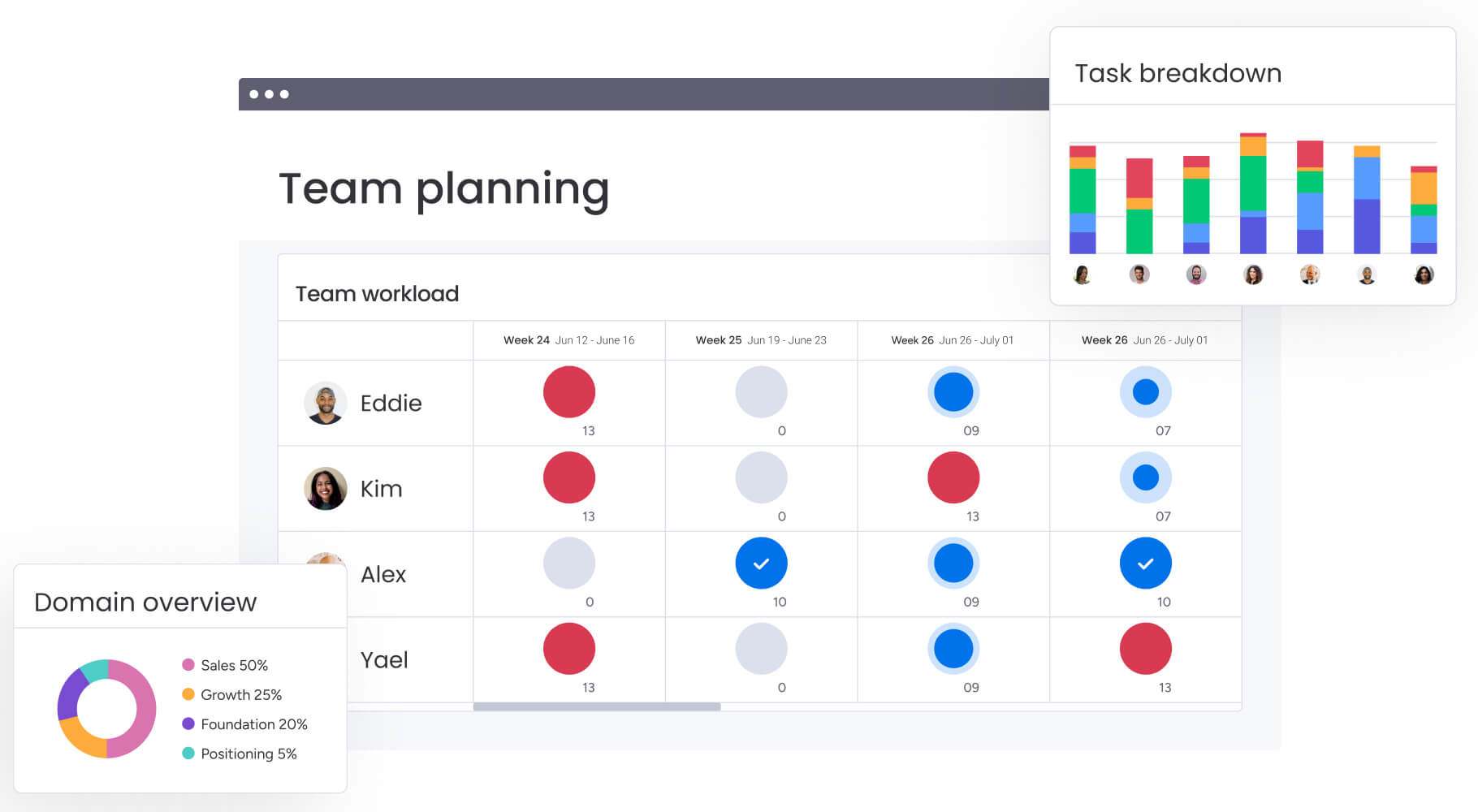
Real-time monitoring outpaces monthly reports. Dashboards display live data on risk exposure, mitigation progress, and emerging threats. This allows the PMO to intervene immediately when issues arise. Out-of-the-box portfolio dashboards highlight key metrics, with the ability to drill down into individual projects.
Step 7: create continuous improvement loops
Systems must learn from past events. Post-mortem reviews of major issues inform risk models. Frequent risk occurrences lead organizations to update templates and checklists to prevent future problems. AI analysis of historical data refines predictive models, enhancing early warning systems over time.
Transform portfolio risk from reactive to predictive
Portfolio risk management has evolved from quarterly spreadsheet reviews to real-time systems that anticipate problems before they occur. Organizations making this shift protect investments, make faster decisions, and maintain execution in volatile markets.
Technology alone does not achieve this. Governance enabling rapid responses, scalable processes, and a culture treating risk as strategic intelligence are essential. Modern platforms like monday work management connect strategy to execution, aggregating risk data, visualizing dependencies, and automating responses to reduce impact. The result: organizations protect what matters while growing with confidence.
Try monday work management
 Get started