

Projects in 2027 are not failing because teams lack skill. They stall because complexity compounds.
Multiple initiatives run in parallel. Shared resources stretch thin. Dependencies stack up quietly until something cracks. Then the same question surfaces again: who owns this?
Project organization is what separates busy teams from high-performing ones. When roles are defined, workflows are visible, and decision paths are clear, momentum builds. When they are not, even strong teams slow down.
Ahead is a clear breakdown of how to structure work that actually scales. Read through and discover the core organizational models teams rely on, a practical method for organizing any initiative, ways to coordinate distributed teams without friction, and how AI is changing how complex portfolios stay aligned.
High-impact projects are not chaotic by default. They become chaotic without structure.
Key takeaways
- Choose the right project structure: Match the organizational approach to the initiative’s complexity, using functional, matrix, projectized, or hybrid models as appropriate.
- Define roles and responsibilities clearly: Use frameworks like RACI to assign accountability and decision-making authority upfront, reducing confusion and delays.
- Visualize workflows and dependencies: Implement Gantt charts, Kanban boards, or dashboards to make project timelines, critical paths, and bottlenecks visible to all stakeholders.
- Monitor and optimize resources: Track capacity, availability, and workload across teams to balance allocation, prevent conflicts, and ensure strategic priorities are met.
- Leverage integrated work management tools: Centralized platforms, such as monday work management, provide real-time visibility, automation, and data-driven insights to coordinate projects and portfolios effectively.
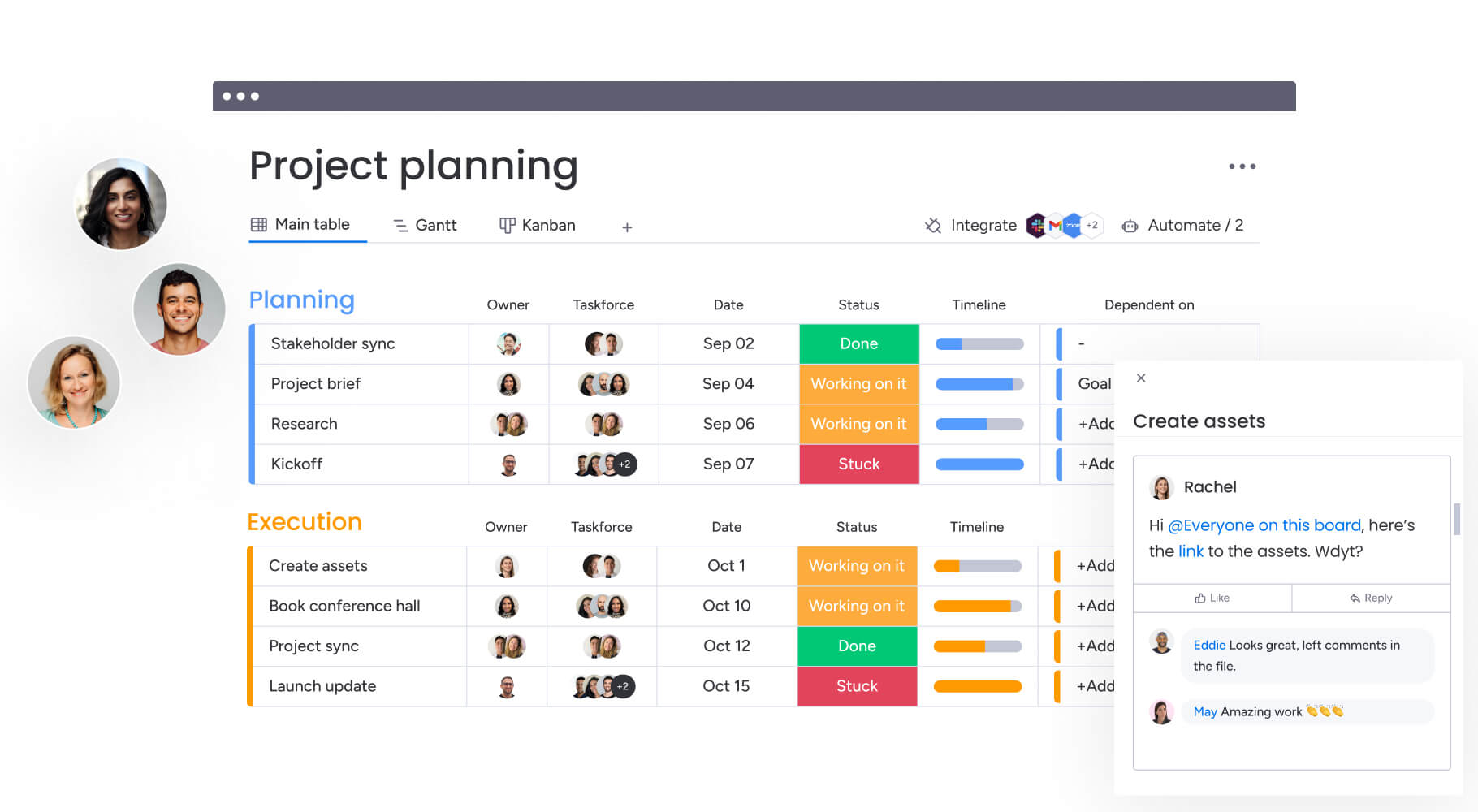
What is project organization?
Project organization defines how work, roles, resources, and workflows are structured to deliver a specific outcome. It clarifies who decides, who executes, and how information moves across teams.
Unlike general management, which supports ongoing operations, project organization creates a temporary structure built around one objective. It connects strategy to execution by defining communication paths, ownership, and resource flow from day one.
In software development, it shapes how product managers, engineers, and QA coordinate releases. In marketing, it aligns content, design, and demand generation around shared milestones.
When organization is weak, work turns reactive. Teams duplicate effort, miss dependencies, and revisit decisions. When it is strong, ownership is clear, handoffs are smooth, and progress is visible.
Key components of modern project organization
A robust organizational framework turns abstract objectives into manageable workflows. Understanding these components helps leaders build structures that support teams instead of obstructing them.
- Scope clarity: Define what is included and what is not to prevent scope creep and protect focus.
- Role definition: Assign accountability and decision authority so ownership is never ambiguous.
- Resource alignment: Allocate budget, people, and tools based on priority and capacity.
- Timeline structure: Map milestones and dependencies to surface the true critical path.
- Communication cadence: Establish how updates, approvals, and escalations flow.
- Performance visibility: Track progress through KPIs and dashboards that reflect real outcomes.
Project organization vs functional organization
Understanding the difference between project-based and functional structures helps determine the right approach for each initiative.
The table below compares functional and project-based structures across focus, reporting lines, resource allocation, and decision speed. It highlights how each model shapes authority, ownership, and execution.
| Aspect | Functional organization | Project organization |
|---|---|---|
| Primary focus | Departmental expertise and operational efficiency | Specific project deliverables and outcomes |
| Reporting lines | Vertical hierarchy with employees reporting to functional managers | Horizontal or matrix structure with teams reporting to project managers |
| Resource allocation | Resources stay within departments | Resources dedicated to projects for their duration |
| Decision speed | Slower, requires approval up the functional chain | Faster, decisions made at project level |
| Example scenario | Accounting department closing fiscal year books | Cross-functional team launching a mobile application |
Functional organization groups people by expertise, such as all marketers in marketing and all engineers in engineering. Project organization groups people by objective, bringing together diverse skills to achieve a defined goal.
Most organizations use a combination of both approaches depending on the work.
Unlike general management, which supports ongoing operations, project organization creates a temporary structure built around one objective. It connects strategy to execution by defining communication paths, ownership, and resource flow from day one.

How strategic project organization drives team success
Strategic project organization improves efficiency and impact by eliminating the coordination tax: the time and energy lost clarifying requirements, chasing updates, and resolving conflicts.
This efficiency leads to faster delivery and higher-quality work. Teams spend less time asking “who is responsible for what” and more time executing. Decision-making accelerates because authority is clear. Resource allocation aligns with priorities due to visibility across departments.
Measurable benefits of structured organization
Investing in organized workflows delivers measurable outcomes for both projects and long-term performance.
- Accelerated project delivery: Defined dependencies and workflows reduce idle time and handoff delays.
- Optimized resource utilization: Visibility into capacity prevents underutilization or over-allocation of critical staff.
- Reduced operational risk: Structured planning identifies bottlenecks early, allowing mitigation strategies.
- Enhanced stakeholder satisfaction: Consistent communication and predictable delivery build trust with internal and external stakeholders.
- Improved team productivity: Clear role definitions eliminate ambiguity, allowing team members to focus on high-value work.
The value of a structured organizational approach
Without structure, organizations pay a high cost. Teams often duplicate efforts because they cannot see what other departments are doing. Deadlines slip, not because the work is difficult, but because dependencies are not mapped. Resource conflicts create internal friction when two projects compete for the same personnel.
Warning signs of missing project organization include:
- frequent emergency meetings to clarify basic status.
- high employee turnover caused by burnout from unclear expectations.
- projects consistently finishing late and over budget.
- decisions revisited multiple times due to undefined authority.
The 4 main project organizational structures
No single structure works for every initiative: organizations need to adapt their hierarchy based on work complexity, team size, and delivery speed. Understanding these four models below helps leaders select the approach that fits their situation.
| Structure | Best for | Decision speed | Resource efficiency |
|---|---|---|---|
| Functional | Routine operations, deep specialization | Slow | High within departments |
| Matrix | Complex projects requiring shared resources | Medium | High across organization |
| Projectized | High-stakes, time-critical initiatives | Fast | Lower due to duplication risk |
| Hybrid | Large enterprises with diverse portfolios | Variable | Variable |
Functional structure
A functional structure organizes the organization into departments based on specialized expertise such as engineering, marketing, or finance. Work flows through vertical silos, with project coordination managed by functional managers. This structure works best when deep technical specialization and stable workflows are required.
Annual budget planning fits this model, relying on finance expertise and structured input from other departments. Advantages include clearly defined career paths and efficient knowledge sharing within specialties.
However, cross-functional projects can face slow decision-making and unclear ownership of final outcomes.
Matrix structure
Matrix structures create a grid of reporting relationships, where team members report to both a functional manager for skill development and a project manager for day-to-day work. This approach balances departmental efficiency with project focus.
Matrix structures vary by authority distribution:
- Weak matrix: Functional managers retain most authority while project managers coordinate.
- Strong matrix: Project managers hold primary authority over resources and budgets.
Product development teams often use this model, pulling engineers and designers from their respective departments. It promotes flexibility and resource sharing, but dual reporting can create conflicting priorities without strong communication.
Projectized structure
A projectized structure arranges the organization entirely around projects. Teams are co-located physically or virtually and dedicated solely to one objective. Project managers control budget, personnel, and schedule. Once a project concludes, teams disband or transition to a new initiative.
This structure suits high-stakes, complex initiatives with tight deadlines, such as building a new facility or launching a product line. Benefits include speed and singular focus. The main limitation is resource duplication: a team member on Project A cannot easily support Project B, which can reduce overall efficiency.
Hybrid structure
Hybrid structures combine elements of functional, matrix, and projectized models to reflect how enterprises operate in reality. An organization may maintain functional operations while creating projectized teams for innovation or transformation initiatives.
For example, a company may run customer support functionally while creating a dedicated projectized team for digital transformation. This approach provides flexibility but requires strong communication channels and a unified platform to prevent silos and maintain a clear operational view.
How to organize any project in 6 steps
Complex projects do not organize themselves. Clarity comes from deliberate setup.
Before timelines are built or tasks are assigned, the foundation needs to be in place. Scope must be defined. Ownership must be clear. Dependencies must be mapped. When these elements are structured early, execution becomes far more predictable.
The six steps below outline a practical way to organize any project from the ground up:
Step 1: Define project scope and objectives
Success starts with boundaries. Defining scope includes specifying what the project will achieve and how completion is measured. SMART goals — specific, measurable, achievable, relevant, and time-bound—turn vague ideas into actionable targets.
A project charter or scope statement anchors the work and prevents scope creep. Using collaborative documents to connect objectives directly to project boards ensures visibility for all stakeholders from day one.
Step 2: Map roles and responsibilities
The RACI matrix defines accountability for each deliverable. It categorizes stakeholders so the team knows who makes decisions and who provides input:
- Responsible: The person who performs the work.
- Accountable: The person who signs off on the work (one per deliverable).
- Consulted: Subject matter experts who provide input.
- Informed: Stakeholders who need updates.
Assigning these roles upfront prevents gaps and reduces time spent navigating internal bureaucracy.
Step 3: Build your project timeline
A timeline turns scope into a chronological plan. Identify key milestones and break them into smaller work items. Mapping dependencies is critical: knowing that design must finish before development begins helps identify the critical path.
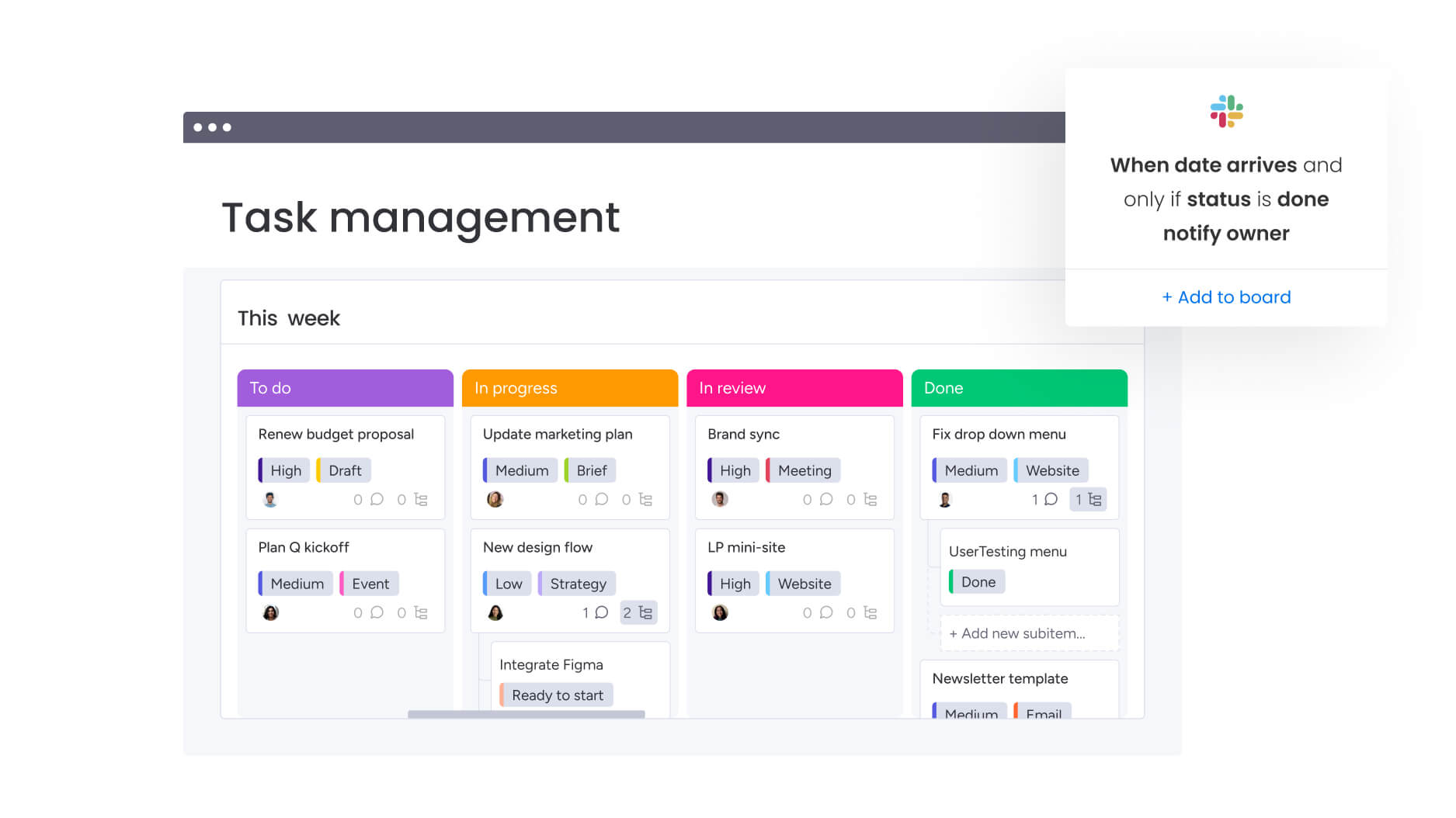
Visualizing timelines with Gantt charts or Kanban boards allows teams to anticipate bottlenecks and track work. Dynamic views provide visibility into scope, schedule, milestones, and dependencies at every level.
Step 4: Establish communication channels
Structured communication replaces random noise. Define the rhythm of collaboration: daily standups for the core team, weekly status updates for managers, and monthly steering committee reviews for executives.
Choose channels based on purpose:
- Instant messaging: Quick queries and urgent updates.
- Project management platform: Official status updates and documentation.
- Video calls: Complex discussions needing real-time collaboration.
- Email: Formal communications and external updates.
Clear channels keep information flowing without overwhelming team members.
Step 5: Allocate resources strategically
Resource planning balances availability, skills, and budget. Capacity planning ensures realistic commitments.
Strategic allocation includes non-human resources such as software licenses and equipment. When conflicts arise, prioritization protocols guide where resources are applied to maximize business value. A dedicated workload view shows over- and under-utilized capacity for quick adjustments.
Step 6: Create tracking and reporting systems
Every project needs a navigation system. Monitoring mechanisms track KPIs that reflect true progress, such as percentage of features complete or budget variance.
Dashboards provide real-time views for objective reporting on project health. Effective tracking surfaces data for timely course correction. Modern platforms like monday work management bring these elements together, offering live dashboards that give insights into budget, goals, schedules, and resources.
Try monday work management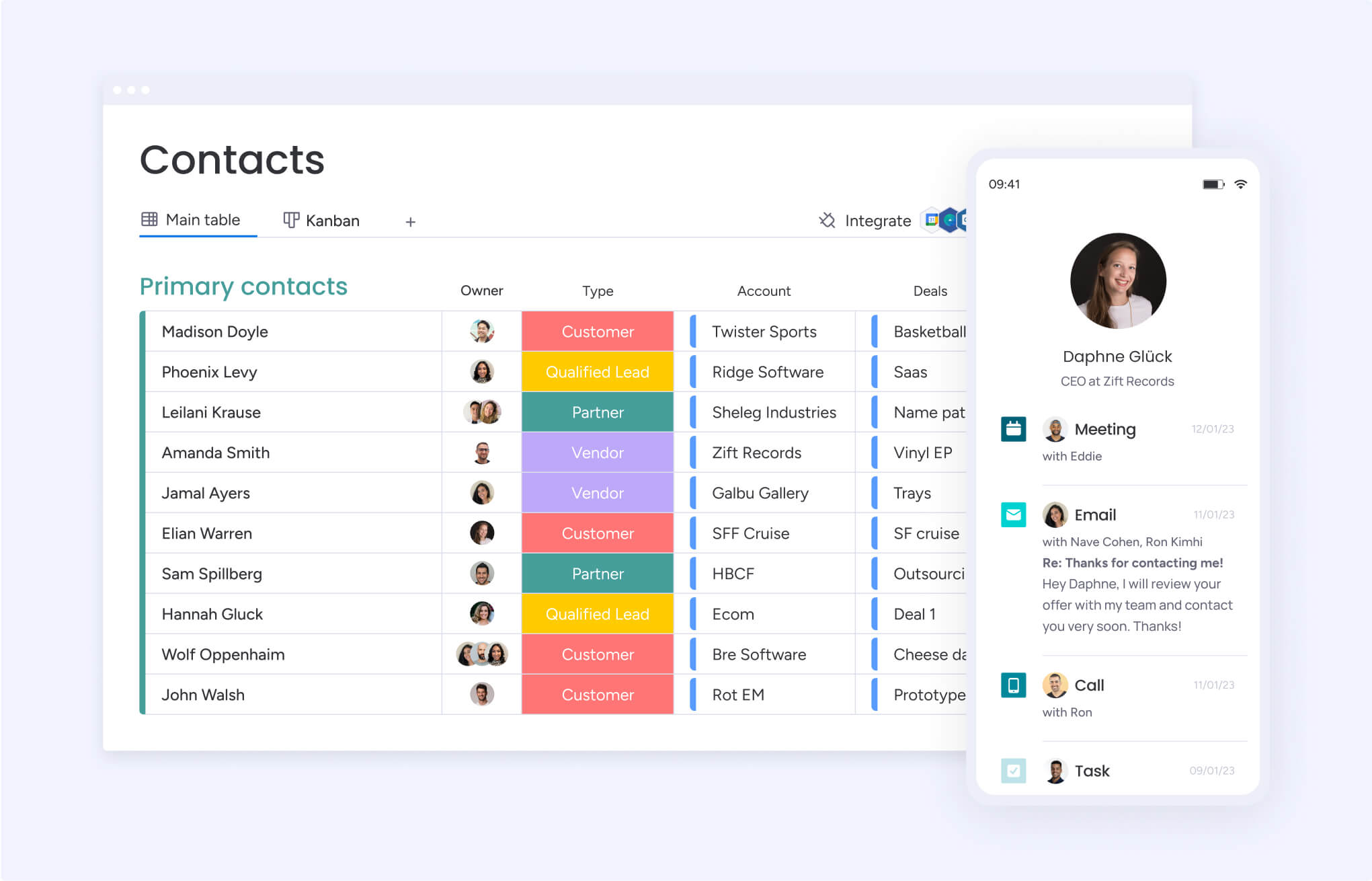
Project organization for distributed teams
Organizing projects across distributed teams requires shifting from presence-based management to outcome-focused coordination. When teams operate across multiple locations, structure replaces physical proximity. Success depends on intentional workflows that bridge distance and create shared understanding across time zones and cultures.
Digital collaboration that bridges distance
Effective distributed organization relies on asynchronous workflows. Teams record decisions, updates, and feedback in a central platform instead of depending on hallway conversations. This documentation-first approach ensures team members in London have the same context as colleagues in New York.
Virtual meetings focus on decision-making and team bonding rather than status updates. Integrating communication tools with work management platforms reduces context switching and keeps teams focused on execution. Teams can manage complex projects without switching tabs by connecting platforms like Microsoft Teams, Gmail, Slack, and Jira.
Time zone coordination strategies
Managing across time zones requires either a follow-the-sun model or defined overlap windows. Teams establish core hours: a two- to four-hour block when everyone is available for synchronous collaboration.
Outside these hours, handoff protocols maintain continuity:
- Documentation standards: every decision and update must be recorded in accessible formats.
- Handoff checklists: structured templates ensure no detail is overlooked during transitions.
- Asynchronous review cycles: work moves through defined stages without real-time approval.
A developer finishing their day in Europe leaves clear notes for the QA engineer starting in the US. This continuous cycle advances projects without requiring team members to work unsustainable hours.
Building connected team culture
Culture unites distributed teams. Shared purpose comes from regular virtual town halls and transparent visibility into how individual contributions impact company goals.
Psychological safety arises from normalizing asynchronous communication and respecting offline time. Onboarding new remote team members should be explicit, providing immediate access to project history, documentation, and social channels to foster belonging.
Creating dynamic project organization charts
Project organization matters even more when teams are distributed.
Without shared space, clarity cannot rely on quick conversations. Roles, workflows, and decision paths must be explicit. Visibility replaces proximity.
The sections below outline how to structure distributed projects so distance does not slow delivery.
Essential elements of modern org charts
A functional project org chart includes more than names and titles. It incorporates role definitions, skill sets, availability, and matrix lines showing dual reporting relationships. This detail allows for rapid resource identification.
Key components include:
- Role definitions: Specific responsibilities and decision-making authority for each position.
- Skill matrices: Technical and soft skills available within the team.
- Availability indicators: Current capacity and upcoming commitments.
- Reporting relationships: Both functional and project-based lines of authority.
During a crisis, a manager can quickly identify who has the skills and bandwidth to assist. The chart becomes a decision-support tool rather than a static reference document.
Digital tools for real-time visualization
Platforms generate organization charts dynamically using real-time project data. Unlike manual diagrams that quickly become outdated, integrated tools reflect current organizational structures automatically.
This accessibility ensures that every stakeholder, regardless of tenure, understands the team structure. Real-time visualization aids decision-making by highlighting structural gaps or heavy dependencies on single individuals.
Adapting charts for Agile environments
Agile projects require fluid structures that evolve with the work. Teams form and disband based on sprint goals or feature sets. Dynamic charts accommodate this by allowing rapid reconfiguration.
A squad structure may exist for only six weeks. Organizational visualization must reflect these temporary alignments without confusion, ensuring accountability remains clear even in high-velocity environments.
AI-powered project organization
Artificial intelligence acts as a force multiplier for project organization, processing data at a scale human managers cannot achieve. AI also shifts focus from administrative upkeep to strategic decision-making.
It doesn’t replace the project manager but in 2026 it provides predictive insights that prevent organizational bottlenecks and failure.
Automated resource optimization
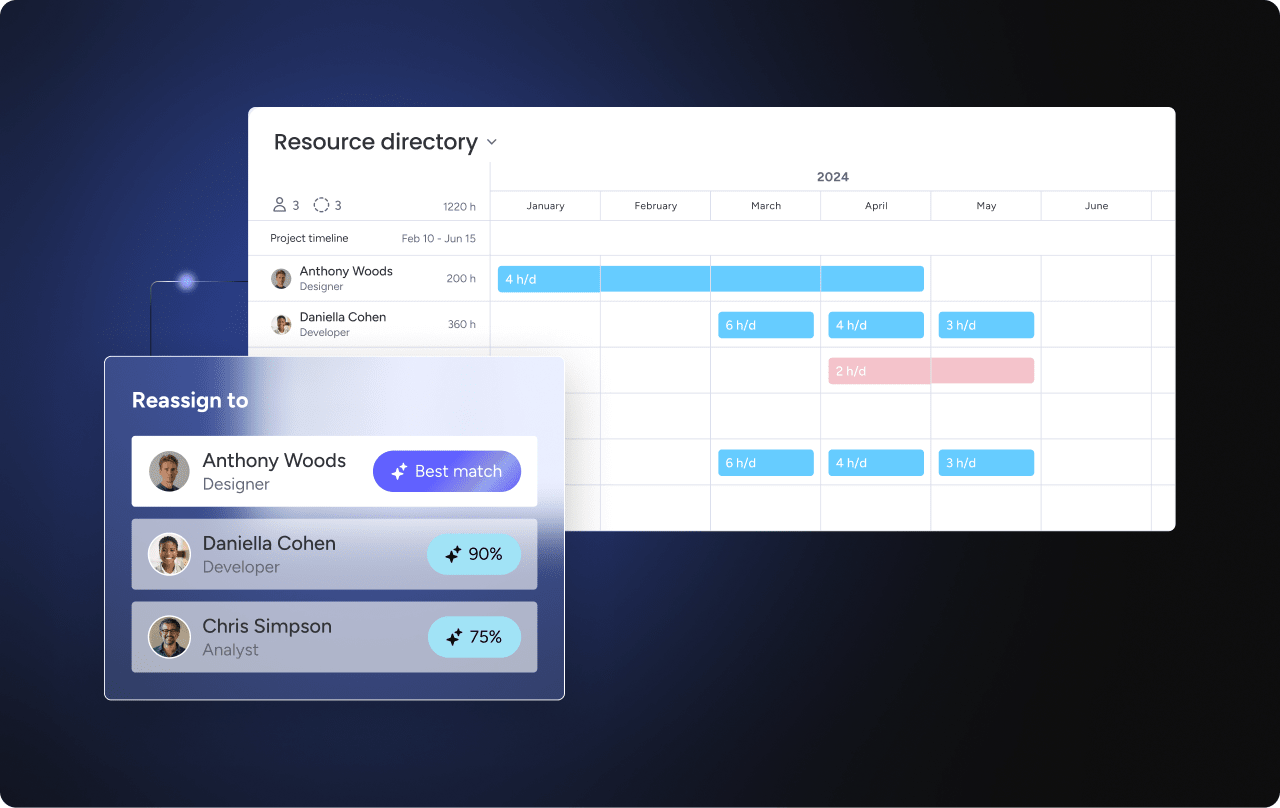
AI algorithms analyze historical performance data and current capacity to recommend the most effective resource distribution. By assessing skill sets against project requirements, the system suggests assignments that balance workloads across the team.
This predictive scheduling identifies potential burnout risks before they occur:
- Workload analysis: Identifies team members approaching capacity limits.
- Skill matching: Suggests optimal assignments based on expertise and availability.
- Performance patterns: Recognizes when specific combinations of people and tasks produce superior results.
If a designer consistently becomes overloaded in the final week of a sprint, AI highlights this pattern, allowing managers to adjust plans proactively. Teams using modern work management platforms can assign the right people to the right projects while considering effort, skill level, availability, and expertise.
Predictive risk identification
Machine learning models examine project parameters to detect anomalies that indicate risk. These systems evaluate patterns such as work types prone to overruns or vendors with histories of late deliveries to forecast potential delays.
Early warning systems alert leadership to minor deviations in scope or budget before they escalate. Portfolio Risk Insights scans all project boards, quickly flagging potential risks by severity so teams can address critical issues at a glance.
Intelligent workflow coordination
AI improves workflow efficiency by managing dependencies and handoffs. Intelligent agents identify bottlenecks in processes, such as approval steps that consistently delay progress.
The system can automate routine prioritization, suggesting which items to tackle next based on deadlines and impact on the critical path. By adapting to team work patterns, AI refines workflows to match operational reality rather than forcing teams to follow rigid theoretical models.
Try monday work management
7 best practices for managing multiple projects
Managing a portfolio of projects requires different skills than managing a single initiative. The focus shifts to resource arbitration, strategic alignment, and standardization across the organization.
Success also depends on systems that prevent projects from competing destructively while maintaining excellence at the individual project level.
1. Implement portfolio-level visibility: Executives need high-level views that consolidate data from all active projects. Centralized dashboards display health status, budget consumption, and milestones across the portfolio. This visibility prevents watermelon reporting by allowing leaders to drill into source data.
2. Balance resources across projects: Resource contention is a primary challenge in multi-project environments. Effective management uses shared resource pools and priority frameworks to guide allocation decisions. When two projects compete for the same asset, choices are based on strategic value, not urgency or escalation.
3. Align projects with strategic goals: Every project should link to organizational objectives. Portfolio reviews assess whether active initiatives still support company strategy. Strategic pivots may require pausing or canceling projects that no longer align.
4. Standardize core processes: While projects differ, management methods should remain consistent. Templates, approval workflows, and reporting formats reduce cognitive load on teams moving between initiatives and ensure consistent interpretation of progress indicators.
5. Enable cross-project communication: Interdependencies are common sources of failure. Formal channels between project managers ensure delays in one project are communicated promptly to connected initiatives.
6. Monitor dependencies proactively: Mapping portfolio dependencies reveals the critical path across the organization. Advanced tracking ensures slippage in one area triggers alerts in connected initiatives, enabling synchronized schedule adjustments.
7. Adapt structures based on data: Organizational design should evolve. Performance analysis reveals structural weaknesses, suggesting when a functional, matrix, or hybrid structure may better support successful outcomes. Continuous improvement relies on leveraging this data to refine operations.

“monday.com has been a life-changer. It gives us transparency, accountability, and a centralized place to manage projects across the globe".
Kendra Seier | Project Manager
“monday.com is the link that holds our business together — connecting our support office and stores with the visibility to move fast, stay consistent, and understand the impact on revenue.”
Duncan McHugh | Chief Operations OfficerTurning project organization into a competitive advantage
Project organization is not paperwork, it’s performance infrastructure.
When ownership is clear, workflows are visible, and priorities are aligned, teams execute with confidence. Fewer decisions are revisited. Fewer dependencies fall through the cracks. Complex initiatives feel coordinated instead of chaotic.
At scale, that clarity compounds. Organizations that structure work intentionally deliver faster, adapt sooner, and operate with far less friction.
Technology plays a central role in making that possible. monday work management brings structure, visibility, and automation into one workspace, connecting strategy to day-to-day execution. Teams gain real-time insight into progress, resources, and risks without juggling disconnected tools.
Strong outcomes start with strong organization. The right structure, supported by the right platform, makes high-impact delivery repeatable.
Frequently asked questions
What is the difference between a functional organization and a project organization?
A functional organization groups employees by specialized expertise with permanent reporting lines, while a project organization assembles team members around temporary objectives.
What are the 4 types of project organizational structure?
The four types are functional (department-based), matrix (dual reporting), projectized (dedicated teams), and hybrid (a mixed approach).
Who is responsible for creating the project organizational structure?
The project manager typically collaborates with functional managers and executive leadership. In larger enterprises, a project management office often establishes standard frameworks.
How do you organize multiple projects simultaneously?
Effective multi-project management requires portfolio-level visibility, strategic resource balancing, and standardized processes across initiatives. Work management platforms provide centralized dashboards and automated workflows to track dependencies and progress.
What is the best organizational structure for agile teams?
Agile teams generally thrive in projectized or hybrid structures that minimize hierarchy and support cross-functional collaboration, enabling rapid decision-making and flexibility during sprints.
Can AI improve project organization?
AI enhances project organization by automating resource allocation, identifying risks through pattern recognition, and optimizing workflows based on team performance data. This allows managers to focus on strategy rather than administrative coordination.

 Get started