


Black Friday arrives whether your team is ready or not. In retail, deadlines don’t negotiate — and when projects fall out of sync across hundreds of locations, revenue opportunities vanish while customer experiences suffer.
This guide shows you how to build systems for project management in retail that actually work for the industry’s unique challenges. You’ll learn how to coordinate multi-location rollouts, create repeatable workflows for store openings and campaigns, and use AI-powered automation to keep distributed teams executing in perfect sync.
Try monday.comKey takeaways
- Create repeatable workflows for store openings, campaigns, and renovations so teams execute consistently without reinventing processes every time.
- Link store openings to expansion targets and campaigns to revenue objectives so resources flow to high-impact work that drives real results.
- Set up rules that trigger next steps automatically when milestones complete, freeing teams from constant status updates and administrative tasks.
- Group initiatives like technology rollouts and seasonal campaigns, then assign specific teams to own each category and develop specialized expertise.
- Get dashboards that show project health across every store, helping leaders spot problems early and make proactive decisions.
What is project management in retail?
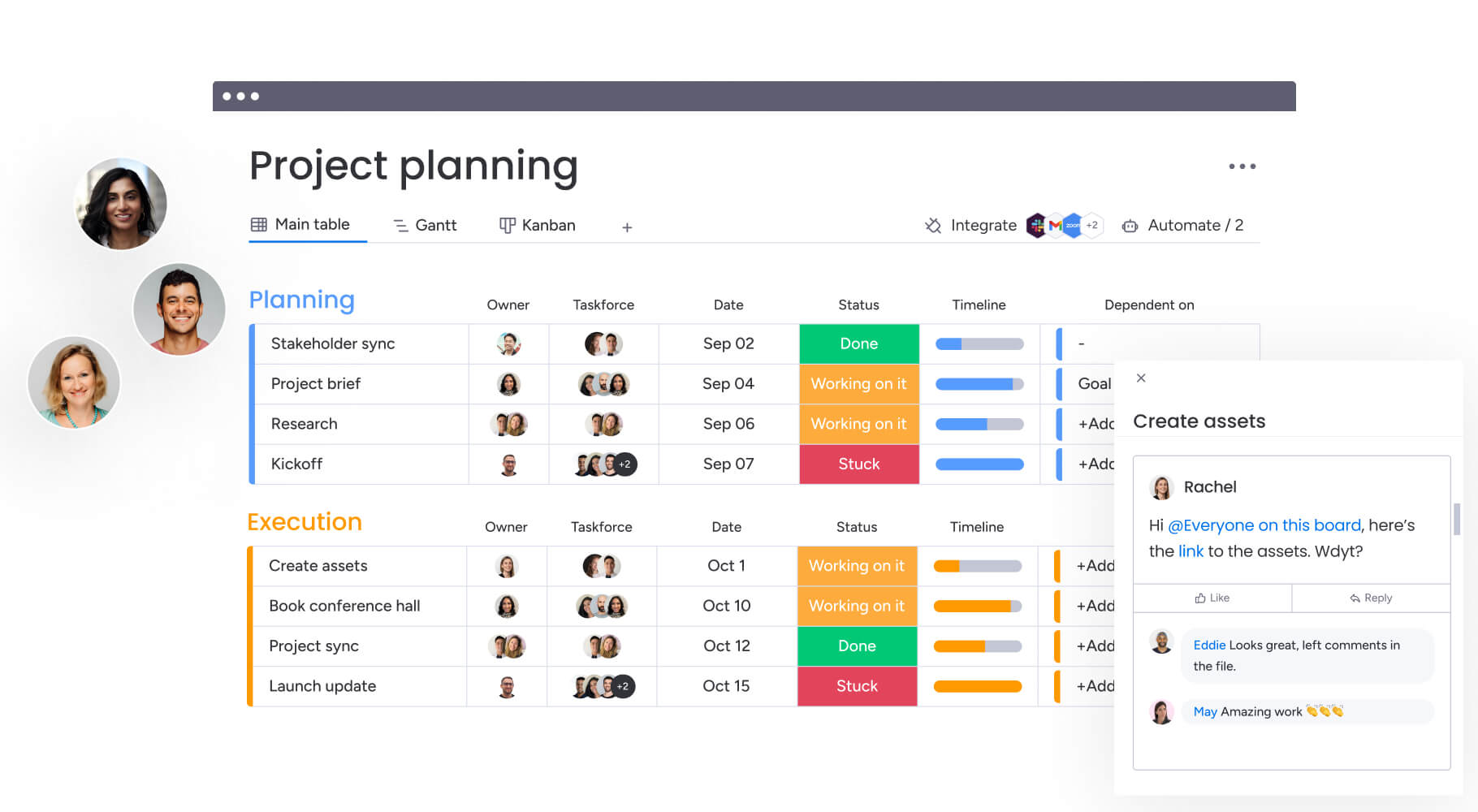
Retail project management is all about bringing structure to complex initiatives that have clear start and end points. It’s not the day-to-day stuff like inventory counts or register management — it’s the focused work with specific goals and measurable results that moves your business forward.
Running a store is operations, but opening a new store is a project. Launching a seasonal campaign is a project. Renovating a flagship location is a project. Each requires coordinated effort across multiple teams, project managers, locations, and timelines.
Retail projects share common characteristics that set them apart from other industries in project management. They often involve multiple physical locations, tight seasonal deadlines, cross-departmental coordination, and direct customer impact. A product launch might require marketing, merchandising, store operations, and supply chain teams to execute in perfect sync across hundreds of locations.
While retail project management follows core PM principles, execution looks very different in practice:
| General project management | Project management in retail | |
|---|---|---|
| Timeline drivers | Client deadlines, budget cycles | Seasonal peaks, promotional calendars |
| Stakeholder complexity | Internal teams, vendors | Multiple store locations, franchisees, vendors, customers |
| Success metrics | On-time, on-budget delivery | Sales impact, customer experience, store compliance |
| Execution environment | Centralized teams | Distributed workforce across regions |
| Change frequency | Planned iterations | Rapid pivots based on market conditions |
Retail organizations use project management to coordinate store openings, execute promotional campaigns, roll out new technology systems, manage renovations, and implement operational improvements. Each initiative requires balancing corporate standards with local market needs while maintaining speed and consistency.
Why retail organizations need structured project management
Retail operates at a pace that punishes disorganization. Seasonal windows are narrow, customer expectations are high, and competitors move fast. Without structured project management, initiatives stall, deadlines slip, and revenue opportunities disappear.
Consider what happens when a holiday campaign launches late. Marketing materials arrive after the promotional window closes. Store teams receive conflicting instructions. Inventory sits in warehouses while shelves remain empty. The financial impact compounds across every affected location.
Structured project management addresses these challenges by creating accountability, visibility, and coordination. Here’s what retail organizations gain when they formalize their approach:
- Predictable execution: Standardized processes mean teams know exactly what to do and when, reducing confusion during high-pressure periods.
- Resource management: Visibility into workloads helps leaders allocate staff, budget, and inventory where they’re needed most.
- Risk identification: Tracking dependencies and milestones surfaces potential problems before they derail timelines.
- Cross-functional alignment: Shared workspaces keep marketing, operations, merchandising, and finance working toward the same goals.
- Scalable growth: Documented processes make it possible to replicate success across new locations and markets.
Real-time dashboards in project management software display project health across all locations. Leaders can see which store openings are on track, which campaigns need attention, and where resources are stretched thin. This visibility transforms decision-making from reactive guesswork to proactive management.
The cost of unstructured project management shows up in missed deadlines, duplicated effort, and frustrated teams. Structured approaches turn scattered coordination into unified execution.
Try monday.com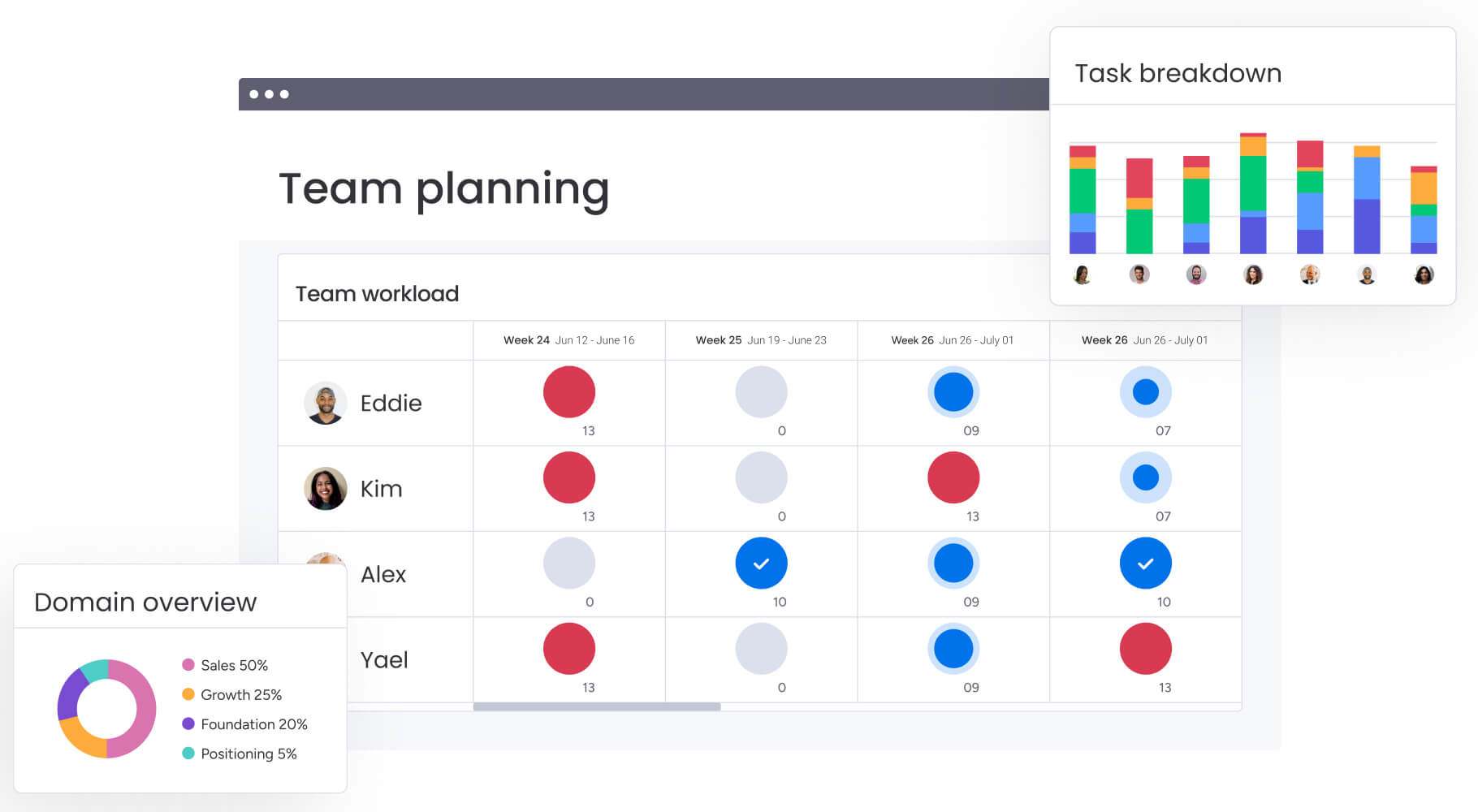
Common retail project types and their unique challenges
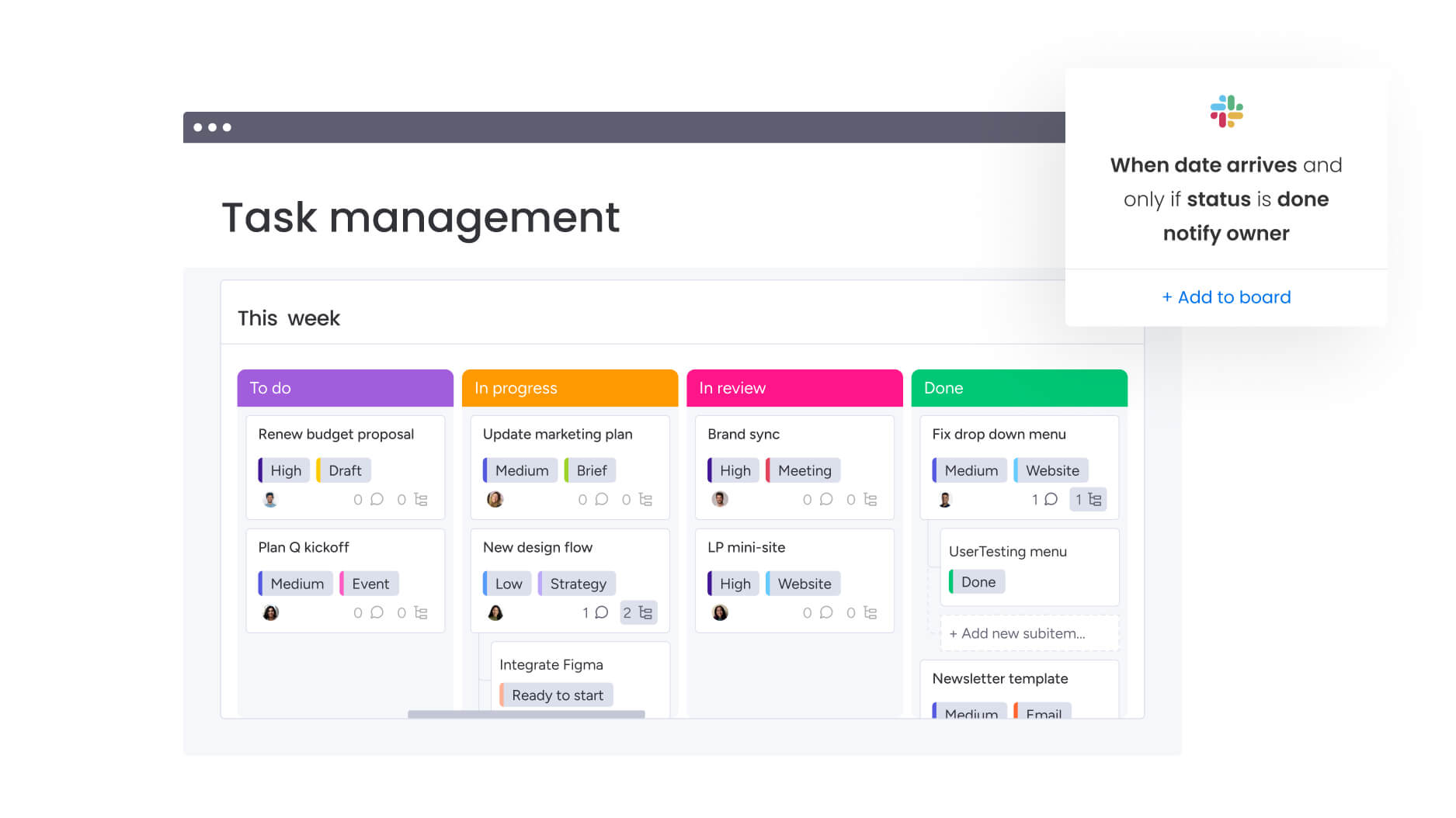
Retail projects span a wide range of initiatives, each with distinct requirements and obstacles. Understanding these project types helps organizations build appropriate workflows and anticipate common pitfalls. Each category presents unique coordination challenges that require specialized approaches.
Store openings and renovations
Store openings involve coordinating construction, permits, staffing, inventory, marketing, and technology installation through project management. These projects require precise sequencing since you can’t train staff before the registers are installed, and you can’t stock shelves before fixtures arrive. Delays in one area cascade through the entire timeline.
For example, when a national retailer opens 20 new locations in a quarter, a delayed permit approval in one city can push back training, inventory delivery, and marketing — creating a ripple effect that impacts the entire launch schedule if dependencies aren’t tracked centrally.
Seasonal campaigns and promotions
These projects operate under fixed deadlines that cannot move. Black Friday happens on Black Friday, regardless of whether your team is ready. These projects demand tight coordination between marketing creative, inventory positioning, store signage, and staff training.
Technology rollouts
Technology projects introduce new point-of-sale systems, inventory management platforms, or customer experience applications. These projects require careful change management since store teams need training, and systems need testing before going live across hundreds of locations.
A common example is a POS rollout where stores receive hardware on time but training materials lag behind, forcing teams to delay go-live or operate inefficiently during high-traffic periods.
Product launches
Product launches coordinate merchandising, marketing, supply chain, and store operations to introduce new items or categories. Success depends on having the right inventory in the right stores with the right promotional support at the right time.
Operational improvement initiatives
These projects address process changes like new return policies, updated safety protocols, or revised staffing models. These projects require communication and training across distributed teams who may never meet in person.
For example, when a retailer updates its return policy, unclear timelines or inconsistent store communication can lead to uneven enforcement, customer frustration, and increased support tickets — even if the policy itself is well designed.
Smart retail teams create custom templates for each project type rather than starting from scratch every time. For example, on monday.com, you’ll find teams building store opening boards that map every step from lease signing to grand opening celebration. These templates keep execution consistent while still letting regional teams adapt for local needs.
5 steps to implement effective retail project management
Creating effective retail project management doesn’t happen by accident — you need a deliberate approach. These 5 steps will help you transform chaotic, last-minute scrambling into a smooth, repeatable system:
Step 1: Define project categories and ownership
Start by identifying the types of projects your organization runs regularly. Group them into categories like store development, marketing campaigns, technology implementations, and operational changes. Assign ownership for each category to specific roles or departments.
This categorization creates accountability and allows you to develop specialized expertise. The team that manages store openings becomes expert at construction timelines and permit requirements. The team that handles campaigns understands promotional calendars and creative workflows.
Step 2: Create standardized templates and workflows
Document the steps, milestones, and deliverables for each project category. Build templates that capture this institutional knowledge so teams don’t reinvent processes for every new initiative.
Effective templates include:
- Task lists with clear ownership assignments
- Timeline estimates based on historical data
- Dependency relationships between activities
- Approval checkpoints at critical milestones
Organizations using smart work management software can build templated project boards that automatically populate with the right structure when a new project launches. Automations assign owners, set deadlines, and notify stakeholders without manual intervention.
Step 3: Establish visibility and reporting structures
Determine what information different stakeholders need and how often they need it. Executives require portfolio-level views showing all active projects and their status. Regional managers need visibility into their specific locations. Store managers need their action items and deadlines.
Build dashboards that serve each audience. Real-time reporting eliminates status meetings and email chains while ensuring everyone works from accurate, current information.
Step 4: Integrate with existing systems and processes
Retail organizations already use systems for inventory, point-of-sale, marketing automation, and financial management. Project management platforms must connect to these systems to create a single source of truth for all project-related information.
Integrations allow project status to reflect real-world progress:
- When inventory arrives at a distribution center, the project timeline updates automatically.
- When marketing assets are approved, the next phase triggers without manual intervention.
- When permits are issued, construction phases activate immediately.
Step 5: Train teams and iterate based on feedback
Roll out new processes gradually, starting with pilot projects or regions. Gather feedback from teams using the system daily. Identify friction points and adjust workflows accordingly.
Adoption depends on teams finding genuine value in the new approach. When project management reduces their workload rather than adding administrative burden, adoption increases naturally.
Try monday.comHow AI and automation transform retail project execution
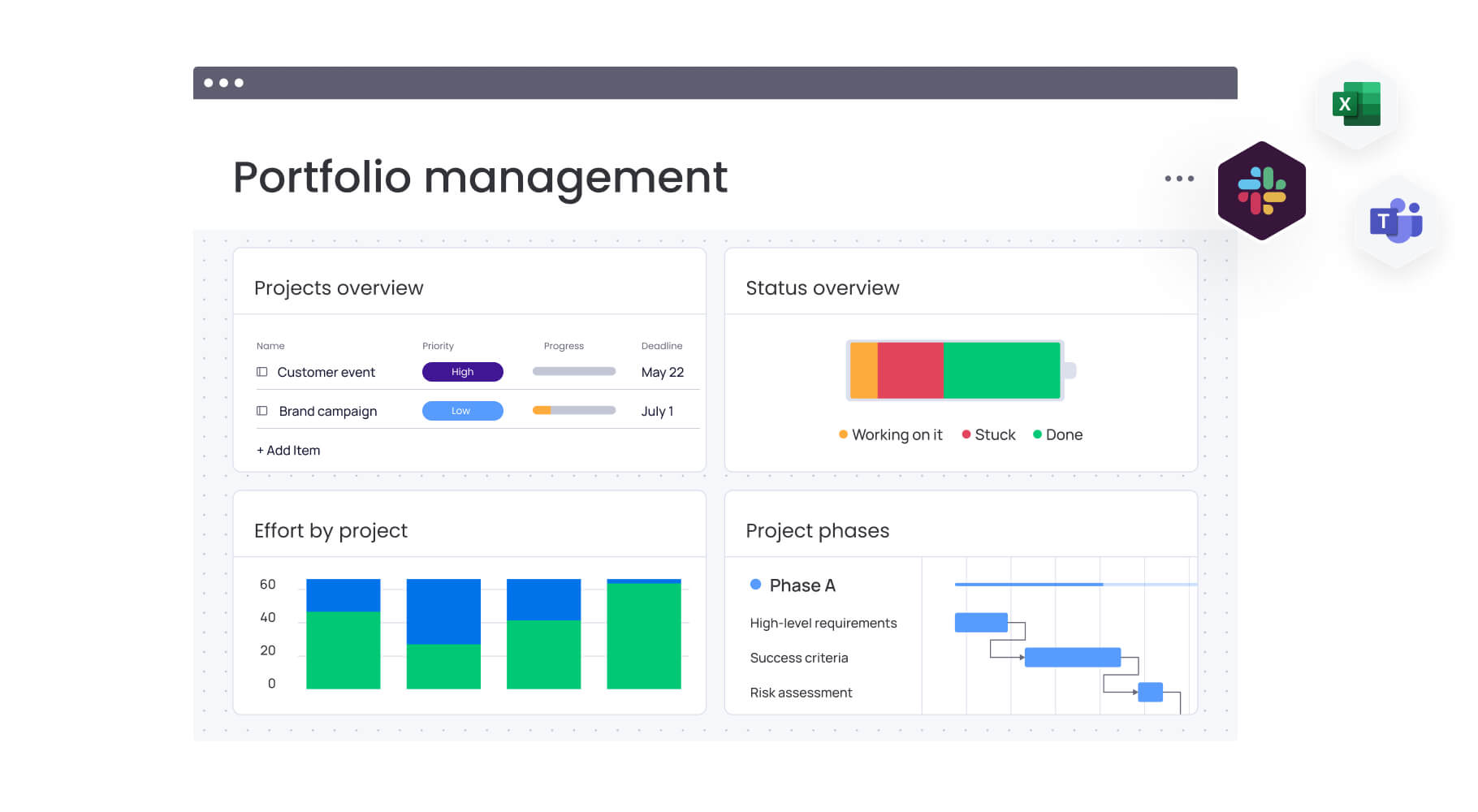
Manually coordinating retail projects across multiple locations is complex and often leads to errors. That’s why smart teams use automation and AI to handle the tedious parts, freeing people to tackle work that requires human judgment. This shift is particularly game-changing in retail, where you’re often juggling dozens of projects across hundreds of locations.
Automation handles routine actions that previously required human attention:
- When a milestone completes, the next phase begins automatically.
- When a deadline approaches, reminders go to the right people.
- When a vendor submits deliverables, approval workflows trigger without anyone clicking buttons.
Teams configure rules like “when construction reaches 80% complete, notify the training team to schedule staff onboarding” or “when inventory arrives at the distribution center, update the campaign launch timeline.” These automations ensure every step is accounted for and completed on time during complex, multi-location initiatives.
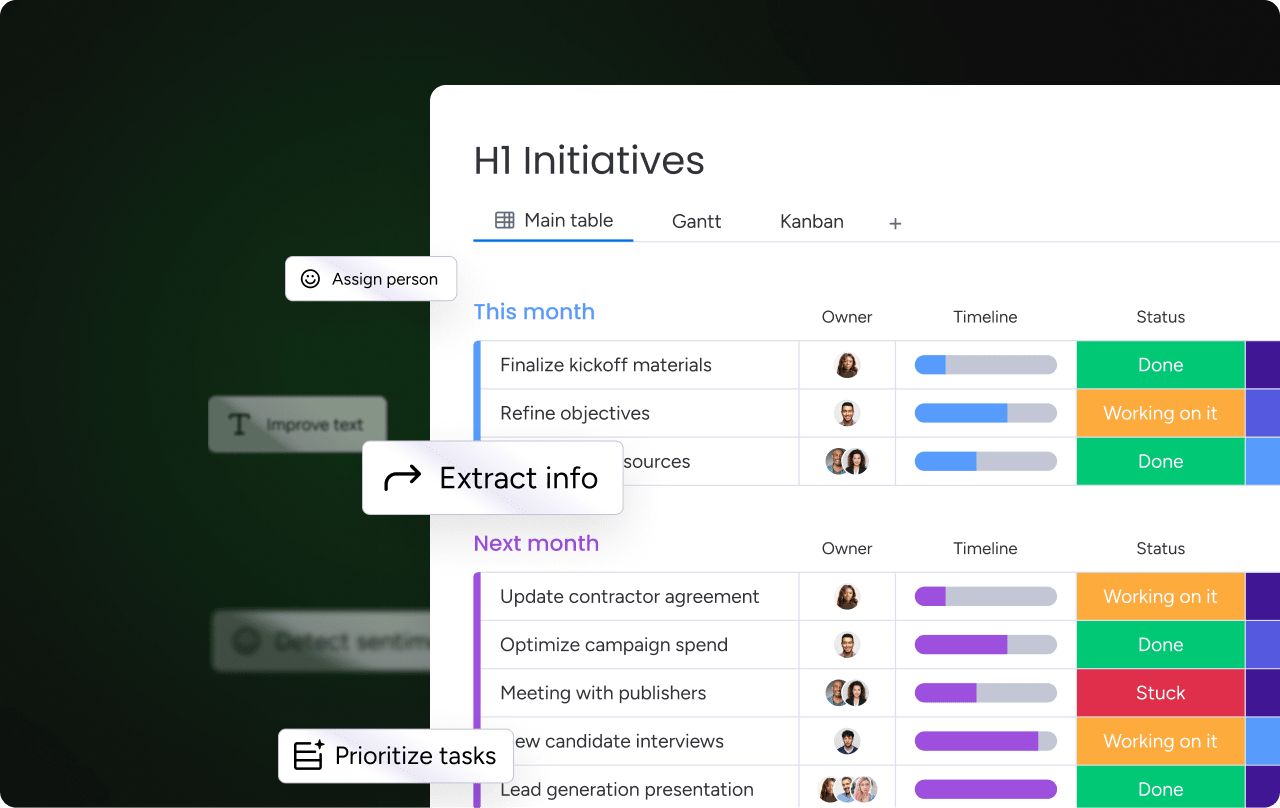
AI capabilities extend beyond simple automation to intelligent analysis and prediction. AI-powered features available through smart software like monday.com include:
- Risk identification: AI scans project portfolios to flag initiatives showing warning signs, allowing leaders to intervene before problems escalate.
- Resource allocation: AI analyzes team capacity, skills, and availability through resource management features to suggest optimal assignments for new projects.
- Data categorization: AI automatically labels and organizes incoming requests, routing them to appropriate teams without manual triage.
- Content summarization: AI extracts key points from lengthy documents, meeting notes, or customer feedback, saving hours of review time.
These capabilities prove especially valuable in retail, where the volume of projects, locations, and stakeholders makes manual oversight impractical. AI helps leaders maintain high-level visibility across hundreds of simultaneous initiatives, allowing them to focus on the most critical information.
Connecting daily retail work to strategic business goals
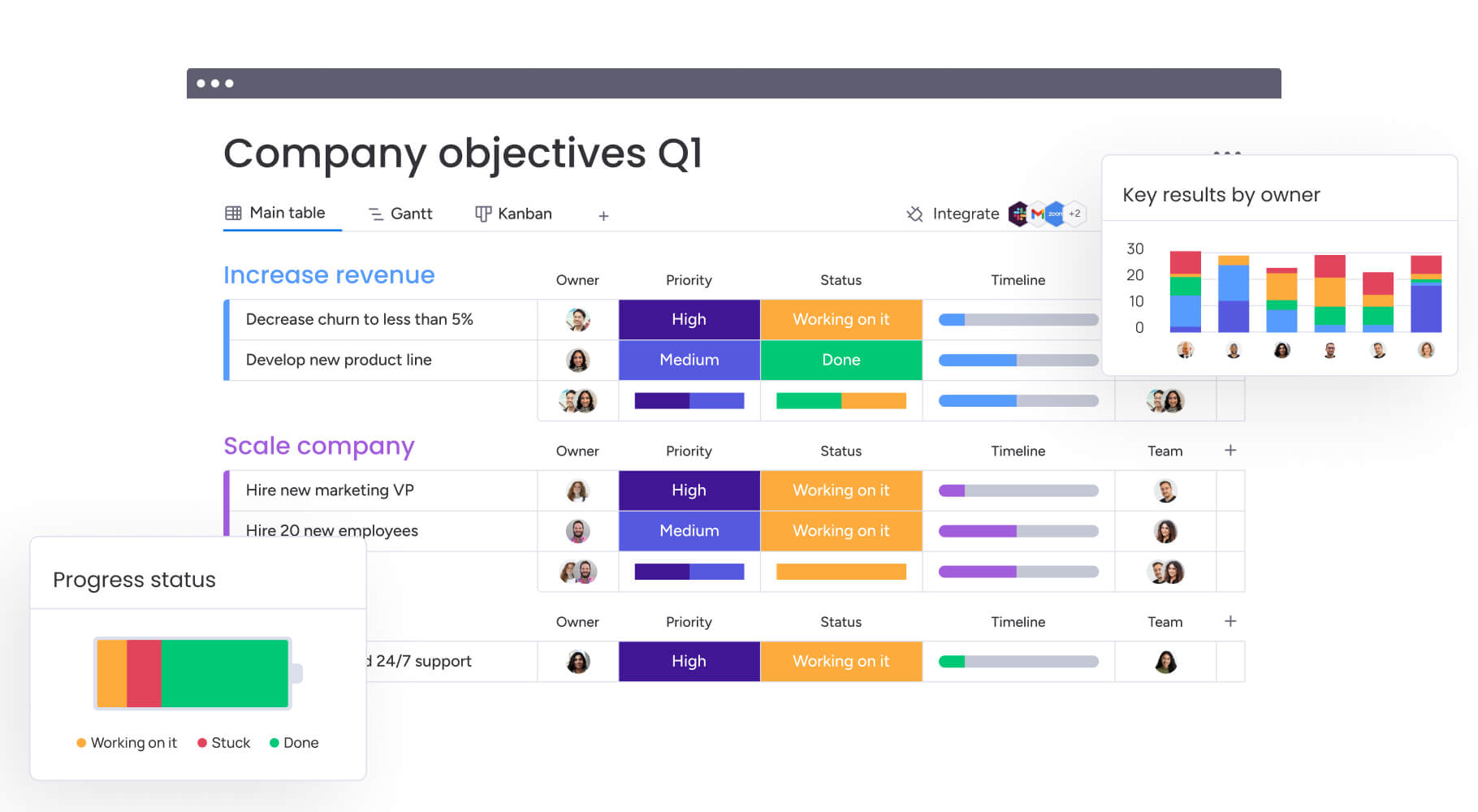
Project execution matters only when it advances business objectives. The most effective project management approaches succeed by ensuring every initiative directly contributes to the organization’s strategic goals. Effective retail project management connects every project to strategic goals to ensure resources flow to high-impact work.
Store openings support expansion targets. Campaigns drive revenue objectives. Technology implementations enable customer experience improvements. This connection ensures resources flow to high-impact work.
Can your current projects connect to company priorities? When teams can answer this question, it’s a clear sign that their work is strategically aligned.
Organizations gain this connection through goals and OKRs features in monday.com. Strategic objectives sit at the top, with projects and tasks linked beneath them. Dashboards show progress toward goals based on the actual completion of underlying work, not subjective estimates.
This structure provides several benefits:
- Prioritization guidance: When resources are constrained, teams know which projects matter most based on their strategic connection.
- Progress visibility: Executives see how daily execution translates to goal achievement without requesting status updates.
- Accountability: Project owners understand how their work contributes to organizational success.
- Resource justification: Budget and staffing requests connect directly to strategic priorities, making approval decisions straightforward.
Retail organizations that connect execution to strategy outperform those that treat projects as isolated activities. Every store opening, campaign launch, and technology rollout becomes part of a larger narrative of organizational progress.
Build retail project management that drives results
When done right, retail project management turns what was once a chaotic mess into a well-oiled machine that delivers real business results. Companies that commit to structured approaches don’t just execute more predictably — they also make better use of their resources and can quickly roll out winning strategies across their entire footprint.
Teams using monday.com experience this transformation firsthand. They move from reactive firefighting to proactive management, from isolated projects to strategic alignment, and from manual coordination to automated execution. The result is faster project delivery, better resource utilization, and stronger business results.
Try monday.comFAQs
What is the role of a project manager in retail?
A retail project manager coordinates initiatives like store openings, campaigns, renovations, and technology rollouts by planning timelines, managing resources, tracking progress, and ensuring cross-functional teams deliver on schedule.
What are the 5 stages of project management?
The 5 stages are initiation, planning, execution, monitoring and controlling, and closing, which provide a framework for moving projects from concept through completion.
What software do retail companies use for project management?
Retail companies use platforms that support multi-location coordination, cross-departmental collaboration, and real-time visibility, with monday.com being a popular choice for its customizable workflows and automation capabilities.
How is retail project management different from other industries?
Retail project management differs due to its multi-location complexity, seasonal deadline pressure, distributed workforce coordination, and direct customer impact requirements.
What skills do retail project managers need?
Retail project managers need skills in stakeholder communication, timeline management, cross-functional coordination, vendor management, and the ability to adapt quickly to changing market conditions.
How can small retail businesses implement project management?
Small retail businesses can start with standardized templates for common initiatives, use visual boards to track progress, and gradually add automations as processes mature.

 Get started