

Every organization juggles two priorities: keeping daily work running and building what comes next. Operations teams ensure payroll processes, customer support flows, and inventory systems run smoothly every day. Project teams launch new products, implement software upgrades, and drive strategic initiatives with defined timelines and budgets. Both matter, but they usually run on different tracks.
Understanding the difference between ops and projects changes how you plan work, run it, and know if it’s working. Operations management focuses on sustaining and optimizing ongoing business processes that keep revenue flowing and customers satisfied. In contrast, project management delivers specific outcomes through temporary initiatives that create new capabilities or drive organizational change.
We’ll break down what separates ops from projects, where they overlap, and how AI is changing both. You’ll see what skills matter most for each role, how to share resources without conflict, and why a unified platform beats juggling separate systems.
Key takeaways
- Unify operations and projects on one platform: solutions like monday work management eliminate silos by managing ongoing processes and temporary initiatives together, giving leaders complete visibility across all work.
- Operations sustain while projects transform: operations keep your business running daily through ongoing processes, while projects deliver specific changes with clear start and end dates.
- Resource conflicts hurt both functions: when operations and project teams compete for the same people without coordination, both suffer from overcommitment and missed deadlines.
- AI optimizes resource allocation automatically: predictive analytics help assign the right people to the right work based on skills, availability, and workload to prevent burnout.
- Success metrics differ but both matter: operations focus on efficiency trends and uptime, while projects measure deliverable quality and timeline adherence, but both drive organizational growth.
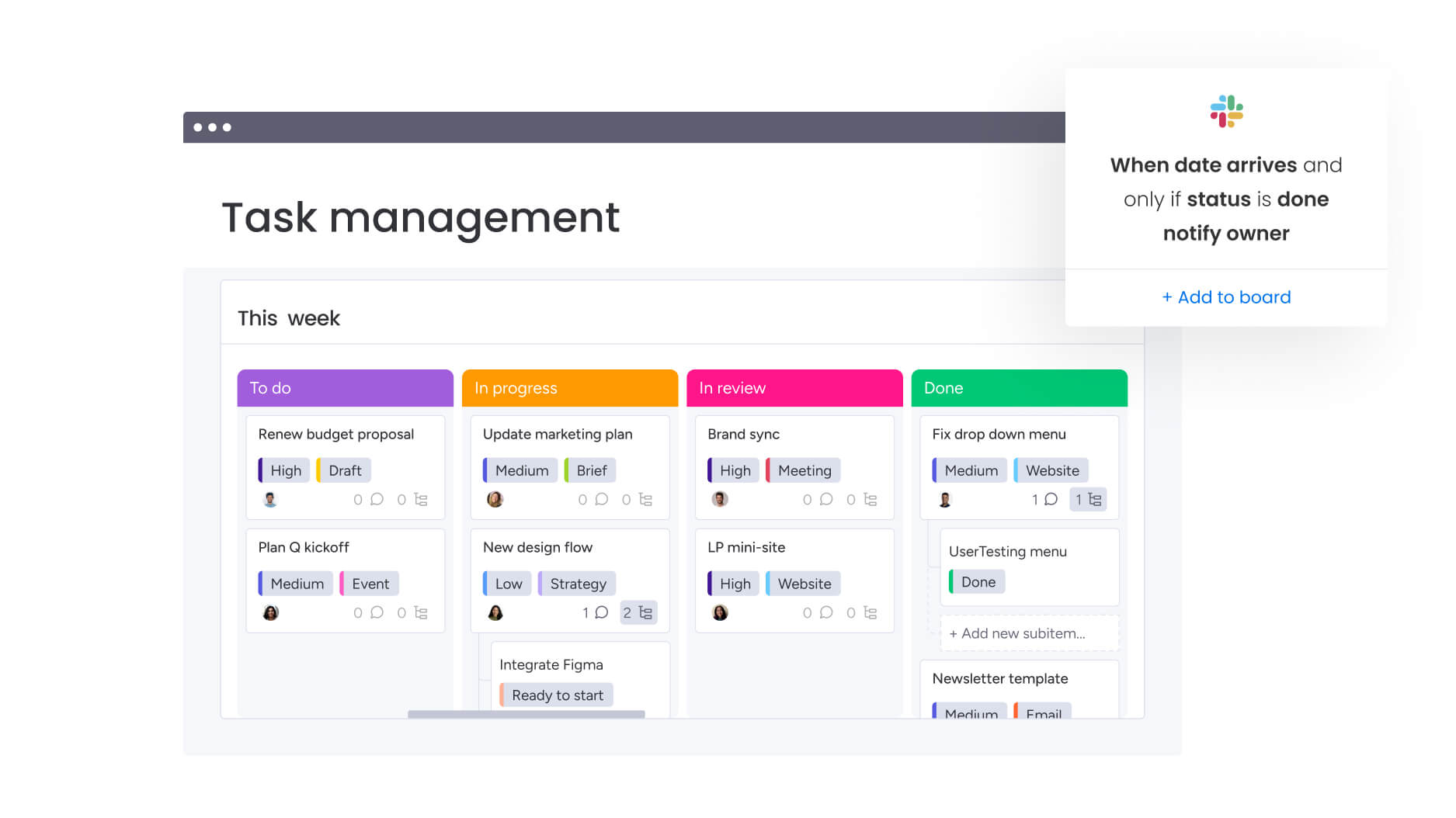
What is operations management?
Operations management is the practice of overseeing and optimizing the day-to-day activities that keep a business running. It’s about turning resources (people, materials, tech, and time) into products and services that customers actually want and that make money.
Whether a hospital system is coordinating patient flow or a retail chain is managing inventory across hundreds of locations, the objective remains the same: ensuring activities run smoothly and efficiently.
Digital platforms have transformed this discipline into an enterprise operating system. Rather than juggling spreadsheets and manual reports, operations managers now use integrated work management systems to monitor real-time performance. Now you can see what’s broken right away instead of waiting weeks for a report to tell you.
Data shows that roughly 90% of U.S. SMEs now use integrated software solutions for payments or business management, up from 48% in 2022, reflecting how digital platforms have become the operational backbone for routine work.
Focus on ongoing business processes
Ops work is repetitive and ongoing and it’s what keeps the company standing. These processes ensure payroll goes out, servers maintain uptime, and customers get the support they expect. Unlike projects that end, ops work never stops and it needs to be stable and consistent.
Understanding core operational processes helps leaders identify where to focus improvement efforts through operational projects and where automation can reduce manual burden. Understanding core operational processes helps leaders identify where to focus improvement efforts and where automation can reduce manual burden.
Key processes that benefit from this oversight include:
- Inventory management: continuous tracking of stock levels, reordering triggers, and storage optimization to ensure materials are available without tying up excessive capital.
- Quality control: rigorous testing protocols to ensure every unit or service meets established standards and protects brand reputation.
- Customer service operations: managing daily support tickets, maintaining response times within service level agreements, and keeping satisfaction scores high through consistent delivery.
- Supply chain coordination: maintaining vendor relationships and logistics to ensure steady material flow and timely distribution.
- Daily reporting: routine collection and analysis of performance data that allows leadership to monitor organizational health and make micro-adjustments.
Continuous improvement and efficiency
Continuous improvement distinguishes high-performing operations teams through methodologies such as Lean, Six Sigma, and Kaizen. These frameworks systematically identify waste and drive incremental process enhancements: reducing cycle times, decreasing error rates by measurable percentages that compound into significant gains over time.
Recent data shows U.S. nonfarm business labor productivity rose at a 4.9% seasonally adjusted annual rate in Q3 2025 while unit labor costs fell 1.9%, quantifying the efficiency and cost-control gains that effective operations management delivers.
Operations teams often identify recurring bottlenecks, such as those found at an order fulfillment labeling station, by applying Lean principles and utilizing tools like an impact effort matrix. Through this analysis, they can effectively rearrange work spaces and adjust staffing to ensure a smoother, more efficient workflow.
To support these efforts, organizations using solutions like monday work management can automate routine monitoring and flag anomalies instantly through real-time dashboards. This provides leadership with the empirical data required to justify necessary process changes, ensuring the company remains both efficient and profitable through a constant focus on optimization.
Managing core business functions
Operations management connects departments across the organization, ensuring they function as a coordinated system rather than isolated units. When finance, HR, supply chain, and customer service align under strong operational oversight, the entire business runs more efficiently and responds faster to challenges.
Good ops management keeps these functions aligned and accountable:
- Human resources: workforce scheduling, capacity planning, and performance monitoring to ensure the right people are in the right roles at the right times.
- Finance: oversight of operational budgets, cost controls, and financial reporting to maintain profitability while delivering services.
- Supply chain: coordinating vendor networks, transport logistics, and inventory control to prevent disruptions that could halt production.
- Quality assurance: maintaining adherence to internal standards and external compliance regulations for safe, reliable, and consistent output.
- Customer service: ensuring the service delivery model is scalable and consistent, turning support from a cost center into a driver of loyalty.

“monday.com has been a life-changer. It gives us transparency, accountability, and a centralized place to manage projects across the globe".
Kendra Seier | Project Manager
“monday.com is the link that holds our business together — connecting our support office and stores with the visibility to move fast, stay consistent, and understand the impact on revenue.”
Duncan McHugh | Chief Operations OfficerWhat is project management?
Project management means using the right skills and techniques to deliver projects on time, on budget, and on scope. Basically, it’s about delivering specific outcomes through temporary work that has a start date and an end date.
A project manager navigates distinct lifecycle phases. Consider a software company launching a mobile app: once launched, maintaining it becomes operations. A construction firm building a bridge manages a project until opening, then maintenance crews take over. An HR team implementing a new benefits system runs a project, while administering those benefits next year is operations.
Project platforms help you break big goals into smaller work items, assign people, and track what’s getting done. The platform keeps your documentation and lessons saved even after the team moves on.
Temporary initiatives with defined endpoints
Every project has a start date and an end date. That deadline creates urgency you don’t get with ongoing ops work. The project lifecycle moves through initiation, planning, execution, monitoring, and closure phases.
Projects differ from ongoing operations through their defined scope, timeline, and deliverables:
- Building a new website (3-month timeline): design, development, content creation, and testing, culminating in a launch date after which the project team dissolves or moves to new initiatives.
- Relocating an office (6-month project): site selection, lease negotiation, physical build-out, and moving logistics, ending once the new office is fully functional.
- Implementing an ERP system (12-month timeline): data migration, user training, and system configuration, ending when the system goes live and transfers to operations.
Delivering specific business outcomes
Projects create change. They’re how you introduce new capabilities, products, or structures. Ops keeps things running, while projects shake things up to hit higher performance or reach new strategic goals.
Organizations use projects to drive specific types of change:
- Process improvements: implementing new workflows or methodologies like agile frameworks to increase velocity and reduce waste.
- Technology implementations: deploying software or hardware systems to modernize the tech stack and enable automation.
- Product launches: coordinating R&D, marketing, sales, and supply chain teams to bring new offerings to market within launch windows.
- Organizational changes: restructuring teams, merging departments, or integrating acquisitions to reshape business architecture.
- Compliance initiatives: meeting new regulatory requirements like GDPR or HIPAA updates to avoid legal risks and penalties.
Leading change and innovation
Project management serves as the primary mechanism through which organizations drive transformation. While operational work follows established patterns and procedures, project work requires navigating uncertainty and addressing novel challenges. Project managers guide teams through ambiguity, adapting to evolving requirements and addressing unforeseen obstacles as they emerge.
The development of an AI-powered feature serves as a prime example of this complexity. In such a project, the technology may not perform as anticipated, or competitive pressures may necessitate sudden strategic adjustments. Project managers provide the leadership required to navigate these uncertainties, managing stakeholder expectations and maintaining team alignment throughout the initiative.
Organizations using solutions like monday work management facilitate this collaboration through centralized workspaces for communication, file sharing, and real-time updates, enabling teams to maintain agility as project paths evolve.
Learn more: The benefits of project management
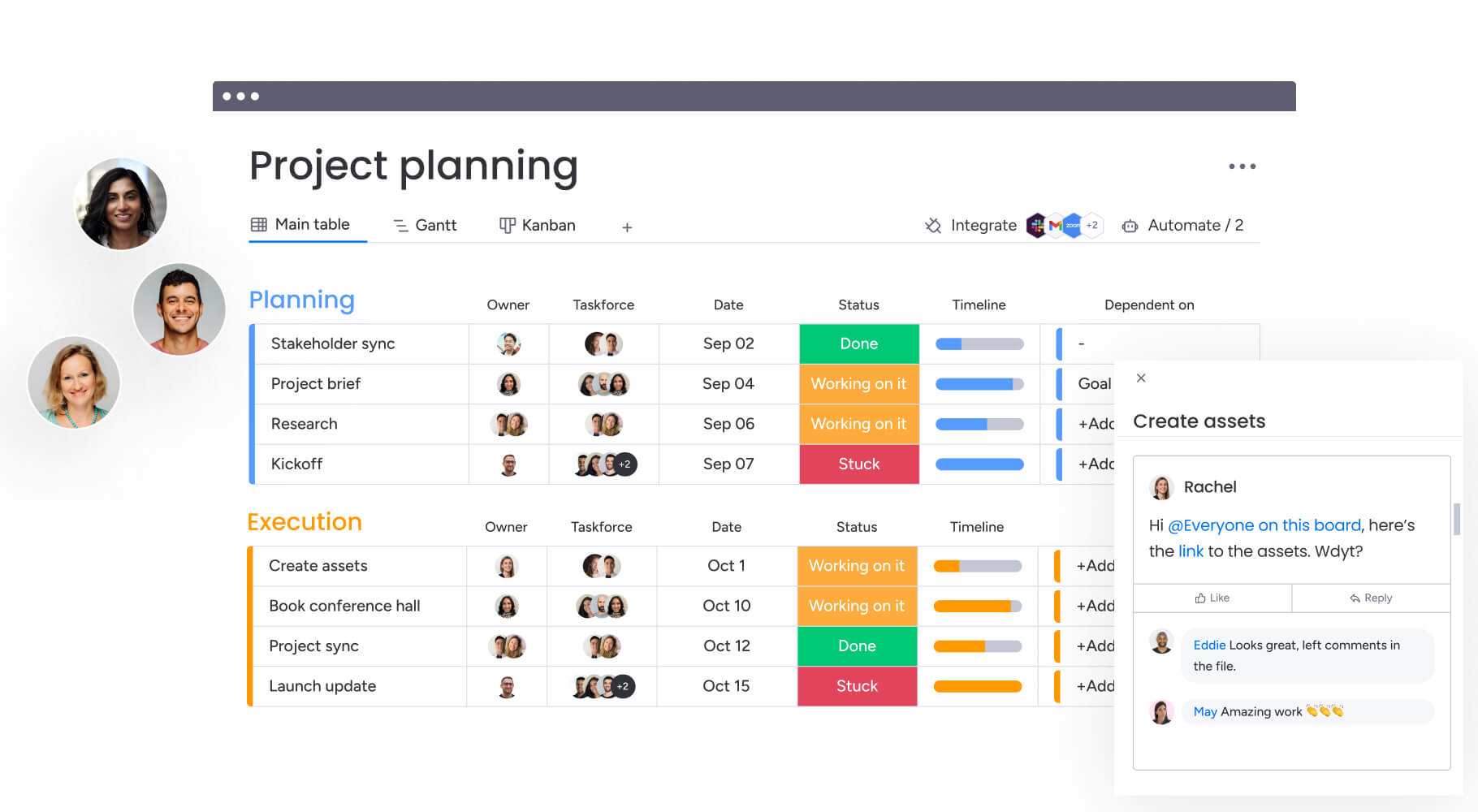
5 key differences between operations and project management
When you understand the difference, you can assign the right people, set realistic expectations, and measure what actually matters. They work differently, but you need both to succeed.
| Feature | Operations management | Project management |
|---|---|---|
| Primary focus | Sustaining and optimizing existing processes | Creating new value or delivering specific change |
| Timeline | Ongoing, cyclical, and indefinite | Temporary, linear, with fixed end date |
| Budgeting | Annual operating budgets (OpEx) | Project-based budgets (CapEx/OpEx mix) |
| Team structure | Permanent, functional departments | Temporary, cross-functional teams |
| Risk profile | Low risk, high predictability | Higher risk, higher uncertainty |
1. Timeline: ongoing vs temporary work
The most fundamental distinction lies in timeline and scope. Operations management focuses on continuity: an inventory manager oversees ongoing processes without a defined endpoint. In contrast, project management centers on finality: a project manager implementing a new CRM system works toward completion before transitioning to the next initiative.
That changes how you plan:
- Operations planning: focuses on annual cycles and year-over-year trends.
- Project planning: concentrates on the critical path to launch dates.
Get this right and you’ll know what to watch: ops teams need stability checks, project teams need milestone tracking.
2. Objectives: efficiency vs deliverables
Ops work is about doing the same thing faster and with fewer resources, while projects create something new that didn’t exist before.
Success looks different for each:
- Operational objectives: cost reduction, quality improvement, and process standardization.
- Project objectives: feature delivery, system implementation, and organizational change.
3. Resource management strategies
Operations rely on stable, dedicated teams: an accounts payable department has set accountants working together indefinitely. Projects borrow resources through temporary assemblies from different departments: designers from marketing, developers from IT, analysts from finance.
Resource management platforms help organizations visualize availability for project work without destabilizing operations. Teams using monday work management can balance workloads and allocate resources based on skills and availability, ensuring neither operations nor projects suffer from overcommitment.
4. How success is measured
Operations are measured by performance ratios and trends over time. Projects are measured by adherence to constraints and deliverable quality.
Success metrics differ significantly:
- Operations metrics: system uptime percentages, cost reduction rates, customer satisfaction scores.
- Project metrics: features delivered on schedule, budget variance, stakeholder approval ratings.
5. Team structures and reporting
Operations follow hierarchical structures where employees report to functional managers overseeing daily work and performance reviews. Projects utilize matrix structures where team members report to functional managers administratively but take direction from project managers on project work.
Modern platforms like monday work management handle this complexity by letting people see both their team work and project work in one place.
Where do operations and project management work together?
The best companies connect ops and projects instead of keeping them in separate silos. As organizations scale, managing both “run the business” and “change the business” activities becomes increasingly complex, making integration essential.
Shared planning and budgeting responsibilities
Operations and project teams must coordinate resource allocation and financial planning. Operational budgets often reserve funds for maintenance supporting project initiatives, while project planning accounts for operational constraints like peak seasons or freeze periods.
Teams need to coordinate on several fronts:
- Budget coordination: teams align operational expenses with project investments to avoid overspending.
- Resource planning: managers balance day-to-day needs with project demand spikes.
- Timeline integration: project schedules work around operational cycles, avoiding major rollouts during critical operational periods.
Resource coordination across functions
Operations and project teams frequently compete for the same limited resources. Without visibility, you get conflict and burnout, like when senior developers have to fix bugs and build features at the same time.
To coordinate well, you need:
- Skills mapping: organizations identify employees with specialized skills for high-value projects while maintaining operational duties.
- Capacity planning: leaders use data to understand true availability across both work types.
- Priority alignment: executive leadership establishes priorities for conflict resolution.
Risk and quality management
Risks are rarely contained within a single department; they spread across functions, creating a ripple effect throughout the organization. For example, an operational failure like a server outage can instantly derail critical project timelines. Conversely, a project failure, such as a buggy software release, can flood operations with support tickets and cripple daily productivity.
Risk shows up in a few places:
- Technology risks: system changes from projects can destabilize operational environments.
- Personnel risks: pulling key staff into multiple projects affects operational quality.
- Compliance risks: regulatory changes require projects to implement controls that become operational responsibilities.
Stakeholder engagement strategies
Both functions serve the same stakeholders (customers, executives, and shareholders) but communicate different messages. Operations reports stability and trends while projects report progress and change.
When you coordinate, everyone stays on message:
- Communication planning: teams ensure operational updates align with project messaging.
- Expectation management: leaders help stakeholders understand trade-offs between service levels and new capabilities.
- Feedback integration: operational teams provide insights informing project decisions while project teams prepare operations for new deliverables.
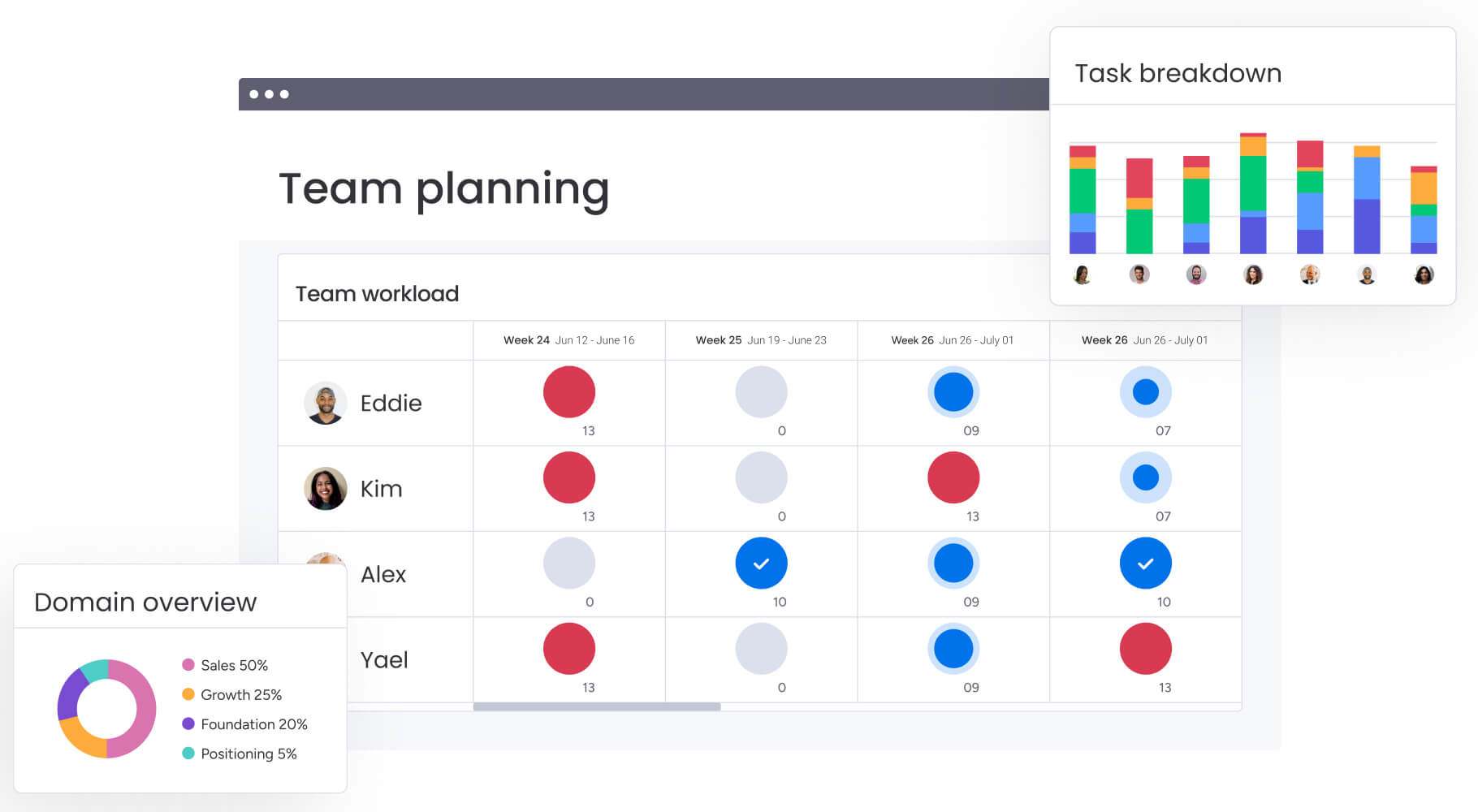
Essential skills for operations and project management success
Ops and project management need different skills, but both roles rely on leadership and analytical thinking. Effective hiring decisions and support team members moving between roles require understanding this distinction.
Operations management competencies
Operations managers need skills that keep daily work running smoothly and efficiently. These competencies focus on stability, optimization, and long-term team performance.
- Process optimization: mapping workflows, identifying bottlenecks, and implementing structural improvements through process optimization to increase throughput.
- Data analysis: interpreting complex performance metrics and trends for evidence-based resource allocation decisions.
- Team leadership: managing stable, long-term teams with focus on development, retention, and consistent performance culture.
- Systems thinking: understanding departmental interconnections to ensure fixes don’t create problems elsewhere.
Project management competencies
Project managers excel at delivering change within constraints. Their skills center on navigating uncertainty, coordinating temporary teams, and driving initiatives to completion.
- Scope management: defining project boundaries and controlling scope creep to keep deliverables feasible.
- Stakeholder communication: coordinating diverse temporary teams while keeping executives informed.
- Risk assessment: anticipating potential roadblocks and planning mitigation before issues arise.
- Change management: adapting plans as requirements evolve while helping teams navigate transition stress.
Overlapping skills for both roles
Despite their differences, operations and project managers share core competencies that drive organizational success. These foundational skills matter regardless of whether you’re sustaining processes or delivering change.
- Communication: conveying complex information to different audiences from technical teams to executives.
- Leadership: motivating teams and driving results while maintaining morale.
- Analytical thinking: using data to make informed business decisions.
- Collaboration: working across organizational boundaries to achieve shared goals.

How do AI and automation unite operations and project management?
AI and automation are erasing the old lines between ops and project work. AI automates data entry and predicts what’s coming, so both teams can work smarter together.
However, while about 80% of companies report using generative AI in at least one function, only about 40% report any enterprise-level EBIT impact, underscoring the operational importance of integrating AI with core systems and workflows rather than running isolated pilots.
AI-powered resource allocation
AI allocates resources across operations and projects in real time, eliminating reliance on static spreadsheets. Machine learning analyzes past performance, current workloads, and future requirements to recommend optimal resource assignments.
Organizations using solutions like monday work management as their enterprise operating system leverage AI to assign the right people to projects based on effort, level, availability, and skills. This solves the problem of draining ops teams when project work piles up.
AI helps you make better resource calls with:
- Predictive capacity planning: forecasting resource needs to spot periods where operational peaks clash with project deadlines.
- Skills matching: identifying team members with specific project skills based on operational track records.
- Workload balancing: automation prevents burnout by flagging overcommitment across operational duties and project work.
Predictive analytics across all work
Predictive analytics shows you what’s coming and helps both ops and project teams. AI spots patterns people miss, so you can fix problems before they blow up.
Portfolio Risk Insights in monday work management scans project boards, flagging potential risks by severity. Teams spot critical issues at a glance without manual data review.
Analytics help you decide with:
- Performance forecasting: algorithms predict operational efficiency and project success rates for early adjustments.
- Risk identification: AI spots potential issues like vendor delays or server instability before impact.
- Trend analysis: systems analyze data to understand how seasonal patterns affect both processes and initiatives.
Intelligent process optimization
AI learns from everything that happens on the platform and keeps improving how ops and projects run. It’s like having a consultant who never sleeps, constantly suggesting ways to work more efficiently.
AI optimizes work with:
- Workflow automation: identifying repetitive work in operations and projects for automation, freeing human time.
- Decision support: data-driven recommendations help managers choose methodologies or route support tickets.
- Continuous learning: systems learn from operational changes and closed projects, refining future recommendations.
AI doesn’t fail because it’s weak. It fails because companies bolt it onto broken workflows instead of integrating it into how work actually runs.
Modernize your organization with unified work management
When operations and projects exist in separate systems, work becomes fragmented and visibility suffers across the organization. A unified platform for all work types addresses this challenge and monday work management provides this solution. The platform enables workflow customization to match specific organizational needs while maintaining centralized visibility and control.
| Traditional challenge | monday work management solution |
|---|---|
| Separate systems for operations and projects | Unified platform supporting all work types |
| Resource conflicts between ongoing work and projects | Integrated resource management with workload visibility |
| Disconnected reporting and metrics | Consolidated dashboards showing operational and project performance |
| Manual coordination between teams | Automated workflows and notifications across functions |
| Limited visibility into dependencies | Portfolio-level views connecting all work streams |
The platform addresses these challenges through the following capabilities:
- Portfolio management: leaders connect projects across the organization for high-level visibility into dependencies, resource allocation, and risk management.
- Resource management: managers balance team workloads effectively, allocating resources based on skills and availability.
- Automated workflows: teams standardize processes for operational work and track project milestones automatically.
- Real-time dashboards: executives monitor operational KPIs and project progress in unified views.
- AI-powered insights: AI blocks categorize requests, summarize status updates, and extract actionable insights from data.
- Cross-functional collaboration: operations and project teams coordinate through shared boards and integrated communication.
The platform scales with your organization, maintaining alignment between operations and projects as you grow. Unified work management enables faster execution, more efficient resource utilization, and stronger connections between strategic objectives and daily activities.
Whether optimizing daily processes or launching strategic initiatives, monday work management provides the capabilities needed to drive organizational growth. Teams gain access to the information required for informed decision-making, while leaders maintain comprehensive visibility across all organizational activities.
Frequently asked questions
Which is more valuable for organizations: operations management or project management?
You need both, and they work well together. Ops keeps revenue coming in and the business running. Projects drive innovation and the changes you need to grow.
Can one person effectively manage both operations and projects?
Some people can do both, but most companies do better with specialists; the mindsets and skills are pretty different. Small companies often use hybrid roles, but as you grow, separate roles usually work better.
How do you transition from operations management to project management?
You can make the switch by learning project skills like scope and change management, and your ops experience will help. Get certified and volunteer for projects in your current role; both are good ways to start.
What certifications help with both operations and project management?
PMP is the top cert for project management. For ops, look at Lean Six Sigma or ITIL. Business analysis and change management certs give you skills that work in both areas.
How does monday work management support both operations and project management?
You get one platform with monday work management, so you don't need separate systems. With resource management, automated workflows, and integrated dashboards, teams can handle both ops and projects in one place.
Will AI replace operations managers or project managers?
AI will help, not replace, these roles; it'll handle admin work and surface insights humans might miss. You still need human judgment, leadership, strategic thinking, and emotional intelligence to handle the messy, complex stuff.

 Get started