

Finance teams approve major software upgrades. Marketing launches new campaign automation systems. Operations rolls out updated inventory tracking. Each department labels these initiatives as “projects,” but they represent something distinct — operational projects that maintain business continuity while strategic initiatives capture executive attention.
Operational projects are targeted improvements that optimize existing processes, reduce costs, and eliminate bottlenecks. Unlike strategic initiatives that transform business models, they focus on making current systems work faster, smarter, and more reliably — delivering incremental gains that compound into lasting competitive advantage.
Below you’ll find the definition of operational projects, differences from strategic work, and their importance for organizational efficiency. You’ll learn about the five main types of operational projects, proven 7-step framework for execution, and how AI is transforming how teams manage these initiatives.
Key takeaways
- Focus on existing processes for quick wins: operational projects improve what you already have rather than building from scratch, delivering measurable results in three to twelve months with lower risk and faster returns.
- Bridge strategy and daily execution systematically: these projects connect high-level goals to ground-level work, ensuring your infrastructure can actually support your ambitions while creating compound improvements across the organization.
- Achieve portfolio-wide visibility with a central platform: real-time dashboards and Gantt charts provide instant insight into timelines and resource distribution, while AI-powered agents monitor project health and flag bottlenecks before they impact delivery. Teams using platforms like monday work management gain this visibility across their entire operational portfolio.
- Build cross-functional teams for lasting change: success requires representatives from every department touched by the process change, breaking down silos and creating shared accountability for collective outcomes.
- Measure everything with specific baselines: define SMART objectives and collect current performance data before making changes, then establish continuous monitoring systems to ensure improvements stick and deliver expected results.
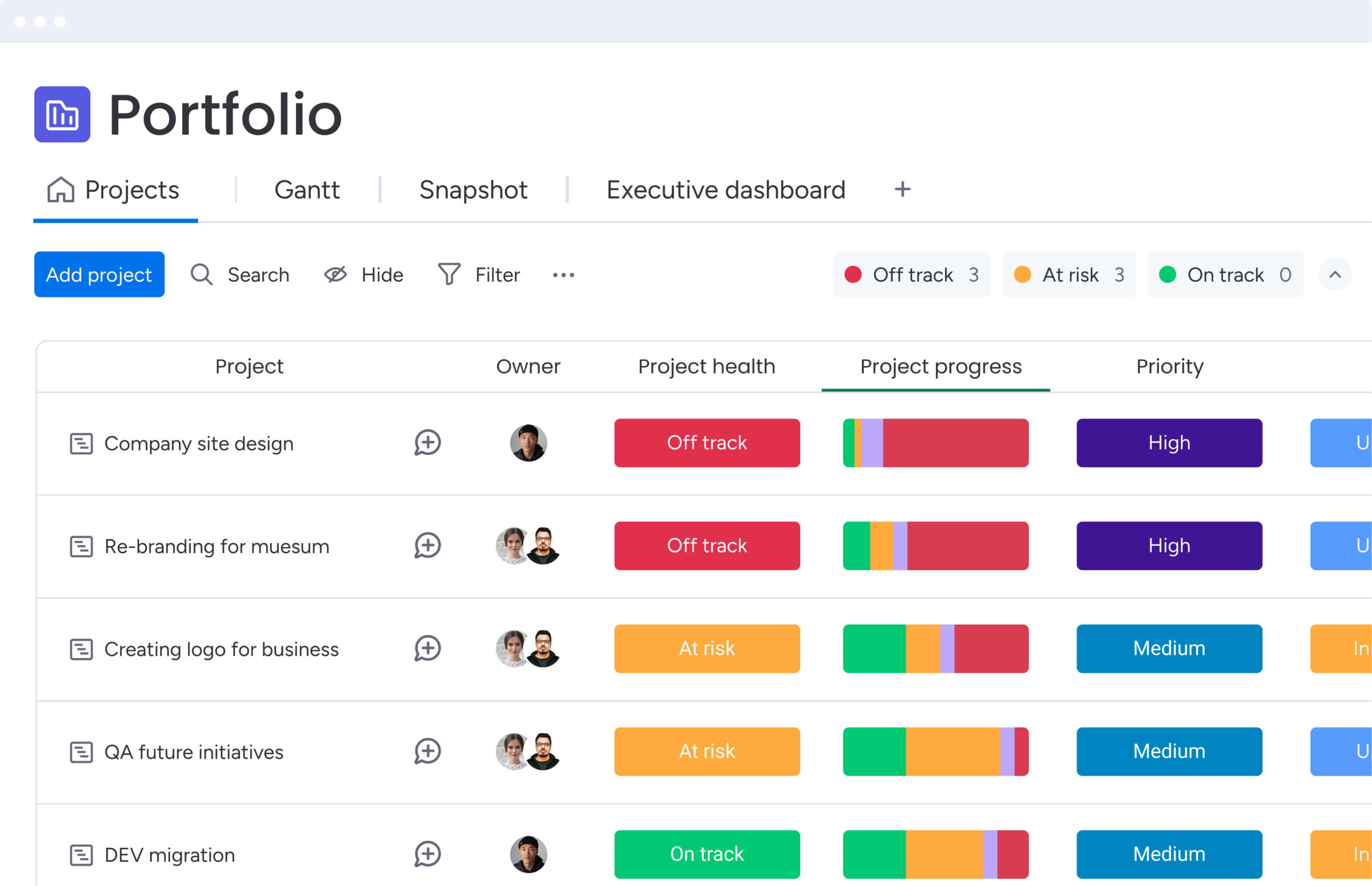
Operational projects improve, optimize, or maintain existing business processes and systems. Unlike strategic projects that transform business models or create new capabilities, operational projects focus on enhancing the efficiency and cost-effectiveness of current operations.
They bridge the gap between daily execution and organizational objectives, ensuring that existing infrastructure can support broader business goals.
Operational projects serve as the foundation for measurable performance improvements. While strategic initiatives often receive executive attention, operational projects deliver tangible competitive advantages through incremental improvements that scale across the organization.
A single process improvement that saves 30 minutes per week, when multiplied across 50 workflows and hundreds of employees, generates substantial aggregate impact.
What distinguishes operational projects from routine work is:
- Focus on existing processes: these projects refine what’s already in place rather than building from scratch.
- Continuous improvement orientation: the primary goal is incremental enhancement, such as reducing cycle times or automating manual steps.
- Shorter time frames: execution typically spans three to twelve months, allowing for rapid iteration and quicker returns.
- Measurable outcomes: success is quantified through specific metrics like reduced cost per unit or improved compliance scores.
- Cross-functional impact: while scope is specific, execution often requires collaboration across multiple departments.
Operational projects form the backbone of organizational efficiency. They ensure day-to-day business functions run smoothly while addressing the operational debt that often hinders broader strategic objectives.
Operational projects vs. strategic initiatives: understanding the differences
Confusion between operational projects and strategic initiatives often leads to misallocated resources and misaligned expectations. While both are essential, they serve different functions in the organizational ecosystem. To make informed decisions about resource allocation and timeline expectations you need to understand those differences.
Operational projects concentrate on executing processes efficiently, while strategic initiatives focus on determining the most effective direction for the organization. The following comparison illustrates the key distinctions:
| Feature | Operational projects | Strategic initiatives |
|---|---|---|
| Primary focus | Optimization of existing processes and systems | Transformation of business model or market position |
| Timeline | Short to medium-term (three to twelve months) | Long-term (one to three years) |
| Resource allocation | Utilizes existing teams and budgets | Requires significant new capital and dedicated teams |
| Risk profile | Low to moderate; failure impacts efficiency | High; failure impacts market viability |
| Success metrics | Efficiency, cost reduction, compliance, quality | Revenue growth, market share, competitive advantage |
Consider a retail chain facing inventory challenges:
- Operational project: implementing a new inventory tracking system to reduce shrinkage by 15%. This uses existing staff, improves a current process, and has a defined end date.
- Strategic initiative: launching a private-label clothing line, which requires new supply chains, new branding, and entry into a new market segment.
Organizations need both types of work running simultaneously through effective project management. Ensure you balance resources for growth with those needed to maintain current business operations.
Why are operational projects essential for business performance?
Operational projects do more than keep things running. They actively improve how your organization performs. By fixing inefficiencies, these projects free up time and money you can use elsewhere. The following areas represent where these initiatives make the most significant impact:
Continuous improvement through systematic execution
Operational projects transform organizational improvement into a consistent practice rather than a reactive response to failure. Instead of waiting for systems to malfunction, teams proactively launch initiatives to identify bottlenecks, test potential solutions, and implement systemic changes.
These incremental improvements generate significant cumulative impact. For instance, a 1% increase in process speed across 50 different workflows results in substantial aggregate gains in organizational velocity. Leading organizations prioritize the discipline of pursuing hundreds of minor refinements rather than waiting for a single transformative breakthrough.
This commitment to continuous optimization creates a sustainable competitive edge by ensuring that efficiency becomes a foundational element of daily operations.
Cutting costs across the board
These initiatives exert a direct and positive influence on the bottom line. Projects centered on workflow automation or vendor consolidation achieve more than mere time savings; they fundamentally and permanently reduce the baseline expenditures required to maintain company operations.
For example, an operational project to automate invoice processing can reduce processing costs by 50% while simultaneously eliminating human error, delivering immediate and recurring fiscal value.
Getting departments to work together
Operational projects naturally bring departments together around a shared objective. A project to improve customer onboarding requires sales, customer success, and IT to align on a single workflow.
This shared work gets departments talking to each other and taking ownership of results together. Teams coordinate through one shared workspace where everyone can see how their work fits into the bigger picture.
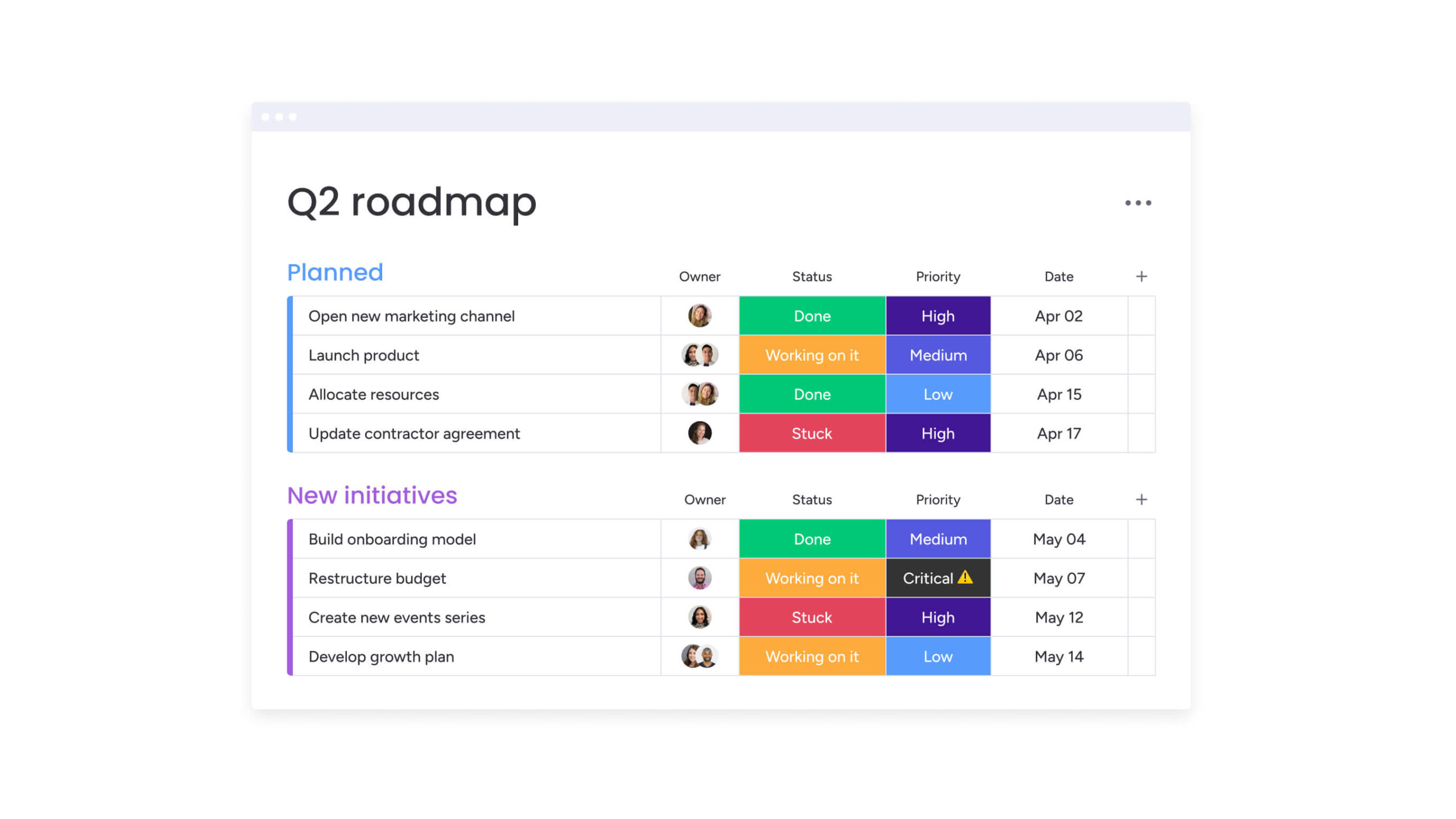
5 essential types of operational projects
Strategic leaders categorize operational initiatives into five distinct frameworks to pinpoint inefficiencies and deploy resources with maximum precision. Classifying projects in this manner ensures that every initiative aligns with a specific performance outcome rather than simply adding to the daily workload.
The five most prevalent types include:
- Process improvement projects: these initiatives optimize existing workflows to eliminate waste. Think of a logistics team redesigning dispatch routes to cut fuel costs. The outcome is reduced cycle times and lower operational costs.
- Technology implementation projects: this involves deploying or upgrading software to support execution. Like migrating from spreadsheets to a cloud-based CRM, or connecting your project management platform to your financial software. The outcome is enhanced data accuracy and streamlined information flow.
- Quality enhancement projects: these projects elevate the standard of products or services through rigorous control measures. Implementing ISO 9001 standards across a manufacturing floor or standardizing customer support response protocols are common examples. The outcome is higher customer satisfaction and reduced error rates.
- Compliance and risk management projects: these ensure the organization adheres to external regulations and internal policies. Like updating data handling procedures to meet GDPR requirements before a deadline hits. The outcome is mitigated legal risk and avoided penalties.
- Resource optimization projects: these focus on maximizing the efficiency of human, financial, and physical assets. Like balancing workloads across departments so no team is overloaded while another sits idle. The outcome is improved employee retention and reduced overtime costs.
Real-world examples of operational projects across industries
Operational projects are implemented across all industries, though their specific applications vary based on business context and operational requirements. The following examples demonstrate how different sectors leverage operational projects to achieve measurable outcomes.
Industry-specific applications include:
- Manufacturing: a global parts supplier implements a predictive maintenance program using IoT sensors. By shifting from scheduled to condition-based maintenance, they reduce machine downtime by 30% and extend equipment lifespan.
- Healthcare: a hospital network launches a project to streamline patient intake processes. By digitizing forms and integrating them with electronic health records prior to arrival, they reduce patient wait times by 20 minutes and increase daily appointment capacity.
- Financial services: a bank automates its compliance reporting workflow. Instead of manual data aggregation, an automated system collects and formats data, reducing reporting time from two weeks to two days and eliminating transcription errors.
- Retail: a clothing retailer optimizes inventory management workflows by integrating point-of-sale data with warehouse ordering systems. This project reduces stockouts during peak seasons and minimizes capital tied up in slow-moving inventory.
- Technology: a software development firm standardizes its code review process. By implementing automated testing triggers and review checklists, they decrease the number of bugs reaching production and accelerate release cycles.
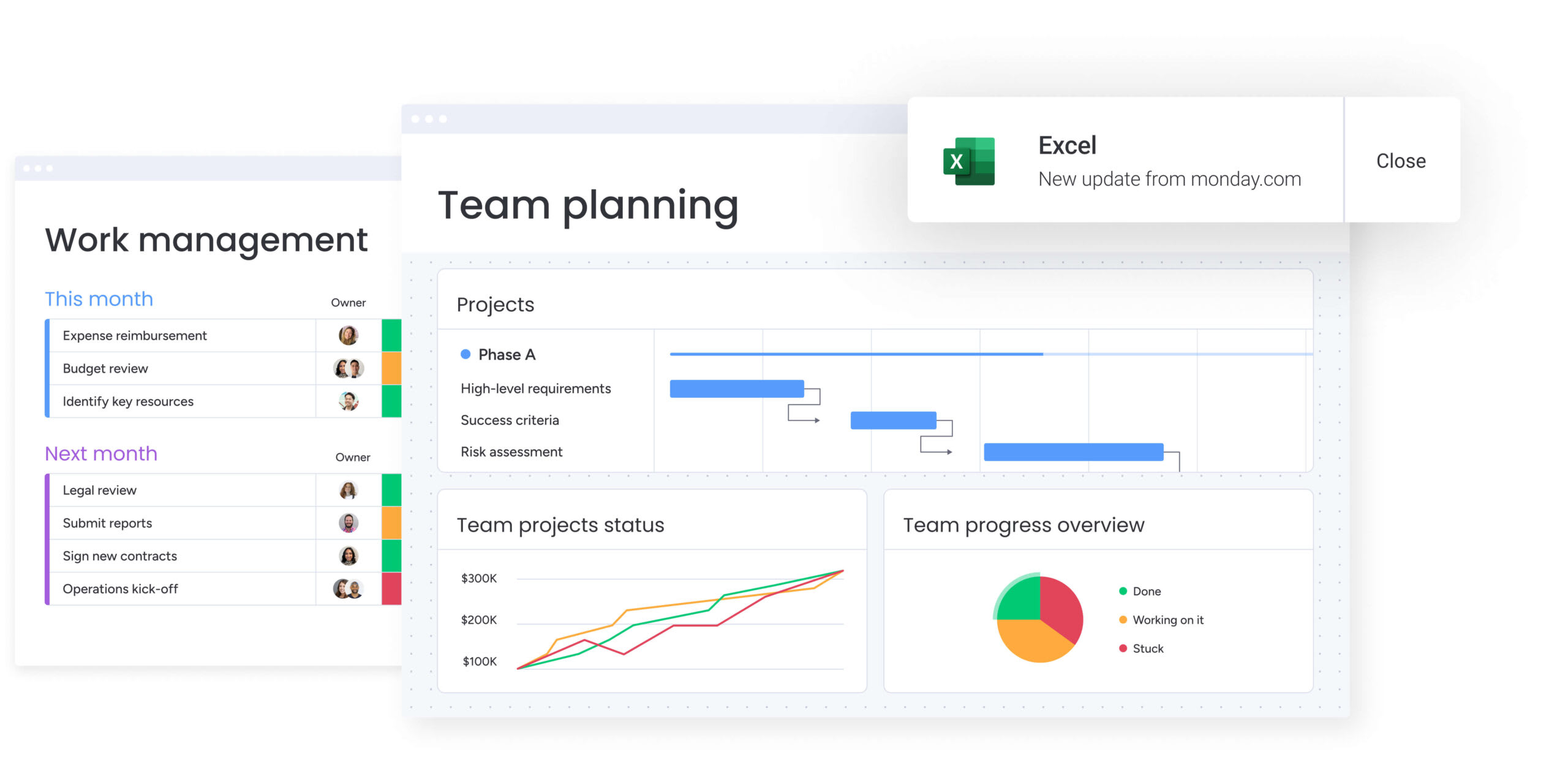
Who owns operational project success?
Operational projects usually involve multiple owners, which means you need clear structures to keep things moving. Success depends on clear accountability and effective collaboration across multiple organizational levels. Three roles matter most for success.
Operations project managers
These professionals connect strategy to actual execution. Unlike strategic project managers who may focus on market trends, operations project managers are deeply embedded in the “how” of the business.
Their responsibilities include:
- Defining project scope: establishing clear boundaries and deliverables.
- Managing timelines: ensuring milestones align with business needs.
- Driving adoption: ensuring that process changes are actually adopted by the teams on the ground.
They need both technical chops and the ability to manage change.
Project management offices and their role
The PMO provides the necessary oversight and standardization. For operational projects, the PMO ensures that initiatives align with broader business goals and don’t conflict with one another.
Key PMO functions include:
- Portfolio management: overseeing multiple projects simultaneously.
- Resource allocation: distributing resources based on priority.
- Methodology establishment: creating consistent approaches across projects.
Building effective cross-functional teams
Ultimately, success comes down to the team doing the work. Effective operational teams are cross-functional, involving stakeholders from every department touched by the process change. Effective operational teams are cross-functional, involving stakeholders from every department touched by the process change.
A project to update billing software, for example, needs representatives from finance, IT, and sales. Organizations using solutions like monday work management establish communication channels and shared accountability by assigning ownership to specific items and providing visibility into dependencies across departmental lines.
7 steps to successfully launch operational projects
Launching operational projects means moving fast without cutting corners. This seven-step process takes you from idea to execution while keeping everyone on board.
Step 1: define measurable operational objectives
Specificity is required from the outset. Objectives must follow the SMART framework to ensure they are Specific, Measurable, Achievable, Relevant, and Time-bound. Rather than aiming to “improve customer service,” a defined objective specifies a goal such as “reducing average ticket resolution time by 15% within Q3.”
Utilizing historical data to set realistic baselines before committing to a final target is a vital preliminary action for accuracy.
Step 2: baseline current process performance
Before making changes, you must establish a clear understanding of your starting point. Mapping current processes and collecting data helps identify exactly where delays occur, costs accrue, and errors happen.
While data provides the foundation, interviewing the individuals performing the work often reveals bottlenecks that quantitative metrics alone do not capture.
Step 3: identify high-impact improvement areas
Once the baseline is set, opportunities should be prioritized based on an effort-versus-impact analysis. Focus centers on changes that deliver the highest value with reasonable resource expenditure. High priority projects must directly support the strategic direction of the company.
Identifying manual activities that are easily automated can provide immediate time savings and demonstrate early project value.
Step 4: secure resources and create realistic timelines
Resource planning involves more than budget allocation; it requires securing dedicated time from subject matter experts. Timelines must include buffers for testing and iteration. Utilization of workload views ensures team members are not double booked across competing initiatives, while building in contingency time accounts for unexpected discoveries during implementation.
Step 5: build stakeholder alignment across departments
Maintaining stakeholder informed status is essential for gaining buy in and support. Stakeholders must understand both the nature of the change and the specific benefits to their respective departments. Regular updates and clear roadmaps keep personnel engaged. Providing a central dashboard where stakeholders can check project status independently reduces friction and increases transparency.
Step 6: execute with controlled rollouts
To mitigate risk, utilize phased implementations or pilot programs that allow teams to test changes in a controlled environment. This approach catches issues early and permits process refinement before a full scale rollout. Selecting a pilot team that is enthusiastic about change helps create internal champions who can advocate for the new process across the organization.
Step 7: establish continuous monitoring systems
Implementation does not represent the conclusion of the project. Continuous monitoring ensures the new process remains effective and delivers the expected results. Establishing feedback loops allows for ongoing adjustments. Setting up automated alerts for instances where performance metrics dip below the established baseline ensures that regressions are addressed immediately.
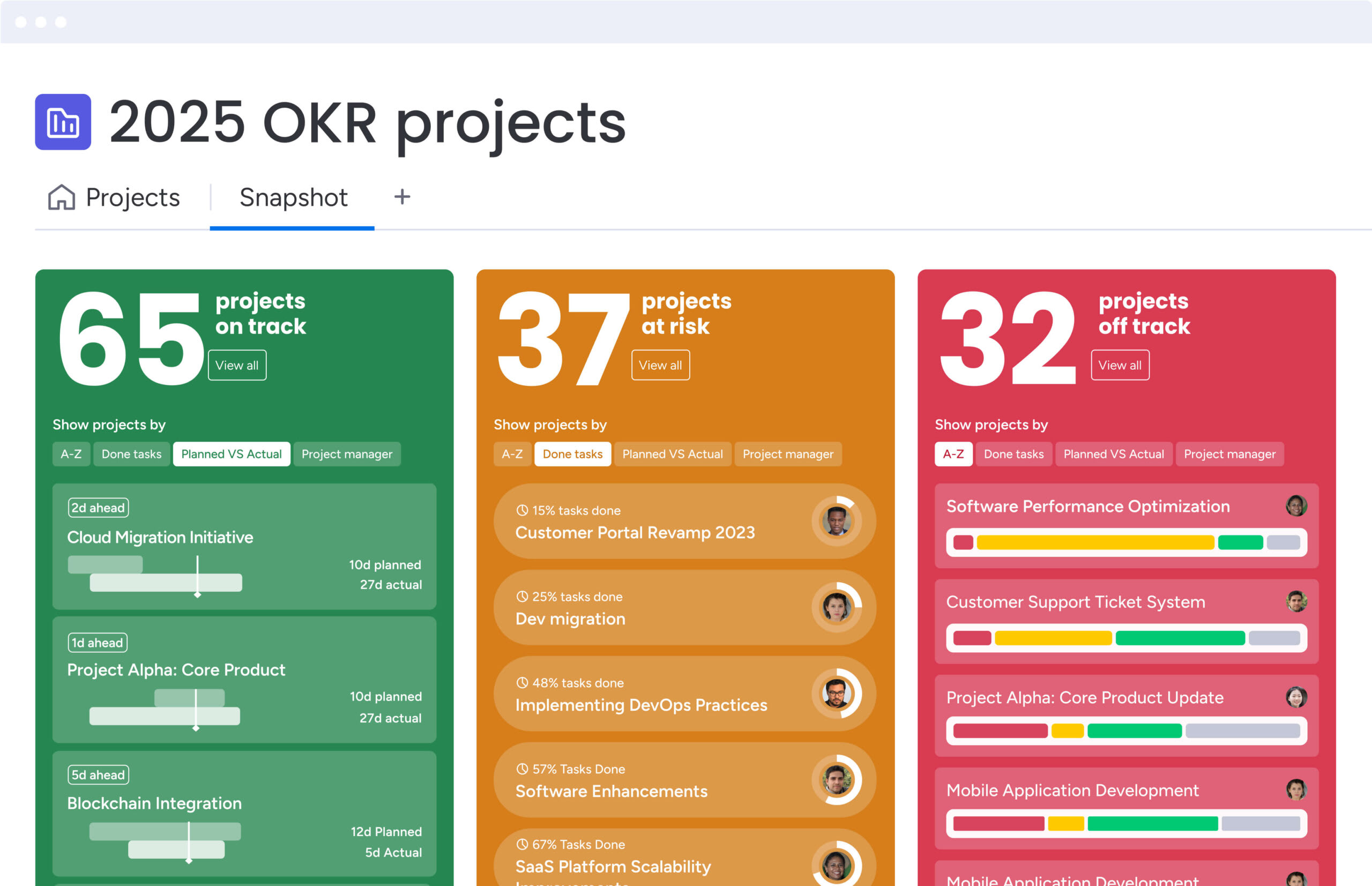
How does AI transform operational project management?
AI has evolved from an emerging technology to a fundamental component of efficient operational management. Organizations are leveraging AI to address challenges that previously required significant time and manual effort. Below the key areas where AI delivers substantial value in operational project management are outlined.
- AI-powered resource allocation at scale: algorithms analyze performance, skills, and availability to optimize team assignments. This eliminates manual guesswork and predicts burnout risks before they occur, ensuring the right people are assigned to the right tasks.
- Predictive risk management across projects and operations: AI monitors project velocity and dependencies to flag bottlenecks, delays, or budget issues weeks in advance. These automated insights categorize issues by severity, allowing for resolution before they escalate into crises.
- Digital workers automating operational activities: AI agents handle routine administration, such as status reporting and data collection. They monitor workflows in real-time and extract insights from complex documentation, shifting the team’s focus from paperwork to strategic decision-making.
Operational project management vs. operations management: understanding the distinction
While these terms are often used interchangeably, understanding the distinction is critical for effective organizational structure. Recognizing how these two disciplines complement each other enables organizations to build more robust operational frameworks.
They compare as shown below:
| Feature | Operational project management | Operations management |
|---|---|---|
| Nature of work | Temporary, unique initiatives | Permanent, repetitive processes |
| Timeline | Defined start and end dates | Ongoing, indefinite |
| Objective | Change, improve, or create a process | Maintain and sustain performance |
| Team structure | Cross-functional, temporary teams | Functional, permanent departments |
| Success measurement | Project completion, ROI, improvement delta | Efficiency, output volume, consistency |
Both disciplines are essential and function most effectively in tandem. Operations management maintains existing processes and performance levels, while operational project management drives continuous improvement and optimization.
With monday work management, teams can effectively manage both disciplines within a unified workspace. The platform supports daily operational workflows alongside improvement initiatives, providing real-time dashboards that deliver comprehensive visibility across all projects and processes.
Enhance your operational projects with monday work management
Strategy connects to execution through monday work management, giving you what you need to run complex operational projects. The platform changes how you run operations by putting visibility, automation, and AI in one place.
Gain portfolio-wide operational visibility
Effective leadership requires a comprehensive “big picture” view before critical decisions can be made. To facilitate this, real-time dashboards aggregate data across your entire portfolio of operational projects, ensuring that no initiative remains siloed.
Furthermore, Gantt charts and Workload views provide instant insight into timelines and resource distribution, while cross-project dependency tracking ensures that a delay in one area does not silently derail another. Ultimately, this level of visibility turns raw operational data into actionable strategic insights.
Automate repetitive operational workflows
Efficiency is driven by smart automation, and monday work management eliminates administrative “busywork” through highly customizable logic.
Status updates, approval requests, and stakeholder notifications occur automatically based on project triggers. AI blocks like “Categorize” organize incoming project requests, while “Extract Info” pulls relevant data from documents, reducing manual entry and freeing teams to focus on high-value problem solving.
Leverage AI insights for continuous excellence
Beyond simple automation, advanced AI capabilities help you identify and rectify issues before they manifest. Specifically, the Project Analyzer Digital Worker monitors project health in real-time, proactively flagging bottlenecks and suggesting optimizations to maintain velocity.
Additionally, AI-driven risk management identifies potential pitfalls before they impact delivery, while resource optimization features ensure the right talent is consistently applied to the most critical activities.
The following table illustrates the key differentiators of monday work management:
| Feature | monday work management | Traditional PM platforms |
|---|---|---|
| User experience | Intuitive, visual interface requiring minimal training | Steep learning curve, rigid interfaces |
| Flexibility | Highly customizable workflows without code | Fixed structures that force process changes |
| Intelligence | AI-powered insights and proactive digital workers | Passive data storage |
| Collaboration | Cross-functional collaboration in one workspace | Siloed communication channels |
| Security | Enterprise-grade security and compliance | Variable security standards |

“monday.com has been a life-changer. It gives us transparency, accountability, and a centralized place to manage projects across the globe".
Kendra Seier | Project Manager
“monday.com is the link that holds our business together — connecting our support office and stores with the visibility to move fast, stay consistent, and understand the impact on revenue.”
Duncan McHugh | Chief Operations OfficerDrive operational excellence through systematic project execution
Operational projects are where efficiency and competitive advantage start. They turn random improvement efforts into consistent performance gains that add up across your entire organization.
The best organizations know operational excellence comes from consistently executing hundreds of focused improvements. Each project makes your organization stronger while delivering results right away.
Ready to transform how your organization approaches operational projects? With the visibility, automation, and intelligence needed to execute operational initiatives at scale, monday work management maintains the agility to adapt as business needs evolve.
Frequently asked questions
What is an example of an operational project?
An operational project example is implementing a new customer service ticketing system to reduce response times and improve customer satisfaction. These projects focus on enhancing existing business processes rather than creating entirely new capabilities.
What are operations projects?
Operations projects are temporary initiatives designed to improve, optimize, or maintain existing business processes and systems within an organization. They typically have shorter time frames than strategic initiatives and focus on measurable improvements to current operations.
What is the difference between strategic and operational projects?
The difference between strategic and operational projects is that strategic projects focus on long-term organizational transformation and competitive positioning, while operational projects concentrate on improving existing processes and systems for immediate efficiency gains. Operational projects typically have shorter timelines and require fewer resources than strategic initiatives.
What are the three types of projects?
The three main types of projects are operational projects (improving existing processes), strategic projects (long-term transformation), and compliance projects (meeting regulatory requirements). Each type serves different organizational needs and requires distinct management approaches.
How do you measure operational project success?
Operational project success is measured through specific performance metrics like cost reduction, process efficiency improvements, quality enhancements, and compliance adherence. Success indicators should be defined at project initiation and tracked throughout implementation.
Can operational projects become strategic initiatives?
Operational projects can evolve into strategic initiatives when their scope expands beyond process improvement to include fundamental organizational change. However, most operational projects remain focused on incremental improvements within existing business structures.

 Get started