

Your project team just delivered every milestone on time and under budget. The stakeholders are happy, the deliverables meet specifications, and the team is celebrating. Six months later, evidence reveals the project had zero impact on the business metrics that actually matter. This scenario is common in traditional management.
The persistent disconnect between effort and impact is driving the shift toward OKR project management. OKRs (Objectives and Key Results) move teams from tracking outputs like completed tasks to measuring outcomes like revenue growth or customer satisfaction. This approach ties daily work directly to strategic priorities, ensuring every sprint contributes to meaningful business results rather than just checking boxes.
A structured approach allows for the creation of effective OKRs, their alignment across departments, and the maintenance of a single source of truth without spreadsheet chaos. The following sections outline a 7 step rollout and provide real world examples, demonstrating how a flexible platform facilitates live progress tracking instead of relying on delayed quarterly check ins.
Key takeaways
- Outcome orientation: shifting focus from mere task completion to measurable impact ensures that teams evaluate success based on how work influences critical business numbers.
- Strategic alignment: objectives are cascaded from the corporate level down to individual projects so that every contributor understands how specific efforts support broader priorities.
- Ambitious performance targets: setting stretch goals where 70% achievement represents success encourages innovation while maintaining realistic expectations for various departments.
- Dynamic progress tracking: real time visibility is achieved through platforms like monday work management by linking key results directly to project activities to facilitate automated updates.
- Agile review cycles: organizations utilize 90 day cycles to assess performance and pivot strategies quickly instead of relying on rigid annual planning sessions.
What are OKRs in project management?
OKRs (Objectives and Key Results) represent a goal setting methodology that bridges the gap between organizational strategy and project execution. An objective establishes a qualitative and inspirational target to be reached. In contrast, key results provide the quantitative evidence required to verify successful attainment of that goal.
Traditional project management metrics often prioritize outputs such as completed deliverables or total hours logged. The OKR framework shifts the organizational focus toward outcomes and measurable business impact. While a conventional goal might specify launching a website by a certain date, an OKR oriented approach prioritizes value by aiming to create a high converting digital experience.
This structure ensures that teams focus on high impact contributions rather than completing tasks that lack strategic significance.
Understanding objectives and key results fundamentals
The framework consists of two distinct components that work together, turning big vision into trackable progress.
- Objectives: qualitative, inspirational goals that define what the team wants to achieve, such as “Build the most reliable payment gateway in the industry” for a software team, designed to be memorable, motivating, and time-bound.
- Key results: quantitative outcomes that prove objective achievement, like “Reduce transaction failure rate to less than 0.1%,” requiring a specific number, a baseline starting point, and a clear target.
How do OKRs transform project outcomes?
OKRs change how project teams operate, from the ground up. Teams that tie daily work to big-picture goals get faster, more aligned, and way more focused.
OKRs provide the following benefits for project teams:
- Enhanced focus: teams limit attention to three to five critical priorities, preventing resource dilution across too many initiatives.
- Improved alignment: every project objective connects directly to organizational goals, ensuring strategic coherence across departments.
- Increased accountability: measurable targets remove ambiguity about success, creating clear ownership and responsibility.
- Data-driven decisions: progress gets measured by metric movement, not subjective reports, enabling objective performance assessment.
Why do project teams need more than traditional metrics?
Traditional project metrics often fail to capture what truly matters in fast-paced business environments. Conventional tracking methods fall short because they focus on outputs rather than outcomes, making it difficult for teams to connect their work to measurable business impact.
| Feature | Traditional project metrics | OKR-based approach |
|---|---|---|
| Focus area | Outputs (deliverables, timelines) | Outcomes (business value, impact) |
| Measurement type | Binary (done/not done) | Continuous (0-100% progress) |
| Time horizon | Project duration (fixed) | Quarterly cycles (adaptive) |
| Alignment method | Scope definition | Strategic cascading |
| Adaptation frequency | Change orders (reactive) | Weekly check-ins (proactive) |
OKRs vs KPIs: key differences for project success
OKRs and KPIs do different jobs in your project portfolio. OKRs drive change and transformation, while KPIs gauge health and business-as-usual performance. Knowing when to use each one makes the difference between tracking what matters and just tracking stuff.
| Dimension | OKRs (Objectives & Key Results) | KPIs (Key Performance Indicators) |
|---|---|---|
| Purpose | Drive change, innovation, and growth | Monitor health, standards, and status quo |
| Time frame | Temporary (usually quarterly) | Ongoing (continuous monitoring) |
| Flexibility | High (targets can be ambitious/stretch) | Low (targets are usually minimum standards) |
| Measurement focus | Future impact and value creation | Past performance and operational efficiency |
| Strategic connection | Direct link to new strategic initiatives | Link to operational excellence |
When to use OKRs vs KPIs in project planning?
Which one you pick depends on what you’re trying to do. Different projects need different ways to track progress.
- Use OKRs for strategic initiatives: launching new products, entering new markets, or transforming internal processes where the path isn’t fully defined and teams need room to experiment and innovate.
- Use KPIs for operational maintenance: ongoing infrastructure support, SLA monitoring, or repetitive compliance work where stability is the primary goal and performance needs to remain steady and predictable.
Creating synergy between outcome and output metrics
The most effective teams leverage both frameworks strategically. KPIs serve as operational guardrails, maintaining system reliability, performance standards, and budget compliance. In contrast, OKRs function as growth accelerators, driving teams toward ambitious improvements and breakthrough innovations.
KPIs often signal when strategic intervention is required. When a Customer Satisfaction Score declines below acceptable thresholds, it indicates the need for a targeted OKR such as “Revamp the Customer Support Experience.” Once that OKR successfully elevates performance to a new standard, that improved level becomes the baseline for ongoing KPI monitoring.
5 essential components of project management OKRs
Rolling out OKRs takes more than just writing down goals. You need the right building blocks in place to execute across teams, timelines, and competing priorities. These five pieces are the foundation for making OKRs work in any project environment.
1. Inspiring objectives that motivate teams
Objectives must establish an emotional connection with your team to drive engagement and commitment. When they lack inspiration or clarity, they fail to generate the meaningful results organizations need.
Effective objectives share three fundamental characteristics:
- Qualitative and memorable: easy to remember without looking at a dashboard.
- Action-oriented: strong verbs that imply movement and change.
- Value-focused: articulate the benefit to customers or business.
2. Quantifiable key results with specific targets
Key results provide the quantitative evidence needed to verify objective achievement. Measurable targets eliminate ambiguity and enable teams to track progress objectively.
Every key result requires three essential elements:
- Specific measurement: must have a number that can be tracked.
- Outcome-based: measure the effect of work, not volume.
- Verifiable: data source must be accessible and indisputable.
3. Quarterly cycles for rapid adaptation
Project plans often span months or years, but OKRs function best on quarterly cycles. That 90-day rhythm forces teams to chunk big projects into pieces that actually deliver value. If a strategy tanks by week six, you can pivot next quarter instead of waiting for the year-end autopsy.
4. Transparent progress visibility
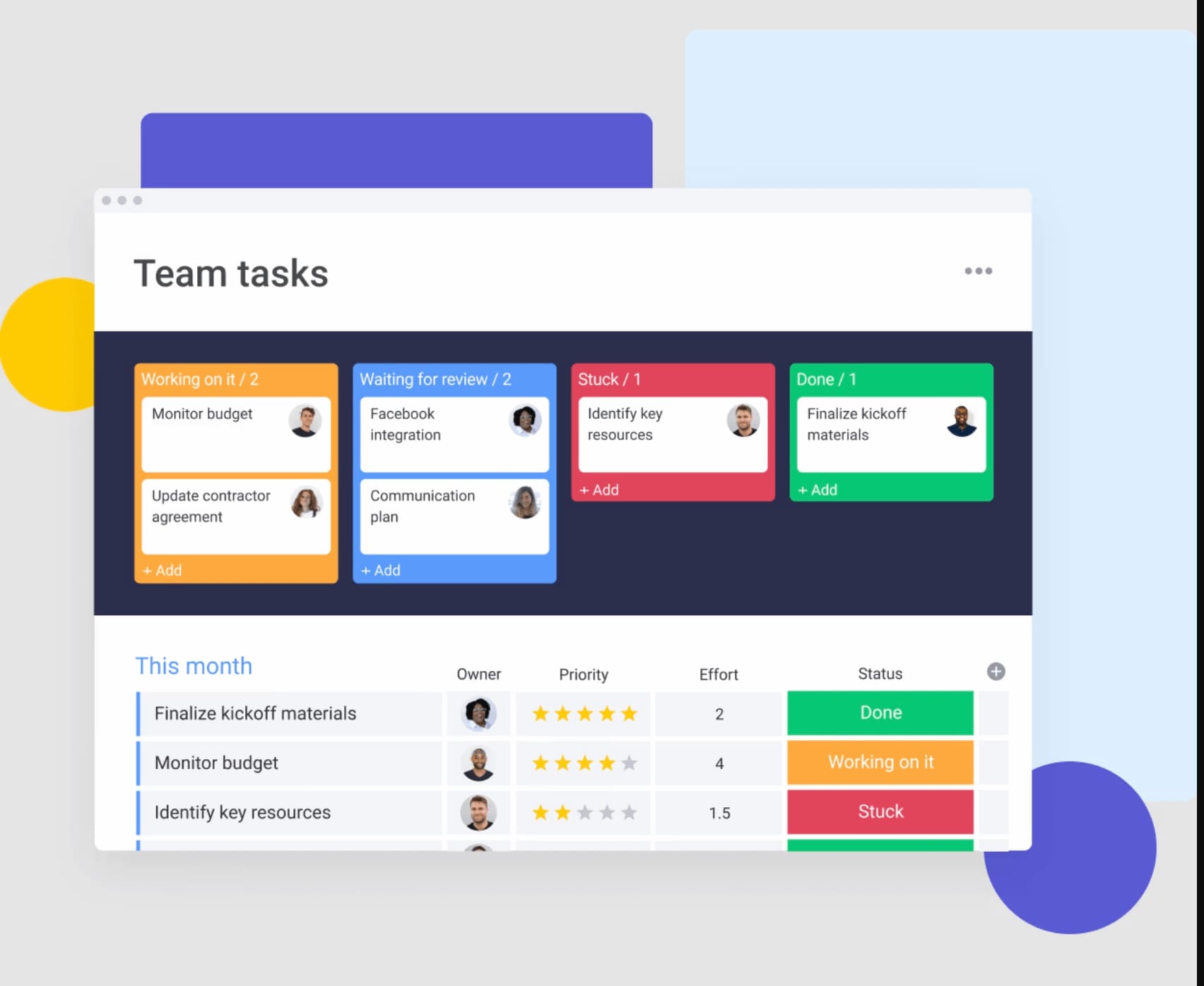
OKRs don’t work in silos. When everyone can see the priorities of other teams, dependencies become apparent and redundant work gets eliminated. Organizations using solutions like monday work management gain this visibility by linking daily project activities directly to strategic goals, ensuring delays in one project are immediately understood by dependent teams.
5. Continuous review and refinement
Success requires a ritual of review that keeps objectives relevant and teams accountable. Effective teams establish three review cadences:
- Weekly check-ins: brief updates on key result progress and blockers.
- Monthly assessments: deeper dives into probability of hitting targets.
- Quarterly retrospectives: analysis of achievements and learning for next cycle.
How to write powerful OKRs for project teams?
Writing effective OKRs directly impacts project success rates. Well-crafted OKRs generate alignment and momentum, while poorly written ones lead to confusion and stalled progress. The following approach ensures your OKRs drive meaningful business outcomes rather than just activity.
Step 1: start with strategic business outcomes
The process begins by identifying the desired business impact. Teams work backward from organizational goals to define their contribution.
- Identify the high-level company goal: determine which strategic priority the project supports, such as revenue growth or market expansion.
- Articulate how the project moves the needle: define the specific contribution to that goal (a new mobile app might open a new sales channel).
- Formalize this impact: translate the business impact into an inspirational objective statement.
Step 2: craft measurable key results that matter
Effective key results strip away ambiguity by answering one core question: “How will we know we succeeded?” To achieve this, you must choose metrics that are sensitive enough to change within the quarter but stable enough to be reliable.
Always state where you’re starting (baseline) and where you want to end (target). Define what 100% achievement looks like versus 70%. Mix leading indicators (predictive) with lagging indicators (validation) for a complete performance picture.
Step 3: balance ambitious and achievable targets
OKRs encourage stretch goals — targets that are challenging yet attainable. The optimal achievement level for an ambitious OKR is typically 70%. When teams consistently reach 100% of their targets, it indicates that goals may have been set too conservatively. Conversely, achievement rates of 30% or lower suggest that goals were unrealistic or that the underlying strategy requires reassessment.
Avoiding common OKR writing pitfalls
Teams frequently make predictable mistakes when first implementing OKRs. Understanding these patterns helps you avoid them from the start.
| Common mistake | Corrected approach | Explanation |
|---|---|---|
| Confusing outputs with results | "Launch v2.0" becomes "Achieve 5,000 daily active users on v2.0" | Launching is an output; usage is the outcome |
| Sandbagging targets | Setting easy targets to guarantee bonuses | Decouple OKRs from compensation to encourage risk-taking |
| Too many OKRs | 10 Objectives per team becomes 3-5 Objectives | Limit objectives to force prioritization |
| Vague measurements | "Improve performance" becomes "Reduce load time by 200ms" | "Improve" is subjective; "200ms" is factual |
7 steps to successfully implement OKRs in project management
Implementation is a change management exercise that requires methodological rigor and cultural adaptation. These seven steps provide a roadmap for sustainable OKR adoption. Each step builds on the previous one to create lasting organizational change.
Step 1: secure leadership commitment and sponsorship
Executive sponsorship provides necessary authority to shift priorities. Leaders must model the behavior by setting their own OKRs, referencing them in town halls, and using them to drive resource allocation decisions.
Step 2: design your OKR rollout timeline
A phased rollout reduces the risk of organizational rejection. The goal is to start small, learn fast, and expand with confidence.
- Pilot phase: select one to two high-performing teams to test the framework.
- Leadership rollout: include all department heads and directors.
- Full expansion: extend to all project teams and individual contributors across the organization.
Step 3: build OKR capabilities across teams
Training ensures consistent application of the methodology. Without a shared understanding, teams interpret OKRs differently, creating misalignment.
Key training components include:
- OKR champions: designate internal experts to coach teams.
- Workshops: conduct practical sessions on writing and grading.
- Resources: create a central repository of templates and examples.
Step 4: establish company and team objectives
Cascading begins with company-level objectives. Once set, these are communicated downward, allowing teams to propose their own OKRs that support the top-level strategy. This bottom-up contribution ensures buy-in and leverages the expertise of people closest to the work.
Step 5: integrate OKRs into project workflows
OKRs must live where the work happens. By integrating OKR tracking into the daily project management environment, you prevent the “double-entry” problem. Teams using platforms like monday work management benefit from automation rules that update key results automatically as project activities complete, keeping data live and relevant.
Step 6: create tracking and review cadences
Establish a rhythm of accountability that keeps OKRs visible and actionable throughout the quarter. Mondays become commitment days for specific actions that move key results. Fridays are for celebrating wins and logging progress. Quarterly sessions handle formal grading and reset.
Step 7: optimize based on quarterly insights
The first quarter of OKR implementation is rarely perfect. Treat the process itself as an iterative project. Analyze participation rates, goal achievement distribution, and team feedback to refine the process for the next cycle.
Project management OKR examples that drive results
These examples illustrate how to structure OKRs across different domains. Teams should adapt specific metrics to their baseline performance and strategic priorities. Each example demonstrates the balance between ambitious objectives and measurable key results.
Software development OKRs
Development teams need OKRs that balance speed with quality. This example shows how to accelerate delivery while maintaining production stability.
Objective: create a developer experience that accelerates feature delivery.
- KR 1: lower the average pull request review time from 24 hours to four hours.
- KR 2: increase deployment frequency from bi-weekly to daily.
- KR 3: maintain zero critical bugs in production for 90 days.
Marketing campaign OKRs
Marketing teams drive brand authority through measurable content and media impact. These OKRs connect thought leadership efforts to tangible business outcomes.
Objective: establish the brand as the thought leader in the fintech space.
- KR 1: increase organic search traffic to the blog by 40%.
- KR 2: secure five placements in Tier-1 media outlets.
- KR 3: generate 500 marketing-qualified leads from the new whitepaper series.
Digital transformation OKRs
Infrastructure modernization requires both technical migration and user adoption. This example demonstrates how to measure success across both dimensions.
Objective: modernize the internal collaboration stack to support hybrid work.
- KR 1: migrate 100% of on-premise file storage to the cloud.
- KR 2: achieve 90% active user adoption of the new collaboration platform.
- KR 3: reduce average document retrieval time from three minutes to 30 seconds.
Cascading OKRs from strategy to project delivery
Cascading aligns the organization vertically, ensuring the CEO’s vision translates into the project manager’s daily plan. This process creates a clear line of sight from executive priorities to frontline execution, transforming abstract strategy into concrete action.
When implemented effectively, cascading eliminates the common disconnect where leadership sets ambitious goals that never reach the teams actually doing the work.
Aligning objectives from executives to contributors
The cascade works like a waterfall where Key Results of one level become Objectives of the level below. At the company level, the objective might be to grow revenue with a key result to enter two new markets. At the department level, entering those markets becomes the objective with a key result to launch localized product in Japan. At the project team level, launching in Japan becomes the objective with a key result to complete translation of 500 core screens.
Visualizing dependencies across project portfolios
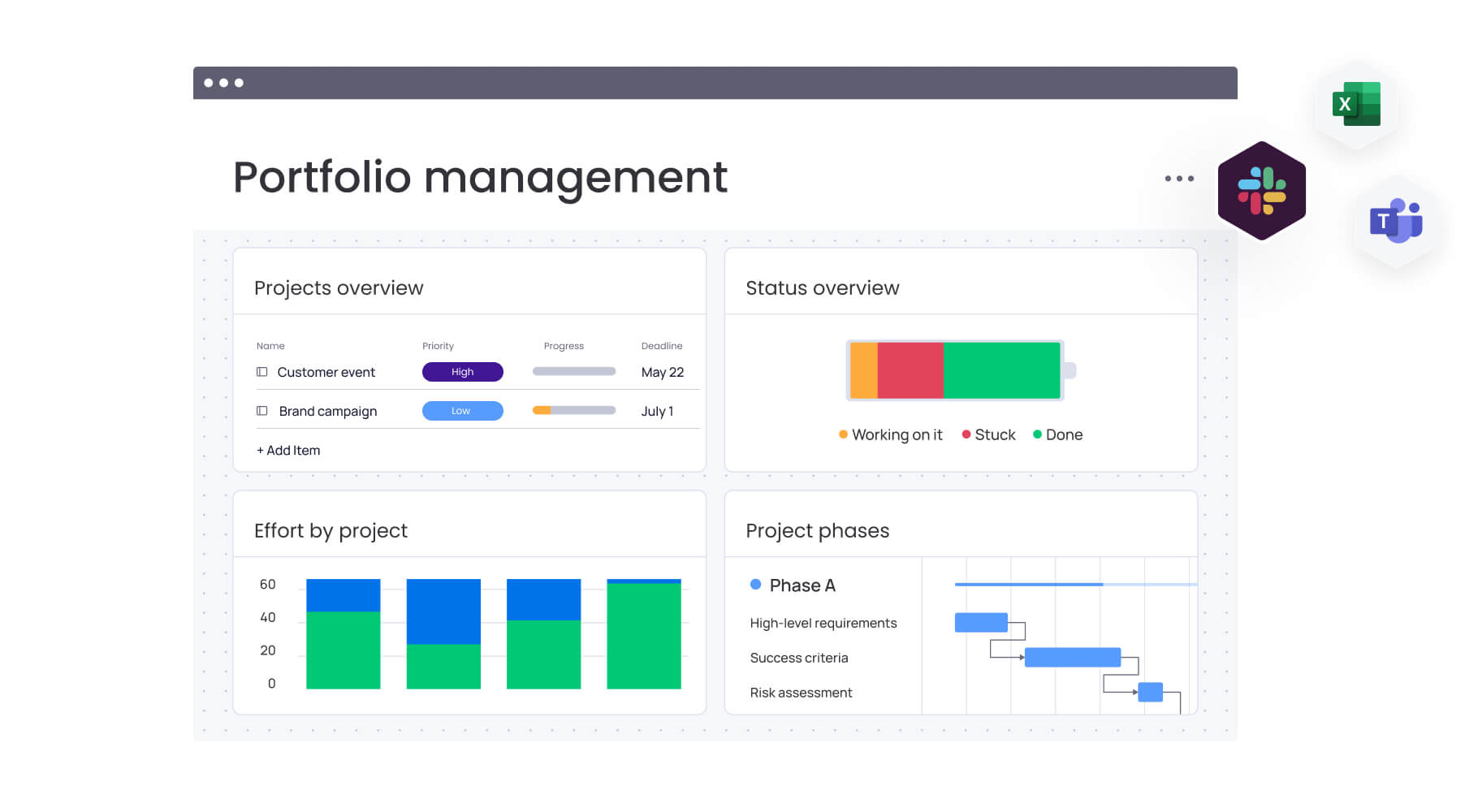
OKRs expose hidden dependencies. If Marketing has an OKR to “Launch Campaign X” but Product doesn’t have a corresponding OKR to “Release Feature X,” conflict exists. Portfolio management capabilities on monday work management visualize these connections, highlighting where objectives are misaligned or where resource bottlenecks will prevent success.
Maintaining strategic focus at scale
Large organizations with hundreds of active projects face inevitable drift without structural alignment. Regular alignment reviews ensure local optimizations don’t negatively impact global strategy. These reviews verify that team-level improvements support rather than undermine organizational objectives.
Real-time OKR tracking and performance management
Waiting for end-of-quarter spreadsheets to assess progress is obsolete. Real-time tracking enables proactive management and faster course correction. Organizations that monitor OKR progress continuously can identify risks early and adjust strategies before quarterly deadlines arrive.
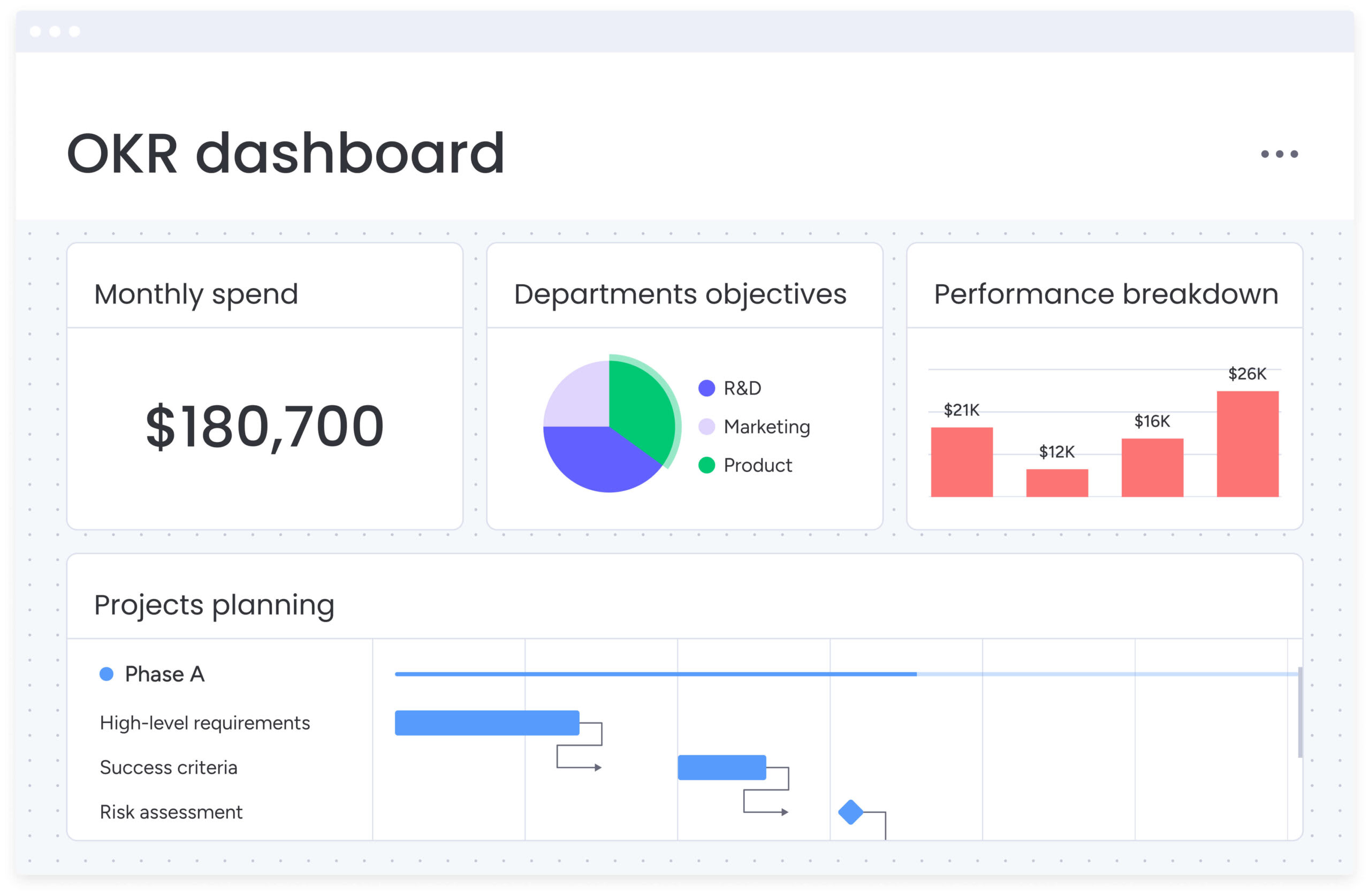
- Moving from static reports to dynamic dashboards: dynamic dashboards provide a live view of organizational health, allowing leaders to drill down from a red (at-risk) Key Result directly into underlying project activities to understand root causes, shifting conversations from “What is the status?” to “How can we help?”.
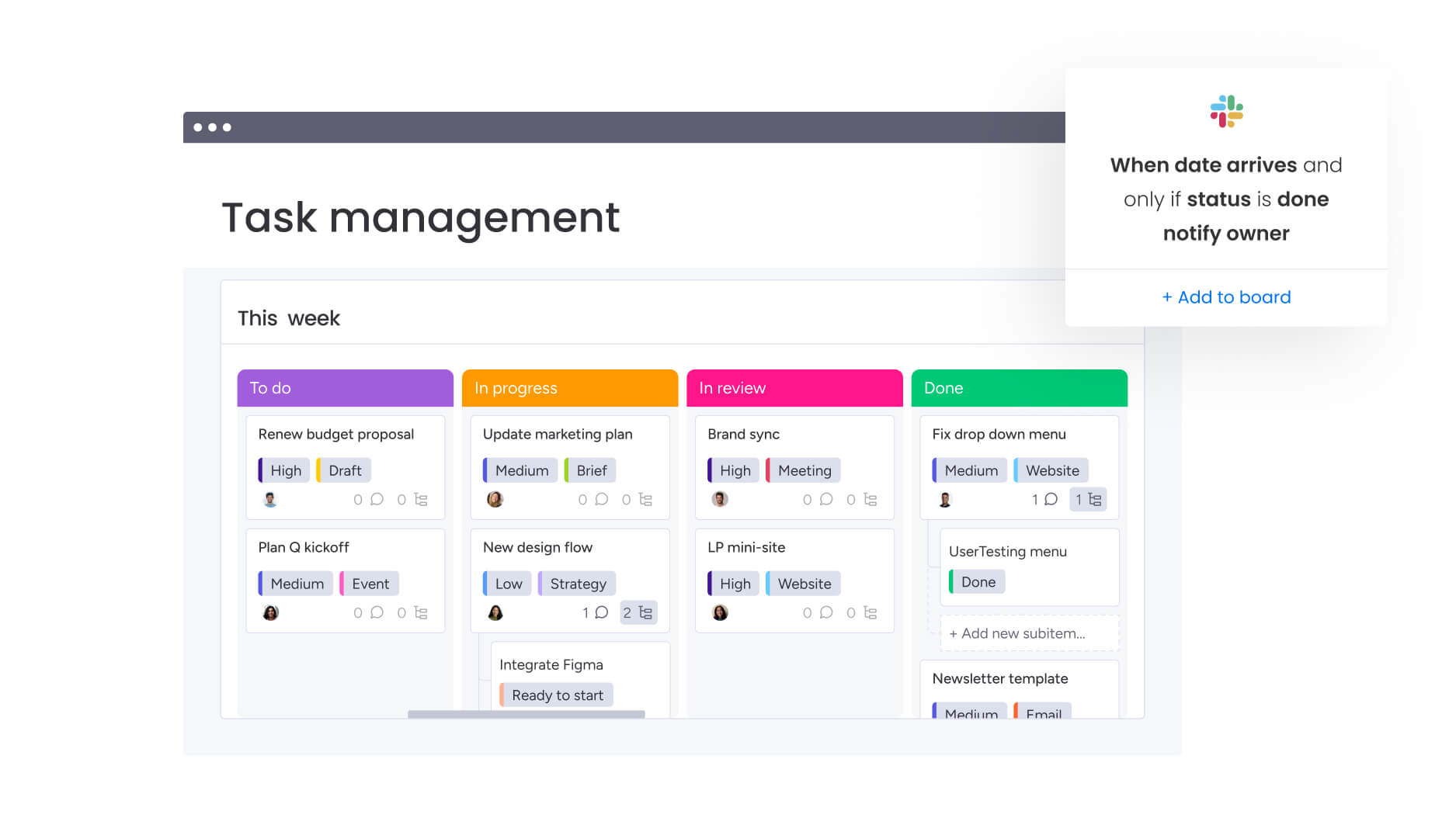
- Automating progress updates and alerts: automation removes the administrative friction of OKRs as monday work management automatically calculates Key Result progress based on completion of linked activities or data from integrated systems, ensuring data accuracy and freeing team time for strategic work.
- Using data to drive OKR decisions: data-driven OKR management removes subjectivity by revealing patterns when certain types of Key Results are consistently missed across teams, suggesting systemic issues rather than individual team failure and exposing whether problems stem from resource constraints, unrealistic planning assumptions, or external factors.

“monday.com has been a life-changer. It gives us transparency, accountability, and a centralized place to manage projects across the globe".
Kendra Seier | Project Manager
“monday.com is the link that holds our business together — connecting our support office and stores with the visibility to move fast, stay consistent, and understand the impact on revenue.”
Duncan McHugh | Chief Operations OfficerTransform your project portfolio with strategic OKR implementation
OKRs represent a fundamental shift from activity-based to outcome-based project management. Organizations that successfully implement this framework see dramatic improvements in strategic alignment, execution speed, and business impact.
The key lies in treating OKR adoption as a strategic initiative itself, complete with executive sponsorship, structured rollout, and continuous optimization.
The comprehensive environment needed to bridge the gap between high-level strategy and daily execution is provided by monday work management.
By unifying goal setting with project delivery, it ensures every activity contributes to measurable business outcomes. Teams gain the visibility, automation, and alignment tools necessary to make OKRs a living part of their project management practice rather than a quarterly reporting exercise.
The most successful OKR implementations start small, learn fast, and scale with confidence. Begin with pilot teams, establish proven patterns, and expand across your organization systematically. With the right framework and platform support, your project teams can transform from task executors to strategic value creators.
Frequently asked questions
How do OKRs work with agile project management?
OKRs work with agile project management by providing the strategic "North Star" for the quarter, while agile sprints handle tactical execution every two weeks. The quarterly OKR cycle aligns with agile planning increments, ensuring sprints deliver strategic value rather than just completing tasks.
Can project teams have their own OKRs separate from company OKRs?
Project teams can have their own OKRs, but they should always align with company objectives. Teams have autonomy to define how they contribute to broader goals through their specific projects, ensuring both independence and strategic alignment.
How many OKRs should a project team have?
A project team should focus on three to five Objectives per quarter, with three to four Key Results per Objective. Exceeding this dilutes focus and reduces the likelihood of achieving meaningful impact across any single objective.
What happens if a project doesn't meet its OKR targets?
Missing an OKR target is a learning opportunity, not a punishable offense. The team analyzes the root cause, whether execution, strategy, or resource-related, and applies those lessons to the next cycle to improve future performance.
Should contractors and external partners be included in project OKRs?
Including contractors and external partners in OKR visibility fosters alignment and accountability. It ensures everyone working on the project understands the definition of success and works toward the same outcomes, regardless of employment status.
How does monday work management support OKR implementation across large project portfolios?
OKR implementation across large project portfolios is supported by monday work management through Portfolio Risk Insights, which aggregate health data across unlimited projects. Automation links high-level strategy to individual activities, ensuring alignment across the entire enterprise while maintaining real-time visibility into progress and risks.

 Get started