


Your marketing team has great ideas. Leadership approves ambitious campaigns. But somewhere between the kickoff meeting and launch day, things get messy. Deadlines shift, budgets get reallocated, and what started as a coordinated strategy becomes a collection of disconnected activities racing toward different finish lines.
This is where a marketing plan template becomes essential. It’s the structured framework that connects your strategic vision to daily execution, ensuring every campaign activity ladders up to measurable business outcomes. A marketing plan template defines your audience, messaging, channels, budget, and success metrics in one cohesive document that keeps teams aligned and accountable throughout execution.
This guide breaks down the essentials of effective marketing plan templates, gives you a proven seven-step strategy to build your own, and shows you how to turn static documents into dynamic workflows that actually evolve with your business. You’ll discover template types for different campaign needs, see real examples in action, and learn how the right platforms help teams execute plans with visibility and coordination across departments.
Key takeaways
- Connect your marketing plan to business objectives: every marketing goal should ladder up to company-level outcomes with specific, measurable targets that demonstrate clear ROI to leadership.
- Transform templates into living workflows: to be effective, your marketing plan needs to become a dynamic workspace where teams track progress, update status, and adapt to changing priorities in real time.
- Bridge the strategy-execution gap with structured processes: break down strategic initiatives into assignable activities with clear owners, deadlines, and dependencies so daily work connects to bigger goals.
- Build cross-functional alignment from day one: marketing rarely works in isolation — create visibility for finance, sales, and leadership so everyone understands budget, timeline, and performance without constant status meetings.
- Scale your planning with monday work management: transform marketing templates into collaborative workflows with AI-powered automation, real-time dashboards, and seamless integrations that eliminate manual coordination overhead.
What is a marketing plan template?
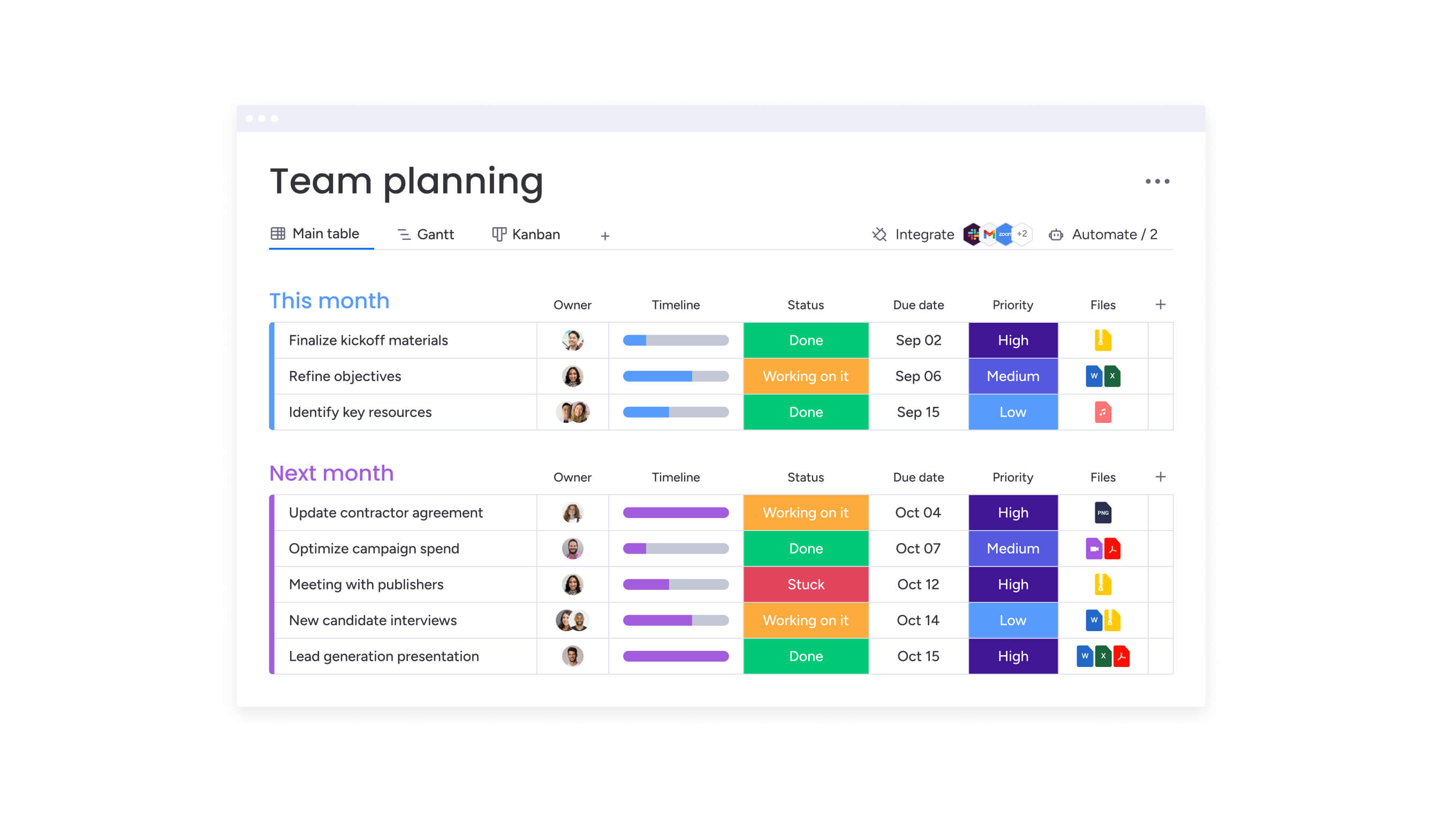
A marketing plan template gives your team a structured framework for planning, executing, and measuring marketing initiatives. It’s the connective tissue between your big-picture goals and the daily activities that actually move the needle.
Think of it as the bridge between “what we want to accomplish” and “how we’ll actually get there.” A marketing plan template defines your audience, messaging, channels, budget, timeline, and success metrics in one cohesive framework. Without this structure, marketing efforts often become scattered, reactive, and difficult to measure.
For mid-to-large organizations, a marketing plan template also functions as an alignment mechanism. It ensures that everyone from the CMO to the content team understands priorities, dependencies, and deadlines. When marketing operates across multiple departments, regions, or business units, this shared understanding becomes essential for coordinated execution.
Do you need a marketing plan template?
Skip the formal planning process, and you’ll likely end up in a familiar mess: campaigns with no clear success metrics, budgets based on hunches rather than data, and a constant struggle to prove ROI when leadership comes asking.
This challenge is compounded by the fact that only 22% of their time is spent on long‑term growth initiatives versus short‑ and medium‑term activities, making structured planning even more critical. Sound familiar?
A documented marketing plan tackles the problems that keep marketing teams spinning their wheels instead of driving results.
- Creates accountability: assigns ownership to specific initiatives and establishes measurable outcomes
- Enables resource optimization: forces teams to prioritize activities based on strategic impact rather than urgency alone
- Provides leadership visibility: gives executives the insights needed to make informed decisions about budget allocation and strategic direction
Your organization’s complexity should dictate your planning approach. A small team with a single campaign might get by with a simple outline. But if you’re juggling multiple campaigns across departments, regions, or product lines, you’ll need a structure that directly links daily activities to your bigger business goals.
What should a marketing plan template include?
Every solid marketing plan template has key pieces that work together to guide your strategy and execution. Knowing what each section actually does makes it easier to tailor templates to your team’s specific needs. Each component serves a distinct purpose in transforming strategic vision into executable activities.
The following table outlines the core components every marketing plan template should address:
| Component | Purpose | Key questions answered |
|---|---|---|
| Executive summary | Provides high-level overview for stakeholders | What are we doing and why? |
| Goals and objectives | Defines measurable outcomes | What does success look like? |
| Target audience | Identifies who you're reaching | Who are we speaking to? |
| Competitive analysis | Maps market positioning | How do we differentiate? |
| Marketing strategies | Outlines approach by channel | How will we reach our audience? |
| Budget allocation | Assigns resources to initiatives | Where are we investing? |
| Timeline and milestones | Establishes execution schedule | When will activities happen? |
| KPIs and measurement | Defines success metrics | How will we track progress? |
Executive summary
This section distills your entire plan into a concise overview that busy executives can absorb quickly. It should capture the strategic rationale, key initiatives, expected outcomes, and resource requirements in one to two pages.
Goals and objectives
Effective marketing plans connect to broader business objectives. Your goals should follow the SMART framework: specific, measurable, achievable, relevant, and time-bound. This section answers the question every CFO will ask: “What will this investment deliver?”
Target audience
Detailed audience profiles inform every subsequent decision in your plan. Include demographic information, behavioral patterns, pain points, and preferred communication channels. The more specific your audience definition, the more targeted your messaging and channel selection can be.
Budget and resource allocation
This section outlines how you’ll distribute financial and human resources across initiatives. It should account for paid media, content production, technology, personnel, and contingency funds.
How to create a marketing plan using a template
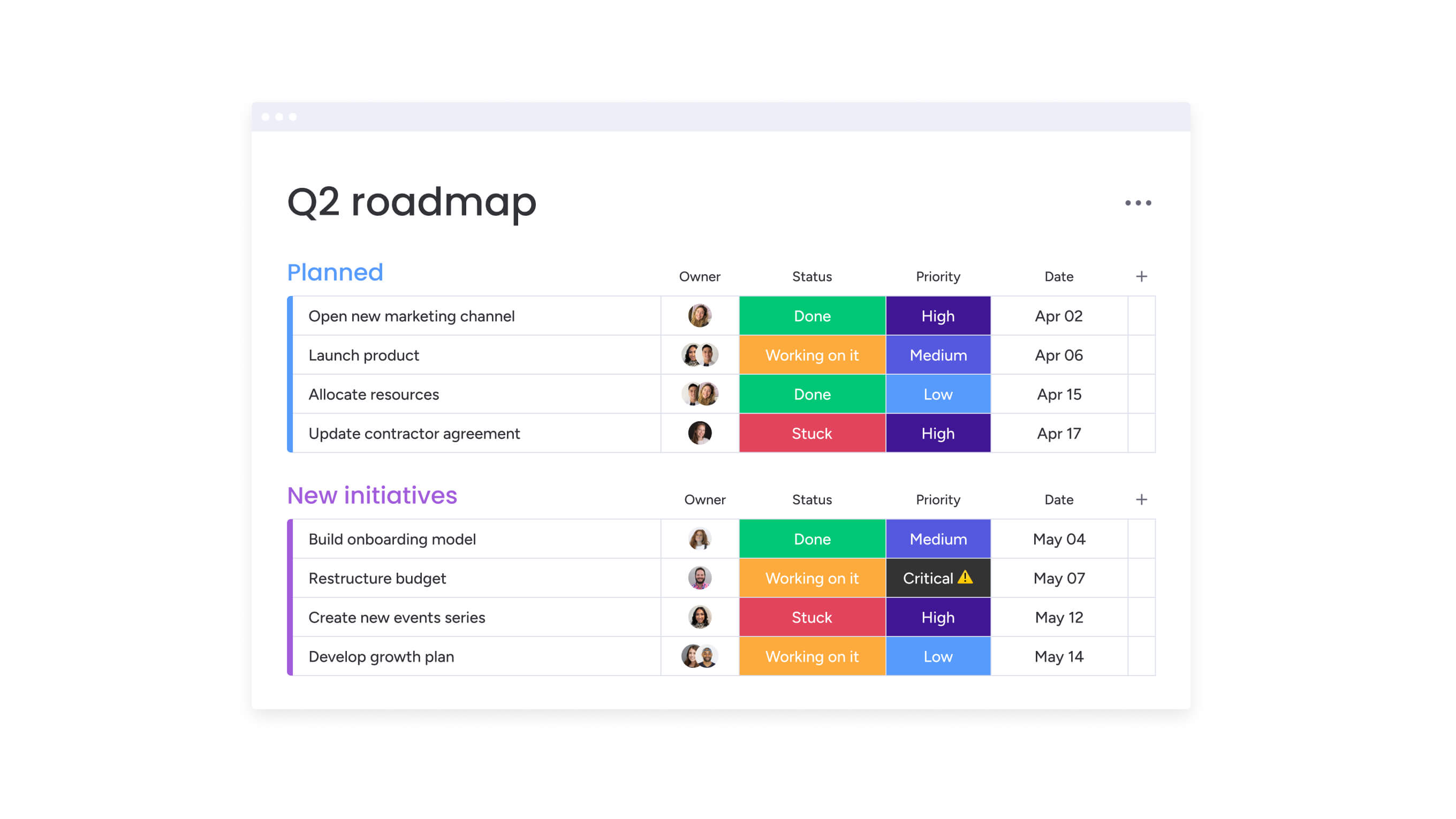
Creating a marketing plan that works takes both big-picture thinking and nuts-and-bolts execution. Here’s how to turn that blank template into a plan your team will actually use. Each step builds on the previous one to create a comprehensive strategy that connects to daily operations.
Step 1: conduct your situational analysis
Don’t jump straight to filling out template fields. First, gather the insights that should drive your decisions: look at how past campaigns performed, what your competitors are up to, and where market conditions are heading. What worked well last quarter? Where did you fall short of targets?
Organizations using monday work management can pull historical data from project dashboards to identify patterns in campaign performance. This analysis provides the foundation for realistic goal-setting and resource allocation.
Step 2: define your goals and connect them to business objectives
Your marketing goals should ladder up to company-level objectives. If the organization aims to increase market share in a specific segment, your marketing plan should outline exactly how marketing activities will contribute to that outcome.
Document both leading indicators (activities you’ll complete) and lagging indicators (results you’ll achieve). This dual approach helps teams understand what they need to do while keeping the ultimate outcomes in focus.
Step 3: map your strategies to channels and tactics
With goals established, determine which channels and tactics will most effectively reach your target audience. Consider the customer journey from awareness through conversion, and identify touchpoints where marketing can influence decisions.
This is where your plan transitions from strategy to execution. Each channel strategy should include:
- Specific tactics: detailed activities for each channel.
- Responsible team members: clear ownership assignments.
- Timelines: deadlines and dependencies.
- Budget allocations: resource distribution across initiatives.
Teams using monday work management can assign owners, set deadlines, and track status for individual initiatives within a unified workspace.
Step 4: build your timeline and establish milestones
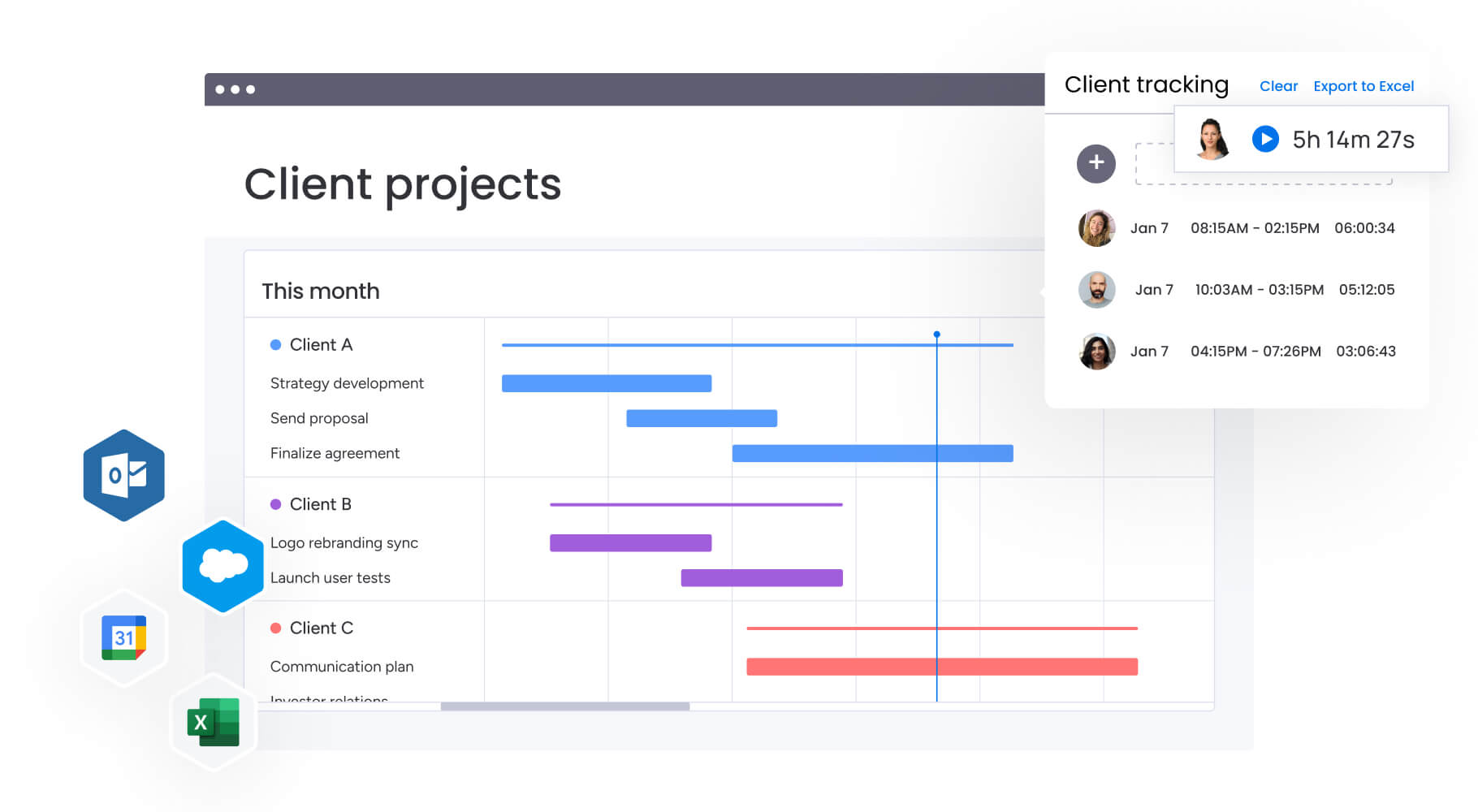
Marketing plans die when they’re just documents nobody looks at after the kickoff meeting. Turn your strategy into a visual timeline showing exactly who’s doing what, when it’s due, and how everything fits together. When people see how their work connects to the bigger picture, they’re more likely to deliver.
Gantt charts provide visibility into project scope, schedule, and dependencies at any level. Teams can identify potential bottlenecks before they impact delivery and adjust resources accordingly.
Step 5: establish measurement and reporting cadences
Define how and when you’ll measure progress against your goals. Create a structured approach to tracking that matches your organization’s decision-making rhythm:
- Weekly check-ins: focus on activity completion and immediate roadblocks.
- Monthly reviews: assess performance against KPIs and tactical adjustments.
- Quarterly reviews: evaluate strategic direction and make adjustments based on market conditions.
Dashboards that automatically display live project data eliminate the manual reporting burden that often derails marketing teams. When leadership can access real-time insights on budget, goals, and schedules, status meetings become strategic conversations rather than data-gathering exercises.
Types of marketing plan templates
Different marketing objectives require different planning frameworks. Understanding the distinctions helps you select or customize templates that match your specific needs. Each template type addresses unique planning challenges and organizational requirements.
Strategic marketing plan template
This comprehensive template covers annual or multi-year planning horizons. It addresses market positioning, competitive strategy, brand development, and long-term resource allocation. Strategic plans typically inform multiple campaign-level plans throughout the year.
Marketing campaign template
Campaign templates focus on specific initiatives with defined start and end dates. They include detailed tactical plans, creative briefs, channel specifications, and performance targets. How do your individual campaigns connect to your broader strategic objectives?
Digital marketing plan template
These templates emphasize online channels including search, social media, email, content marketing, and paid advertising. They often include technical specifications for tracking, attribution models, and platform-specific requirements.
Sales and marketing plan template
When marketing and sales alignment is critical, this template ensures both teams work toward shared objectives. It addresses lead generation targets, handoff processes, and shared accountability for revenue outcomes.
One-page marketing plan template
For organizations that need a simplified framework, one-page templates capture essential elements in a scannable format. They work well for communicating strategy to stakeholders who don’t need tactical details.
Organizations using intelligent solutions like monday work management can build tailored workflows without coding, ensuring the template matches how they actually work. The platform supports all these planning approaches through customizable workflows that adapt to any campaign type, team structure, or organizational need.
How to turn your marketing plan template into action
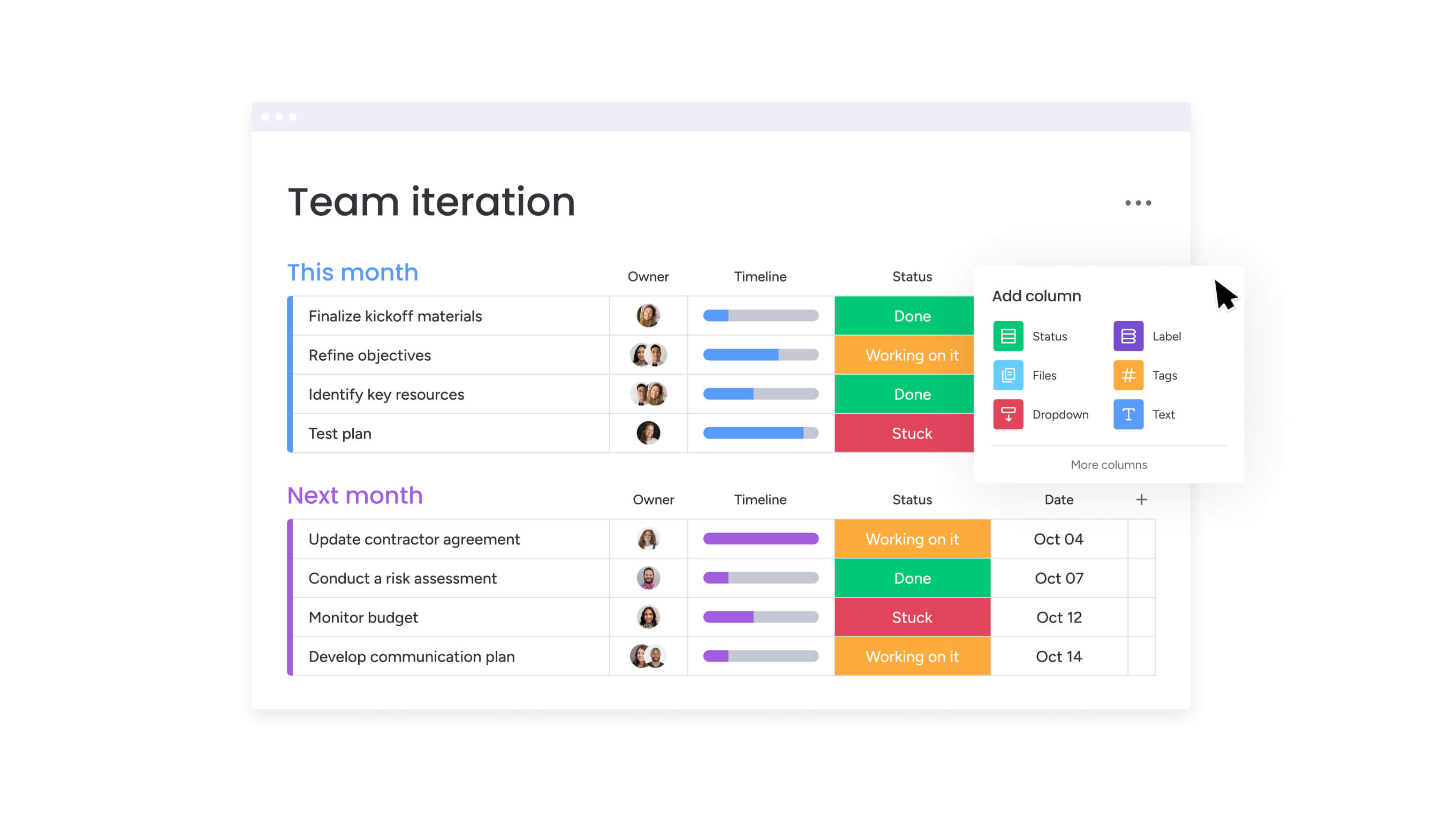
The greatest challenge for most marketing strategies lies in the gap between planning and execution. That beautiful plan gathering digital dust in your shared folder? It’s not moving the needle on anything. The key is transforming your documented strategy into daily workflows that keep teams aligned and accountable.
Connect strategy to daily work
Every item in your marketing plan should translate into assignable activities with owners, deadlines, and status tracking. When team members can see how their individual contributions connect to strategic objectives, engagement and accountability increase.
Automate routine coordination
Status updates, approval requests, and deadline reminders consume significant time when handled manually. Automations can handle repetitive coordination, sending notifications when items need attention and updating stakeholders automatically as work progresses.
Maintain real-time visibility
Leadership needs to understand campaign progress without scheduling status meetings or chasing updates. Dashboards that pull data from active projects provide instant answers about budget utilization, timeline adherence, and performance against targets.
Adapt as conditions change
Markets shift, priorities evolve, and opportunities emerge. Your marketing plan should be a living document that updates as your business does. Teams leveraging monday work management can modify workflows, reassign resources, and adjust timelines without rebuilding their entire planning structure.
Enable cross-functional collaboration
Marketing rarely operates in isolation. Finance needs budget visibility, sales needs lead flow information, and leadership needs performance data. A centralized workspace where all stakeholders can access relevant information eliminates silos and reduces coordination overhead.
Transform your marketing plan template with monday work management
Managing marketing plans at scale requires more than static templates. You need dynamic workflows that evolve with your business, connect to your existing tools, and provide real-time visibility across teams.
Advances solutions like monday work management transform marketing plan templates from static documents into living, collaborative workflows. Here’s how the platform addresses common planning challenges:
- Dynamic planning that evolves: plans update in real time as work progresses, ensuring strategy stays connected to daily execution
- Cross-departmental alignment: connect marketing plans to resource management, budget approvals, and company-wide goals through portfolio views and dependency tracking
- AI-powered efficiency: AI Blocks automate research summarization, action item extraction, and risk detection, reducing manual planning work.
- Unlimited customization: drag-and-drop customization, template libraries, and conditional logic let teams adapt templates to any campaign type or organizational structure
- Real-time visibility: live dashboards, workload management, and automated notifications keep stakeholders informed without manual reporting
- Seamless integration: connect to 200+ platforms including CRM, analytics, and communication applications, ensuring marketing data flows across your tech stack.
With monday work management, marketing planning becomes intuitive, collaborative, and scalable. Teams can build the exact workflow they need, track progress in real time, and adapt quickly as priorities shift — all without technical expertise or adding tool sprawl.
Try monday work management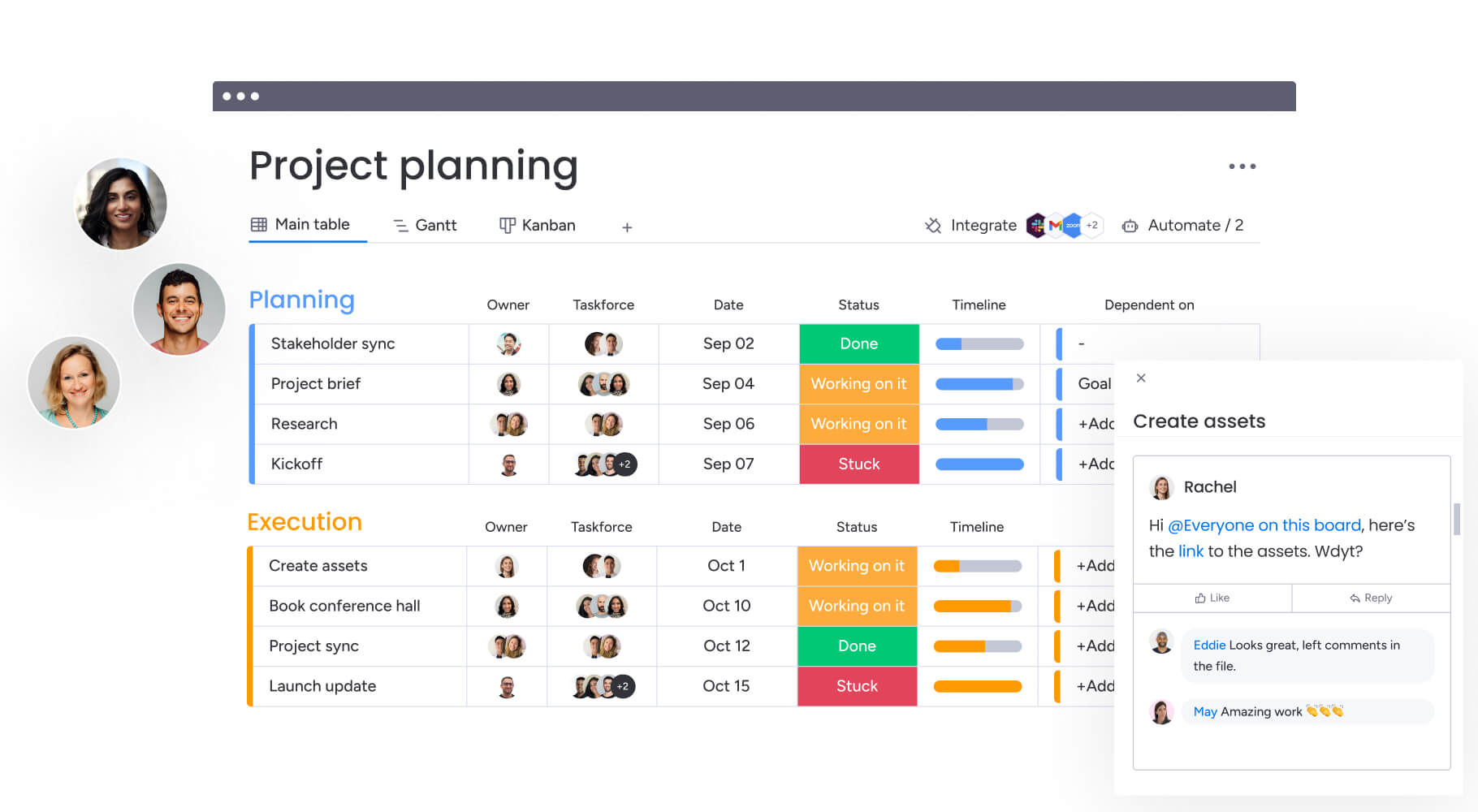
Build marketing plans that drive measurable results
Marketing plan templates provide the foundation for strategic execution, but their true value emerges when they become living workflows that connect strategy to daily operations. Organizations that successfully bridge the planning-execution gap see improved campaign performance, stronger cross-functional alignment, and clearer ROI demonstration to leadership.
The best marketing plans bend without breaking when conditions shift. Turn your template into a living, breathing workspace that keeps pace with your business, and you’ll stop chasing campaigns and start driving growth.
Ready to turn your marketing strategy into coordinated execution? Start building workflows that connect every campaign activity to your broader business objectives.
Frequently asked questions
What should a marketing plan template include?
A marketing plan template should include an executive summary, goals and objectives, target audience profiles, competitive analysis, marketing strategies by channel, budget allocation, timeline with milestones, and KPIs for measuring success. Each component guides strategy development and execution.
How do I create a marketing plan using a template?
To create a marketing plan using a template, start by conducting a situational analysis, then define goals that connect to business objectives, map strategies to specific channels, build a timeline with milestones, and establish measurement cadences. This systematic approach transforms templates into actionable roadmaps.
Are there free marketing plan templates I can customize for my business?
Yes, free marketing plan templates are available from various sources including project management platforms, marketing software providers, and business resource websites. These offer customizable formats in spreadsheet, document, and visual board formats.
What is the difference between a marketing plan and a marketing strategy?
A marketing strategy defines your overall approach to reaching customers and achieving business goals. A marketing plan documents the specific tactics, timelines, budgets, and resources needed to execute that strategy.
How often should I update my marketing plan?
Marketing plans should be reviewed quarterly at minimum, with monthly check-ins on tactical execution. Annual comprehensive reviews assess strategic direction and make adjustments based on performance data and market conditions.
What are the 7 Ps of marketing used in marketing planning?
The seven Ps of marketing are product, price, place, promotion, people, process, and physical evidence. These provide a comprehensive framework for developing marketing strategies, particularly for service-based organizations.

 Get started