


Your engineering team just approved a $2.3 million equipment purchase after 14 months of evaluation. Marketing had zero visibility into that buying process until the final vendor presentation. Sound familiar? Most manufacturing companies excel at building products but struggle to build the marketing systems that drive consistent demand for those products.
Manufacturing marketing strategy requires a fundamentally different approach than consumer or software marketing.
echnical buyers research extensively before engaging sales teams. Purchase decisions involve five-ten stakeholders across engineering, procurement, finance, and operations. Sales cycles stretch 6-18 months while committees evaluate specifications, conduct site visits, and analyze total cost of ownership. Traditional marketing tactics that work for consumer brands or SaaS companies often fall flat when applied to industrial equipment, components, or manufacturing services.
In this article, you’ll discover seven marketing strategies built for manufacturing’s unique challenges. We’ll cover everything from creating technical content that engineers value to nurturing leads across a twelve-month sales cycle. Let’s get into it!
Key takeaways
- Engineer-first marketing wins: manufacturing buyers expect technical depth, specifications, and proof of performance — marketing must speak to engineers and decision-making committees, not consumers.
- Design for long, complex sales cycles: six–18 month buying journeys require structured nurture programs, role-specific content, and consistent engagement across every evaluation stage.
- Use SEO and content to capture high-intent demand: technical SEO, application-driven pages, and long-tail keywords attract buyers actively researching solutions before sales involvement.
- Unify teams with shared workflows: monday work management aligns marketing, sales, and production in one workspace, keeping campaigns, assets, and leads coordinated throughout extended deal cycles.
- Measure impact in revenue terms: track cost per qualified lead, marketing-sourced revenue, sales cycle velocity, and lead-to-customer conversion to prove marketing’s contribution to growth.
What makes manufacturing marketing unique?
in 2026, manufacturing marketing isn’t just another flavor of B2B. What works brilliantly for SaaS companies or professional services falls completely flat when you’re selling six-figure equipment to committees of engineers who scrutinize every specification.
When you recognize what makes your technical buyers tick, you can build marketing that actually speaks their language — and turns interested prospects into customers who trust your expertise.
Three core differences shape how manufacturing companies must approach marketing: the formal, committee-driven buying process; the extended timeline from first contact to closed deal; and the technical sophistication of the audience.
B2B buying processes vs consumer marketing
Manufacturing purchases follow formal procurement protocols that bear no resemblance to consumer buying behavior. A consumer might research a laptop for three days and make a purchase decision based on reviews, price, and brand preference.
However, a manufacturing company evaluating a CNC machine coordinates input from production managers, quality engineers, maintenance teams, procurement specialists, and financial controllers. In fact, spend on orders over €one million completed via end-to-end digital self-service has tripled since 2022, underscoring buyers’ comfort with making capital-intensive decisions online.
The process includes technical specifications review, site visits, sample production runs, total cost of ownership analysis, and formal bid comparisons. Each stakeholder applies different evaluation criteria:
- Production managers: prioritize throughput and reliability.
- Quality engineers: focus on precision and repeatability.
- Maintenance teams: assess serviceability and downtime risks.
- Finance teams: evaluate ROI and payment terms.
Marketing must address all these perspectives simultaneously while maintaining technical accuracy and building trust across the entire committee through comprehensive marketing strategies.
Long sales cycles and multiple decision makers
Manufacturing sales cycles routinely span 6–18 months from initial contact to signed contract. During this period, five–ten stakeholders evaluate the purchase, each entering and exiting the process at different stages.
A typical buying committee includes several key roles:
- End users: will operate the equipment daily.
- Technical evaluators: assess specifications and performance requirements.
- Procurement professionals: manage vendor relationships and contract terms.
- Financial approvers: control budget allocation and ROI analysis.
- Executive sponsors: make final purchasing decisions.
Marketing must maintain engagement across this entire timeline, providing relevant content for each stakeholder’s specific concerns at precisely the right moment.
Technical audiences requiring specialized content
Manufacturing buyers approach purchasing decisions with an engineer’s analytical mindset. They expect detailed technical specifications, performance data, material certifications, and compliance documentation. A marketing brochure that emphasizes “innovative solutions” without backing those claims with measurable performance metrics gets immediately discarded.
Engineers want to see specific data points including:
- Performance metrics: load capacities, tolerance ranges, cycle times.
- Operational data: energy consumption figures and maintenance intervals.
- Proof of results: case studies with specific production improvements and documented cost savings.
- Technical implementation details: installation requirements and integration specifications.
This demand for technical proof is critical, as eight in ten B2B decision-makers will actively look for a new vendor if performance guarantees aren’t offered.
Why do modern manufacturers invest in strategic marketing?
Manufacturing companies historically viewed marketing as a cost center focused on trade show attendance and product brochures. That perspective has fundamentally changed as digital transformation reshapes industrial buying behavior and competitive dynamics.
Today’s manufacturing landscape however demands a strategic approach to marketing that drives measurable business outcomes. Forward-thinking manufacturers now recognize marketing as a strategic function that directly impacts revenue growth, market positioning, and competitive advantage.
Digital transformation of industrial buyers
Industrial buyers have adopted the same digital-first research behaviors that transformed consumer purchasing. Engineers and procurement professionals now begin their evaluation process with online searches, review technical content on manufacturer websites, compare specifications across multiple vendors, and form preliminary opinions before initiating contact with sales teams.
The game has changed completely. Your digital presence no longer just supports sales — it creates the opportunity for sales conversations in the first place. If engineers can’t find you online with the right technical content, you simply won’t make their shortlist.
Data-driven decision making in manufacturing
Manufacturing companies apply rigorous data analysis to production processes, quality control, and supply chain management. Marketing increasingly receives the same analytical treatment.
Modern marketing teams can demonstrate:
- Campaign effectiveness: which campaigns generate qualified leads.
- Content performance: which assets advance buyer journeys.
- Channel ROI: which channels deliver the strongest return on investment.
- Revenue correlation: how marketing activities connect to closed deals.
This measurability makes marketing accountable in ways that resonate with manufacturing executives who expect every function to justify its resource allocation through quantifiable results.
Competitive differentiation through marketing
The reality is that in many manufacturing sectors, your competitors’ products look nearly identical to yours on paper. When specs and pricing match up closely, your marketing becomes the deciding factor that tips the scales in your favor.
Companies leverage marketing to:
- Demonstrate expertise: content marketing showcases technical knowledge.
- Establish authority: thought leadership builds industry credibility.
- Signal sophistication: digital presence reflects operational capabilities.
7 manufacturing marketing strategies that drive growth
Each of these seven strategies we explore below will tackle a specific pain point you’re likely facing right now — whether it’s getting technical content in front of the right engineers or proving to your CEO that marketing dollars are actually driving revenue.
Each strategy also works as part of an integrated system where content marketing feeds account-based campaigns, SEO drives trade show attendance, and marketing automation nurtures leads generated through multiple channels.
Understanding how these strategies interconnect helps manufacturing marketers build comprehensive programs that deliver consistent results across extended buying cycles.
Strategy 1: content marketing for engineers and technical buyers
Content marketing strategy for manufacturing focuses on creating technical resources that help engineers and buyers solve problems, evaluate options, and make informed decisions. Technical audiences research extensively before engaging with sales teams and value educational content over promotional messaging.
The following content types consistently drive engagement with technical manufacturing audiences:
- Technical white papers: in-depth explorations of industry challenges, emerging technologies, or application methodologies.
- Application guides: detailed documentation showing how products solve specific manufacturing challenges.
- Customer case studies: results-focused narratives including production improvements and implementation timelines.
- Specification comparison resources: interactive content enabling engineers to compare technical parameters.
Teams using intelligent platforms like monday work management can automatically tag content by industry, application, technical topic, and buyer journey stage, making it easier to surface the right content at the right time through effective project management.
Strategy 2: account-based marketing for enterprise clients
Account-based marketing (ABM) aligns perfectly with manufacturing’s high-value, committee-based buying process. Rather than casting a wide net to generate maximum leads, ABM focuses resources on a defined set of target accounts that match ideal customer profiles.
ABM treats each target account as a market of one, developing customized marketing strategies that address specific challenges. Effective tactics include:
- Personalized content campaigns: tailored messaging addressing specific account challenges.
- Coordinated multi-channel outreach: synchronized touchpoints across email, social, and direct mail.
- Executive engagement programs: c-level interactions and relationship building.
- Account-specific landing pages: customized web experiences for target companies.
Organizations using monday work management can orchestrate sophisticated multi-touch campaigns through a comprehensive go-to-market strategy that addresses the complexity of enterprise manufacturing purchases.
Strategy 3: SEO and digital presence for manufacturing companies
Search engine optimization for manufacturing requires a fundamentally different approach than consumer SEO. Technical buyers search for highly specific terms like “five-axis CNC machining tolerances” or “ISO 13485 compliant injection molding” that have low search volumes but extremely high purchase intent.
Manufacturing SEO focuses on ranking for these technical long-tail keywords rather than high-volume generic terms. Key tactics include:
- Technical landing pages: dedicated pages for specific technical terms and applications.
- Comprehensive product pages: detailed specifications and technical documentation.
- Technical content libraries: extensive resources addressing industry challenges.
- Location-based optimization: geographic targeting for local manufacturing searches.
Strategy 4: trade show marketing with digital integration
Trade shows remain important for manufacturing marketing, providing opportunities for hands-on product demonstrations and face-to-face relationship building. The most effective approach integrates trade shows into broader digital marketing strategies.
An integrated approach connects digital efforts with in-person events to maximize ROI. This ensures that every trade show interaction is part of a larger, coordinated campaign. Key tactics include:
- Pre-show digital campaigns: use targeted LinkedIn and email campaigns to reach attendees before the event.
- Digital lead capture: implement mobile apps to capture detailed lead information and trigger automated follow-up workflows.
- Live demonstration content: record product demonstrations for post-event content marketing and sales follow-up.
- Post-show sequences: launch automated follow-up campaigns to deliver promised information and nurture new leads.
- Pre-show digital campaigns: targeted LinkedIn and email campaigns reaching attendees before the event.
- Digital lead capture: mobile apps capturing detailed lead information and triggering follow-up workflows.
- Live demonstration content: recording product demonstrations for post-event content marketing.
- Post-show sequences: automated follow-up campaigns delivering promised information.
Strategy 5: marketing automation for lead nurturing
Marketing automation addresses the fundamental challenge of maintaining engagement across 6–18 month manufacturing sales cycles. Automated nurture sequences deliver relevant content to leads based on their behavior, interests, and position in the buying journey.
For manufacturing companies, automation proves particularly valuable for managing multi-stakeholder buying processes. Key tactics include:
- Behavior-triggered email sequences: automated responses based on content downloads and website activity.
- Lead scoring and qualification systems: automated ranking of prospects based on engagement and fit.
- Progressive profiling through forms: gradual collection of lead information over time.
- Multi-path nurture campaigns: different sequences for different stakeholder roles.
Teams using monday work management can build automated workflows that respond to campaign performance, lead behavior, and market conditions as part of their overall marketing strategies.
Strategy 6: video marketing for product demonstrations
Video marketing proves particularly effective for manufacturing because it demonstrates physical products, shows equipment in operation, and conveys technical capabilities in ways that text and static images cannot match.
Effective video types for manufacturing include:
- Product demonstration videos: detailed walkthroughs showing equipment operation and performance.
- Virtual facility tours: comprehensive videos showcasing manufacturing capabilities and quality processes.
- Customer testimonial videos: interviews discussing challenges, implementation, and results achieved.
- Technical training content: educational videos demonstrating best practices and application guidance.
Strategy 7: channel partner marketing programs
Many manufacturing companies sell through distributors, dealers, or value-added resellers rather than direct sales forces. Channel partner marketing focuses on enabling these partners to effectively market and sell the manufacturer’s products.
Effective channel marketing provides partners with comprehensive support:
- Co-brandable marketing materials: templates and assets partners can customize.
- Joint marketing initiatives: collaborative campaigns and events.
- Centralized partner portals: digital hubs for accessing resources and training.
- Comprehensive training programs: education on products, markets, and selling techniques.
Leveraging AI in manufacturing marketing
Artificial intelligence transforms manufacturing marketing by automating complex activities, analyzing vast datasets, and personalizing content at scale. For manufacturing marketers managing long sales cycles, technical content libraries, and multi-stakeholder buying processes, AI provides capabilities that would be impossible through manual effort.
AI tools also elevate your marketing capabilities by transforming how you engage prospects during those 18-month evaluation marathons. Imagine automatically serving an engineer the exact technical specification sheet they need, right when they’re comparing options.
This trend is accelerating rapidly, with 88% of organizations reporting regular use of AI and 79% using generative AI in at least one business function in 2025, with marketing and sales among the most common areas of use.
Automated campaign optimization
AI-powered campaign optimization continuously analyzes performance data and automatically adjusts campaign parameters to improve results. Rather than marketers manually reviewing metrics and making periodic adjustments, AI systems monitor campaigns in real-time, test variations, and implement improvements automatically.
AI Blocks capabilities within monday work management enable manufacturing marketers to build sophisticated automation workflows that respond to campaign performance, lead behavior, and market conditions.
Predictive analytics for demand generation
Predictive analytics applies machine learning algorithms to historical data to forecast future outcomes. In manufacturing marketing, predictive analytics provides valuable insights:
- Lead conversion probability: identifies which leads are most likely to convert.
- Purchase timing: estimates when prospects will be ready to buy.
- Demand forecasting: predicts future demand for different products or services.
- Resource allocation: optimizes marketing spend across channels and campaigns.
AI-powered content personalization
Manufacturing buying committees include multiple stakeholders with different concerns, priorities, and information needs. AI-powered content personalization delivers customized content to each stakeholder based on their role, interests, and position in the buying journey.
Rather than sending the same generic content to all leads, AI systems analyze individual behavior patterns and automatically select the most relevant content for each recipient.
Try monday work management
How to measure manufacturing marketing ROI
In an industry that measures machine efficiency down to the second, marketing is held to the same high standard of data-driven accountability. Manufacturing executives want hard numbers, not marketing speak.
Effective measurement requires tracking the right metrics, implementing proper attribution models, and connecting marketing activities to business outcomes. This data-driven approach helps manufacturing marketers optimize their strategies and demonstrate clear value to executive leadership.
KPIs that matter to manufacturing executives
Manufacturing executives care about metrics that directly connect to business outcomes. The following KPIs reflect real business value:
Metric Definition Why it matters
Cost per qualified lead Total marketing spend divided by number of sales-qualified leads generated Measures marketing efficiency and enables comparison across campaigns
Sales cycle length Average time from first marketing touch to closed deal Shorter cycles indicate more effective lead nurturing
Marketing-sourced revenue Total revenue from opportunities where marketing generated the initial lead Demonstrates marketing's direct contribution to company revenue
Customer lifetime value Total revenue generated from a customer over the entire relationship Justifies customer acquisition costs and helps prioritize target markets
Lead-to-customer conversion rate Percentage of marketing-qualified leads that ultimately become customers Measures lead quality and effectiveness of the entire process
Attribution models for complex B2B sales
Attribution determines which marketing activities deserve credit for generating revenue. Manufacturing buyers might interact with a company through organic search, download white papers, attend webinars, visit trade show booths, and have several sales conversations before making a purchase decision.
Different attribution approaches offer different perspectives:
- First-touch attribution: credits the initial marketing activity that generated the lead.
- Last-touch attribution: credits the final marketing activity before the sale.
- Multi-touch attribution: distributes credit across all marketing touchpoints.
- Time-decay attribution: assigns more credit to touchpoints closer to the purchase decision.
Connecting marketing metrics to revenue
The ultimate measure of marketing effectiveness is revenue impact. Connecting marketing metrics to revenue requires tracking leads through the entire sales process, from initial contact through qualification, opportunity creation, and final close.
Organizations utilizing monday work management can connect marketing automation, CRM, and sales processes to create the infrastructure needed for accurate revenue attribution.
How to build integrated marketing operations
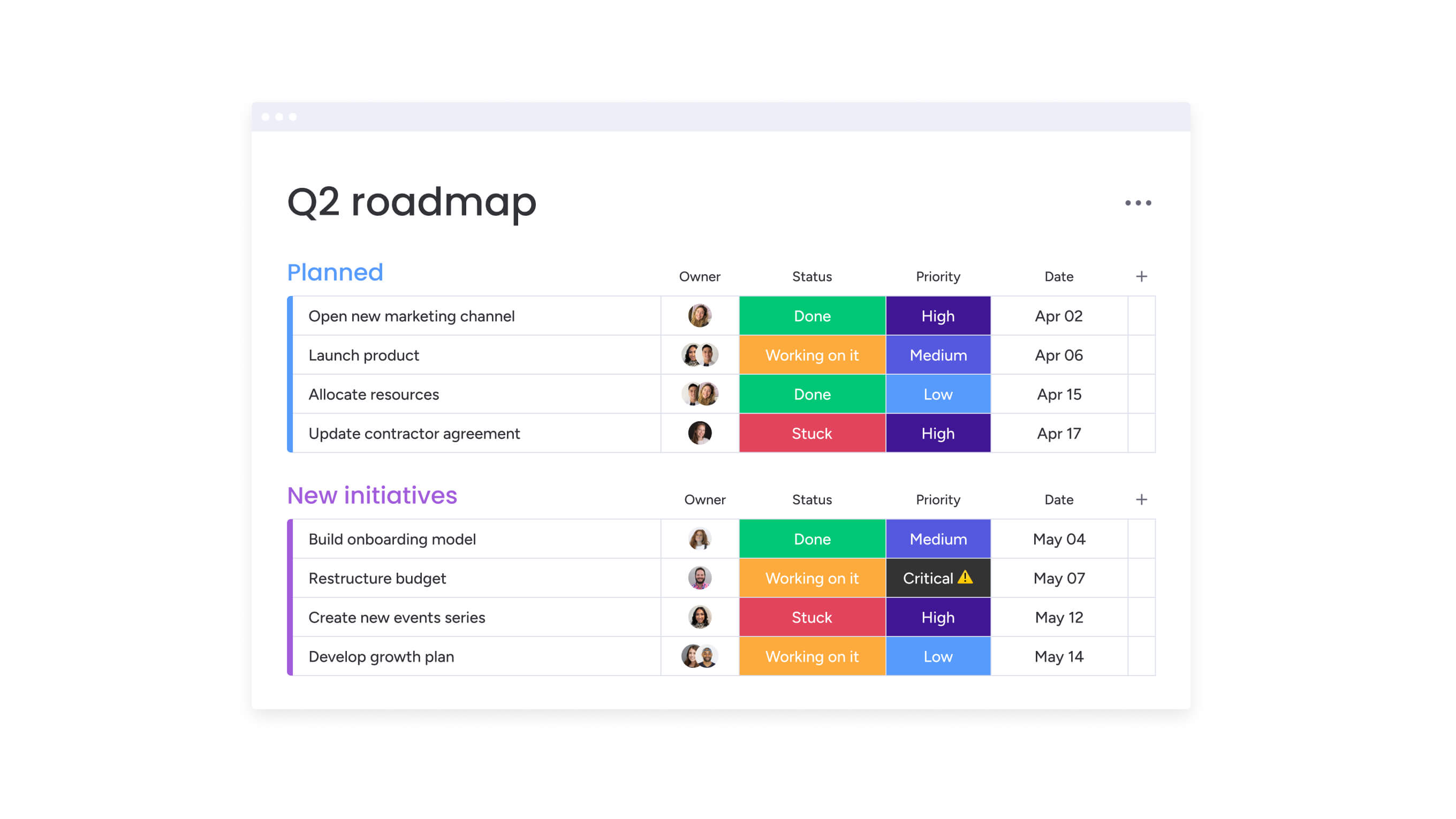
Manufacturing marketing success requires coordination across multiple departments, campaigns, and systems. Effective manufacturing marketing operates as an integrated system where campaign planning, content creation, lead nurturing, and performance measurement all connect seamlessly.
This integrated approach ensures that marketing efforts align with business objectives while maximizing efficiency and impact across the organization.
Step 1: align marketing with sales and production
Manufacturing marketing cannot operate in isolation from sales and production teams. Marketing generates leads that sales must convert, promotes capabilities that production must deliver, and makes promises that the entire organization must fulfill.
Marketing teams need to understand production capabilities, capacity constraints, and lead times to accurately represent what the company can deliver. Sales teams need to provide feedback on lead quality, share customer insights, and communicate competitive intelligence that shapes marketing strategy.
Take a quick inventory: when was the last time your marketing team actually sat in on a production meeting or joined a technical sales call? That gap might be costing you more than you realize.
Step 2: establish cross-functional team collaboration
Effective collaboration between marketing and other departments requires more than occasional meetings. It demands shared workflows, transparent communication, and collaborative platforms that make cross-functional work seamless.
Key collaboration practices include:
- Shared project boards: unified workspaces where marketing, sales, product, and other teams can see project status.
- Automated notifications: systems that alert relevant stakeholders when input is needed.
- Centralized asset libraries: shared repositories where all teams can access current marketing materials.
- Cross-functional campaign planning: collaborative processes bringing together stakeholders from different departments.
Teams using monday work management can work in shared boards that provide mutual visibility into each other’s activities, timelines, and priorities.
Step 3: optimize resource allocation across departments
Manufacturing companies operate with finite resources: limited marketing budgets, constrained production capacity, and sales teams that can only handle a certain volume of leads. Effective marketing operations optimize resource allocation across these constraints.
Real-time dashboards on monday work management provide visibility into campaign performance, resource allocation, and ROI, enabling data-driven decisions about where to invest marketing resources.
Level up your manufacturing marketing approach
As we’ve explored. manufacturing marketing requires an all-encompassing approach that addresses technical audiences, extended sales cycles, and complex buying committees.
Success comes from implementing integrated strategies that work together to generate qualified leads, nurture prospects through long evaluation periods, and demonstrate measurable business impact.
These are the practical, field-tested approaches helping manufacturers convert technical buyers into customers while proving marketing’s impact on the bottom line. From content marketing that educates technical buyers to AI-powered personalization that addresses individual stakeholder needs, each element contributes to a comprehensive system designed for manufacturing’s unique challenges.
Organizations that embrace these approaches while leveraging platforms like monday work management to coordinate cross-functional efforts will find themselves better positioned to compete in increasingly digital manufacturing markets.
Remember. the key is starting with a clear understanding of your buyers, implementing measurement systems that track real business impact, and building integrated operations that align marketing with broader business objectives.
The content in this article is provided for informational purposes only and, to the best of monday.com‘s knowledge, the information provided in this article is accurate and up-to-date at the time of publication. That said, monday.com encourages readers to verify all information directly.
Frequently asked questions
What is manufacturing marketing strategy?
Manufacturing marketing strategy is the systematic approach to generating demand, building brand awareness, and supporting sales for industrial products, equipment, or services. It addresses technical audiences, committee-based purchasing processes, and extended sales cycles that can span 6–18 months.
How do manufacturers create effective marketing plans?
Manufacturers create effective marketing plans by defining ideal customer profiles, mapping the buyer journey from awareness through decision, identifying content and touchpoints needed at each stage, and establishing metrics that connect marketing activities to business outcomes.
What are the most effective digital marketing tactics for manufacturing companies?
The most effective digital marketing tactics for manufacturing companies include technical content marketing, SEO optimization for technical long-tail keywords, LinkedIn advertising targeting specific job titles and industries, and marketing automation that nurtures leads across long sales cycles.
How can manufacturers measure marketing effectiveness?
Manufacturers measure marketing effectiveness by tracking metrics that directly connect to business outcomes: cost per qualified lead, marketing-sourced revenue, lead-to-customer conversion rates, and customer lifetime value. This requires end-to-end tracking from initial contact through closed deals.
What makes B2B manufacturing marketing different from other B2B marketing?
B2B manufacturing marketing differs through the extreme technical sophistication of buyers, the length and complexity of sales cycles spanning 12–18 months, and the physical nature of products being sold, requiring detailed specifications and proof of capabilities that goes far beyond what software or service buyers require.
How do you align manufacturing marketing with sales teams?
Aligning manufacturing marketing with sales teams requires establishing shared goals, implementing regular communication processes, creating unified visibility into leads and opportunities, and working from shared platforms that provide access to lead data, campaign information, and performance metrics.

 Get started