

Leadership today is tested in the day-to-day details of execution. Priorities shift, teams work across locations, and decisions need to happen quickly without creating confusion. When ownership is unclear or information is scattered, even strong teams can lose momentum.
Effective leaders create clarity that keeps work moving forward. They balance direction with flexibility, communicate context behind decisions, and build environments where teams can adapt without losing focus. As AI becomes part of everyday workflows, leaders also gain new ways to access insights, reduce manual coordination, and support better decisions.
This guide explores the leadership skills that matter most today, the styles shaping modern organizations, and how AI is influencing the way leaders operate. It also looks at practical ways to keep teams aligned, strengthen accountability, and build systems that support consistent performance as organizations grow.
Key takeaways
- Adapt leadership style to context: Different situations require different approaches, from transformational leadership during change to more directive styles in high pressure moments.
- Build clarity through systems and structure: Strong leadership reduces confusion by clearly defining ownership, priorities, and workflows across teams.
- Focus on core leadership qualities: Emotional intelligence, adaptability, data literacy, communication, and systems thinking drive consistent team performance.
- Use technology to scale leadership impact: Platforms like monday work management help centralize visibility, improve coordination, and support data driven decision making across teams.
- Measure leadership effectiveness with data: Tracking metrics like project completion, engagement, and goal achievement helps identify what works and where to improve.
What is Leadership?
Leadership is the ability to move people toward a shared goal while keeping everyone clear, focused, and ready to adjust when conditions change. It is not just about authority or job titles. At its core, leadership blends vision, judgment, communication, and decision-making in a way that helps people do strong work together.
It shows up at every level of an organization. A team lead can show leadership by creating clarity in day to day work, while an executive does it by setting direction across the business. What matters most is not your title, but whether you can create the conditions for people to do their best work and stay connected to the bigger goal.
Good leadership also brings structure to uncertainty. It helps teams understand what matters now, who owns what, and where priorities may need to shift. As work becomes more complex, leaders are expected to bring both human judgment and practical coordination into the same conversation.
Core components of effective leadership
Strong leadership usually comes down to three connected elements. Together, they shape how a leader guides people, makes sound decisions, and keeps work moving when pressure rises. Each one matters on its own, but they work best when used together.
Influence
This is the ability to shape what people do and how they think, through trust rather than title. For example, a product lead may explain how a new feature solves a real customer problem, which gives the development team a clearer sense of purpose beyond simply writing code.
Direction
Setting clear goals and showing how individual work supports the broader business strategy. A marketing director, for instance, may take a broad brand idea and turn it into a launch calendar with defined deliverables, timelines, and owners.
Adaptability
This relates to the ability to respond quickly when circumstances change. If a competitor launches a disruptive product, effective leaders adjust priorities and roadmaps right away, instead of staying tied to a plan that no longer fits the market.
Leadership vs management: understanding the distinction
Leadership and management are closely linked, but they are not the same. Leadership is about setting direction and helping people believe in it. Management is about organizing the work and making sure execution stays on track.
The table below shows how leadership and management differ across a few key areas:
| Dimension | Leadership focus | Management focus |
|---|---|---|
| Direction | Vision: defining what and why | Execution: defining how and when |
| Change | Innovation: encouraging new ideas | Stability: ensuring consistency |
| People | Culture: shaping values and engagement | Operations: organizing processes and resources |
| Timeframe | Long-term strategic outcomes | Short-term operational delivery |
| Approach | Inspiring and influencing | Planning and controlling |
A sales transformation initiative makes this difference easier to visualise in practise. The leader defines the shift to a product led growth model and explains why it matters for the company’s future. The manager builds the timeline, assigns territories, sets quotas, and tracks progress against plan.
In practice, most people do both. At one moment, they may be shaping direction and building support. At another, they may be handling day to day execution and making sure the work gets done smoothly.
Try monday work managementStrong leadership usually comes down to three connected elements. Together, they shape how a leader guides people, makes sound decisions, and keeps work moving when pressure rises.
7 leadership styles that shape modern organizations
No single leadership style works in every situation. What matters is knowing which approach fits the team, the moment, and the challenge in front of you. Each style explored below has a clear purpose, and each one can be effective when used at the right time.
1. Transformational leadership
Transformational leaders push teams to do more than they thought possible by connecting daily work to a larger purpose. They build momentum, create belief, and encourage people to think beyond routine tasks.
This style works especially well during periods of change or when new ideas are needed. A leader may rally a team around a sustainability initiative and frame it as a chance to reshape the industry, not just meet compliance standards.
This approach can be powerful, though it depends on credibility and clear judgment. At the same time, it can be easy to miss operational details, so teams need visible ways to track both strategic priorities and day to day performance.
2. Servant leadership
Servant leaders focus first on the team’s growth, support, and well being. Their role is to remove friction, clear obstacles, and create the conditions people need to do strong work.
This style is often most effective with experienced teams that can work independently. For instance, a servant leader may spend time removing administrative blockers so developers can stay focused on coding and delivery.
It builds trust and often improves engagement. However, gathering broad input can slow decision making, especially when the business needs a fast response.
3. Democratic leadership
Democratic leaders ask for input from the team before making the final decision. This style works well when a problem needs different perspectives and the quality of the decision depends on shared insight.
A leader might gather ideas from sales, product, and support before approving the quarterly roadmap. This usually improves buy in and brings stronger ideas to the surface.
However, it can slow things down when the issue is urgent. In many organizations, shared platforms help simplify this process by collecting input and decisions in one place, which makes collaboration easier and more organized.
4. Situational leadership
Situational leaders adjust their style based on a person’s experience, confidence, and level of support needed. That means one team member may need direct guidance, while another may need coaching, support, or full delegation.
For example, a new hire learning expense procedures may need step by step direction. Meanwhile, a senior finance manager handling budget reports may need very little oversight at all.
This flexibility helps people perform better and grow faster. It also allows leaders to respond more effectively to the real needs of the team, instead of relying on a single fixed approach.
5. Coaching leadership
Coaching leaders focus on long term development. Instead of giving immediate answers, they ask thoughtful questions that help people think clearly, solve problems, and build confidence on their own.
When a team member struggles with client negotiations, a coaching leader may guide the discussion with specific questions that help shape a better strategy. This creates learning that lasts beyond the moment.
Over time, this style improves capability and supports retention. Still, it requires patience and time, which means it may not fit every short term situation.
6. Digital-first leadership
Digital first leaders use technology to communicate clearly, make better decisions, and keep teams aligned across locations. This style matters even more in remote and hybrid environments, where visibility and timing can easily break down.
These leaders know how to run effective virtual meetings, use screen recordings for complex explanations, and keep progress visible through shared dashboards. They also understand how to make asynchronous work feel connected rather than fragmented.
As a result, teams can stay coordinated across time zones without relying on constant meetings. Platforms that provide real time updates make this style much easier to sustain.
7. Autocratic leadership
Autocratic leaders make decisions independently, with little or no team input. Although this style often gets criticized, it can be the right choice when speed matters more than consensus.
During a security breach or a major production outage, quick direction can prevent delays and reduce damage. In moments like that, a single decision maker can help the team act clearly and immediately.
That said, this style should not become the default. Used too often, it can lower morale, reduce trust, and limit the flow of new ideas.

5 essential qualities of successful leaders
Strong leadership today depends on a set of practical qualities that help people handle real workplace challenges. These skills can be developed with practice, and together they make leadership more steady, effective, and human.
1. Emotional intelligence
Emotional intelligence is the ability to understand and manage emotions, both personally and across the team. In distributed teams, this often means noticing changes in behavior through communication patterns rather than body language.
Here’s what high emotional intelligence looks like:
- Regular check-ins: Scheduling one-on-ones for non-work conversations.
- Sensitive feedback delivery: Using video for difficult conversations.
- Digital team bonding: Creating virtual spaces for relationship building.
When a typically vocal team member goes quiet in meetings, emotionally intelligent leaders reach out privately to offer support before performance suffers.
2. Adaptability
Adaptability is the ability to adjust thinking and behavior when conditions shift. In fast moving markets and technical environments, rigid plans often create more problems than they solve.
Adaptive leaders stay flexible by:
- Change as data: Viewing shifts as information, not failure.
- Immediate pivots: Adjusting project priorities when customer preferences change.
- Flexible planning: Using rolling forecasts rather than static budgets.
For example, an engineering lead may even restructure a sprint mid cycle when new AI capabilities remove manual work. That change can free time for more valuable work almost immediately.
3. Data literacy
Data literacy means understanding dashboards, reports, and performance signals well enough to make sound decisions. A leader does not need to be a data scientist, but they do need to know what to look for and what questions to ask.
Instead of guessing why projects are slowing down, data literate leaders review cycle time and workflow data to find the actual cause. They also use metrics to balance workloads more fairly and avoid overloading high performers.
This kind of visibility becomes much easier when work is tracked in a shared platform. With modern and intelligent solutions like monday work management, teams can view live project data in one place and make decisions based on what is happening now, not assumptions from last week.
4. Communication skills
Communication works when people not only hear a message, but also understand it clearly. That includes speaking, writing, listening, and choosing the right format for the situation.
Strong communicators are great at:
- Audience adaptation: Adjusting style based on who they’re addressing.
- Concrete storytelling: Using narratives to make abstract concepts tangible.
- Feedback loops: Confirming understanding through active listening.
- Channel selection: Knowing when to use synchronous versus asynchronous communication.
This becomes especially important in teams spread across functions, cultures, and time zones. Clear communication builds trust, reduces confusion, and helps work move forward with fewer misunderstandings.
5. Systems thinking
Systems thinking is the ability to see how different parts of the organization connect and affect one another. Leaders with this mindset do not stop at the visible problem, they look at the deeper causes and the ripple effects.
When a project slips, for example, systems thinkers do not rush to blame individuals. Instead, they examine the full workflow, including approvals, resourcing, dependencies, and communication gaps.
This broader view leads to better decisions and fewer unintended problems. It also matters because recent studies show that operating model redesigns now succeed 79% of the time and meet most objectives 63% of the time, which makes system level thinking even more valuable.
How AI transforms leadership capabilities
AI now handles more of the data analysis and administrative work that used to consume a leader’s time. As a result, leaders can spend more energy on judgment, strategy, people development, and complex decisions that need context.
This does not replace leadership judgment. Instead, it strengthens it by providing clearer information, faster signals, and better visibility into what is changing across the business.
That shift really matters because it helps leaders focus on the work only people can do well. When routine work becomes easier to manage, more attention can go to direction, coaching, and long term priorities.
AI-powered decision making
AI helps uncover patterns in large datasets that are easy to miss with manual analysis. Because of this, decisions become more grounded in evidence rather than instinct alone. In fact, recent data shows that 78% of organizations already use AI in at least one business function, which reflects how widely it is being adopted.
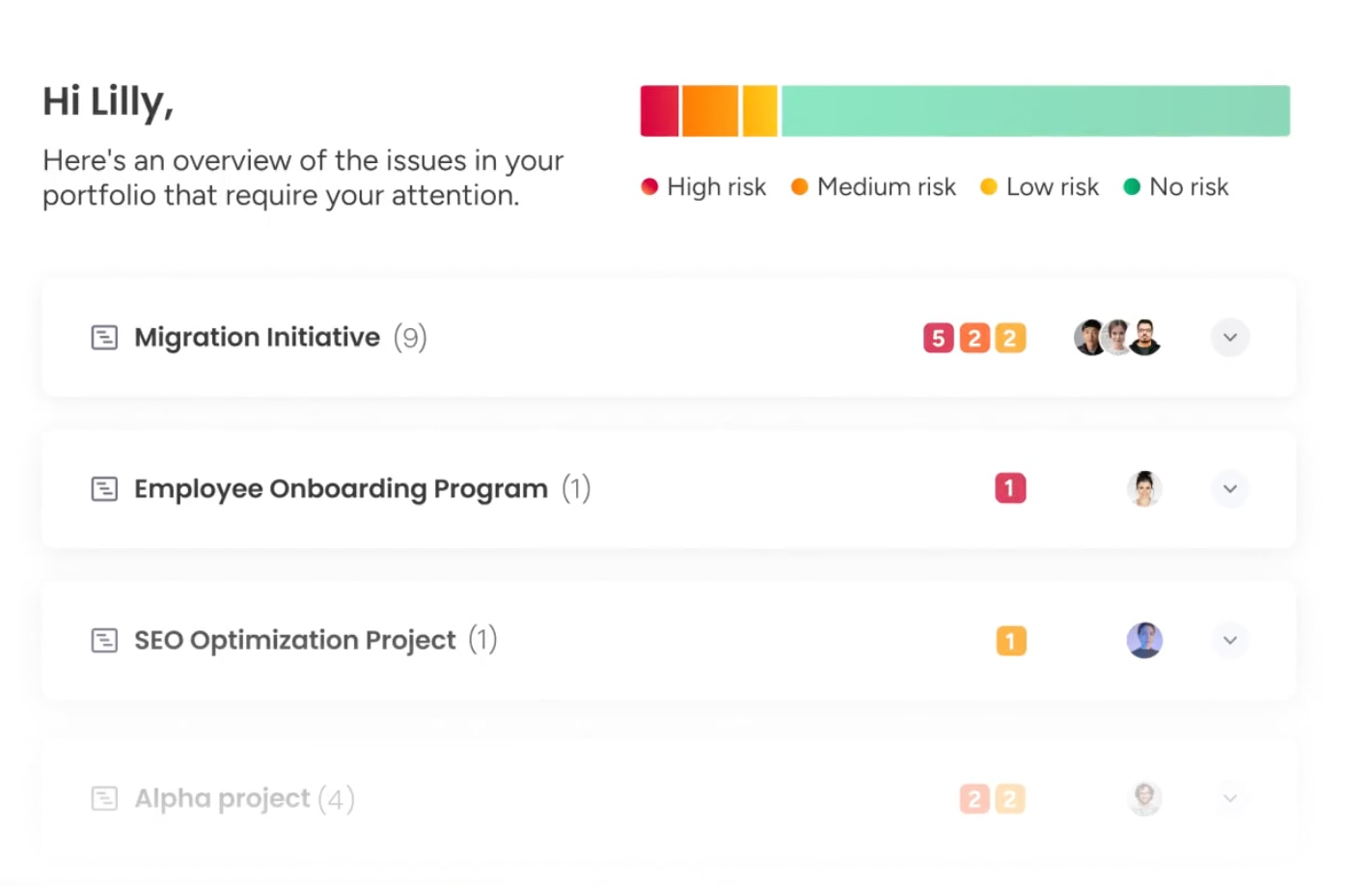
For example, AI might identify a 30% chance of delay based on past performance and current workload. As a result, leaders can adjust timelines early or reassign resources before issues grow. In addition, capabilities like Portfolio Risk Insights on monday work management scan project boards and highlight risks by severity, which helps teams act sooner.
Leading human-AI collaborative teams
Work today often includes both people and AI working side by side. Leaders decide where human effort matters most, such as strategy, relationships, and complex thinking, while AI handles structured work like data processing and scheduling.
For instance, a marketing team may use AI to generate content variations and review campaign results. Meanwhile, human marketers refine tone and manage partnerships more thoughtfully. As a result, leaders shape an environment where AI supports the team’s work rather than replacing it.
Automating leadership administration
Administrative work can quietly take up a large part of a leader’s time. However, AI now handles routine activities like tracking status, building reports, and organizing meetings more efficiently.
Instead of manually preparing weekly updates, leaders can rely on AI to generate real time summaries directly from project boards. At the same time, AI agents can flag projects that need attention and schedule follow ups automatically. Because of this, leaders gain more time for coaching, planning, and decision making.
Try monday work managementAI helps uncover patterns in large datasets that are easy to miss with manual analysis. Because of this, decisions become more grounded in evidence rather than instinct alone.
Building high-performance teams in distributed environments
Creating strong teams in remote settings takes deliberate effort. Casual office interactions no longer happen naturally, so leaders need structured ways to keep people connected and aligned. Success depends on building systems that support collaboration, clarity, and trust across locations.
1. Establishing trust without physical presence
In remote teams, trust grows through consistency and transparency rather than physical visibility. Leaders support this by communicating clearly and showing reliability over time.
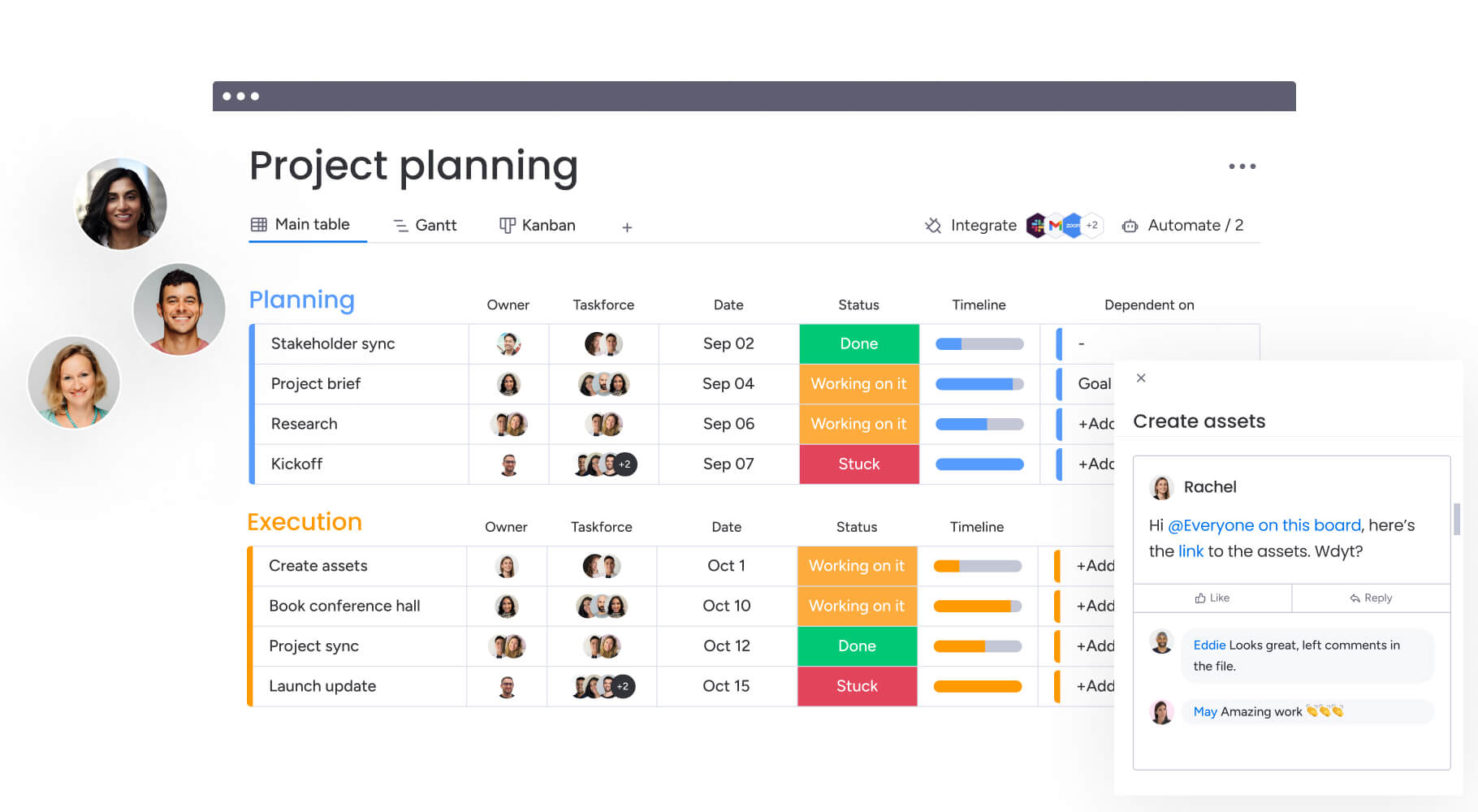
- Transparency: Use shared platforms where everyone knows who’s doing what and why. Teams gain this visibility through unified workspaces on monday work management where work status, decisions, and progress are accessible to all.
- Consistency: Follow through reliably on digital commitments. When you say you’ll review something by Tuesday, do it. This reliability replaces the natural accountability you get from being in the same office.
- Humanity: Model vulnerability by admitting mistakes and sharing personal updates. It shows people they can be human at work, not just productive.
2. Maintaining energy across time zones
Time zone differences can easily create gaps in communication if not handled carefully. Leaders manage this by planning schedules that include everyone fairly.
Meeting times can rotate so no single group is always adjusting. In addition, setting shared working hours helps teams collaborate in real time while protecting focused work time. Documenting decisions also ensures that people who could not attend still stay informed and involved.
3. Enabling seamless cross-department collaboration
When teams cannot see each other’s work, silos can form quickly. Leaders reduce this by creating shared visibility and clear transitions between responsibilities.
Digital workspaces allow marketing, sales, and support teams to collaborate on the same initiatives. At the same time, defining ownership clearly prevents overlap or missed work. Regular check ins between team leads also help align priorities before issues appear.

Measuring leadership effectiveness through metrics
Leadership becomes easier to manage when it can be measured clearly. With the right platform, teams can track whether leadership efforts are improving performance and overall health. This also helps demonstrate progress to stakeholders in a practical way.
Essential leadership KPIs
Here are the metrics that show whether your team’s healthy and your leadership’s working:
- Project completion rate: This shows whether you’re planning realistically and executing efficiently.
- Team engagement scores: Numbers on satisfaction and motivation usually change before performance does. Federal workforce data shows that employee engagement can reach 73% when leadership effectiveness is measured and improved systematically.
- Goal achievement rate: This shows whether you’re aligned and focused.
- Resource utilization: This reveals burnout risks and where you’re wasting capacity.
- Quality metrics: These make sure you’re not sacrificing quality for speed.
Real-time leadership dashboards
Dashboards help turn raw data into clear actions. Instead of tracking activity alone, strong dashboards focus on outcomes that matter.
Different views can be set based on roles, so executives focus on strategy while team leads track daily progress. Alerts can also be configured to signal when performance shifts outside expected ranges. With monday work management, these views help leaders focus on decisions instead of compiling data.
Team health indicators
Early signals often reveal issues before performance declines. Metrics like peer recognition, feedback tone, and participation in team routines provide useful insights.
When these indicators begin to drop, leaders can step in early. Adjusting workload, scheduling one on one conversations, or organizing team activities can help restore balance. Acting early usually prevents larger problems later.

“monday.com has been a life-changer. It gives us transparency, accountability, and a centralized place to manage projects across the globe".
Kendra Seier | Project Manager
“monday.com is the link that holds our business together — connecting our support office and stores with the visibility to move fast, stay consistent, and understand the impact on revenue.”
Duncan McHugh | Chief Operations OfficerTurning leadership into scalable systems with monday work management
Leadership today depends on more than clear judgment and strong communication. Teams also need a practical way to connect daily execution with broader business goals, especially when priorities shift, ownership is unclear, and work is spread across functions.
Intelligent and powerful solutions like monday work management help address those challenges by giving leaders a shared platform for visibility, coordination, and faster decision making.
The points below show how the platform supports the leadership needs covered throughout this guide:
- Unclear ownership and limited visibility: Shared boards, dashboards, and connected workspaces make responsibilities, progress, and decisions easier to track across teams.
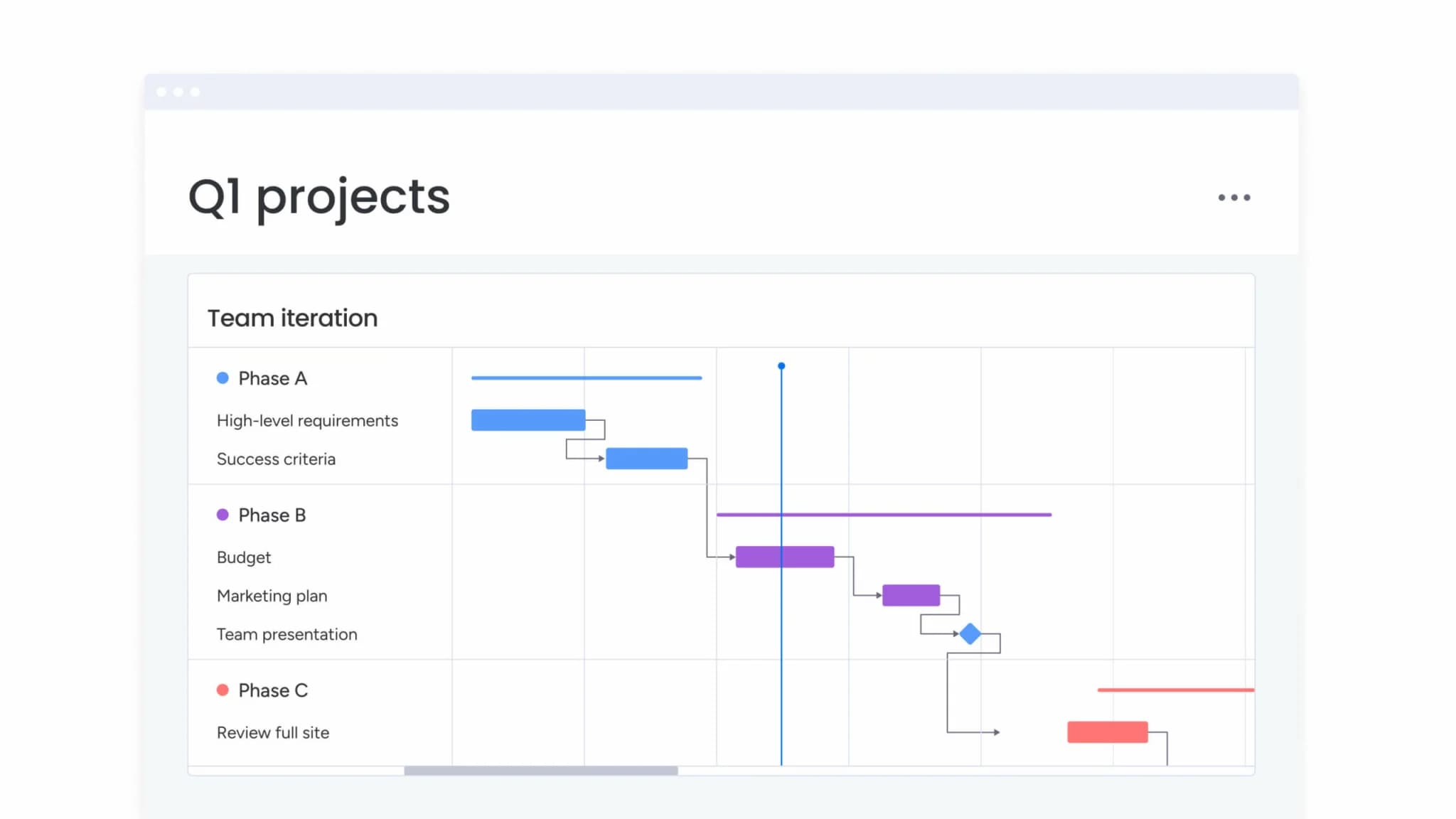
- Disconnected strategy and day to day execution: Portfolio views and real time reporting help connect active work with larger priorities, so leaders can see how team activity supports business goals.
- Slow decisions caused by scattered information: AI Blocks can categorize feedback, extract key details, and summarize updates, which helps leaders review information more quickly and act with more confidence.
- Risks that surface too late: Portfolio Risk Insights analyzes project boards and highlights potential risks, helping teams spot issues earlier and respond before they grow.
- Too much time spent on manual coordination: Automation and AI driven capabilities reduce repetitive updates, reporting, and follow ups, which gives leaders more time for planning, coaching, and strategic work.
By leveraging monday work management, teams are able to stay aligned, work more efficiently, and create stronger strategic impact, all within a structure that stays practical rather than heavy or complicated.
Try monday work managementFrequently asked questions
What are the 4 basic leadership styles?
The four widely recognized styles include autocratic, where decisions are made independently, and democratic, where team input is considered. In addition, laissez faire leadership offers minimal direction, while transformational leadership focuses on shared vision and motivation.
How can someone develop leadership skills?
Leadership skills grow through practice, feedback, and real experience. Taking on challenging projects, learning from mentors, and using structured platforms like monday work management can support steady development. Over time, skills like communication, emotional awareness, and data understanding become stronger.
What distinguishes great leaders from average ones?
Strong leaders focus on developing their teams while making decisions based on both data and values. They also adapt quickly when situations change and create environments where people feel comfortable sharing ideas and taking responsibility.
Can leadership be learned or is it innate?
Leadership is largely developed through experience and learning. While certain traits may help at the start, consistent practice and the right support systems play a bigger role in long term growth.
How do you measure leadership effectiveness?
Leadership effectiveness can be seen through outcomes such as goal achievement, project delivery, engagement levels, and retention. In addition, dashboards provide clear visibility into these metrics, making it easier to track progress and adjust when needed.
What role does technology play in modern leadership?
Technology supports leadership by improving visibility and reducing manual work. It helps teams stay aligned, supports decision making with real time data, and allows leaders to focus more on strategy and people rather than routine coordination.

 Get started