

A $500 million highway expansion, spanning eight years and involving 12 agencies and 200 contractors, represents the immense scale of infrastructure project management. Six months in, delays ripple across work streams, budget overruns surface from unexpected soil conditions, and community tensions rise over environmental impact. This scenario unfolds across infrastructure projects worldwide.
Infrastructure project management is the discipline of planning, coordinating, and delivering the massive physical and digital systems that power society. Unlike typical projects measured in months, these initiatives span decades, involve billions in funding, and require alignment across governments, contractors, regulators, and communities. Their scale and complexity demand specialized approaches beyond standard project frameworks.
What makes infrastructure project management unique? How do its six phases, from strategic planning to long-term operations, connect? What separates high-performing leaders, and how does AI reshape risk across multi-billion-dollar portfolios? The answers below outline what it takes to deliver infrastructure at scale.
Key takeaways
- Master the six-phase lifecycle approach: infrastructure projects span decades from strategic planning through long-term operations, requiring specialized management that goes far beyond traditional project frameworks.
- Coordinate massive stakeholder ecosystems effectively: success depends on aligning government agencies, contractors, communities, and environmental groups around shared goals while maintaining transparent communication across all parties.
- Leverage AI-powered risk management for proactive decisions: Portfolio Risk Insights provided by monday work management scan data across hundreds of projects to surface potential issues before they become costly delays or budget overruns.
- Scale resource management across multi-year timelines: optimize allocation of specialized talent, heavy equipment, and materials across multiple concurrent projects to prevent bottlenecks and maximize utilization.
- Build enterprise-wide visibility through real-time portfolio dashboards: transform scattered project data into unified insights that enable faster decision-making and keep leadership informed without manual reporting delays.
What is infrastructure project management?
Infrastructure project management is the practice of planning, coordinating, and executing large-scale physical and digital systems that form society’s foundation. This includes transportation networks, energy grids, water systems, and telecommunications backbones.
Unlike standard project management, infrastructure management spans the entire asset lifecycle: from strategic planning through decades of operation and maintenance.
The scale alone sets infrastructure projects apart. While typical projects may span several months or a few years, infrastructure programs frequently extend over five to 20 years.
Furthermore, budgets often escalate into the hundreds of millions or billions of dollars. Stakeholder ecosystems include government agencies, public communities, environmental groups, and countless contractors. This complexity requires specialized management approaches, as traditional project frameworks are insufficient for this scale.
Understanding contemporary infrastructure project management
Today’s infrastructure projects must meet immediate functional needs while building in long-term resilience and adapting to rapid technological change. Teams coordinate thousands of moving parts while meeting evolving regulations and diverse community expectations. Success means managing physical materials and data with equal precision, tracking steel shipments as carefully as permit approvals.
Modern infrastructure management has evolved into an enterprise capability. Organizations now coordinate hundreds of concurrent initiatives, each with unique requirements but all needing standardized oversight. This shift from project-by-project execution to portfolio-wide coordination shows how much infrastructure delivery has matured.
Consider how a transportation authority manages multiple highway expansions, rail upgrades, and bridge replacements simultaneously. Each project has distinct technical requirements, but all must align with regional development goals, environmental standards, and budget constraints.
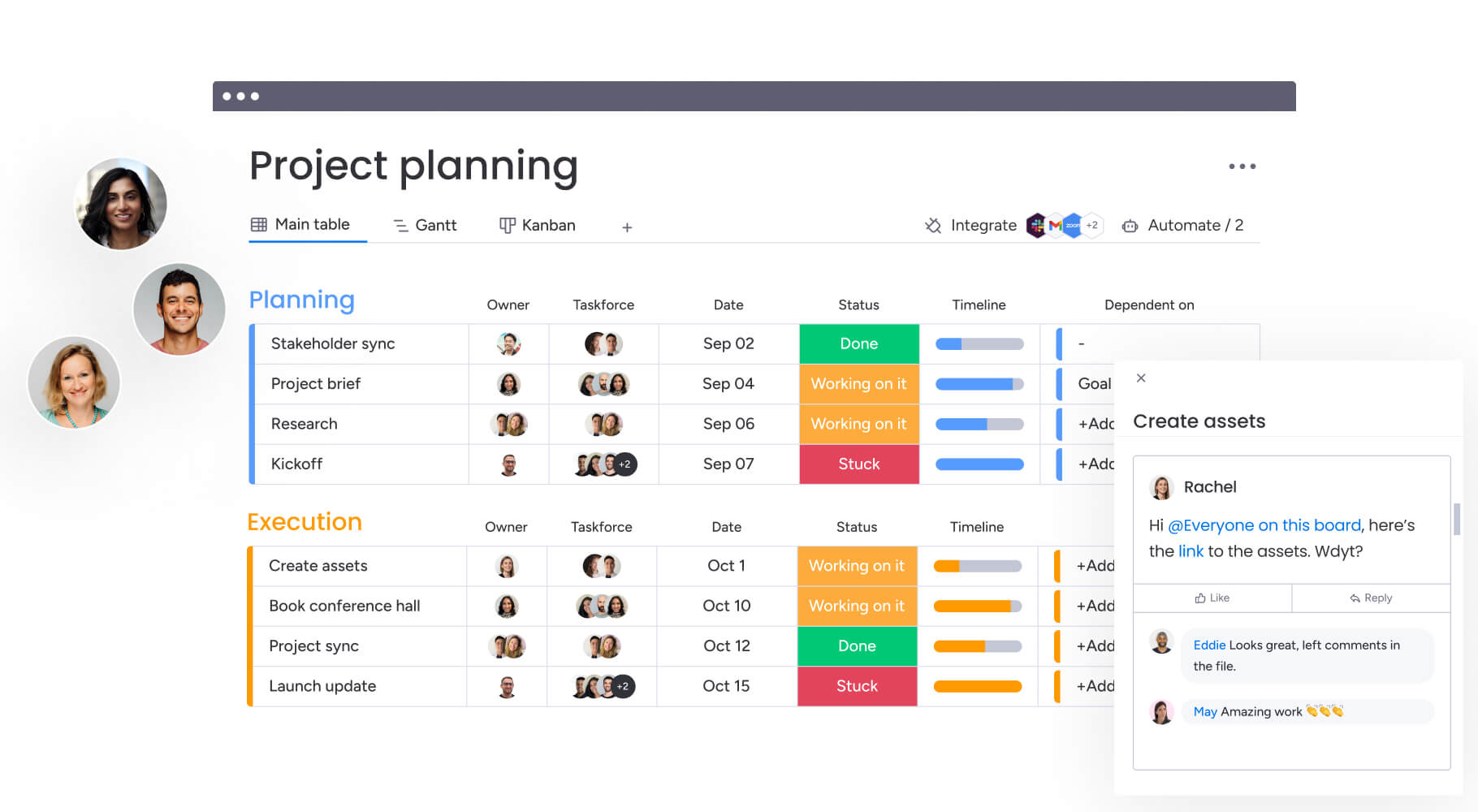
Coordinating this requires platforms that provide real-time visibility across all initiatives while maintaining project-level detail.
How does infrastructure PM differ from traditional project management?
Infrastructure projects operate at a different scale and complexity than standard commercial or IT projects. These structural differences require specialized management approaches:
| Aspect | Traditional project management | Infrastructure project management |
|---|---|---|
| Timeline | Months to two years | 5–20+ years (planning through operation) |
| Budget | Thousands to millions | Hundreds of millions to billions |
| Stakeholders | Internal teams, direct clients | Government agencies, public communities, environmental groups, contractors |
| Regulatory scope | Industry-specific standards | Multi-jurisdictional approvals, environmental impact, public safety laws |
| Risk profile | Market and operational risk | Geopolitical, environmental, and societal risk |
Why do infrastructure projects require specialized management?
Standard methodologies fail when applied to infrastructure due to excessive interdependencies and external variables. These projects face challenges that require specialized expertise: managing scale, navigating regulatory environments, and handling public scrutiny. Knowing these challenges helps you select the right management approaches and technology platforms.
Managing scale and complexity in infrastructure development
Infrastructure development is complex across physical, time-based, and organizational dimensions. Projects span hundreds of miles across varied terrain and jurisdictions. Decisions made during planning must stay viable for lifecycles exceeding 50 years. A single project coordinates hundreds of contractors, subcontractors, and specialized consultants.
Key complexity factors include:
- Geographic scale: projects spanning multiple jurisdictions with varying terrain and conditions.
- Extended timelines: planning decisions that must remain viable for 50+ year lifecycles.
- Massive coordination needs: managing hundreds of contractors, subcontractors, and specialized consultants.
- Multi-dimensional dependencies: physical, temporal, and organizational interdependencies across all work streams.
This complexity demands sophisticated coordination providing a single source of truth. When teams centralize project data, communications, and workflows on platforms like monday work management, they get real-time status updates, no matter where they’re located. The platform’s cross-project dependencies feature helps visualize how delays in one area impact the entire portfolio.
Navigating regulatory and compliance requirements
Regulatory compliance in infrastructure involves continuous adaptation rather than static checklists. Projects navigate environmental impact assessments, safety standards, labor laws, and multi-jurisdictional zoning requirements that often change mid-project. A single compliance failure can stop work, trigger massive fines, or even cancel the entire project.
Effective managers maintain audit-ready documentation trails for every decision, material approval, and safety inspection. This satisfies government oversight and public interest groups while protecting your organization from legal exposure. Automated audit trails and version control within solutions like monday work management ensure every change is tracked and accessible.
Coordinating multiple stakeholders across jurisdictions
Infrastructure stakeholders include entities with conflicting priorities and timelines. Government agencies focus on compliance and budget. Community groups prioritize local impact and transparency. Environmental organizations monitor sustainability. Contractors focus on schedule and profitability.
How do you make sure delays or changes reach everyone instantly? Platforms that centralize stakeholder communication prevent misalignment and the costly disputes that follow.
With platforms like monday work management, role-based permissions and stakeholder-specific views keep everyone informed while maintaining appropriate access controls.
6 essential phases of infrastructure project management
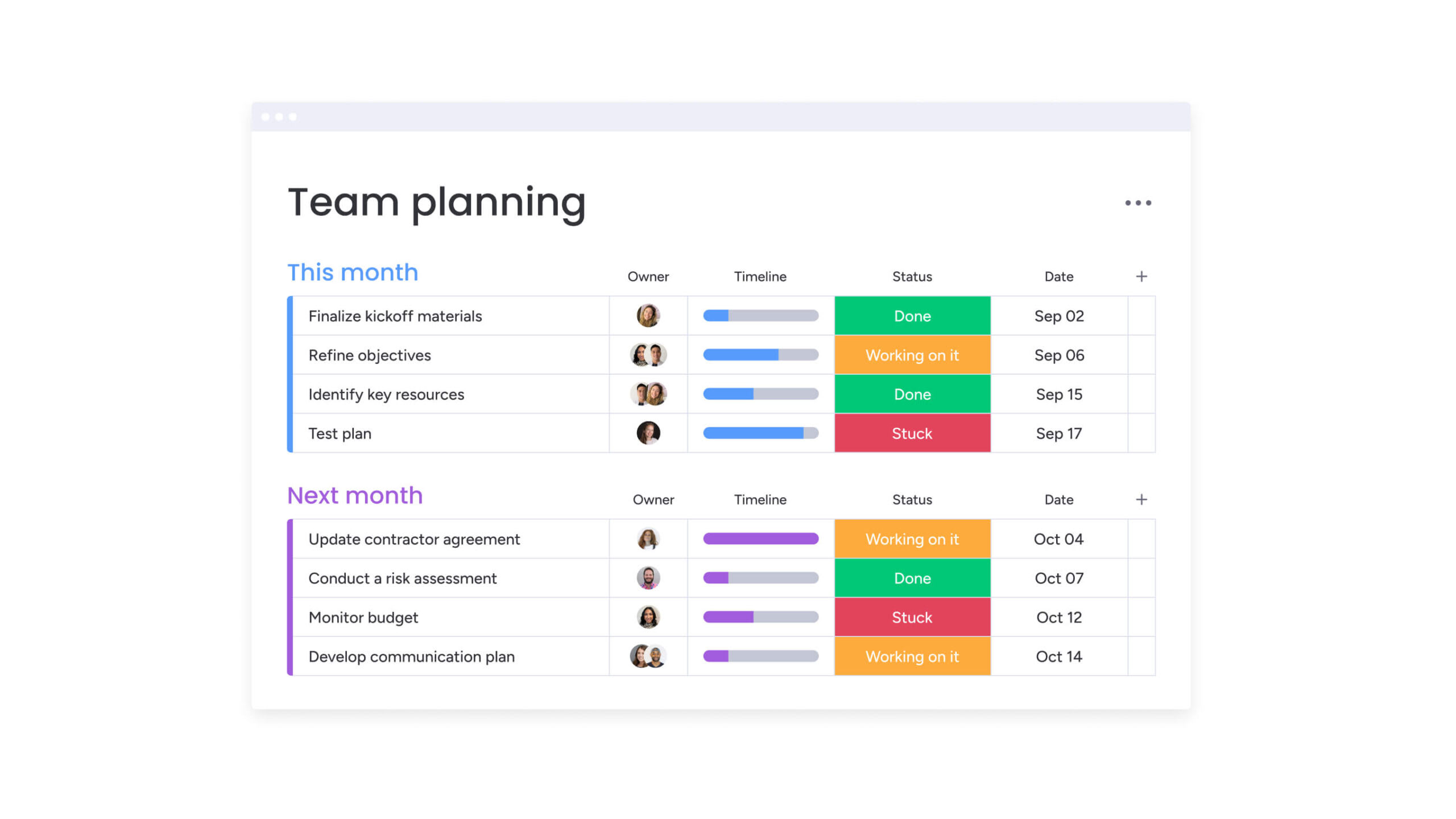
Infrastructure projects follow a structured lifecycle that extends far beyond construction. Successful delivery requires continuity across six distinct phases: preserving strategic intent from conception through long-term operation. Each phase builds on the last while preparing for the next, creating a seamless progression from vision to reality.
Phase 1: strategic planning and feasibility assessment
This foundational phase determines project viability before committing significant resources. It involves rigorous needs assessment, stakeholder analysis, and early risk identification.
Key activities include:
- Technical feasibility studies: examining engineering constraints and solution options.
- Financial modeling: developing cost estimates and funding strategies.
- Environmental impact assessment: identifying potential ecological effects.
- Social acceptance evaluation: gauging community support and concerns.
This phase typically lasts one to three years and produces the business case, preliminary design concepts, and funding strategy.
Phase 2: design and engineering development
During this phase, strategic vision becomes detailed technical specifications. The process moves from conceptual design to detailed engineering drawings, refined through iterative stakeholder feedback. Modern projects use digital twins and 3D modeling to validate designs virtually before physical work begins.
Critical deliverables encompass:
- Detailed engineering drawings: complete technical specifications.
- Material specifications: quality standards and sourcing requirements.
- Construction sequencing plans: optimized build schedules.
- Risk mitigation designs: safety and contingency measures.
This phase spans two to four years and delivers final design documents, technical specifications, and construction-ready plans.
Phase 3: procurement and contract management
Complex infrastructure needs sophisticated procurement strategies to select partners and allocate risk effectively. Models vary from traditional design-bid-build to design-build and public-private partnerships, depending on risk profile. This phase focuses on qualifying contractors, evaluating tenders, and establishing performance guarantees.
Phase 4: construction and implementation
The execution phase is often the most capital-intensive period when the project becomes physical reality. Management focuses on coordinating multiple contractors, enforcing quality control, and ensuring site safety. Change management becomes critical here: teams must adapt to unforeseen conditions without blowing the budget.
This phase typically lasts three to seven years and relies on real-time progress tracking to keep thousands of parallel activities aligned.
Phase 5: testing and commissioning
Before going live, projects undergo rigorous systems testing to ensure proper function. This phase covers performance validation, safety certification, and operational readiness trials. It involves the critical handover from construction teams to operational staff, requiring comprehensive documentation transfer and training.
Lasting six months to two years, this phase ensures the asset is safe, compliant, and ready for use.
Phase 6: operations and long-term maintenance
Infrastructure management extends into multi-decade operational phases focused on asset optimization. This involves preventive maintenance planning, real-time performance monitoring, and lifecycle cost management. Modern projects plan for 50 to 100 year lifecycles, using digital systems to predict maintenance needs and optimize energy usage.
5 types of infrastructure projects transforming society
Infrastructure encompasses diverse project types, each presenting unique management challenges and opportunities. Recognizing the specific nuances of each category is vital for effective project delivery, as every sector necessitates a tailored approach to risk mitigation, stakeholder alignment, and technological integration.
1. Transportation infrastructure systems
Transportation projects include highways, railways, airports, ports, and urban transit systems. These initiatives face the unique challenge of maintaining service continuity while major construction occurs. Management focuses on logistics, phased implementation, and integration with existing systems.
Key management considerations include:
- Traffic flow maintenance: coordinating lane closures and detours.
- Multi-modal integration: connecting different transportation systems.
- Public safety protocols: ensuring worker and traveler safety.
- Environmental compliance: managing noise, emissions, and habitat impact.
Teams using solutions like monday work management can coordinate lane closures, traffic diversions, and stakeholder communications through unified dashboards that track multiple work streams simultaneously.
2. Energy and power infrastructure
This sector covers power generation, transmission networks, renewable energy farms, and smart grid modernization. Primary challenges include technical complexity and extreme safety requirements. Managers navigate the integration of intermittent renewable sources with aging grid infrastructure while adhering to strict environmental regulations.
3. Digital and telecommunications infrastructure
Projects include broadband networks, data centers, 5G rollouts, and smart city sensors. The defining characteristic is rapid technological evolution, so infrastructure built today must accommodate future standards. Managers face challenges related to cybersecurity, interoperability, and rapid deployment across vast geographic areas.
4.Water and environmental infrastructure
Water treatment plants, distribution networks, and flood control systems are critical for public health and environmental protection. These projects face high community sensitivity and rigorous environmental standards. Management prioritizes long-term sustainability, climate resilience planning, and zero-failure operations for critical life-support systems.
5. Social and community infrastructure
Hospitals, schools, and public housing projects require extensive community engagement to ensure physical builds meet functional and social needs. Managers balance strict requirements like medical hygiene standards or educational accessibility with inclusive design and public funding constraints.
Core responsibilities of infrastructure project managers
Infrastructure project managers possess hybrid skillsets bridging technical engineering, financial strategy, and public relations. Their responsibilities ensure projects remain viable and aligned with strategic goals despite constant external pressures. Success requires mastering both technical complexity and stakeholder dynamics across multi-year timelines.
Portfolio and program oversight
Managers oversee multiple related projects or phases simultaneously, requiring strategic perspective. This involves identifying interdependencies where delays in one project impact the entire portfolio. Effective oversight balances competing priorities for funding and attention, ensuring the overall program delivers intended benefits.
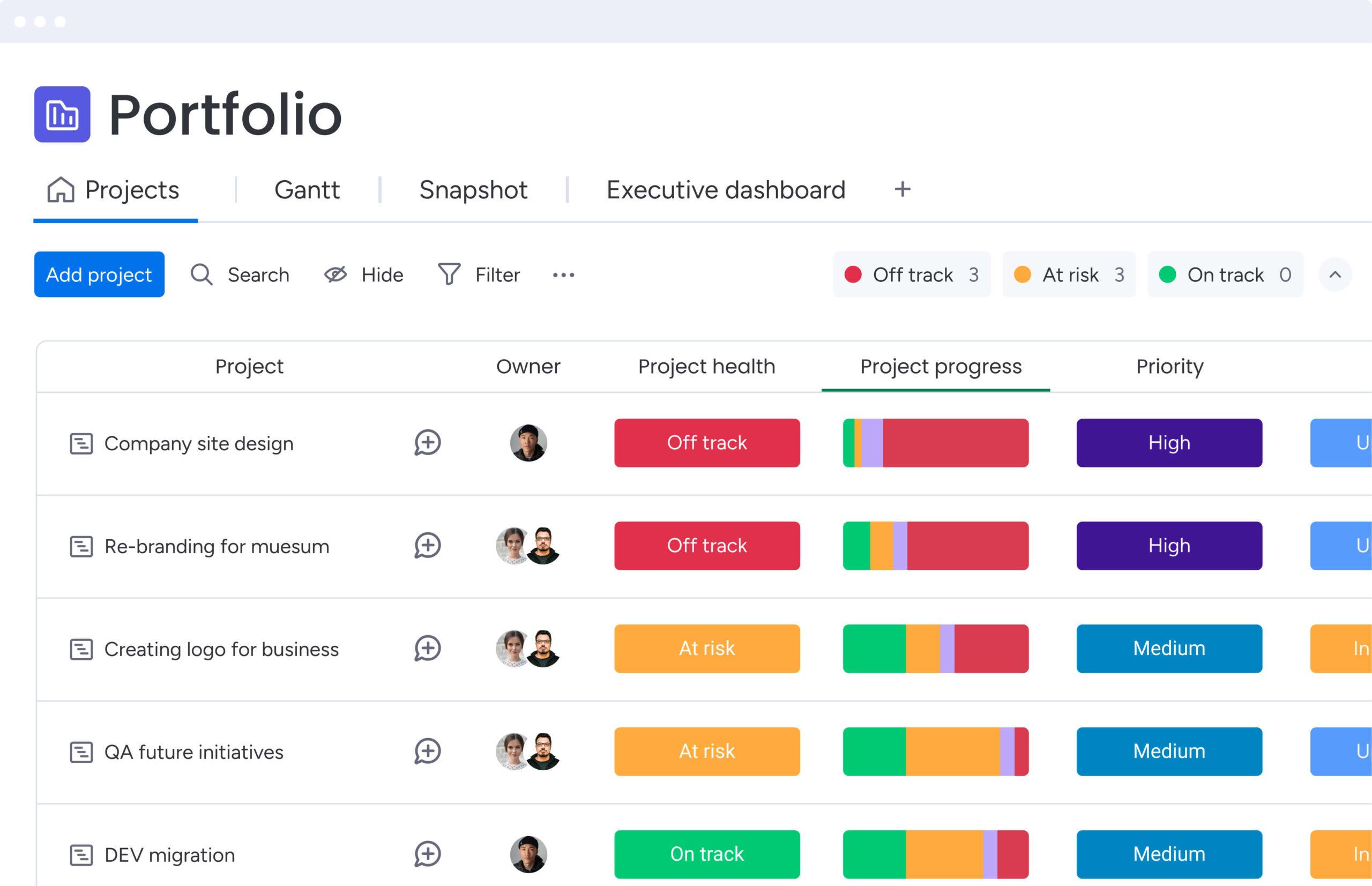
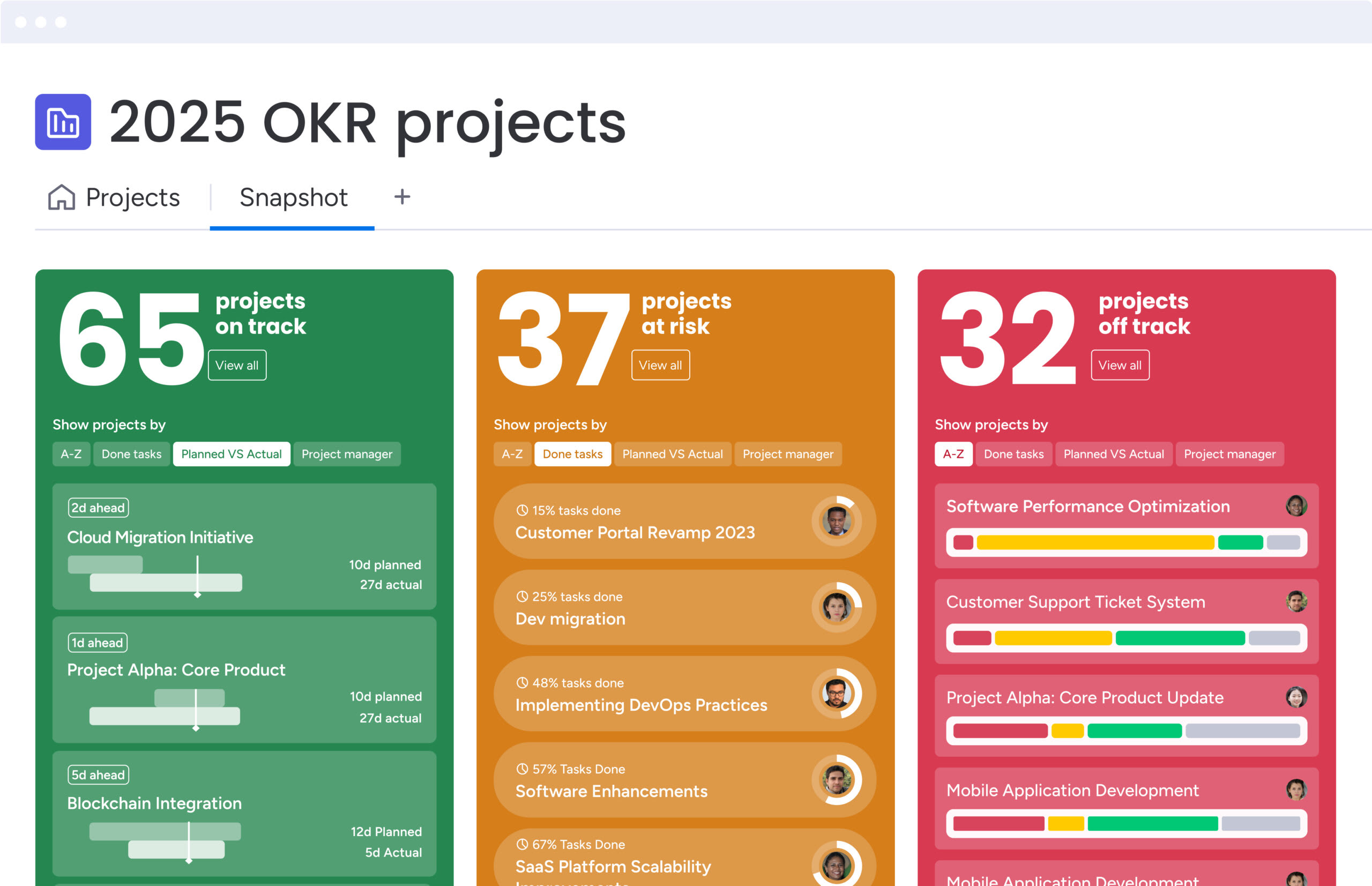
Organizations gain this visibility when they aggregate project data on platforms like monday work management. Portfolio dashboards showcase critical metrics across hundreds of initiatives, enabling accurate trade-off decisions without manual data reconciliation.
Resource planning and workforce optimization
Infrastructure projects consume massive resources, from specialized engineering talent to heavy machinery and raw materials. Managers forecast resource needs years in advance and optimize allocation to prevent bottlenecks. This involves managing labor shortages, scheduling equipment across multiple sites, and ensuring financial liquidity.
Essential resource management activities include:
- Capacity forecasting: predicting workforce needs across project phases.
- Skills mapping: matching specialized expertise to project requirements.
- Equipment scheduling: coordinating heavy machinery across multiple sites.
- Budget allocation: distributing financial resources based on priority and timeline.
The platform’s Resource Planner and Workload View help teams visualize capacity and make intelligent assignments based on skills, availability, and project requirements.
Risk management and mitigation strategies
Comprehensive risk management is central to infrastructure delivery. Managers identify and mitigate technical risks, financial risks, regulatory risks, and external risks. This requires proactive approaches where potential issues are modeled and mitigation plans developed before they impact the critical path.
AI-powered Portfolio Risk Insights from monday work management scan data across entire portfolios to surface risks with context, owners, and mitigation options, enabling proactive adjustments before delays occur.
Stakeholder alignment and communication
Managing relationships is as important as technical knowledge. Managers act as the central point of information between government officials, engineers, financiers, and the public. Responsibilities include translating technical progress into understandable updates for different audiences, managing expectations, and resolving conflicts.
7 success factors for modern infrastructure projects
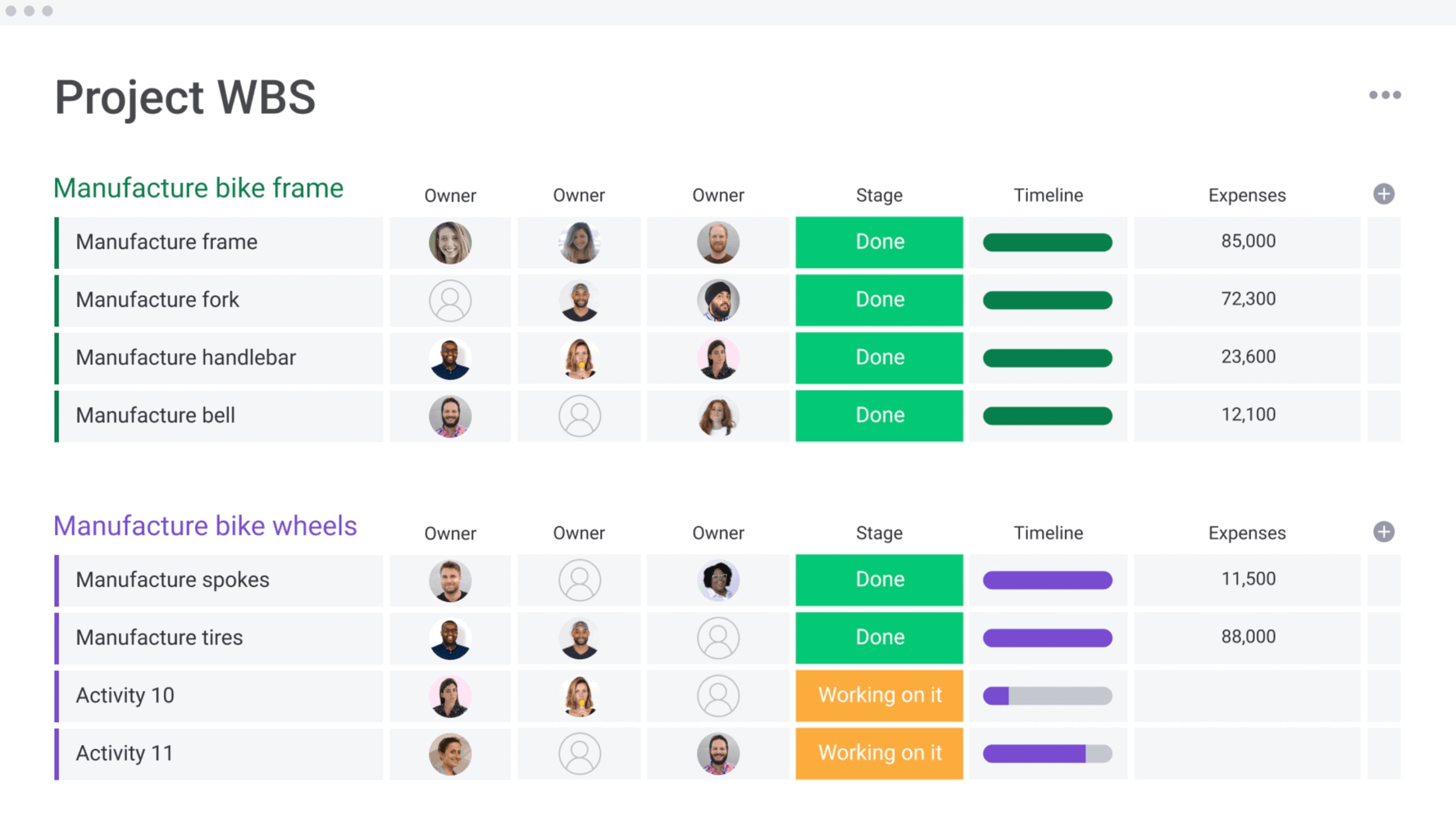
High-performing infrastructure projects share characteristics that distinguish them from those plagued by delays and overruns. Implementing these strategies significantly increases delivery probability. These factors represent proven approaches that leading organizations use to navigate complexity and deliver results consistently.
1. Integrated project delivery approaches
Integrated Project Delivery aligns all stakeholders around shared objectives and incentives. By involving contractors during design phases, IPD reduces constructability issues and fosters collaboration. Shared risk and reward structures motivate all parties to prioritize overall project success.
2. AI-powered risk management systems
Artificial intelligence shifts risk management from reactive firefighting to predictive prevention. These systems analyze historical project data and real-time inputs to identify potential risks before they materialize into costly problems.
Advanced AI-powered portfolio risk tools continuously scan data across hundreds of projects, surfacing emerging risks with context and recommended mitigation strategies enabling proactive adjustments that keep initiatives on track.
3. Real-time portfolio visibility
Success depends on instant access to accurate data regarding status, budget, and resources across the entire portfolio. Real-time visibility eliminates lag inherent in manual reporting, enabling faster decision-making. Moreover, dashboards and automated reporting ensure leadership has current health metrics while mobile access keeps field teams connected.
4. Cross-functional collaboration platforms
Modern infrastructure delivery requires seamless collaboration across organizational boundaries. Shared digital workspaces allow diverse teams to access documents, update status, and communicate in context. This eliminates data silos and ensures architects, engineers, and contractors work from current information.
5. Sustainable infrastructure design
Sustainability is now a foundational requirement rather than an elective. Therefore, successful initiatives integrate climate resilience and environmental impact minimization into the earliest planning stages. In addition to reducing ecological footprints, this approach optimizes lifecycle costs through energy-efficient design and the selection of low-carbon materials.
6. Digital twin technology implementation
Digital twins create virtual replicas of physical infrastructure, enabling simulation and optimization throughout the lifecycle. These models support design validation, allow virtual construction rehearsals, and provide rich data foundations for operational maintenance.
7. Agile resource allocation methods
Adapting Agile principles to infrastructure allows teams to pivot rapidly as conditions change. By doing so, flexible resource allocation enables organizations to shift specialized personnel and heavy equipment to address emergent priorities. Thus, teams can recover from unforeseen delays without disrupting the stability of the broader portfolio.
How does AI transform infrastructure project management?
Artificial intelligence addresses the specific challenges of scale and unpredictability in large projects by automating complex analysis and optimizing logistics. AI capabilities enable infrastructure managers to shift from reactive problem-solving to predictive optimization, fundamentally changing how these massive undertakings are planned and executed.
- Predictive risk analysis across project portfolios: AI algorithms analyze vast datasets including historical performance, weather patterns, and economic indicators to predict project risks with high accuracy. Machine learning models identify subtle patterns human managers might miss. This capability allows organizations to implement mitigation strategies months in advance, shifting from crisis management to risk prevention.
- Digital twins for infrastructure planning: AI enhances digital twin technology by enabling real-time data processing and scenario simulation. It processes inputs from IoT sensors and construction logs to provide actionable insights on project progress and quality. AI-powered digital twins run thousands of construction scenarios to identify the most efficient sequence of operations.
- Automated resource assignment and optimization: AI optimizes the complex puzzle of resource allocation by simultaneously considering skills, availability, location, and cost. Algorithms suggest optimal assignment of crews and equipment across multiple sites to maximize utilization. monday work management’s AI-powered smart assignments match the right people to the right projects based on job role and capacity.
- AI-driven maintenance scheduling: in the operational phase, AI shifts maintenance from fixed schedules to condition-based interventions. By analyzing asset performance data, AI predicts exactly when equipment requires service, preventing failures while avoiding unnecessary maintenance. This approach significantly reduces operational costs and extends infrastructure asset life.
Managing infrastructure programmes at enterprise scale
Large organizations manage complex portfolios of simultaneous infrastructure initiatives. This requires advanced program management capabilities optimizing enterprise-wide performance. Enterprise-scale infrastructure management demands sophisticated coordination mechanisms that balance standardization with project-specific flexibility.
Coordinating cross-project dependencies
Infrastructure programs involve web-like dependencies where delays ripple through multiple projects. Effective management requires mapping these connections to visualize how shared resources and timelines interact.
To address this complexity, cross-project dependency features within monday work management provide visualization and conflict mitigation options. This functionality prevents cascading delays by ensuring prerequisite work completes before subsequent phases begin.
Standardizing processes with flexibility
Enterprise-scale management requires balancing standardization with project-specific needs. Organizations develop standardized templates for reporting, safety, and procurement ensuring consistency and compliance. These frameworks must remain flexible enough to accommodate unique project constraints without breaking the governance model.
Managed templates on monday work management allow organizations to standardize entire workspaces, including integrations and automations, while making changes to hundreds of projects in real-time. This delivers the governance enterprises need while maintaining adaptability that complex projects demand.
Executive visibility through portfolio dashboards
Senior leadership requires high-level visibility into program health without getting bogged down in daily details. Executive dashboards aggregate data from individual projects to present key performance indicators, risk levels, and financial trends. AI-powered reporting automates generation of these insights, highlighting only issues requiring executive intervention.
Optimizing resources across multiple projects
Enterprise resource management focuses on maximizing utilization of talent and equipment across the entire portfolio. By viewing resources as a shared pool, organizations smooth out demand peaks and valleys, moving capacity where most needed.
The Resource Directory on monday work management defines company resources in one place, including job role, team, skills, and location, enabling informed allocation decisions across the portfolio.
Selecting infrastructure project management software
Infrastructure projects require specialized software capabilities exceeding basic project management applications. Organizations must identify platforms specifically designed to handle the massive scale, extended durations, and intricate stakeholder ecosystems characteristic of these initiatives.
Establishing this specialized technology foundation is critical for synchronizing complex workflows and maintaining oversight across the entire asset lifecycle.
Must-have features for infrastructure PM
When evaluating platforms for infrastructure project management, organizations should prioritize these essential capabilities:
- Portfolio management: manage multiple related projects with shared resources, dependencies, and aggregated reporting.
- Resource planning: advanced allocation, capacity forecasting, and workload balancing across multi-year timelines.
- Risk management: dedicated modules for identifying, tracking, quantifying, and mitigating risks across the lifecycle.
- Stakeholder collaboration: unified portals allowing secure access and communication for diverse groups.
- Regulatory compliance: automated audit trails, document version control, and compliance tracking features.
- Real-time reporting: customizable dashboards providing instant visibility into status, budget, and safety metrics.
Integration capabilities with engineering systems
Project management software must integrate seamlessly with technical applications used by engineering and design teams. Essential integrations include CAD/BIM software, geographic information systems, and document management repositories. Seamless data flow between systems reduces manual entry errors and ensures project schedules align with technical progress.
Scalability for portfolio growth
Infrastructure organizations need platforms that scale effortlessly from single pilot projects to enterprise-wide portfolios. Software must handle large data volumes, thousands of users, and complex permission structures without performance degradation. Flexible licensing and deployment options ensure technology adapts as the organization’s project pipeline expands.
Building resilient infrastructure delivery capabilities
Infrastructure project management represents one of the most complex disciplines in modern business, requiring specialized expertise that bridges engineering, finance, and public policy. Organizations that master these capabilities position themselves to deliver the critical systems that power economic growth and social progress.
The future belongs to teams that can orchestrate massive, multi-year initiatives while maintaining agility and stakeholder alignment. Success demands platforms that provide enterprise-scale coordination without sacrificing project-level precision. As infrastructure investment accelerates globally, the organizations with sophisticated management capabilities will capture the greatest opportunities.
Infrastructure teams can transform complexity into competitive advantage with monday work management. By centralizing workflows, connecting stakeholders, and providing AI-powered insights, the platform enables organizations to deliver the infrastructure of tomorrow with confidence and precision.
Drive infrastructure success with monday work management
Engineered to handle the rigorous demands of infrastructure project management, monday work management centralizes complex workflows, connects fragmented stakeholders, and provides strategic visibility needed to deliver multi-year initiatives on time and budget.
AI-powered portfolio risk insights
The platform’s Portfolio Risk Insights feature proactively scans data across hundreds of infrastructure projects to identify potential issues. AI analyzes structured data like timelines and budgets alongside unstructured updates to surface risks with context and actionable mitigation recommendations.
This capability helps infrastructure leaders anticipate challenges across complex portfolios rather than reacting after they occur.
Enterprise resource management at scale
Workforce optimization is addressed through advanced resource capabilities in monday work management. The Resource Directory provides centralized views of skills, roles, and availability across large infrastructure teams. Resource Planner and Capacity Manager allow managers to optimize allocation across multiple projects, ensuring the right expertise is available when needed.
Unified platform for stakeholder collaboration
The platform serves as a single source of truth for diverse infrastructure stakeholder ecosystems. It facilitates transparent communication, secure document sharing, and real-time progress tracking across government agencies, contractors, and internal teams.
Customizable dashboards allow managers to present relevant views to different stakeholder groups while maintaining data consistency.
| Capability | Traditional approach | monday work management |
|---|---|---|
| Risk management | Manual tracking, reactive response | AI-powered predictive insights across portfolios |
| Resource planning | Spreadsheets, disconnected applications | Integrated resource directory and intelligent assignment |
| Stakeholder communication | Email, separate systems | Unified collaboration platform with role-based access |
| Portfolio visibility | Manual reporting, delayed insights | Real-time dashboards with automated executive reporting |
| Compliance documentation | Manual filing, audit challenges | Automated audit trails and compliance reporting |
Infrastructure project management requires platforms as resilient and forward-looking as the projects themselves. Teams can master complexity, align stakeholders, and deliver the infrastructure of the future with confidence using monday work management.
Frequently asked questions
What does an infrastructure project manager do?
Infrastructure project managers oversee the planning, execution, and delivery of large-scale systems like transportation networks and energy facilities. They coordinate diverse stakeholders, manage multi-year budgets, and ensure strict regulatory compliance throughout the project lifecycle.
What are examples of major infrastructure projects?
Major examples include highways, airports, power plants, transmission lines, water treatment plants, dams, data centers, and 5G towers. These projects are characterized by high cost, long duration, and significant societal impact.
What skills are needed for infrastructure project management?
Success requires technical understanding of engineering systems, financial planning, risk management, and regulatory knowledge. Strong stakeholder management and communication skills are essential to align diverse groups around shared goals.
How do you become an infrastructure project manager?
Professionals typically start with backgrounds in engineering or construction, obtain certifications like PMP, then gain experience on infrastructure projects. They acquire specialized knowledge in areas like public sector contracting or environmental compliance.
What is the difference between project infrastructure and construction management?
Infrastructure project management covers the entire asset lifecycle including strategic planning, financing, and long-term operations. Construction management focuses specifically on the physical building phase and site execution.
How do infrastructure programmes differ from individual projects?
Infrastructure programmes coordinate groups of related projects to achieve broad strategic objectives. They require portfolio-level resource optimization and dependency management that individual project management doesn't address.

 Get started