

Most organizations don’t run on a single project management style — even if they think they do.
Engineering may rely on structured documentation and long-term roadmaps. Marketing often works in short creative cycles. Operations teams depend on predictable timelines to plan capacity and resources. Each approach makes sense in isolation. The friction starts when these teams need to deliver something together.
A product launch, for example, might require compliance-heavy planning, iterative design testing, and a tightly coordinated rollout schedule. If everyone sticks rigidly to their own methodology, collaboration becomes harder than it needs to be.
Hybrid project management offers a practical middle ground. It combines structured planning with flexible execution so different parts of a project can operate in the way that suits them best, while still aligning on shared milestones, budgets, and outcomes.
Instead of choosing between predictability and adaptability, hybrid frameworks let you design a system that supports both.
In this definitive guide, you’ll learn what hybrid project management really means, when it works best, and how to implement it step by step. You’ll also explore proven frameworks and practical ways to coordinate cross-functional teams without slowing delivery or sacrificing control.
Key takeaways
- Blend methodologies strategically: Combine Waterfall’s structured planning with Agile’s flexible execution to meet both predictable and adaptive project needs.
- Match methodology to project requirements: Apply structured approaches for fixed or compliance-heavy components and iterative methods for evolving or innovative work.
- Enable cross-functional alignment: Hybrid frameworks help teams with different operational styles collaborate while maintaining shared goals and timelines.
- Leverage hybrid frameworks for risk and delivery management: Use layered planning and iterative cycles to identify risks early and deliver value incrementally without sacrificing governance.
- Use flexible work management platforms for unified visibility: Solutions like monday work management provide multiple project views, workflow automation, and performance tracking across methodologies.
What is hybrid project management?
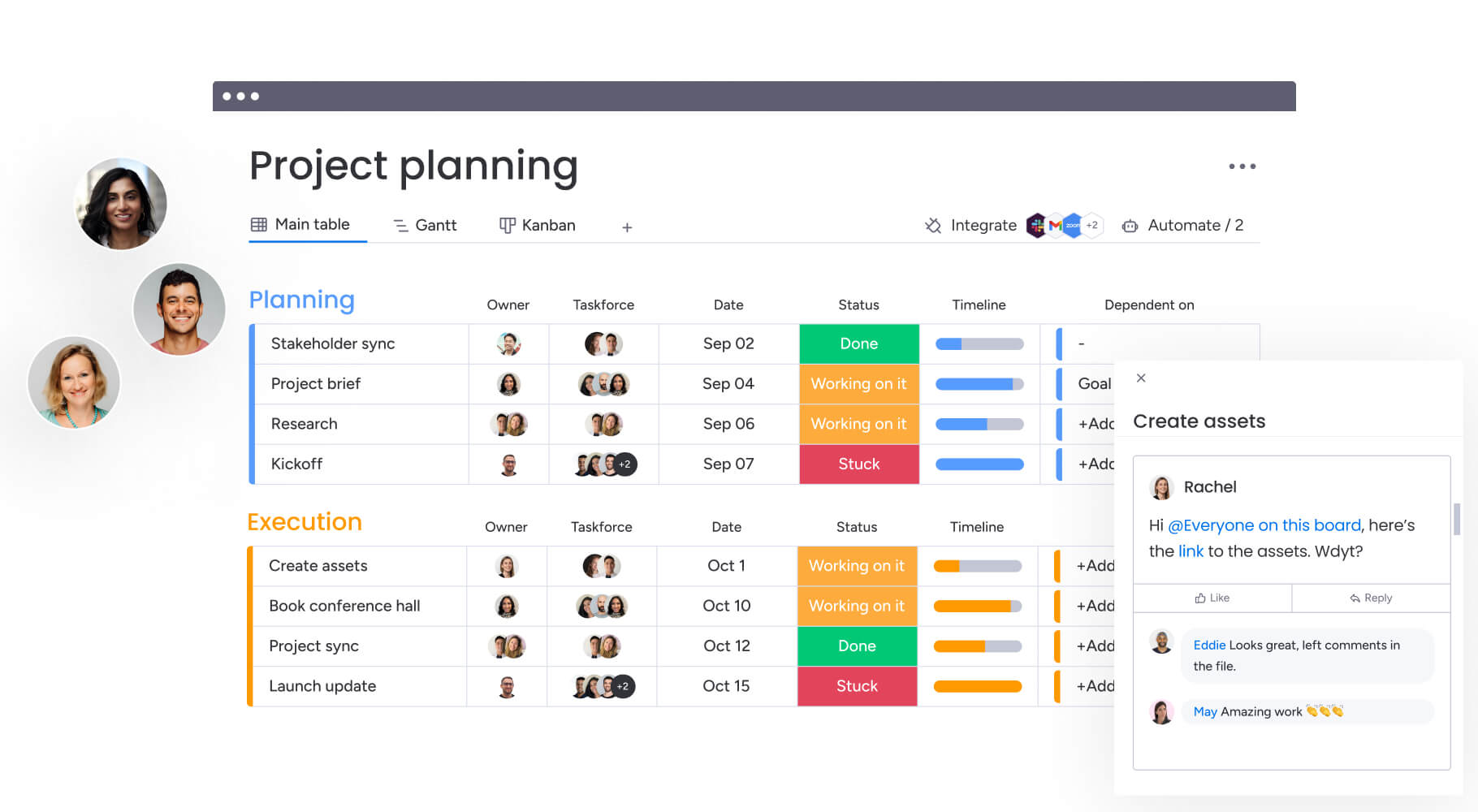
Hybrid project management combines structured planning with flexible execution to manage projects that require both predictability and adaptability. Instead of enforcing a single approach, hybrid models allow teams to select methods based on project needs and organizational capabilities.
For example, a construction company building a new headquarters might use structured planning for permits, foundation work, and regulatory compliance where changes are costly and requirements are fixed. At the same time, interior design, technology installations, and workspace configuration could follow iterative cycles that incorporate feedback and allow adjustments. This combination ensures compliance and innovation progress together.
The key to hybrid project management is flexibility. Marketing teams might follow structured phases for campaign planning and budget approval, then shift to rapid sprints for creative development and testing. Engineering teams could apply strict documentation for safety-critical components while iterating quickly on user interface improvements.
The key to hybrid project management is flexibility. Marketing teams might follow structured phases for campaign planning and budget approval, then shift to rapid sprints for creative development and testing
Traditional project management methodologies explained
To implement hybrid approaches effectively, it’s really important to understand the foundational methodologies they combine. Each framework below has different strengths that contribute to hybrid models.
Waterfall methodology
Waterfall methodology follows a linear, sequential path in which each phase completes before the next begins. Teams move through conception, initiation, analysis, design, construction, testing, deployment, and maintenance in order. This approach works best when requirements are fixed, compliance is essential, and thorough documentation is required.
Here is what makes Waterfall effective:
- Predictability: Fixed timelines and budgets provide stakeholders with clear expectations.
- Governance: Rigorous documentation and approval gates ensure compliance with standards.
- Structure: Clear phase boundaries make progress tracking straightforward.
- Limitations: Changes become costly once execution begins, potentially delivering outdated solutions.
Agile methodology
Agile methodology breaks work into small, manageable increments delivered through short cycles. Teams release value early and often, continuously incorporating feedback to adapt their approach. Agile thrives when requirements evolve, innovation is essential, and user needs drive decisions.
Agile succeeds because of:
- Adaptability: Teams pivot quickly based on feedback and changing requirements.
- Collaboration: Continuous stakeholder engagement ensures outcomes meet actual needs.
- Speed: Short cycles deliver working solutions faster than traditional approaches.
- Challenges: Variable scope makes long-term budgeting and scheduling difficult.
Why organizations move beyond pure approaches
Relying on a single methodology sounds simple. In practice, it often creates tradeoffs.
Consider a financial services firm building a mobile banking app. Compliance requirements demand detailed documentation, approval gates, and strict oversight. That leans heavily toward Waterfall. At the same time, the user experience needs testing, feedback, and rapid iteration. That calls for Agile.
Neither approach fully solves the problem on its own.
Hybrid project management bridges that gap. Structured planning handles governance and regulatory checkpoints, while short sprints allow teams to refine features and respond to feedback. Leaders maintain visibility over budgets and milestones. Delivery teams keep the flexibility they need to improve the product.
Platforms like monday work management make this coordination practical. Teams can manage timelines, sprint boards, and dashboards in one place, aligning structured oversight with day-to-day execution.
Core benefits of hybrid project management
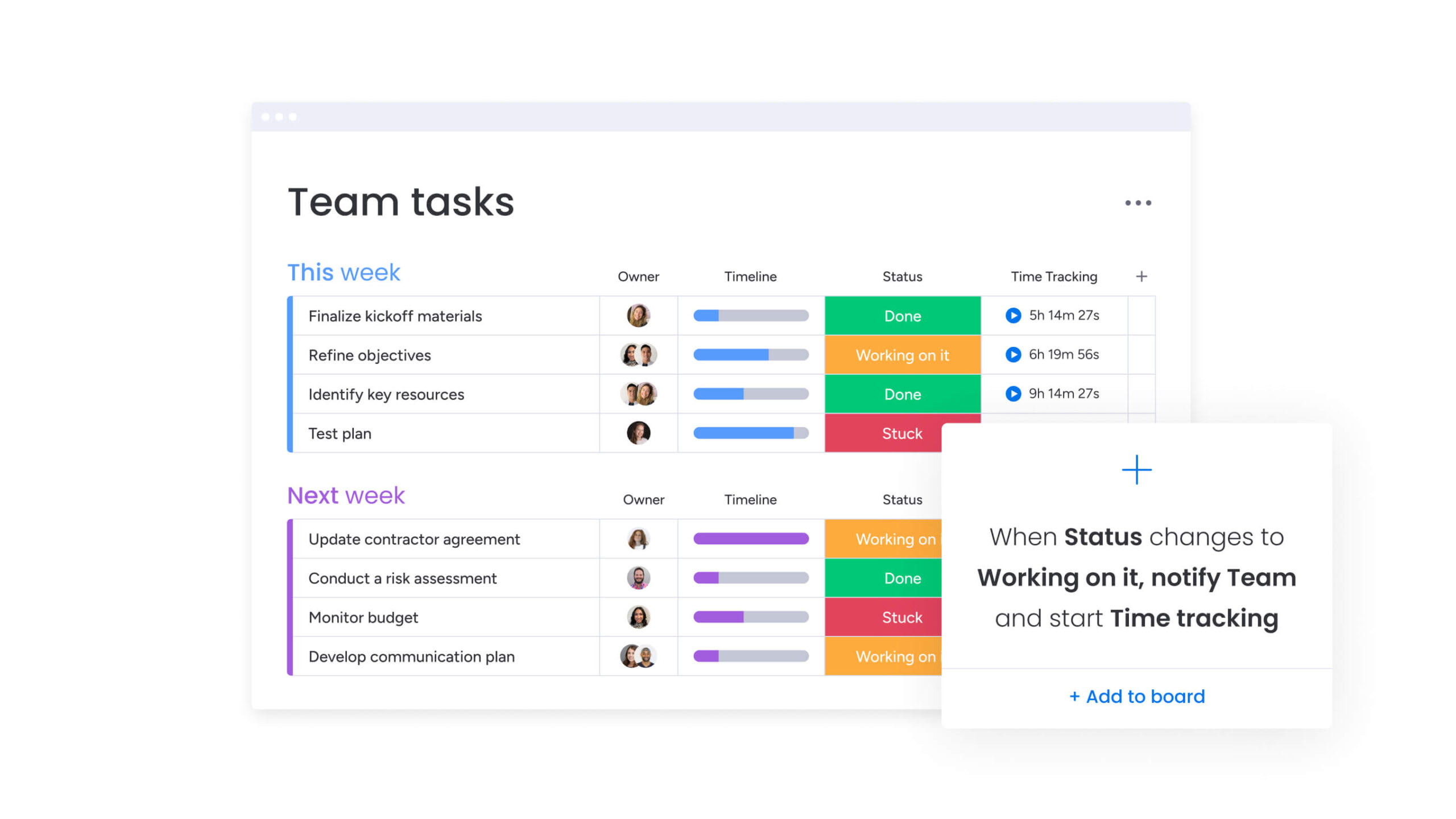
The real value of hybrid project management shows up in how teams work together. Leaders gain visibility without slowing execution. Teams stay flexible without losing alignment. The result is steadier delivery and fewer surprises along the way.
- Flexibility with strategic control: Hybrid models balance oversight and autonomy. Leaders track milestones and budgets, while teams manage daily work through sprints and backlogs. Marketing directors can define launch dates and budgets, while creative teams iterate on messaging and design through weekly sprints.
- Enhanced risk management: Combining methodologies uncovers risks at multiple stages. Initial planning identifies major risks, such as regulatory changes or resource constraints, while iterative cycles address smaller risks, including technical challenges or scope adjustments.
- Improved stakeholder alignment: Hybrid project management translates between executive priorities and team-level execution. Leadership receives predictable reporting, while teams maintain flexibility to solve challenges. Reports reflect actual work, connecting sprints to strategic objectives.
- Accelerated delivery with governance: Hybrid frameworks allow incremental value delivery while maintaining essential controls. Teams release functional components as they meet governance criteria, delivering value continuously without compromising compliance or quality standards.
Hybrid project management translates between executive priorities and team-level execution. Leadership receives predictable reporting, while teams maintain flexibility to solve challenges.
When to choose hybrid project management
Some projects fit neatly into one methodology. Others do not. When predictability and adaptability both matter, a hybrid approach often becomes the smarter choice.
Hybrid works best when:
- Mixed requirements: Projects with both fixed deliverables and evolving components benefit from applying different methods to different elements.
- Cross-functional teams: When departments with varying operational styles collaborate, hybrid approaches accommodate diverse work preferences.
- Compliance and innovation balance: Regulated industries require structured planning for compliance while maintaining flexibility for competitive advantage.
- Enterprise transformations: Large-scale initiatives demand strategic roadmaps combined with tactical flexibility for localized execution.
How to implement hybrid project management: 7 steps
Creating a hybrid project management approach requires careful planning and a very clearly defined process. The following steps guide you through implementing a hybrid model while maintaining team productivity and alignment across methodologies.
Step 1: Map your methodology landscape
First up, document how teams currently work: identify which departments use Waterfall, where Agile is most effective, and where friction exists between approaches. Create a simple inventory that lists teams, their preferred methodologies, and potential integration opportunities.
This overview highlights where to start and which teams may need additional support, setting a foundation for a smooth hybrid rollout.
Step 2: Analyze project requirements
Next, examine each project component to determine the most suitable methodology. Consider factors such as:
- Specificity: Well-defined requirements suit structured approaches.
- Change likelihood: Uncertain elements benefit from iterative methods.
- Compliance needs: Regulatory requirements demand documentation and controls.
- Error impact: High-cost mistakes require predictive planning.
By aligning methodology to project characteristics, teams reduce risk and improve delivery outcomes.
Step 3: Select components to blend
Choose specific elements from each methodology based on your analysis. Common combinations include:
- Waterfall structure with Agile execution: Use phase gates for governance while running sprints between milestones.
- Fixed budgets with flexible scope: Maintain financial controls while allowing adjustments in features.
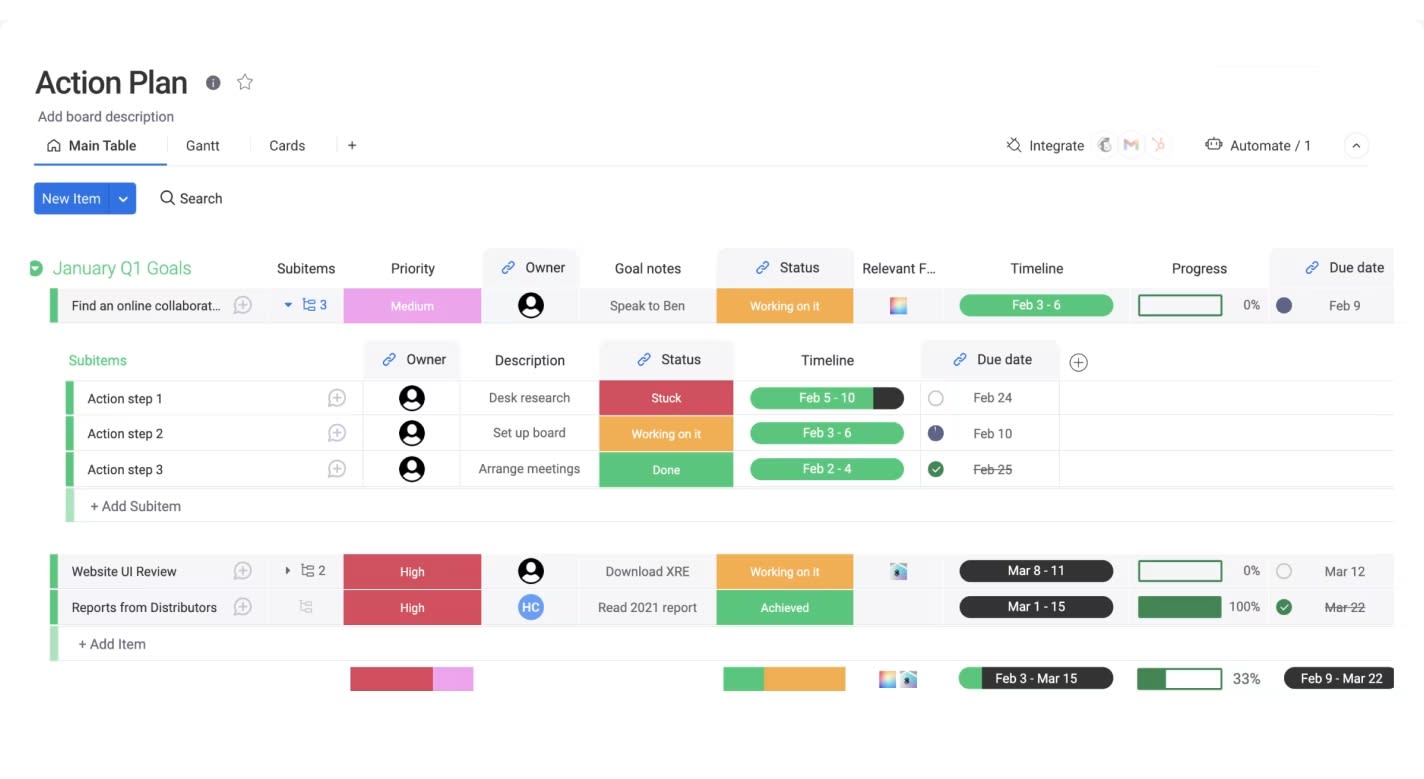
- Structured planning with iterative delivery: Define overall timelines using Gantt charts while managing daily work through Kanban boards.
These combinations allow teams to balance control with flexibility effectively.
Step 4: Design your hybrid framework
Define clear transition points between methodologies. Specify how sprint results feed into milestone reviews and when teams switch between planning and execution modes.
Modern and intuitive platforms like monday work management can automate these transitions by linking sprint boards to project timelines. Data flows seamlessly between different views, keeping work synchronized without manual updates.
Step 5: Enable teams for hybrid success
Adopting a new process requires more than instructions. Focus on helping teams understand why hybrid works and how it improves their workflow.
Show how the hybrid model addresses existing pain points without discarding effective practices already in place. Training and guidance help ensure adoption and long-term success.
Step 6: Launch pilot projects
Select pilot projects that are complex enough to validate the hybrid model but not so critical that mistakes disrupt business operations. Set clear success metrics, including delivery speed, quality measures, and team satisfaction.
Frequent check-ins during pilots allow for adjustments based on real results rather than assumptions, ensuring continuous improvement before wider rollout.
Step 7: measure and optimize performance
Finally, track both traditional and Agile metrics to evaluate hybrid effectiveness. Monitor schedule variance alongside sprint velocity and cost performance while observing cycle time.
Popular hybrid project management frameworks
Hybrid project management is not a single model. It is an umbrella term for several structured frameworks that combine governance and agility in different ways. Some are designed for large enterprises with strict oversight requirements. Others are better suited for product teams balancing funding gates with iterative delivery.
The table below compares widely used hybrid frameworks by scale, complexity, and primary use case. The sections that follow explain how each one works in practice and when to apply it.
| Framework | Best for | Key characteristics | Complexity |
|---|---|---|---|
| Water-scrum-fall | Software in large enterprises | Waterfall planning, scrum execution, waterfall deployment | Moderate |
| Agile-stage-gate | Product development | Stage gates with agile sprints between reviews | High |
| Disciplined agile delivery | Tailored solutions | Context-driven toolkit for methodology selection | High |
| SAFe hybrid | Enterprise alignment | Scaled agile with non-agile integration points | Very high |
Water-scrum-fall
This framework uses Waterfall for requirements gathering and budgeting, Scrum sprints for execution, and Waterfall again for testing and deployment. It balances flexibility with control and regulatory compliance.
Agile-stage-gate
Used often in physical product development, stage gates provide checkpoints for funding and resource allocation. Agile sprints between gates allow iterative refinement while maintaining governance.
Disciplined agile delivery
DAD offers decision frameworks for selecting the right methodology based on project characteristics. Teams choose lifecycle models according to context, providing flexibility for diverse project types.
Scaled agile framework hybrid
Large enterprises often adopt SAFe hybrid to synchronize Agile release trains with traditional milestones. This ensures alignment across departments that follow longer cycles, such as legal, hardware, or compliance teams.
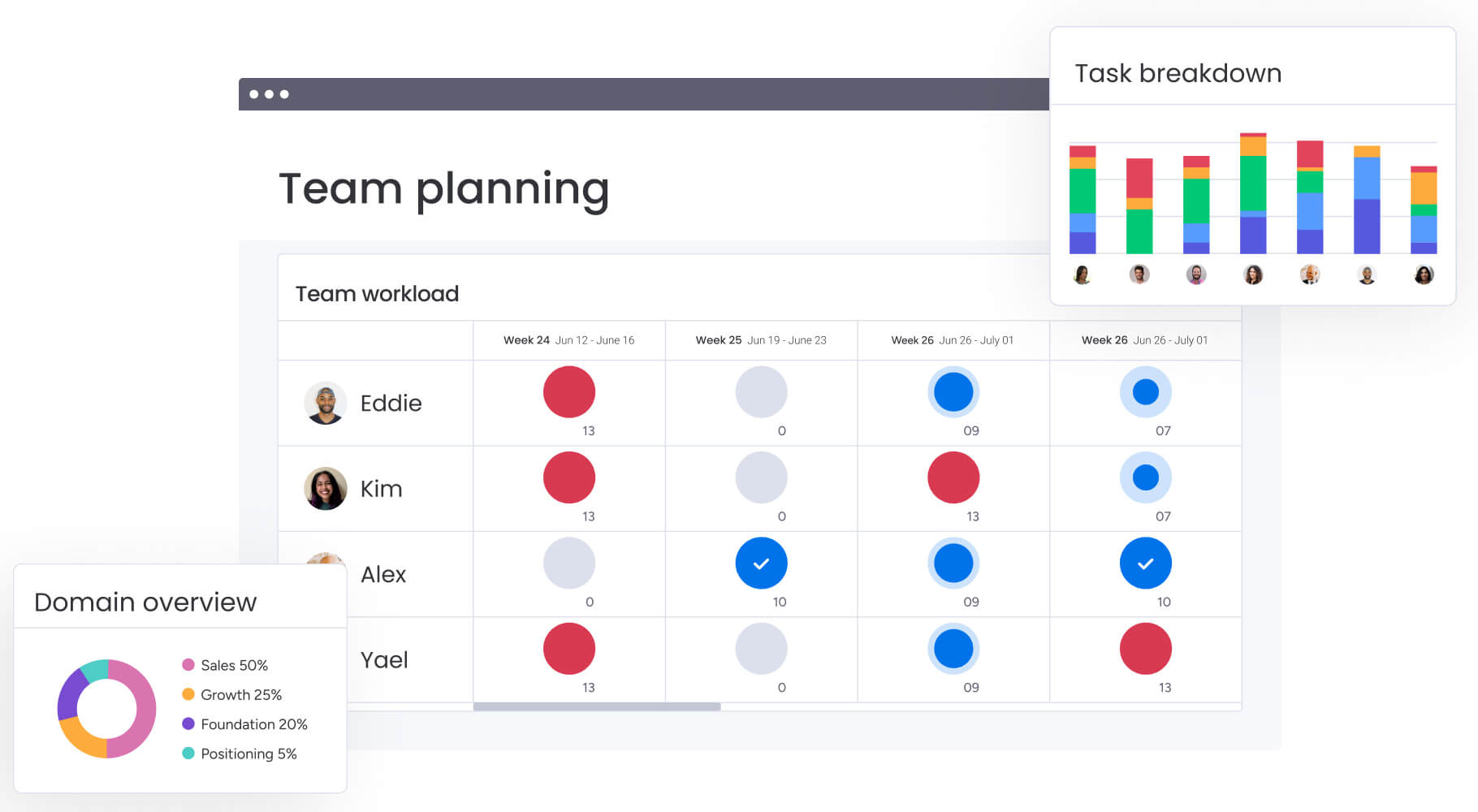
Resource management in hybrid environments
Managing resources across different methodologies can be complex. Waterfall teams plan capacity months in advance, while Agile teams adjust sprint by sprint. Effective management requires systems that translate between planning styles while maintaining full visibility across projects.
Dynamic resource allocation
Allocating resources effectively requires translating different ways of measuring capacity. Waterfall tracks hours and deadlines, while Agile uses story points and velocity. Platforms that handle both approaches allow managers to see total capacity across all projects.
The workload view on advanced platforms like monday work management acts as this translation layer. Managers gain visibility into aggregate capacity, preventing conflicts and identifying availability gaps before they affect delivery timelines.
Cross-methodology workload balancing
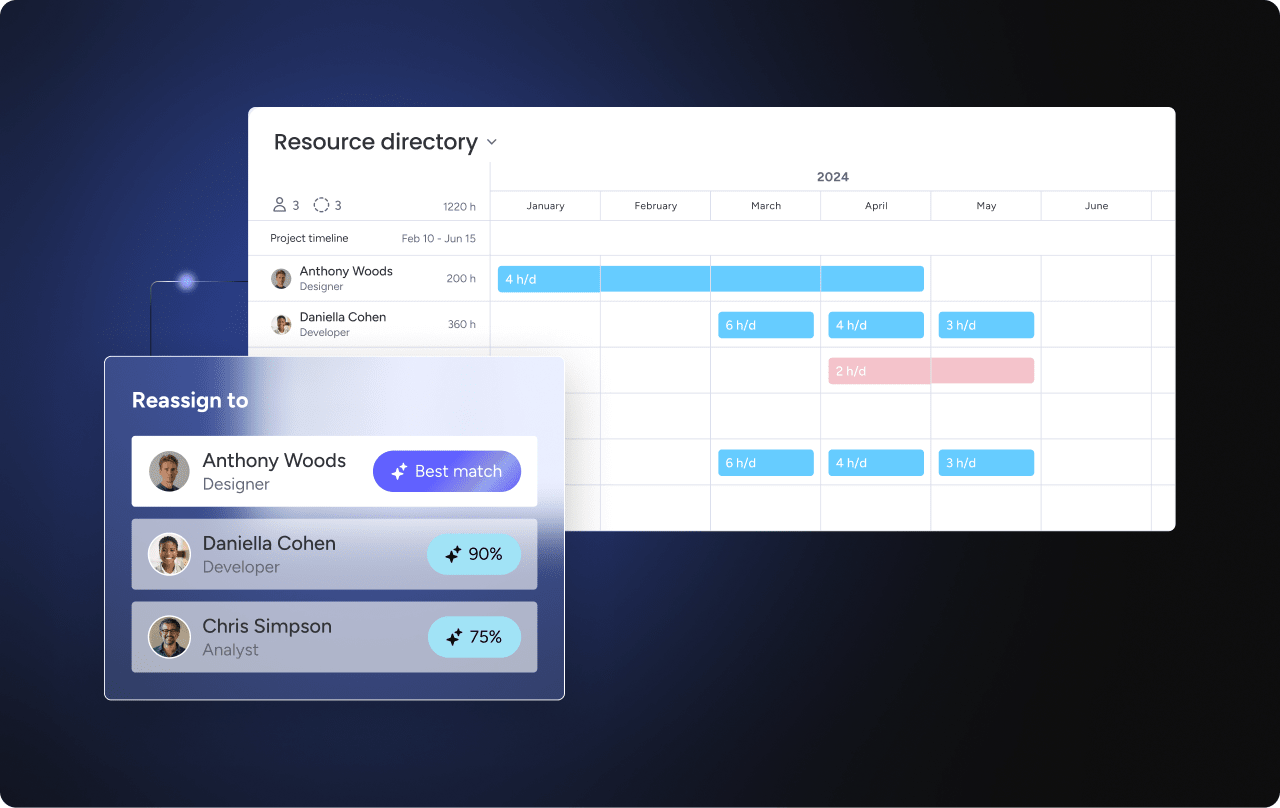
Team members often contribute to multiple projects using different approaches. A designer may follow a Waterfall timeline for one project while engaging in high-intensity Agile sprints for another.
Balancing these demands requires a holistic view of workload rather than focusing solely on individual projects. Resource management features consolidate work across methodologies, helping managers redistribute assignments and maintain healthy team capacity.
Skills-based team optimization
Hybrid success improves when team members align with the work style that suits them. Detail-oriented planners excel during requirements phases, while creative problem-solvers thrive in iterative execution. Assigning people to phases that match their strengths enhances both productivity and satisfaction.
Developing hybrid competencies also requires identifying project team members who can bridge methodologies. These individuals translate between approaches and facilitate coordination across teams and project phases.
AI-powered hybrid project management
AI transforms hybrid management from manual coordination into an intelligent, automated process. It reduces the effort required to manage multiple methods while improving decision-making. Teams can scale hybrid work without increasing management complexity.
Intelligent methodology selection
AI evaluates projects, historical performance, and team skills to recommend the optimal combination of methods. This approach removes guesswork by providing data-driven suggestions.
It also detects factors that may be overlooked, such as seasonal workload spikes, team availability, and interdepartmental dependencies.
Automated phase transitions
Transitions between methodologies are often where projects stall. AI identifies the ideal timing for these shifts and automates workflow adjustments. When requirements phases conclude, it generates initial backlogs, assigns team members, and notifies stakeholders automatically.
Automation ensures work continues smoothly while confirming that all necessary steps are completed before moving forward.
Predictive portfolio analysis
AI provides visibility across all hybrid projects, identifying patterns and risks that might otherwise be missed. monday work management’s portfolio risk insights evaluate projects across methodologies, flagging potential issues by severity and suggesting interventions.
This proactive approach shifts organizations from reactive problem-solving to preventative risk management, improving the reliability of delivery schedules.

“monday.com has been a life-changer. It gives us transparency, accountability, and a centralized place to manage projects across the globe".
Kendra Seier | Project Manager
“monday.com is the link that holds our business together — connecting our support office and stores with the visibility to move fast, stay consistent, and understand the impact on revenue.”
Duncan McHugh | Chief Operations OfficerScale hybrid approaches across your enterprise today
Adopting hybrid project management in one team is a strong start. Scaling it across an organization is where the real impact happens.
As more departments adopt blended ways of working, consistency becomes just as important as flexibility. The goal is not to standardize every workflow. It is to create shared guardrails that keep teams aligned while still allowing them to operate in the way that suits their work.
Create a hybrid excellence center
A center of excellence captures best practices, sets standards, and guides teams in hybrid adoption. It develops playbooks and templates while helping departments identify methods that suit their workflows.
Standardized reporting ensures consistency, while teams retain control over day-to-day execution.
Standardize flexible governance
Scaling hybrid work requires governance that supports creativity rather than restricting it. Define core standards such as deliverables, budgets, and compliance, while allowing teams to determine how they achieve these goals.
Drive organizational adoption
Sustainable adoption relies on cultural change. Demonstrate the value of hybrid methods, identify internal champions, and provide training on workflows and benefits.
Platforms with intuitive interfaces and gradual rollout capabilities, like monday work management, accelerate adoption. Teams can start with familiar methods and progressively expand into hybrid workflows as confidence grows.
Build your hybrid project management foundation
Hybrid project management combines structured and flexible approaches to accelerate delivery, align stakeholders, and enhance risk management. Choosing the right framework alone is not sufficient; organizations need platforms that support multiple methods and ensure seamless transitions.
Sophisticated yet easy-to-use platforms like monday work management provide a foundation for hybrid work, reducing friction from managing multiple methods so teams can focus on execution rather than coordination.
Try monday work managementFrequently asked questions
What is the difference between agile and hybrid project management?
Agile focuses exclusively on iterative development and adaptability. Hybrid project management combines Agile flexibility with Waterfall’s structured planning and governance to meet project-specific requirements.
Which project situations best suit a hybrid approach?
Hybrid approaches excel in projects with mixed fixed and evolving requirements, initiatives that balance regulatory constraints with innovation, or cross-functional efforts where teams naturally use different methodologies.
Can you switch methodologies mid-project?
Yes. Switching can improve outcomes when project conditions change. Successful transitions require a clear plan, stakeholder alignment, and a platform that supports smooth workflow shifts without losing data or momentum.
How do you measure success in hybrid project management?
Success is measured by combining KPIs from both methodologies. Use traditional metrics like schedule variance for planning phases and Agile metrics like velocity and cycle time for execution phases to obtain a comprehensive view.
What skills do hybrid project managers need?
They require fluency in Agile and Waterfall methodologies, strong change management capabilities, effective communication for cross-team translation, and proficiency in platforms that support multi-method workflows and reporting.
How does monday work management support hybrid project management?
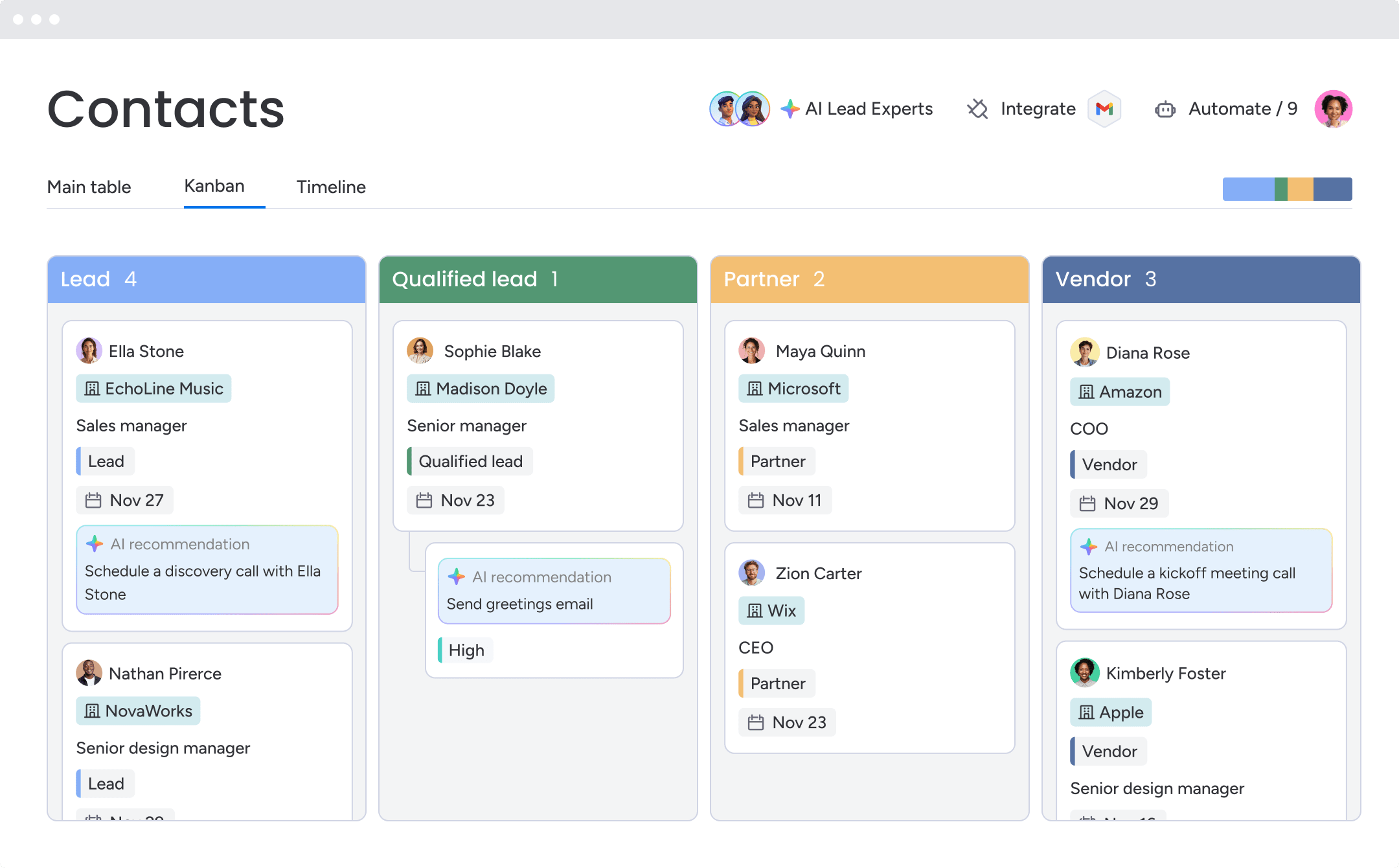
Flexible platforms like monday work management offer Gantt, Kanban, and timeline views within unified projects. Teams can work in preferred methodologies while maintaining cross-project visibility, automated workflows, and consistent governance across the organization.

 Get started