

Feedback shapes how quickly teams learn, adapt, and improve. When it happens consistently and at the right moments, expectations stay clear, small issues get resolved early, and work moves forward with fewer surprises. Without a reliable way to share input, teams often rely on assumptions, which can lead to misalignment, rework, and missed opportunities to improve.
Strong feedback management brings structure to how insights are shared and applied. Instead of living in scattered conversations or occasional reviews, feedback becomes part of everyday workflows. Teams know where to give input, how to act on it, and how improvements connect to broader goals.
This practical article explores how modern organizations build feedback systems that support continuous improvement. It looks at the types of feedback that strengthen performance, ways to deliver input that people can act on, and how monday work management helps connect feedback directly to execution so insights lead to measurable progress.
Key takeaways
- Connect feedback to daily work: Feedback is most effective when it is built into everyday workflows, helping teams address issues early, stay aligned, and improve outcomes as work moves forward.
- Make feedback specific and actionable: Clear feedback should focus on observable behaviors, supported by examples and practical next steps that people can apply right away.
- Build continuous feedback habits across teams: Strong feedback systems rely on regular, timely input flowing between peers, managers, and cross functional teams, instead of depending on occasional formal reviews.
- Create accountability through follow through: Feedback only creates value when it is documented, assigned, and tracked through to resolution, so insights lead to visible improvements.
- Use centralized tools to scale the process: Platforms such as monday work management can help teams organize feedback, automate routing, and turn input into trackable actions across departments.
What is feedback in the workplace?
Workplace feedback is structured communication that helps people adjust what they do, improve how they work, and stay connected to business goals. It gives employees, teams, and leaders useful input they can act on, so performance keeps moving in the right direction.
On a basic level, it differs from casual opinions or offhand comments because it serves a clear purpose. Feedback helps individuals and teams stay aligned with shared goals and expected outcomes. Getting your feedback system up to scratch is hugely important in 2026, especially when 26% of employees say they received no feedback in the past year, which shows a clear gap in workplace communication.
You can think of feedback as your organization’s GPS. It keeps checking progress, making adjustments based on current information, and helping people reach goals more smoothly.
Understanding the modern feedback definition
Feedback is no longer limited to annual reviews. Today, it moves steadily through the workplace and supports ongoing improvement.
In modern organizations, feedback travels in every direction. It moves between peers, across departments, and up to leadership, not only from managers to employees. That shift reflects how work happens now, where teams move quickly and priorities can change at any moment.
Modern feedback is:
- Specific and actionable: Tied to observable behavior and clear next steps.
- Timely and relevant: Shared while the situation is still fresh and changes can still be made.
- Documented and trackable: Captured in platforms that create visibility and accountability.
This approach fits the pace of current work much better. Teams need input they can use right away, not months after the moment has passed. With advance solutions like monday work management, organizations can bring feedback from different channels into one place, connect it to workflows, and make sure it leads to action instead of disappearing in emails or meeting notes.
Try monday work managementYou can think of feedback as your organization’s GPS. It keeps checking progress, making adjustments based on current information, and helping people reach goals more smoothly.
Feedback vs criticism in professional settings
Understanding the difference between feedback and criticism changes how people communicate at work. It also makes improvement much more likely.
Both involve evaluation, but the intent and outcome are very different. Giving feedback helps someone move forward. Criticism often leaves them stuck in what already went wrong.
The table below shows how constructive feedback differs from destructive criticism.
| Feature | Constructive feedback | Destructive criticism |
|---|---|---|
| Focus | Specific behaviors and outcomes | Personality and character traits |
| Time orientation | Future-focused (how to improve) | Past-focused (what went wrong) |
| Goal | Improvement and growth | Blame and shame |
| Specificity | The report lacked Q3 data | You're always careless |
| Actionability | High (with defined next steps) | Low (vague or impossible) |
Feedback focuses on what a person can change, while criticism focuses on who the person is. When teams understand that difference clearly, they create psychological safety, which makes honest communication and steady improvement much easier.
The shift toward continuous feedback systems
Annual reviews made sense when work moved more slowly and roles stayed the same for years. That is no longer how most organizations operate.
Projects now move quickly, teams shift often, and remote or hybrid work reduces the natural moments people once had to connect. Because of this, older feedback methods often feel disconnected from the work itself.
Traditional feedback tends to fall short for a few clear reasons:
- Delayed input loses relevance: By review time, projects are complete and behaviors are ingrained.
- One-way communication limits understanding: Without dialogue, context gets lost.
- Disconnected from daily work: Feedback lives in HR systems, not where work happens.
Organizations now need feedback practices that match the pace of everyday work. Real time input, ongoing conversations, and direct links to daily execution help feedback become part of the routine instead of a once a year event.
Why smart organizations prioritize feedback systems
Feedback is not only an HR concern. It is part of the operational foundation that helps organizations work more effectively.
When feedback moves through clear channels, leaders get useful signals about what is working, what needs attention, and where issues may be starting. That kind of visibility helps teams adjust earlier and with less friction.
1. Drive performance through continuous improvement
Regular feedback creates a cycle of continuous improvement. Teams can spot skill gaps, workflow issues, and quality problems while the work is still in motion.
This continuous calibration means:
- Faster skill development: People know exactly what to improve and how.
- Reduced rework: Issues surface early when fixes are simple.
- Higher quality standards: Consistent input raises the performance baseline.
Each project learns from the last one, stacking improvements over time.
2. Build adaptability in changing markets
Markets shift, customer expectations change, and competition does not stay still. Organizations that gather feedback and act on it quickly can adjust with more confidence.
Continuous feedback enables:
- Rapid strategy pivots: Frontline insights inform leadership decisions immediately.
- Product improvements: Customer feedback drives development priorities.
- Service optimization: Support team input shapes process refinements.
When feedback connects directly to execution (through platforms like monday work management that link input to projects and workflows), organizations respond to change before it becomes a crisis.
3. Strengthen cross-team collaboration
Silos often appear when teams do not understand each other’s priorities, pressure points, or capacity. Structured feedback helps close those gaps.
Cross-functional feedback improves:
- Project coordination: Marketing knows what sales needs; product understands customer pain points.
- Resource planning: Teams share capacity constraints before they impact delivery.
- Innovation potential: Diverse perspectives combine to solve complex problems.
Feedback systems force clear communication about expectations, dependencies, and outcomes: the foundation of real collaboration.
Try monday work managementMarkets shift, customer expectations change, and competition does not stay still. Organizations that gather feedback and act on it quickly can adjust with more confidence.
7 essential types of workplace feedback
Feedback shows up in many forms throughout the workday, from quick project adjustments to longer-term development conversations. Knowing which type of feedback fits the moment helps teams respond more effectively and avoid confusion or mixed signals.
The seven types below highlight the most common ways feedback supports progress, collaboration, and continuous improvement across teams.
1. Performance feedback
Performance feedback connects directly to responsibilities, results, and quality standards. It focuses on the measurable parts of work that support business goals.
For example, you might say, “Your conversion rate increased 15% this month, which put you above target. The personalized follow up strategy clearly made a difference.”
This kind of feedback works best when it is tied to specific metrics and shared regularly, rather than saved for an annual review.
2. Appreciation and recognition
Recognition highlights valuable contributions and reinforces positive behavior. It supports morale and motivation, and it works best when it feels specific and sincere.
For example, you might say, “Thank you for stepping in to lead the client meeting on short notice. Your preparation and confidence kept the project moving.”
Generic praise tends to fade quickly. Specific recognition, on the other hand, helps people understand what they did well and why it mattered.
3. Developmental coaching
Coaching supports long term growth. It helps people build skills for future roles, not only improve in their current one.
In this example, you might say, “If you want to prepare for a senior role, spend more time building your financial analysis skills. The budget planning course next quarter would be a strong next step.”
Good coaching connects personal growth with organizational needs. That makes the value clear for both the employee and the business.
4. Improvement feedback
Improvement feedback points out a specific issue and explains how to handle it better next time. It is corrective, but it should still feel constructive and respectful.
For context, you might say, “The client brief was missing technical requirements, which delayed development. Next time, use the requirements checklist before submitting it.”
This kind of feedback only works when it is specific and easy to act on. Vague comments do not give people enough to work with.
5. Real time project feedback
Project feedback happens while the work is still underway. Because of that, it gives teams a chance to adjust before a small issue affects the full delivery timeline.
For example, you might say, “The design draft needs to reflect the new brand guidelines before we move into the next sprint.”
This kind of feedback is practical, immediate, and closely tied to execution. It helps teams stay aligned while work is still moving.
6. 360 degree feedback
This method brings together input from peers, managers, and direct reports. It gives a fuller view of how someone works across the organization.
For example, feedback might show that peers value someone’s responsiveness, while direct reports would like more decision making authority.
Because it includes several perspectives, 360 degree feedback often reveals blind spots that would otherwise stay hidden.
7. AI powered feedback
AI can review work patterns, workload trends, and large sets of comments to identify useful insights. This makes it easier to spot patterns that would take much longer to find manually.
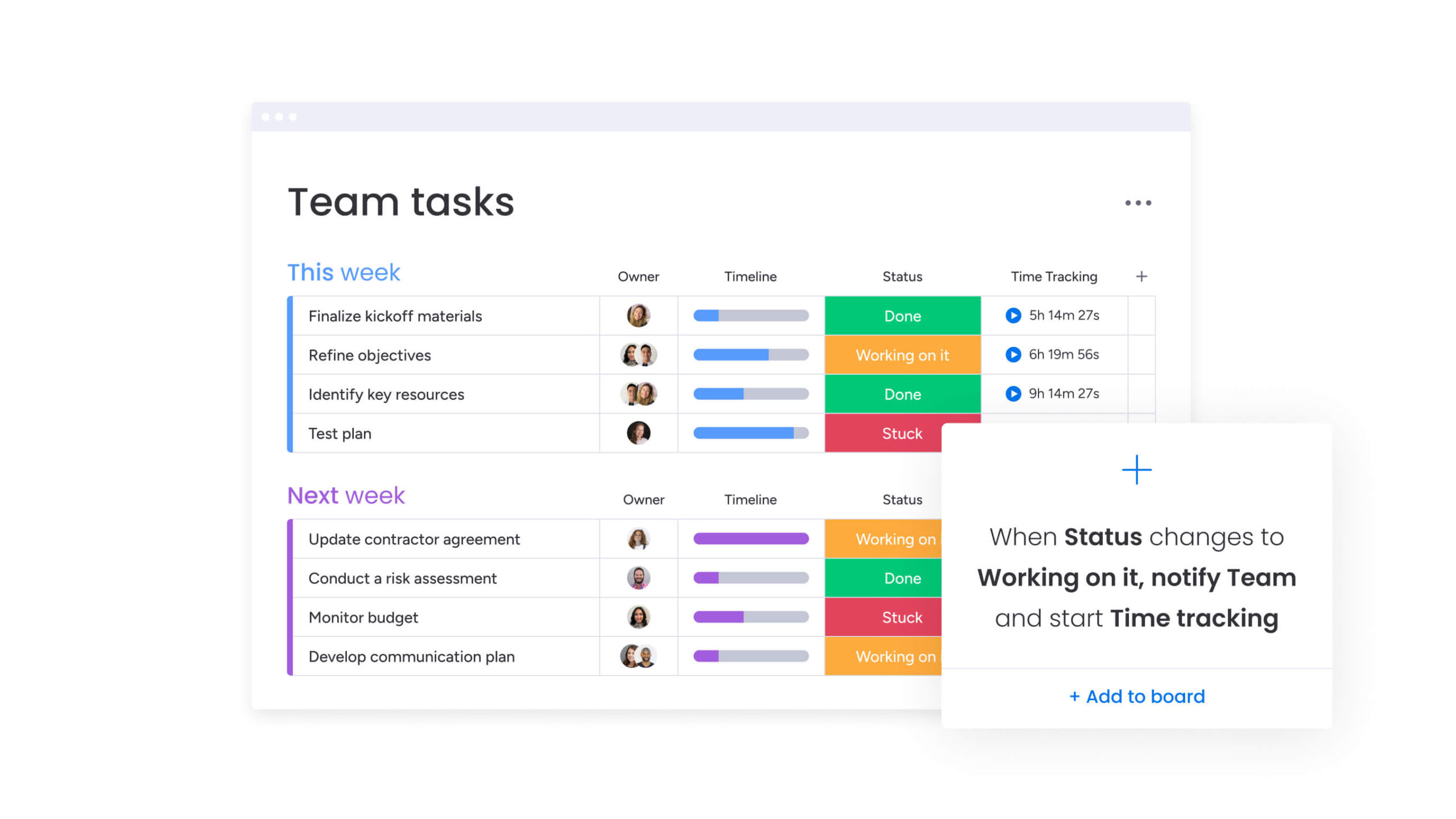
With monday work management, teams can use AI Blocks to categorize feedback by theme, detect sentiment, and surface recurring patterns across a large number of responses.
For example, an AI generated insight might say, “Workload analysis shows you are consistently over capacity on Tuesdays. Consider redistributing recurring meetings.”
How to give feedback that creates real impact
Good feedback is not just about instinct. It works best when you use a clear structure and deliver it with care. That way, the conversation feels useful instead of uncomfortable.
In most cases, feedback lands well or poorly because of how it is framed. When people understand what happened, why it matters, and what they can do next, they are much more likely to respond positively.
1. Choose the right moment
Timing shapes how feedback is received. Immediate feedback works well for operational issues because you can address them before mistakes grow. Scheduled feedback, however, fits development conversations that need more thought.
The idea is simple. Share feedback while the context is still clear and relevant. If you wait too long, the details fade, and the feedback becomes less accurate and less useful.
2. Use data and specific examples
Vague feedback creates uncertainty. Clear examples, on the other hand, make your point easier to understand and easier to trust. That is why data based feedback often feels more credible.
For example, instead of saying, “You need to be more proactive,” you could say, “You submitted the risk analysis three days after the deadline, which delayed the mitigation strategy.” Specific wording shows exactly what needs to change.
It also helps to use consistent formats when feedback is shared across teams. Structured templates available on modern platforms like monday work management make that process smoother, while also keeping communication clear across the organization.
3. Focus on what people did
To reduce defensiveness, separate behavior from intent. You should comment on what the person did, not what you assume they meant. This keeps the conversation grounded and fair.
For example, a behavior based comment would be, “You interrupted the speaker three times during the presentation.” An intent based comment would be, “You were being rude and dismissive.” The first invites reflection, while the second usually invites resistance.
4. End with clear next steps
Feedback without direction rarely helps. Every feedback conversation should end with practical, measurable steps the other person can take. That is what turns insight into improvement.
For instance, you might say, “For the next report, use the Q4 template so all required data fields are included. Then schedule a review with me before submission.” Clear next steps make improvement feel possible and concrete.
5. Set a time to review progress
Feedback is much more effective when there is follow through. Set a clear timeline to revisit progress, so the conversation leads to real change instead of being forgotten.
This can include a few simple check points:
- Check in meetings: Review specific improvements after two weeks.
- Progress tracking: Monitor key metrics every week.
- Milestone reviews: Assess broader development each quarter.
With monday work management, teams can automate reminders and track completion more easily. As a result, feedback stays visible and the loop closes properly.
Try monday work management
How to master the art of receiving feedback
Receiving feedback well is just as important as giving it well. If you know how to listen carefully and respond thoughtfully, you can get much more value from the conversation.
This takes practice because feedback can feel personal, even when it is useful. Still, people who handle feedback calmly often improve faster because they focus on what they can learn, not just how the message feels in the moment.
1. Listen actively
Active listening means giving the speaker your full attention instead of preparing your response while they are still talking. It also means repeating the main point back in your own words, so you can confirm you understood it correctly.
For example, you might say, “What I hear you saying is that the lack of detail in the brief created delays for the design team. Is that right?” This keeps the conversation clear and shows that you take the input seriously.
2. Ask questions that clarify the issue
Thoughtful questions help you understand the real concern and what better performance would look like. These questions should come from curiosity, not self protection. That difference matters.
Useful questions can include:
- Request an example: “Can you share a specific moment where communication broke down?”
- Clarify the expectation: “What would a successful outcome have looked like?”
- Set priorities: “Which area should I focus on improving first?”
Questions like these make feedback easier to use. They also help shift the conversation from judgment to coaching.
3. Write feedback down
Documenting feedback gives you something concrete to return to later. It also reduces confusion and helps you track your progress over time. Without a record, details are easy to forget or misremember.
Try to capture a few key points after each conversation:
- Specific feedback received: The exact issues or observations raised.
- Action items identified: The steps you agreed to take.
- Timeline agreed on: When progress should be reviewed.
- Resources needed: Any support, training, or guidance required.
4. Turn feedback into an action plan
Feedback only becomes useful when you turn it into action. Break broad comments into smaller steps with deadlines, so you know exactly what to work on and how to measure progress.
For example, if the feedback is “improve presentation skills,” your plan could look like this:
- Enroll in a workshop: Sign up by the end of the month.
- Practice regularly: Rehearse with a mentor each week.
- Create speaking opportunities: Present in a team meeting every month.
- Ask for input: Request feedback after each presentation.
Platforms like monday work management help teams connect feedback directly to trackable work. Because of this, action items are easier to manage and less likely to get lost.
5. Track progress over time
Improvement is easier to show when you measure it clearly. Tracking progress helps you demonstrate that you took the feedback seriously and made practical changes.
Progress can show up in different ways:
- Performance metrics: Measurable gains in key areas.
- Peer feedback: Confirmation from colleagues that improvement is visible.
- Self reflection: Your own view of how your habits have changed.
- Manager input: Formal recognition that progress has been made.
Documenting feedback gives you something concrete to return to later. It also reduces confusion and helps you track your progress over time. Without a record, details are easy to forget or misremember.
6 feedback challenges every organization faces
Even with the right intent, feedback often falls apart due to structural gaps and cultural friction. In many cases, the issue is not a lack of effort, but unclear processes and weak follow through. Once you spot where things break, you can fix them with systems that actually support action.
Most feedback initiatives struggle in similar ways. People hesitate to speak up, insights go unused, and trust fades when nothing changes. Below are six common challenges, along with practical ways to address each one.
1. Getting people to participate
People hold back feedback for simple reasons. They may fear consequences, feel too busy, or assume their input will not matter. Over time, silence becomes the norm.
To improve participation, focus on making the process easy and safe.
- Reduce friction: Make feedback easy through forms, quick surveys, or integrated tools.
- Show impact: Share how previous feedback led to changes.
- Create safety: Ensure anonymous options and non-retaliation policies.
2. Turning insights into actions
Collecting feedback is only half the job. Without clear ownership and timelines, ideas sit idle and momentum fades quickly.
To close this gap, treat feedback like any other work item.
- Assigning ownership: Every feedback item needs a responsible party.
- Setting deadlines: Treat feedback like any other deliverable.
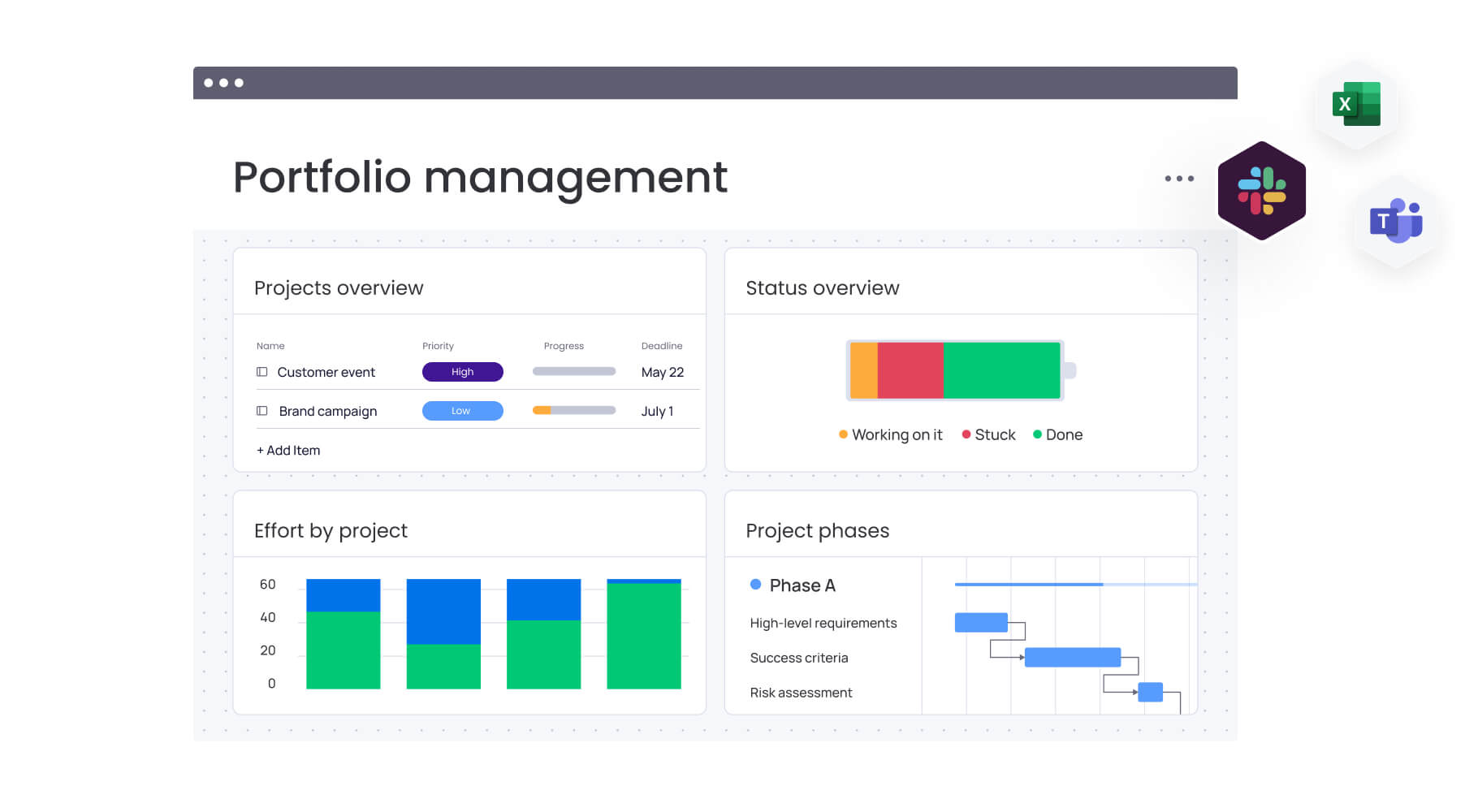
- Tracking completion: Monitor progress through dashboards and reports.
3. Building stakeholder trust
Trust shapes the quality of feedback you receive. If people feel exposed or ignored, they filter what they say or stop sharing altogether.
You build trust through consistent behavior.
- Transparency: Show how feedback is used and what changes result.
- Consistency: Respond to all feedback, even when you can’t act on it.
- Protection: Never punish honest feedback, even when it’s critical.
4. Breaking down department silos
Teams often work in isolation, which limits useful feedback across functions. As a result, misalignment grows between what is promised and what is delivered.
Create bridges by:
- Shared standards: Use common feedback formats across departments.
- Unified platforms: Centralize feedback in one accessible system.
- Regular exchanges: Schedule cross-functional feedback sessions.
Organizations using monday work management create shared boards where departments can provide input on each other’s work, breaking down traditional barriers.
5. Eliminating manual busywork
Manual processes slow everything down. Entering, sorting, and tracking feedback by hand drains time that should go into improvement.
Automation solutions include:
- Smart routing: Automatically send feedback to relevant owners.
- Categorization: Use AI to sort and tag feedback by theme.
- Status tracking: Update progress without manual intervention.
- Report generation: Create summaries automatically.
6. Proving business impact
One of the hardest parts is linking feedback to measurable outcomes. Without clear connections, it can feel like effort without return.
Connect feedback to outcomes by:
- Tracking correlations: Link feedback frequency to performance improvements.
- Measuring efficiency: Calculate time saved through better processes.
- Monitoring retention: Connect feedback culture to employee satisfaction.
- Assessing quality: Tie feedback to error reduction and customer satisfaction.
How to design feedback workflows that scale
As feedback volume increases, informal approaches quickly become difficult to manage. Comments get buried in messages, ownership becomes unclear, and useful insights fail to translate into meaningful change. Designing structured workflows ensures feedback moves smoothly from input to action, without creating extra administrative work for teams.
The steps below outline a practical way to build feedback workflows that stay clear, consistent, and easy to manage as your organization grows.
Step 1: audit your existing feedback channels
Start by listing every place where feedback shows up, emails, meetings, surveys, chat messages, and performance systems. Then, look at how each channel performs in terms of usage, usefulness, and how well it connects with other systems. This gives you a clear starting point.
To guide your review, focus on a few key questions:
- Where does feedback currently come from?
- How much feedback comes through each channel?
- What happens after feedback is collected?
- Which channels lead to real action?
- Where do delays or breakdowns happen?
This step helps you spot gaps where feedback disappears, as well as overlaps where teams are doing the same work twice.
Step 2: map stakeholder feedback journeys
Next, trace how feedback travels from the moment it is shared to the point where it gets resolved. By mapping this journey, you can see exactly who interacts with it and where things slow down.
As you map this out, you will start to notice:
- Bottlenecks: Where feedback gets stuck.
- Handoff points: Where ownership transfers.
- Decision gates: Where feedback gets approved or rejected.
- Dead ends: Where feedback disappears without action.
Because of this, you gain a clearer picture of what needs fixing and where ownership should be tighter.
Step 3: automate collection and routing
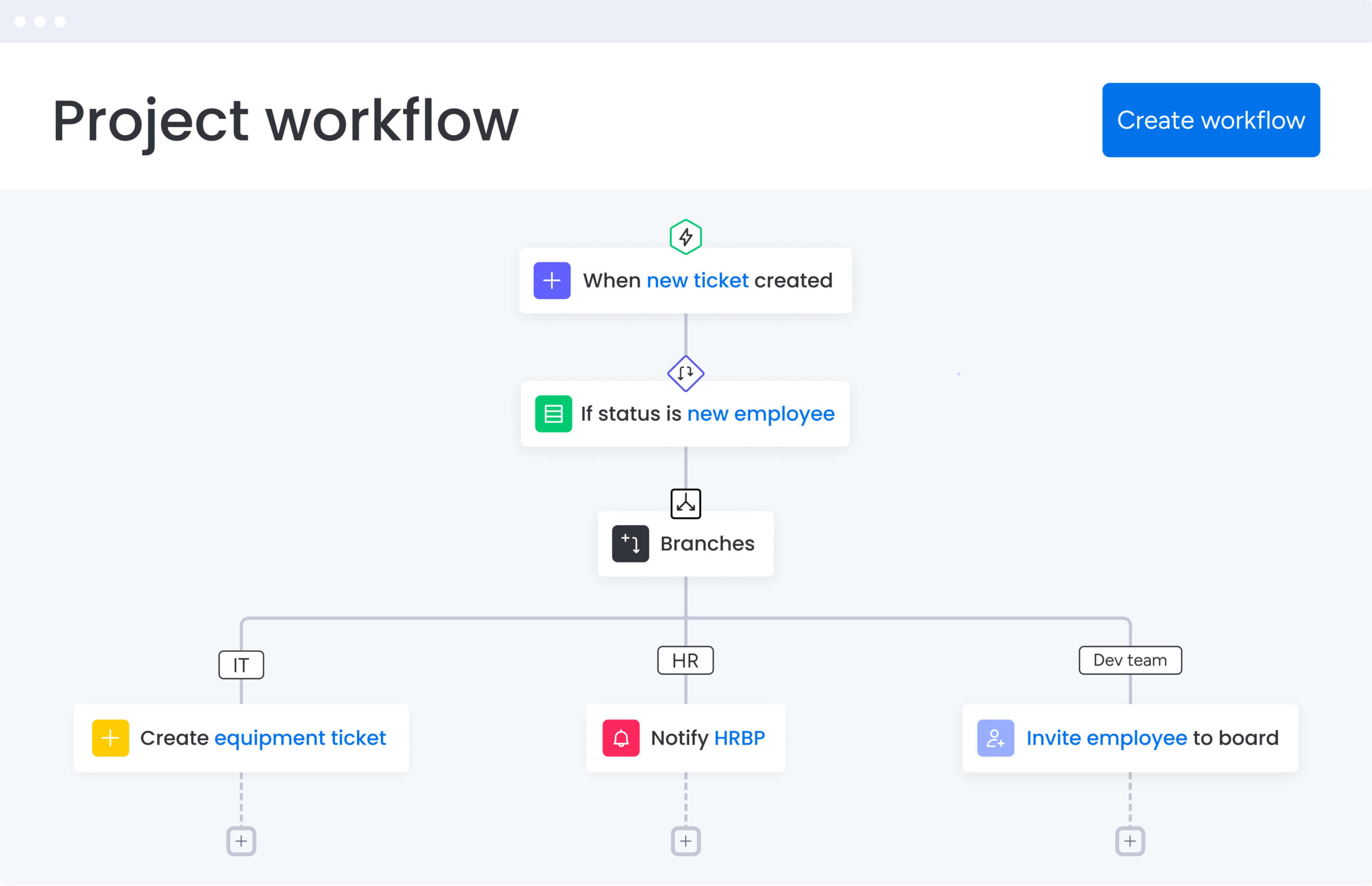
Manual routing wastes time and introduces errors. Automation ensures feedback reaches the right people instantly.
Automation rules might include:
- Technical feedback → Engineering backlog.
- Customer complaints → Support lead with urgency flag.
- Process suggestions → Operations team for review.
- Performance feedback → Direct manager and HR system.
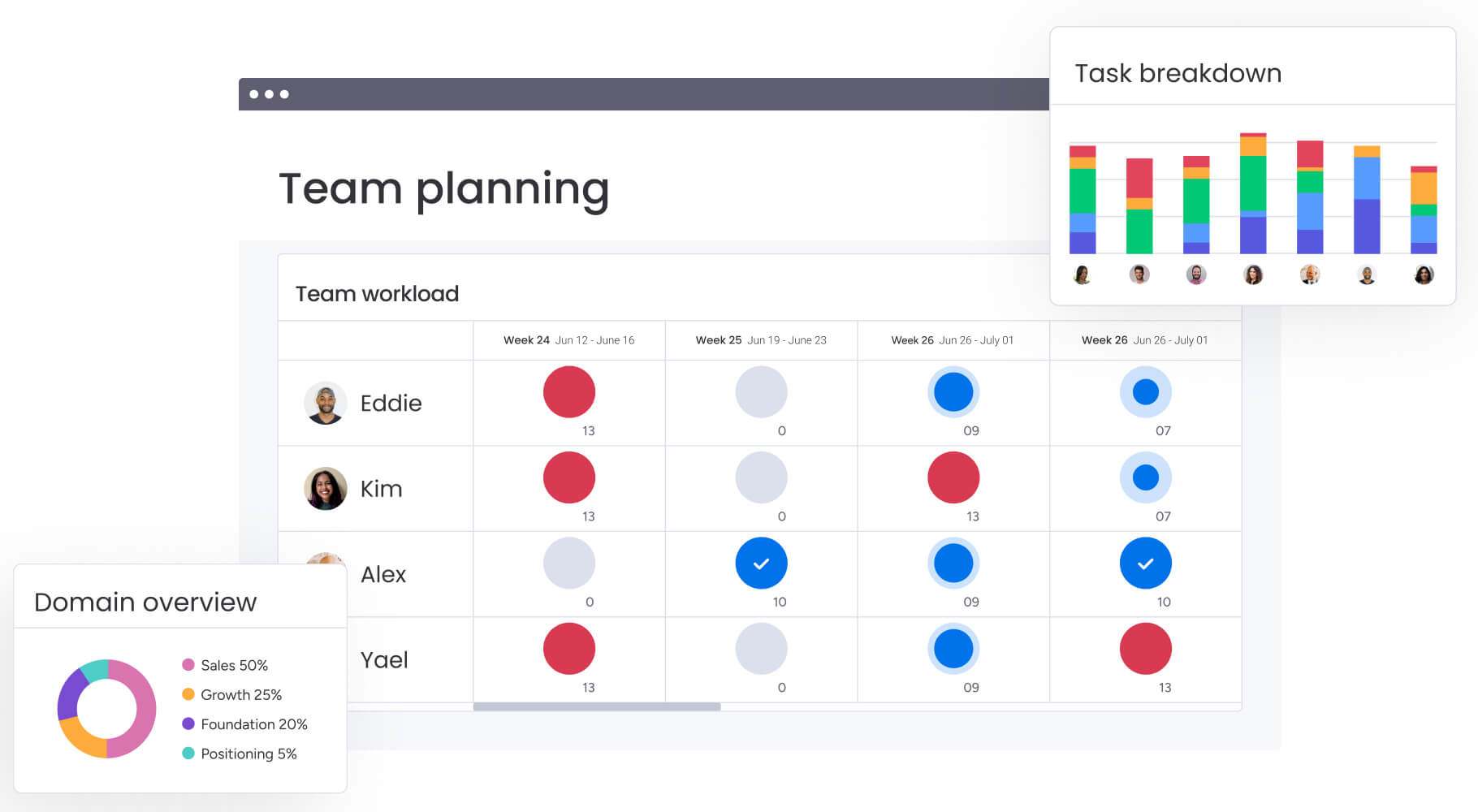
monday work management enables teams to configure these automations without coding, using simple if-then logic that scales across thousands of feedback items.
Step 4: create action triggers from feedback
Collecting feedback is only part of the process. What matters more is how quickly you respond. That is where action triggers come in.
You can create triggers such as:
- Negative sentiment → Immediate manager notification.
- Safety concern → Compliance team alert.
- High-priority tag → Executive dashboard update.
- Recurring theme → Trend analysis report.
These triggers transform passive collection into active response systems.
Step 5: monitor feedback loop velocity
Speed plays a big role in whether feedback is useful. So, it is important to measure how quickly it moves from submission to resolution.
Pay attention to these key metrics:
- Time to first response: How quickly someone acknowledges feedback.
- Time to assignment: How fast feedback gets an owner.
- Time to action: How long before work begins.
- Time to resolution: Total cycle from input to outcome.
By tracking these, you can clearly see where delays happen and improve those areas over time.

“monday.com has been a life-changer. It gives us transparency, accountability, and a centralized place to manage projects across the globe".
Kendra Seier | Project Manager
“monday.com is the link that holds our business together — connecting our support office and stores with the visibility to move fast, stay consistent, and understand the impact on revenue.”
Duncan McHugh | Chief Operations OfficerTurn feedback into business results with monday work management
When feedback is scattered across meetings, chat threads, emails, and review cycles, it becomes harder to act on what matters. Teams lose context, ownership gets blurry, and useful input often stalls before it leads to change.
The intuitive monday work management platform helps solve that by connecting feedback directly to the work people already manage every day.
- Centralized visibility: Feedback from forms, messages, emails, and cross team conversations can live in one shared platform, so teams can see what came in, who owns it, and what needs attention next.
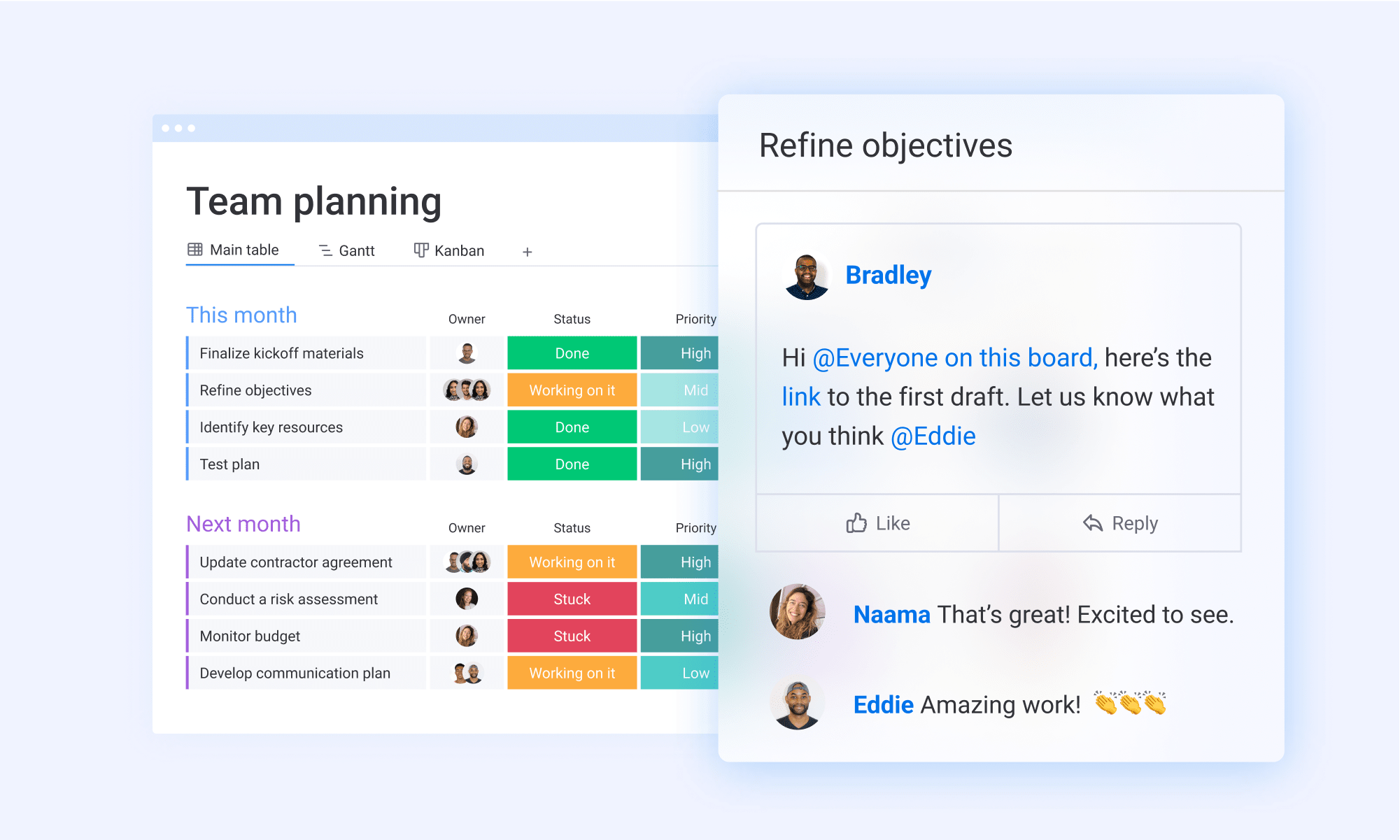
- Clear ownership and follow through: Feedback can be assigned, prioritized, and tracked with deadlines and status updates, so ideas, concerns, and improvement requests do not get lost.
- Automation that reduces manual effort: Routing rules, alerts, and AI powered categorization help teams move feedback to the right people faster, while cutting down on repetitive admin work.
- Stronger cross functional alignment: Shared boards, connected workflows, and integrations with platforms like Slack, Jira, Zendesk, and Gmail help departments respond to feedback with the same context.
- Better connection to business goals: Feedback can be linked to projects, deliverables, and broader priorities, so leaders can clearly see how daily input supports performance and outcomes.
By bringing feedback into the same environment where work happens, monday work management helps teams move from fragmented input to coordinated improvement. Insights stay visible, responsibilities stay clear, and progress becomes easier to sustain as the organization grows.
Try monday work managementFrequently asked questions
What is feedback in communication?
Feedback in communication is a two way exchange where the receiver responds to a message, helping confirm understanding and guide adjustments. In the workplace, this back and forth keeps communication clear and reduces misalignment between teams. At the same time, it supports continuous improvement because people can quickly correct or refine how they share information. As a result, conversations become more effective and outcomes stay on track.
Why is feedback important in the workplace?
Feedback plays a key role in improving performance and keeping teams aligned with shared goals. It gives people clear direction on what is working and what needs attention, so they can adjust before issues grow. In addition, it helps organizations respond to change faster. Because of this, individual insights turn into shared understanding that improves both decisions and execution.
What is the difference between constructive feedback and criticism?
Constructive feedback focuses on specific actions that can be improved, along with clear ways to move forward. It gives people something practical to work with, which makes improvement feel achievable. Criticism, however, often targets personality or past mistakes without offering solutions. Because of this, it tends to create defensiveness instead of progress, which slows down learning.
What makes feedback effective?
Effective feedback is timely, specific, and easy to act on. It focuses on observable behavior, includes clear examples, and explains what should happen next. Also, it is shared while the situation is still fresh, so changes can be made quickly. That is why well delivered feedback leads to faster improvement and better results.
What is instant feedback and why does it matter?
Instant feedback is shared right after an action or behavior takes place. Because it is immediate, it helps people understand what to adjust while the context is still clear. As a result, small issues can be corrected before they turn into larger problems. This keeps work moving smoothly and reduces the need for rework later.
Why does infrequent feedback fail?
Infrequent feedback often loses its value because too much time passes between the action and the response. Details fade, context is lost, and it becomes harder to apply the input in a meaningful way. For example, annual reviews cannot guide work that has already been completed months earlier. That is why ongoing feedback is more effective, since it supports real time improvement instead of delayed reflection.

 Get started