


Some people seem to create confidence the moment they speak. Priorities become clearer, decisions feel more grounded, and uncertainty settles into direction. It can look like a personal trait, yet in reality, executive presence is often the result of how clearly work is structured, communicated, and made visible to others.
Today, presence is less about commanding a room and more about removing confusion. Leaders stand out when they can show what matters, explain what is changing, and guide next steps without friction. When information flows clearly and progress is easy to follow, confidence builds naturally across teams and stakeholders.
This practical guide shows how executive presence can be developed through systems that make leadership visible every day. You will learn how clarity, structured communication, and consistent decision frameworks help you build influence, align teams, and create the kind of reliability that earns trust at every level.
Key takeaways
- Executive presence is built through systems, not personality: Clear workflows, visible progress, and structured decision making help leaders project confidence and control in day to day work.
- Visibility strengthens trust with stakeholders: Real time dashboards, proactive updates, and shared project context reduce uncertainty and make leadership more credible.
- Data backed communication improves strategic influence: Leaders are more effective when they can connect day to day execution to business goals, answer questions clearly, and guide next steps with evidence.
- Scalable processes extend leadership impact: Delegation frameworks, accountability structures, and reusable templates help leaders create consistency and drive results across teams.
- Work management tools support modern executive presence: Sophisticated platforms like monday work management help teams centralize updates, coordinate cross functional work, and maintain the visibility needed for steady, reliable leadership.
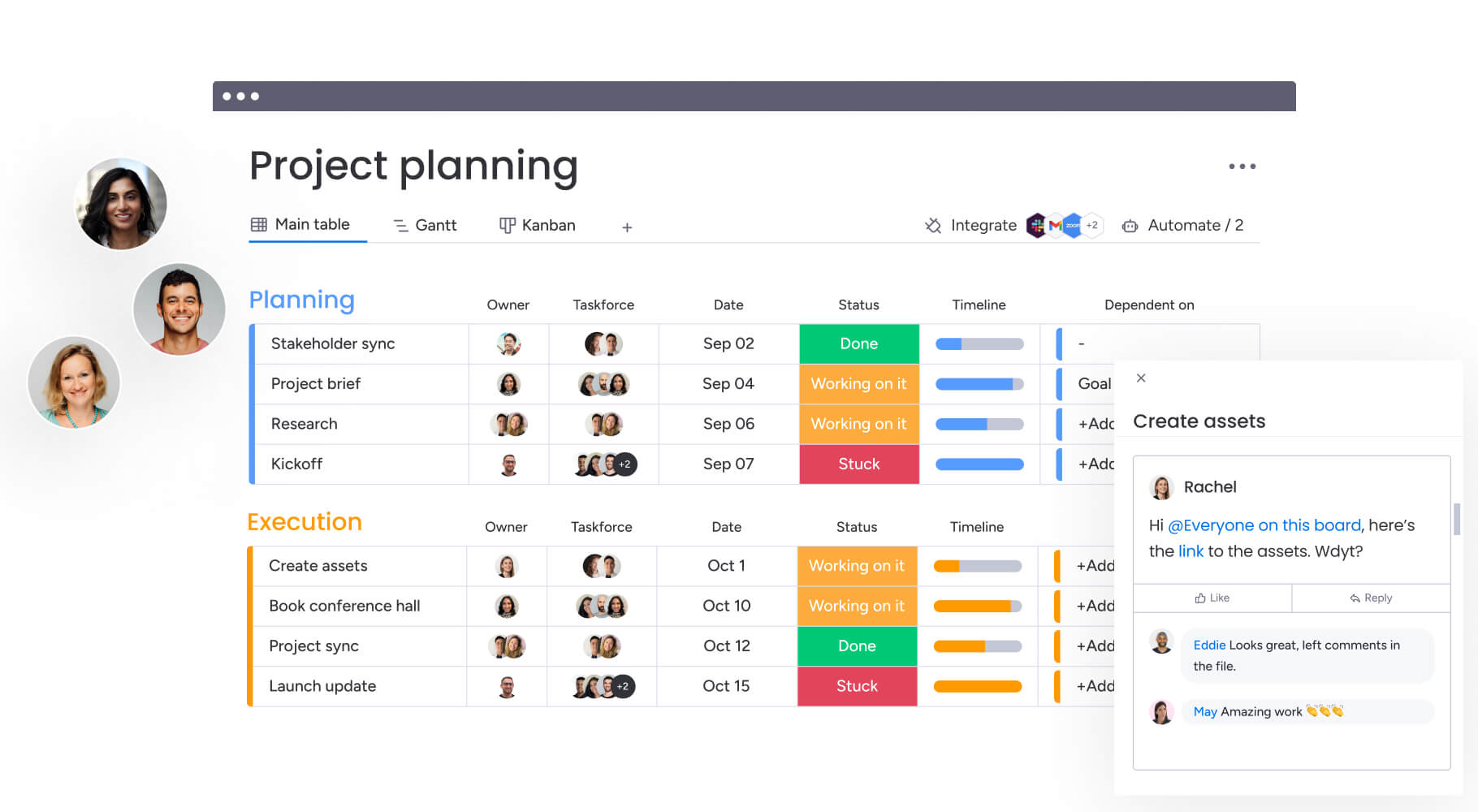
What is executive presence?
Executive presence is not about personality or charm. It shows up in how you bring clarity to complex situations and help others move forward with confidence. When things feel messy, your ability to organize work and guide decisions becomes visible.
At its core, it’s about trust. People believe in your judgment because you show consistency, direction, and awareness of the bigger picture. You are not just managing tasks, you are connecting them to meaningful outcomes.
Defining executive presence for modern leaders
Executive presence is something you can build. It comes from how you structure work, share updates, and make decisions in a way others can follow. Instead of relying on authority, you rely on clarity and visibility.
Today, presence is less about how you sound in a room and more about how your work speaks across teams. When your processes are clear and your data is accessible, people see that you are in control. That visibility creates confidence without needing constant explanation.
Here are a few ways this shows up in everyday work:
- Transparent workflows: A leader makes project progress visible so stakeholders do not need meetings or long email threads to stay informed.
- Data backed confidence: A manager answers questions using live data instead of delaying decisions or relying on guesswork.
- Systematic reliability: A director keeps everyone aligned through consistent updates, so nothing depends on manual follow ups.
Work management platforms support this approach by turning abstract leadership ideas into clear, trackable processes. As a result, your leadership becomes something people can see and rely on.
The three pillars of traditional executive presence
The core elements of executive presence have not changed, but how they show up has. Where presence was once judged mainly in person, it is now shaped through how clearly you communicate, structure information, and navigate complexity in digital environments.
The table below shows how the traditional pillars have evolved to reflect how leadership is experienced in 2026:
| Pillar | Traditional definition | Modern application |
|---|---|---|
| Gravitas | Grace under pressure and stoicism | Having data and systems to navigate crises with evidence-based confidence |
| Communication | Oratory skills and public speaking | Ability to communicate asynchronously and structure information for digital channels |
| Appearance | Attire and physical grooming | Digital presentation, including organized virtual workspaces and professional digital artifacts |
Today, presence is often demonstrated through clarity rather than charisma alone. Organized thinking, visible progress, and confident communication across digital channels now influence how credibility and leadership capability are perceived.
Why executive presence matters beyond the C-suite
Executive presence is not limited to senior roles. In fact, building it early can change how quickly you grow in your career. It helps you influence decisions, align teams, and move work forward without constant friction.
For a project manager, you stop chasing updates and instead create alignment from the start. As a developer or designer, your ideas gain traction because you connect them to business impact. That shift makes your contributions easier for others to support.
At the same time, mid level managers benefit by resolving blockers faster and securing resources with less effort. Because of this, teams operate with more clarity and less confusion.
Try monday work management
“monday.com has been a life-changer. It gives us transparency, accountability, and a centralized place to manage projects across the globe".
Kendra Seier | Project Manager
“monday.com is the link that holds our business together — connecting our support office and stores with the visibility to move fast, stay consistent, and understand the impact on revenue.”
Duncan McHugh | Chief Operations OfficerHow executive presence drives career success
Understanding its impact makes it easier to focus on building it. Moving into leadership roles requires more than technical ability. You need to guide decisions, influence others, and keep teams aligned.
From technical expert to strategic leader
Many skilled professionals struggle when stepping into leadership. The challenge is not capability, it is communication. You need to show how your work connects to broader goals.
To do this, shift from detailed explanations to clear narratives. They build systems that make their work visible and their communication clearer. Instead of explaining the technical nuance of a code deployment or marketing funnel, they use high-level roadmaps and impact analysis to show how their work moves business KPIs.
By turning their expertise into visible workflows, they show the kind of forward thinking senior leaders need.
Building influence that crosses departments
Working across teams is where executive presence becomes obvious. Strong leaders reduce friction by making information clear and accessible.
Here is how that plays out in practice:
- Unified data: You present one reliable source of truth, which removes confusion and conflicting numbers.
- Process definition: You clarify responsibilities and handoffs so work flows smoothly between teams.
- Consistent follow through: You ensure commitments are tracked and completed without constant reminders.
When teams share the same view of work, collaboration becomes easier. As a result, you can influence areas beyond your direct responsibility.
The business case for developing executive presence
Organizations benefit when more people demonstrate executive presence. Decisions happen faster, communication becomes clearer, and teams stay aligned.
You will notice the impact in several ways:
- Reduced miscommunication: Clear processes and structured updates remove uncertainty.
- Higher stakeholder confidence: Consistent reporting builds trust over time.
- Improved retention: People prefer working with leaders who provide direction and stability.
In short, executive presence is not about style. It is about how effectively you make work understandable, manageable, and aligned with larger goals.
Executive presence vs leadership presence
People often mix up leadership presence and executive presence. Still, they serve different purposes in how you show up at work. When you understand the difference, you can shift your approach based on what the situation actually needs.
Understanding the key differences
Leadership presence centers on your team. It shows up in how you motivate, coach, and support people day to day. You build trust, keep morale steady, and help individuals perform at their best.
Executive presence, on the other hand, reaches beyond the team. It shapes how others view your judgment, your confidence, and your ability to drive results. It is less about managing people closely and more about influencing direction at a higher level.
Before getting into details, here is a quick breakdown of how they differ:
| Feature | Leadership presence | Executive presence |
|---|---|---|
| Primary focus | Team dynamics and individual motivation | Organizational strategy and stakeholder confidence |
| Scope of influence | Direct reports and immediate peers | Cross-functional departments and executives |
| Communication style | Empathetic, coaching-oriented, frequent | Concise, data-driven, decisive, high-level |
| Key outcome | High team engagement and productivity | Strategic alignment and resource acquisition |
| Decision making | Consensus-building and operational | Evidence-based and strategic risk management |
When to apply each type of presence
Knowing when to switch between the two makes a big difference. Leadership presence works best in moments where people need to feel heard and supported. For instance, in one on ones or team retrospectives, you focus on listening, guiding, and building trust.
At the same time, executive presence becomes essential in high stakes settings. Board reviews, budget discussions, and crisis situations require clarity and direction. In these moments, you shift toward outcomes, risks, and impact instead of team level detail.
Combining both for maximum leadership impact
The most effective leaders do not pick one over the other. Instead, they move between both depending on the situation. They rely on structured workflows and clear reporting to handle executive responsibilities, which frees up time to focus on people.
For example, you might use a portfolio dashboard to secure budget approval from leadership. Then, you switch gears and bring your team together to celebrate progress and plan next steps.
This balance builds credibility with executives while strengthening trust within your team.
Try monday work managementThe new rules of executive presence
Executive presence has shifted alongside the way work happens. Influence is no longer built only through presentation style or authority, but through how clearly leaders create direction, communicate priorities, and maintain visibility across complex, fast-moving environments.
Strong presence now comes from making decisions easier to follow and progress easier to understand, especially when teams are distributed and information moves quickly.
Data-driven gravitas that builds trust
Today, trust comes from how clearly you use data to guide decisions. When you share metrics openly, you show that your choices are grounded in facts rather than opinion. That creates confidence across the organization.
In addition, live dashboards help you move quickly from a high level view to specific details. This ability signals control and awareness, especially in meetings where decisions need to happen fast.
Communication through visibility systems
Charisma isn’t the main way to show executive presence anymore. Systems have taken its place. Leaders show presence by creating a steady rhythm of communication stakeholders can count on.
Here’s what that looks like:
- Proactive reporting: Pushing status reports before they’re requested.
- Visible roadmaps: Keeping project timelines accessible to all stakeholders.
- Predictable rhythms: Establishing regular review and update cycles that eliminate surprises.
Technology makes this possible by automating how information flows. A leader who sets up a system where stakeholders are automatically notified of key milestones maintains high visibility without spending hours writing emails.
Digital-first professional presence
Your authority now shows up on screens as much as in person. Clean visuals, clear audio, and an organized workspace all contribute to how others perceive you. Even small details, like how you share your screen, can shape that perception.
In addition, knowing your collaboration platforms well helps you stay effective in any setting. Whether it is video, chat, or shared documents, your fluency keeps you in control of the interaction.
Demonstrated adaptability in uncertain times
Business conditions shift quickly, and leaders are expected to keep things moving. Executive presence now includes the ability to adjust plans without creating confusion. That means being transparent about what is changing and why.
When you show how priorities are shifting and how resources are being reallocated, you bring structure to uncertainty. Because of this, your team and stakeholders stay confident even during change.

8 ways to build executive presence through systems
Executive presence is not about personality or style. It comes from how clearly you run your work, how consistently you communicate, and how well your systems support decisions. When your operations are structured and visible, people trust your leadership without needing constant explanation.
Here are eight practical ways to build that kind of presence through systems.
1. Design strategic visibility dashboards
You build credibility when people can see what is happening without asking. A strong dashboard shows progress, risks, and priorities at a glance, so conversations move faster and stay focused.
Good leadership dashboards show high-level metrics and let you drill into details. On monday work management, leaders can build custom dashboards that visually connect daily work to quarterly objectives, immediately flag at-risk items, and present an uncluttered interface that demonstrates precision of thought. By showing a live view of the business, you shift conversations from status updates to solving real problems.
2. Orchestrate cross-functional workflows
Executive presence grows when you operate across teams, not inside one function. When workflows are connected, you show that you understand how work moves across the business.
Map dependencies clearly and define handoffs so nothing slips through gaps. At the same time, keeping everything on a shared board ensures everyone works from the same source of truth.
3. Lead with data-driven decision frameworks
People trust decisions more when they understand how they were made. That is why strong leaders define criteria for priorities, resources, and risks upfront.
When stakeholders understand the logic behind choices, they’re more likely to accept the outcome. Documenting these decisions within a work management platform creates an audit trail of leadership logic, proving that choices are intentional and aligned with business goals.
4. Create scalable delegation systems
Delegation is not just assigning work. It is about creating a structure where ownership, expectations, and outcomes are clear from the start.
A scalable setup includes:
- Single ownership: Every task has one clearly visible owner, so accountability is never unclear.
- Automated check ins: Status updates happen automatically, which keeps you informed without constant follow up.
- Quality checkpoints: Work is reviewed at key stages, so standards stay high without slowing progress.
This way, your team runs smoothly while you stay focused on bigger priorities.
5. Establish proactive communication cadences
Strong leaders do not wait to be asked for updates. Instead, they create a rhythm that keeps everyone informed and confident.
You might use:
- Weekly digest: A short update on progress, risks, and next steps for your team.
- Monthly executive brief: A high level summary that ties work to business outcomes.
- Stakeholder alerts: Quick updates when something critical happens, whether it is a win or a blocker.
With automations in monday work management, this cadence becomes consistent and easy to maintain.
6. Leverage AI insights for strategic foresight
AI is not just for saving time. It helps you see patterns, risks, and insights that others might miss.
For instance, you can summarize long discussions, extract action items from meetings, and flag potential risks early. On top of that, Portfolio Risk Insights gives you a quick view of where attention is needed most.
As a result, you walk into conversations prepared with insights, not just updates.
7. Build transparent accountability structures
Accountability works best when it is built into the process, not enforced personally. When expectations and results are visible, teams focus on improving the work instead of defending it.
Strong accountability includes:
- Public commitments: Deadlines and owners are visible, so expectations are clear.
- Objective metrics: Success is measured with data, not opinions.
- Retrospective logs: Lessons are recorded, which helps teams improve over time.
Because of this structure, you come across as fair, consistent, and reliable.
8. Multiply impact through reusable templates
Instead of solving the same problem repeatedly, strong leaders create repeatable solutions. Templates allow you to apply proven methods across projects.
When you build templates in monday work management, you reduce setup time and maintain consistency. At the same time, your way of working spreads across the organization, even when you are not directly involved.
Try monday work managementInstead of repeatedly solving the same problem, strong leaders create repeatable solutions.
Mastering virtual executive presence
Remote work has changed how leadership shows up. You are no longer judged by physical presence, but by how clearly and consistently you operate across digital spaces. Every interaction now leaves a trace, which means your presence is built over time through visible actions.
Because of this shift, leadership becomes more deliberate: you aren’t just present in meetings, you are present in documents, dashboards, and conversations that continue even when you are offline.
Optimizing your digital leadership platform
In a distributed environment, your workspace becomes your stage. It is not just about having a neat background, it is about how confidently you move through the platforms your team relies on every day. This is where credibility starts to take shape.
Clear audio and video matter because they carry tone and intent. At the same time, smooth screen sharing and confident navigation signal that you are in control. When you can guide others through tools like whiteboards or breakout rooms, you naturally take ownership of the space.
Leading high-stakes virtual meetings
Virtual meetings demand more structure because energy does not carry the same way it does in person. That is why a clear agenda shared ahead of time sets the tone before the meeting even begins. It shows preparation and respect for everyone’s time.
During the session, you need to actively guide the conversation. Calling on quieter voices keeps participation balanced, while shared documents help anchor the discussion. Then, closing with clear decisions and next steps ensures nothing gets lost once the call ends.
Building remote influence at scale
In remote teams, influence is not built through casual conversations. Instead, it grows through consistent and visible contributions in shared spaces. That means your words, timing, and clarity matter more than ever.
To scale your influence effectively, focus on a few core behaviors:
- Public recognition: Highlight wins in shared channels so others feel seen and valued, which builds trust over time.
- Thought leadership: Share insights, trends, or useful resources so your perspective becomes part of everyday conversations.
- Responsive engagement: Reply quickly and thoughtfully so people associate you with clarity and reliability.
Together, these habits create a presence that feels active even when you are not in a live conversation.
Balancing authenticity with executive presence
One of the biggest misconceptions about executive presence is that it requires adopting an inauthentic persona. The most effective leaders find ways to amplify their natural strengths while meeting professional expectations through systematic support.
Leading authentically with adaptive presence
Executive presence does not mean becoming someone else. It means using your strengths in a more structured way so others can see their impact. When you align your style with clear systems, your leadership becomes easier to recognize.
For example, if you prefer writing over speaking, detailed updates can carry just as much weight as a live presentation. If you think visually, roadmaps can communicate strategy more effectively than long explanations. The key is to make your strengths visible.
Creating safety while projecting strength
Strong leadership combines clarity with approachability. On one hand, structured processes show that you are steady and in control. On the other hand, transparency helps people feel safe and included.
When your team understands how decisions are made, uncertainty drops. They know what to expect, and that consistency builds trust. Over time, this balance creates an environment where people feel supported while still respecting your authority.
The new authenticity framework for leaders
Authenticity becomes real when your values show up in how work gets done. It is not enough to talk about fairness or transparency, those ideas need to be built into how your team operates.
For instance, if you value transparency, you might keep project boards open to everyone. If growth matters to you, regular feedback loops should be part of your workflow. This way, your values are not just stated, they are experienced every day.

Accelerate executive presence with monday work management
Executive presence grows when leaders can communicate clearly, show progress confidently, and keep priorities aligned across teams. When work is structured and visible, updates feel more decisive, conversations stay focused, and stakeholders gain confidence in the direction ahead.
monday work management helps create that clarity by turning everyday execution into something easy to track, share, and build on.
- Shared visibility: Teams can track progress, risks, and ownership in one place, which makes it easier to answer questions quickly and keep stakeholders aligned.
- Cross functional coordination: Connected workflows reduce handoff issues between teams and create a clearer path from planning to execution.
- Structured prioritization: Dashboards, automations, and portfolio views help leaders focus attention on the work that has the greatest business impact.
- Consistent accountability: Clear owners, status updates, and documented next steps make responsibilities visible and reduce the need for manual follow up.
- Scalable execution: Templates, integrations, and repeatable processes help teams maintain consistency as work grows in size and complexity.
When work is easy to understand and progress is visible, leaders can communicate with confidence, align teams more easily, and create momentum that others trust and follow.
Try monday work managementFrequently asked questions
How long does it take to develop executive presence?
It takes time, but you can notice changes within three to six months when you apply consistent practices. Structured communication and clear visibility make a difference early on. The key is staying consistent rather than expecting quick fixes.
Can introverts build strong executive presence?
Yes, and often very effectively. Introverts tend to rely on preparation and clear thinking, which fits well with data driven leadership. With the right setup, you can show confidence without needing to be overly vocal.
What are the biggest mistakes when developing executive presence?
Many leaders mistake confidence for arrogance or rely too much on personality. Others communicate inconsistently or avoid using structured systems. As a result, their impact feels unclear even when their work is strong.
How do you maintain executive presence during challenges?
During difficult moments, steady communication and clear data matter most. When you already have systems in place, you can respond calmly and keep others informed. That consistency helps reduce uncertainty across your team.
Does executive presence mean changing who you are?
No, it is about making your strengths more visible. When your work is organized and easy to follow, your natural style comes through more clearly. You are not changing who you are, you are making it easier for others to see it.
How does monday work management support executive presence development?
The platform supports you by improving visibility, keeping communication consistent, and helping you make informed decisions. Because of this, your leadership becomes easier to recognize across the organization.

 Get started