


Marketing calls them “high-intent leads.” Sales labels them “enterprise prospects.” Customer success flags them as “at-risk accounts.” Same customers, different definitions — and inconsistent actions that quietly cost revenue.
Without a shared structure, segmentation becomes subjective. Campaigns miss the mark, follow-ups lose context, and teams operate from disconnected views of the same customer base.
A customer segment template changes that. It replaces vague labels with clear criteria and connects customer behavior to specific actions across marketing, sales, and customer success. Instead of static spreadsheets that age quickly, modern templates evolve as customers move, engage, and purchase.
This practical, easy-to-follow guide breaks down what makes a segment template effective, the essential components every framework needs, and seven actionable steps to build one from scratch. It also explores how AI-powered insights and automation transform segments from descriptive categories into operational systems that drive measurable growth.
Key takeaways
- Segments should predict behavior, not just demographics: Focus on purchase patterns, engagement levels, and usage data to drive actionable business decisions.
- Customer segment templates align teams around a single source of truth: Shared definitions prevent conflicting approaches between marketing, sales, and customer success.
- Dynamic templates outperform static spreadsheets: Real-time updates allow customers to move between segments as behavior changes, keeping strategies relevant.
- Segmentation should be tied to measurable business outcomes: Track conversion rates, revenue attribution, and customer movement to prove ROI and optimize strategies.
- Work management platforms enhance segmentation effectiveness: Powerful solutions such as monday.com visualize segments, automate workflows, and provide real-time performance dashboards.
What is a customer segment template?
A customer segment template organizes customer data into groups that drive actionable decisions. Static lists capture a moment in time, but templates evolve with your customers — tracking their behavior, value, and what that means for marketing, operations, and customer success.
A strong template includes demographics, purchase patterns, and engagement levels. This creates a single source of truth across the organization, ensuring that when sales refers to a “high-value account,” marketing and customer success know exactly what criteria define that group.
Learn more: Marketing segment template
The evolution from static spreadsheets to living frameworks
Teams once tracked age, location, and income in basic spreadsheets. Customer behavior changed, but the spreadsheets did not — leaving teams weeks or months behind.
Today’s templates integrate real-time data sources, allowing for automatic updates and cross-team collaboration. Customers shift between segments the moment their behavior changes, meaning teams can see what’s happening now, not what happened last quarter.
How segments differ from basic demographics
Demographics describe who a customer is, behavioral segments predict what they will do. Here’s the practical difference:
| Approach | Example | Business value |
|---|---|---|
| Demographic profile | Women aged 25–35 | Limited insight into intent or behavior |
| Behavioral segment | Frequent mobile purchasers who engage with video content and have high lifetime value | Dictates specific strategy and resource allocation |
Effective segmentation combines multiple data points — behavioral patterns, purchase history, and engagement preferences. This creates a complete view of each customer, guiding targeted actions rather than generic messages.
When traditional segmentation limits growth
Basic segmentation breaks when customers change fast or you enter new markets. Organizations struggle when personalization demands exceed simple categories, such as treating a loyal customer like a new prospect because the customer profile data hasn’t been updated.
A strong template includes demographics, purchase patterns, and engagement levels. This creates a single source of truth across the organization, ensuring that when sales refers to a “high-value account,” marketing and customer success know exactly what criteria define that group.
How customer segment templates drive business success
Customer data only becomes valuable when it influences decisions. A well-designed customer segment template turns scattered information into clear priorities, measurable opportunities, and coordinated action across teams.
Instead of reporting on who customers are, it reveals what drives revenue, retention, and operational focus — and where to invest next.
Enable personalization that actually scales
Templates provide the structure needed to deliver personalized experiences across thousands or millions of target audience members. Messaging, recommendations, and journeys are tailored by segment, without manually customizing each interaction.
For example, a template defines “high-value early adopters” with clear criteria, automatically triggering personalized onboarding sequences. Adoption increases, and customer success managers can focus on strategic work.
Align teams around unified customer understanding
Shared customer segment definitions prevent conflicting views between marketing, sales, customer success, and product teams. A template ensures that when sales refers to a “qualified lead,” marketing and product understand exactly what criteria define that market segment.
This alignment ensures customers experience consistent interactions at every touchpoint. Deals progress faster, and the buyer’s journey becomes smoother.
Turn insights into measurable revenue
Segmentation directly impacts revenue. Templates track metrics such as:
- Customer lifetime value by segment: Identifies which groups generate the most long-term value.
- Conversion rates: Shows which segments respond best to specific campaigns.
- Revenue per segment: Informs resource allocation based on financial impact.
Leadership decisions are guided by data rather than assumptions.
Meet privacy requirements while maximizing data value
Modern templates help comply with GDPR, CCPA, and other privacy laws while still generating insights. Aggregated, anonymized data and consent management build trust without sacrificing analytic value.
Organizations can deliver personalized experiences safely and responsibly.
5 must-have components of any customer segment template
A useful template needs five key elements to answer meaningful questions and drive measurable results, these include:
Core identity and demographic fields
Include company size (for B2B), industry, location, and role. Demographics provide context for behavior, even if they do not define segments alone.
Key fields include:
- Company size and industry: For B2B organizations.
- Geographic location and time zone considerations: To optimize engagement.
- Role and decision-making authority: To understand influence within the organization.
Behavioral patterns and engagement metrics
Activity data reflects how customers interact with your product or service. This includes website visits, email engagement, product usage, and support interactions.
Critical indicators include:
- Product usage frequency and feature adoption: Shows engagement depth.
- Communication preferences and response patterns: Guides outreach strategy.
- Purchase timing and seasonal behavior trends: Informs campaign planning.
Needs and motivation indicators
This component captures the “why” behind customer behavior, such as stated goals, pain points, and feature requests documented in customer profiles. Qualitative data tells you what customers will do next and what to build.
Customer journey stage markers
Track where customers are in their journey — from first awareness to renewal. When you know the stage, you can deliver the right message at the right time and intervene strategically to support conversion.
Revenue and lifetime value data
Financial metrics reveal which segments matter most. Metrics such as revenue, lifetime value, acquisition cost, and profitability help prioritize efforts and focus on high-impact opportunities.

6 customer segmentation templates for different business models
Segmentation is not one-size-fits-all. The data that matters to a B2B sales team looks very different from what drives performance in e-commerce or subscription businesses. Choosing the right framework ensures segments reflect how revenue is generated, how customers engage, and where growth opportunities actually exist.
B2B enterprise account template
Designed for account-based marketing and sales teams operating in complex buying environments. This template centralizes insights on company size, industry, decision-making structure, budget ownership, and projected implementation timelines.
It also tracks multiple stakeholders and clearly defines their roles across the buying group. With this structure, sales teams can engage the full organization, align outreach, and manage long, multi-threaded sales cycles more effectively.
E-commerce purchase behavior template
Transaction patterns and shopping preferences drive this behavioral segmentation framework. The template captures purchase frequency, average order value, preferred product categories, seasonal trends, and overall price sensitivity.
It also includes fields for browsing behavior, cart abandonment signals, and responsiveness to promotions. These handy insights allow marketing teams to automate recommendations and retarget campaigns based on specific, repeatable shopping behaviors.
SaaS product adoption template
User engagement and feature usage sit at the center of SaaS segmentation strategies. This template tracks login frequency, depth of feature adoption, support ticket trends, and signals tied to expansion potential.
Additional metrics for onboarding completion, time-to-value, and churn risk help guide customer success actions. Teams can quickly identify customers who need enablement and those who are positioned for upsell conversations.
Service business loyalty template
Client relationships and service utilization define the structure of this template. It focuses on service frequency, contract value, referral behavior, and satisfaction indicators across the customer life cycle.
Tracking tenure, preferred service tiers, and communication channels supports targeted retention efforts. Service organizations use this framework to strengthen delivery quality and recognize their highest-value clients.
Multi-channel retail template
Built for customers who engage across digital and physical touchpoints, this template captures channel preferences, cross-channel behaviors, and location-based interaction patterns.
It also maps in-store versus online activity and device usage to support consistent experiences. Retail teams rely on this data to connect physical and digital journeys into a single, unified view.
Subscription business retention template
Subscription stability and churn prevention are the core priorities of this framework. The template monitors usage trends, billing history, engagement signals, and renewal likelihood over time.
It also tracks subscription tier movement and feature utilization patterns. These insights support proactive retention strategies for at-risk customers and growth planning for stable, expanding accounts.

“monday.com has been a life-changer. It gives us transparency, accountability, and a centralized place to manage projects across the globe".
Kendra Seier | Project Manager
“monday.com is the link that holds our business together — connecting our support office and stores with the visibility to move fast, stay consistent, and understand the impact on revenue.”
Duncan McHugh | Chief Operations OfficerHow to build your customer segment template
A practical implementation strategy ensures templates are adopted and effective. Following these steps helps avoid common pitfalls and accelerates time to value. Each step builds on the previous one, creating a framework that turns customer data into actionable business insights.
Step 1: Start with business objectives
Specific business goals define segmentation needs. Objectives might include increasing conversion rates, reducing churn, improving customer lifetime value, or optimizing marketing spend.
A clear framework translates high-level goals into actionable data requirements. For example, if the goal is reducing churn, the template should prioritize risk indicators and declining usage patterns.
Step 2: Map your available data sources
An audit of the current data landscape reveals what client information is accessible. This involves reviewing CRM systems, marketing automation platforms, product analytics, and customer support systems.
Assess data quality, completeness, and accessibility. Early attention to integration challenges ensures the template relies on accurate and reliable information.
Step 3: Select your segmentation strategy
Different segmentation strategies fit different business models. Strategies include behavioral, demographic, psychographic, value-based, or hybrid models.
The choice depends on the business objectives and target customers defined in Step 1. A B2B company might prioritize firmographic and value-based segmentation, while a lifestyle brand focuses on psychographic and behavioral data.
Step 4: Design your template structure
Organize data fields, define segment criteria, and establish naming conventions. The layout should differentiate required and optional fields and include data validation rules to maintain data hygiene.
Ensure scalability so the structure can accommodate future data points without disrupting existing segments.
Step 5: Validate with real customer data
Test the template with actual customer data to confirm its effectiveness. Analyze segment sizes, check for overlap, and verify business relevance.
If a segment contains most of the customer base, it is too broad. If it includes only a few people, it is too narrow. Initial testing informs refinement before full deployment.
Step 6: Roll out across your organization
Adoption requires thoughtful change management. This includes training team members, securing stakeholder buy-in, and integrating the template into existing workflows.
Address potential resistance and provide clear guidelines to maintain data quality during rollout, preventing template degradation over time.
Step 7: Schedule regular performance reviews
Finally, always remember that ongoing maintenance ensures segments remain relevant. Define review frequency, performance metrics, and update triggers.
Frameworks for assessing segment effectiveness support data-driven improvements. Teams also need guidance on retiring segments that no longer predict behavior or deliver value.
A clear framework translates high-level goals into actionable data requirements. For example, if the goal is reducing churn, the template should prioritize risk indicators and declining usage patterns.
Transform static segments with AI-powered intelligence
Artificial intelligence enhances segmentation by identifying patterns humans may miss and enabling real-time adaptability. AI also shifts segmentation from reactive analysis to predictive insights that anticipate customer needs and behavior.
Let AI discover hidden segment patterns
Machine learning uncovers patterns invisible to manual analysis. AI identifies subtle behavioral correlations, seasonal trends, and predictive signals that reveal new, high-value segments.
For example, AI might reveal that customers who use a specific combination of three features are 90% less likely to churn, creating a new “Safe Anchor” segment that wasn’t previously visible.
Enable real-time segment updates
AI allows dynamic segmentation that updates automatically as customer behavior changes. Customers move between segments instantly when thresholds, like engagement or usage, are met.
Real-time scoring ensures marketing and sales teams act on the customer’s current state rather than outdated information.
Predict customer movement between segments
Predictive models forecast churn, expansion opportunities, and lifecycle stage progression.
Proactive insights let businesses retain at-risk customers or pitch upgrades at the optimal moment. This approach turns reactive strategies into timely interventions.
Generate natural language segment insights
AI translates complex segment data into understandable insights. Automated summaries, trend explanations, and actionable recommendations make segmentation accessible to non-technical teams.
Managers receive clear statements such as: “The ‘High-Growth’ segment grew by 15% this month due to adoption of the new mobile feature,” instead of raw tables or charts.
Modern platforms like monday.com integrate these insights into one place, providing visibility, coordination, and alignment across teams. This ensures segmentation strategies are actionable, measurable, and connected to everyday workflows.
Connect customer segments to automated action
Customer segments serve as operational triggers, not just analytical categories. Automation transforms insights into immediate action, turning static reports into dynamic workflows that respond to customer behavior in real time.
This approach also ensures that segmentation drives measurable business outcomes across marketing, sales, and customer success.
Trigger campaigns based on segment changes
Segment transitions can automatically initiate marketing campaigns. For example, moving a customer into the “New Customer” segment triggers a welcome sequence, while a shift to “At-Risk” activates a retention campaign.
Workflow examples include:
- Educational emails: When a user enters the “Feature Explorer” segment.
- Retention campaigns: Triggered by movement to “At-Risk” status.
- Upsell sequences: Activated when customers reach “High-Value” thresholds.
These automations ensure the right content reaches the right person at the right time.
Coordinate cross-team customer responses
Segments help teams coordinate actions across sales, marketing, and customer success. Automatic assignment ensures that when a high-value lead enters a specific segment, the sales team receives an immediate alert.
Escalation procedures for “Critical Support” segments provide VIP clients with priority handling, improving efficiency and customer experience.
Build segment-specific workflow rules
Different segments can trigger tailored business processes. Approval workflows, pricing rules, and service level agreements can all be customized by segment.
For example, the “Enterprise” segment might route contract approvals through legal automatically, while “SMB” contracts use standard terms. Customization improves operational efficiency and ensures proper governance.
Optimize based on segment performance
Automation allows continuous process improvement using segment performance data. A/B testing by segment supports evidence-based adjustments to rules and workflows.
How to measure the real impact of your customer segments
Segmentation only matters if it moves the needle. If it cannot be tied to revenue, retention, or efficiency, it quickly becomes a reporting exercise instead of a growth strategy.
Clear metrics change all that. When segments are measured against real business outcomes, they shift from descriptive labels to strategic levers that guide smarter decisions and long-term value.
Track segment-specific conversion rates
Conversion performance often varies significantly across segments, making segmented tracking essential. Monitoring email open rates, click-through rates, purchase conversion, and upsell success by segment shows which strategies resonate and where adjustments are needed.
Key metrics to monitor include:
- Email engagement rates by segment: Optimize messaging relevance and timing.
- Purchase conversion rates: Identify segments that consistently drive revenue.
- Upsell success rates: Guide expansion strategies and product positioning.
Establishing baselines allows teams to set realistic improvement targets and apply statistical significance testing. This ensures observed differences reflect true performance trends rather than random variation.
Monitor customer movement and evolution
Tracking how customers move between segments over time reveals the overall health of the customer base. Progression patterns, such as how many new customers become loyal customers, reflect the effectiveness of onboarding and engagement strategies.
Retention rates within each segment and the drivers behind upward or downward movement provide insight into the full customer life cycle. These signals highlight where optimization efforts can have the greatest impact.
Calculate revenue attribution by segment
Connecting segments to financial outcomes demonstrates the business value of segmentation. Core metrics include revenue per segment, customer lifetime value by segment, and acquisition cost efficiency.
For organizations with long sales cycles or multiple touchpoints, a consistent attribution framework is essential. Clear rules ensure revenue is credited accurately to the initiatives and segments that influence results.
Create continuous improvement loops
Measurement should inform ongoing refinement of segmentation criteria. Regular review cycles, clear performance thresholds, and structured feedback help teams adjust segments as customer behavior changes.
Balancing stability with responsiveness prevents reporting disruption while allowing models to evolve. This discipline keeps segmentation relevant without creating operational noise.

Customer segments create clarity, but clarity alone does not drive growth. The real advantage comes from turning insights into visible, automated, cross-team action.
monday.com transforms segmentation from static categorization into an operational system that teams use every day.
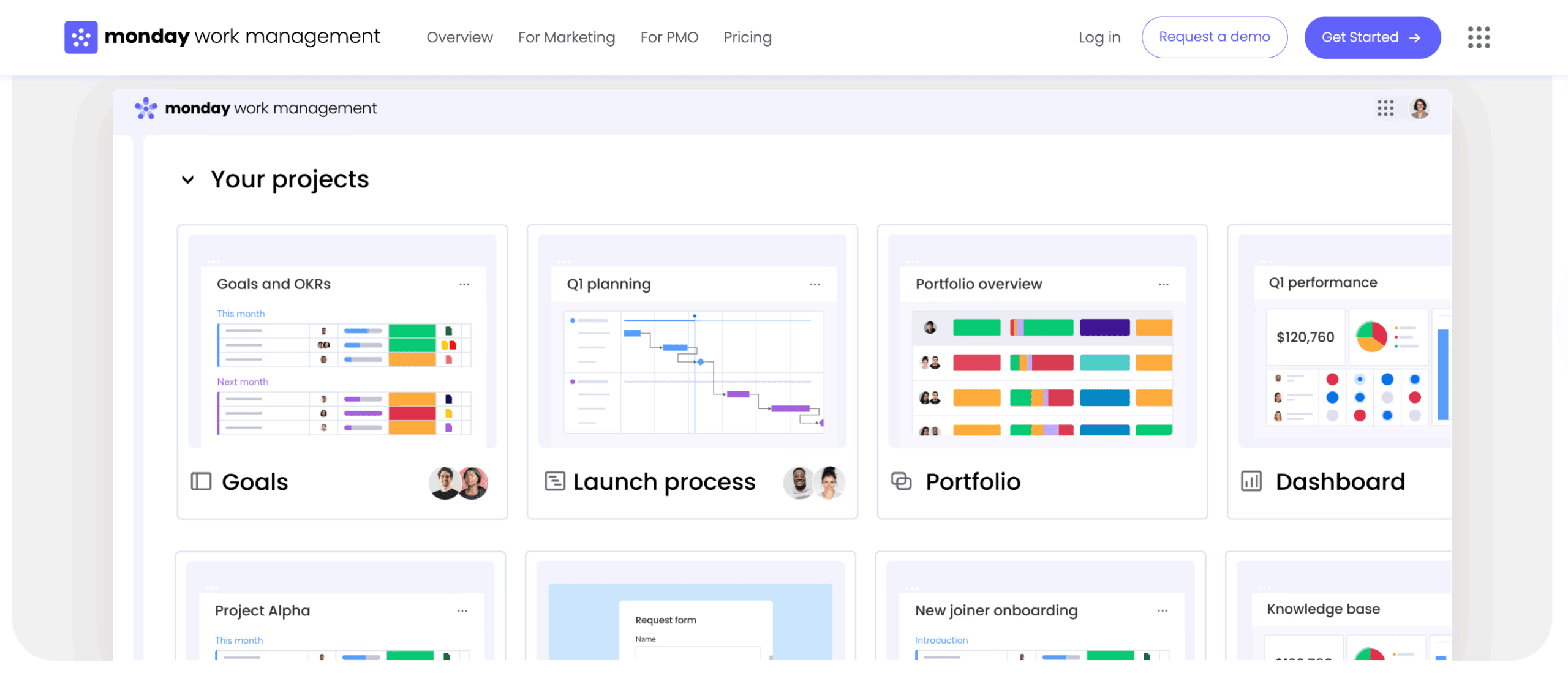
Visualize segments across interactive boards
Segmentation becomes easier to manage when it is visible. Instead of buried reports, segments live on structured boards that reflect real-time customer status.
- Segment-specific boards: Organize customers by group with labels and color coding for instant identification.
- Live segment metrics: Display engagement, revenue, or health indicators directly on the board.
- Shared visibility: Give marketing, sales, and customer success access to the same up-to-date customer view.
Apply AI Blocks for instant categorization
Manual categorization slows teams down and introduces inconsistency. AI Blocks allow segmentation rules to operate automatically at scale.
- Automated label assignment: Categorize customers based on behavioral, value, or engagement thresholds as data updates.
- Data extraction from communications: Capture relevant details from emails and documents into structured segment fields.
- Custom segmentation logic: Define AI rules aligned with specific business criteria and performance goals.
Automate workflows between marketing and sales
Segments become powerful when they trigger immediate, coordinated responses.
- Sales notifications for qualified leads: Alert account executives when a customer reaches defined qualification criteria.
- Customer success alerts for expansion signals: Notify teams when usage patterns indicate upsell potential.
- Account routing for high-value segments: Assign ownership automatically to ensure consistent service and governance.
Track segment performance in real-time dashboards
Leaders need clear visibility into whether segmentation is working.
- Segment-level conversion tracking: Monitor campaign performance by defined customer groups.
- Revenue attribution by segment: Connect financial impact directly to segmentation strategy.
- Customer movement analysis: Track how customers shift between segments over time.
Connect your entire tech stack
Segmentation only works when definitions stay consistent across systems.
- CRM and marketing sync: Align segment logic across automation and pipeline tools.
- Support system integration: Reflect service data inside segmentation frameworks.
- Unified data visibility: Maintain a single source of truth without complex migration projects.
With structure, automation, and AI working together, customer segments move from static definitions to operational drivers of measurable growth.
Turn segmentation into a lasting growth advantage
Customer segment templates are not just organizational tools. When managed dynamically, they become engines for smarter decisions, stronger relationships, and measurable growth.
Behavioral segmentation helps teams anticipate needs, personalize interactions, and allocate resources where they have the greatest impact. Shared definitions reduce internal friction, ensuring every customer touchpoint feels consistent and intentional.
The advantage compounds massively over time. Teams that continuously measure, refine, and evolve their segments build powerful systems that adapt to shifting behavior and market conditions, creating differentiation that competitors struggle to match.
Try monday.comFrequently asked questions
How many customer segments should I create?
Starting with three to five segments keeps efforts focused and actionable. Too many segments increase complexity, while too few overlook meaningful differences in customer behavior and value.
What's the difference between customer segments and buyer personas?
Customer segments group real customers based on observed behavior and value. Buyer personas are fictional profiles used mainly to guide messaging and creative direction.
How often should customer segments be updated?
Quarterly reviews work for most organizations, balancing stability and relevance. Faster-moving industries or major transitions may require monthly reviews.
Do customer segmentation templates work for B2B companies?
B2B segmentation is highly effective when centered on company attributes, buying processes, and account value. Templates help manage complex buying groups and account-based strategies.
What customer data is essential for effective segmentation?
Behavioral data, transaction history, and engagement metrics are critical. Demographics add context, but behavior drives action and predicts future value.
How can I measure if my customer segments are working?
Compare conversion rates and outcomes across segments and against non-segmented approaches. If segments do not show distinct performance patterns, the criteria likely need refinement.

 Get started