


A creative team just delivered another campaign. The design looks great, the copy hits the mark, and stakeholders are satisfied. But getting there was chaotic. Briefs arrived incomplete, feedback was scattered across emails and chat threads, and multiple people claimed final approval authority.
This scenario is increasingly common. Modern creative work involves managing more requests, coordinating across departments with different priorities, and maintaining brand consistency while deadlines accelerate. Traditional methods like email chains and shared folders often break down when content is produced for multiple channels, distributed teams, and external partners under constantly shifting business demands.
This guide presents eight steps for building a modern, scalable creative workflow. It explains in detail how structured processes can reduce administrative friction, align stakeholders, maintain quality, and allow creative teams to focus on producing impactful content.
Key takeaways
- Structured workflows enhance creativity: Clear, repeatable processes reduce administrative friction and allow creative teams to focus on high-value work.
- Cross-department visibility prevents bottlenecks: Connecting marketing, brand, legal, and product teams ensures smooth handoffs and consistent communication.
- Resource planning and capacity management are essential: Balancing workloads and matching skills to projects prevents burnout and maintains quality across channels.
- Data-driven insights improve performance: Tracking cycle times, approvals, and collaboration metrics helps teams optimize workflows and creative output.
- monday.com support scalable workflows: Visual boards, automated approvals, and real-time project tracking help coordinate work across teams and projects.
What is a creative workflow?
A creative workflow is the structured, repeatable process that turns creative requests into finished work. It acts as the backbone guiding projects from concept through production, review, and delivery. Unlike ad-hoc efforts that rely on individual heroics, a workflow creates a system that brings order while preserving innovation.
Creative workflows differ depending on the output. For a blog post, the workflow moves from keyword research and briefing to drafting, editing, SEO review, and publication. For a video campaign, it spans scriptwriting, storyboarding, production, post-production, and multichannel distribution.
Effective workflows share common traits that set them from simple task lists. These elements help teams deliver consistently without sacrificing quality:
- Defined stages: Every phase has specific deliverables and clear entry and exit criteria.
- Smooth handoffs: Responsibilities transfer between team members with all necessary context included.
- Repeatable structure: The same framework applies to similar projects, enabling accurate timeline and resource predictions.
- Built-in checkpoints: Quality gates and approval stages prevent errors from reaching final delivery.
Understanding modern creative workflows
Creative workflows face pressures that didn’t exist a decade ago. Teams produce way more content with the same headcount while coordinating across time zones and using AI to work smarter.
Recent research even shows that AI-enabled workflows can compress cycle time and reduce rework in complex, multi-stakeholder processes, further impacting how creative teams work in 2026.
Here’s how traditional and modern approaches differ:
| Traditional creative process | Modern creative workflow |
|---|---|
| Linear progression from one stage to the next | Parallel workstreams with mapped dependencies |
| Siloed software for different functions | Integrated platforms connecting strategy and execution |
| Manual handoffs through email and chat | Automated routing based on status changes |
| Reactive problem-solving when deadlines slip | Proactive risk management with real-time visibility |
Creative workflow vs creative process
The creative process and creative workflow are related but not the same. The creative process focuses on how ideas emerge — brainstorming, mood boarding, and design thinking — the unstructured space where innovation happens.
The creative workflow also defines what gets done, when, and who does it. This includes project briefing, asset creation, review cycles, approval routing, and delivery. It provides a structured path to bring ideas to market.
For marketing teams, the process involves exploring concepts for a new creative strategy. The workflow moves the approved concept through design, legal review, and launch.
Essentially, while the process drives quality, the workflow drives completion.
Why your creative team needs structure
Creative teams often resist structure, believing it may limit creativity. The right structure, however, frees creativity. By cutting admin work and removing friction, structured workflows give creative professionals space to focus on actual creation.
Managing doubled content demands
Organizations now need content across more channels than ever — social media, websites, email, video platforms, and emerging digital spaces. This explosion of content creates immediate capacity challenges. Without structured workflows, volume can quickly lead to breakdowns.
Common problems when scaling creative work:
- Resource conflicts: Multiple high-priority projects compete for the same designers, creating bottlenecks.
- Quality inconsistencies: Rush jobs compromise brand standards.
- Team burnout: Creative talent becomes overwhelmed by administrative chaos and constant firefighting.
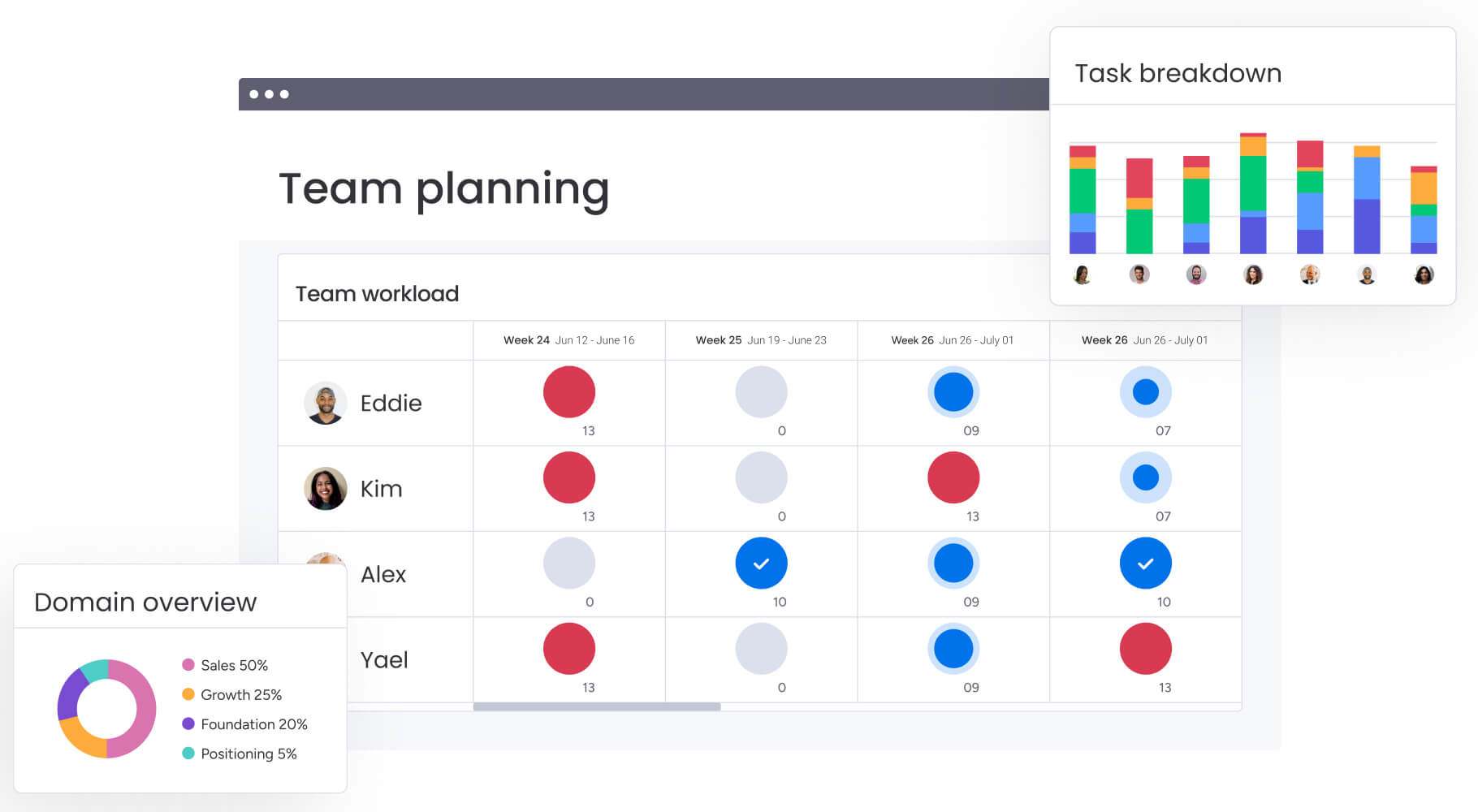
Teams using modern platforms like monday.com address these capacity challenges with strategic resource planning. Visual workload tracking allows managers to balance assignments and prevent overload.
Connecting creative work across departments
Creative projects now involve stakeholders from marketing, brand, legal, product, and external partners. Without structure, cross-department coordination can stall progress and create inefficiencies.
Key symptoms include:
- Information silos: Creative briefs fail to reflect business priorities.
- Approval bottlenecks: Projects stall indefinitely while awaiting sign-off.
- Version control chaos: Teams waste time on outdated files.
- Invisible dependencies: Cascading delays ripple across projects.
Workflow structure provides a single source of truth. Everyone can view project status, and automated notifications keep stakeholders accountable. Connecting business units through platforms such as monday.com ensures visibility into work progress and potential risks in real time.
Ensuring brand consistency everywhere
As creative output grows across channels and teams, maintaining a consistent brand voice becomes a lot more challenging. With 497,046 new business applications filed in December 2023 alone, the demand for brand and content creation continues to increase rapidly.
However, fragmented approaches seriously weaken brand impact.
Structured workflows solve this by putting in place much-needed, systematic controls:
- Creative asset management: Ensures teams use current guidelines.
- Review standardization: Every piece adheres to the same standards.
- Approval routing: Appropriate stakeholders review relevant content types.
5 core components of creative workflow management

Effective creative workflows rely on five integrated components that guide projects from start to finish. Understanding these elements (outlined below) helps teams build scalable systems that grow with their organization.
Strategic brief development
Strong workflows start with comprehensive project briefs. Briefs align creative work with business strategy, preventing scope creep and endless revisions.
A complete brief includes:
- Business context: Connects the project to organizational goals and explains why the work matters.
- Target audience definition: Specifies demographics, psychographics, and behavioral insights.
- Success metrics: Establishes measurable outcomes that define what success looks like.
- Creative parameters: Outlines brand guidelines, tone requirements, and technical specifications.
- Timeline and dependencies: Maps key milestones and coordination points with other teams.
Learn more: AI creative brief agent
Resource planning and capacity management
Creative work requires specific skills at specific times, making resource planning more complex than standard project management. Effective workflows replace guesswork with data-informed decisions.
This component includes:
- Skill mapping: Match talent to work requirements.
- Capacity visualization: Prevent overallocation and burnout.
- Project prioritization: Balance urgent requests with strategic initiatives.
- External resource coordination: Manage freelancers and agencies efficiently.
Creative production workflows
Production workflows map how work moves from concept to completion: while steps vary by content type, the overall structure ensures quality remains high and work continues moving efficiently.
- Concept development: Initial ideation and direction setting.
- Asset creation: Design, writing, or production work.
- Internal review: Quality checks and brand compliance.
- Stakeholder feedback: Input from relevant departments.
- Revision cycles: Iterative improvements based on feedback.
- Final approval: Sign-off from designated decision makers.
- Asset preparation: Formatting and optimization for delivery.
Feedback and revision systems
Feedback is where many creative projects slow down. When comments are scattered across email, chat, and multiple file versions, teams waste time interpreting input instead of improving the work.
A structured feedback system replaces confusion with clarity. It centralizes comments, ties feedback directly to the brief, and defines who has final approval.
The difference is clear when you compare ad-hoc feedback with a structured model:
| Unstructured feedback | Structured feedback system |
|---|---|
| Scattered input across emails and chats | Centralized collection attached to creative assets |
| Vague direction leaving creatives guessing | Actionable guidance tied to the brief |
| Unlimited revision rounds with no endpoint | Defined cycles with completion criteria |
| Unclear who has final say | Designated approvers with clear hierarchy |
With defined revision rounds, designated approvers, and completion criteria, teams reduce rework and move projects forward with confidence instead of guesswork.
Asset delivery and distribution
Creative workflows extend beyond asset creation — they include delivery. Ensuring content reaches the right channel in the right format is essential for impact.
Key elements include:
- Format optimization: Preparing assets for specific platforms.
- Distribution coordination: Managing multichannel rollouts.
- Asset archiving: Organizing files for future reference.
- Performance tracking: Measuring content effectiveness.

Build your creative workflow in 8 steps
These eight steps translate workflow theory into a practical system your team can actually run. While they’re presented in sequence, building a creative workflow is not a one-time exercise. Teams often revisit and refine earlier steps as priorities shift, volume grows, and new bottlenecks appear.
Step 1: Map your current creative process
Improving your workflow starts with understanding it. Document how work currently flows through your organization.
Start by:
- Identifying every stage: From request to delivery.
- Noting all stakeholders: Who touches the work at each phase.
- Highlighting pain points: Where delays and frustrations occur.
- Gathering time estimates: Actual durations versus planned timelines.
Step 2: Define roles and ownership
Workflows fail when responsibilities are unclear. Assigning clear roles ensures accountability across the team.
Essential roles include:
- Project ownership: Overall accountability for delivery.
- Creative direction: Maintaining quality and brand compliance.
- Production execution: Asset creation and development.
- Quality assurance: Verifying standards.
- Stakeholder liaison: Coordinating communications.
- Final approval authority: Decision-making responsibility.
Step 3: Create brief templates that work
Templates align stakeholders before work begins and reduce issues later. They should be comprehensive but not bureaucratic.
Include:
- Project objectives: Defining what success looks like.
- Target audience: Clarifying who the content serves.
- Key messages: Specifying core communication points.
- Brand requirements: Outlining guidelines and constraints.
- Success metrics: Determining how results will be measured.
- Timeline: Listing key milestones and deadlines.
- Budget: Noting resource constraints.
- Approval process: Identifying who signs off at each stage.
Step 4: Design smart approval workflows
Smart approval workflows maintain quality without slowing progress.
Consider:
- Project type: Define the asset category.
- Review stakeholders: Specify who needs to review.
- Timeline: Set expected review durations.
- Escalation protocol: Clarify how approvals advance if delayed.
| Project type | Review stakeholders | Timeline | Escalation protocol |
|---|---|---|---|
| Social media posts | Creative lead, brand manager | 24 hours | Auto-approve if no response |
| Campaign assets | Creative director, brand, legal | 48 hours | Escalate to marketing director |
| External communications | All stakeholders plus executive | 72 hours | Executive decision required |
Step 5: Set up resource management
Resource planning turns workflow theory into a realistic execution plan. Without it, even efficient processes can fail.
Establish systems for:
- Capacity tracking: Monitor team availability and workload.
- Skill documentation: Match projects to team strengths.
- Project prioritization: Balance competing demands.
- Workload balancing: Prevent burnout and bottlenecks.
- External resource coordination: Manage freelancers and agencies.
Step 6: Build feedback and revision loops
Structured feedback maintains quality while keeping projects on schedule. Clear processes prevent endless revision cycles.
Define:
- Collection methods: How feedback is gathered.
- Consolidation processes: Managing conflicting input.
- Revision planning: Outlining scope and timeline for changes.
- Approval checkpoints: Determining when revisions are complete.
- Documentation requirements: Recording decisions and rationale.
Step 7: Establish success metrics
Measurement helps teams improve continuously. Track both workflow efficiency and content quality.
Monitor:
- Process metrics: Cycle time, revision counts, frequency of bottlenecks.
- Quality metrics: Approval rates, stakeholder satisfaction scores.
- Business metrics: Content performance, goal achievement.
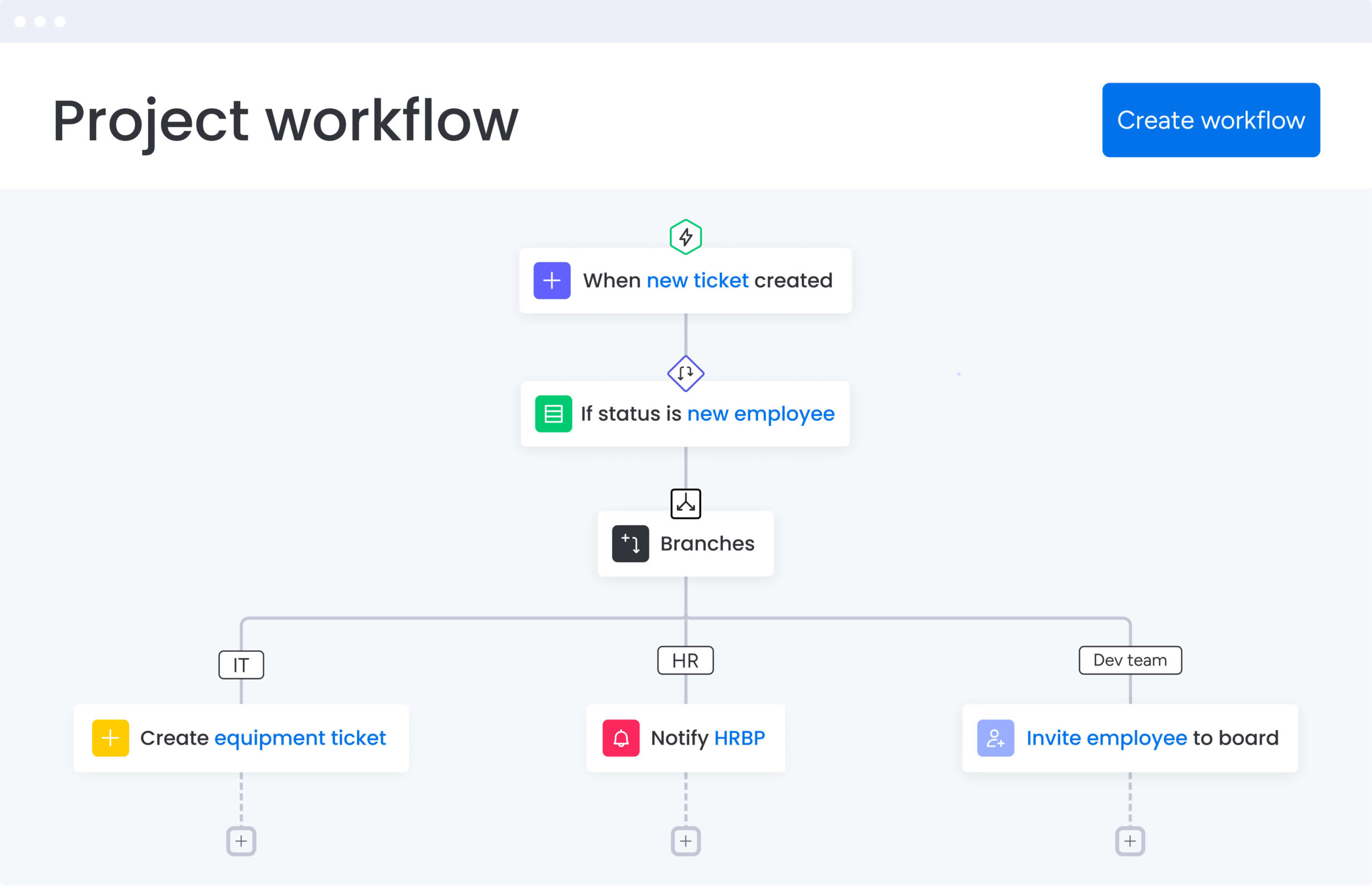
Step 8: Automate repetitive creative work
Automation reduces administrative workload, allowing teams to focus on high-value creative work.
Consider automating:
- Project initiation: When briefs are submitted.
- Asset routing: Based on status changes.
- Notification management: Progress updates and deadline alerts.
- Status reporting: Dashboards and stakeholder communications.
- File organization: Asset categorization and archiving.
Teams using modern and unified solutions like monday.com can automate these key workflow steps, including templated boards and approval notifications.
Learn more: Creative agency project management software
Power your creative workflow with AI and automation
AI and automation remove friction that slows creative teams. By using these technologies, workflows become intelligent systems that anticipate needs, streamline processes, and improve overall performance. Creative teams gain the ability to work more efficiently while maintaining quality and consistency.
AI-driven creative operations
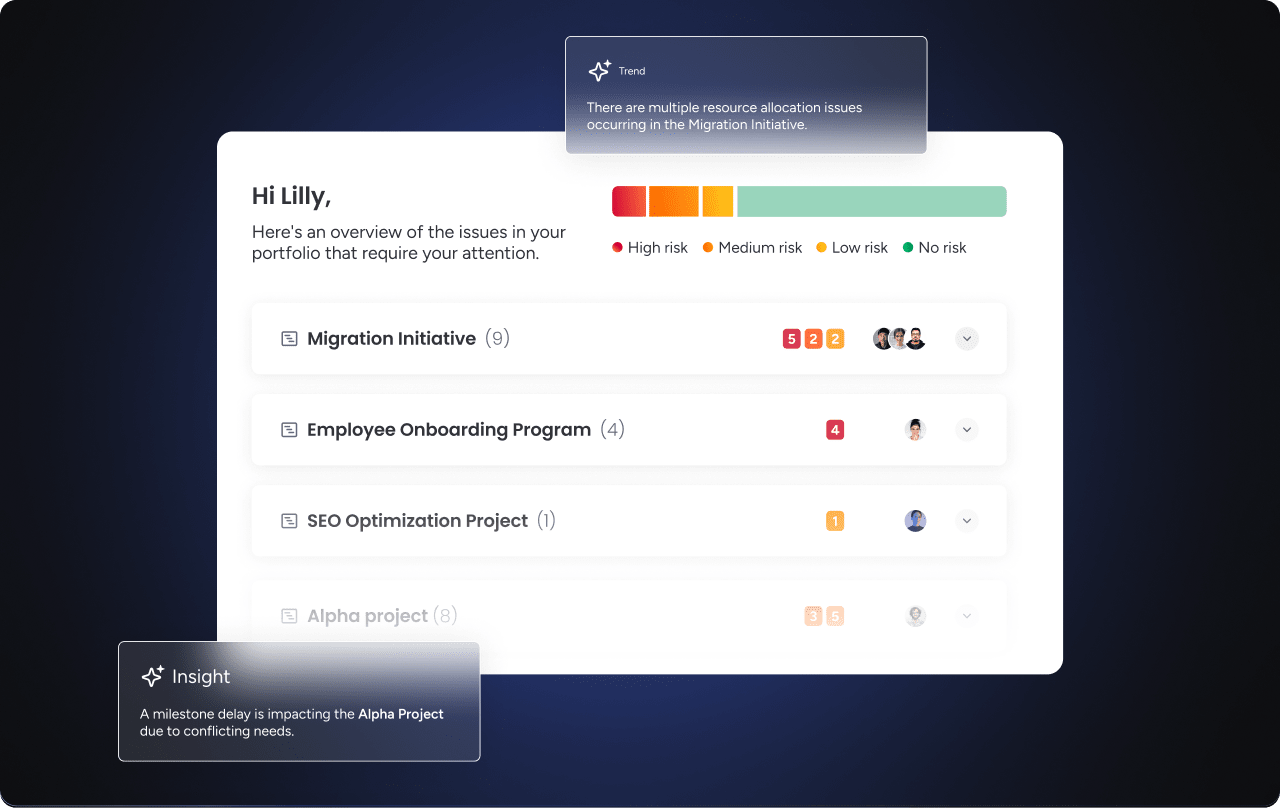
AI transforms creative operations from reactive to proactive. Teams receive predictive insights that help them stay ahead of demand, identify potential issues, and address problems before they escalate.
Practical AI applications for creative teams include:
- Predictive project management: AI analyzes patterns to flag delays, forecast resource requirements, and highlight projects at risk.
- Intelligent task routing: Algorithms assign work based on skills, availability, and past performance.
- Decision support: AI extracts key requirements from briefs, identifies challenges, and recommends optimal resource configurations.
Automated asset processing at scale
Automation handles high-volume, repetitive work that consumes creative time. This ensures consistency while freeing mental space for high-value creative work.
Key areas for automation include:
- File management: Categorizes assets, manages versions, converts formats, and organizes archives.
- Quality assurance: Verifies specifications and brand compliance automatically.
- Workflow coordination: Tracks progress, manages deadlines, and sends stakeholder updates.
Intelligent resource allocation
AI turns resource allocation into a data-driven process. Intelligent systems evaluate team performance, project needs, and capacity to ensure optimal assignments.
Benefits include:
- Skills-based matching: Aligns project requirements with team strengths.
- Capacity optimization: Evaluates availability to prevent bottlenecks.
- Performance analysis: Identifies team configurations that produce the best results.
Best practices for managing creative workflows
Clear structure matters most when work spans multiple teams and locations. As creative output grows, coordination becomes more complex. The right strategies help you scale production without losing quality or control.
Building workflows across multiple teams
Coordinating work across marketing, product, and sales requires a unified approach that respects each team’s processes. Shared standards with built-in flexibility improve alignment and efficiency.
Key strategies include:
- Standardized interfaces: Common brief formats and unified approval processes.
- Explicit handoff procedures: Clear communication standards between departments.
- Common language: Shared terminology for project status and priorities.
- Coordinated scheduling: Account for dependencies and cross-team collaboration needs.
Managing distributed creative teams
Remote teams require thoughtful workflows to ensure collaboration across time zones. Documented processes and asynchronous updates keep work moving efficiently.
Essential elements include:
- Documentation-first workflows: Rely on comprehensive documentation rather than real-time meetings.
- Overlap hour identification: Identify collaboration windows across time zones.
- Asynchronous update rhythms: Share progress regularly without requiring simultaneous participation.
- Remote review processes: Use digital approvals to maintain quality standards.
Scaling quality creative production
As creative output increases, systematic quality management ensures your brand remains consistent. Balancing speed with standards is crucial when expanding creative capacity.
Focus on:
- Standardized frameworks: Consistent review criteria and quality checkpoints.
- Automated checks: Technology-assisted brand compliance verification.
- External partner processes: Managing freelancers and agencies with the same rigor as internal teams.
Coordinating work across marketing, product, and sales requires a unified approach that respects each team’s processes. Shared standards with built-in flexibility improve alignment and efficiency.
How to track and optimize creative workflow performance
Ongoing measurement allows workflows to adapt to evolving business needs. Data-backed insights also help teams identify bottlenecks, allocate resources efficiently, and maintain high-quality output.
Essential metrics for creative teams
A complete measurement framework evaluates performance across four dimensions, each revealing different insights into workflow health and opportunities for improvement.
- Efficiency metrics: Cycle time reveals workflow effectiveness.
- Quality metrics: Approval rates indicate output standards and stakeholder satisfaction.
- Collaboration metrics: Assess team interaction and communication effectiveness.
- Business metrics: Connect creative efforts to organizational results and goal achievement.
Real-time creative analytics
Access to live analytics shifts management from reactive to proactive. Teams can detect and resolve issues before they affect delivery.
- Project health monitoring: Tracks progress, risks, and resource allocation across the portfolio.
- Performance dashboards: Highlight productivity and efficiency trends over time.
- Forecasting: Predicts capacity needs and potential challenges before they arise.
Visual dashboards on monday.com display live project data for insights into budgets, goals, schedules, and resources. Teams customize views with drag-and-drop widgets to make informed decisions.
Continuous workflow improvement
Optimization requires regular review and adaptation as teams and requirements evolve. Systematic assessment ensures workflows remain effective and scalable.
- Regular assessment cycles: Conduct monthly reviews and quarterly audits.
- Data analysis: Identify bottlenecks and inefficiencies using key metrics.
- Team feedback: Collect input from workflow participants.
- Pilot improvements: Test workflow changes before organization-wide rollout.
- Best practice documentation: Institutionalize successful approaches for repeatable success.

“monday.com has been a life-changer. It gives us transparency, accountability, and a centralized place to manage projects across the globe".
Kendra Seier | Project Manager
“monday.com is the link that holds our business together — connecting our support office and stores with the visibility to move fast, stay consistent, and understand the impact on revenue.”
Duncan McHugh | Chief Operations OfficerRun and scale your creative workflow with monday.com
A strong creative workflow needs more than documentation. It needs a system that supports planning, execution, collaboration, and reporting in one place. monday.com gives creative teams the structure to stay organized without limiting how they create.
Instead of juggling email threads, spreadsheets, and scattered files, teams manage every stage of production on visual boards that reflect how work actually flows.
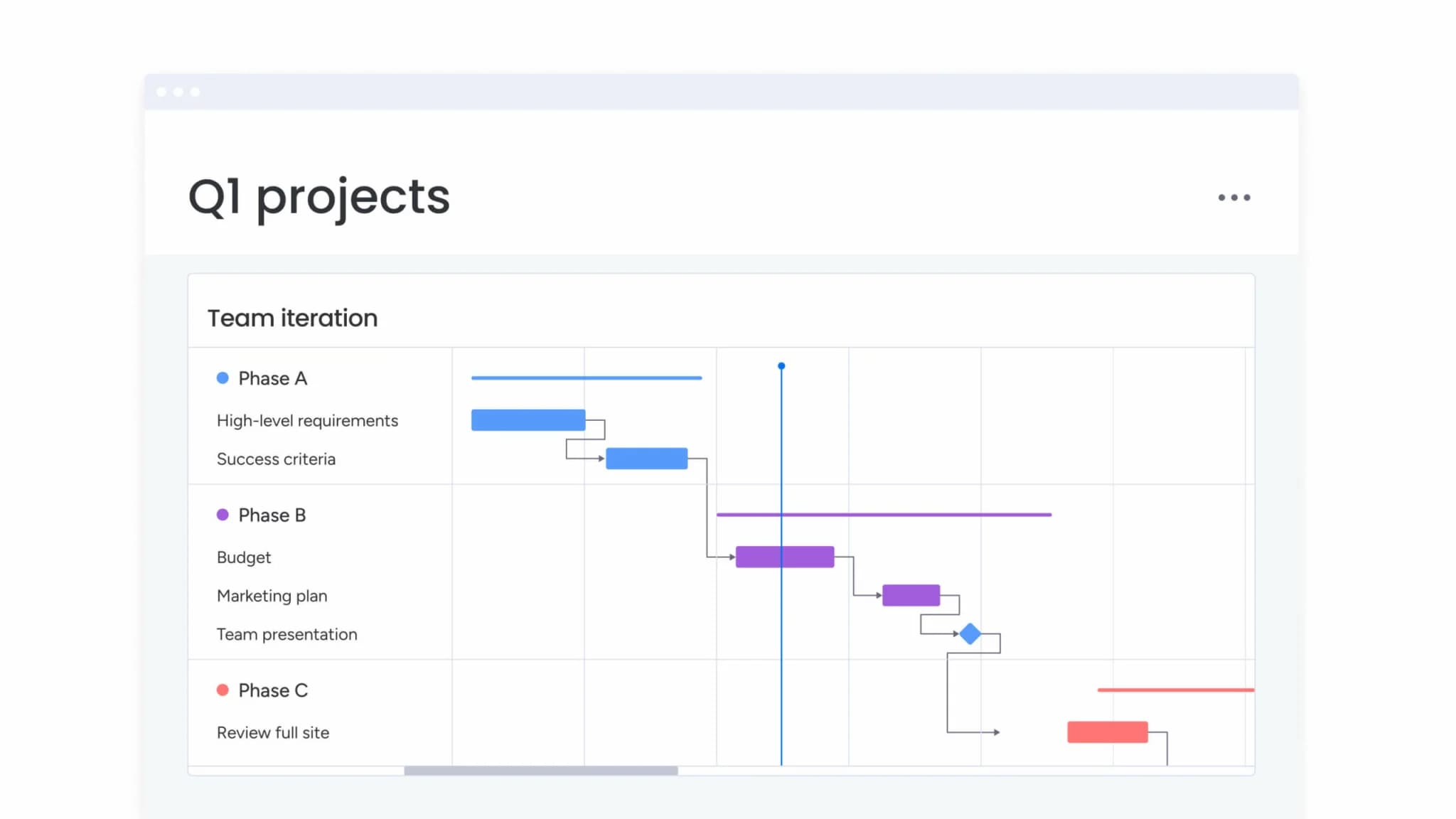
- Visual project management: Map briefs, production stages, reviews, and delivery in Kanban, Gantt, Timeline, or Calendar View. Switch perspectives instantly without rebuilding your workflow.
- Automated approvals: Route assets to the right stakeholders when statuses change, send reminders automatically, and reduce manual follow-ups.
- Centralized feedback: Keep comments attached directly to creative assets so revisions are clear and version control stays intact.
- Resource and workload tracking: View team capacity in real time to prevent bottlenecks and balance assignments before burnout happens.
- Portfolio-level dashboards: Monitor timelines, budgets, and creative performance across campaigns, departments, and regions.
Dependency mapping makes risks visible early. If one stage slips, timelines update automatically so teams can adjust before delays cascade. With marketing, product, legal, and external partners connected in the same workspace, handoffs become seamless instead of reactive.
When structure and visibility are built into daily work, creative teams spend less time managing chaos and more time producing high-impact content.
Try monday.comFrequently asked questions
What is a creative workflow?
A creative workflow is a structured, repeatable sequence of steps that guides work from concept to delivery, including defined stages, handoffs, and approval checkpoints.
What are the five stages of the creative process?
The five stages are preparation, incubation, illumination, evaluation, and implementation. Creative workflows provide operational structure around these stages.
How do you create a creative workflow?
Map your current process, define roles and responsibilities, build brief templates, design approval paths, and automate repetitive tasks.
What is the difference between a creative process and a creative workflow?
A creative process focuses on ideation and problem solving, while a creative workflow organizes operational steps, timelines, and accountability for consistent delivery.
Why is workflow important in creative projects?
Workflows reduce chaos, prevent bottlenecks, maintain brand consistency, and free creative professionals to focus on high-value work instead of administrative coordination.
How can AI improve creative workflow management?
AI automates repetitive tasks, predicts project risks, categorizes incoming requests, and provides real-time insights to enable faster, data-driven decision-making.

 Get started