

Imagine a whiteboard filled with brilliant ideas after a two-hour brainstorm, the energy in the room electric. Now, picture the team three weeks later, stuck in debate and unable to turn that creative momentum into action. This gap between exploration and execution is where many teams falter, but it’s also where the most successful ones learn to thrive.
The difference lies in understanding convergent vs divergent thinking. Divergent thinking helps teams explore possibilities and generate multiple solutions without judgment, while convergent thinking takes those options and applies analytical rigor to select the best path forward. Most teams lean hard into one mode and stay there, brainstorming forever or rushing straight to decisions without exploring what’s actually possible.
In this guide, you’ll learn to master the rhythm between these two thinking modes, apply a 5-step framework for balanced results, and see how a flexible work platform can help you turn great ideas into finished projects. The ability to navigate this transition effectively ensures that high-level concepts become tangible assets rather than remaining abstract possibilities.
Key takeaways
- Master the rhythm between exploration and execution: use divergent thinking to generate multiple solutions, then switch to convergent thinking to evaluate and select the best path forward.
- Recognize when your team is stuck in one thinking mode: watch for endless brainstorming without decisions (too much divergent) or rushing to first solutions without exploration (too much convergent).
- Create psychological safety for creative exploration: schedule dedicated time for idea generation where team members can propose unconventional solutions without immediate judgment or criticism.
- Connect thinking to action with a unified platform: visual boards in platforms like monday work management support brainstorming and idea organization, while automated workflows and AI capabilities help teams evaluate options and execute decisions seamlessly.
- Apply the 5-step framework to balance both modes: start with divergent exploration, shift to convergent evaluation, return to divergent development, apply convergent refinement, then implement with continuous optimization.
What is the difference between convergent and divergent thinking?
Convergent and divergent thinking are two distinct cognitive approaches teams use to solve problems and drive innovation. Knowing when to use each mode (and when to switch) is what separates teams that ship from teams that spin.
Divergent thinking is the exploratory phase where teams generate multiple possibilities, ideas, and solutions without immediate judgment. It’s expansive, creative, and non-linear, like casting a wide net to see what you catch.
In contrast, convergent thinking is the analytical phase where teams evaluate those options, apply logic, and narrow choices down to a single, optimal solution. It’s focused, linear, and decisive: the process of picking the best option and running with it.
| Aspect | Divergent thinking | Convergent thinking |
|---|---|---|
| Purpose | Generate multiple possibilities | Select the optimal solution |
| Process | Expansive, non-linear | Focused, linear |
| Judgment | Suspended | Applied |
| Output | Many options | One decision |
| Mindset | "What could we do?" | "What should we do?" |
Picture a marketing team facing a significant budget cut. During divergent thinking, they ask: “What are all the possible ways we could maintain impact with less spend?” This generates ideas ranging from shifting to organic channels, partnering with micro-influencers, repurposing existing content, or focusing on retention over acquisition.
However, during convergent thinking, they analyze each option against specific criteria (ROI potential, implementation speed, team capabilities) to select the single approach that delivers maximum impact within constraints.
So how do the best teams master this balance? They know exactly when to explore and when to commit.
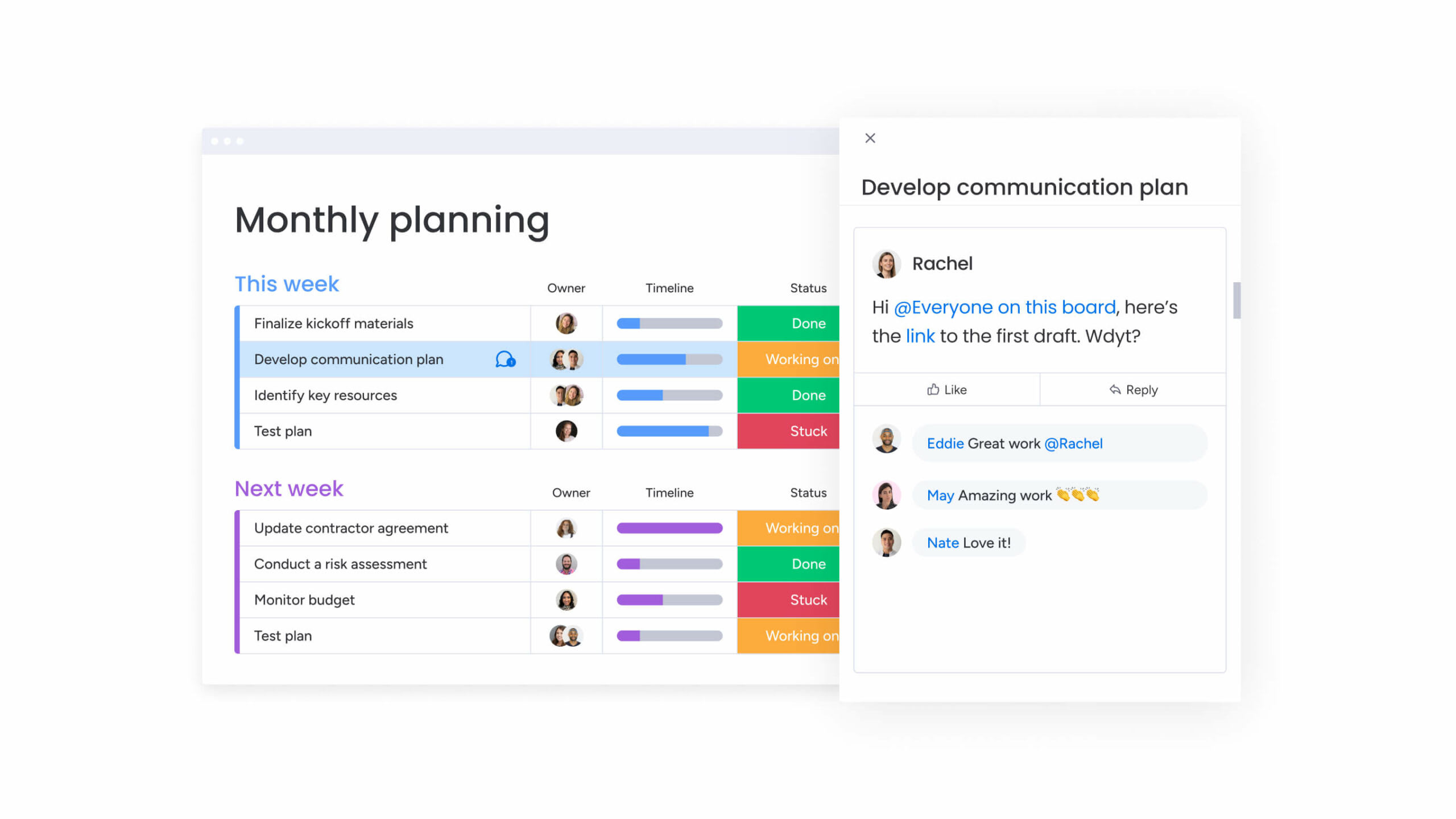
Understanding divergent thinking in organizations
Divergent thinking powers exploration by suspending judgment to uncover possibilities beyond initial solutions. In this mode, quantity breeds quality, generating numerous alternatives helps teams avoid settling for the first adequate solution.
This thinking style thrives on psychological safety. Team members need to feel secure proposing unconventional ideas, confident that their contributions will be received with openness. Teams in divergent mode release rigid structures and remain receptive to unexpected connections.
Real examples of divergent thinking at work
Divergent thinking looks different in each department, but the exploration principle stays the same. Different teams use divergent thinking before locking in a direction by:
- Product development: before creating a roadmap, product teams brainstorm dozens of potential features to address user pain points, exploring wild variations to ensure they’re not missing breakthrough solutions.
- Marketing campaigns: during concept development for a product launch, creative teams generate diverse angles, visual styles, and messaging approaches simultaneously to discover what resonates.
- Process improvement: when a workflow creates bottlenecks, operations teams explore every possible optimization, from automation to role reassignment to entirely new methodologies.
- Crisis response: facing unexpected supply chain disruption, logistics teams develop multiple contingency plans before a crisis deepens.
Identifying strong divergent thinkers on your team
Spotting natural divergent thinkers helps you build teams that can explore deeply without getting lost. These characteristics signal strong divergent thinking abilities:
- Generates multiple solutions: when presented with a challenge, they rarely stop at one answer, consistently offering several distinct approaches.
- Asks “what if” questions: they naturally explore alternative scenarios with questions like “What if we removed this constraint?” or “What if we combined these two ideas?”.
- Builds on others’ ideas: rather than critiquing, they expand and combine concepts using phrases like “Yes, and we could also…”.
- Embraces ambiguity: they remain comfortable working with incomplete information while others rush to define parameters.
- Challenges assumptions: they question existing processes and identify unwritten rules limiting the team’s thinking.
Understanding convergent thinking in organizations
Convergent thinking is how teams move from ideas to execution. After generating possibilities, convergent thinking helps you evaluate options, prioritize ruthlessly, and select the best path forward. It applies logic, defined criteria, and data to transform exploration into action.
Without strong convergent thinking, teams spin endlessly in ideation cycles without delivering tangible value. Effective convergent phases require clear evaluation frameworks that minimize bias, maintain objectivity, and align decisions with strategic goals.
Real examples of convergent thinking at work
Convergent thinking turns strategy into commitment. Teams use this analysis to pick the right move:
- Budget allocation: finance and leadership teams analyze multiple investment options against strict ROI criteria to select specific projects for funding.
- Vendor selection: after receiving proposals from ten potential suppliers, procurement teams evaluate each against a weighted scorecard of cost, reliability, and compliance factors.
- Resource planning: project managers review skills, availability, and current workload of team members to determine optimal assignments for critical projects.
- Quality control: engineering teams investigate recurring software bugs, systematically testing hypotheses until they isolate the specific root cause.
Identifying strong convergent thinkers on your team
Convergent thinkers bring the focus teams need to finish projects. Therefore, watch for these signs of strong convergent thinking:
- Evaluates options systematically: they naturally apply defined criteria to assess multiple solutions, creating mental or actual scorecards for comparison.
- Makes decisive choices: they’re comfortable selecting one path from many alternatives and accepting the trade-offs required for progress.
- Focuses on implementation: once a decision is made, their attention immediately shifts to logistics, the how, who, and when of execution.
- Analyzes data effectively: they draw insights from metrics and performance indicators, preferring decisions backed by evidence over intuition.
- Prioritizes ruthlessly: they distinguish between essential and nice-to-have elements, protecting the project’s core value proposition.
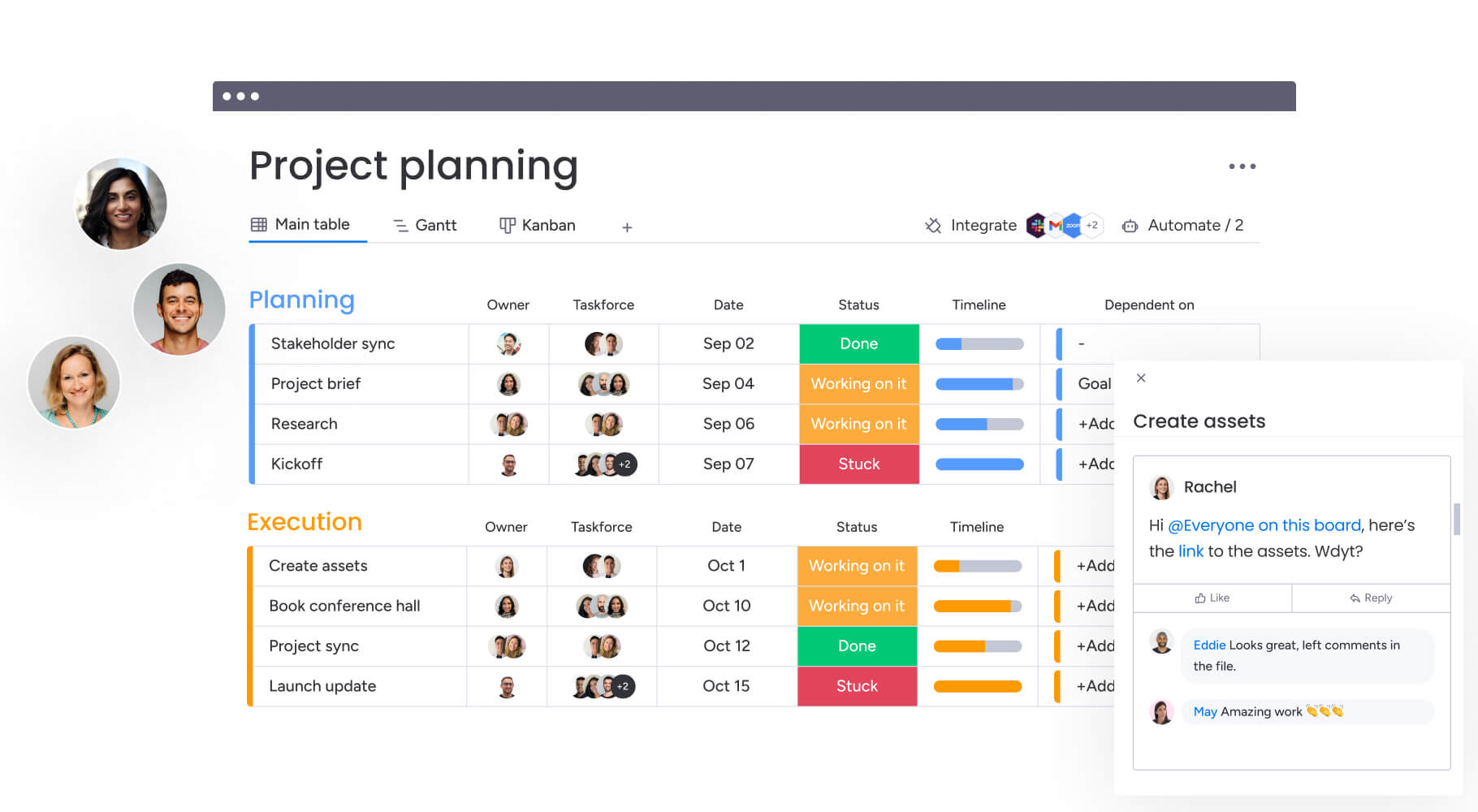
When do teams need convergent vs divergent thinking?
The best teams switch between modes depending on where they are in the project and what they’re facing. Knowing when to switch matters just as much as the thinking itself. Get the timing right and you’ll nail both exploration and execution.
Using divergent thinking to drive exploration
Use divergent thinking when the path isn’t clear or when your current approach isn’t cutting it:
- Early project phases: when the problem itself needs definition, explore root causes and full scope before attempting solutions.
- Breakthrough challenges: when novel thinking matters more than incremental improvement, set aside standard solutions for new approaches.
- Cross-functional collaboration: when diverse perspectives are essential, bring together sales, engineering, and support teams to generate wider insights.
- Market disruption: when traditional solutions no longer address changing conditions, rethink fundamental assumptions about your approach.
Applying convergent thinking for execution
Switch to convergent thinking when it’s time to stop exploring and start shipping:
- Decision deadlines: when teams must choose between viable alternatives to maintain momentum.
- Resource constraints: when limited budgets or headcount require strict prioritization of initiatives.
- Implementation phases: when detailed planning and execution take priority over further ideation.
- Performance optimization: when data analysis reveals specific improvement opportunities requiring focused action.
Knowing when to switch between modes
Recognizing the shift between thinking modes prevents organizational stagnation. You can identify the appropriate time to transition by monitoring for these specific signals:
| Signal | Current mode | Action required |
|---|---|---|
| Analysis paralysis | Divergent (stuck) | Shift to convergent: introduce constraints, set deadline, force selection |
| Groupthink or premature consensus | Convergent (too early) | Shift to divergent: pause decision, ask "What are we missing?" |
| Diminishing returns on ideas | Divergent | Shift to convergent: when new ideas are variations, start evaluating |
| New information changes scope | Convergent | Shift to divergent: reopen exploration to find new approach |
5 steps to achieve thinking balance
Teams can implement this practical methodology that alternates between divergent and convergent phases to maximize both creativity and execution. It keeps exploration realistic while making sure execution gets your best ideas and stops teams from brainstorming forever or jumping to conclusions too fast.
Step 1: start with divergent exploration
Begin with a broad divergent phase where teams define the problem space and generate multiple solution approaches. Plan for this phase to eat up 20-30% of your timeline. Go for quantity, not quality.
Key activities include:
- Stakeholder interviews: gather diverse viewpoints to understand the full scope.
- Open brainstorming: generate volume without filtering or judgment.
- Research phases: understand the landscape of existing solutions and approaches.
Make it safe to share any idea, even the wild ones.
Step 2: shift to convergent evaluation
Once you’ve got enough ideas, start evaluating and prioritizing. Narrow it down to two to three solid options using clear criteria.
Evaluation components include:
- Criteria establishment: define metrics for feasibility, cost, impact, and strategic alignment.
- Assumption validation: test key hypotheses with stakeholders or data.
- Decision documentation: record why certain options were selected or eliminated.
This approach ensures decisions remain grounded in objective criteria rather than subjective preferences.
Step 3: return to divergent development
Once you’ve picked a concept, go divergent again to explore how to build it. This “bounded divergence” allows creativity within constraints, focusing on how rather than what.
Development activities include:
- Prototype creation: build multiple versions or approaches to test.
- Pilot testing: try different implementation methods on small scale.
- Detailed planning: explore various timelines, resource allocations, and risk mitigation strategies.
Step 4: apply convergent refinement
Now lock it down: finalize details, allocate resources, and commit to the plan. This is where exploration becomes action.
Refinement elements include:
- Final adjustments: incorporate pilot results and stakeholder feedback.
- Resource allocation: assign specific people, budgets, and timelines.
- Success metrics: establish clear KPIs and monitoring approaches.
Step 5: implement with continuous optimization
Execution leans convergent, but stay flexible. Stay open to quick bursts of exploration and decision-making as problems pop up.
Optimization practices include:
- Regular review cycles: assess progress and adapt based on results.
- Rapid problem-solving: when roadblocks appear, briefly diverge to explore solutions before converging on fixes.
- Performance monitoring: track both creative output and execution efficiency to maintain balance.
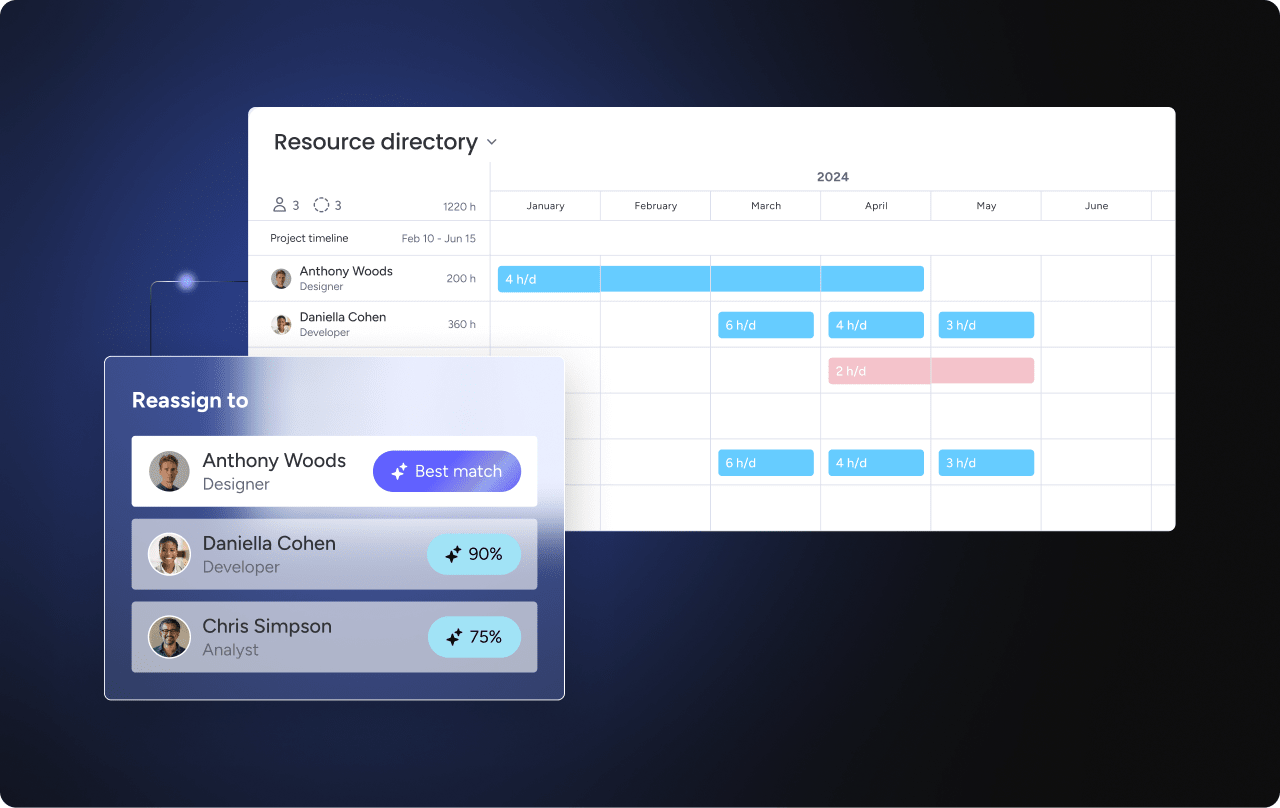
How does AI transform both thinking modes?
AI enhances both thinking modes by amplifying human capabilities rather than replacing judgment. It processes large datasets to generate insights that spark ideas and provides analytical support for decision-making. This enables teams to explore possibilities more thoroughly and execute with greater efficiency.
AI-powered approaches for divergent ideation
AI jumpstarts creative thinking and helps teams spot connections they’d miss on their own. Today’s work management platforms use AI to support exploration through automated idea generation and pattern spotting.
Key AI applications for divergent thinking include:
- Pattern recognition: AI identifies unexpected connections between disparate data sources, suggesting relationships human teams might miss.
- Scenario modeling: automated generation of multiple “what if” scenarios helps strategic planning teams explore wider ranges of potential futures.
- Content synthesis: AI combines insights from market research, customer feedback, and internal documentation to spark new thinking directions.
- Rapid prototyping: AI-assisted creation of multiple design or process variations allows teams to visualize dozens of concepts quickly.
AI analytics for convergent decision making
AI provides the data foundation convergent thinking needs. Analytics empower teams to make decisions backed by evidence, increasing confidence and accuracy.
Key AI applications for convergent thinking include:
- Data analysis: AI processes large datasets to identify trends and performance indicators that guide selection.
- Risk assessment: automated evaluation of potential outcomes and probability scenarios helps teams quantify and compare risks.
- Resource optimization: AI recommends optimal allocation based on constraints, skills, and objectives.
- Performance prediction: AI forecasts likely results of different decision paths based on historical patterns.
Creating effective human-AI thinking teams
Set clear boundaries for where AI fits in your thinking process. Use AI for data heavy-lifting in both phases, but keep humans in charge of context and ethics.
Best practices for human-AI collaboration include:
- Setting clear boundaries: define where AI involvement starts and stops in your thinking process.
- Training critical interpretation: ensure team members can evaluate AI insights critically rather than accepting them blindly.
- Maintaining human accountability: keep final decisions with humans who understand broader context and implications.
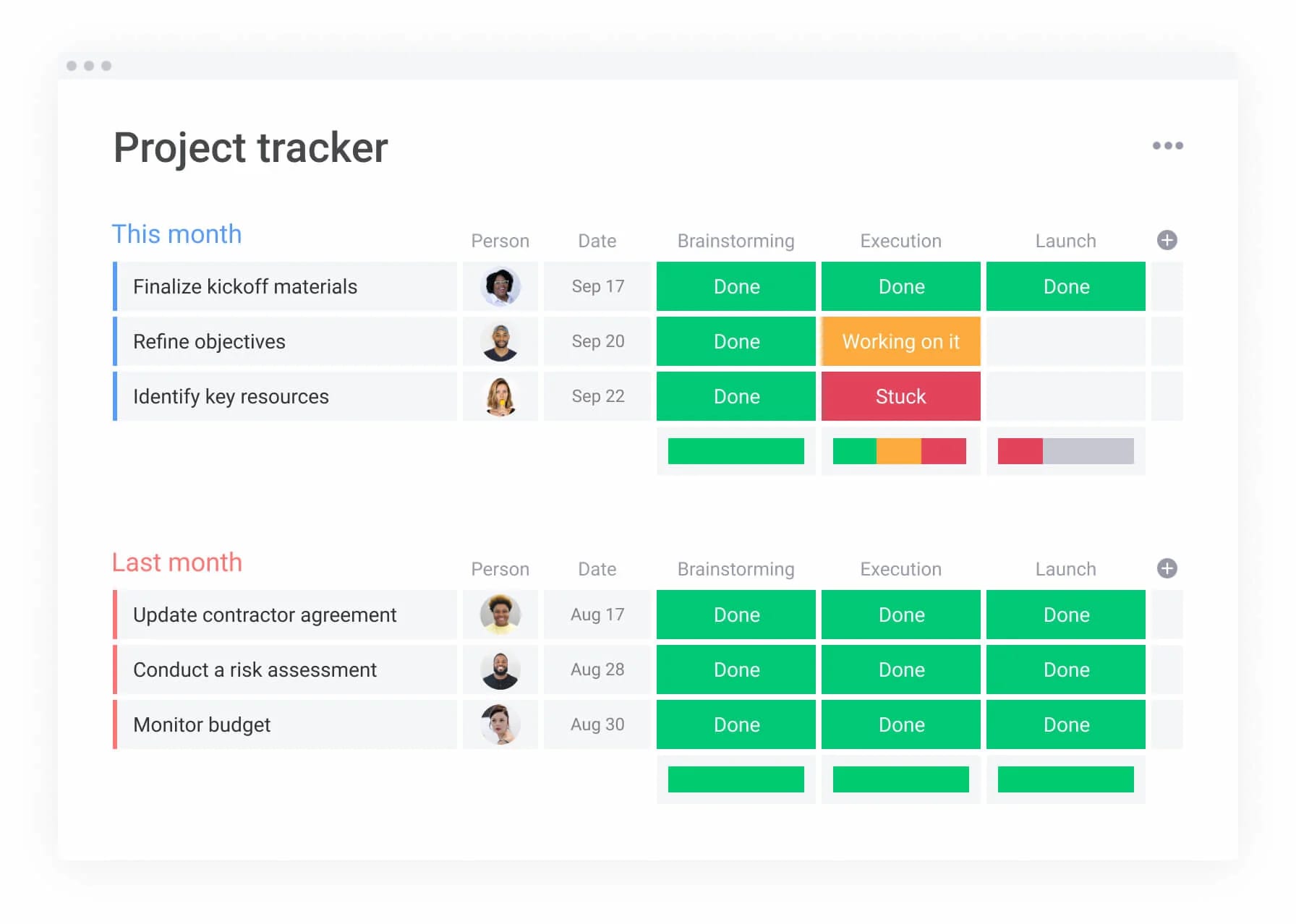
Building organizational thinking capabilities
Developing a balanced thinking capability requires a deliberate focus on organizational culture and process. You can optimize team performance by structuring your environment to support both modes rather than relying solely on individual intuition.
Implementing these formal frameworks ensures that every department achieves higher-quality outcomes through more effective cognitive habits.
Fostering psychological safety for creative divergence
Cultivating an environment of psychological safety and intellectual curiosity is fundamental to organizational exploration. By making intentional cultural choices, you ensure that divergent thinking becomes a sustainable practice rather than an occasional occurrence.
Key practices for fostering divergent thinking include:
- Dedicated exploration time: schedule regular “lab time” or innovation sprints where idea generation happens without implementation pressure.
- Failure tolerance: celebrate learnings from unsuccessful experiments as valuable data points for future success.
- Cross-functional collaboration: create structures that bring diverse perspectives together through rotating team members or cross-departmental squads.
- Leadership modeling: executives demonstrate curiosity by asking questions rather than just providing answers.
Establishing frameworks for convergent decisions
Effective convergent thinking relies on robust systems that provide clarity and streamline the selection process. These formal frameworks empower teams to transition rapidly from a multitude of options to decisive action.
Essential convergent frameworks include:
- Decision criteria: standardized evaluation frameworks ensure decisions are consistent and aligned with strategic goals.
- Data accessibility: democratized access to relevant metrics and insights enables informed decision-making at all levels.
- Authority definition: clear guidelines establish who owns different types of decisions, preventing confusion that stalls convergence.
- Timeline discipline: structured processes include defined “disagree and commit” points where debate ends and execution begins.
Enabling cross-functional thinking collaboration
Dismantling departmental silos allows an organization to balance cognitive modes more effectively. By actively connecting varied perspectives, you naturally create an environment where exploration and execution coexist.
Teams with different thinking strengths collaborate more effectively when they share visibility into how ideas flow from exploration to execution. When marketing’s creativity meets finance’s analysis, you get better results than either team could deliver solo.
Measuring and optimizing thinking performance
Quantifying cognitive performance allows you to identify specific areas where thinking needs rebalancing. By measuring outcomes alongside process, you can detect patterns and iteratively refine how your teams navigate the tension between exploration and execution.
Tracking exploration vs execution metrics
Monitoring both dimensions ensures that you do not optimize for creativity at the expense of efficiency or vice versa. You should track distinct metrics for each mode to maintain a comprehensive view of team performance.
| Thinking mode | Key metrics | Measurement approach |
|---|---|---|
| Divergent | Ideas generated, cross-functional participation, time to first prototype | Track brainstorming outputs, collaboration frequency, pipeline health |
| Convergent | Decision speed, implementation success rate, resource utilization | Monitor decision timelines, project completion rates, budget adherence |
Spotting thinking imbalances early
Early identification of cognitive bias prevents project stagnation. You can protect your timelines by watching for these specific indicators:
- Endless brainstorming: sessions continue without producing decisions.
- Analysis paralysis: teams research indefinitely without committing.
- Missed deadlines: projects stall in exploration phase.
- Idea backlog: great concepts accumulate but never launch.
Signs of convergent overuse include:
- Premature solutions: teams select first viable option without exploration.
- Stagnant approaches: same methods applied to new problems.
- Limited innovation: products launch on time but fail to meet user needs.
- Risk aversion: teams avoid uncertainty by sticking to known solutions.
Using data to improve thinking effectiveness
Regularly auditing your data reveals hidden thinking patterns. A retrospective analysis might indicate, for instance, that a team is allocating 80% of its resources to exploration while only 20% reach execution.
Dashboards show both creative output and execution metrics, so teams can adjust based on real results, not guesses.
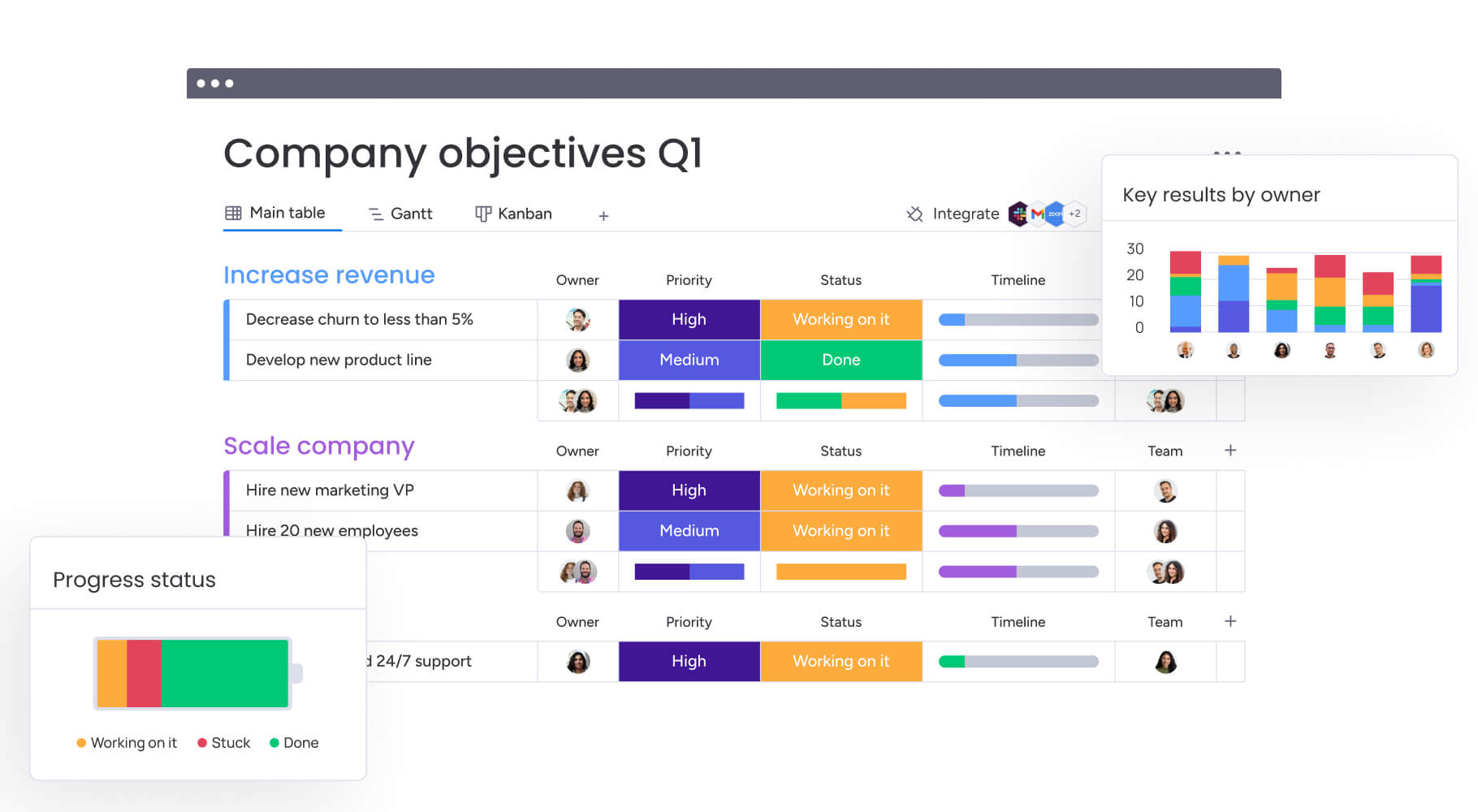
Power both thinking modes with monday work management
You need one platform that supports the entire thinking cycle. One that connects exploration to action without the friction of switching between tools. With monday work management, the seamless integration keeps momentum going as your team switches between modes.
Visual collaboration for divergent phases
Visual and collaborative features make it easier for everyone to jump into creative exploration. Visual boards make ideas tangible and work for different thinking styles.
Divergent thinking capabilities include:
- Visual project boards: flexible layouts like Kanban and Whiteboards accommodate brainstorming and idea organization.
- Real-time collaboration: multiple team members contribute simultaneously during ideation sessions.
- Custom workflows: adaptable processes support different types of creative exploration.
- Integration capabilities: connect with creative and research tools teams already use.
Automated workflows for convergent execution
Automation handles the routine stuff so teams can focus on analysis and decisions. Workflows keep evaluation and execution consistent.
Convergent thinking capabilities include:
- Automated routing: processes move decisions through evaluation stages automatically.
- Data-driven dashboards: real-time insights support analytical decision-making.
- Resource management views: visibility into capacity and allocation enables optimization decisions.
- Progress tracking: automated monitoring identifies execution bottlenecks requiring attention.
AI capabilities that enhance team thinking
AI in monday work management boosts human thinking, but doesn’t replace it. Teams process more data during exploration and make sharper decisions during execution.
AI-powered thinking support includes:
- AI blocks for divergent thinking: features like “Categorize,” “Summarize,” and “Suggest action items” help teams organize brainstorming chaos into structured themes.
- Product Power-ups for convergent thinking: capabilities like Portfolio Risk Insights and Resource Management provide analytical depth for complex decisions.
- Digital Workforce integration: project Analyzer and other Digital Workers provide ongoing thinking support as always-on analysts.

“monday.com has been a life-changer. It gives us transparency, accountability, and a centralized place to manage projects across the globe".
Kendra Seier | Project Manager
“monday.com is the link that holds our business together — connecting our support office and stores with the visibility to move fast, stay consistent, and understand the impact on revenue.”
Duncan McHugh | Chief Operations OfficerTransform your team's thinking effectiveness
Balance both modes and your team will tackle challenges with greater creativity and deliver more impactful results. Organizations that build this capability see faster innovation cycles, better decision quality, and stronger execution across all departments.
The key lies in recognizing that both thinking modes are essential, not competing approaches. Teams need the creative exploration of divergent thinking to discover breakthrough solutions and the analytical rigor of convergent thinking to turn those ideas into reality.
Start by assessing your team’s current thinking patterns. Are you stuck in endless brainstorming without decisions, or rushing to solutions without proper exploration? Use the framework and signals outlined here to identify where adjustments will create the biggest impact on your team’s performance.
Frequently asked questions
What is the main difference between convergent and divergent thinking?
The main difference between convergent and divergent thinking lies in their purpose and approach. Divergent thinking generates multiple unique ideas and possibilities to explore a problem space, while convergent thinking evaluates those options to select the single best solution for implementation.
Can someone excel at both convergent and divergent thinking?
Yes, individuals can develop proficiency in both convergent and divergent thinking. While most people have a natural inclination toward one mode, skills in both areas can be developed through practice and awareness.
What is an example of divergent and convergent thinking?
Divergent thinking forms the cognitive foundation of creativity through open-ended exploration and idea association. However, true creative problem-solving requires both divergent thinking for idea generation and convergent thinking to refine those ideas into practical solutions.
Which thinking mode works best for problem solving?
Effective problem-solving requires both modes working in sequence. Divergent thinking ensures all possibilities are considered, while convergent thinking selects and implements the best solution based on the specific problem complexity and time constraints.
How can leaders encourage both thinking styles on their teams?
Leaders encourage balance by creating psychological safety for risk-free divergent exploration while establishing decision-making frameworks for effective convergent action. This dual approach ensures teams can explore creatively and execute efficiently.
When should teams switch from divergent to convergent thinking?
Teams should transition to convergent thinking when they've generated sufficient options to evaluate, when decision deadlines approach, when resource constraints tighten, or when further ideation yields diminishing returns.

 Get started