


You spend weeks crafting the perfect consulting proposal, researching the client, customizing every section, and presenting a compelling case for why you’re the right choice. Then you wait, and the follow-up emails start feeling increasingly awkward, until eventually you get the dreaded “we’ve decided to go with another consultant” response.
Your consulting proposal template is often what separates wins from losses. A well-structured proposal doesn’t just list your services. It connects your expertise directly to the client’s specific challenges in a way that makes your solution feel inevitable. It builds trust, proves value, and walks decision-makers toward a yes that feels natural.
The following sections cover the eight essential components every winning proposal needs, plus free templates for different consulting specialties. You’ll also learn how to write executive summaries that actually close deals and discover how the right work platform can transform your accepted proposals into trackable, profitable projects that deliver exactly what you promised.
Key takeaways
- Structure proposals around client psychology, not consultant convenience: Address both rational ROI needs and emotional security concerns by proving you understand their specific challenges and can deliver certainty.
- Include eight essential components in every proposal: Executive summary, problem statement, methodology, deliverables, team qualifications, pricing, terms, and acceptance path work together to build trust and drive decisions.
- Write executive summaries that function as standalone sales documents: Start with the client’s success story, quantify the cost of inaction, and create legitimate urgency without artificial pressure tactics.
- Bridge proposals to execution with a Work OS: Convert accepted proposals directly into trackable project boards with monday work management, monitor scope against original agreements, and collaborate with clients in real-time for transparent delivery.
- Customize templates for each industry while maintaining core structure: Use consistent frameworks but adapt language, case studies, and deliverables to reflect specific industry terminology and pain points.
What makes a winning consulting proposal template
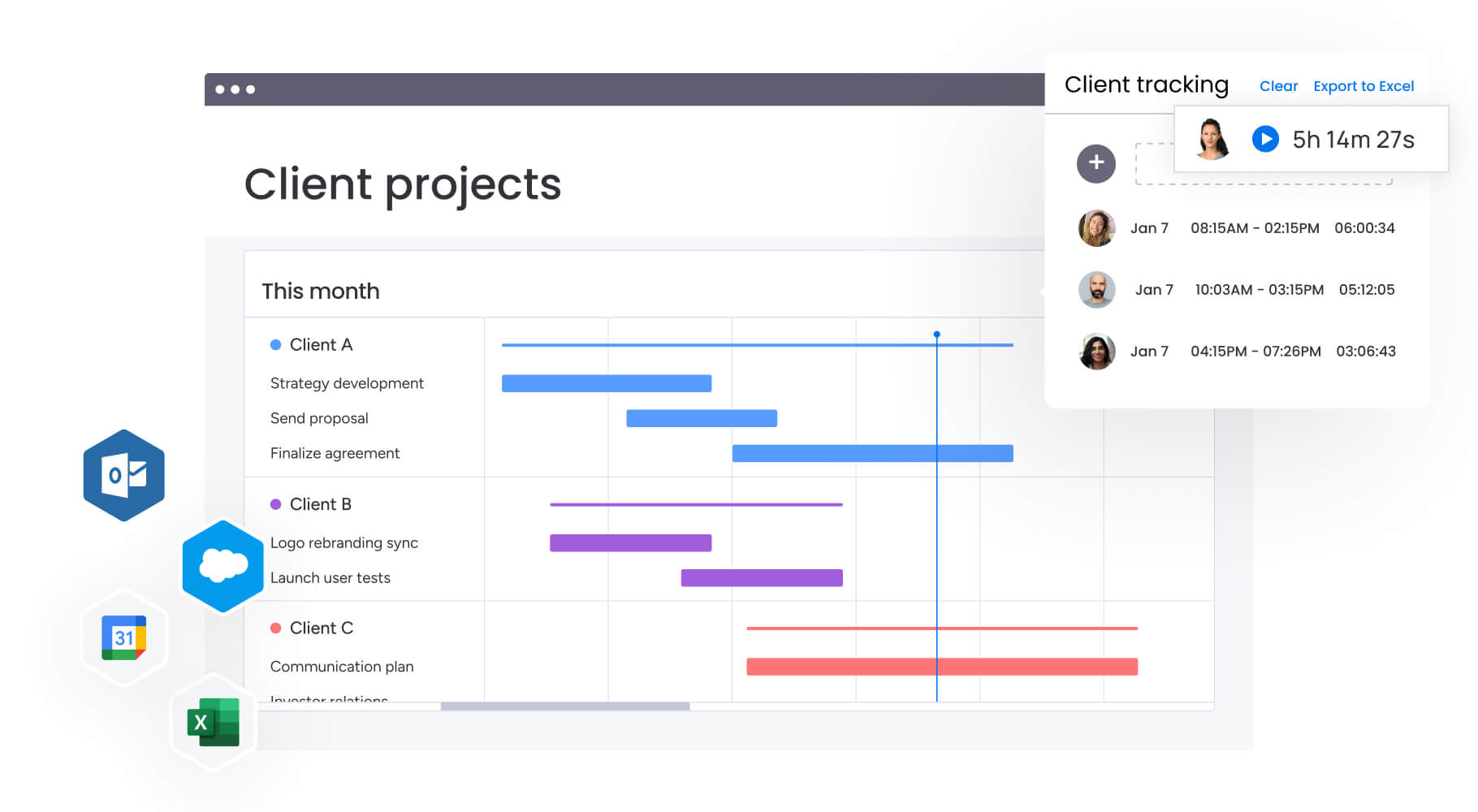
Winning proposals connect your expertise to what keeps your client up at night. It’s a roadmap that proves you understand their problem and know exactly how to solve it.
Success comes down to three things, including understanding what the client actually needs, a structure that guides their decision, and customization that proves you know their world.
Understanding the psychology of proposal success
Clients don’t buy deliverables, but certainty and outcomes. The decision to hire a consultant carries professional risk for the stakeholder making that choice — in fact, eight in ten B2B decision-makers say they will actively look for a new vendor if performance guarantees aren’t offered.
Successful proposals speak to ROI and to the emotional need for security. Your proposal validates the client’s problem by proving you understand their specific situation. Trust comes from proving competence in their specific context, not listing generic credentials.
Key elements that convert prospects to clients
High-converting proposals share a common structure that guides readers toward a clear decision. These elements help you build proposals that speak directly to what decision-makers care about most.
The most effective proposals include these critical components:
- Problem articulation: A concise restatement of the challenge that confirms alignment and demonstrates active listening.
- Quantified outcomes: Metrics that define success, shifting the conversation from cost to value.
- Structured methodology: A visual or step-by-step explanation of how work gets done, removing uncertainty about the engagement.
- Transparent pricing: Investment options that are easy to understand and directly tied to delivered value.
Why traditional templates fall short
Generic templates fail because they’re built for consultant convenience, not client context. A template that looks the same for a financial audit and a creative rebrand tells clients you’re not specialized.
Keep your structure consistent for efficiency, but make the content framework flexible enough for industry-specific details. Rigid templates force unique client problems into generic solutions. Effective frameworks give you a foundation to build tailored solutions.
Success comes down to three things, including understanding what the client actually needs, a structure that guides their decision, and customization that proves you know their world.
8 essential components every consulting proposal must include
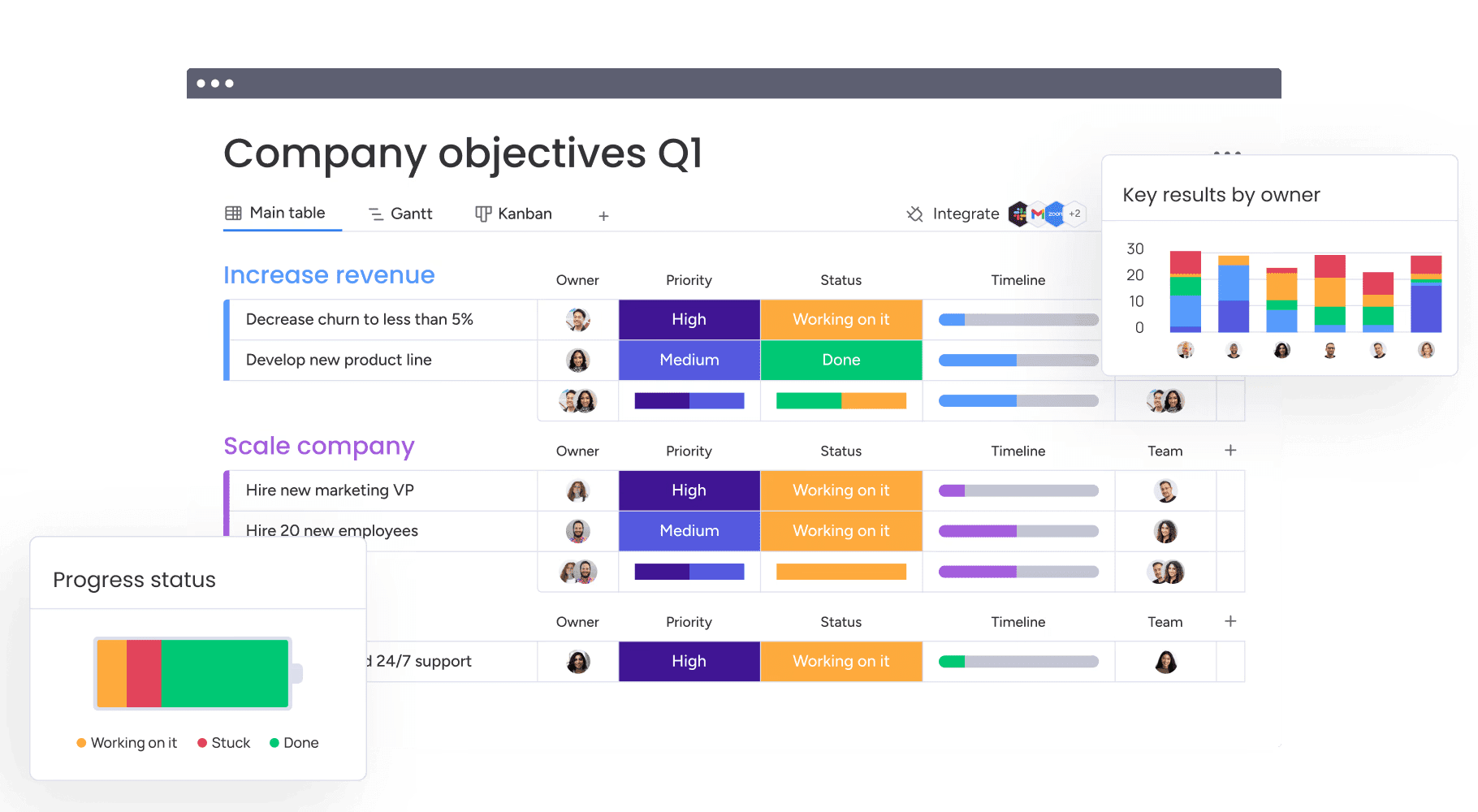
A solid proposal framework covers every critical aspect of the engagement, protecting both you and your client. These eight components build a case for your value, capability, and reliability. Each element builds trust and proves you can deliver results.
1. Executive summary that sells your vision
The executive summary is a standalone document for senior decision-makers who may never read the full proposal. It captures the entire engagement in one page and communicates value immediately.
Your executive summary needs four key elements:
- The hook: Immediately addresses the client’s most pressing pain point.
- The solution: Briefly outlines the proposed strategic approach.
- The outcome: Highlights projected ROI or business impact.
- The ask: States the investment required and timeline for results.
2. Problem statement and business objectives
This section reflects the client’s reality in their own words. Problem statement development goes beyond surface symptoms to diagnose root causes. It goes beyond surface symptoms to diagnose root causes. Using the client’s own terminology and industry language proves you know their world.
From there, link the consulting engagement explicitly to broader organizational goals like revenue growth, operational efficiency, or risk mitigation. This positions the project as essential, not optional.
3. Proposed solution and methodology
This section details exactly how you’ll solve the problem. Breaking down complex methodologies into digestible project phases helps clients understand what they’re investing in and reduces uncertainty about the engagement process.
A typical methodology structure includes:
- Phase one: Discovery and assessment: Gathering data and establishing baselines.
- Phase two: Strategy and planning: Developing the roadmap.
- Phase three: Execution and implementation: Doing the work.
- Phase four: Review and optimization: Ensuring long-term success.
4. Detailed deliverables and timeline
Ambiguity in deliverables is the primary cause of scope creep — McKinsey’s review of 300+ billion‑dollar megaprojects found average cost overruns of ~80% and schedule delays of ~50%. List exactly what the client will receive: an audit report PDF, a Python codebase, a three-day workshop.
Beyond that, a realistic timeline, visualized as a Gantt chart or high-level roadmap, sets expectations for pacing and key milestones. Organizations using monday work management can visualize project timelines with Gantt charts that track scope, schedule, project milestones, and dependencies at any level.
5. Team expertise and qualifications
Trust doesn’t come from the firm, but from the specific people delivering the work. Highlight relevant experience, not just general bios.
Focus on why this team is uniquely qualified to solve this problem. Short case studies or similar project references reinforce capability without bloating the document.
6. Investment and payment structure
Present pricing with tiered options so clients feel in control. Link the fee structure back to deliverables. The table below shows how to structure pricing tiers effectively, with each option building on the previous one to give clients clear choices that match their needs and budget:
| Option | Scope | Value proposition |
|---|---|---|
| Option 1 | Basic compliance and execution | Core deliverables with standard support |
| Option 2 | Strategic partnership and implementation | Enhanced collaboration and advisory services |
| Option 3 | Full transformation and ongoing support | Comprehensive engagement with long-term partnership |
7. Terms, assumptions, and risk mitigation
Part of being professional is defining boundaries. This section outlines what’s out of scope just as clearly as what’s in scope.
List dependencies, such as “Client must provide data access by Day five,” and standard legal terms regarding IP ownership, confidentiality, and termination. This prevents friction later in the engagement.
8. A path to acceptance
Finally, the conclusion makes it easy to say yes. Give them a clear next step: a digital signature, a deposit, or a link to schedule the kickoff.
A simplified acceptance page lets the client sign immediately while they’re still engaged.
8 free consulting proposal templates to win more work
Different consulting niches need different proposal structures to address their unique buyers and project types. The following eight categories cover most professional services, and each template speaks the language of its audience while keeping the core elements that close deals.
1. Management consulting proposal template
Specifically built for C-suite audiences, this template focuses on transformation and strategy. Beyond that, it emphasizes methodology, change management, and long-term ROI.
The structure prioritizes alignment and impact over technical details.
2. IT consulting proposal template
Built for CIOs and technical leads, this template focuses on specifications, security, and integration. In particular, it includes detailed sections for technical architecture, security compliance, and implementation roadmaps.
Risk mitigation around data migration and downtime is central.
3. Marketing consulting proposal template
This template speaks CMO language: growth, reach, and conversion. To achieve this, it relies heavily on visual elements and campaign timelines.
Key sections include target audience analysis, channel strategy, and performance KPIs. Additionally, the investment section often ties fees to ad spend or performance metrics.
4. HR consulting proposal template
Built for people and culture work, this template addresses sensitive topics like talent acquisition, retention, and compliance. It emphasizes confidentiality and people-focused methodologies.
Typically, deliverables often include employee handbooks, training modules, and cultural assessment reports.
5. Strategy consulting proposal template
Designed for market entry or competitive positioning, this template relies on data and research. Specifically, it highlights market analysis, competitive landscape, and scenario planning.
The tone is analytical and forward-looking, focusing on future market share and competitive edge.
6. Business operations consulting template
This template targets COOs and focuses on efficiency and more streamlined processes. It utilizes current state versus future state comparisons and process mapping.
Ultimately, the value comes from cost reduction, speed, and fewer errors.
7. Financial advisory proposal template
Professional and compliance-focused, this template addresses CFO concerns. In particular, it focuses on risk assessment, regulatory compliance, and financial modeling.
Trust and fiduciary responsibility run through the team qualifications and methodology.
8. Digital transformation proposal template
Uniquely, a hybrid of IT and management consulting, this template covers how new technologies change business models. It balances technical details with user adoption and change management, because technology fails without people.
The structure prioritizes alignment and impact over technical details.
How to write an executive summary that closes deals
The executive summary is your most important section. It needs to work as a standalone sales argument for stakeholders who may never read the full technical scope. This section decides whether your proposal moves forward or gets filed away.
Step 1: start with their success story
The opening paragraph skips consultant history and jumps straight to the client’s future. Therefore, paint a vivid picture of what the organization looks like after the project succeeds.
This grounds the reader in a positive outcome before you discuss the work required. What would your client’s organization look like with efficiencies gained, revenue captured, or risks eliminated?
Step 2: quantify the opportunity cost
Inaction kills more consulting proposals than anything else; consequently, you must calculate the cost of the status quo. By putting a dollar amount on the problem, the proposal creates financial urgency.
In turn, this allows you to reframe the conversation from spending money on a consultant to investing to stop losing money.
Step 3: create urgency without pressure
Real urgency drives decisions, but it must feel authentic. Instead of using artificial sales deadlines, highlight external factors that demand speed, such as market shifts, regulatory deadlines, or seasonal opportunities.
Furthermore, you should outline a “cost of delay” timeline, showing exactly how pushing the start date postpones the realization of these critical benefits.
Bridge proposals and profitable projects with monday work management

The transition from signed proposal to active project is where most teams lose momentum. Data gets trapped in PDFs, and project setup becomes a manual headache. monday work management acts as the monday Work OS that connects the entire lifecycle, turning a static proposal into a trackable project workflow.
Traditional approaches compare to monday work management like this:
| Aspect | Traditional approach | monday work management |
|---|---|---|
| Transition | Manual recreation of items from PDF to spreadsheet | Instant conversion of proposal scope to project boards |
| Resourcing | Guesswork based on email chains | Workload View visualizes capacity across the team |
| Visibility | Static weekly status reports | Real-time dashboards showing live progress and budget |
| Collaboration | Fragmented email threads and file attachments | Contextual communication directly on items |
| Client access | Limited visibility, creating anxiety | Guest access for controlled, transparent collaboration |
Convert accepted proposals to live projects instantly
When a proposal is accepted, the scope becomes actionable items. Proposal templates on monday work management become the foundation for project boards, so you can start executing immediately.
Deliverables from the scope section automatically turn into items with owners, deadlines, and dependencies.
Track deliverables against original scope
Scope creep kills profitability. By managing the project where the proposal was built, consultants keep a clear line between what was sold and what’s being delivered.
The platform also tracks deliverables against the initial agreement and flags potential overages before they hurt margins.
Manage changes and additional requests
Change happens. Unmanaged change costs money, so monday work management gives you a standard process for change requests.
WorkForms by monday captures new client requests, routes them for approval, and if approved, automatically adds them to the project scope with budget adjustments. Furthermore, this creates a clear audit trail of all scope modifications.
Monitor project health and profitability
Consultants need to see portfolio health in real time, because delayed insights lead to delayed interventions. Dashboards pull data from multiple client projects, showing timeline progress, budget spend, and resource use.
This lets leadership spot at-risk projects early and step in before problems escalate.
Collaborate with clients in real time
Transparency creates trust. Instead of static email updates, clients are invited as guests to specific project boards or view-only dashboards.
They can see progress on deliverables, approve assets, and communicate directly within the platform. Furthermore, this centralized collaboration eliminates the confusion that comes from scattered email threads and version control issues.

“monday.com has been a life-changer. It gives us transparency, accountability, and a centralized place to manage projects across the globe".
Kendra Seier | Project Manager
“monday.com is the link that holds our business together — connecting our support office and stores with the visibility to move fast, stay consistent, and understand the impact on revenue.”
Duncan McHugh | Chief Operations OfficerBuild winning proposals that drive profitable consulting engagements
A well-structured proposal template serves as the foundation for consistent client acquisition and project success. The eight essential components create a framework that addresses client psychology while demonstrating your expertise and methodology.
Remember that templates provide structure, but customization drives results. Each proposal must speak directly to the client’s industry, challenges, and objectives. The executive summary remains your most powerful sales asset, requiring careful attention to success visualization, opportunity cost, and legitimate urgency.
monday work management bridges the gap between proposal acceptance and project execution, ensuring that the promises made in your proposal translate into trackable, profitable engagements. This unified approach eliminates the friction that often derails consulting projects in their early stages.
Frequently asked questions
How long should a consulting proposal be?
A consulting proposal should be as concise as possible while covering all essential components, typically ranging from five to ten pages depending on project complexity. Focus on quality over quantity, ensuring every section adds value to the decision-making process.
When should I send a consulting proposal?
Send proposals only after a discovery meeting has occurred and the client has verbally expressed interest in a solution. This ensures the document confirms a conversation rather than starting one, significantly increasing your chances of acceptance.
Should I include pricing in my initial proposal?
Yes, pricing should always be included to qualify the lead and ensure budget alignment. Providing tiered options helps prevent immediate rejection based on cost alone and gives clients a sense of control over their investment level.
What file format is Use case consulting proposals?
PDF is the standard format to ensure design consistency and prevent unauthorized editing. Web-based proposal links are becoming increasingly popular for tracking analytics and enabling easier sharing among stakeholders.
How quickly should I follow up after sending a proposal?
Follow up within 2-3 business days if no response is received. This confirms receipt and offers to answer any immediate questions while the proposal is still fresh in the client's mind.
Can I use the same template for different industries?
While the core structure can remain the same, the language, case studies, and specific deliverables must be customized to reflect the unique terminology and pain points of each industry. Generic proposals signal lack of specialized expertise and reduce conversion rates.

 Get started