

A major digital transformation initiative has been approved at the executive level. Marketing plans to enter three new markets, operations aims to automate the supply chain, and IT is implementing new systems across every department. Each function has detailed plans, dedicated budgets, and aggressive timelines. Six months later, reports show activity, yet progress often appears disconnected from broader organizational goals.
This gap arises because projects are frequently treated as isolated deliverables rather than as drivers of business outcomes. Business project management addresses this by linking every project to measurable business results—revenue growth, cost reduction, or faster decision-making. It ensures that marketing expansions drive revenue, supply chain automation reduces costs, and IT rollouts accelerate enterprise-wide decisions.
This guide explains how business project management operates in practice, contrasts it with traditional project management, and outlines frameworks that convert strategic vision into measurable outcomes. It also examines the types of business projects organizations typically run, the skills required to lead cross-functional teams, and the processes needed to coordinate complex work across departments.
Key takeaways
- Align projects with business strategy: ensure every initiative directly supports organizational goals and measures success through business impact rather than task completion.
- Differentiate projects from operations: focus on change-driven, temporary projects that create new capabilities, while operational work maintains stability and ongoing processes.
- Use structured frameworks to bridge strategy and execution: follow a defined lifecycle from initiation through closure to transform vision into measurable outcomes.
- Develop cross-functional leadership and stakeholder management skills: coordinate diverse teams, resolve conflicts, and maintain alignment across departments for effective execution.
- Leverage work management platforms like monday: centralize project data, track performance metrics, and provide visibility across teams to connect daily work to strategic objectives.
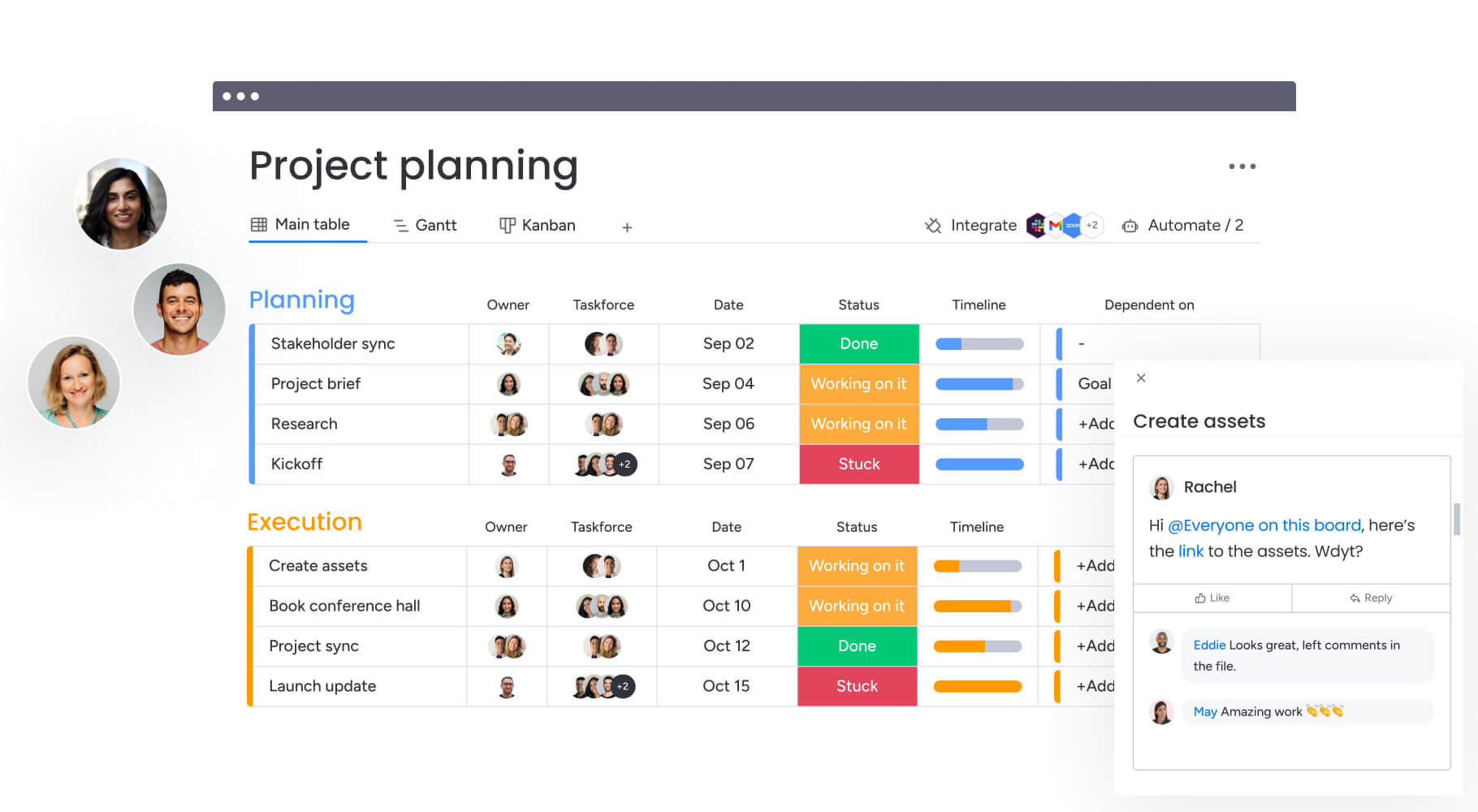
Business project management is the practice of planning, executing, and tracking projects that drive measurable business outcomes. Unlike technical project management, which focuses on specifications and deadlines, business project management emphasizes creating value while staying aligned with the organization’s strategic objectives.
It connects executive goals with the daily work of teams. Each project links to a broader business outcome — such as market expansion, operational efficiency, or enhanced customer experience. Modern platforms like monday work management help teams turn structured plans into adaptable workflows that respond to evolving business needs. Roughly 90% of U.S. small and midsize merchants now report using integrated software vendor solutions for payments or business management—up from 48% in 2022 — underscoring how work is increasingly run on integrated platforms rather than siloed applications.
Defining business project management in modern organizations
Projects today rarely operate in isolation. Marketing, sales, IT, and operations workflows intersect constantly, requiring coordination between high-level strategy and operational execution. International bandwidth is now four times larger than before the COVID‑19 pandemic, demonstrating how cross-border data flows and digital collaboration have expanded markedly, increasing the coordination load on cross-functional projects.
Success requires aligning stakeholders and coordinating resources across departments. Modern project managers focus on strategy, not just schedules, ensuring that completing a project on time also generates meaningful business value. Many projects fail despite meeting deadlines because they do not align with broader business goals — a gap that business project management is designed to close.
Core elements that drive business project success
High-impact projects share characteristics that distinguish them from routine work:
- Strategic alignment: every initiative connects to company goals, so resources focus where they matter most.
- Stakeholder engagement: leaders from multiple departments stay involved, helping decisions stick and roadblocks disappear.
- Resource optimization: talent and budget allocation reflects business priority rather than availability.
- Value measurement: success is tracked through business metrics, such as ROI and market share, rather than task completion alone.
- Risk management: risks are assessed in terms of business impact, like delayed market entry, not just project-level issues.
Business project management vs. operational work
Understanding the distinction between business projects and operational work ensures the right approach for each:
| Feature | Business projects | Operational work |
|---|---|---|
| Purpose | Create change, value, or new capabilities | Maintain stability and sustain current value |
| Timeline | Temporary with defined start and end | Ongoing and continuous |
| Scope | Unique deliverables and specific outcomes | Repetitive processes and standard outputs |
| Success metrics | Strategic impact, ROI, adoption | Efficiency, SLA adherence, uptime |
Business project management vs. traditional project management
Traditional project management focuses on time, budget, and scope. Business project management goes further by measuring the value created and aligning projects with strategic goals.
Scope and strategic alignment
Business project management evaluates work at the portfolio level, connecting each project to long-term growth objectives. Launching a new product line links directly to the company’s expansion strategy. Traditional project management might only track task completion, such as updating documentation, without assessing its impact on business outcomes.
Stakeholder dynamics
A stakeholder map includes executives, external partners, regulators, and customers. Decisions are reached through cross-functional negotiation and consensus rather than top-down direction, requiring transparency across all groups.
Success metrics that matter
Success shifts from “did we finish?” to “did we improve the business?” Here’s how that changes the way teams measure progress and report results:
| Metric type | Traditional PM | Business PM |
|---|---|---|
| Primary focus | Output (deliverables) | Outcome (value) |
| Time metric | On-schedule delivery | Time-to-market speed |
| Budget metric | Variance to budget | Return on investment |
| Quality metric | Defect rate | Customer satisfaction score |

Each project type requires a tailored approach to risk, speed, and stakeholder involvement. Understanding the project type helps teams select the right governance, allocate resources efficiently, and navigate challenges effectively. Each type has unique success factors that influence planning and execution.
1. Strategic transformation initiatives
These are high-stakes, large-scale efforts that reshape how an organization operates or competes. Projects such as digital transformation, mergers and acquisitions, or business model pivots typically span six to 24 months and involve significant C-suite engagement.
Success measures include:
- Revenue growth: achieving measurable increases in top-line performance.
- Market share expansion: capturing new customers or segments.
- Operational efficiency gains: streamlining processes to improve productivity.
These initiatives require tight cross-department coordination and often extensive change management to succeed.
2. Operational excellence projects
These initiatives focus on improving core operations and delivering more with fewer resources. Examples include supply chain optimization, accounts payable automation, or Six Sigma quality programs.
Key challenges include:
- Process interdependence: improving one area without disrupting another.
- Cross-department alignment: coordinating complex workflows across teams.
Modern platforms like monday work management enable shared visibility across departments through customizable boards and real-time dashboards, supporting efficient execution.
3. Compliance and regulatory programs
These projects are driven by external mandates and have fixed requirements that cannot be negotiated. Common examples include GDPR implementation, SOX audits, and ISO certification.
Primary focus areas include:
- Meticulous documentation: ensuring records meet audit standards.
- Clear audit trails: maintaining transparency of actions and decisions.
- Strict adherence to timelines: avoiding penalties or operational disruptions.
Failure in these programs can directly impact business continuity, making risk mitigation the top priority.
4. Digital innovation projects
These initiatives create new capabilities or enhance customer experiences. Examples include launching customer portals, implementing AI for support, or developing mobile applications.
Success depends on:
- User adoption: ensuring employees and customers embrace the new technology.
- Business enablement: aligning tools with organizational objectives.
Collaboration between technical teams and business stakeholders is critical, and platforms that provide a shared language for coordination improve efficiency.
5. Cross-departmental integration
These projects aim to break down silos and unify workflows. Initiatives such as creating shared service centers, integrating customer data across sales and support, or consolidating reporting systems present unique challenges.
Focus areas include:
- Stakeholder coordination: managing conflicting priorities across functional areas.
- Unified visibility: providing a single source of truth for teams to act on shared data.
Modern platforms like monday work management bring these elements together, creating an environment where teams can collaborate effectively and maintain alignment.
Try monday work management
Certain foundational blocks ensure stability and success across industries and project types. These elements transform chaotic activity into structured business processes. Understanding and implementing them creates a framework for consistent project delivery and measurable business value.
Strategic goal alignment
Every project begins with a clear line of sight to strategic objectives. The alignment framework involves:
- Identifying top-level organizational goals: start with what the business wants to achieve.
- Mapping project outcomes to goals: define how this project contributes.
- Establishing success criteria upfront: set measurable targets before work begins.
Teams using monday work management connect work to business goals through features that track progress toward strategic objectives, ensuring alignment and productivity at every level.
Resource planning and optimization
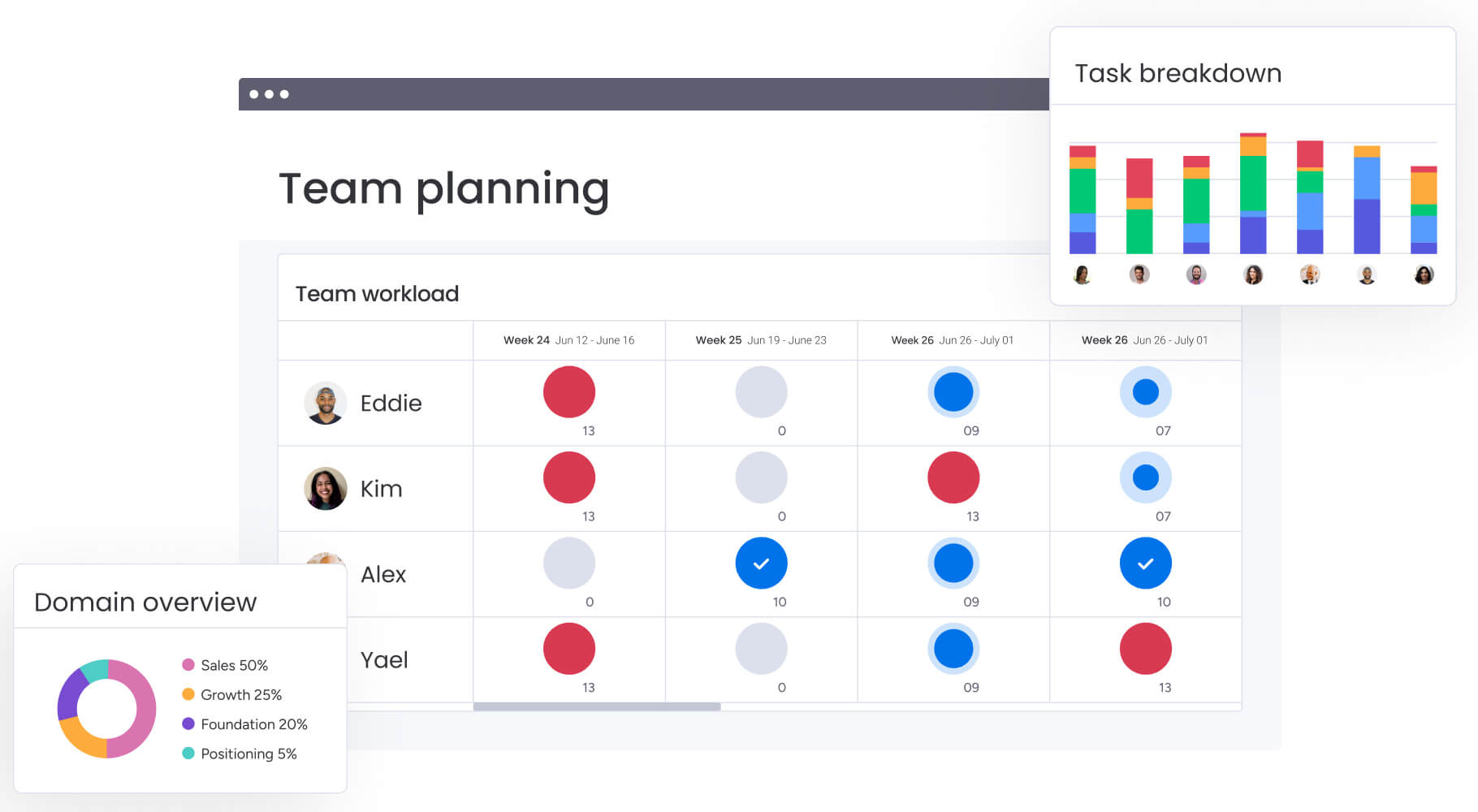
Capacity planning ensures the right people work on the right initiatives at the right time. This involves skill mapping, budget allocation, and prioritization based on strategic importance. Aligning resources with organizational priorities helps ensure teams focus on what drives the most value.
Effective planning prevents bottlenecks where high-priority projectsstall because key experts are engaged in low-impact work. Modern platforms like monday work management provide visibility into resource utilization across the entire portfolio, enabling managers to balance workloads and adapt to changing priorities efficiently.
Risk management frameworks
Proactive business protection requires addressing multiple categories of risk:
- Market risks: competitor activity or economic shifts mitigated by agile planning cycles.
- Stakeholder risks: resistance to change mitigated through early engagement and clear communication.
- Resource risks: loss of key personnel or budget reductions mitigated by cross-training and contingency planning.
Performance measurement systems
Tracking project health and business impact ensures progress is visible and measurable. Leading indicators monitor project performance, while lagging indicators capture the resulting business value.
Dashboards on monday work management provide real-time insights into budgets, goals, schedules, and resources, replacing static reports with live, actionable data.
What business project managers actually do
Business project managers orchestrate strategy and execution. Their role emphasizes leadership and coordination rather than chart updates or administrative tasks. They serve as the bridge between strategic objectives and tactical delivery, ensuring projects generate measurable business outcomes.
Day-to-day responsibilities
Business project managers handle activities that maintain momentum and alignment:
- Stakeholder communication: translating project status into business relevance for executives.
- Progress monitoring: tracking milestones against the strategic roadmap.
- Issue resolution: removing blockers that impede cross-functional collaboration.
- Resource coordination: negotiating with functional managers to ensure team availability.
- Strategic alignment: ensuring scope changes do not drift from the business case.
Stakeholder coordination
Success requires navigating diverse priorities and personalities. Effective managers establish regular communication rhythms, including weekly standups for core teams and monthly steering committees for executives. Conflict resolution focuses on shared organizational goals rather than departmental interests, ensuring decisions benefit the business as a whole.
Strategic decision-making
Business project managers steward organizational resources and advise on project direction, resource allocation, and priority adjustments. They balance constraints with flexibility to seize new opportunities and determine when plans should adapt to emerging market conditions.
The 5-step process for managing business projects
Each project type demands a tailored approach to risk, speed, and stakeholder involvement. Understanding the type of project helps teams select appropriate governance, allocate resources effectively, and navigate challenges efficiently. Unique success factors guide planning and execution throughout the project lifecycle.
Step 1: Project initiation and business case
Projects begin with a business case that defines ROI, identifies stakeholders, and secures executive sponsorship. A project charter clarifies success in business terms, ensuring alignment on objectives before work begins.
Step 2: Planning and resource mapping
Planning translates vision into a concrete roadmap, involving:
- Allocating budget: assigning funds according to strategic priorities.
- Securing human resources: ensuring the right people are available when needed.
- Defining communication strategy: establishing clear information flow among stakeholders.
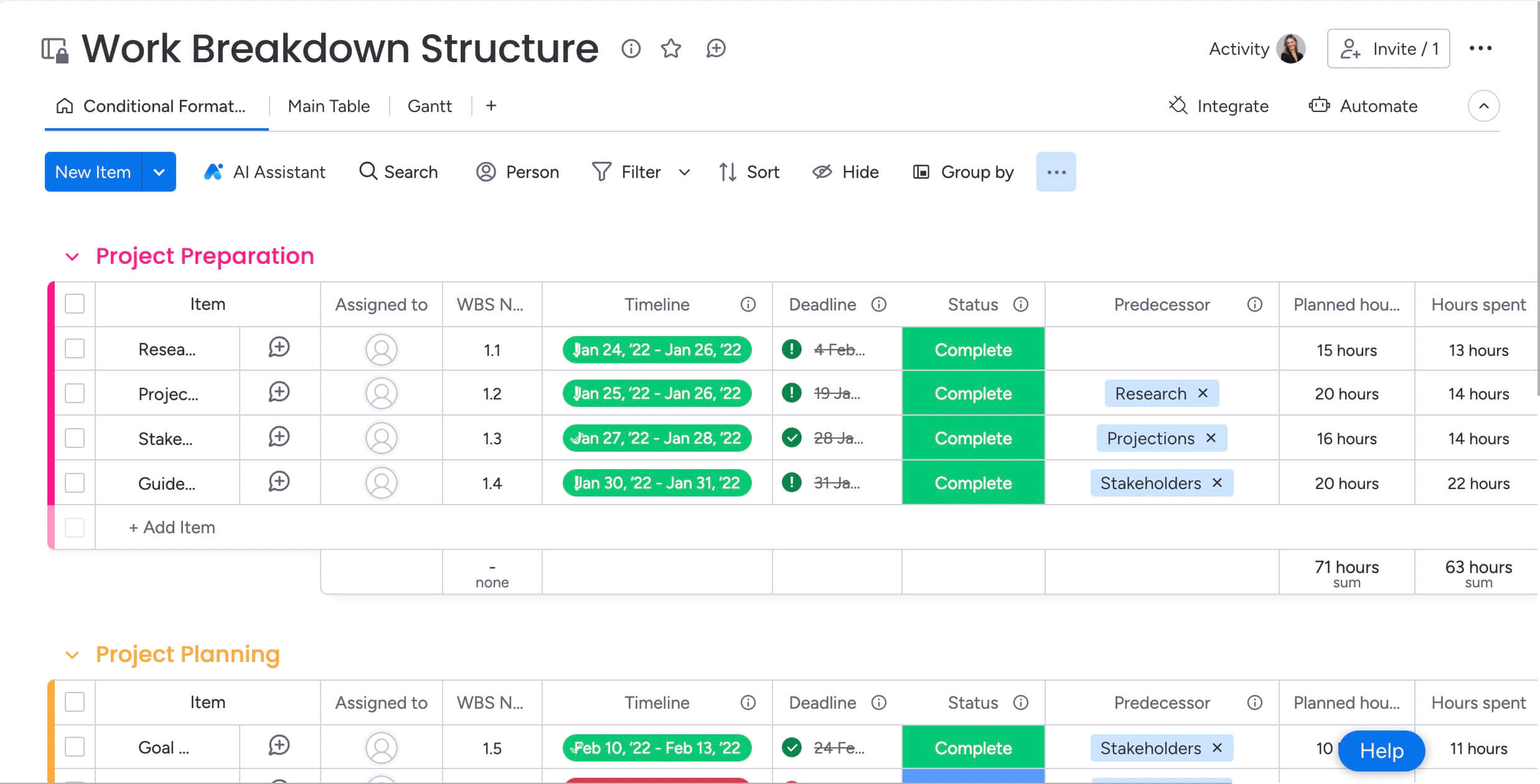
Teams using monday work management benefit from collaborative planning through Gantt charts that track scope, schedules, milestones, and dependencies.
Step 3: Execution and team leadership
Execution focuses on momentum and alignment. Leaders motivate teams, manage interdepartmental dependencies, and keep stakeholders informed. Effective leadership involves removing obstacles to ensure teams deliver maximum value.
Step 4: Monitoring and performance control
Continuous monitoring keeps projects on track and aligned with business objectives:
- Tracking KPIs: measuring progress against defined goals.
- Managing budget burn rates: ensuring financial resources are used efficiently.
- Adjusting plans: responding to reality while maintaining strategic alignment.
Transparent reporting reduces surprises and allows early course correction before issues escalate.
Step 5: Project closure and knowledge transfer
Closure involves more than archiving files. Teams document lessons learned, hand off deliverables to operational teams, and communicate the final business impact to stakeholders. This phase confirms ROI and strengthens organizational knowledge.
Try monday work managementWhich departments benefit from business project management?
Business project management principles apply organization-wide. Each department leverages these frameworks to address unique challenges while maintaining consistent practices. Understanding departmental applications helps organizations implement cohesive, effective project management.
Operations and supply chain
Operations teams drive efficiency through initiatives such as supply chain digitization, warehouse automation, or vendor management system deployment. Modern platforms like monday work management help streamline operational planning and execution, supporting continuity and reliability.
Human resources and organizational development
HR projects shape workforce and culture, including performance management system rollouts, diversity initiatives, and remote work policies. Success relies on sensitive communication and structured change management across the organization.
Finance and strategic planning
Finance teams manage enterprise operations through ERP deployments, financial reporting automation, and budget process redesign. Effective cross-functional coordination ensures data integrity and system integration.
Marketing and customer success
Marketing projects drive growth through global brand refreshes, customer portal launches, or geographic market expansions. These initiatives often involve external agencies, tight timelines, and deliverables that directly affect revenue.
Information technology and digital services
IT projects enable business functionality and innovation. Deployments such as digital transformations, analytics platforms, and customer app rollouts are measured by adoption rates and business enablement.
7 critical skills for business project management excellence
Effective business project managers combine strategic insight with interpersonal skills. These capabilities distinguish them from purely technical managers. Developing these competencies enables project leaders to drive meaningful business outcomes while strengthening stakeholder relationships.
1. Strategic business thinking
Seeing the big picture involves understanding market dynamics and how projects advance organizational goals. This skill enables decisions that prioritize long-term value over short-term convenience.
2. Cross-functional leadership
Leading without authority in matrixed organizations requires influencing peers and leaders across departments. Building trust and consensus ensures momentum and drives progress efficiently.
3. Data-driven decision making
Data provides clarity beyond intuition. This skill involves:
- Interpreting business metrics: analyzing trends to guide strategy.
- Analyzing project KPIs: monitoring performance against objectives.
- Balancing quantitative and qualitative input: combining metrics with stakeholder feedback for informed decisions.
4. Stakeholder communication
Tailoring messages ensures engagement at all levels. Executives need concise summaries, while teams require detailed instructions. Effective communication delivers the right information to the right people at the right time.
5. Risk assessment and mitigation
Proactive planning protects the business. This involves identifying potential threats such as budget reductions or market shifts and maintaining contingency plans. Strong risk management transforms uncertainty into a competitive advantage.
6. Technology and automation fluency
Project managers must understand the platforms powering their work. They leverage automations for repetitive tasks and gain insights through dashboards. Understanding workflow configuration improves efficiency without requiring coding expertise.
7. Organizational change management
Projects ultimately change how people work. This skill includes:
- Managing resistance: addressing concerns and easing transitions.
- Fostering adoption: ensuring teams embrace new processes.
- Aligning culture: embedding practices that support new operating methods.
How AI revolutionizes business project management
Artificial intelligence enhances human decision-making, shifting project managers from data gatherers to strategic advisors. AI enables teams to identify risks, allocate resources, and generate insights, making project leadership more proactive and strategic.
Predictive risk intelligence
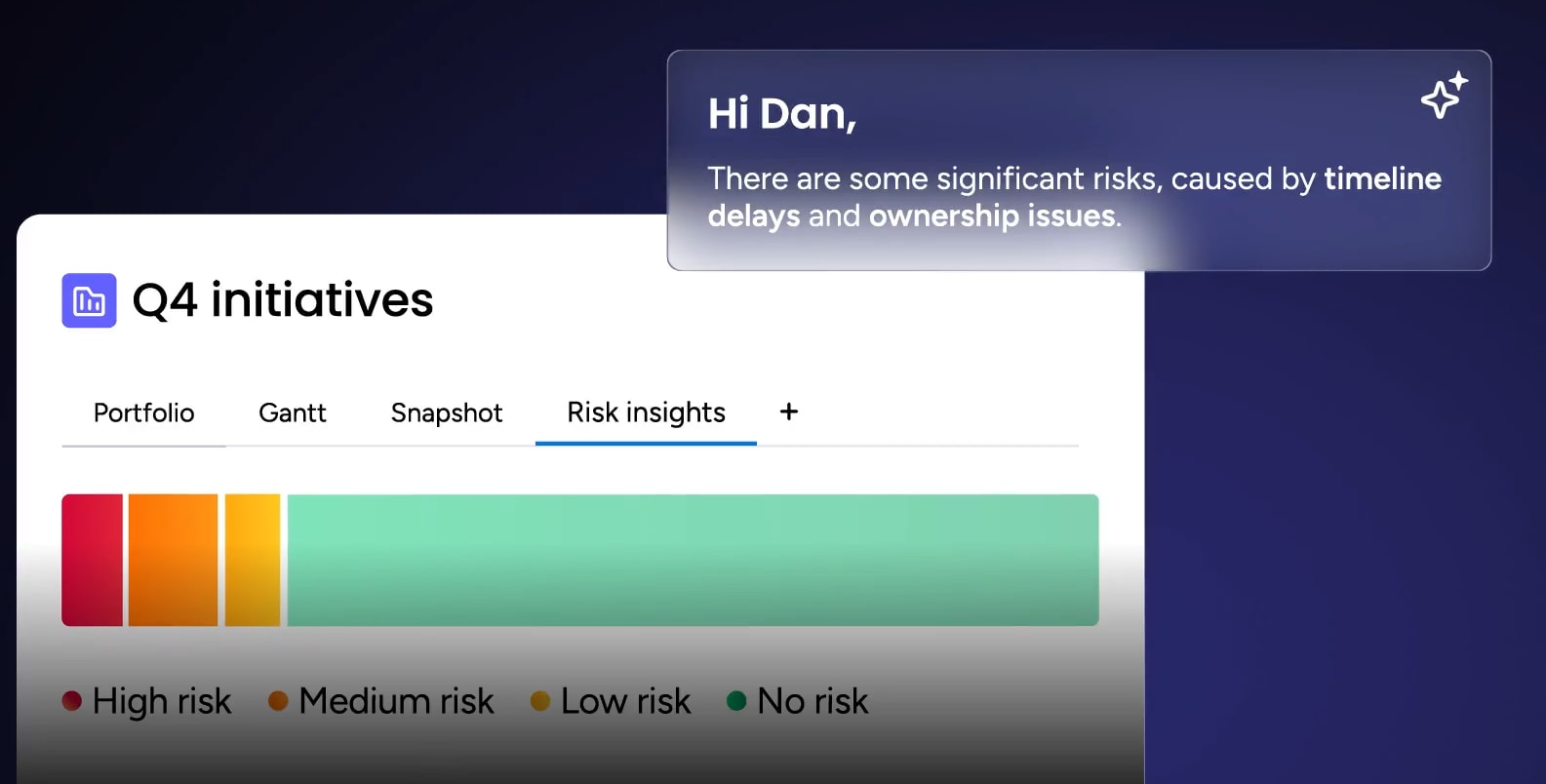
AI examines historical data to detect potential issues early. It identifies patterns such as consistently late vendors or tasks prone to delays, allowing timely intervention. Portfolio Risk Insights on monday work management scans project boards and flags critical risks automatically, reducing manual review.
Automated resource allocation
AI matches people to tasks based on:
- Skills
- Availability
- Requirements
Workloads are dynamically balanced, ensuring critical projects are staffed properly while avoiding team overload.
AI-powered project insights
AI transforms project data into actionable summaries, highlighting performance trends and suggesting corrective actions. Teams gain immediate visibility into project health without waiting for manual reports. Visual dashboards on monday work management generate daily updates on risks, trends, and overall project progress.
Digital workers handling PM tasks
AI agents handle administrative tasks, including status updates, reminders, and meeting scheduling. This frees managers to focus on strategy and stakeholder relationships. The Digital Workforce on monday work management creates a hybrid approach where AI manages routine tasks and humans make complex decisions, driving efficiency and business results.

“monday.com has been a life-changer. It gives us transparency, accountability, and a centralized place to manage projects across the globe".
Kendra Seier | Project Manager
“monday.com is the link that holds our business together — connecting our support office and stores with the visibility to move fast, stay consistent, and understand the impact on revenue.”
Duncan McHugh | Chief Operations OfficerBuild a competitive advantage through business project management
Business project management transforms how organizations execute strategy and deliver value. Organizations that master this discipline gain advantages in speed, alignment, and responsiveness. Consistently turning strategic vision into measurable outcomes becomes a core differentiator.
Structured frameworks connect daily work to strategic goals. Teams gain clarity on priorities, stakeholders align around shared objectives, and resources focus on high-impact initiatives. This systematic approach reduces waste and accelerates time-to-value.
Modern platforms like monday work management address these challenges by combining flexibility with enterprise-grade structure. The platform serves as a unified Work OS where strategy meets execution, allowing teams to build workflows aligned with business processes while providing executives the visibility and control they need.
The platform supports diverse business projects through features that drive value:
| Feature | Business benefit |
|---|---|
| Portfolio management | Provides high-level view of strategic initiatives for executive decision-making |
| Automations | Eliminates repetitive administrative tasks, saving time and reducing errors |
| Dashboards | Delivers real-time insights for data-driven decisions across the organization |
| WorkForms by monday.com | Standardizes request intake and data collection from stakeholders |
Teams select templates matching their workflow, import existing data, and invite stakeholders to collaborate. The platform scales from single teams to entire enterprises, supporting the journey toward a fully integrated business operating system.
Try monday work managementFrequently asked questions
What's the difference between business project management and regular project management?
Business PM emphasizes strategic alignment and organizational outcomes, while traditional PM focuses on completing tasks within scope, time, and budget. Business PM links every project to broader company goals and measures success by business impact rather than task completion.
How much does a business project manager typically earn?
In the US, mid-level business project managers generally earn $90,000 to $130,000 annually, with variation depending on experience, location, and industry. Strategic focus typically commands higher compensation than purely technical roles.
What certifications help advance business project management careers?
Certifications such as PMP (Project Management Professional), PMI-PBA (Professional in Business Analysis), and Agile credentials demonstrate expertise in both execution and strategic alignment.
Can small businesses implement business project management effectively?
Small businesses can adopt scaled frameworks to manage growth without heavy administrative overhead. Starting with simple processes and scaling complexity over time ensures effective implementation.
How quickly can organizations adopt business project management practices?
Initial adoption can take weeks with intuitive platforms. Teams may be operational in under two weeks, while achieving full organizational maturity with standardized processes typically takes six to twelve months.
How does monday work management support business project management differently than other platforms?
monday work management blends flexibility and structure, allowing workflows to match exact business processes while providing enterprise-grade security, reporting, and automation. The platform adapts to the way teams work rather than enforcing rigid methodologies.

 Get started