

Finance teams spend hours tracking down stuck invoices. Marketing campaigns are delayed because approval steps aren’t clear. HR manually chases onboarding paperwork multiple times a week. These aren’t isolated incidents — they’re symptoms of undefined or poorly documented business processes.
A business process is how work actually gets done: a series of connected steps that transform raw materials like data, requests, or ideas into valuable outputs. It’s the structured sequence that turns a customer inquiry into a closed deal, a job requisition into a successful hire, or a product concept into a market launch. Mapping these workflows visually reveals where handoffs occur, who owns each step, and how long each phase takes. This clarity creates a single source of truth and reduces dependence on institutional knowledge.
This guide explains what business processes are, why they matter for growth, and how to design workflows that scale without breaking. It covers the three essential types of processes, the seven steps to build effective workflows, and real-world examples of teams that turned operational chaos into consistent results.
Key takeaways
- Business processes define how work gets done: they are structured sequences of activities that transform inputs into valuable outputs to achieve organizational goals.
- There are three essential types of processes: operational processes create customer value, supporting processes enable internal efficiency, and management processes guide strategic alignment.
- Effective processes require clear roles and measurable outcomes: assigning ownership, defining responsibilities, and tracking KPIs ensures accountability and continuous improvement.
- Process design benefits from visualization and optimization tools: mapping workflows helps identify bottlenecks, redundancies, and gaps, enabling smarter, data-driven improvements.
- Technology like monday work management supports process automation and monitoring: visual boards, AI-driven automation, and dashboards help teams execute workflows consistently and adapt to changes in real time.
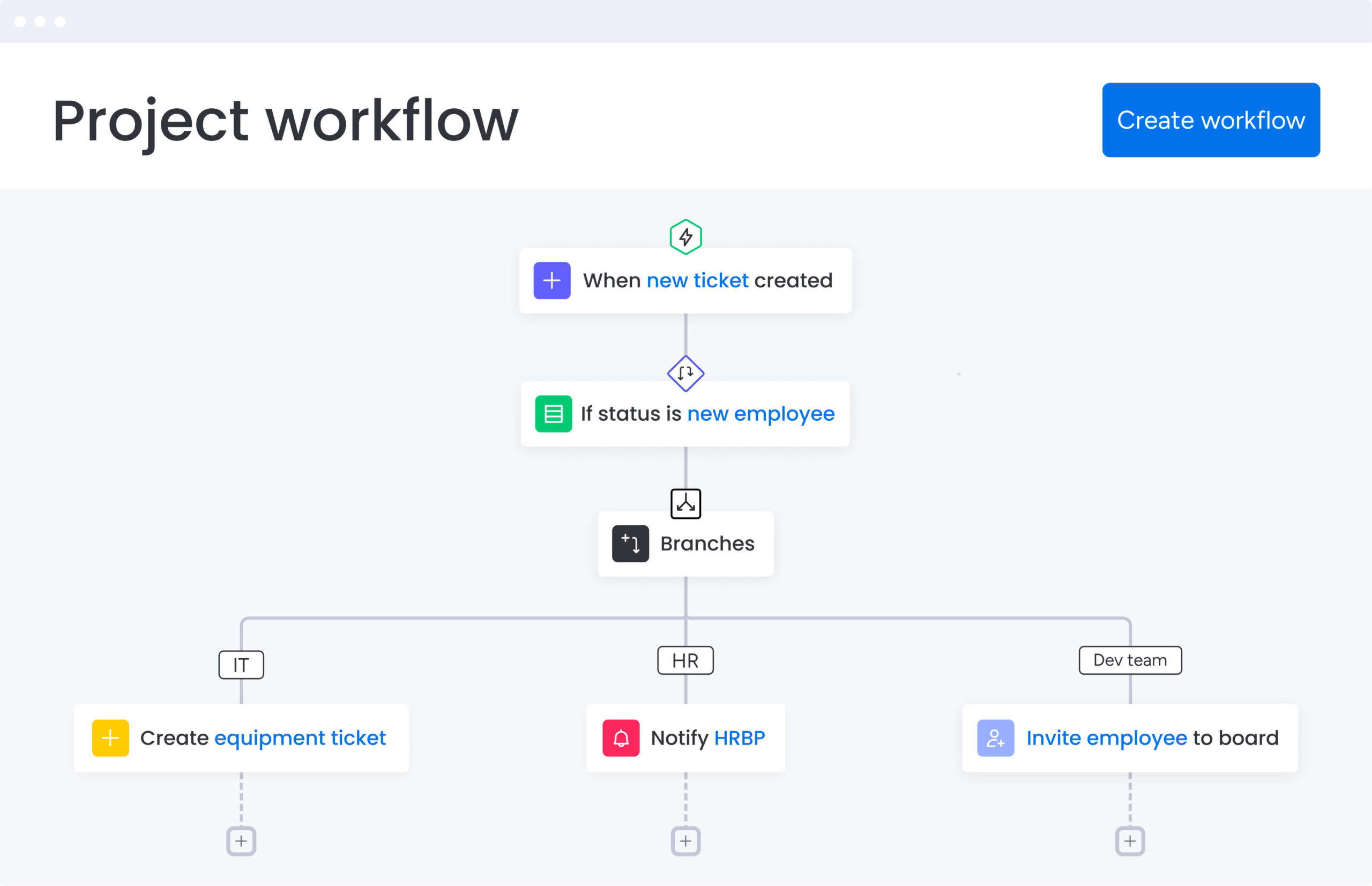
A business process is a series of connected activities that transform inputs into valuable outputs to achieve specific organizational goals. Think of it as a repeatable recipe that turns raw materials — whether data, documents, or customer requests — into something valuable for the business or customers.
Take employee onboarding as an example. It is more than just welcoming a new hire. It is a structured sequence:
- Contract review triggers IT setup: the contract initiates the necessary technology provisioning.
- IT setup connects to training schedules: system access aligns with planned training sessions.
- Training schedules link to manager introductions: new hires are introduced to their managers at the right time.
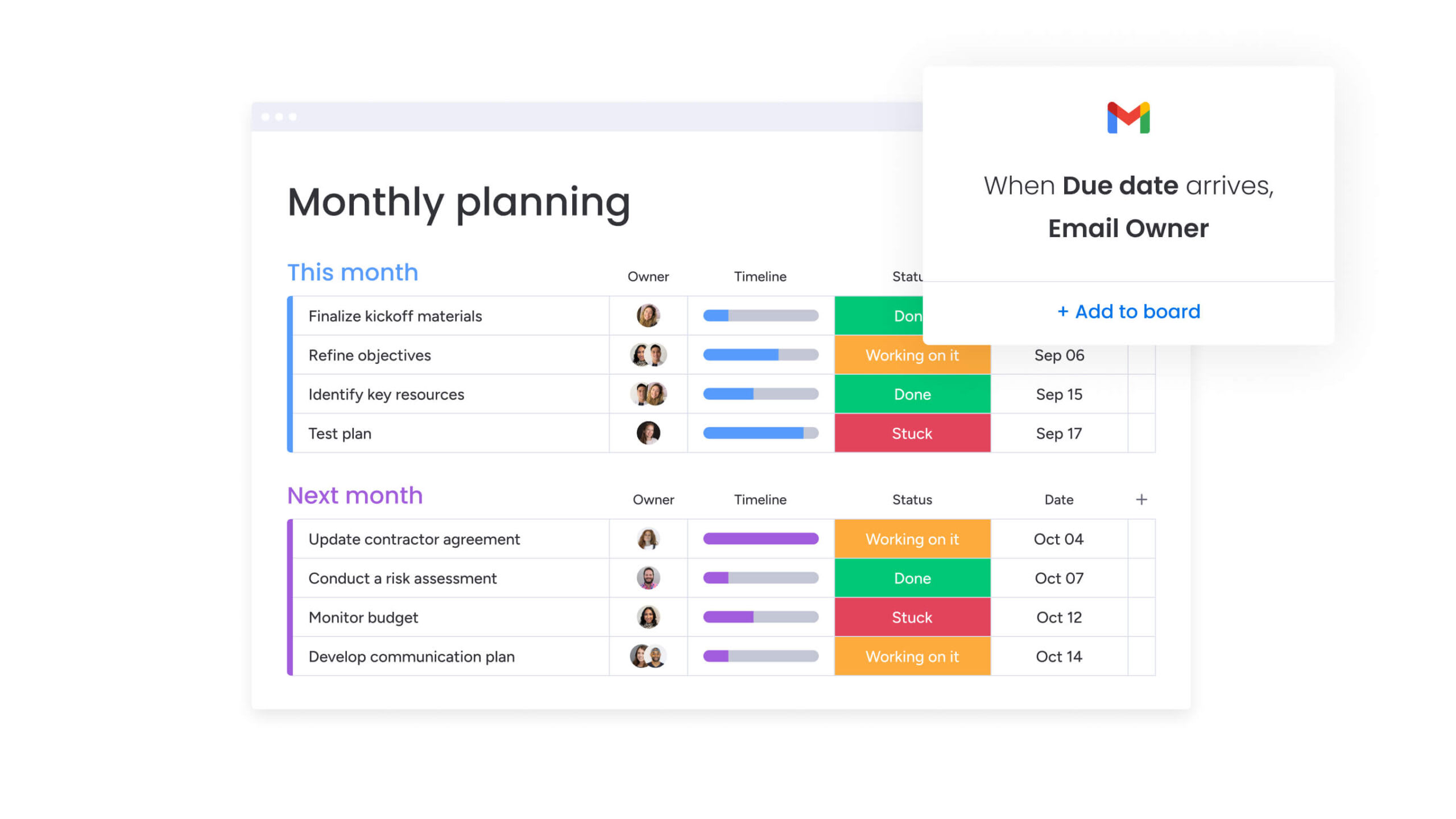
Each step has an owner, timeline, and expected outcome. Mapping these sequences visually on monday work management allows teams to see exactly where handoffs occur, who is responsible for each step, and how long each phase takes.
Structure removes guesswork and provides a foundation for continuous improvement over time.
Why business processes drive organizational success
Think of business processes as the infrastructure that keeps your company running smoothly. They ensure mid-to-large organizations remain aligned across departments rather than operating in silos. Defining and optimizing processes delivers measurable benefits in areas that matter most:
- Operational consistency: standardized processes ensure consistent results across tasks, from invoice processing to software deployment.
- Scalability and growth: as the company grows, documented processes allow teams to onboard new hires quickly and replicate what works across regions.
- Risk reduction and compliance: well-designed workflows embed the right checks and balances, creating audit trails and ensuring regulatory adherence.
- Resource optimization: visible processes reveal where resources are performing well and where bottlenecks exist, guiding leaders to allocate people and budget effectively.
With hybrid and remote teams, relying on hallway conversations is no longer feasible. Digital and automated workflows keep work moving efficiently, even when team members are not in the same room.
3 essential types of business processes
Recognizing process types helps organizations prioritize improvements. Each type requires a different approach to optimization and delivers distinct value:
| Process type | Definition | Examples | Primary impact |
|---|---|---|---|
| Operational | Core activities that directly create value for customers | Product manufacturing, service delivery, order fulfillment | Customer satisfaction, competitive advantage |
| Supporting | Activities that provide resources for operational processes | HR recruitment, IT support, financial reporting | Internal service delivery, operational enablement |
| Management | Activities that govern and direct the organization | Strategic planning, performance management, compliance auditing | Strategic alignment, organizational governance |
Operational processes
Operational processes generate value for customers and revenue. These workflows define what a business does and how it differentiates itself in the market. Optimizing operational processes delivers faster results, higher quality, and quicker responses to customer needs. Tracking these workflows on monday work management provides real-time visibility into delivery timelines, quality metrics, and customer touchpoints.
Supporting processes
Supporting processes equip operational teams with the resources they need. While they do not generate revenue directly, they are essential to daily operations. Automating these workflows reduces administrative burden and accelerates how quickly teams receive necessary tools, personnel, and budget.
Management processes
Management processes guide and monitor organizational performance. They ensure operational and supporting workflows align with company objectives and compliance requirements. Using data and reporting, executives can track whether day-to-day work connects to strategic goals. Platforms like monday work management provide insights that help leaders make informed decisions and adjust strategy when needed.
Try monday work management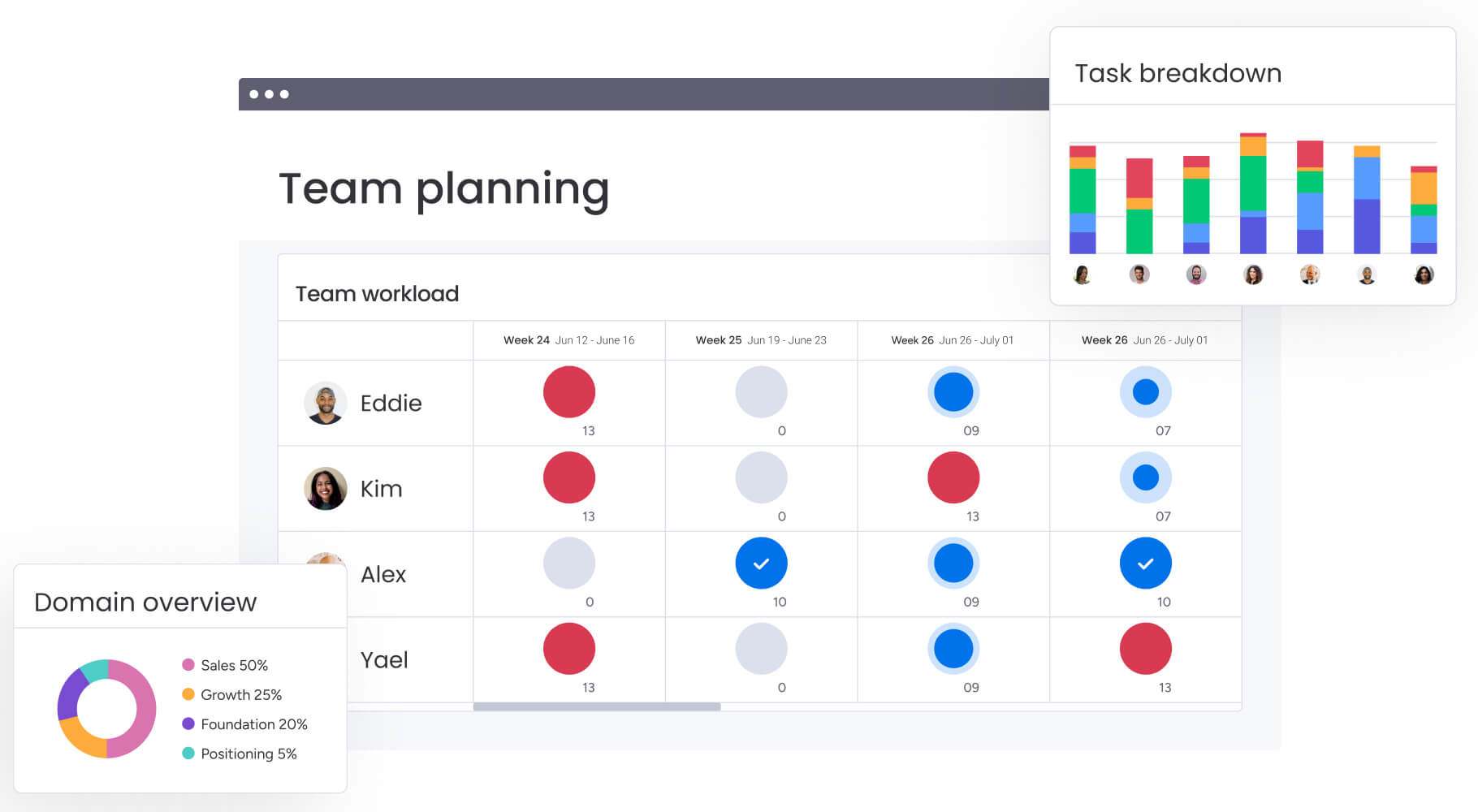
Key business process components
No matter how simple or complex, every effective business process shares the same core building blocks. Identifying and defining these components allows teams to troubleshoot existing workflows or design new ones that actually work. Understanding these elements helps create processes that are strong, adaptable, and measurable.
Inputs and outputs
Inputs are the materials, data, or triggers that start a process. Outputs are the results delivered when the process is complete. In content production, a creative brief serves as the input, while a published article represents the output.
Key considerations for inputs:
- Completeness: ensure the process starts with everything it needs to prevent delays.
- Quality standards: define input criteria to reduce mistakes later.
- Timing: know when inputs are ready to improve scheduling and coordination.
Key considerations for outputs:
- Specifications: provide a clear standard for what “done” looks like.
- Quality metrics: use measurable criteria to track performance.
- Delivery format: standardize output formats to make handoffs smoother.
Roles and accountability
Clear ownership is essential for every process. Roles define who performs the work, while accountability defines who is responsible for the outcome.
- Process owner: oversees process design and ensures performance meets goals.
- Executor: completes specific activities within the workflow.
- Approver: validates output before it moves to the next stage.
Modern platforms like monday work management automate these assignments so handoffs occur instantly, and every step has a designated owner, keeping work flowing efficiently.
Performance metrics
KPIs measure process effectiveness and highlight areas for improvement. Common metrics include:
- Cycle time: how long activities take from start to finish.
- Error rates: frequency of mistakes or defects.
- Throughput: the volume of work completed in a given period.
Tracking these metrics enables data-driven decisions. Dashboards provide real-time visibility into process performance, ensuring teams act on accurate information.
Continuous feedback loops
Processes must evolve as business needs change. Feedback loops gather insights from multiple sources:
- Customer feedback: input from recipients of process outputs.
- Employee feedback: perspectives from those performing the work.
- System data: metrics collected automatically through digital platforms.
Regular reviews refine workflows by removing outdated steps and adjusting processes to meet current requirements.
Business process vs business procedure
Although often used interchangeably, a process and a procedure serve different purposes. A process represents the high-level workflow, while a procedure provides step-by-step instructions for specific tasks.
| Feature | Business process | Business procedure |
|---|---|---|
| Scope | High-level, cross-functional workflow | Detailed, task-specific focus |
| Flexibility | Dynamic; focuses on flow and outcome | Rigid; focuses on strict adherence |
| Purpose | Achieve strategic business goal | Complete specific activity accurately |
| Example | Employee onboarding workflow | IT setup configuration steps |
Understanding this distinction allows leaders to manage the big picture without micromanaging. Teams can rely on procedures to perform tasks accurately while processes keep work aligned and moving efficiently.
These examples illustrate how structured workflows deliver consistent, measurable results across departments.
Customer onboarding process
A standardized onboarding workflow shapes the customer experience from the first interaction:
- Sales handoff: provide complete customer context.
- Technical implementation: complete system setup accurately.
- User training: transfer knowledge and skills effectively.
- Final go-live sign-off: confirm success metrics are met.
Optimizing this workflow ensures customers see value faster and remain engaged. Automations schedule activities and send welcome communications so no steps are missed.
Employee recruitment process
Recruitment determines the talent foundation of an organization. A structured workflow includes:
- Job requisition: secure approval and budget allocation.
- Candidate sourcing: identify candidates through multiple channels.
- Screening: assess initial qualifications efficiently.
- Interview rounds: use structured evaluations for fair selection.
- Offer approval: negotiate terms and confirm final hiring decisions.
A clear recruitment workflow improves efficiency and reduces errors while ensuring a positive candidate experience.
Order fulfillment process
Efficient order fulfillment keeps logistics and retail moving. The workflow covers:
- Order receipt: validate incoming orders.
- Inventory allocation: reserve stock for orders.
- Picking and verification: confirm items meet quality standards.
- Packing: follow shipping specifications.
- Delivery tracking: monitor shipment until customer receipt.
Process optimization increases accuracy and reduces costs. Real-time tracking and automated updates help teams manage higher volumes effectively.
Invoice and payment processing
Managing accounts payable ensures timely, accurate payments. The workflow involves:
- Invoice receipt: capture data from incoming invoices.
- Verification: check against purchase orders.
- Approval routing: follow budget thresholds.
- Payment execution: complete transactions and reconcile accounts.
Automation reduces errors and processing costs. AI can extract invoice data and flag unusual entries for review.
Product development process
Bringing a product to market requires coordination across teams. The workflow includes:
- Ideation and research: generate concepts and analyze markets.
- Feasibility analysis: plan resources and timelines.
- Design and prototyping: create and refine solutions.
- Testing and validation: ensure quality and usability.
- Launch and monitoring: track market performance and feedback.
A structured process accelerates delivery and ensures products meet customer needs. Collaboration platforms keep teams aligned on timelines and responsibilities.
Modern platforms like monday work management connect these processes in one place, providing visibility, accountability, and collaboration. Teams can track progress, automate repetitive tasks, and ensure work aligns with broader business goals.
Try monday work management
“monday.com has been a life-changer. It gives us transparency, accountability, and a centralized place to manage projects across the globe".
Kendra Seier | Project Manager
“monday.com is the link that holds our business together — connecting our support office and stores with the visibility to move fast, stay consistent, and understand the impact on revenue.”
Duncan McHugh | Chief Operations Officer7 steps to build effective business processes
Building or redesigning a business process requires careful planning and structured execution. This framework guides teams from identifying a problem to creating workflows that actually work. Each step builds on the previous one, ensuring comprehensive process development.
Step 1: define process objectives.
Start by clarifying what the process needs to achieve. Identify the specific outcomes you want and how success will be measured.
Examples of measurable objectives include:
- Reduce invoice processing time: cut processing duration by 30%.
- Ensure audit compliance: achieve 100% adherence to safety audits.
- Improve onboarding experience: raise customer satisfaction to 95%.
Clear goals prevent scope creep and provide a baseline for evaluating improvements.
Step 2: map your current workflow.
Understand the existing process before making changes. Process mapping documents the workflow step by step, capturing all handoffs and decision points.
Key activities include:
- Stakeholder interviews: reveal how work actually happens versus official documentation.
- Direct observation: capture variations, workarounds, and informal practices.
- Documentation review: identify gaps between policy and actual work.
Visual maps clarify complexity and create a shared language. Platforms like monday work management allow teams to visualize these workflows using Gantt charts or Kanban views.
Step 3: identify process improvements.
With the workflow mapped, analyze it to uncover inefficiencies. Look for bottlenecks, redundancies, error-prone steps, and tasks suitable for automation.
Common areas for improvement include:
- Bottlenecks: points where work consistently slows down.
- Redundancies: duplicate activities that add no value.
- Error-prone steps: activities with frequent failures.
- Manual tasks: processes that can be automated.
Root cause analysis ensures the focus is on underlying issues, not just symptoms. This step also highlights opportunities for AI-driven efficiency.
Step 4: design the optimized process.
Create a “to-be” workflow that resolves identified issues. Define the ideal sequence of activities, assign responsibilities, and integrate the necessary tools.
Involving stakeholders ensures the design is practical and builds buy-in for future changes.
Step 5: test with a pilot program.
Pilots allow teams to validate new processes with minimal risk. Implement the workflow with a small group or project to:
- Validate assumptions: ensure the design works in practice.
- Identify unforeseen issues: catch challenges before full rollout.
- Gather feedback: refine based on user experience.
- Measure performance: compare results with baseline metrics.
Data from pilots supports decisions for organization-wide adoption.
Step 6: roll out across teams.
Full implementation requires structured change management. Provide training, update documentation, and communicate why the change matters and how it benefits teams.
Support mechanisms help employees adopt the new workflow, ensuring consistent usage.
Step 7: monitor and refine continuously.
Processes are never static. Track workflows against KPIs and review them regularly.
Continuous monitoring enables incremental improvements and keeps processes agile as business needs evolve.
Platforms like monday work management support ongoing process tracking, making it easier to identify bottlenecks and optimize performance in real time.
How AI transforms business process operations
AI shifts process management from static automation to dynamic adaptation. It learns from data, enabling workflows to adjust in real time and handle complexity beyond traditional automation.
Autonomous process automation
Unlike standard automation, AI interprets unstructured data and makes context-driven decisions. Capabilities include:
- Intelligent routing: categorize tickets by urgency and sentiment, routing them automatically.
- Dynamic assignment: balance workloads based on capacity and expertise.
- Content processing: extract information from emails and documents efficiently.
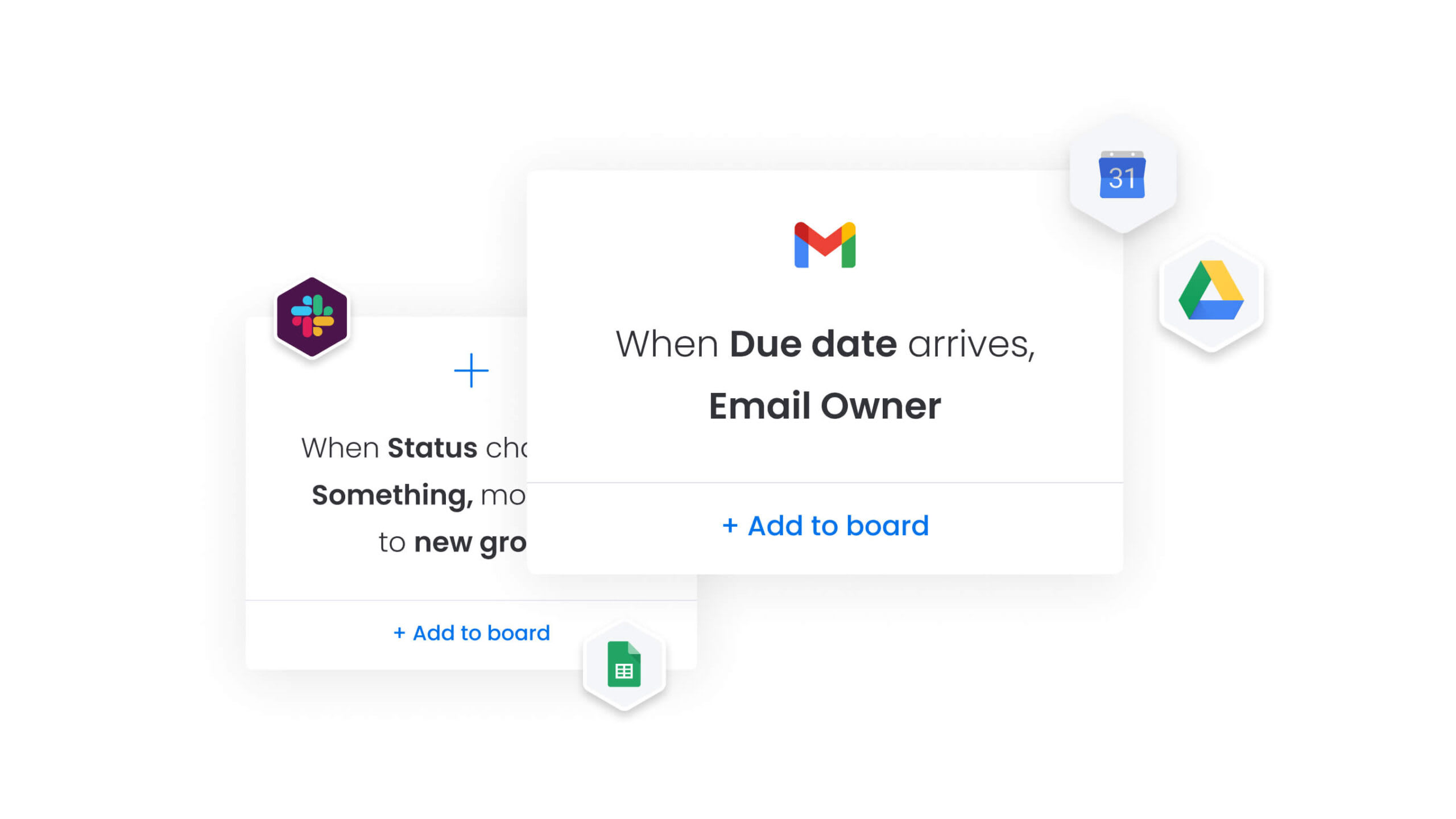
Modern platforms like monday work management integrate AI Blocks that automate labeling, extract data, and summarize updates across boards.
Predictive process intelligence
AI analyzes historical data to forecast potential delays. Teams can proactively adjust resources before bottlenecks affect timelines. Features such as Portfolio Risk Insights scan boards and flag risks by severity, enabling preventive action.
Real-time process adaptation
Intelligent systems adjust workflows on the fly. For instance, approvals blocked due to absence can be rerouted automatically, ensuring work continues without interruption.
AI-driven process mining
Process mining tools reconstruct workflows from digital footprints, exposing shadow processes and workarounds. This data-driven insight identifies inefficiencies often missed by manual mapping and suggests optimizations backed by evidence.
Measurement turns process management into a strategic tool. Leaders must track clear metrics to demonstrate value, guide optimization, and justify investments. Effective KPIs highlight performance trends and indicate where improvements are needed.on.
Critical process KPIs
Measuring process performance effectively requires a balanced set of metrics that reflect the most important aspects of operations. These indicators help organizations understand where they excel and where improvements are needed, supporting both short-term decisions and long-term strategy.
Efficiency metrics: cycle time, throughput, and resource utilization rates.
Quality metrics: error rates, rework percentages, and first-pass yield.
Cost metrics: cost per transaction and labor hours per unit.
Customer metrics: customer satisfaction score and service level agreement compliance rates.
Performance tracking methods
How data is collected depends on the maturity of the process. Early-stage tracking often relies on spreadsheets, which can introduce errors. More advanced organizations use automated collection through work management platforms to obtain accurate, real-time insights.
Establishing baselines before making changes is essential. This allows teams to quantify the impact of process improvement initiatives and make data-driven decisions.
Process analytics dashboards
Dashboards consolidate complex information into visual insights. The most effective dashboards display real-time status, historical trends, and alerts in one view.
They allow executives to monitor overall process health while giving managers the ability to drill down into operational details. Teams using monday work management can customize dashboards with more than ten drag-and-drop widgets, letting them visualize data in ways that enable faster, sharper decisions.
Optimization strategies
Data is only useful when it drives action. Common strategies include:
- Bottleneck analysis: identifying and relieving congestion points that slow overall workflow.
- Parallel processing: executing activities simultaneously to reduce cycle time.
- Value stream mapping: removing steps that do not add value to the process.
- Resource reallocation: shifting capacity to focus on high-impact activities.
Prioritizing changes based on effort versus impact ensures improvements deliver the greatest return on investment.
Transform your business processes with monday work management
Managing complex processes in distributed environments requires a platform that balances structure with flexibility. Modern platforms like monday work management provide the architecture to design, run, and optimize workflows across the enterprise. They bridge the gap between planning and execution, helping teams build adaptable workflows that meet organizational needs.
Visual process design and mapping
Teams can design and visualize workflows using an intuitive, no-code interface. Boards serve as the foundation, with columns representing data points and status updates. Users can switch between Gantt charts for timeline dependencies and Kanban views for stage-based workflows.
This visual approach democratizes process design, enabling operational leaders to map complex, cross-department workflows that stakeholders can easily understand and adopt.
Intelligent automation with AI blocks
AI can handle repetitive cognitive work directly within workflows. AI Blocks include ready-made actions that bring automation into daily operations:
- Categorize: AI analyzes incoming requests and automatically tags them by priority or topic.
- Extract info: key data points are pulled from uploaded documents and populated into relevant columns.
- Summarize: long threads or complex updates are condensed into concise summaries for stakeholders.
- Custom blocks: teams can create tailored AI automations for unique workflow needs.
Cross-team process collaboration
Silos slow efficiency. Shared boards and dashboards connect teams, ensuring marketing, sales, and product teams view the same data.
Contextual communication occurs directly within items, preserving decision history. Granular permissions keep collaboration open while maintaining security and process integrity.
Real-time process monitoring
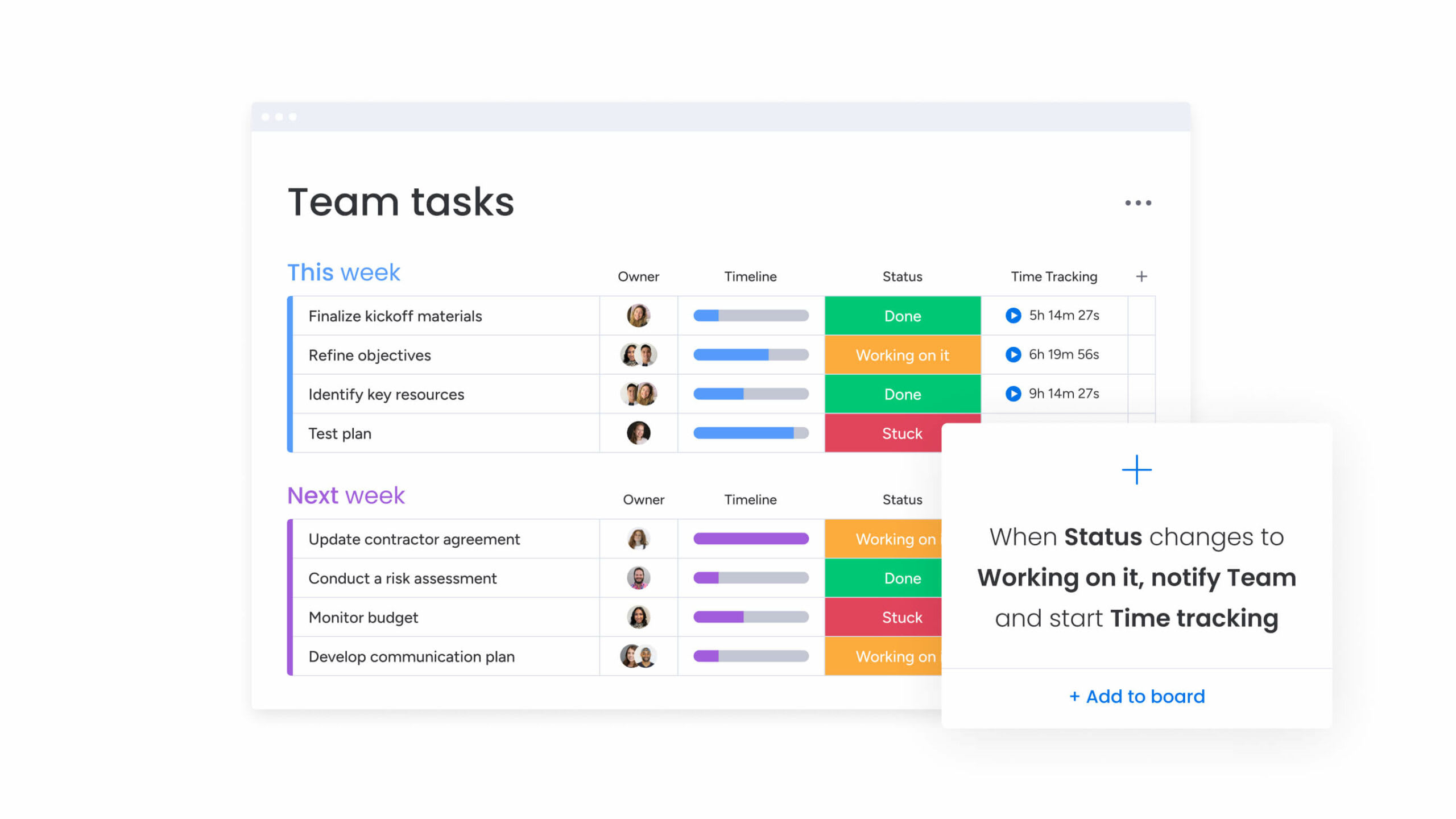
Visibility enables proactive management. Dashboards provide a live overview of process health by aggregating data across multiple boards.
Automated alerts notify managers if deadlines or budgets are at risk. Portfolio Risk Insights analyze active projects to identify systemic risks, allowing leaders to intervene before small issues escalate.
Building processes that scale with your organization
Well-designed processes transform chaotic work into predictable, measurable systems that consistently deliver value. Documented and optimized workflows supported by the right technology become competitive advantages that scale with the business.
The key to successful process management is balancing structure with flexibility. AI-powered platforms like monday work management automate routine decisions while keeping complex scenarios under human oversight.
Start by identifying your most critical processes—those that directly impact customers or consume significant resources. Continuous optimization builds organizational capability over time, laying a foundation for sustainable growth and operational excellence.
Try monday work managementFrequently asked questions
What are the main types of business processes?
Operational processes create core value, supporting processes enable infrastructure, management processes guide strategy, and governance processes ensure compliance.
What are the steps of the business process lifecycle?
Define objectives, map the current state, identify improvements, design the new process, test with a pilot, roll out to the team, and continuously monitor for refinement.
What is a business process example?
Employee onboarding is a structured sequence including contract signing, equipment provisioning, system access setup, and training sessions.
What is a key business process?
A key process is essential to delivering an organization’s value proposition, such as product manufacturing for a factory or claims processing for insurance.
How do small companies implement business processes?
Start by documenting critical activities, keeping processes simple, using affordable cloud-based platforms, and prioritizing consistency before automation.
Can AI automate complex business processes?
Yes, AI can process unstructured data, make context-based decisions, and adapt to exceptions, which platforms like monday work management support through AI Blocks.

 Get started