


Your marketing campaigns are performing well, leads are converting, and revenue is growing. But here’s what keeps executives up at night: customers still see you as interchangeable with competitors. Every sale requires the same level of convincing as the last one.
This is where brand marketing strategy changes everything. Unlike campaign-focused marketing that drives immediate conversions, brand marketing strategy builds the long-term equity that makes customers choose you before they even talk to sales. It’s the systematic approach to shaping how people think, feel, and talk about your organization across every interaction. When done right, it transforms price-sensitive prospects into loyal advocates who pay premium rates and refer others.
This guide walks through the essential components of an effective brand marketing strategy, from defining your core brand elements to measuring ROI. Take a moment to read through and you will discover proven growth strategies that scale across departments and learn how to build implementation roadmaps that deliver measurable results. You will also see how a flexible work management platform can help coordinate complex brand initiatives across teams and timelines.
Key takeaways
- Brand marketing is a long-term growth engine: strong brand strategy reduces price sensitivity, shortens sales cycles, and builds preference before prospects ever engage with sales.
- Equity compounds when brand is treated as a system: purpose, positioning, identity, messaging, and governance must work together to create consistent, repeatable brand experiences at scale.
- Brand and performance marketing work best together: brand builds demand and trust, while campaigns capture it — separating the two limits impact and inflates acquisition costs.
- Measurement unlocks credibility and budget: tracking awareness, perception, and engagement alongside CAC, LTV, and retention proves brand ROI and guides smarter investment decisions.
- monday work management turns brand strategy into execution: centralized workflows, asset governance, and real-time dashboards help teams coordinate brand initiatives across channels without losing consistency.
What is brand marketing strategy?

Brand marketing strategy is the comprehensive plan that defines how an organization builds, communicates, and sustains its brand identity to drive business growth. It goes beyond logos and taglines to create systematic approaches for shaping perception, building trust, and connecting with audiences across every touchpoint.
On a fundamental level it functions like the central nervous system of your business — it’s what guides how people perceive and connect with you at every touchpoint. While marketing tactics focus on immediate conversions and campaigns, brand marketing strategy builds long-term equity through consistent experiences that compound value over time.
The foundation of sustainable growth
Brand marketing strategy serves as the north star for every brand decision, communication, and customer interaction through effective brand management. It establishes core values, articulates purpose, creates identity systems, and builds governance frameworks that ensure consistency across teams and channels.
Organizations with strong brand strategies align cross-functional teams around shared objectives. This alignment simplifies campaign coordination, maintains messaging consistency, and delivers cohesive experiences. The strategy also provides decision criteria that help teams evaluate whether initiatives strengthen or dilute brand equity.
How brand marketing creates lasting value
Brand marketing builds compound interest over time — as trust grows, recognition spreads, and customers become increasingly loyal. When customers consistently encounter aligned brand experiences, they develop mental shortcuts that make purchase decisions faster and easier.
You’ll see this value materialize in four concrete business outcomes:
- Premium pricing power through enhanced perceived value.
- Reduced acquisition costs through referrals and recognition.
- Higher lifetime value through repeat purchases.
- Increased resilience during market disruptions.
Big brands like Apple demonstrate this principle perfectly — customers pay premium prices and remain loyal because the brand has built deep emotional connections around innovation and premium experience over decades.
The strategic approach to building brand equity
Building brand equity requires balancing consistency with evolution. Your strategy defines how you’ll differentiate from competitors, what benefits you’ll deliver, and how you’ll stay relevant as markets shift.
This approach involves continuous investment in brand-building activities even when immediate ROI isn’t apparent. Brand equity accumulates gradually through repeated positive exposures. For example, Nike exemplifies this by consistently investing in inspirational messaging that builds emotional connections beyond product features, creating brand equity that translates into market leadership and pricing power.
Brand marketing strategy vs marketing strategy
Marketing strategy and brand marketing strategy serve different but complementary purposes. Understanding these very real differences will help you allocate resources effectively and build both immediate momentum and long-term value.
The fundamental difference lies in timeline, measurement approach, and primary objectives. Here’s how these two strategies compare across key dimensions:
Dimension Marketing strategy Brand marketing strategy
Primary goal Drive immediate conversions and revenue Build long-term brand equity and relationships
Timeline Quarterly campaigns and initiatives Multi-year sustained investment
Key metrics CPA, conversion rate, ROAS, pipeline velocity Brand awareness, consideration, preference, NPS
Tactical focus Performance marketing, lead generation, sales enablement Brand storytelling, thought leadership, customer experience
Budget allocation Campaign-specific with ROI expectations Sustained investment with compounding returns
Understanding the key differences
Marketing strategy deploys channels and tactics based on immediate performance data. If a channel drives conversions efficiently, investment increases. Conversely, brand marketing strategy invests in channels and content that build awareness and perception even when direct attribution proves difficult.
Marketing strategy also optimizes for efficiency and conversion at each funnel stage, using A/B testing, audience segmentation, and performance tracking to maximize short-term returns. Brand marketing strategy optimizes for consistency, memorability, and emotional resonance across all touchpoints, even when individual interactions don’t generate immediate conversions.
When to focus on brand vs marketing tactics
Different business stages and market conditions call for a different type of strategic emphasis:
- Early-stage startups: will typically prioritize a marketing strategy to generate revenue and validate product-market fit. As companies establish market presence, brand marketing strategy becomes increasingly important for sustainable competitive advantage.
- Established companies entering new markets: these organizations benefit from brand marketing strategy that builds awareness and credibility before performance marketing can effectively drive conversions.
- Companies in commoditized markets: where products are similar, organizations need brand marketing strategy to create differentiation beyond features and pricing.
How both strategies work together
The most effective approach integrates both strategies in a coordinated framework. Strong brand awareness reduces customer acquisition costs because prospects already recognize and trust the brand. Defined brand positioning makes messaging more effective by providing consistent themes that resonate across campaigns.
Organizations using modern platforms like monday work management coordinate both strategies by connecting campaign workflows to brand guidelines in a single workspace.
Performance marketing teams track campaign metrics while brand teams monitor consistency and perception, with dashboards providing visibility into how both efforts contribute to business outcomes.
7 essential components of a brand marketing strategy
Every effective brand marketing strategy requires seven foundational components that work together to create cohesive brand experiences and build lasting market position. Understanding each component helps you identify gaps in your current approach and prioritize investments for maximum impact.
These components also provide the structure and guidelines that enable cross-functional teams to execute brand-building activities consistently while adapting to changing market conditions.
Core brand elements
- Compelling brand story and narrative: your brand story articulates why the company exists beyond making money, connecting company purpose with customer needs in a narrative that creates emotional resonance as part of your overall branding strategy. Effective brand stories identify the customer’s challenge, position the brand as an enabler of transformation, and demonstrate authentic commitment through actions that match words.
- Target audience definition and personas: effective brand management requires deep understanding of who the brand serves, moving beyond demographics to psychographic insights about motivations, challenges, and values. Actionable personas capture not just who customers are but how they think and how they prefer to engage with brands.
- Consistent visual identity system: visual consistency creates recognition through coordinated use of logos, colors, typography, and design patterns across all touchpoints as part of your brand identity system. The visual identity system includes detailed guidelines for logo usage, color palettes, typography hierarchies, and layout principles.
Communication and positioning framework
- Authentic brand voice and messaging: brand voice defines how the brand communicates — the personality, tone, and style that make communications recognizable. This encompasses messaging frameworks, value propositions, proof points, and conversation guidelines that help teams communicate consistently.
- Multi-channel brand presence: effective brand marketing requires coordinated presence across channels where target audiences spend time, with each channel optimized for its unique characteristics while maintaining brand consistency.
- Brand positioning and differentiation: positioning articulates what makes the brand unique and valuable compared to alternatives, defining the specific market space the brand occupies in customer minds.
Governance and execution
- Brand governance framework: as organizations scale, brand governance ensures consistency without creating bottlenecks. Teams using intelligent platforms like monday work management collaborate on brand identity development while maintaining governance through automated workflows and approval processes.
How brand marketing strategy drives business growth
Brand marketing strategy drives measurable business impact by shaping how customers perceive value, trust, and differentiation. When done well, it reduces reliance on constant persuasion and creates demand that compounds over time.
The four growth drivers below demonstrate how strong brands turn perception into sustained commercial advantage.
The four pillars of brand-driven growth
- Premium pricing power: strong brands command price premiums because customers perceive greater value beyond functional features. This pricing power stems from trust, perceived quality, and emotional connections that make price less relevant to purchase decisions.
- Reduced customer acquisition costs: brand awareness and positive brand perception dramatically lower the cost of acquiring new customers. When prospects already recognize and trust a brand, they require less education and persuasion to convert.
- Increased customer lifetime value: customers who connect with brands emotionally demonstrate higher retention rates, make more frequent purchases, and spend more per transaction than customers who view brands as commoditized.
- Competitive barriers and market expansion: strong brands create barriers that protect market position and enable expansion into adjacent markets. Established brand equity makes it harder for new entrants to gain traction because customers default to known brands.
Building trust and emotional connection
Trust forms the foundation of brand equity, reducing perceived risk in purchase decisions and creating willingness to try new offerings. Emotional connections transform transactional relationships into loyal partnerships where customers actively advocate for brands.
These connections develop through consistent delivery of brand promises, authentic communication that aligns with customer values, and experiences that exceed expectations.
Organizations using monday work management build these connections systematically by tracking customer interactions, monitoring sentiment, and ensuring consistent experiences across touchpoints.
Creating competitive advantage
Brand marketing strategy creates sustainable competitive advantages that competitors struggle to replicate. While products can be copied and prices can be matched, brand perception and emotional connections take years to build.
This advantage manifests in customer preference that persists even when competitors offer similar features or lower prices. The combination of trust, recognition, and emotional connection creates a moat around your business that protects market share and enables premium positioning.
Enabling premium pricing and loyalty
Premium pricing and customer loyalty create powerful economic advantages. Premium pricing improves profit margins while loyalty reduces acquisition costs and increases lifetime value. Together, these effects generate significantly higher profitability than competitors relying on volume and discounting.
How to build an effective brand marketing strategy
Building an effective brand marketing strategy requires a clear, connected approach. Early decisions shape everything that follows, from how the brand shows up in market to how teams execute and measure success.
The framework below outlines how to move from brand definition to execution and optimisation in a practical, structured way.
Step 1: define your brand purpose and values
Brand purpose articulates why the organization exists beyond profit generation, connecting business activities to meaningful impact that resonates with customers and employees. Start by examining the intersection of what the company does uniquely well, what customers genuinely need, and what positive change the organization seeks to create.
The process begins with stakeholder interviews across leadership, employees, and customers to identify common themes about company strengths and aspirations. Brand values translate purpose into behavioral principles that define how the organization operates and makes decisions.
Quick win: gather your leadership team for a workshop using the “Start, Stop, Continue” framework to identify behaviors that should define your brand culture. Document three-five specific values that emerge and test them against recent business decisions to ensure authenticity.
Step 2: research your market and audience
Comprehensive market and audience research provides the insights necessary to position the brand effectively and create messaging that resonates. This research encompasses competitive analysis, customer interviews, market trend analysis, and perception studies that reveal opportunities for differentiation.
Customer research moves beyond demographics to understand psychographics — the motivations, challenges, decision processes, and values that drive behavior. Conduct in-depth interviews with customers across different segments, asking about their goals, obstacles, decision criteria, and perceptions of your brand and competitors.
Quick win: interview five customers this week using this framework:
- What problem were you trying to solve?
- What alternatives did you consider?
- What made you choose us?
- What would make you recommend us to others?
Step 3: develop your brand identity elements
Brand identity development creates the visual and verbal assets that make the brand recognizable and distinctive across touchpoints. This step produces logo systems, color palettes, typography standards, photography guidelines, messaging frameworks, and voice principles.
Visual identity begins with logo development that captures brand personality and works across applications. Color palette selection considers psychological associations, competitive differentiation, and practical application across media. Typography establishes hierarchy and personality through font selection and usage guidelines.
Step 4: create your brand implementation roadmap
The implementation roadmap translates brand strategy into actionable initiatives with timelines, ownership, and success metrics. This roadmap prioritizes activities based on impact and feasibility, ensuring teams focus on high-value initiatives that build brand equity systematically.
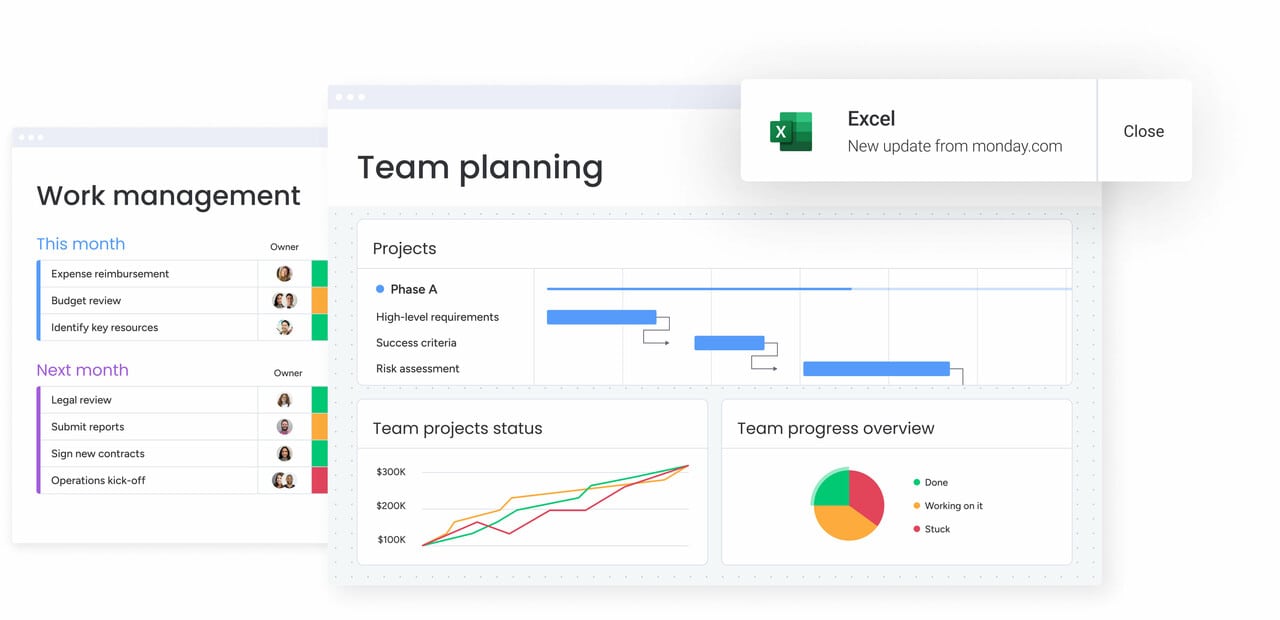
Begin by auditing current brand touchpoints to identify gaps between current state and desired brand experience. Organizations using monday work management can create implementation roadmaps with Gantt charts that visualize dependencies and timelines, while Workload View helps balance team capacity across brand initiatives.
Quick win: create a simple prioritization matrix with “Impact” on one axis and “Effort” on the other. Plot your top ten brand initiatives and focus first on high-impact, low-effort opportunities.
Step 5: establish measurement and optimization systems
Measurement systems track brand health over time and connect brand investments to business outcomes, enabling data-driven optimization and stakeholder communication. Effective measurement combines leading indicators like awareness and perception with lagging indicators like revenue and market share.
Define a core set of brand metrics aligned with strategic objectives:
- Brand awareness and consideration.
- Net promoter score and sentiment.
- Customer lifetime value and retention.
- Share of voice in your market.
Establish baseline measurements and set realistic targets based on industry benchmarks and business goals.
10 proven brand growth strategies for scalable impact
Organizations ready to scale their brand marketing efforts can deploy these advanced strategies below that drive measurable growth through coordinated, cross-functional execution.
Each strategy addresses specific growth challenges while reinforcing overall brand positioning:
Awareness and reach strategies
- Full-funnel brand activation: coordinate brand-building activities across awareness, consideration, and decision stages to create seamless customer journeys that convert awareness into revenue.
- Employee brand advocacy programs: transform team members into authentic brand ambassadors who amplify reach and credibility through their personal networks.
- Strategic partnership amplification: leverage complementary brands’ audiences and credibility to expand reach and enhance positioning through co-marketing initiatives.
- Content-led brand building: establish thought leadership and build trust through valuable, educational content that addresses customer challenges and demonstrates expertise.
Engagement and community strategies
- Community-driven brand evolution: engage customers and prospects in ongoing dialogue that shapes brand development while creating belonging and loyalty.
- Experiential brand engagement: create memorable brand interactions through events, installations, and immersive experiences that demonstrate brand values.
- Data-driven personalization at scale: use customer data and marketing automation to deliver relevant brand experiences tailored to individual preferences and behaviors.
- Influencer brand collaboration: partner with industry experts and content creators who have engaged audiences aligned with target customers.
Purpose and consistency strategies
- Purpose-driven brand initiatives: align brand marketing with social or environmental causes that resonate with target audiences and reflect brand values.
- Omnichannel brand consistency: ensure cohesive brand experiences across all customer touchpoints, digital and physical, owned and third-party.
Measuring brand marketing ROI with real-time dashboards
Brand marketing measurement has moved beyond occasional surveys to always-on visibility through dashboards that link brand signals directly to business results. The challenge, of course, is that brand impact builds over time — it compounds gradually and rarely shows up as instant, one-to-one revenue.
Modern measurement frameworks close that gap by tracking brand health alongside commercial performance. This gives teams a clearer way to prove value, refine investments, and make smarter decisions about where brand efforts will have the greatest impact.
Metric category Key indicators Measurement method Reporting frequency
Awareness Aided/unaided awareness, share of voice, branded search volume Surveys, media monitoring, search analytics Quarterly surveys, monthly digital metrics
Perception Brand attributes, NPS, sentiment, consideration Surveys, social listening, market research Quarterly surveys, continuous social monitoring
Engagement Website metrics, content consumption, social engagement Web analytics, content analytics, social analytics Weekly or monthly
Business impact CAC, LTV, conversion rates, retention, revenue CRM, marketing automation, financial systems Monthly or quarterly
Key brand performance metrics to track
The most valuable brand metrics balance comprehensiveness with actionability. A core brand scorecard typically includes 12-15 metrics across awareness, perception, engagement, and business impact dimensions.
- Leading indicators: like awareness and perception provide early signals of brand health changes, enabling proactive adjustments before business impact becomes apparent.
- Lagging indicators: like customer lifetime value and market share confirm whether brand investments translate into business results.
Building your brand marketing dashboard
Effective brand dashboards consolidate metrics from multiple sources into unified views that enable quick assessment and informed decision-making. The dashboard design should match audience needs: executives need high-level trends and business impact, while marketing managers need detailed campaign performance and channel metrics.
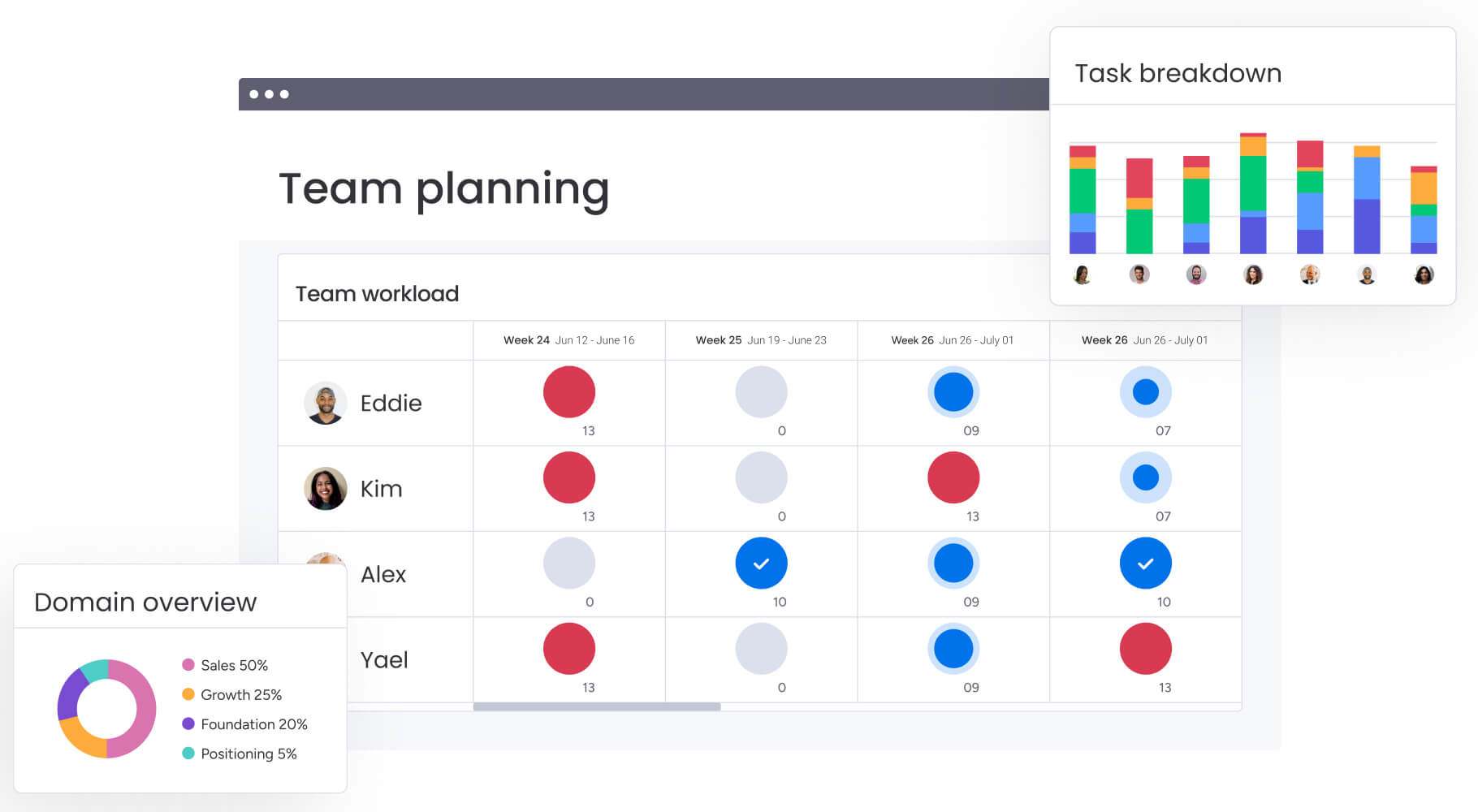
Teams using monday work management build customizable dashboards with drag-and-drop widgets that display live brand data. Integrations with analytics platforms, marketing automation systems, and CRM platforms create automated data flows that eliminate manual reporting while providing real-time visibility into brand performance.
Connecting brand metrics to business outcomes
Effective brand measurement shows how brand investment influences real business results. One practical approach is cohort analysis, which compares performance metrics for customers with different levels of brand awareness or perception.
For example, you can examine how customers who recognised the brand before first contact perform compared to those who did not, looking at conversion rates, deal size, and retention. This type of analysis makes the impact of brand activity visible and provides clear evidence to support ongoing investment in brand-building.
AI-powered brand management for cross-functional teams
Artificial intelligence transforms brand management from manual, periodic activities to continuous, data-driven processes that scale across large organizations. AI applications also address common brand management challenges: maintaining consistency across teams, managing growing asset libraries, monitoring brand perception in real-time, and predicting brand performance.
Imagine the creative work your team could accomplish by automating routine brand compliance checks. AI makes this possible through intelligent automation that handles routine work while teams focus on strategy and creativity.
Using AI for brand consistency at scale
Brand consistency becomes increasingly challenging as organizations grow. AI-powered analysis examines content against brand guidelines to identify inconsistencies before publication, ensuring all customer-facing materials align with brand standards.
- Natural language processing: examines written content to verify alignment with brand voice principles.
- Image recognition: analyzes visual content to confirm proper logo usage, color application, and design pattern adherence. These automated checks catch inconsistencies that manual review might miss, especially when reviewing high volumes of content.
Automating brand asset management
Managing brand assets across teams, regions, and channels quickly becomes complex without the right systems in place. Automation helps bring order by making assets easier to find, share, and use correctly.
Instead of relying on rigid folder structures, teams can locate the right files using intelligent search. Automated version control and rights management ensure everyone is working with approved, up-to-date assets, while notifications alert teams when usage rights are expiring or new versions are available.
AI-driven brand sentiment analysis
Understanding how audiences perceive the brand requires analyzing vast amounts of unstructured data from social media, reviews, forums, news articles, and customer feedback. AI-powered sentiment analysis processes this data continuously, identifying trends, themes, and anomalies that indicate brand health changes.
Organizations using monday work management can even leverage AI Blocks to categorize brand feedback at scale, detect sentiment in customer communications, and summarize complex data into actionable insights. Digital Workers monitor brand mentions across channels and create action items when intervention is needed.
Execute your brand marketing strategy with monday work management
As we’ve alluded to in this guide, brand marketing strategy execution requires coordinating complex, cross-functional workflows that span creative development, campaign management, content production, and performance tracking. Traditional approaches using spreadsheets, email, and disconnected systems create coordination challenges, version control issues, and visibility gaps that slow execution and compromise brand consistency.
Organizations using monday work management for brand marketing report faster campaign execution and improved brand consistency across touchpoints. The platform eliminates common pain points: lost files, unclear ownership, missed deadlines, and inconsistent approvals.
Streamline brand campaign workflows
Brand campaigns involve multiple workstreams that must align to deliver cohesive customer experiences. Campaign boards organize all campaign elements in unified views where teams see the full scope, track progress, identify bottlenecks, and coordinate handoffs.
Automations eliminate manual coordination by triggering actions based on status changes:
- When creative is approved, content production automatically begins.
- When content is ready, distribution teams receive notifications.
- Timeline views provide visual representation of campaign schedules, showing how different workstreams align and where potential conflicts exist.
Centralize brand asset management
Brand asset management within monday work management consolidates all brand materials in organized, accessible workspaces where teams find what they need quickly. Custom fields capture asset metadata like usage rights, expiration dates, and approval status, enabling sophisticated filtering and search.
Approval workflows route assets through defined review processes, capturing feedback, tracking revisions, and documenting final approval. The audit trail shows who approved what and when, providing accountability and compliance documentation.
Enable cross-team brand collaboration
Brand marketing requires coordination across marketing, creative, sales, product, and executive teams who need different levels of access and different views of brand initiatives. Flexible permissions and customizable views enable each team to see relevant information in formats that match their needs.
- Marketing teams: use campaign boards that show full initiative details.
- Creative teams: focus on asset production boards that prioritize design workflows.
- Executives: view high-level dashboards that show campaign status and performance metrics. Cross-functional visibility ensures alignment without overwhelming teams with irrelevant information.
Track brand performance in real time
Real-time performance tracking connects brand activities to outcomes, enabling data-driven optimization and demonstrating ROI to stakeholders. Custom dashboards display metrics relevant to different stakeholders, with integrations pulling data from analytics platforms, marketing automation systems, and CRM tools automatically.
AI-powered insights analyze performance data to identify patterns, anomalies, and optimization opportunities. The system can flag campaigns underperforming expectations, highlight content types generating exceptional engagement, or predict future performance based on current trends.
Transform your brand strategy into competitive advantage
Brand strategy only works when it jumps off the planning document and starts influencing how everyone in your company talks to customers. The organizations that build lasting competitive advantages understand that brand strategy requires systematic execution, continuous measurement, and cross-functional alignment.
Your brand strategy becomes powerful when teams can execute consistently at scale. This means having the right processes, tools, and governance to maintain brand standards while adapting to market changes and growth demands.
The most successful brand strategies integrate seamlessly with daily operations, making brand excellence the natural outcome of how work gets done rather than an additional burden on already busy teams.
Ready to make brand excellence your standard? Start building with monday work management.
Frequently asked questions
How long does it take to see results from brand marketing strategy?
Brand marketing strategy typically requires six-twelve months before measurable improvements in brand awareness and perception become apparent, with business impact like increased conversion rates and customer lifetime value emerging over 12-24 months.
What budget should I allocate to brand marketing strategy?
Organizations typically allocate 10-20% of total marketing budget to brand marketing activities, with B2B companies often at the lower end and consumer brands at the higher end of this range.
How do I align brand strategy across different departments?
Aligning brand strategy across departments requires governance frameworks that define decision rights, approval processes, and quality standards while providing collaborative platforms that enable consistent execution.
What's the difference between B2B and B2C brand strategies?
B2B brand strategies emphasize thought leadership, expertise demonstration, and relationship building with longer sales cycles, while B2C strategies focus more on emotional connection, lifestyle association, and individual purchase decisions.
How often should I update my brand marketing strategy?
Brand marketing strategy should undergo comprehensive review annually with minor adjustments quarterly based on performance data and market changes.
What are the 4 C's of brand strategy?
The four C's of brand strategy are Clarity, Consistency, Credibility, and Competitiveness, providing a framework for evaluating brand strength and guiding strategic decisions.

 Get started