


Brands appear in countless places every day, campaign assets, sales decks, regional microsites, and partner materials. When marketing, creative, legal, and regional teams operate from different folders, timelines, and versions, maintaining consistency becomes challenging. Approvals stall, outdated logos slip through, and overall brand cohesion starts to erode.
Brand management software addresses these challenges by connecting people, processes, and assets, centralizing creative workflows, and automating approvals. Leadership gains clear visibility into what is launching, where, and when, transforming brand governance from reactive firefighting into a structured, repeatable system.
This guide explores 15 brand management software platforms designed for operational excellence in 2026. It highlights key features, workflow automation capabilities, AI-driven governance tools, and cross-department collaboration solutions to help teams maintain consistency while streamlining operations.
Key takeaways
Brands face increasing complexity across teams, regions, and channels. Effective brand management software turns scattered workflows into a centralized system, improving consistency, efficiency, and visibility. The following key takeaways summarize the most important insights from the 2026 brand management landscape:
- Centralized brand operations improve consistency: connecting people, processes, and assets in a single platform ensures that campaigns, creative assets, and approvals follow standardized workflows.
- Workflow automation accelerates delivery: automating intake, approval, and review processes reduces bottlenecks and allows teams to focus on execution rather than manual follow-ups.
- Cross-department collaboration is essential: shared dashboards, boards, and integrated workflows enable marketing, creative, legal, and regional teams to coordinate effectively across projects.
- AI-powered tools enhance governance: AI-driven features like categorization, summarization, and translation assist in maintaining brand compliance and accelerating operational tasks.
- Flexible platforms support operational excellence: platforms such as monday work management demonstrate how adaptable views, dashboards, and integrations can help organizations scale brand workflows without sacrificing control.
What is brand management software for operational excellence
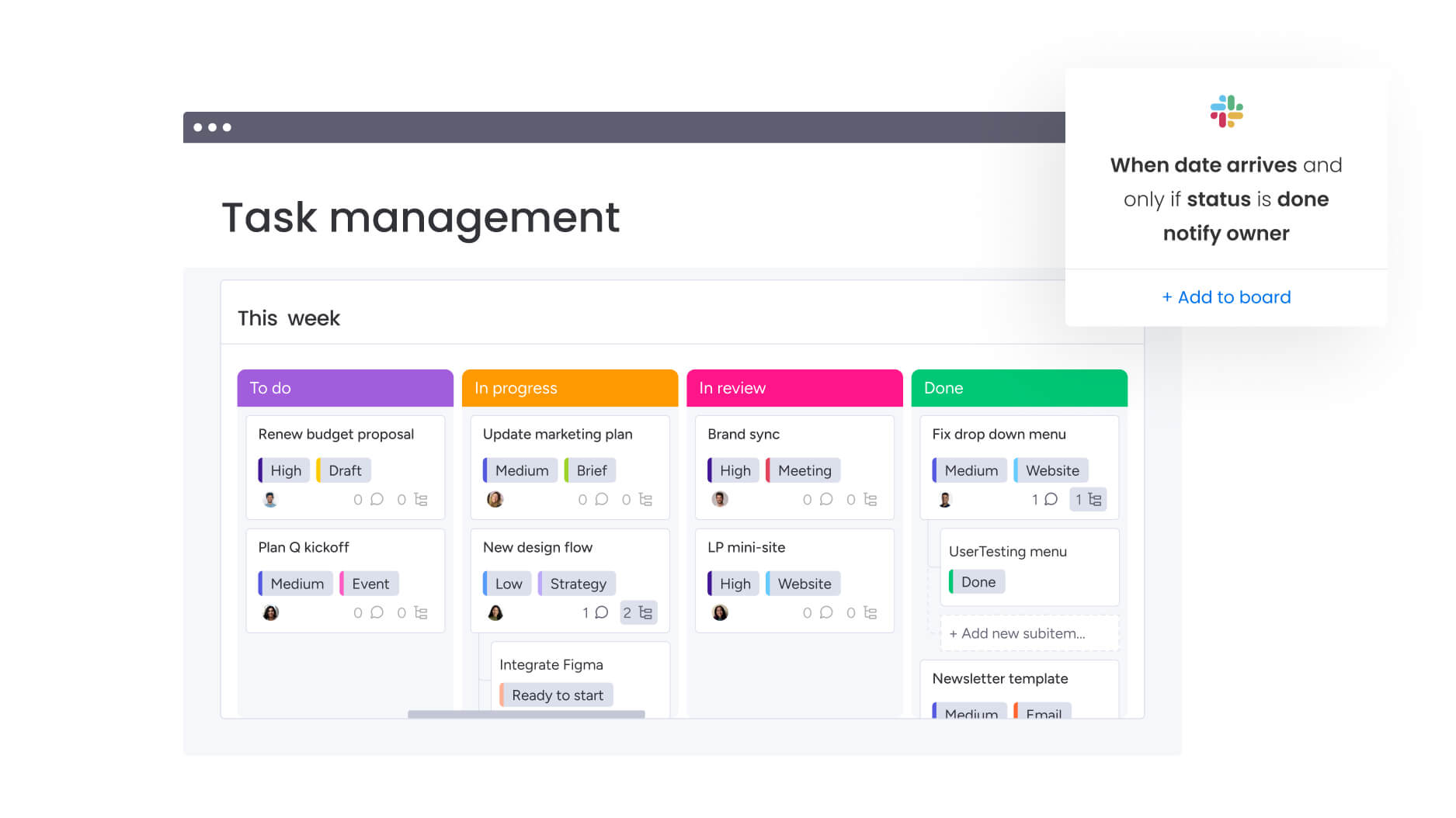 Forget shared drives and endless email threads. Modern brand management software connects strategy to actual work, giving teams a single place to plan, execute, and track campaigns. It ensures every asset and creative deliverable aligns consistently with brand identity. This technology goes beyond basic file storage to become the central system for running brand operations.
Marketing teams manage entire campaigns from these platforms. Creatives keep design workflows moving, and sales teams can quickly access approved materials. This unified ecosystem removes approval bottlenecks through intelligent automation and guarantees consistency across all customer interactions, allowing teams to focus on impact rather than administration.
As organizations grow, guardrails become essential. This software provides control without slowing teams down, simplifying the process of finding, using, and tracking every asset across regions and departments. It shifts the dynamic from simply storing a brand to actively running one.
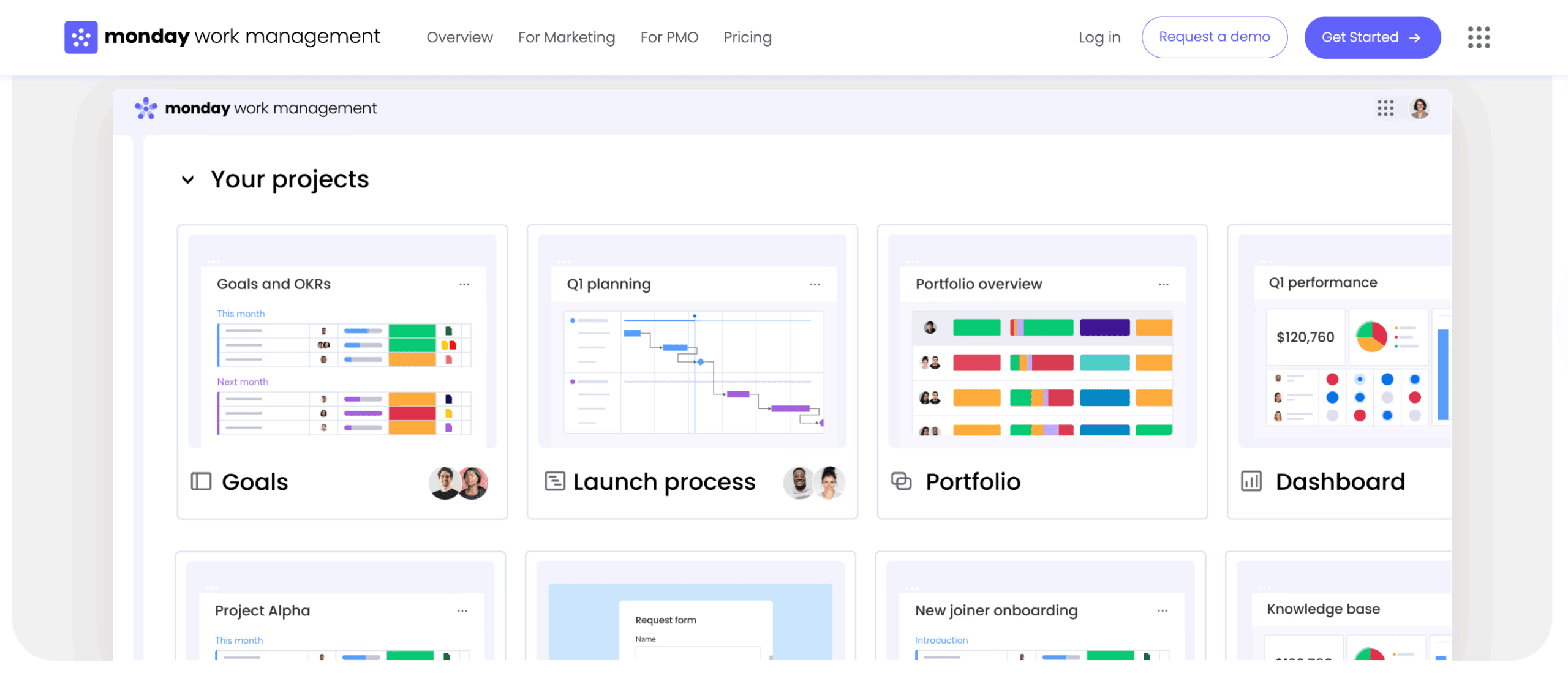
15 best brand management platforms for workflow excellence
Brand management is no longer just a logo folder. It has evolved into a system that turns strategy into real-world execution while maintaining consistency. The ideal platform orchestrates collaboration across leadership, creative, and marketing units, connecting guidelines to actual work.
The challenge is translating brand rules into work that ships on time. Leading platforms automate approvals and give leaders visibility into ongoing work without micromanagement. They accelerate campaign delivery, reduce approval delays, and link daily tasks to broader organizational goals.
The following 15 platforms address different brand challenges, from managing global campaigns to speeding up creative production. Each is analyzed for strengths to help find the best fit for operational workflows.
1. monday work management
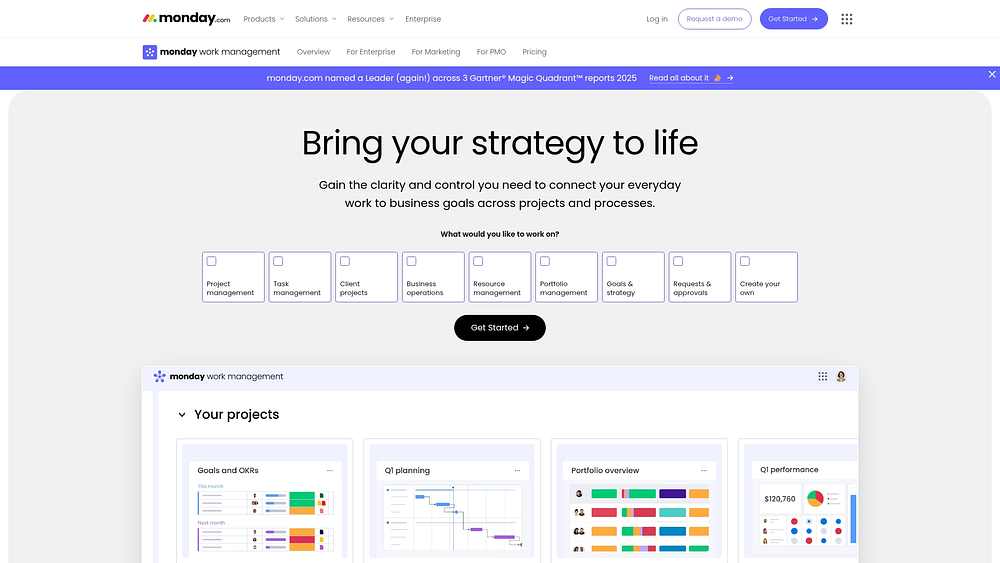
monday work management reimagines brand operations by treating “brand consistency” as a dynamic, living process rather than a static collection of files. It enables teams to handle campaigns, creative production, and approvals as interconnected workflows. This ensures that marketing, creative, legal, and regional units remain aligned without the need for constant status meetings.
Built on monday.com’s Work OS, this platform shines when you’re juggling multiple campaigns across regions and teams. Leaders get the big-picture view they need without getting stuck in the weeds.
Example:
Companies utilize monday work management to oversee brand campaigns from the initial request through to launch reporting. The shared workspace keeps briefs, timelines, owners, and approvals linked. Marketing teams can visualize plans via Calendar and Timeline views, creative leads can monitor workloads, and executives can track progress through dashboards that aggregate data across multiple boards.
Key features:
- Cross-departmental collaboration: work is centralized in one location using boards, updates, and dashboards, ensuring all stakeholders view the same status, owners, and deadlines. This is critical during launches when marketing, legal, and regional teams must move in sync.
- Customizable approval and intake flows: project intake & approvals patterns utilize intuitive forms to standardize creative requests and direct them to the appropriate owners. Automations handle the follow-through, sending notifications and reminders when statuses change or dates approach.
- Portfolio and reporting visibility: dashboards offer an immediate view across campaigns, regions, and workstreams. Teams can also assess delivery risks and dependencies using Gantt charts, milestones, and critical path features.
- Flexible views for brand work: users can toggle between Kanban, Gantt, Calendar, Timeline, and Workload views to manage production schedules and capacity without disrupting the underlying workflow.
Pricing:
- Free: Up to two seats, three boards, three docs.
- Basic: $9/seat/month (billed annually) includes unlimited items and a 1-board dashboard.
- Standard: $12/seat/month (billed annually) adds Timeline/Gantt views, guest access, and 5-board dashboards.
- Pro: $19/seat/month (billed annually) features private boards, time tracking, and up to 20-board dashboards.
- Enterprise: custom pricing unlocks exclusive features like portfolio management, advanced resource planning, and 250,000 automation actions per month.
- Annual billing: offers approximately 18% savings, with discounts available for nonprofits.
Why it stands out:
- Built for strategy-to-execution work: the platform links high-level goals to daily tasks, allowing teams to plan, execute, and report in a single environment. Leaders gain real-time insights without demanding weekly slide decks.
- High adoption, faster time to value: designed for ease of use, the platform encourages teams to keep data current because the interface is engaging. Forrester’s Total Economic Impact™ study notes a payback period of under 4 months.
- Freedom to customize with governance: teams can tailor their processes using templates, automations, and views while maintaining standardized request, tracking, and approval methods across the organization.
Advanced AI features:
- AI Blocks: integrate AI directly into boards to manage administrative work that often bogs down brand teams. Capabilities include:
- Summarize: condense lengthy campaign briefs or threads into actionable points.
- Extract info from files: pull essential details from PDFs, images, and documents (such as contracts or invoices) directly into board columns.
- Categorize: automatically tag incoming requests by urgency, channel, or region for faster routing.
- Translate: facilitate localization by translating text for different markets.
- Detect sentiment: analyze qualitative feedback (e.g., survey comments) to quickly identify themes.
- AI Automations: available on Pro and Enterprise plans, these allow AI actions to trigger based on workflow events (e.g., when a new request is received).
- Digital Workforce (coming soon): digital workers will handle tasks 24/7. Digital Workers will handle work 24/7. For brand operations, this includes the Project Analyzer, which identifies bottlenecks, and the Campaign Manager, which analyzes performance for insights.
Automations:
- Automation center workflows: the Automation Center allows teams to configure reminders, handoffs, and status-based notifications, keeping approvals in motion and reducing manual follow-up.
- Standardize recurring brand processes: combine templates and automations for repeatable tasks like creative requests, launches, and audits.
- AI-powered automation blocks (Pro and Enterprise): incorporate AI actions like categorizing, summarizing, and extracting information into automation recipes for high-volume tasks.
Integrations:
- Connect collaboration to execution: link communication tools like Slack and Microsoft Teams to ensure updates and decisions are tied to the work.
- Keep inbox work from getting lost: connect Gmail and Outlook to convert emails into trackable items.
- Keep files in context: integrate Google Drive to attach, share, and preview files directly within the workflow.
- Bring in your project ecosystem: connect with Jira Cloud for technical delivery timelines or sync planning data from Excel.
- Open API: marketing teams can link their tech stack or build custom integrations to maintain data consistency across systems.
Brand management software features:
- Request intake that protects your team’s time: WorkForms and board forms gather necessary details upfront (channel, region, due date), while automations route requests to the correct owners.
- Governance through structured workflows: utilize Project Intake & Approvals patterns, milestones, and Gantt charts to maintain consistent reviews across regions and stakeholders.
- Execution visibility for leaders: dashboards aggregate campaign delivery, workload, and timelines into live reports, enabling executives to identify risks and adjust priorities early.
2. Frontify
Frontify acts as a centralized hub that turns scattered brand elements into a cohesive, accessible system. It excels at building interactive brand guidelines and streamlining approval processes, making it a strong choice for enterprise teams that need to manage complex operations across various markets and stakeholder groups.
Use case:
Best suited for organizations that prioritize detailed documentation and guideline management, specifically those requiring dedicated brand portals for both internal staff and external partners.
Key features:
- Interactive brand guidelines replace static PDFs with dynamic, web-based portals.
- Kanban workflows are embedded with configurable approval steps linked directly to assets.
- AI Brand Assistant aids in compliance checks, content suggestions, and automated tagging.
Pricing:
- Custom pricing: quote-only based on a Monthly Active Users (MAU) model.
- Free trial: 30-day trial available.
- Pricing structure: MAU-based with 6-month averaging to accommodate usage spikes.
- Enterprise features: like Provisioning may involve extra costs.
Considerations:
- Teams unfamiliar with digital asset management may face a learning curve.
- The mobile app requires an internet connection and does not support offline work.
3. Brandfolder
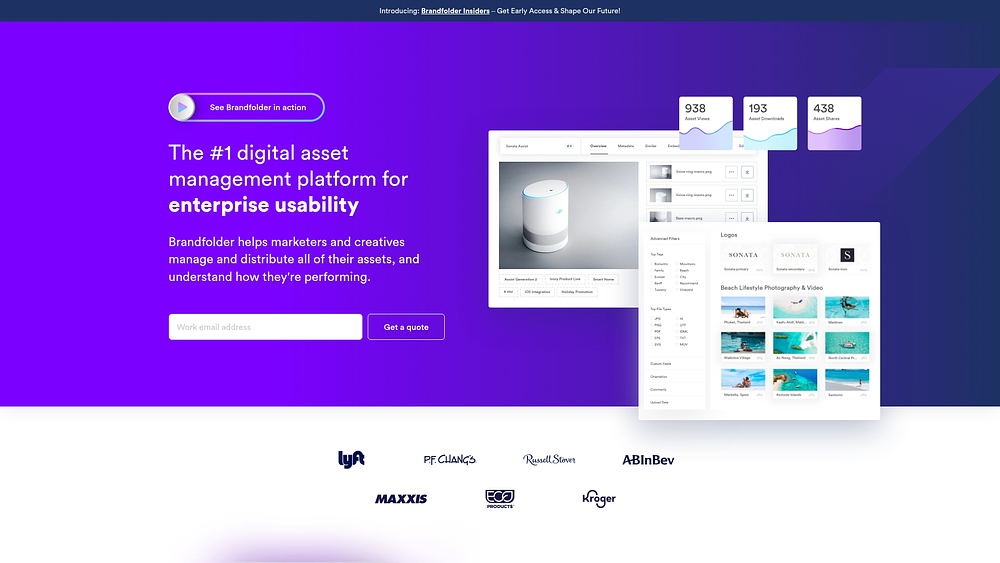
For organizations navigating complex asset libraries, Brandfolder offers a sophisticated approach to brand control. By merging AI-driven asset intelligence with Smartsheet’s work management tools, it provides significant value to enterprises that need to oversee extensive portfolios across numerous teams and distribution channels.
Use case:
Ideal for companies with intricate brand portfolios that demand advanced organization, automated workflows, and deep usage analytics across distributed teams.
Key features:
- AI-driven Brand Intelligence handles auto-tagging and recognition of video scenes and speech for actionable insights.
- Smart CDN facilitates on-the-fly asset transformations and embedding across channels.
- Content Automation empowers non-designers to generate on-brand materials via controlled templates.
Pricing:
- Premium: quote-only, includes SSO, analytics, and core automation.
- Enterprise: custom pricing for advanced automation, enterprise controls, Insights data connector, and vanity URLs.
- Professional services: are available for workflow setup and integration.
Considerations:
- The quote-only model can make budget planning less transparent.
- Some users report occasional upload performance issues and a learning curve for taxonomy setup.
4. Bynder
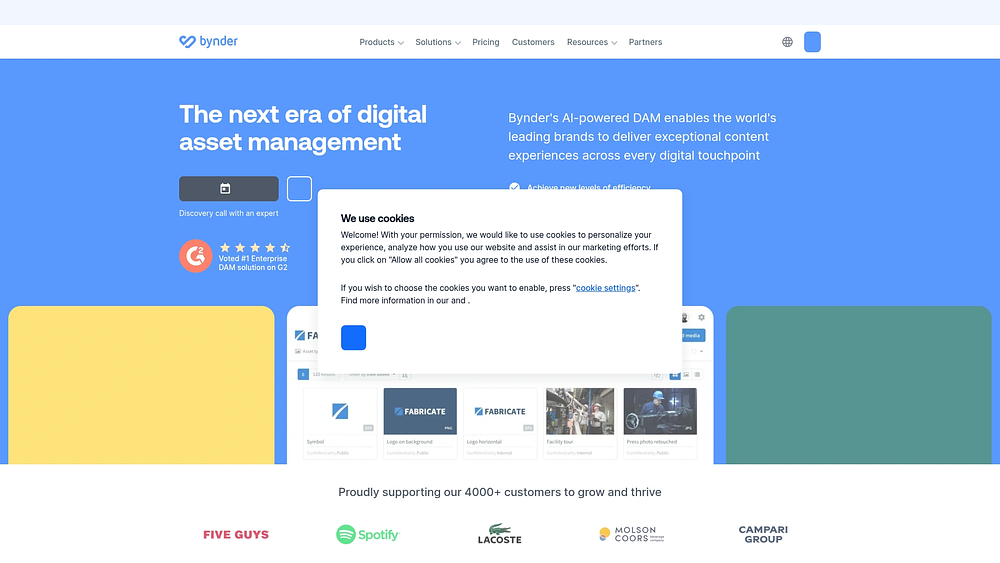
Global brands often turn to Bynder to automate the complex web of content creation and management. This platform focuses on content-centric work, pairing creative asset approvals with structured editorial workflows to ensure brand consistency remains intact across international borders.
Use case:
Large enterprises managing global brand operations that require extensive workflow automation and robust integration capabilities.
Key features:
- Asset workflow automation: directs creative files through configurable approval paths with annotations, version control, and multi-step reviews.
- Content workflow management: facilitates planning, templating, drafting, and reviewing of editorial content with real-time collaboration and CMS connectors.
- Enterprise integrations: connects with over 145 prebuilt integrations across CMS, PIM, marketing automation, and eCommerce platforms.
Pricing:
- Custom pricing: quote-only, tailored to users, storage, and product mix.
- Modular approach: core AI-powered DAM with add-ons for Asset Workflow, Content Workflow, Studio, and Analytics.
- Free trial: 14-day self-service trial for the Content Workflow module.
- Enterprise focus: costs vary based on ecosystem usage and negotiated terms.
Considerations:
- Some organizations report complex initial setups and time-intensive implementations.
- The Content Workflow interface is English-only, which may hinder localization efforts.
5. Sprout Social
Sprout Social tackles the specific challenge of maintaining a unified voice across fragmented social networks. It combines robust social media management with enterprise-grade governance, offering the automation and approval structures necessary for large organizations. Its integration with Salesforce Service Cloud further bridges the gap between brand management and customer service.

Use case:
Organizations with complex social brand operations that need strict governance, automated workflows, and integrated customer service tools.
Key features:
- Smart Inbox with case management streamlines social customer service and monitoring.
- Multi-step approval processes involve external stakeholders and automated routing based on content type.
- Embedded AI assistance supports content creation, reply suggestions, and sentiment analysis.
Pricing:
- Standard: $199/month per seat (5 social profiles).
- Professional: $299/month per seat (unlimited profiles, AI Assist for posts).
- Advanced: $399/month per seat (AI Assist for replies, sentiment analysis, API integrations).
- Enterprise: custom pricing (white-glove onboarding, SSO, priority support).
- Add-ons: premium Analytics and Listening are available as add-ons.
- Nonprofit discounts: available for qualifying organizations.
Considerations:
- Advanced features like automated rules are locked behind higher-tier plans.
- Seat-based pricing scales linearly, and essential add-ons require separate purchases.
6. Canva
Canva bridges the gap between professional design standards and team-wide accessibility. It democratizes the creative process by pairing intuitive design tools with enterprise-level governance, allowing non-designers to produce materials that adhere to brand standards without constant oversight.
Use case:
Organizations looking to empower non-designers to create compliant materials while maintaining centralized control over the visual identity.
Key features:
- Brand kit functionality: centralizes colors, fonts, logos, and templates for a consistent identity.
- Template management and collaboration: offers ready-made layouts with real-time editing and task assignments.
- Approval workflows and publishing: includes approver roles and scheduling tools to maintain standards during distribution.
Pricing:
- Free: $0/month with core editor, 1 Brand Kit, and 5GB storage
- Pro: $15/month includes premium content, 5 Brand Kits, and 100GB storage
- Business: $20/month adds collaboration admin tools, 100 Brand Kits, and 500GB storage
- Enterprise: custom pricing with SSO, multi-team management, and 1TB storage.
- Promotional offers available: periodic discounts and limited-time pricing incentives may apply.
- Nonprofit pricing options: discounted plans are available for eligible nonprofit organizations.
Considerations:
- Lacks the depth of dedicated work management platforms regarding resource management and portfolio analytics.
- Enterprise security features and AI indemnity often require higher-tier plans.
7. Marq
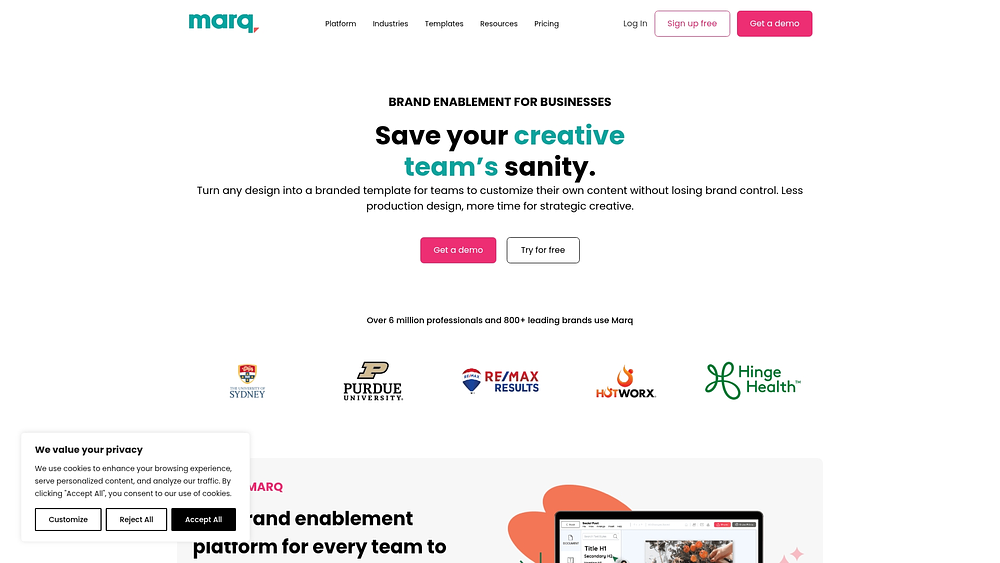
Marq addresses the tension between creative freedom and brand rigidity through smart templating. By utilizing lockable templates and automated workflows, it ensures that distributed teams can produce content without breaking brand rules. This makes it particularly effective for organizations with strict compliance needs across various locations.
Use case:
Companies that require strict adherence to brand standards through controlled templates, especially those generating high volumes of similar materials across regions.
Key features:
- Template governance: locks logos, fonts, and colors to restrict non-brand elements.
- Approval workflows: configurable processes at account, template, and user levels with real-time collaboration.
- Data automation: smart fields connect to CRM systems and data sources to reduce manual errors.
Pricing:
- Free: $0/month for individuals with basic needs.
- Pro: individual plan with premium templates and smart fields.
- Team: SMB plan with advanced locking and admin roles.
- Enterprise: quote-based with unlimited storage, SSO, and advanced analytics.
- Annual billing: offers savings of 30-33%.
Considerations:
- Advanced analytics are often gated behind higher tiers or add-ons.
- InDesign import limitations may necessitate template redesigns for complex layouts.
8. Canto
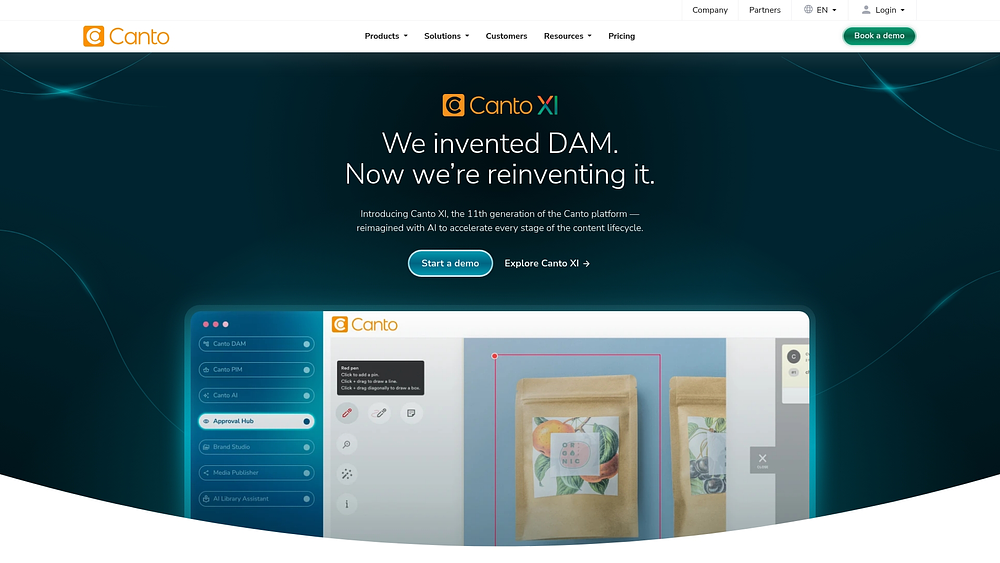
With a focus on visual discovery, Canto merges robust asset organization with modern AI search tools. It integrates proofing and approval processes directly into the library, serving teams that manage complex assets across multiple channels. Its recent acquisition of MerlinOne has further bolstered its AI capabilities, making it a strong contender for organizations needing both control and speed.
Use case:
Organizations needing sophisticated asset organization paired with native review workflows, particularly those requiring multiple branded portals.
Key features:
- AI Visual search: enables instant discovery through visual recognition and intelligent filtering.
- Approval Hub: centralized proofing with markup tools and version comparison.
- Workspaces: private areas for work-in-progress assets with controlled access.
Pricing:
- Core essentials: custom quote for foundation features.
- Enhanced collaboration: custom quote for advanced capabilities.
- Add-ons: approval Hub, Media Publisher, and Workflows sold separately.
- Free trial: available on request.
Considerations:
- Workflows tend to be linear, which may not suit complex project management needs.
- Several key workflow capabilities require purchasing separate add-ons.
9. Hootsuite
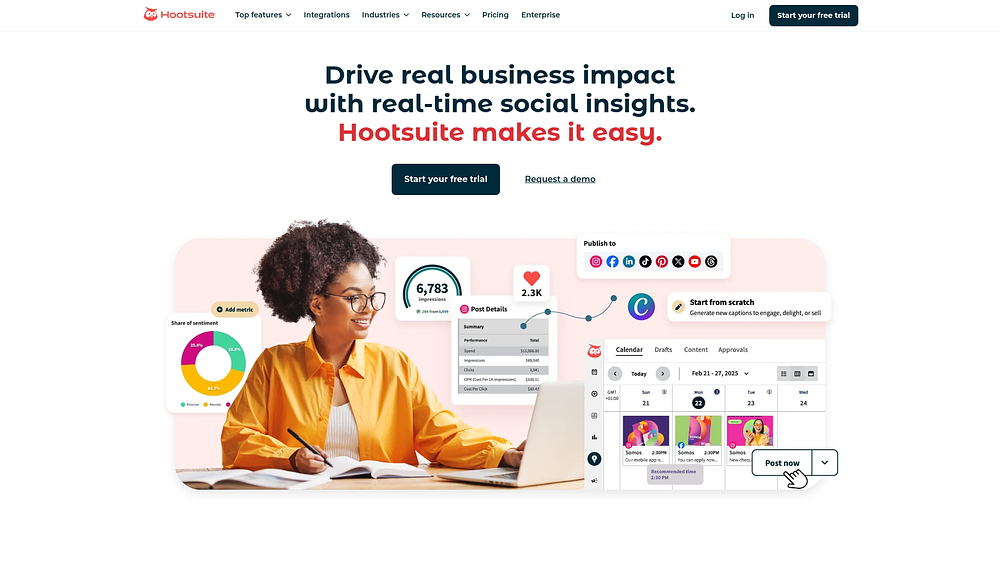
Hootsuite provides the command center necessary for regulated industries and large teams to manage social presence safely. It excels in coordinated planning and multi-tier approvals, ensuring that content adheres to strict compliance standards before it ever reaches the public eye.
Use case:
Organizations managing brand presence across multiple social channels that require scheduling, monitoring, and governed collaboration.
Key features:
- Multi-tier approval workflows with granular permissions.
- Advanced Inbox with skill-based routing and sentiment detection.
- Unified calendar for collaborative planning and cross-platform scheduling.
Pricing:
- Standard: $99/month per user (annual).
- Advanced: $249/month per user (annual).
- Enterprise: custom pricing with add-ons.
- Nonprofit discounts: reduced pricing available for qualifying organizations.
Considerations:
- Advanced governance features are restricted to higher-tier plans.
- Many Advanced Inbox capabilities are Enterprise add-ons.
10. Slate
To avoid confusion, it is important to clarify that the well-known brand “Slate” is not a brand asset management platform. Instead, Slate is a respected digital media publisher recognized for its editorial voice and original journalism. It functions as a content destination rather than a solution for managing brand assets or workflows.

Use case:
For staying informed. Slate is an online magazine and podcast network known for its distinctive voice on politics, news, and culture. It’s a tool for your brain, not your brand assets.
Key offerings:
- In-depth articles and opinion pieces from a team of seasoned journalists.
- A popular network of podcasts, including Slow Burn and Political Gabfest.
- Slate Plus, a premium membership for ad-free experiences and bonus content
Pricing:
A Slate Plus membership is available for a monthly or annual fee.
Considerations:
- This is a media company, not a brand management or workflow software. This is a media company, not a brand management or workflow platform.
11. Meltwater
Meltwater fuses the breadth of media intelligence with the precision of workflow management. It is designed for communications teams that need to monitor brand perception across traditional and digital channels while simultaneously coordinating complex approval processes for their own content.
Use case:
Organizations requiring integrated media monitoring and social workflow management with enterprise-grade governance.
Key features:
- Multi-step approval workflows with up to five approvers.
- Unified inbox with agent collision prevention and automated moderation.
- Integrated influencer marketing workflows within the social suite.
Pricing:
- Enterprise pricing available through custom quotes only.
- Self-serve plans were discontinued in April 2026.
- Professional services are priced separately for implementation and setup.
Considerations:
- Quote-only pricing requires sales conversations.
- Some users note a learning curve due to the platform’s complexity.
12. Sprinklr
Sprinklr operates as a total experience management system, connecting brand interactions across advertising, social media, and customer service. It is built for large enterprises that need to consolidate marketing work into a single operational system, offering deep integrations from content creation through to campaign execution.
Use case:
Large enterprises managing brand experiences across multiple touchpoints requiring a unified platform.
Key features:
- Unified campaign orchestration from intake to delivery.
- Editorial calendar and production dashboards connected to publishing and analytics.
- AI-powered compliance scanning and governance controls.
Pricing:
- Enterprise pricing: custom quotes only.
- Self-serve options: discontinued as of April 2026.
- Professional services: additional costs for setup.
Considerations:
- Steep learning curve often requiring technical consultant support.
- Enterprise-focused pricing lacks transparency for smaller teams.
13. Agorapulse
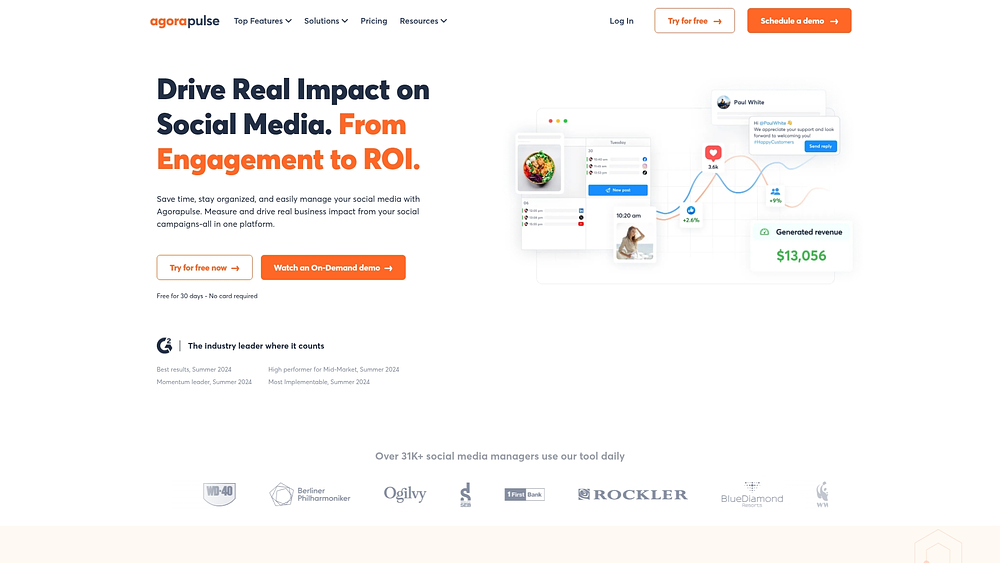
Agencies and marketing teams often choose Agorapulse for its ability to streamline external approvals. The platform focuses on facilitating collaboration through shared calendars and providing ROI-focused reporting, making it a practical choice for managing workflows involving multiple clients or stakeholders.
Use case:
Organizations managing brand presence across social channels that need scheduling, monitoring, and streamlined client approvals.
Key features:
- External shared calendars: allow unlimited client approvals without extra seats.
- Unified social inbox: centralizes mentions and messages with collision detection.
- ROI dashboard integration: connects social performance to Google Analytics.
Pricing:
- Free: $0/month for one user and three profiles.
- Standard: $79/user/month (annual) for ten profiles.
- Professional: $119/user/month (annual) adds team workflows.
- Advanced: $149/user/month (annual) includes bulk publishing.
- Custom: quote-based for enterprise needs.
Considerations:
- Multi-step approvals are limited to custom enterprise plans.
- X (Twitter) capabilities require a separate paid add-on.
14. Brand24
Real-time reputation management is the core of Brand24. By leveraging AI to monitor millions of online sources, it provides marketing teams with immediate insights into brand sentiment. Its project-based structure allows for unlimited user collaboration, making it easier for teams to respond collectively to conversations across the web.
Use case:
Organizations requiring comprehensive brand monitoring with cross-functional team access for rapid response management.
Key features:
- Real-time tracking across social media, news, and blogs with customizable alerts.
- AI-powered sentiment analysis and anomaly monitoring.
- Project-based organization with QuickShare reporting.
Pricing:
- Individual: $199/month ($149/month annually).
- Team: $299/month ($249/month annually).
- Pro: $399/month ($299/month annually).
- Business: $599/month ($499/month annually).
- Enterprise: from $999/month.
- API access: available for an additional fee.
Considerations:
- Historical data backfill is limited to roughly 30 days.
- API restrictions prevent access to private Facebook groups or Instagram Stories.
15. Awario
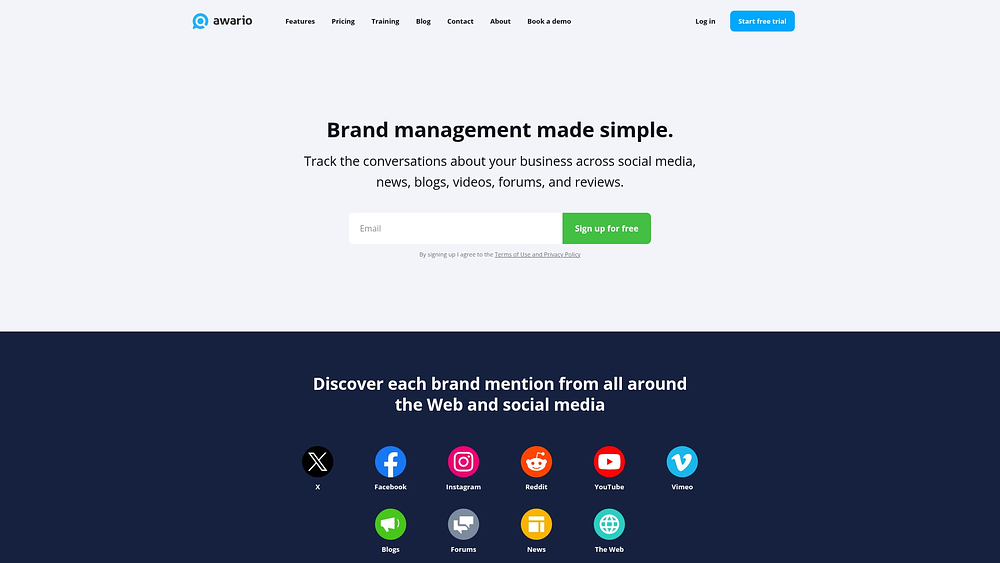
Awario casts a wide net, scanning billions of web pages daily to provide immediate brand intelligence. It combines proprietary web crawling with social APIs to offer comprehensive coverage. Teams utilize its streamlined workflow to identify high-impact conversations and prioritize responses to emerging opportunities or threats.
Use case:
Organizations seeking comprehensive brand monitoring with transparent pricing and immediate setup.
Key features:
- Real-time mention tracking with Boolean search capabilities.
- Sentiment analysis and influencer identification.
- Team collaboration features, including role-based access.
Pricing:,
- Starter: $29/month (annual).
- Pro: $89/month (annual).
- Enterprise: $249/month (annual).
- Custom: quote-based for larger quotas.
Considerations:
- Task assignment relies on tags rather than formal assignee workflows.
- Export features are restricted to higher tiers.
Essential features of workflow-centric brand management platforms
A strong brand system does more than store files. It connects planning with execution, transforming scattered activities into structured processes that deliver consistent outcomes every time.
The key is converting random tasks into trackable workflows. The following four features distinguish basic file storage from a full-featured brand command center:
Automated approval workflows
Manual email approvals can slow project progress. Automated workflows accelerate work by routing tasks to the right people at the right time, enabling teams to focus on decisions instead of email coordination.
These systems combine speed with oversight, turning uncertainty into predictability:
- Intelligent routing: tasks advance automatically based on triggers, with reminders to keep timelines intact.
- Custom triggers: on monday work management, automations notify the next reviewer upon status changes, route requests by category, or escalate items nearing deadlines.
- Stronger oversight: dashboards offer leadership a real-time view of pending, blocked, and ready-to-ship items.
Cross-departmental collaboration
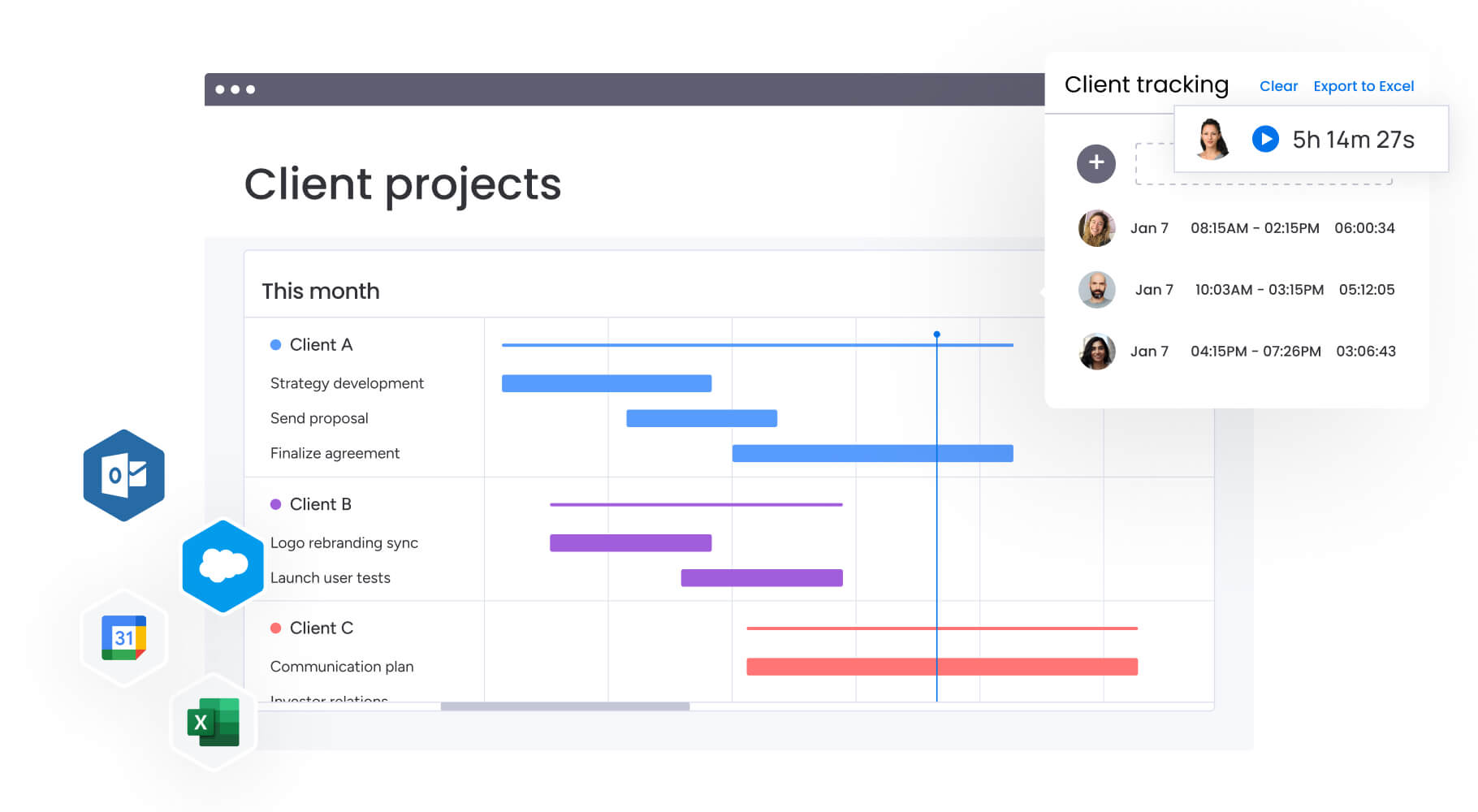 Brand consistency requires teams to work in sync. Marketing, creative, legal, and regional teams need a single workspace to view each other’s progress, eliminating confusion over which version of a file is current.
Product launches highlight this need. Teams managing positioning, campaigns, and support materials rely on Calendar, Timeline, and Gantt views to coordinate activities. Shared dashboards ensure all stakeholders align on schedules and priorities.
AI-powered brand governance
Effective brand governance prevents problems rather than reacting to them. AI helps teams focus on decisions that require human judgment by filtering noise and highlighting relevant items.
Organizations using monday work management leverage AI to enhance governance:
- Triage requests at scale: the Categorize AI Block labels incoming requests by urgency or region.
- Turn documents into trackable fields: extract info from files captures data from briefs or contracts into board columns.
- Support global rollouts: translate accelerates localization, while Summarize condenses briefs into concise snapshots.
Seamless tech stack integration
A brand platform must connect with the systems teams already use. Without integration, workflows remain fragmented.
Integrations reduce manual handoffs by linking conversations, files, and requests to delivery. Teams connect Gmail or Outlook for inbound work, Slack or Microsoft Teams for updates, and Google Drive for file storage, keeping execution grounded in a single source of truth.
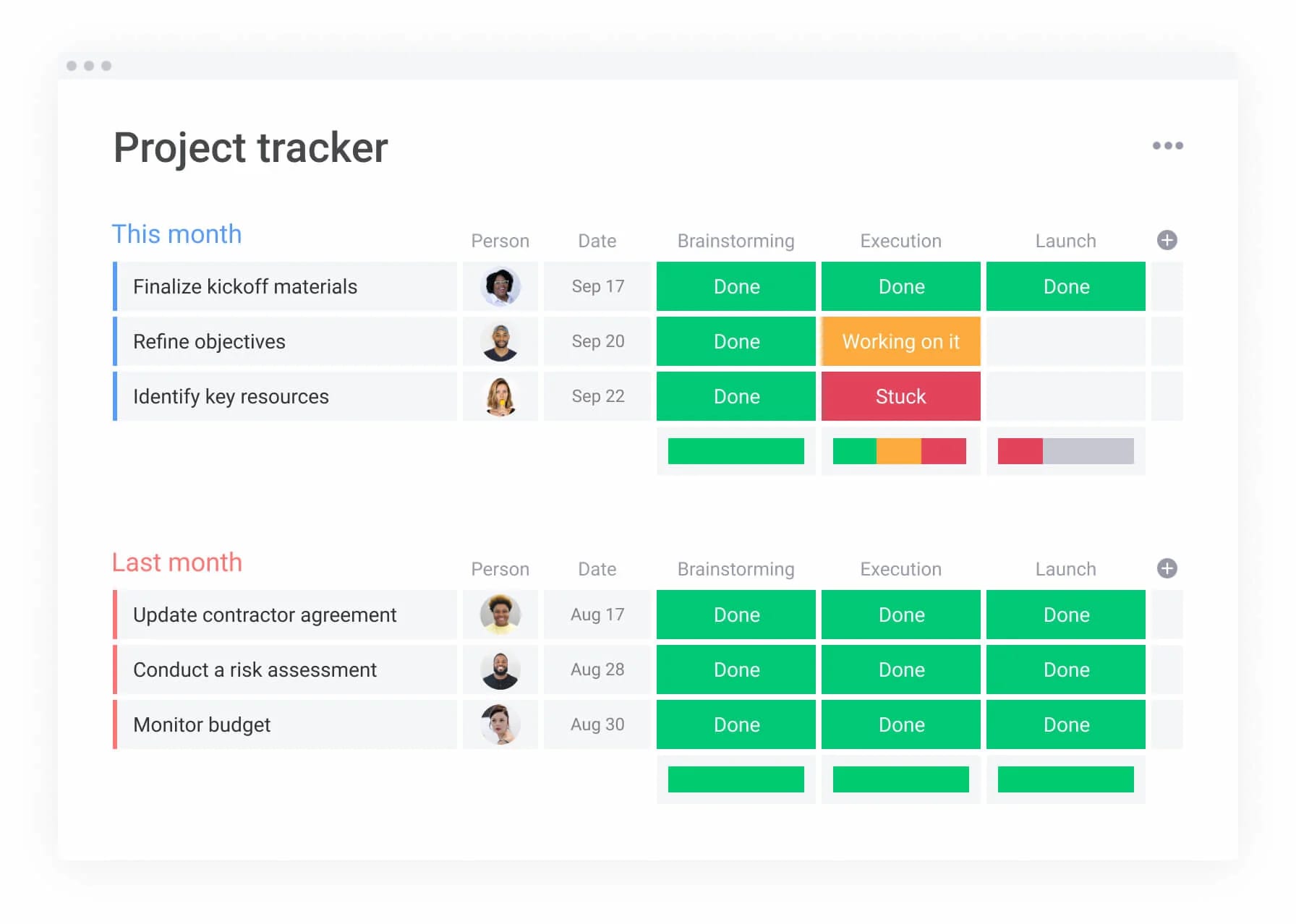
Seven key benefits of operational brand management software
Good brand software does way more than store your assets. It connects your strategy to actual work, giving leaders real-time visibility, teams a clear roadmap, and everyone the data they need to make smart calls.
Operationalizing your brand yields tangible results: faster coordination, tighter governance, and predictable delivery. Here are the benefits of running brand work as a connected system.
Accelerated campaign execution
Campaign delivery accelerates when manual handoffs are eliminated through marketing planning automation. Automated workflows link intake, production, review, and launch, ensuring everyone knows the next step.
Organizations using monday work management coordinate campaigns by routing requests through forms, tracking timelines via Calendar or Gantt views, and using automations for reviewer notifications in their marketing planning workflows. This results in fewer bottlenecks and more consistent launches.
Optimized resource distribution
To staff high-value creative work without burnout, you need a real-time view of capacity.
Managers use monday work management to plan production with Workload views, adjusting assignments as priorities shift. Leaders can review resource signals through dashboards, distributing work based on actual constraints rather than guesswork.
Enhanced brand compliance across teams
Consistency builds trust. A structured workflow ensures every department adheres to the same review process, which is crucial when work spans regions and agencies.
Teams on monday work management standardize request fields, approval stages, and milestones through marketing planning frameworks so stakeholders understand what “ready” implies. AI Blocks categorize requests and summarize change logs, simplifying governance at scale.
Real-time performance visibility
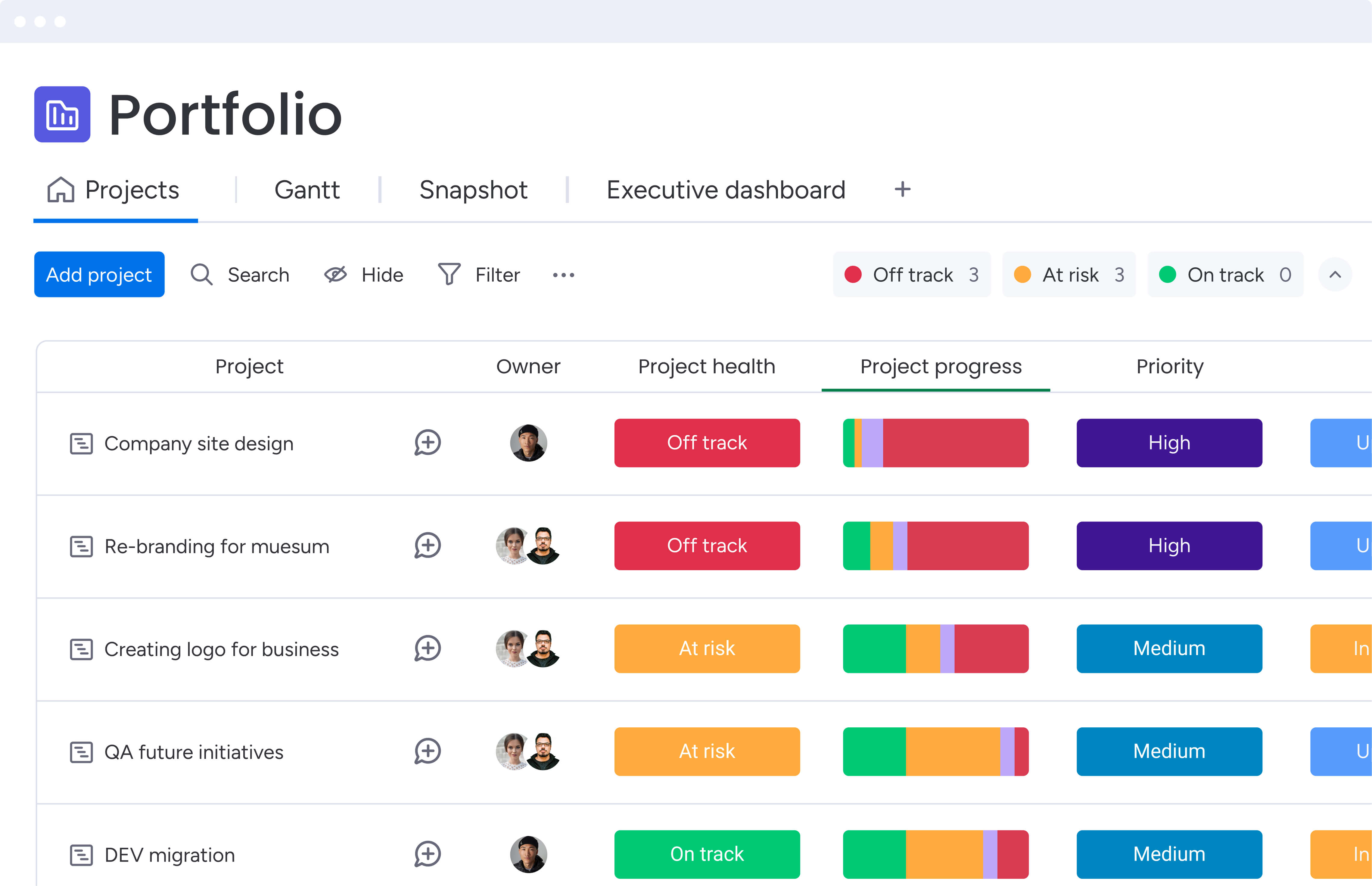
Leadership requires portfolio visibility without demanding constant updates. Dashboards provide live reporting across boards, allowing teams to track delivery signals in real time.
With monday work management, leaders monitor campaign execution through dashboards, drilling into underlying items when necessary. This fosters faster decisions and fewer surprises.
Reduced asset recreation costs
Rework often stems from missing context or outdated inputs. Operational brand management mitigates this by connecting briefs, files, owners, and timelines.
Teams using monday work management standardize requests via forms, centralize files through integrations like Google Drive, and track approvals within the workflow. This encourages reuse and reduces unnecessary recreation.
Improved cross-regional coordination
Global brand success relies on headquarters setting the framework while regions execute locally. Shared workflows ensure consistency, while specific views and AI assist cross-time zone collaboration.
Teams coordinate localization on monday work management by tracking regional variants in a shared board and using AI Blocks like Translate and Summarize for handoffs. Dashboards keep global leaders informed without hindering local teams.
Streamlined stakeholder alignment
Alignment improves when everyone references the same source of truth. When stakeholders view status, owners, and dates in one location, decisions occur faster.
monday work management grounds alignment in live reporting, offering dashboards for leadership and detailed views for teams. This reduces status meetings and simplifies approval management.
How to select the right brand management platform
Selecting a brand management platform is a strategic decision that shapes how your company executes its vision. The right platform serves as an operational backbone, connecting planning, execution, and reporting. Here is how to find the best fit:
Step 1: map your workflows as they are, not as you wish they were
Before evaluating platforms, examine your processes carefully. Document how work flows from intake to delivery, highlighting areas where decisions stall.
This workflow audit serves as your blueprint. Key points to capture include:
- Key handoffs: where teams exchange work.
- Hidden bottlenecks: where review cycles slow delivery.
- Approval cycles: which stages require structure versus visibility.
Step 2: demand a connected ecosystem
Brand work relies on the broader business, from communication to project planning. A disconnected platform increases manual work and version drift.
Seek strong integrations and an open API. With monday work management, teams connect Slack or Microsoft Teams for collaboration, Gmail or Outlook for requests, and Google Drive for files, using the open API for custom connections.
Step 3: plan for growth and complexity
Growth brings more regions, stakeholders, and concurrent initiatives. Your platform must handle complexity without enforcing rigid processes on every team.
Prioritize flexible workflow design and reporting that aggregates across boards. monday work management supports this with customizable views (Kanban, Gantt, Timeline, Workload) and dashboards that help leaders manage portfolios without constant rebuilding.
Step 4: define your return on investment
ROI is realized when teams adopt the platform and keep data current. This requires a workflow teams can run daily.
monday work management is designed for high adoption and rapid setup, supporting faster payback. Forrester’s Total Economic Impact™ study reports a payback period of less than 4 months.
Three emerging trends transforming brand management
Brand management is shifting from a reactive checklist to an operating model that spans the business. These trends illustrate how leading organizations prepare for increased volume and expectations.
AI digital workers for brand operations
Imagine delegating monitoring and analysis to an always-on specialist. Digital workers promise to handle the operational weight that slows teams down, without replacing people.
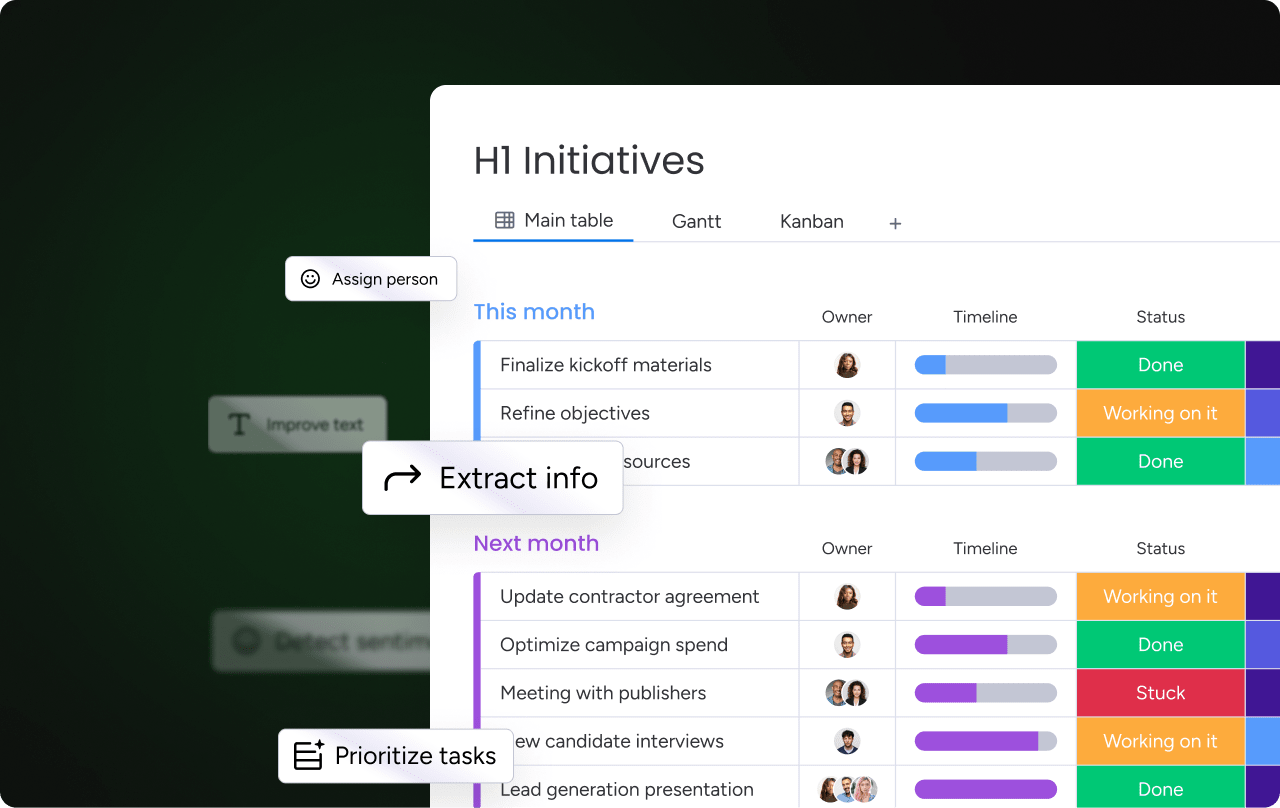
As part of monday.com’s AI offering, the Digital Workforce (coming soon) includes:
- Project analyzer: flags bottlenecks and keeps projects on track.
- Campaign manager: analyzes performance and delivers actionable insights.
Currently, AI Blocks reduce manual work by categorizing requests, summarizing discussions, extracting details, and translating content.
Predictive analytics for brand performance
Brand leaders desire early signals rather than late reports. Predictive thinking begins with centralizing execution data to surface trends.
Teams using monday work management build dashboards that aggregate delivery and performance signals for marketing planning. When operations run in one workspace, leaders can spot patterns early and adjust priorities confidently.
Enterprise-wide brand orchestration
A brand is the sum of every customer interaction. Brand work scales only when operations connect across departments, not just within marketing.
Organizations use monday work management to coordinate shared workflows aligning marketing, operations, and other units. Dashboards keep leadership informed, while teams maintain ownership within their boards.
Let AI handle the heavy lifting
As brand volume grows, so does the admin load. monday.com’s AI offering helps teams keep pace by converting unstructured inputs into action-ready data.
- Summaries that move work forward: use the Summarize AI Block to turn briefs and threads into decisions.
- Faster intake processing: use Categorize to label requests by urgency or region.
- Structured data from messy inputs: use Extract info from files to pull details from documents into your workflow.
| Capability | monday work management | Traditional DAM systems | Social media platforms |
|---|---|---|---|
| Primary focus | Running workflows across teams and stakeholders | Managing and organizing assets | Publishing and managing social channels |
| Approvals and intake | Forms, automations, and project intake & approvals patterns | Usually asset-level reviews | Typically limited to content review |
| Cross-department collaboration | Shared boards and dashboards across departments | Often centered on marketing and creative | Usually centered on social teams |
| AI support | AI Blocks (plus Digital Workforce listed as coming soon) | Commonly focused on organizing assets | Commonly focused on channel analytics |
| Integration ecosystem | Integrations with common work apps and an open API | Often centered on creative and storage apps | Centered on social networks |
| Customization | Flexible views, dashboards, and workflow design | More fixed to DAM structure | More fixed to channel workflows |
While asset systems focus on files and social platforms on channels, monday work management helps teams run the operational system behind the brand, from intake to delivery to reporting.
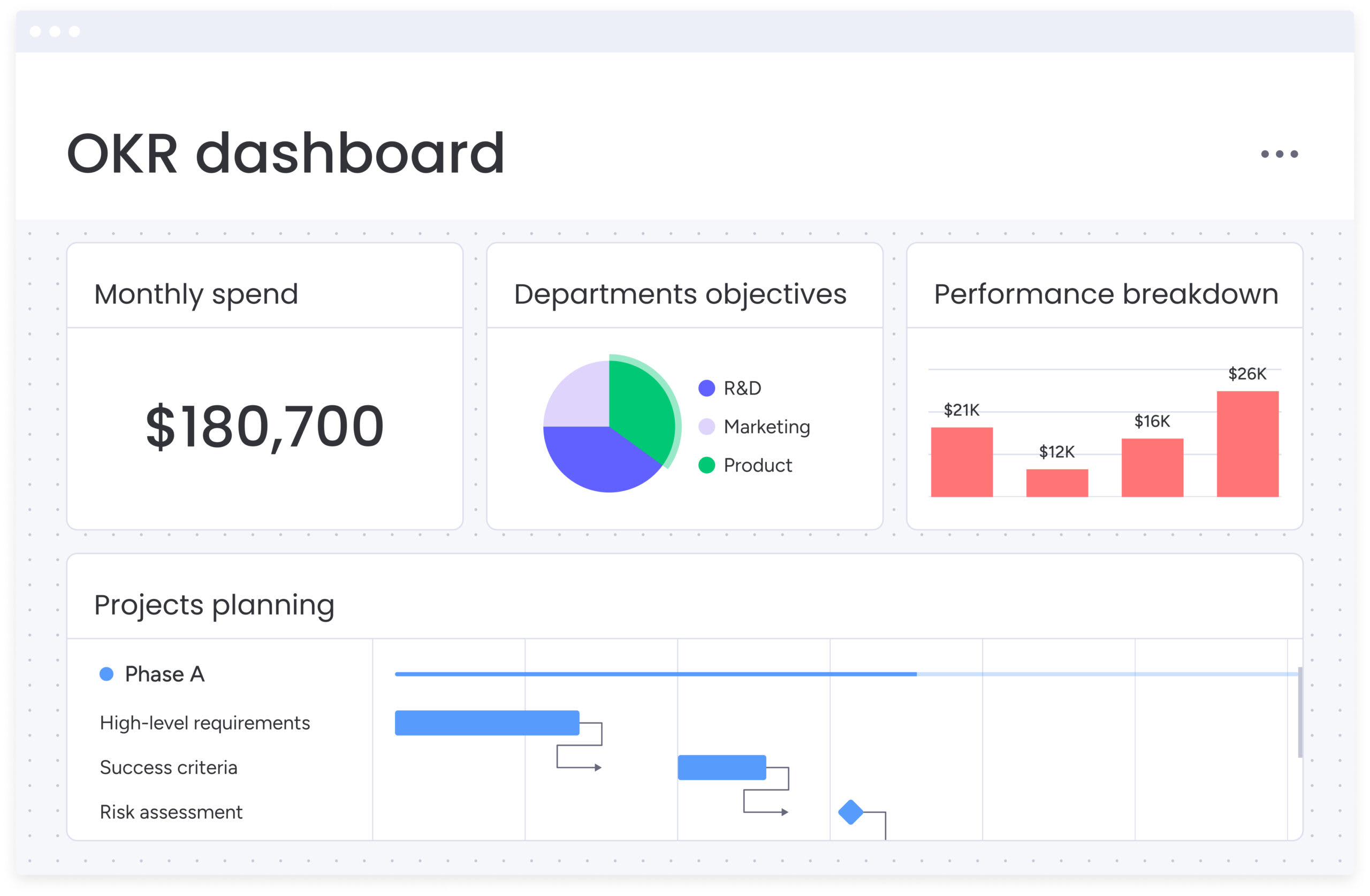
Why monday work management leads in operational brand excellence
Modern brand teams face a common set of challenges: fragmented workflows, slow approvals, limited visibility across regions, and growing pressure to deliver more campaigns with the same resources. When brand work lives in disconnected tools and folders, leaders lose oversight, teams waste time on coordination, and consistency becomes difficult to maintain at scale.
monday work management directly addresses these challenges by turning brand strategy into structured, executable workflows. It connects daily tasks to broader business goals, giving teams a single system to plan, execute, review, and report on brand work without adding operational overhead.
How monday work management enables operational brand excellence:
- Centralized workflows across teams: marketing, creative, legal, and regional stakeholders collaborate in one shared workspace with real-time visibility.
- Automated intake and approvals: forms, automations, and project intake & approval patterns eliminate manual follow-ups and accelerate delivery.
- Leadership-level visibility: live dashboards aggregate campaigns, timelines, and risks across portfolios without status meetings.
- AI-powered governance: AI Blocks help categorize requests, summarize briefs, extract data from files, and support localization at scale.
- Flexible execution at scale: customizable views (Kanban, Timeline, Gantt, Workload) adapt to how teams actually work, while maintaining governance.
The result: faster campaign execution, stronger brand compliance, better resource utilization, and clearer alignment between execution and strategy. Teams gain efficiency and control without rigidity, and leaders gain confidence without micromanagement.
In 2026, operational brand excellence isn’t about more tools, it’s about running your brand as a system. monday work management provides that system, helping organizations scale brand impact while keeping work simple, visible, and connected.
Frequently asked questions
What is brand management software?
Brand management software is a centralized platform that connects people, processes, and assets to maintain brand consistency across teams, regions, and channels. It goes beyond basic file storage to become the operational system for running brand work—managing campaigns, automating approvals, coordinating creative production, and ensuring every asset aligns with brand guidelines. Modern brand management software transforms scattered workflows into structured, repeatable processes that improve efficiency, governance, and visibility.
How does brand management software improve operational efficiency?
Brand management software improves efficiency by eliminating manual handoffs, automating approval workflows, and centralizing work in one shared system. Teams spend less time searching for files, chasing approvals, or coordinating across email threads. Automated routing ensures requests reach the right people at the right time, while dashboards provide real-time visibility into campaign status, bottlenecks, and delivery timelines. This allows teams to focus on execution rather than administration, accelerating campaign delivery and reducing rework.
What features should I look for in brand management software?
Look for platforms that offer automated approval workflows, cross-departmental collaboration tools, AI-powered governance features, and seamless integrations with your existing tech stack. The best brand management software provides flexible views (Kanban, Timeline, Gantt, Workload) to match how teams actually work, customizable dashboards for leadership visibility, and standardized intake processes to protect team capacity. Platforms like monday work management combine these capabilities in one adaptable system designed for operational excellence.
How does AI enhance brand management?
AI enhances brand management by automating repetitive administrative tasks that slow teams down. AI-powered features can categorize incoming requests by urgency or region, summarize lengthy campaign briefs into actionable points, extract key details from documents directly into workflows, translate content for global markets, and detect sentiment in feedback. This allows teams to maintain governance at scale without adding manual overhead, freeing people to focus on strategic decisions rather than operational busywork.
Can brand management software support global teams?
Yes. Modern brand management software is built to coordinate work across regions, time zones, and languages. Shared workflows ensure consistency while allowing local teams to execute within their context. Features like AI-powered translation, centralized dashboards, and flexible permissions enable headquarters to set the framework while regions adapt and deliver locally. Platforms like monday work management provide the visibility global leaders need without slowing down regional execution.
How is monday work management different from traditional DAM systems?
Traditional Digital Asset Management (DAM) systems focus primarily on organizing and storing files. monday work management focuses on running the workflows behind the brand—from intake and planning through execution, approvals, and reporting. While DAM systems manage assets, monday work management manages the work itself, connecting marketing, creative, legal, and regional teams in shared workflows with automated approvals, live dashboards, and AI-powered governance. It's the difference between storing a brand and actively running one.
What is the typical ROI of brand management software?
ROI is realized when teams adopt the platform, keep data current, and reduce time spent on manual coordination. Organizations using monday work management report faster campaign delivery, reduced approval bottlenecks, better resource utilization, and stronger brand compliance. According to Forrester's Total Economic Impact™ study, monday work management delivers a payback period of less than 4 months, driven by high adoption rates, reduced rework, and improved cross-team visibility.
How do I choose the right brand management platform for my organization?
Start by mapping your current workflows to identify bottlenecks, handoffs, and approval cycles. Look for platforms that integrate with your existing tech stack, support flexible workflow design, and scale as your organization grows. Prioritize systems that encourage adoption through intuitive interfaces and provide leadership visibility without requiring constant manual updates. Test platforms with real workflows during trials, and define clear ROI metrics—faster delivery, reduced rework, or improved compliance—to measure success.

 Get started