


A marketing team launches campaigns across multiple channels. The creative is strong. The messaging is consistent. Budgets are approved.
A few weeks later, traffic looks fine. Engagement seems healthy. But one question remains unanswered: is anyone actually remembering the brand?
That is the difference between activity and awareness.
Brand awareness is not about being seen once. It is about being remembered. When someone enters your category, your name should feel familiar. Ideally, it should be the first one that comes to mind.
Strong awareness makes everything else easier. Sales conversations start warmer. Ads perform better. Customers trust faster. Without it, every campaign has to work harder just to introduce who you are.
Building that kind of recognition does not happen by accident. It requires consistent messaging, repeated exposure, and coordinated execution across every channel. When those elements work together, brand visibility compounds. When they do not, even great creative gets forgotten.
The sections ahead explore how to build awareness intentionally, measure what matters, and turn visibility into long-term advantage.
Key takeaways
- Consistent multi-channel execution matters: Focus on a few high-impact tactics and maintain consistent messaging across platforms to build lasting brand awareness.
- Measure meaningful metrics: Track unaided brand recall, share of voice, and direct website traffic to understand real brand recognition rather than relying on vanity metrics.
- Content should provide value and be shareable: Educational, behind-the-scenes, and user-generated content amplifies reach and strengthens emotional connections with the audience.
- Employees and partnerships amplify reach: Turning employees into brand advocates and collaborating with strategic partners extends visibility without significantly increasing budget.
- Centralized campaign management improves coordination: Solutions like monday.com help unify workflows, track performance, and ensure consistent execution across teams and channels.

What is brand awareness and why does it matter?
Brand awareness measures how well people recognize your brand — its qualities, values, and unique differentiators. It reflects whether your brand comes to mind when someone needs what you sell. When your brand is top of mind, awareness is at work.
This awareness forms the foundation for every marketing effort. Without it, trust cannot develop, and without trust, consideration and purchase do not follow. The sequence matters: people need to see your brand before they believe in it, and they need to believe before they buy.
The direct link between brand awareness and revenue growth
Brand awareness drives revenue by establishing familiarity and trust. Companies with strong brand recall close deals faster because prospects already know them, making every marketing dollar more efficient. Your budget stretches further when your name is recognized.
This connection shows up in tangible metrics across the customer lifecycle:
- Higher conversion rates: Familiar brands convert better than unknowns. When trust exists before the first sales call, teams can focus on fit instead of proving credibility.
- Reduced marketing costs: Strong awareness lowers customer acquisition costs. More people search for your brand by name, reducing reliance on paid ads.
- Premium pricing power: recognized brands command higher prices. Customers see them as safer bets and pay more for confidence.
How strong brand recognition creates competitive advantage
Brand awareness acts as a business moat. In crowded markets, brands that occupy the top-of-mind position capture the majority of purchase intent. This mental real estate protects against new competitors and price wars.
Even if competitors offer better products, an established brand benefits from familiarity. Being first in someone’s mind often matters more than being first to market.
This position fosters loyalty that weathers pricing changes or occasional service issues—research shows that nearly three-quarters of consumers prefer to trade down within their known brand rather than switch to a cheaper competitor during economic downturns.
Why most teams struggle to build brand awareness at scale
The primary challenge is operational cohesion, not creativity. Marketing teams often work in silos, with social media managers, PR teams, and content creators running disconnected campaigns that dilute messaging.
Consistent messaging across channels strengthens audience confidence and recall. A centralized system to track initiatives ensures cumulative impact and ties every interaction to business goals.
Brand awareness drives revenue by establishing familiarity and trust. Companies with strong brand recall close deals faster because prospects already know them, making every marketing dollar more efficient.
Brand awareness vs brand recognition: understanding the key differences
Brand awareness and brand recognition are often treated as the same thing, but there are big differences to consider.
One measures whether people can identify your brand when they see it. The other measures whether they think of your brand without being prompted. That distinction changes how you set goals, design campaigns, and evaluate success.
The comparison below highlights how each concept influences customer behavior, measurement strategy, and business impact.
| Aspect | Brand recognition | Brand awareness |
|---|---|---|
| Definition | Identifying a brand when prompted by a logo, name, or packaging | Overall familiarity and recall of a brand's existence and qualities |
| Consumer action | "I know this brand" | "I need a solution, and I think of this brand" |
| Measurement | Aided recall surveys (multiple choice) | Unaided recall (open-ended questions) and search volume |
| Business impact | Validates visual identity and consistency | Drives organic traffic and purchase consideration |
| Marketing goal | Visual consistency and reach | Emotional connection and authority |
The 4 levels of brand awareness
Brand growth follows a predictable path, and your goal is to guide people up this pyramid. Each level represents a deeper connection between your brand and potential customers.
- Unaided awareness: The pinnacle. When someone is asked about your category, your brand is the first name they mention. This position usually commands the highest market share.
- Aided awareness: People recognize the brand when they see it on a list. You are in the mix, but not their first choice.
- Brand recognition: People identify your logo or product when they see it. This is the baseline for any advertising to succeed.
- Brand ignorance: People have never heard of your brand. Every new brand starts here.
Moving customers from recognition to brand preference
Advancing from recognition to preference requires consistent, positive experiences across every interaction. Being known is not enough — the brand must connect to specific values or outcomes.
This happens when you reliably deliver on promises and reflect who your customers want to be. Helpful content, responsive support, and community engagement all add meaning to your brand name. Coordinated campaigns ensure that a customer who sees an ad on LinkedIn receives a consistent message when visiting the website or attending a webinar.
Try monday.com
Proven tactics to build brand awareness that actually work
Brand awareness grows through deliberate execution, not random activity. The tactics below focus on practical ways to increase visibility and stay memorable. The key is choosing the right combination for your audience and committing to consistent delivery.
1. Create content that people want to share
Viral reach is rarely accidental. Shareable content comes from material that is genuinely valuable, entertaining, or emotionally compelling. Sharing amplifies reach by tapping into audience networks — without extra ad spend.
- Educational assets: Guides, templates, and original research that provide utility and encourage peer sharing.
- Behind-the-scenes access: Showcasing the human side of your business to build authenticity and connection.
- User-generated content: Inviting customers to share their own stories, creating social proof and engagement loops.
2. Partner with influencers who match your values
Influencer marketing works best when alignment takes priority over reach. Micro-influencers with highly engaged, niche audiences often generate more awareness than celebrities with passive followings.
- Vetting potential partners: Evaluate audience quality and engagement rather than just follower count.
- Negotiating clear deliverables: Define content expectations and performance goals precisely.
- Tracking engagement metrics: Prioritize meaningful interactions over vanity impressions.
3. Build strategic partnerships that expand your reach
Co-marketing allows brands to borrow credibility from non-competitive partners. Look for companies that serve the same customers but solve different problems. This approach doubles exposure with shared effort.
- Co-hosted webinars: Share expertise and audiences simultaneously.
- Joint research reports: Combine data and insights for greater market impact.
- Bundled service offerings: Create value propositions that benefit both customer bases.
These partnerships demonstrate your brand is part of a trusted network.
4. Turn employees into brand advocates
Employees are often the most underutilized marketing asset. When team members share content, it reaches far more people than posts from official channels.
- Pre-approved content: Provide ready-to-share posts that maintain brand consistency.
- Social media guidelines: Offer clear boundaries and best practices for professional sharing.
- Recognition systems: Acknowledge and reward active participants to encourage engagement.
This approach humanizes your brand and expands organic reach on platforms like LinkedIn.
5. Master social media brand building across platforms
Platform-specific strategies outperform generic content distribution. Each channel requires messaging tailored to how people use it.
- LinkedIn: Professional insights and industry leadership content.
- Instagram: High-quality visuals and authentic storytelling.
- X (Twitter): Concise thought leadership and real-time engagement.
Maintain a consistent voice while adapting format to each platform. Brands that align messaging and experience across channels are more likely to retain recall and preference.
6. Scale your content marketing strategy
Consistency drives content marketing success. Scaling requires a production system that separates planning, creation, and distribution. By utilizing content calendars and approval workflows, teams can maintain a steady drumbeat of publishing regardless of internal distractions.
Maximizing the value of each asset is critical. Repurposing a single, high-effort piece can fuel multiple channels for weeks.
- Single whitepaper becomes: A blog series, webinar content, and multiple social posts.
- Research report transforms into: Infographics, podcast episodes, and email campaigns.
- Case study expands to: Video testimonials, social proof posts, and sales collateral.
Modern platforms like monday.com help coordinate production through campaign boards, tracking every asset from ideation to launch.
7. Run smart paid advertising campaigns
Paid media should amplify organic momentum rather than replace it. Effective campaigns focus on reach and frequency within target accounts or demographics instead of immediate conversion.
- Testing creative variations: Continuously A/B test messaging, visuals, and formats.
- Budget allocation optimization: Allocate spend to the best-performing channels and audiences.
- Message coordination: Align paid efforts with organic themes to create a unified narrative impact.
8. Host memorable brand experiences and events
Experiential marketing builds emotional connections that digital ads alone cannot achieve. Whether through virtual summits or in-person pop-ups, events allow people to interact with your brand in ways other channels cannot replicate.
The value comes from creating shareable moments: experiences intentionally designed for attendees to capture and post, extending the impact far beyond the room. Interactive elements, exclusive content, and networking opportunities leave lasting impressions that people remember.
9. Launch referral programs that drive growth
Referral programs transform satisfied customers into an active growth engine. The most effective programs offer two-sided incentives, rewarding both the referrer and the new customer.
Beyond transactions, these programs demonstrate confidence in your brand’s value by encouraging recommendations. Integrate referrals into the natural customer journey so the ask feels relevant rather than intrusive.
10. Optimize for voice search and visual discovery
Search behavior is moving beyond typing alone. Voice search optimization focuses on conversational, long-tail keywords that directly answer questions.
Visual discovery optimization ensures your brand appears in:
- Image searches: Properly tagged and optimized visuals.
- Pinterest discovery: Branded pins that drive traffic and awareness.
- Google Lens results: Visual search optimization for product recognition.
This approach captures audiences who search by asking questions or showing images rather than typing.
11. Build communities that champion your brand
Community is the best way to keep customers around. By creating spaces where customers can connect with each other, the brand becomes the facilitator of value rather than just the provider through community building.
Effective community management includes:
- Peer-to-peer connection: Enable members to help and learn from one another.
- Brand facilitation: Step back and allow members to guide conversations.
- Value creation: Provide exclusive content, early access, or recognition.
Slack groups, forums, and event series are all effective platforms for community building.
12. Use AI to personalize brand experiences at scale
AI enables personalized experiences across thousands of interactions simultaneously. With international bandwidth now four times larger than before the COVID-19 pandemic, the digital landscape offers unprecedented opportunities for personalized brand experiences. Recommendation engines, dynamic website content, and personalized email triggers make every interaction feel tailored to the moment.
Teams using monday.com use AI Blocks to:
- Categorize incoming data: Automatically sort and tag brand mentions and feedback.
- Summarize campaign performance: Generate insights from complex data sets.
- Detect sentiment: Monitor customer feedback tone without manual effort.
Learn more: AI brand voice writer agent
How to measure brand awareness and prove marketing ROI
Measuring brand awareness requires both quantitative and qualitative insights. Direct attribution for top-of-funnel activity is challenging, but combining multiple signals reveals real market penetration. Establishing baseline metrics and tracking changes over time demonstrates progress clearly.
Essential metrics every marketing team should track
Tracking the right metrics prevents vanity reporting and focuses on genuine growth. Five key metrics include:
- Unaided brand recall: The percentage of respondents who mention your brand first without prompting.
- Share of voice: Your brand’s share of conversation across social media and press relative to competitors.
- Brand search volume: The frequency of direct searches for your brand.
- Social media reach: Unique viewers of your content and follower growth rates.
- Website direct traffic: Visitors typing your URL directly into a browser, bypassing search engines.
Building real-time brand performance dashboards
Monthly reports are insufficient for agile marketing. Real-time dashboards consolidate social, web, and CRM data into a single view. This enables teams to:
- Spot trending topics: Identify viral opportunities as they emerge.
- Identify underperforming channels: Reallocate resources quickly for maximum impact.
- Pivot resources instantly: Respond to market changes without waiting for reports.
Teams on monday.com integrate these data sources directly alongside campaign workflows for a unified view of performance and execution.
Connecting brand awareness to business results
Demonstrating ROI involves linking awareness spikes to downstream business metrics. Attribution modeling identifies which touchpoints contributed to conversions, even months later.
Mapping the customer journey and analyzing correlations between share of voice and acquisition costs helps marketing leaders prove brand investment value. This data-driven method elevates brand awareness from a “nice-to-have” to a measurable business driver.
Try monday.com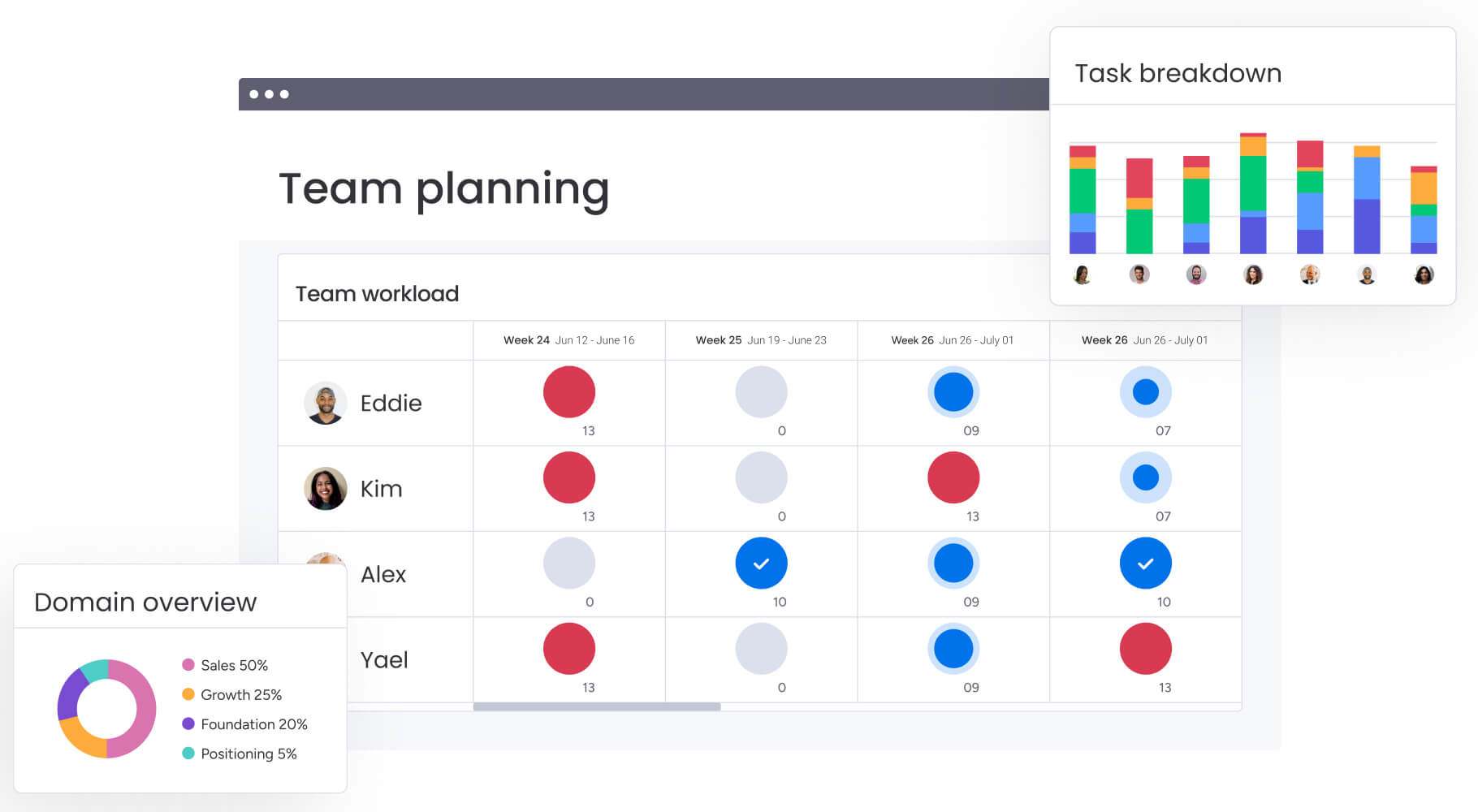
Building effective brand awareness campaigns on limited budgets
Brand awareness does not depend on budget alone. Many high-visibility campaigns succeed because they are focused and well-coordinated, not because they outspend competitors. When resources are limited, clarity and consistency become your biggest advantages.
High-impact tactics for resource-constrained teams
Small teams can achieve outsized results by leveraging current assets. These approaches prioritize time and coordination over financial investment:
- Employee advocacy programs: Leverage the workforce to extend reach at minimal cost.
- User-generated content campaigns: Encourage customers to create content for authenticity and cost efficiency.
- Strategic partnerships: Share audiences with complementary brands to double exposure.
- Content repurposing: Turn one high-quality asset into multiple derivatives to maximize value.
- Community building: Invest in forums and social groups to foster loyalty beyond paid ads.
Maximizing brand reach without breaking the bank
Guerrilla marketing and organic social strategies rely on timing and creativity rather than budget. Engaging with trending conversations, creating meme-based content, or executing low-cost stunts can generate viral lift.
The focus is shareability: create moments that audiences feel compelled to broadcast. Content that provides immediate value, sparks emotion, or taps shared experiences encourages wider reach.

“monday.com has been a life-changer. It gives us transparency, accountability, and a centralized place to manage projects across the globe".
Kendra Seier | Project Manager
“monday.com is the link that holds our business together — connecting our support office and stores with the visibility to move fast, stay consistent, and understand the impact on revenue.”
Duncan McHugh | Chief Operations OfficerAI-powered brand management: the future is already here
AI is more than a content generator — it is a strategic multiplier. By analyzing data, detecting patterns, and optimizing routine tasks, AI frees strategists to focus on higher-level strategy without missing opportunities.
Real-time brand monitoring with AI analytics
AI-powered social listening evaluates millions of conversations instantly to detect sentiment shifts and emerging trends. Teams can anticipate PR issues or identify viral potential the moment it arises.
Platforms like monday.com integrate AI sentiment detection, automatically categorizing mentions as positive, neutral, or negative for immediate market visibility.
Automating campaign optimization for improved results
Machine learning can test thousands of ad variations, audience segments, and bids in real time. Automated optimization directs resources to high-performing assets, enhancing ROI without manual intervention.
Teams set parameters and allow AI to optimize within boundaries, freeing time for strategic planning and creative work.
Using predictive analytics to guide brand strategy
Predictive models analyze historical data to forecast consumer behavior and market trends. Brands can anticipate demand and develop products or campaigns aligned with future opportunities.
Organizations that act quickly on predictive insights capture market share before competitors recognize the opportunity.

How monday.com transforms brand awareness strategy into action
A strong strategy succeeds when paired with disciplined execution. Modern platforms like monday.com provide the operational foundation to coordinate complex, multichannel brand campaigns.
These intelligent solutions turn fragmented spreadsheets and disconnected applications intro a unified digital workspace where strategy, execution, and performance measurement coexist.
Managing multi-channel campaigns in one platform
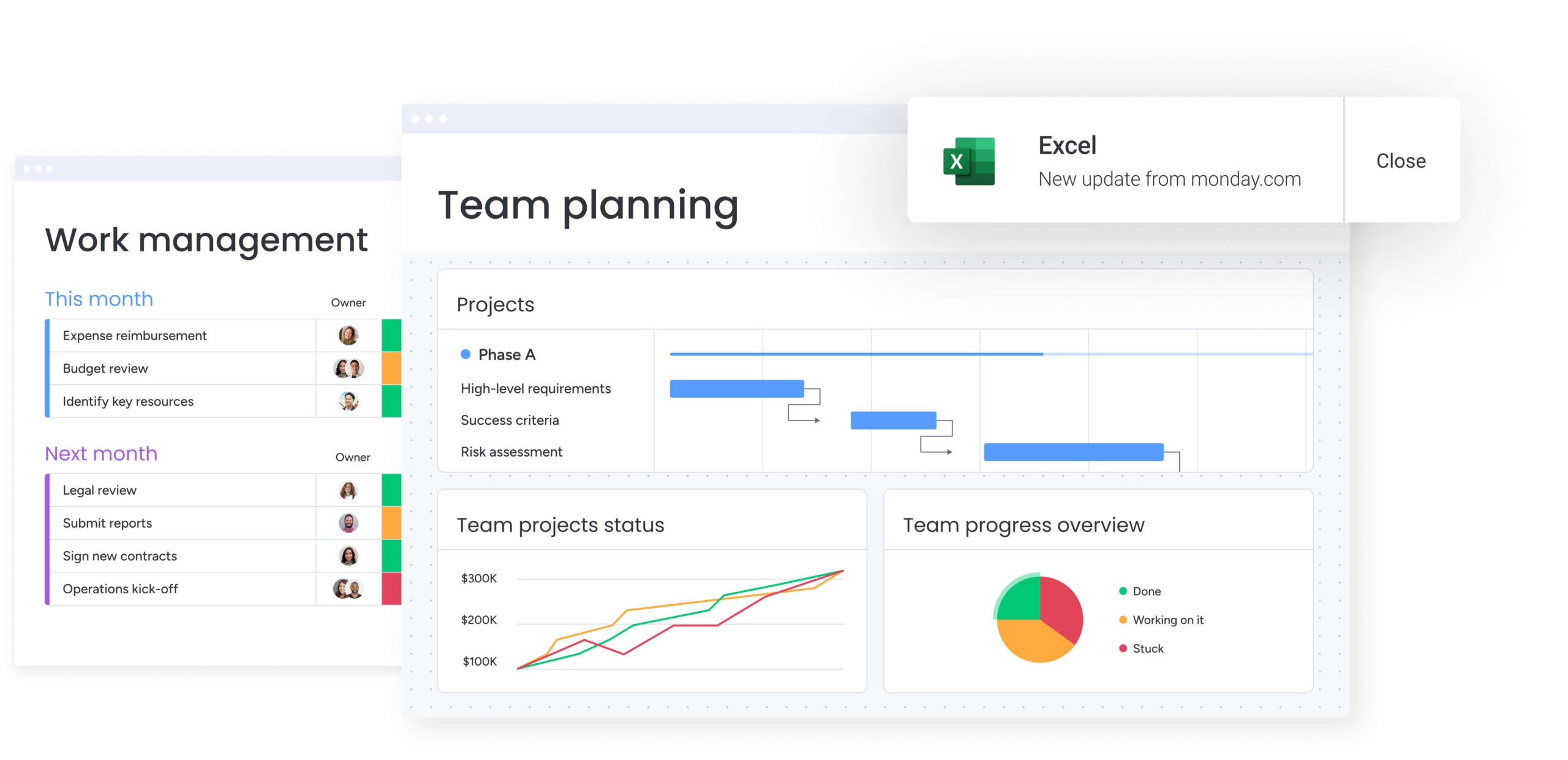
monday.com centralizes the complexity of modern marketing. Campaign boards act as a single source of truth, tracking every initiative from ideation to launch.
Cross-functional collaboration ensures creative, legal, and PR teams remain aligned. Visual timelines highlight dependencies, so a delay in design does not surprise the social media team. This coordination prevents siloed execution that can dilute brand messaging across channels.
Automating brand workflows to scale faster
Automation eliminates administrative friction that slows brand teams. Campaign launch sequences automatically create and assign items once a project is approved. Approval workflows route creative assets to the right stakeholders, notifying them only when their input is required.
AI Blocks further enhance efficiency by:
- categorizing brand mentions by sentiment: Automatically sort positive, negative, and neutral feedback.
- summarizing lengthy campaign reports: Extract key insights from complex performance data.
- extracting insights from performance data: Identify patterns and opportunities without manual analysis.
These capabilities allow teams to move faster with greater precision.
Tracking campaign performance with live dashboards
The sophisticated platform converts raw data into actionable insights through customizable dashboards. Campaign performance widgets display real-time reach and engagement metrics alongside budget tracking, ensuring financial discipline.
Workload views further prevent team burnout by visualizing resource allocation across all active projects.
monday.com centralizes the complexity of modern marketing. Campaign boards act as a single source of truth, tracking every initiative from ideation to launch.
Turn brand awareness into your competitive advantage today
Building a recognizable brand is a cumulative process that requires consistent, strategic action. The tactics outlined above provide the roadmap, but operational excellence drives success. When teams execute flawlessly across multiple channels while maintaining message consistency, brand awareness becomes a sustainable competitive advantage.
The most successful organizations do more than implement these tactics — they build systems that ensure every touchpoint reinforces their brand promise. By centralizing efforts, automating repetitive workflows, and measuring what matters, marketing teams can stop reacting to the market and start shaping it.
The next step is to select high-impact tactics aligned with current business goals and establish the infrastructure to execute them flawlessl: your brand’s future market position depends on operational decisions made today.
Try monday.comFrequently asked questions
How do you calculate brand awareness percentage?
Brand awareness percentage is calculated using the formula: (Number of people who recognize your brand ÷ Total number of people surveyed) × 100. This can be applied separately to measure aided awareness and unaided awareness.
What's the fastest way to increase brand awareness?
High-leverage tactics such as activating employee advocacy, forming strategic partnerships with established brands, and running targeted paid social campaigns generate faster awareness than sporadic efforts across multiple channels. Consistency in these high-visibility channels drives results quickly.
How long does building brand awareness typically take?
Meaningful brand awareness is a long-term investment. Initial recognition may appear within three to six months, but strong market presence usually requires 12 to 18 months of consistent activity. Achieving category leadership often takes two to three years of sustained strategic effort.
What's the difference between aided and unaided brand awareness?
Aided awareness occurs when consumers recognize a brand from a list or visual prompt, indicating it is in their consideration set. Unaided awareness occurs when a consumer spontaneously recalls the brand name without prompts, reflecting stronger top-of-mind dominance.
Can small businesses build brand awareness effectively?
Small businesses can achieve strong brand awareness by focusing on niche communities, authentic storytelling, and high-engagement channels rather than broad reach. Creativity, distinct positioning, and community building often outperform large budgets in specific market segments.
How does monday.com help coordinate brand awareness campaigns?
Modern platforms like monday.com consolidate all campaign activities, assets, and communication in a single workspace. Automation reduces manual overhead, while integrated dashboards link execution directly to performance metrics, enabling teams to scale brand strategy efficiently.

 Get started