


Managing a 50–100+ person marketing team across multiple retail locations is complex. Campaigns span departments, timelines shift with seasonal demand, and execution must stay consistent across digital and in-store channels. Without structure, even strong plans break down fast.
The real challenge isn’t strategy or creativity, it’s coordination at scale. Disconnected tools, manual updates, and unclear ownership make it hard to track progress, manage workloads, or react quickly to competitor moves and market changes.
Workflow automation software brings order to retail marketing operations. It connects campaigns, people, and resources in one system, helping leaders standardize execution while still allowing flexibility for local markets. This guide breaks down what to look for and what actually works.
Key takeaways
Effective workflow automation is essential for retail marketing leaders managing large, multi-location teams. The following insights highlight the core benefits and practical applications of structured work management in this context:
- Centralized operations: consolidating campaigns, teams, and data in one platform improves visibility and reduces workflow silos.
- Standardized yet flexible workflows: using templates and automations allows consistent execution while adapting to local market needs.
- Resource optimization: monitoring team capacity and workloads prevents burnout during peak retail seasons and improves overall efficiency.
- Strategic alignment: linking campaigns and projects to company OKRs ensures marketing initiatives directly support business objectives.
- Measurable impact: platforms like monday work management enable tracking of productivity, collaboration, and ROI, demonstrating the tangible benefits of workflow automation.
What makes heads of marketing choose monday work management for retail marketing operations?
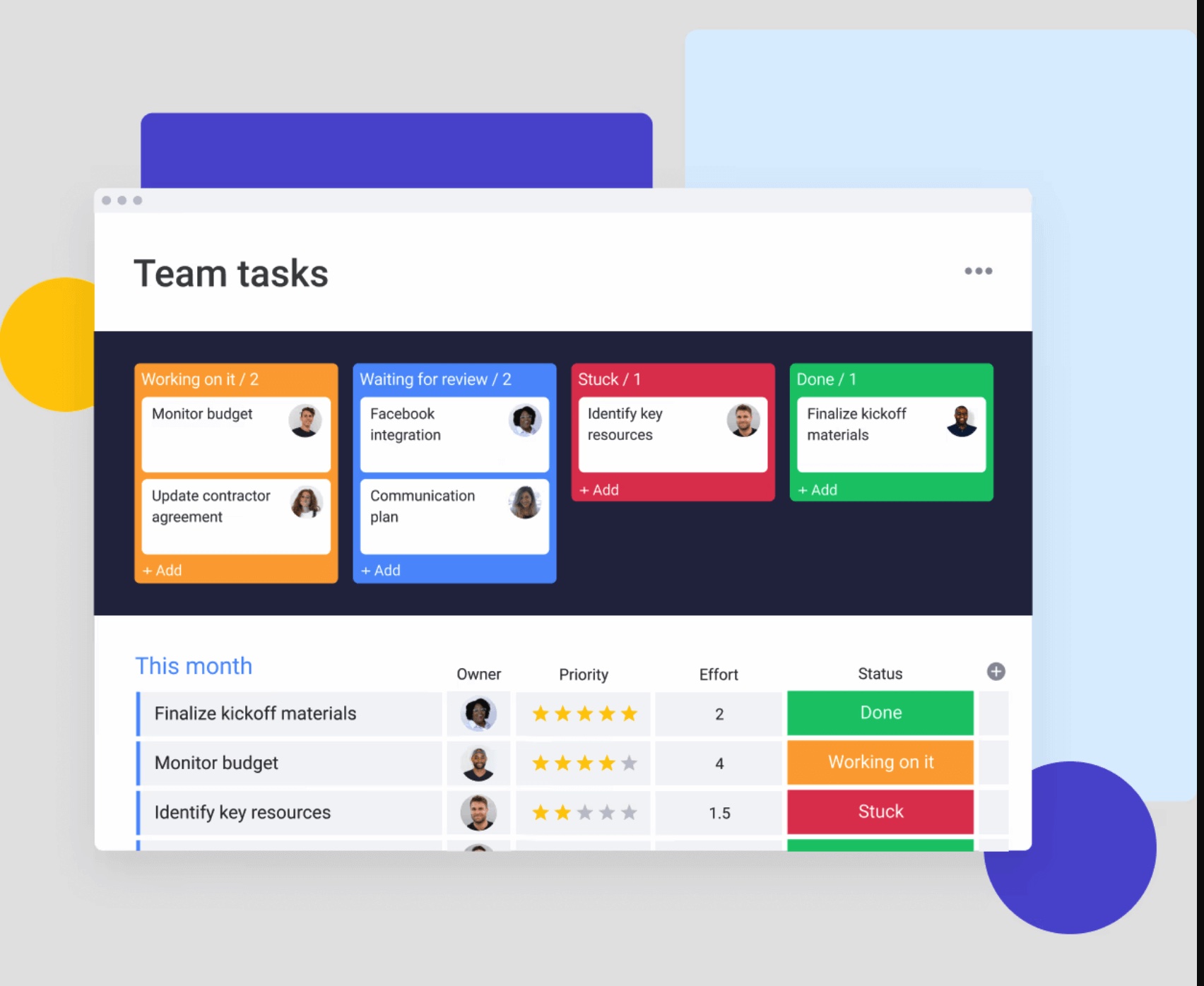
When leading a large retail marketing team across multiple channels, modern platforms like monday work management provide something invaluable: a single source of truth. Teams gain full visibility into how strategy translates into execution, tracking campaign progress, performance metrics, and OKRs all in one place.
Managing 50–100+ marketers across content, creative, acquisition, events, and operations presents challenges that basic solutions cannot address:
- Workflow chaos: teams constantly reinvent workflows for each campaign.
- Visibility gaps: progress and capacity disappear across disconnected platforms.
- Scattered impact: marketing results get lost across silos without clear ownership or accountability.
monday work management solves these core pain points by standardizing workflow management across teams and regions while maintaining the flexibility to customize for local market needs. Templates, automations, and clear ownership replace inefficient processes, driving faster execution without sacrificing quality or brand consistency.
The results speak for themselves:
- VML: saves 7,000 hours per account monthly and delivers campaigns 2x faster.
- Canva: achieved 3x creative output.
- FARFETCH: saves $118K per month with a 6x ROI.
As a Leader in the 2024 Gartner® Magic Quadrant™ for Marketing Work Management, monday work management provides the enterprise workflow management software capabilities retail marketing leaders need to deliver on time with aligned priorities and seamless collaboration.
monday work management top features for retail marketing operations
Here are seven features that actually solve the day-to-day chaos retail marketing leaders face when juggling big teams and complex campaigns.
Campaign management
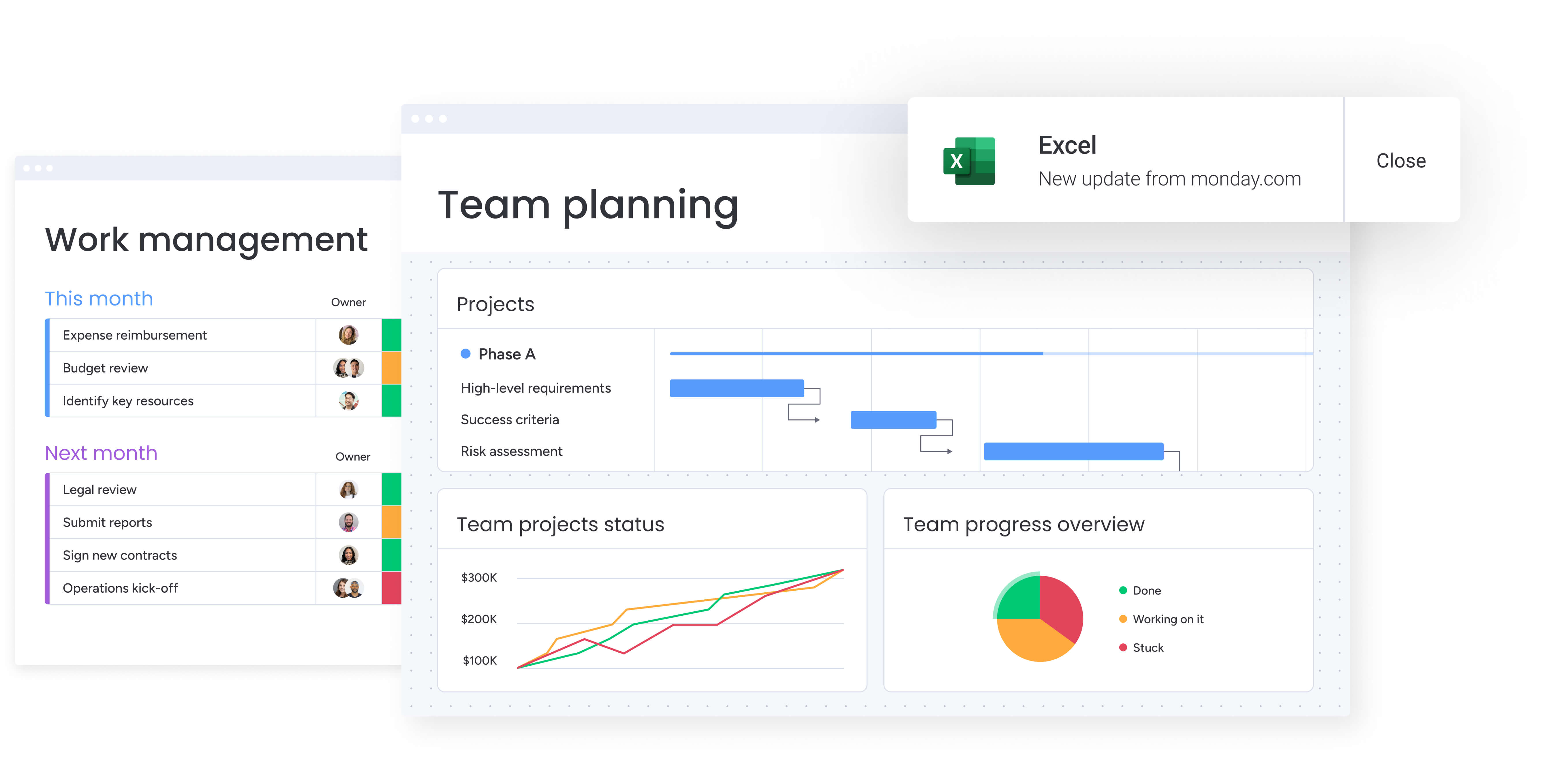
Keep every campaign detail organized and visible from start to finish. See everything, from planning to launch to performance, in whatever view works best for your brain: calendar, Timeline, Kanban, or Gantt. Track every retail channel at once, whether it’s in-store promos or digital campaigns.
Key benefits for retail marketing leaders:
- Real-time coordination: track campaign performance in real time and identify bottlenecks before they impact launch dates.
- Multi-location execution: ensure consistent execution across hundreds of store locations.
- Inventory synchronization: connect campaign timelines with inventory and merchandising systems to prevent costly disconnects between promotional messaging and in-store reality.
For heads of marketing managing seasonal retail campaigns like Black Friday or back-to-school promotions, this capability eliminates the chaos of coordinating across multiple teams and locations.
Resource management
Gain a clear view of team availability, workloads, and skill sets. Workload View highlights bottlenecks and prevents burnout before peak periods.
This capability directly addresses poor resource utilization that plagues retail marketing teams:
- Peak season burnout: prevent team overload during high-demand periods.
- Misaligned priorities: identify when teams are over capacity and proactively redistribute work.
- Resource optimization: see exactly who’s working on what across multiple marketing functions.
This visibility enables agile responses to competitive pricing and promotional opportunities.
Dashboards and reporting
Bring project data into dashboards that provide actionable insights. Filter, spot trends, and monitor goal progress. Generate executive reports instantly to show ROI, CAC, conversion rates, and budget performance.
Transform C-suite communication:
- Automated reporting: replace manual data compilation with automated portfolio-level reports.
- Real-time insights: show goal progress, campaign performance across regions, and resource utilization.
- Data-driven decisions: spot trends, identify underperforming campaigns, and allocate budget for maximum impact.
Automations
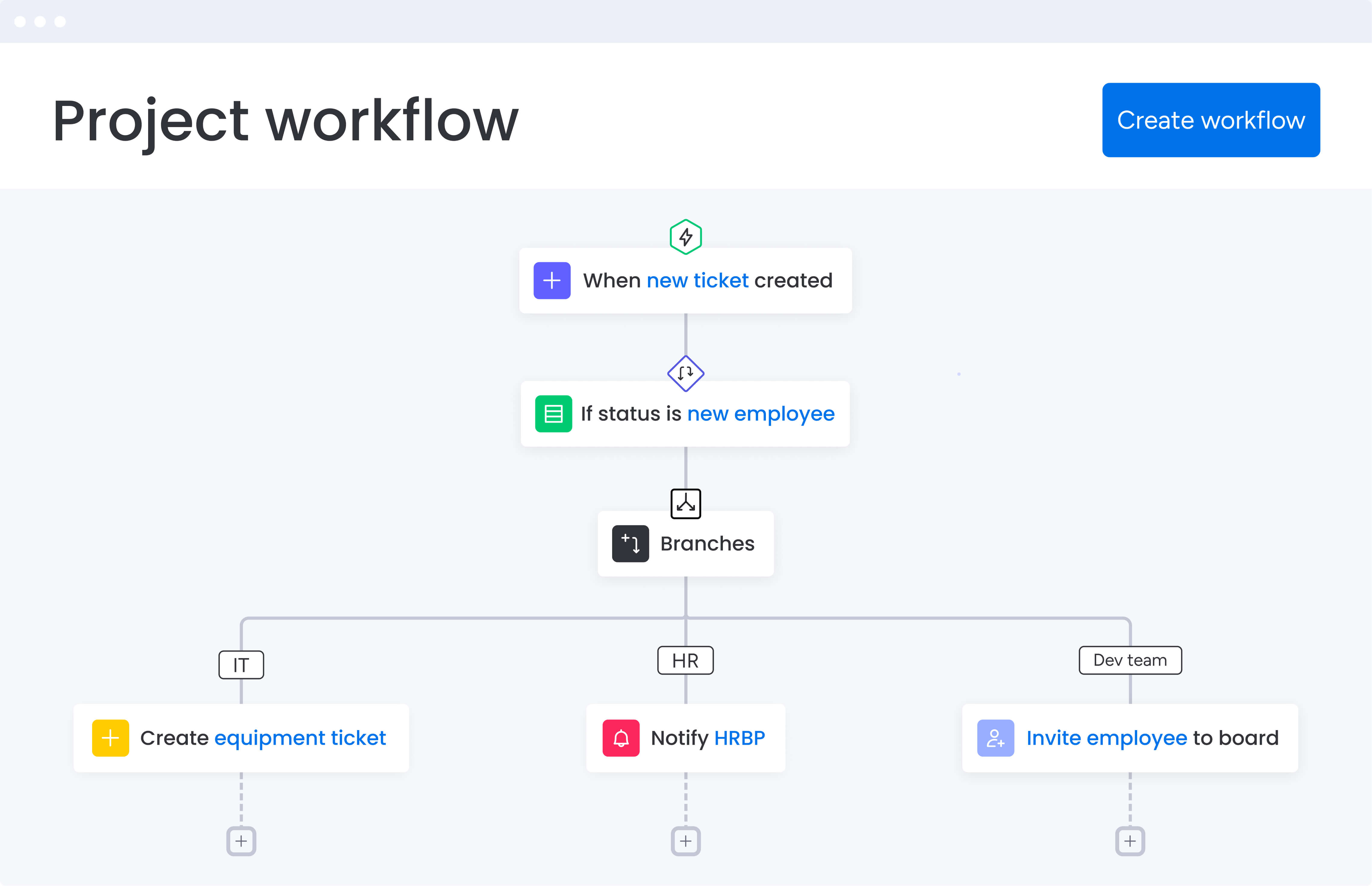
Free teams from repetitive processes. Automate asset review cycles, stakeholder notifications, and next-step assignments based on custom rules.
Eliminate workflow reinvention:
- Standardized processes: move creative assets through review cycles automatically.
- Stakeholder notifications: send alerts when campaigns launch or statuses change.
- Consistency at scale: ensure uniform execution while freeing team capacity for strategic work.
This feature is critical for retail marketing operations where workflow automation software helps teams avoid reinventing processes for each campaign. For large retail marketing teams managing dozens of concurrent campaigns, automation ensures consistency while freeing up your team’s capacity to focus on the strategic and creative work that drives brand awareness and growth.
Creative requests and approvals
Accelerate creative workflows by scaling your business with automated request processes that connect teams to the right information in real time. The platform streamlines creative production from intake through briefs, approvals, and asset management, ensuring ownership and eliminating confusion about who’s responsible for what.
Solve creative production bottlenecks:
- Formalized processes: structure creative brief submission and approval workflows.
- Queue visibility: give campaign managers realistic expectations for turnaround times.
- Ownership clarity: eliminate duplicated efforts and confusion about responsibilities.
For retail marketing leaders managing creative production across multiple campaigns and channels, this transparency is essential when you’re coordinating creative assets for seasonal campaigns that have hard launch dates tied to inventory availability and promotional calendars.
Goals and OKRs
Track progress towards your strategic objectives for alignment and productivity, ensuring that all marketing initiatives contribute to company-level goals. Connect individual campaigns and projects to broader marketing objectives, creating line-of-sight from daily execution to strategic outcomes.
Align marketing with business strategy:
- Strategic connection: link individual campaigns to quarterly OKRs.
- Progress tracking: get at-a-glance views of goal advancement.
- Automated reporting: send stakeholder updates showing marketing’s delivery against objectives.
This capability is essential for heads of marketing who need to align marketing strategy with company goals and demonstrate how marketing activities drive business results. In retail, where marketing must balance seasonal demands with year-round brand building, the ability to track how each campaign contributes to quarterly OKRs ensures your team stays focused on what matters most.
Integrations
monday work management integrates with 200+ of your favorite apps, allowing you to connect your marketing stack or build tailored integrations using the open API. This includes essential retail marketing platforms like Salesforce, HubSpot, Google Analytics, Slack, Microsoft Teams, and specialized retail systems for POS, inventory, and loyalty platforms.
Create a unified marketing command center:
- Data flow: connect campaign data from marketing automation platforms.
- Customer insights: pull information from CDPs and CRM systems.
- Operational alignment: sync with inventory data and POS systems.
- Reduced platform switching: eliminate silos that scatter marketing impact.
For retail marketing operations, integration capabilities are critical because your marketing effectiveness depends on connecting with systems across the organization. monday work management’s extensive integration ecosystem means you can make decisions based on real-time customer insights, inventory levels, and sales performance without manually compiling data from multiple sources.
How a head of marketing in retail benefits from monday work management
Understanding the specific advantages monday work management delivers helps retail marketing leaders evaluate the platform’s impact on their operations. These benefits address the core challenges of managing large teams, complex campaigns, and multi-location execution.
Time savings
Retail marketing teams using monday work management report significant time savings through automation and streamlined workflows:
- VML: saves 7,000 hours per account monthly.
- FARFETCH: saves 3,500 hours per month.
- Capacity reallocation: hundreds of hours redirected from administrative work to strategic marketing initiatives.
These time savings come from eliminating manual status updates, automating approval workflows, and reducing the endless email chains and meetings required to track campaign progress. For your 50-100+ person team, this translates to more focus on strategic initiatives that drive growth.
Cost efficiency
The platform delivers measurable cost savings by optimizing resource utilization and preventing wasted marketing spend:
- FARFETCH: saves $118K per month with a 6x ROI.
- VML: saves $250K annually to reinvest elsewhere.
- Risk reduction: reduced costly mistakes from over-committing resources or missing promotional deadlines.
By providing visibility into team capacity and campaign performance, monday work management helps you avoid launching campaigns that aren’t aligned with inventory availability while ensuring resources are allocated efficiently.
Improved collaboration
Cross-team collaboration improves dramatically when everyone works from a single source of truth:
- Genpact: 40% improvement in cross-team collaboration.
- Process elimination: 100% removal of spreadsheets.
- Communication efficiency: 25% decrease in email exchanges.
For retail marketing leaders managing teams across content, creative, acquisition, events, and operations, this improved collaboration means faster decision-making and more consistent customer experiences across channels.
Enhanced productivity
Marketing teams become more productive when they can focus on strategic work rather than administrative processes:
- Country road group: 25% increase in efficiency while managing 150+ projects.
- Canva: 3x creative output.
- Quality maintenance: higher quality marketing outputs without sacrificing speed.
The platform’s intuitive interface drives high adoption rates, ensuring your marketing data stays accurate and your workflows actually get followed, unlike platforms that teams abandon after the initial rollout.
Real-time visibility and tracking
Perhaps the most transformative benefit for heads of marketing is the real-time visibility into all campaigns, performance, and team workloads. This addresses the core pain point of inability to track progress, capacity, and ROI in real time.
Instant decision-making capability:
- Campaign status: see which campaigns are on track instantly.
- Capacity monitoring: identify which teams are over capacity.
- ROI tracking: monitor which initiatives are delivering results.
- Competitive response: make informed decisions quickly without waiting for weekly status meetings.
Instantly see which campaigns are on track, which teams are over capacity, and which initiatives are delivering ROI, this task management approach enables you to make informed decisions quickly in the fast-paced retail environment where competitive responses and promotional adjustments can’t wait for weekly status meetings.
How to optimize retail marketing workflows with monday work management
Here’s your roadmap to transform your retail marketing chaos into a well-oiled machine in six practical steps. Each one tackles a specific pain point while building toward your complete workflow overhaul.
Step 1: centralize your marketing operations in one workspace
Start by consolidating campaigns, projects, and workflows into monday work management to create a single source of truth. Set up dedicated boards for key areas, campaigns, creative production, events, and operations, and link them to see the complete picture.
Implementation actions:
- Board creation: set up dedicated boards for each major marketing function.
- Data migration: move existing campaign information from spreadsheets and folders.
- Team onboarding: train team members on the unified workspace structure.
- Connection mapping: link related boards to show dependencies and relationships.
This eliminates the scattered folders, spreadsheets, and email chains that create silos across your teams.
Step 2: standardize workflows with templates and automations
Build standardized templates for your most common marketing workflows, seasonal campaigns, product launches, store-level marketing, and promotional events. Configure automations to handle repetitive processes like moving creative assets through approval cycles, sending notifications when campaigns launch, and updating stakeholders on project status.
Key standardization areas:
- Campaign templates: create reusable structures for different campaign types.
- Approval workflows: automate creative review and approval processes.
- Notification systems: set up automatic stakeholder updates.
- Status tracking: configure automated project status changes.
Teams benefit from reduced setup time, while regional managers can still adapt workflows for local needs.
Step 3: implement resource management and capacity planning
Set up the Workload View to gain visibility into team bandwidth across your 50-100+ person marketing organization. Define team members’ capacity, assign work based on skills and availability, and monitor workload distribution to prevent burnout during peak retail seasons.
Resource optimization steps:
- Capacity definition: set realistic workload limits for each team member.
- Skills mapping: document team member capabilities and specializations.
- Workload monitoring: track current assignments and availability.
- Redistribution protocols: create processes for balancing overloaded teams.
This proactive resource management helps you balance seasonal demands while maintaining year-round brand building efforts.
Step 4: connect marketing strategy to execution with Goals and OKRs
Link individual campaigns and projects to your strategic marketing objectives and company-level OKRs. This creates line-of-sight from daily execution to strategic outcomes, ensuring every marketing initiative contributes to business goals.
Strategic alignment components:
- Goal hierarchy: map company OKRs to marketing objectives to campaign activities.
- Progress tracking: set up automated progress monitoring and reporting.
- Performance metrics: define KPIs that connect tactical work to strategic outcomes.
- Executive reporting: configure automated reports for leadership visibility.
Configure automated reports that show executive leadership how marketing activities are delivering against quarterly objectives.
Step 5: integrate your retail marketing tech stack
Connect monday work management with CRM systems, marketing automation platforms, POS systems, inventory management, and loyalty programs. This enables data flow for real-time insights on customers, inventory, and sales.
Integration priorities:
- Customer data: connect CRM and CDP systems for audience insights.
- Campaign platforms: link marketing automation and email platforms.
- Retail systems: integrate POS, inventory, and loyalty platforms.
- Analytics tools: connect Google Analytics and other measurement platforms.
This eliminates the need to manually compile data from multiple sources for decision-making.
Step 6: build executive dashboards for real-time performance tracking
Create custom dashboards that track the metrics that matter most to your role: campaign ROI, CAC, MQL-to-customer rate, budget adherence, team productivity, and time-to-launch. Configure these dashboards to provide both high-level portfolio views for executive reporting and detailed campaign analytics for optimization.
Dashboard configuration:
- Executive metrics: focus on ROI, budget performance, and strategic goal progress.
- Operational metrics: track team productivity, campaign timelines, and resource utilization.
- Real-time updates: ensure data refreshes automatically for current insights.
- Customizable views: create different dashboard versions for different stakeholder needs.
This real-time visibility enables you to spot issues early, respond to competitive changes quickly, and demonstrate marketing’s impact to the C-suite.
Comparison: monday work management vs. competing platforms
Not all workflow platforms can handle the chaos of retail marketing. Here’s how monday work management compares to the competition on the features that actually matter for managing big teams and complex campaigns:
| Feature | monday work management | Asana | Wrike |
|---|---|---|---|
| Campaign management views | Calendar, Timeline, Kanban, Gantt, Workload, Table | List, Board, Timeline, Calendar | List, Board, Gantt, Table, Calendar |
| Resource management | Built-in Workload View with capacity planning | Limited, requires premium tier | Available in Business tier and above |
| Retail-specific workflows | Customizable for seasonal campaigns, store-level marketing | General project management focus | General project management focus |
| Automation capabilities | 200+ automation recipes, no-code builder | Rules available in Premium tier | Automation engine in Business tier |
| Integration ecosystem | 200+ native integrations including retail POS, CDP | 200+ integrations | 400+ integrations |
| Executive dashboards | Pre-built and custom dashboards with real-time data | Reporting in Business tier | Custom dashboards in Business tier |
| Goals and OKR tracking | Native Goals feature with progress tracking | Goals in Business tier | Goals available, limited OKR functionality |
| Price per user/month | From $10/user/month (billed annually) | From $10.99/user/month (billed annually) | From $10/user/month (billed annually) |
| G2 rating | 4.7/5 (12K+ reviews) | 4.3/5 | 4.2/5 |
| Team size optimization | Optimized for 50-100+ person teams | Suited for small to mid-size teams | Scales to enterprise |
How Officeworks transformed their retail marketing operations
This real-world case study demonstrates how a major retailer overcame common marketing operations challenges using monday work management. Officeworks’ transformation illustrates the practical benefits retail marketing leaders can expect when implementing a unified workflow platform.
The challenge
Officeworks, one of Australia’s leading retailers with over 165 stores and 40,000 products, faced difficulty managing marketing campaigns across departments. Teams relied on separate folders, calendars, emails, and spreadsheets containing over 100 tabs.
Core operational problems:
- Information fragmentation: different teams provided information in different ways, risking important details getting lost.
- Lack of control: no central approval processes or reporting capabilities.
- Planning difficulties: challenging to plan and prioritize product launches and marketing campaigns.
- Resource visibility: no clear view of workload distribution across teams and locations.
Without central coordination, approval workflows, or visibility into progress, planning and executing campaigns consistently was a constant challenge.
The solution
Officeworks partnered with monday.com’s implementation team to map out core business processes across departments and identify the most efficient workflows to apply uniformly across the business. They built initial boards, dashboards, templates, and automations together, then ran trials with select teams to fine-tune processes before launching more widely.
Implementation approach:
- Process mapping: identified core business processes across all departments.
- Workflow standardization: created uniform processes for consistent execution.
- Collaborative development: built boards, dashboards, and templates with monday.com’s team.
- Pilot testing: ran trials with select teams before full rollout.
The team prioritized three key capabilities: easily visualizing workload by store, department, and team members; identifying gaps and allocating resources; and tracking if anything was at risk of falling behind schedule.
The results
The transformation delivered immediate, measurable impact across multiple areas of their marketing operations:
- 10,000+ fewer emails through centralized communication and automated notifications.
- 635+ working spreadsheets replaced with unified boards and workflows.
- One full day per week saved for the project coordinator managing the annual back-to-school promotion.
- Significant direct cost and time savings while delivering workload balance for staff.
Transform your retail marketing operations with monday work management
The evidence is clear: retail marketing leaders who implement a robust work management platform gain the centralized visibility, operational efficiency, and strategic alignment needed to manage large teams and complex campaigns successfully. The platform transforms scattered processes into coordinated execution, delivering measurable improvements in collaboration, productivity, and ROI.
Key transformation outcomes:
- Operational excellence: standardize workflows while maintaining local market flexibility.
- Resource optimization: prevent team burnout and maximize marketing investment efficiency.
- Strategic alignment: connect daily execution to company OKRs with real-time visibility.
- Competitive advantage: respond quickly to market changes with unified team coordination.
Stop letting disconnected teams, inefficient processes, and lack of visibility hold back your marketing impact. workflow management software provides the centralized platform you need to align your 50-100+ person marketing team, standardize workflows across regions, and gain real-time insights into campaign performance and team capacity.
Join 152,000+ customers who trust monday work management to connect their marketing operations and amplify their impact. Experience how the platform eliminates silos, automates repetitive processes, and provides the executive visibility you need to demonstrate marketing ROI.
The content in this article is provided for informational purposes only and, to the best of monday.com‘s knowledge, the information provided in this article is accurate and up-to-date at the time of publication. That said, monday.com encourages readers to verify all information directly.
Frequently asked questions
How does monday work management integrate with retail POS and inventory systems?
monday work management offers 200+ native integrations and an open API that allows you to connect with retail-specific systems including POS platforms, inventory management systems, and merchandising platforms. You can build custom integrations using the API or leverage pre-built connectors through integration platforms like Zapier, enabling your marketing campaigns to stay synchronized with inventory levels and ensuring promotional messaging aligns with product availability across store locations.
What's the typical learning curve for marketing teams new to workflow automation?
Teams typically become comfortable with monday work management within two weeks to one month. The platform is designed with an intuitive interface that teams love from the first click, contributing to its recognition for Highest User Adoption for Enterprises by G2. The visual, drag-and-drop interface requires no coding skills, and monday.com provides training resources, templates, and dedicated customer success support to accelerate adoption across your 50-100+ person marketing team.
Can monday work management handle multi-location retail marketing campaigns?
Yes, monday work management is specifically designed to manage marketing across multiple locations while maintaining both standardization and local customization. You can create master campaign boards that roll out to hundreds of store locations, with the flexibility to customize messaging and timing for local markets. The platform's automation capabilities ensure consistent brand execution, while the customization features allow for regional variations, addressing the retail-specific challenge of balancing corporate marketing initiatives with local market needs.
How do you maintain brand consistency across automated marketing workflows?
monday work management maintains brand consistency through standardized templates, approval workflows, and version control features. You can create approved templates for different campaign types that include brand guidelines, required review steps, and quality checkpoints. The platform's proofing and approval features allow stakeholders to provide feedback directly on creative assets, with version history tracking all changes. Automated notifications ensure the right people review materials at the right time, preventing off-brand content from reaching customers.
What's the difference between workflow automation and project management in monday work management?
While project management focuses on planning, tracking, and delivering specific marketing projects, workflow automation in monday work management handles the repetitive processes within those projects. The platform combines both capabilities: you get robust project management features like Gantt charts, dependencies, and milestones for planning complex retail campaigns, plus automation features that handle routine processes like status updates, notifications, and moving work through approval cycles. This combination makes monday work management effective for retail marketing operations where you need both strategic campaign planning and efficient execution at scale.
How much time can retail marketing teams save with monday work management?
Time savings vary by organization size and complexity, but customer data shows substantial improvements. VML saves 7,000 hours per account monthly, FARFETCH saves 3,500 hours per month, and Officeworks eliminated over 10,000 emails while replacing 635+ working spreadsheets. The Forrester Total Economic Impact study reports a payback period of less than four months. For a 50-100+ person retail marketing team, these time savings translate to significant capacity that can be redirected to strategic initiatives.

 Get started