


Marketing leaders managing 100+ person teams face a familiar challenge: campaigns span multiple channels, creative requests pile up across departments, and budget tracking happens in scattered spreadsheets.
When your team includes content creators, designers, demand generation specialists, and event coordinators all working on different timelines, visibility becomes your biggest operational hurdle.
The best resource management platforms designed for marketing teams go beyond basic project tracking. They provide real-time visibility into team capacity, automate workflow handoffs between departments, and connect campaign execution to budget adherence and ROI metrics.
This helpful article explores the essential features marketing leaders need in resource management software, from AI-powered capacity planning to cross-team collaboration capabilities. Join us and we’ll also examine how leading work management platforms help organizations eliminate marketing silos, accelerate campaign delivery, and build the operational foundation needed to scale marketing impact across enterprise teams.
Key takeaways
Marketing leaders managing 50-100+ person teams need centralized visibility and operational efficiency to deliver results at scale. The right resource management software connects campaign planning, execution, and performance tracking in one workspace: eliminating the disconnected processes and siloed teams that scatter marketing impact.
Here’s how the best platforms transform operations:
- Centralize all marketing work in one platform: connect campaign planning, creative production, and performance tracking to eliminate silos and give everyone visibility into priorities and progress.
- Balance team workloads with real-time capacity planning: see who’s overloaded before burnout happens and redistribute work to keep campaigns on track without overwhelming your people.
- Automate repetitive marketing processes: set up workflows for creative briefs, approvals, and handoffs so your team focuses on strategy instead of chasing updates through email.
- Optimize resource management with strategic tools: use AI-powered optimization, visual capacity planning, and campaign tracking to accelerate delivery while demonstrating measurable ROI to leadership.
- Connect marketing activities to business outcomes: track budget adherence, campaign performance, and team productivity in dashboards that prove marketing’s strategic impact on company growth.
What makes heads of marketing choose resource management software?
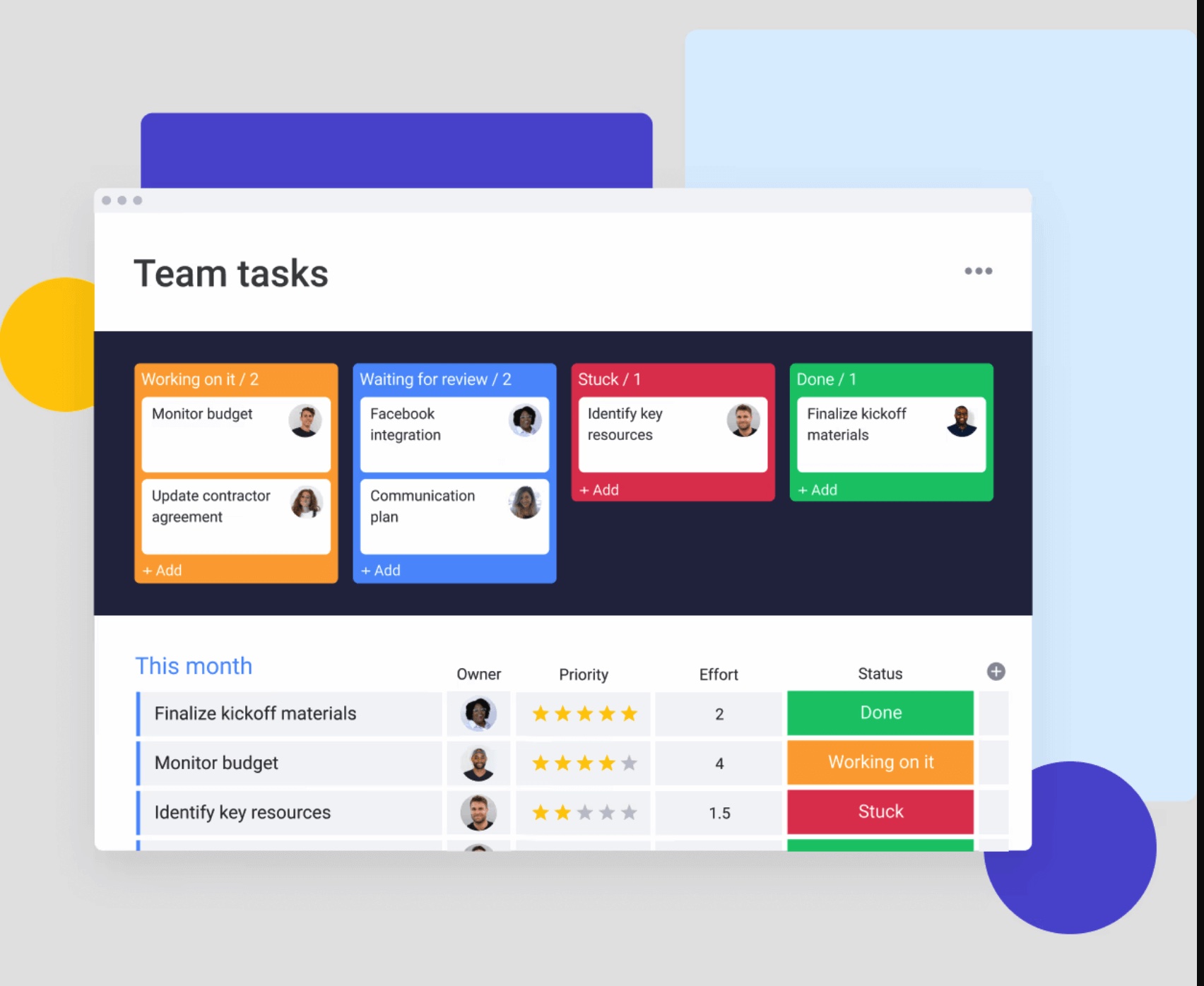
The best resource management software delivers the centralized visibility and operational efficiency that marketing leaders need to manage large-scale teams across content, creative, acquisition, events, and operations.
When you’re steering a marketing team of 50-100+ people in tech, you need instant visibility into who’s maxed out, which campaigns are on track, and where your budget stands — all without jumping between platforms. This transparency enables strategic resource allocation, prevents team burnout from misalignment, and ensures marketing initiatives align with company goals and OKRs while demonstrating clear ROI to executive leadership, showcasing scalable enterprise resource management in action.
Named a Leader in the 2024 Gartner® Magic Quadrant™ for Marketing Work Management, monday work management has helped companies like VML save 7,000 hours per account monthly with 2x faster delivery, while Canva achieved 3x creative output through improved resource management and workflow standardization.
Top features marketing leaders need in resource management software
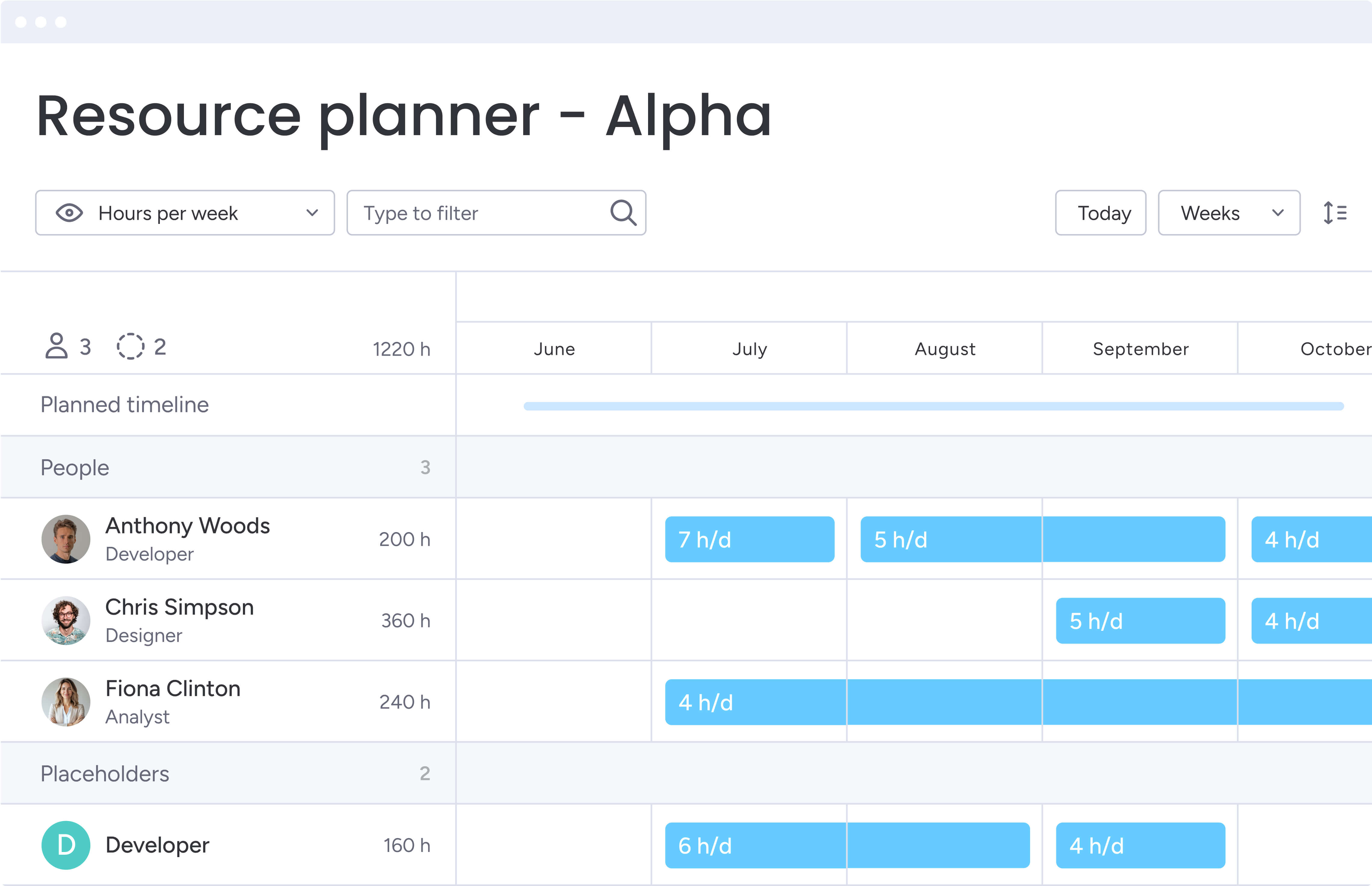
Here’s what you actually need in your resource management platform to wrangle the chaos of multi-team marketing operations. These features tackle the real headaches you face when juggling content creators, designers, demand gen specialists, and ops teams.
Real-time resource capacity planning
Resource management platforms provide instant visibility into team capacity across all marketing initiatives. Visual interfaces display each team member’s scheduled hours, available capacity, and task assignments, updating in real-time as work progresses.
Marketing leaders can filter by department, role, or project to understand resource distribution across:
- Content teams.
- Creative departments.
- Demand generation.
- Event coordination.
When you’re running a marketing department with 100+ specialists, this capacity planning takes the guesswork out of who should be working on what. You can identify overloaded designers before burnout occurs, redistribute work to balance utilization rates, and make data-driven staffing decisions that improve team productivity and on-time delivery metrics.
Campaign management and tracking
Campaign management capabilities allow marketing teams to plan, execute, and track multi-channel campaigns from a single dashboard. Timeline views, Calendar views, and Kanban boards provide flexible visualization options for campaign schedules, while dependencies automatically adjust timelines when priorities shift.
Key tracking capabilities include:
- Campaign status across all channels.
- Budget spend monitoring.
- Performance metrics aggregation.
- Stakeholder approval workflows.
- Cross-channel coordination for email, social, events, and paid media.
This single view of all your campaigns finally solves that persistent question: ‘What’s actually happening across all our marketing initiatives right now?’ Instead of chasing updates through email threads and spreadsheets, marketing leaders gain a real-time snapshot of all active campaigns, their progress toward goals, and potential bottlenecks.
Additionally, automated notifications keep channel owners informed of changes, while dashboards aggregate campaign performance data for executive reporting on marketing ROI, CAC, and MQL-to-customer conversion rates.
For a real-life demonstration of the impact, FARFETCH’s marketing team saved 3,500 hours per month by centralizing campaign tracking with monday work management.
Budget and ROI analytics
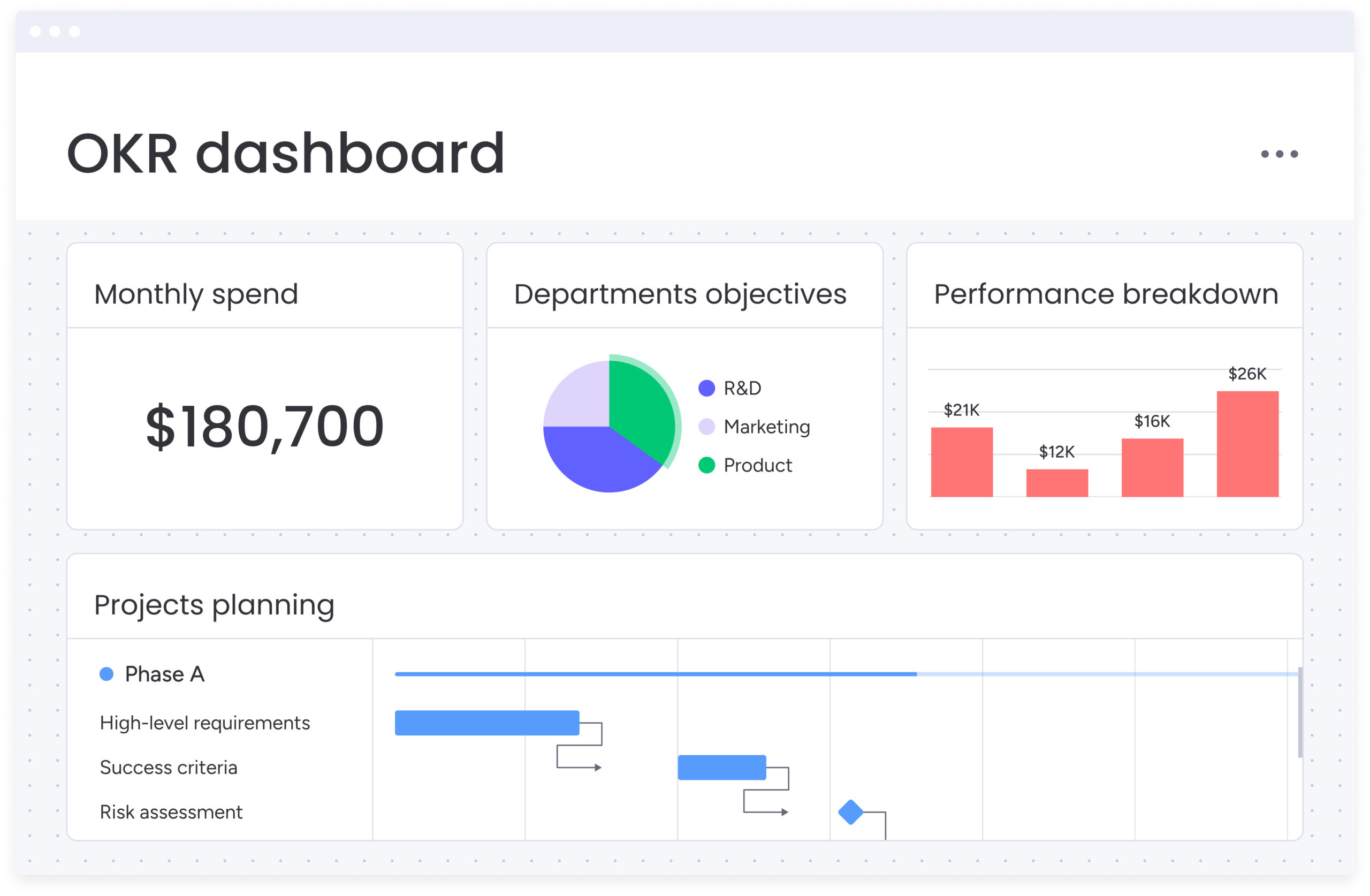
Built-in budget tracking columns and customizable dashboards enable marketing leaders to monitor spend against forecasts in real-time. The platform tracks budget allocation across campaigns, programs, and teams, with automated alerts when spending approaches thresholds.
Financial management features:
- Integration with financial systems for actual cost data.
- Formula columns for automatic budget variance calculations.
- ROI and cost-per-acquisition metrics.
- Forecasting accuracy tracking.
- Executive-ready budget adherence reports.
When the C-suite asks about marketing spend, you’ll have answers ready — not excuses. These analytics let you stay ahead of budget conversations instead of scrambling to explain variances. You can demonstrate marketing’s contribution to revenue growth with visual dashboards that connect campaign spend to business outcomes.
The platform’s reporting features also generate executive-ready views of budget adherence, forecasting accuracy, and marketing efficiency metrics that prove the strategic value of marketing investments.
Genpact’s marketing team achieved 100% removal of spreadsheets and 25% decrease in email exchanges by centralizing budget tracking and campaign analytics on monday.com, illustrating holistic enterprise resource management.
Workflow automation and templates
Automation engines eliminate manual work through customizable recipes that trigger actions based on status changes, dates, or custom conditions. Marketing teams can automate creative brief submissions, approval routing, asset handoffs, and stakeholder notifications without coding.
Automation capabilities include:
- Creative brief routing and approvals.
- Asset handoff notifications.
- Status update triggers.
- Stakeholder alert systems.
- Cross-team coordination workflows.
Pre-built templates for campaign launches, content calendars, event management, and creative production provide standardized workflows that teams can customize to their specific processes. This automation capability directly addresses the inefficient processes where marketing teams constantly reinvent workflows.
Create a standard playbook for briefs, approvals, and production once — then watch your campaigns launch faster without sacrificing quality or brand standards. Templates ensure consistency across regions and teams, while automation frees marketers from administrative tasks to focus on creative and strategic work.
Cross-team collaboration features
Platforms centralize communication through @mentions, comments, file attachments, and update threads directly on task and campaign boards. Teams can share feedback, request approvals, and collaborate on creative assets without switching to email or chat platforms.
Collaboration tools include:
- Real-time commenting and feedback.
- File sharing and version control.
- Integration with Slack, Microsoft Teams, and Google Workspace.
- Mobile app access for remote collaboration.
- Centralized communication audit trails.
For marketing organizations struggling with silos between creative, content, demand gen, and product marketing teams, these collaboration features create alignment, reflecting a core principle of enterprise resource management.
Cross-functional visibility further ensures legal, product, and finance teams stay informed of marketing initiatives, while centralized communication creates an audit trail of decisions and approvals. This transparency improves stakeholder satisfaction and reduces the meeting overhead that slows campaign execution.
ThoughtWorks achieved a 55% reduction in email communication and 41% reduction in conference calls after implementing monday.com for their global marketing operations.
AI-powered resource optimization
AI capabilities analyze historical project data to recommend optimal resource allocation, predict project timelines, and identify risks before they impact delivery. The AI can categorize incoming creative requests, suggest task assignments based on team skills and availability, and generate detailed project plans from brief descriptions.
AI-driven features:
- Historical data analysis for resource recommendations.
- Project timeline predictions.
- Risk identification algorithms.
- Automated request categorization.
- Skill-based task assignment suggestions.
This AI-powered forecasting transforms resource management from reactive to predictive for marketing leaders. Instead of discovering capacity issues when campaigns are already delayed, you receive early warnings that enable reallocation. AI-suggested project plans accelerate campaign kickoff, while automated request categorization ensures creative briefs reach the right teams instantly, resulting in better resource management.
How heads of marketing benefit from resource management software
Marketing leaders gain several strategic advantages when implementing resource management platforms. These benefits directly showcase how effective resource management addresses the operational challenges that prevent marketing teams from achieving their full potential.
Eliminate marketing silos
Connect content, creative, demand generation, events, and operations teams in one workspace where everyone has visibility into priorities, progress, and dependencies. Cross-functional workflows ensure seamless collaboration with legal, product, and finance teams, reducing handoff delays and improving stakeholder satisfaction metrics.
Accelerate campaign delivery
Reduce time-to-launch through automated workflows, standardized templates, and real-time collaboration that eliminate manual coordination. Marketing teams report 2x faster delivery and 40% time savings in production when processes are centralized and automated.
Optimize team utilization
Balance workloads across specialized roles including designers, copywriters, and strategists with visual capacity planning that prevents burnout and missed deadlines. Real-time utilization tracking helps marketing leaders improve resource allocation decisions and demonstrate efficient use of budget and team resources to executive leadership.
Demonstrate marketing ROI
Track campaign performance, budget adherence, and team productivity in customizable dashboards that connect marketing activities to business outcomes. Generate executive-ready reports on campaign ROI, CAC, MQL-to-customer rates, and content performance that prove marketing’s strategic impact on company growth.
How to manage marketing resources effectively
Getting resource management right means tackling both the tech setup and the human side of change — neither works without the other.
Here’s your handy yroadmap to turn marketing chaos into strategic execution — tested and proven by teams just like yours.
Step 1: centralize all marketing work in one platform
Start by bringing everything — yes, everything — into one place: your campaigns, creative projects, events, and day-to-day operations all belong in your resource management hub. Create dedicated boards for each marketing function while connecting them through dependencies and automations to maintain visibility across the entire marketing organization.
Key actions:
- Set up boards for each marketing function.
- Connect workflows through dependencies.
- Establish cross-team visibility protocols.
- Migrate existing projects and campaigns.
Step 2: implement standardized workflow templates
Build reusable templates for common marketing processes including campaign launches, creative requests, event management, and content production. Standardize intake forms, approval chains, and handoff procedures to eliminate the inefficient processes where teams reinvent workflows for each initiative.
Template categories:
- Campaign launch workflows.
- Creative request processes.
- Event management timelines.
- Content production pipelines.
- Approval and review chains.
Step 3: configure real-time resource tracking
Set up workload views to monitor team capacity across all active campaigns and projects. Define working hours, track time allocation, and establish utilization targets for different roles to enable strategic capacity planning and prevent resource burnout.
Configuration elements:
- Team member capacity settings.
- Utilization target definitions.
- Workload visualization setup.
- Capacity alert thresholds.
Step 4: connect marketing strategy to execution
Link campaign boards to company OKRs and strategic goals to ensure all marketing initiatives align with business objectives. Use dashboards to track progress toward goals and demonstrate how marketing activities contribute to company-wide targets.
Strategic alignment features:
- OKR integration and tracking.
- Goal progress visualization.
- Strategic initiative mapping.
- Executive dashboard creation.
Step 5: automate repetitive marketing processes
Create automation recipes for creative brief routing, approval notifications, asset handoffs, and status updates. Eliminate manual coordination work so marketing teams can focus on creative and strategic initiatives rather than administrative tasks.
Automation priorities:
- Brief submission and routing.
- Approval notification workflows.
- Asset handoff processes.
- Status update triggers.
- Stakeholder communication.
Step 6: build executive reporting dashboards
Configure custom dashboards that aggregate campaign performance, budget adherence, team utilization, and marketing ROI metrics. Schedule automated reports for executive leadership that demonstrate marketing impact on revenue growth, customer acquisition, and brand awareness.
Dashboard components:
- Campaign performance metrics.
- Budget adherence tracking.
- Team utilization rates.
- Marketing ROI calculations.
- Automated executive reporting.
Comparison: resource management platforms for marketing teams
The following comparison highlights key features and capabilities that matter most to marketing leaders evaluating resource management platforms.
Each platform offers unique strengths, but the differences in implementation time, pricing, and specific marketing features can significantly impact your team’s success.
| Feature | monday work management | Smartsheet | Wrike | Asana |
|---|---|---|---|---|
| Multi-currency support | Native support with automatic conversion | Limited to 5 currencies | Requires add-on | Manual entry only |
| SOX compliance features | Built-in audit trails and controls | Partial compliance | Full compliance | Limited support |
| ERP integration | 200+ integrations including SAP, Oracle | SAP only | Multiple ERPs | Limited integrations |
| Real-time budget tracking | Live dashboards with drill-down | Daily updates | Weekly updates | Real-time with delays |
| AI-powered risk insights | Proactive risk identification | No AI features | Basic AI | Rule-based only |
| Approval workflow automation | Unlimited custom workflows | 10 workflow limit | Pre-built only | Manual approvals |
| Resource capacity planning | Visual workload management | Spreadsheet view | Calendar only | Basic capacity view |
| Financial reporting customization | Fully customizable dashboards | Fixed reports | Some customization | Limited options |
| Time to implementation | 2-4 weeks average | 3-6 months | 2-3 months | 4-8 weeks |
| User adoption rate | Highest in industry per G2 | Average | Below average | Average |
How Genpact transformed their global marketing operations
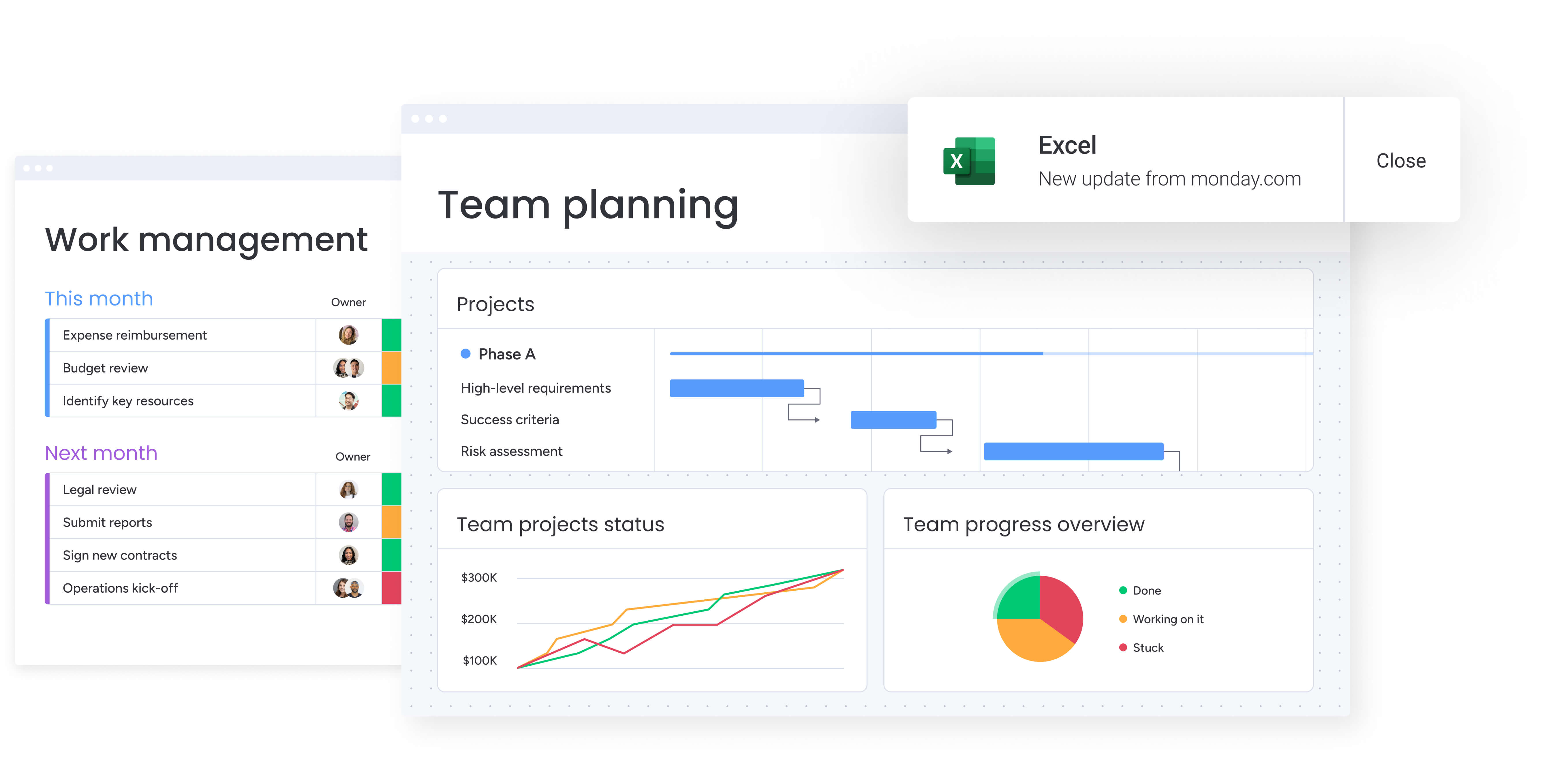
Here’s how Genpact transformed their scattered global marketing teams into a synchronized powerhouse — and the measurable results they achieved. The numbers tell the story: dramatic improvements in team collaboration, faster execution, and total visibility across their marketing machine.
The challenge
Genpact’s globally distributed marketing department runs 24 large-scale campaigns simultaneously, each with multiple cross-channel activations managed by campaign managers and channel owners across different teams. The team relied heavily on spreadsheets saved across personal desktops, emails, and SharePoint folders to manage go-to-market planning.
With multiple stakeholders entering information at different times, no one knew which version was current or where to find critical campaign details. “There was no single source of truth or central repository that kept track of the status, progression, and key information surrounding our marketing campaigns,” says Sarah Pharr, AVP, Marketing at Genpact.
The lack of visibility made it nearly impossible to answer basic questions about turnaround times, delays, or activation status across their complex marketing operations.
The solution
Genpact implemented monday.com to standardize end-to-end campaign planning and execution across their global marketing department. The team built workflow boards outlining the complete activation process for each channel, with columns tracking target dates versus actual timelines to identify bottlenecks.
They utilized Timeline views and dashboards to monitor outstanding campaign elements and drill down into critical priorities for each week or month. The marketing team formalized their campaign brief submission and approval process using monday.com forms.
When campaign managers submit briefs, automated notifications alert the appropriate teams, creating a visible queue that shows request status and turnaround times. This transparency replaced the previous black box where campaign managers had no visibility into whether their request was first in line or twentieth.
The results
The implementation delivered measurable improvements across Genpact’s marketing operations:
- 40% improvement in cross-team collaboration for end-to-end campaign planning and execution.
- 100% removal of spreadsheets from marketing operations.
- 25% decrease in email exchanges across the marketing department..
The marketing department is now implementing the Workload feature for resource allocation to ensure consistent delivery of marketing plans without overloading teams, with the ability to flag when teams are over capacity and proactively prioritize work.
Ready to kickstart your marketing operations in 2026?
The best resource management platform helps your marketing team switch from constantly putting out fires to confidently executing your strategy. In 2026, you need a platform that connects your teams, streamlines workflows, and provides the visibility needed to deliver campaigns faster while maintaining quality and brand consistency.
Intuitive solutions like monday work management give you the capabilities to tear down those frustrating team silos, get campaigns out the door faster, and show leadership exactly how marketing drives business growth.
Join the organizations that have already transformed their marketing operations with measurable improvements in collaboration, efficiency, and campaign performance.
The content in this article is provided for informational purposes only and, to the best of monday.com‘s knowledge, the information provided in this article is accurate and up-to-date at the time of publication. That said, monday.com encourages readers to verify all information directly.
Frequently asked questions
What is the typical ROI timeline for marketing resource management software implementation?
The typical ROI timeline for marketing resource management software implementation is three to four months, with most enterprise teams seeing measurable results in that period. Organizations typically achieve payback periods of less than four months, with early wins including time savings from eliminated spreadsheets and reduced email coordination, followed by improved campaign delivery speed and increased resource utilization rates.
How long does it take to onboard a 100+ person marketing team?
Enterprise marketing teams typically achieve full adoption within two weeks to one month. The platform's intuitive interface requires minimal training, with most users becoming comfortable within days through a phased approach starting with a pilot team, building out base structures and templates, then expanding to additional teams with dedicated support.
Can marketing resource management software integrate with our existing martech stack?
Resource management platforms integrate with 200+ marketing tools including Salesforce, HubSpot, Marketo, Adobe Creative Cloud, Google Workspace, Slack, Microsoft Teams, and major marketing automation platforms. Open APIs enable custom integrations with proprietary systems, allowing marketing teams to connect their CRM, digital asset management, marketing automation, and analytics tools to create a unified marketing ecosystem.
What is the difference between project management and resource management platforms?
Project management tools focus on task tracking, timelines, and deliverables for individual projects. Resource management tools emphasize capacity planning, workload balancing, and allocation across multiple projects and teams, combining both capabilities to allow marketing leaders to manage campaign execution while optimizing how people, budgets, and time are distributed across the entire marketing portfolio.
How do you measure marketing team utilization effectively?
Effective utilization measurement tracks both scheduled capacity and actual time spent on billable versus non-billable work. Resource management platforms show planned allocation versus actual hours logged, enabling comparison of estimated versus real effort, with marketing leaders targeting 70-80% utilization for creative roles to allow time for collaboration, learning, and strategic thinking.
What security certifications should marketing resource management software have for tech companies?
Enterprise marketing teams should require SOC two Type II, ISO 27001, GDPR compliance, and HIPAA certification if handling health-related data. Platforms should maintain these certifications plus additional security features including IP restrictions, two-factor authentication, multiple SSO options, BYOK (Bring Your Own Key), and tenant-level encryption.

 Get started