


As a marketing leader in financial services, you’re spinning a lot plates. Your 50-100+ person team spans content, creative, acquisition, and events — all while navigating strict governance requirements. Even your best-planned campaigns hit roadblocks when you can’t see who’s available and what’s getting stuck in approval loops.
The right resource management software cuts through this complexity. You get instant visibility into who’s doing what, which projects are moving forward, and where bottlenecks are forming. Your team stays balanced, your campaigns stay on track, and you can anticipate compliance needs proactively.
In this guide, we’ll unpack what actually works for large marketing teams, highlight the features that deliver real results, and share how companies like Genpact boosted their cross-team collaboration by 40%.
We’ll also dive into implementation strategies, platform comparisons, and real-world examples that demonstrate how the right approach transforms marketing operations from reactive coordination to proactive resource optimization.
Key takeaways
Running a marketing department with dozens of specialists across multiple functions? Your resource management approach will make or break your ability to hit ambitious goals instead of watching deadlines slip away. Here’s what effective resource management delivers for marketing leaders in finance:
- Prevent team burnout before it happens: use real-time workload views to see who’s overallocated and balance resources across your 50-100+ person marketing team instantly.
- Connect daily work to strategic goals: link every campaign and resource decision directly to OKRs so your marketing efforts drive measurable business impact.
- Break down silos between marketing functions: create unified workflows that connect content, creative, acquisition, and events teams naturally instead of operating in isolation.
- Gain complete visibility into operations: gain complete visibility into team capacity, campaign performance, and budget adherence through automated dashboards and cross-departmental workflows.
- Save thousands of hours monthly through automation: eliminate manual coordination and repetitive tasks so your team focuses on strategic work that drives growth.
What makes heads of marketing choose monday work management for resource management?
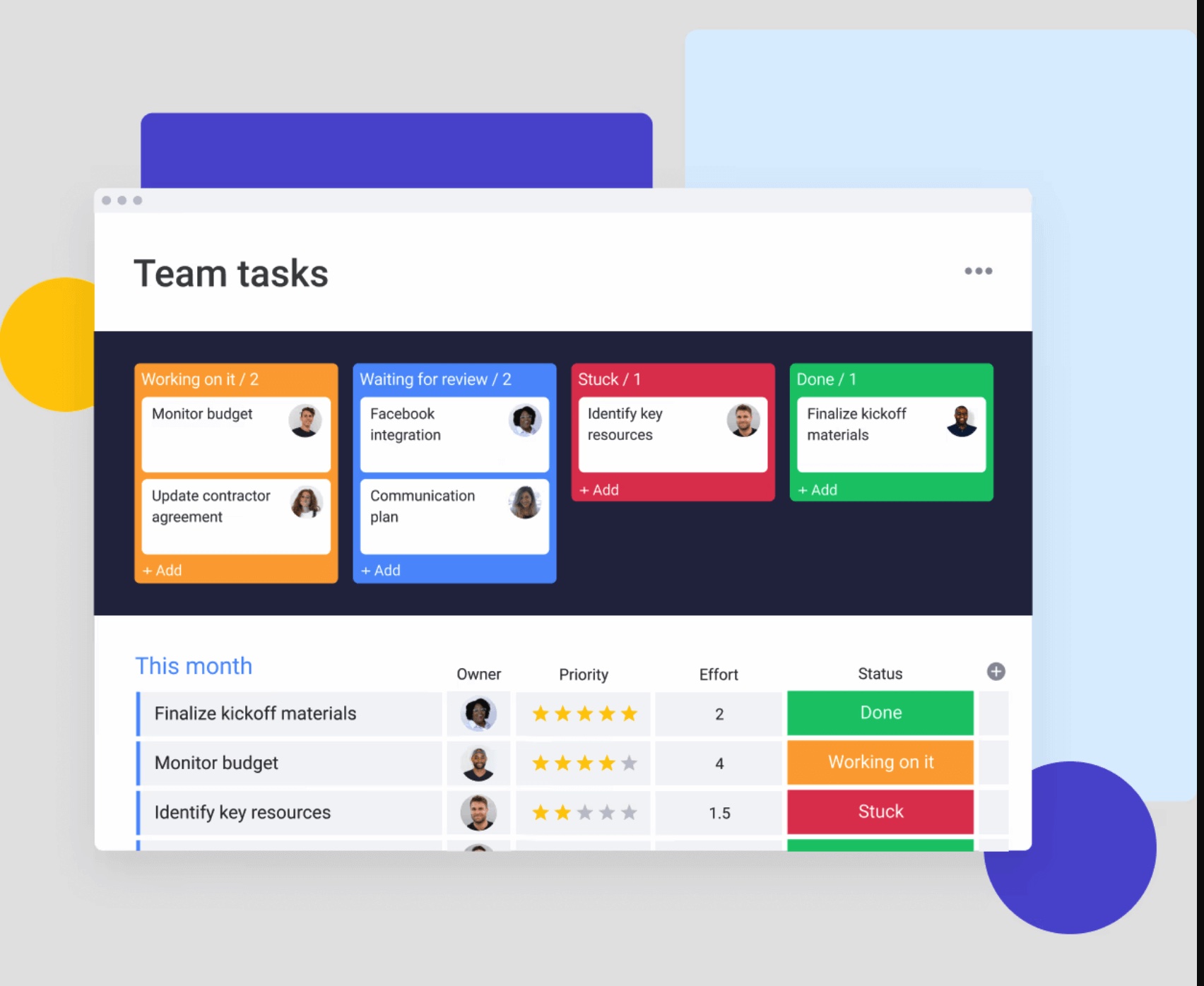
Marketing leaders in finance have a tough job: you need full visibility into what your distributed teams are doing and how campaigns are performing, all while keeping everything compliant with strict financial regulations. T
Fortunately, monday work management enables marketing leaders to centralize visibility into all campaigns, performance metrics, and team workloads while applying enterprise resource management best practices to ensure strategic alignment with business goals.
The intelligent platform bridges the gap between big-picture strategy and day-to-day execution. Your OKRs drive priorities, standardized workflows eliminate wasted effort, and everything stays aligned with the timelines and budgets your business demands.
For marketing leaders managing 50-100+ person teams across content, creative, acquisition, events, and marketing operations, the platform addresses these core pain points:
- Disconnected execution: teams operating in isolation with duplicative processes.
- Inefficient workflows: no standardization means teams constantly reinvent processes.
- Visibility gaps: inability to track progress, capacity, and ROI in real time.
- Poor resource utilization: burnout in some teams while others sit underutilized.
- Scattered marketing impact: lack of visibility into team priorities and focus areas.
The platform’s capacity planning capabilities allow you to allocate resources strategically, prevent burnout from unbalanced workloads, and ensure visibility into team priorities and focus areas.
monday work management top features for resource management
Let’s focus on the features that actually move the needle for marketing teams in finance. These core features address the most common challenges facing large marketing organizations in financial services.
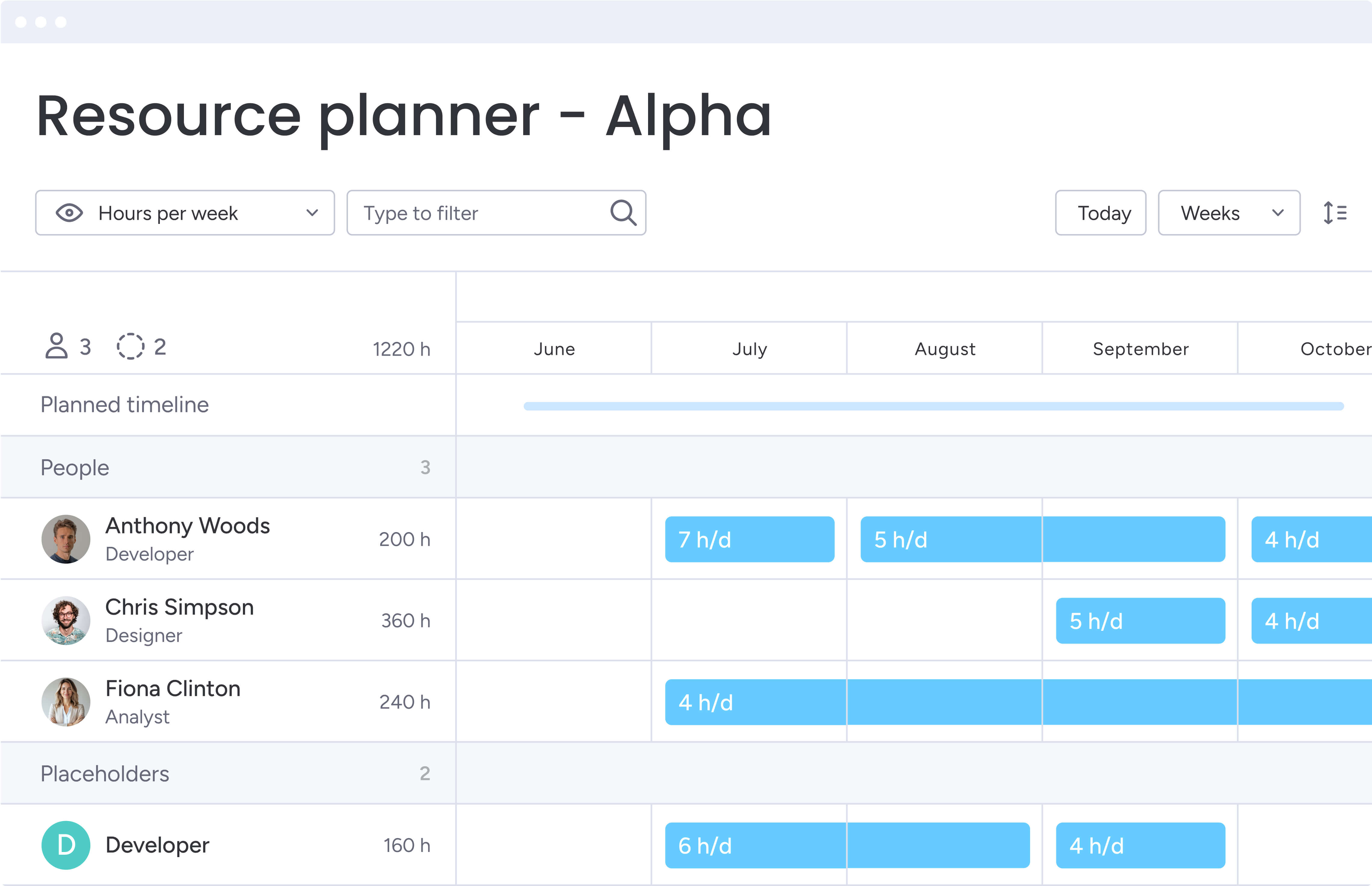
Workload View
Workload View shows you exactly who is over capacity and who could take on more work. The color-coded interface makes capacity issues jump off the screen, so you can spot bottlenecks before they derail your campaigns. The view updates in real time as tasks are assigned, completed, or rescheduled.
For heads of marketing managing 50-100+ person teams across multiple functions, Workload View solves the critical challenge of poor resource utilization and team burnout. Instead of discovering overallocation after missed deadlines or team complaints, you can proactively balance workloads and ensure consistent delivery of marketing plans.
Real-time dashboards
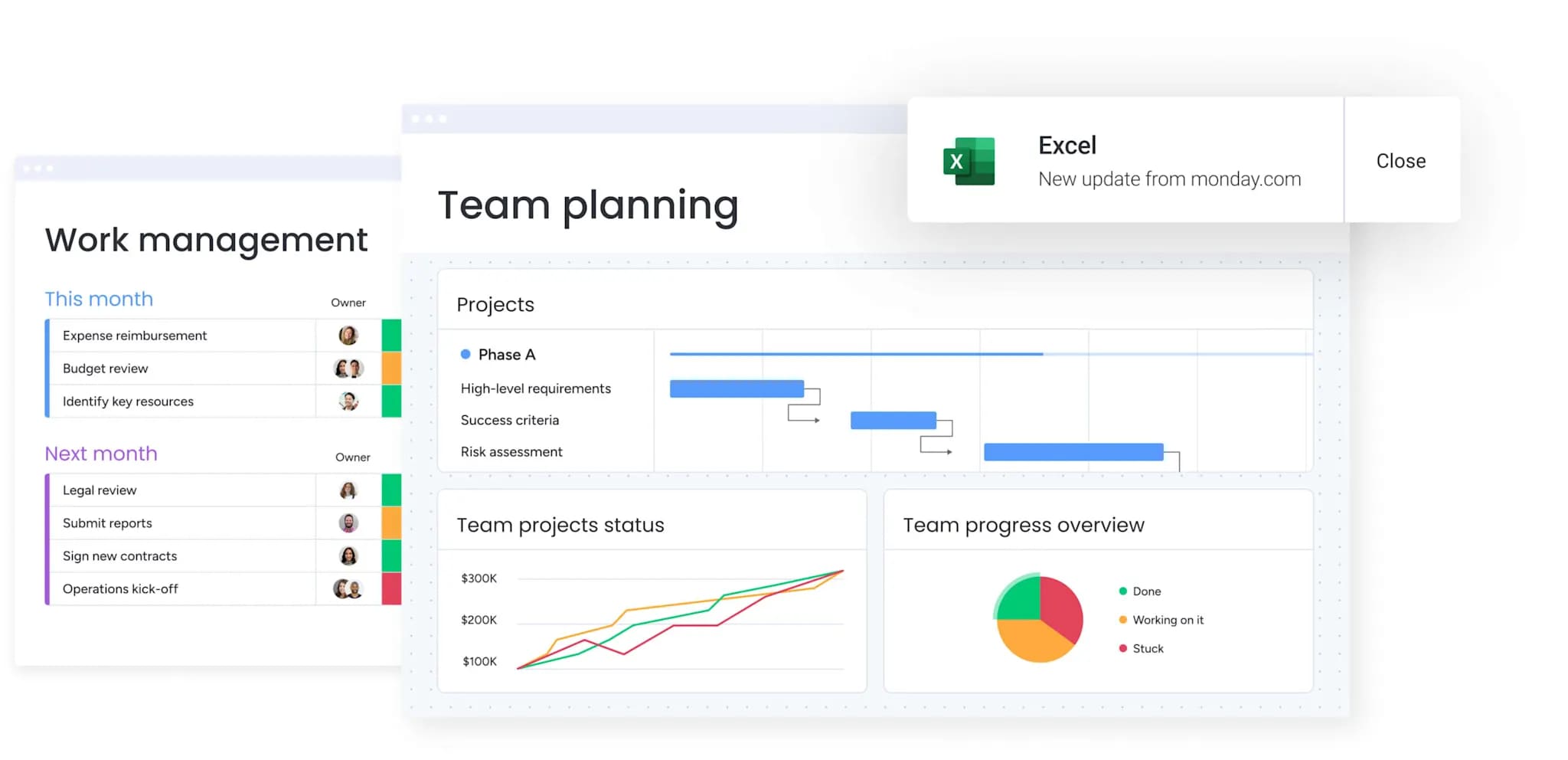
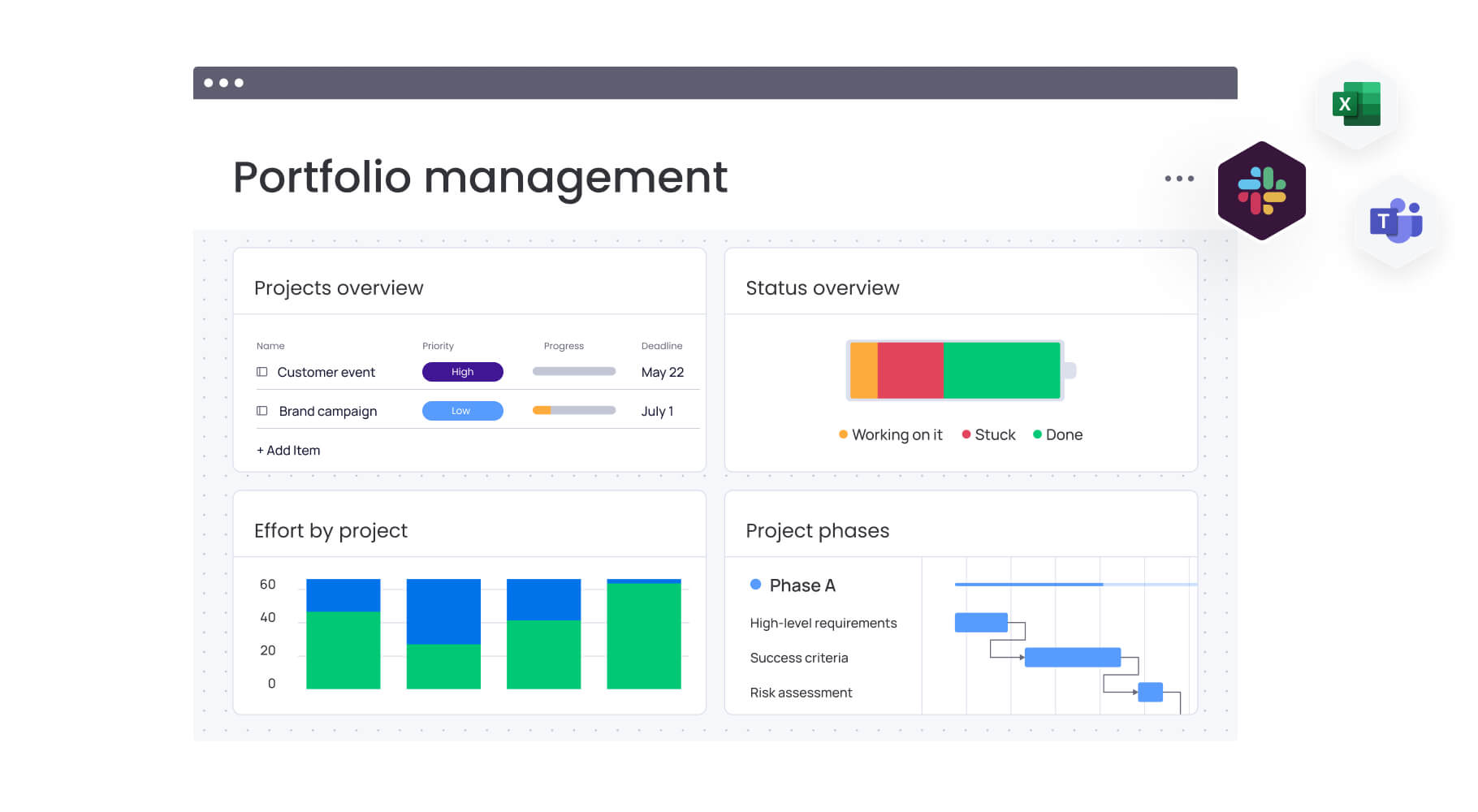
Real-time dashboards pull everything that matters into one place — no more digging through multiple tools to piece together what’s happening across your marketing operation. You can create executive-level dashboards showing campaign ROI, budget adherence, and team utilization, or detailed operational dashboards tracking specific KPIs like MQL-to-Customer rate and content performance.
These dashboards are essential for marketing leaders who need to:
- Report impact to executive leadership: generate instant reports with clear metrics.
- Align marketing strategy with company OKRs: connect daily work to strategic goals.
- Make data-driven decisions: access real-time insights without manual compilation.
The platform eliminates the manual work of compiling reports from disconnected systems. You gain centralized visibility into all campaigns, performance, and team workloads, enabling decisions about resource allocation, budget adjustments, and strategic priorities.
Cross-departmental workflows
Cross-departmental workflows connect teams across content, creative, acquisition, events, legal, product, and finance departments within unified processes. You can create workflows that automatically route creative briefs from marketing to legal for compliance review, trigger finance approvals for budget changes, or coordinate product launches across marketing and product teams.
This feature directly addresses the disconnected execution and silos that scatter marketing impact across enterprise organizations. Instead of teams operating in isolation with duplicative processes, cross-departmental workflows establish standardized processes that teams can follow consistently.
Campaign management and OKR tracking
Campaign management capabilities allow you to plan, execute, and track campaigns across teams and regions from a single platform. You can map individual campaigns to strategic OKRs, track progress against objectives, and measure how marketing initiatives contribute to company-level goals.
For marketing leaders responsible for aligning marketing strategy with company goals, this feature ensures:
- Strategic alignment: connect campaigns to business goals, timelines, and budgets.
- Performance tracking: monitor volume and performance of content and campaigns.
- Executive reporting: demonstrate marketing’s contribution to organizational objectives.
Automation and templates
Automation capabilities eliminate repetitive manual tasks through customizable recipes that trigger actions based on specific conditions. You can automate status updates, notifications, task assignments, deadline reminders, and approval workflows. Templates provide standardized starting points for common marketing processes including campaign launches, event planning, and creative production.
For heads of marketing facing inefficient processes where teams constantly reinvent workflows, automation and templates provide the standardization needed to eliminate wasted time. Benefits include:
- Operational efficiency: establish best practices once, then replicate across teams.
- Governance compliance: maintain consistency while allowing creative flexibility.
- Time savings: reduce manual coordination and administrative overhead.
Integration with financial systems
monday work management integrates with financial systems, CRM platforms, and marketing automation tools through 200+ native integrations and an open API. For finance-specific needs, integrations with systems like Salesforce, HubSpot, and enterprise financial platforms ensure data flows seamlessly between marketing operations and financial reporting systems.
This integration capability is essential for heads of marketing in financial services who need to:
- Track resource allocation against campaign ROI: monitor budget adherence in real time.
- Maintain compliance: meet financial governance requirements.
- Demonstrate impact: show marketing’s financial contribution with data rigor.
Enterprise security & compliance
Enterprise security features include IP restrictions, two-factor authentication, multiple SSO options, BYOK (Bring Your Own Key), and tenant-level encryption. The platform maintains SOC two Type II certification, GDPR compliance, and meets financial services regulatory requirements.
For marketing leaders in financial services, enterprise security meets the compliance requirements that are non-negotiable in the finance industry. You can implement resource management software that provides flexibility while maintaining governance, data protection, and audit capabilities.
How heads of marketing in finance benefit from monday work management
Marketing leaders in financial services experience measurable improvements across multiple dimensions when they implement comprehensive resource management. These benefits translate directly to better business outcomes, improved team satisfaction, and stronger alignment with organizational goals.
Time savings
Marketing teams using monday work management report saving thousands of hours monthly through automation, streamlined workflows, and reduced manual coordination. VML saves 7,000 hours per account monthly, while FARFETCH saves 3,500 hours per month.
These time savings allow marketing leaders to redirect team capacity from administrative tasks to strategic, creative work that drives business growth.
Cost efficiency
By optimizing resource allocation and preventing overallocation, monday work management helps marketing organizations reduce wasted spend and improve budget adherence. Teams report ROI improvements ranging from 3x to 346%, with organizations like Zippo achieving 8x ROI and FARFETCH saving $118K per month through improved operational efficiency.
Research shows that aligned marketing and sales teams deliver 208% higher revenue growth from marketing strategies compared to misaligned counterparts.
Compliance & accuracy
For financial services marketing, monday work management provides the audit trails, approval workflows, and data governance necessary to maintain compliance while executing campaigns. The platform’s enterprise security features and permission controls ensure marketing activities meet regulatory requirements without slowing down execution.
Productivity improvements
Marketing teams achieve measurable productivity gains through standardized processes and visibility. Genpact improved cross-team collaboration by 40%, while M Booth cut average time to assign design projects by 80%. These improvements translate directly to faster time-to-launch and higher on-time delivery rates.
Output quality improvements
With proper resource allocation and reduced burnout, marketing teams produce higher-quality work at greater volume. Canva achieved 3x creative output, producing 60K ads, while Deezer increased campaigns per week by 142%. Quality improvements stem from matching the right skills to the right projects and ensuring teams aren’t stretched beyond capacity.
Visibility & tracking improvements
monday work management eliminates the inability to track progress, capacity, and ROI in real time that plagues marketing leaders using disconnected tools. You gain complete visibility into team priorities and focus areas, enabling you to identify bottlenecks, reallocate resources proactively, and demonstrate marketing’s contribution to business goals.
How to optimize marketing resource management with monday work management
Getting resource management right takes more than just buying software — you need a plan that solves today’s problems while setting you up for what’s next.
This step-by-step process ensures you maximize the value of monday work management while minimizing disruption to ongoing campaigns and operations.
Step 1: audit your current resource management process
Start with a reality check: map out exactly how your team currently handles resource allocation, capacity tracking, and workload management. Identify where visibility gaps exist, which teams experience chronic overallocation, and where manual processes consume the most time. This audit establishes your baseline for measuring improvement.
Step 2: define success metrics and KPIs
Pick metrics that actually matter to your business — not just vanity stats. Consider these key performance indicators:
- Campaign ROI: track return on marketing investment.
- Team productivity: measure output and resource utilization.
- Time-to-launch: monitor speed from concept to execution.
- On-time delivery rates: track campaign deadline adherence.
- Stakeholder satisfaction: gauge internal and external feedback.
Define target utilization rates that balance productivity with sustainable workloads. Set benchmarks for budget adherence and forecasting accuracy, and determine how you’ll measure the reduction in silos and improvement in cross-team collaboration.
Step 3: build your implementation team
Assemble a cross-functional implementation team including representatives from content, creative, acquisition, events, and marketing operations. Include stakeholders from legal, product, and finance teams who participate in cross-functional collaboration.
Further, be sure to designate champions within each team who will drive adoption and provide feedback during rollout.
Step 4: configure workflows and integrations
Set up standardized workflows for your most common marketing processes. These typically include:
- Campaign execution: from brief to launch.
- Event launches: planning through post-event analysis.
- Creative production: intake, approvals, and asset management.
- Marketing planning cycles: quarterly and annual planning.
Configure integrations with your existing CRM, marketing automation tools, and financial systems to create a single source of truth. Build templates that provide standardization for governance while allowing customization for different marketing functions.
Step 5: train teams and launch pilots
Conduct role-specific training for different team members:
- Executives: dashboard and reporting training.
- Managers: resource allocation and workflow configuration training.
- Individual contributors: task management and collaboration training.
Launch pilot programs with one to two high-visibility campaigns or teams, gather feedback, refine workflows based on real usage, and document best practices before scaling.
Step 6: scale across all marketing functions
Roll out monday work management systematically across all marketing functions, using the templates and workflows refined during pilots. Establish governance standards for how teams should use the platform while maintaining flexibility for team-specific needs. Implement regular reviews of resource utilization, campaign performance, and team adoption to continuously optimize your approach.
Comparison: monday work management vs competing platforms
Not all resource management platforms are built for the realities of financial services marketing. Differences in workload planning, campaign-to-OKR alignment, security controls, and integrations can significantly impact adoption and ROI.
The table below compares leading platforms across the criteria that matter most for large, regulated marketing teams.
| Feature | monday work management | Asana | Wrike |
|---|---|---|---|
| Workload and capacity visualization | Workload widget with real-time capacity view, drag-and-drop reallocation | Basic workload view in business tier | Workload charts with resource allocation |
| Portfolio management | Advanced portfolio view with multi-project aggregation, AI-powered insights | Portfolios in business tier | Portfolio-level reporting |
| Automation capabilities | 200+ pre-built recipes, custom no-code automations | Rules in premium tier, limited customization | Automation engine with conditional logic |
| Dashboard and reporting | Unlimited custom dashboards, 30+ widget types, AI-powered summaries | Reporting in business tier, limited widgets | Custom dashboards with advanced analytics |
| Goals and OKRs tracking | Native goals feature with campaign linking | Goals in business tier | Goals module available |
| Implementation time | Days to weeks with templates | Weeks to months | Weeks to months |
| Enterprise adoption | 245,000+ customers, 59 Fortune 100 companies | 150,000+ customers | 20,000+ customers |
How Genpact transformed their global marketing operations
Real-world implementations really demonstrate how monday work management addresses the complex challenges facing large marketing organizations. Let’s explore Genpact’s transformation when they adopted a comprehensive resource management solution across globally distributed teams.
The challenge
Genpact’s globally distributed marketing department managed 24 ongoing large-scale marketing campaigns simultaneously, each with multiple cross-channel activations involving numerous stakeholders. Campaign managers relied heavily on spreadsheets saved across personal desktops, emails, and SharePoint folders, making it nearly impossible to track campaign status, progression, or key information.
With no single source of truth, the team lacked the visibility needed to identify bottlenecks, predict delays, or provide accurate turnaround times.
The solution
Genpact implemented monday work management to create a unified platform connecting campaign managers, channel owners, and cross-functional teams. They built workflow apps outlining end-to-end activation processes for each channel, with columns tracking target dates versus actual timeframes to identify trends and bottlenecks.
The team also created a high-level GTM campaign calendar with subitems showing the hierarchy of programs, campaigns, and activations. They implemented forms and automation recipes to formalize brief submission and approval processes.
The results
The implementation delivered significant improvements across their marketing operations:
- 40% improvement: cross-team collaboration for end-to-end campaign planning.
- 100% removal: elimination of spreadsheets from marketing operations.
- 25% decrease: reduction in email exchanges through centralized communication.
- Complete visibility: full transparency into campaign status across 24+ concurrent campaigns.
<!–StartFragment–>The Total Economic Impact™ Forrester study reports less than four month payback period for monday.com implementations.<!–EndFragment–>
Make resource planning work for modern marketing teams
Modern marketing teams don’t struggle because of a lack of ideas — they struggle because execution breaks down at scale. When resources are spread across spreadsheets, inboxes, and disconnected tools, even the strongest strategies lose momentum.
monday work management gives heads of marketing the structure and visibility needed to plan resources with confidence. You can see real-time capacity across teams, balance workloads before burnout sets in, and connect every campaign back to business goals — all in one platform designed for enterprise complexity.
Instead of reacting to bottlenecks and chasing updates, you gain a clear operating rhythm: standardized workflows, automated coordination, and executive-ready insights that show exactly how marketing resources drive results.
Join thousands of enterprise marketing teams who use monday work management to bring clarity to resource planning, improve delivery predictability, and give leadership the visibility they expect.
Start planning smarter, allocating faster, and delivering with confidence.
The content in this article is provided for informational purposes only and, to the best of monday.com‘s knowledge, the information provided in this article is accurate and up-to-date at the time of publication. That said, monday.com encourages readers to verify all information directly.
Frequently asked questions
How long does implementation take for a 100+ person marketing team?
Implementation for large marketing teams typically takes two weeks to one month from initial setup to full adoption. The timeline depends on the complexity of your existing workflows, number of integrations required, and how many marketing functions you're bringing onto the platform simultaneously. monday work management's intuitive interface accelerates adoption, and for enterprise implementations, monday.com provides dedicated onboarding, consulting, and change management services.
Can resource management software handle financial services compliance requirements?
Yes, monday work management is built for enterprise compliance with SOC two Type II certification, GDPR compliance, and security features specifically designed for regulated industries. The platform offers IP restrictions, two-factor authentication, multiple SSO options, BYOK (Bring Your Own Key), and tenant-level encryption. Advanced admin tools provide granular permission controls and audit trails necessary for financial services governance.
What's the typical ROI timeline for marketing resource management software?
Organizations typically see measurable ROI within the first quarter of implementation. The Total Economic Impact™ Forrester study reports less than four month payback period for monday.com implementations. Early wins include time savings from automation, improved collaboration, and reduced tool costs from consolidation. Longer-term ROI comes from improved resource utilization, budget adherence, and increased campaign output.
How do you measure success with MRM software beyond utilization rates?
Successful heads of marketing measure MRM software impact across multiple dimensions. Track campaign ROI and CAC to demonstrate marketing's financial contribution. Monitor volume and performance of content and campaigns to show output improvements. Measure budget adherence and forecasting accuracy to prove financial discipline. Assess team productivity through time-to-launch and on-time delivery metrics.
Do marketing teams need technical skills to use resource management platforms?
No, monday work management is designed for users of all technical levels with an intuitive, visual interface that requires no coding or technical expertise. The drag-and-drop functionality, pre-built templates, and visual workflow builders allow marketing professionals to configure processes without IT support. For more complex customizations or integrations, monday.com provides implementation support, but day-to-day use requires no technical skills.
What's the difference between marketing resource management software and project management tools?
Marketing resource management software focuses specifically on optimizing how marketing teams allocate people, budget, and time across campaigns and initiatives, with features like workload balancing, capacity planning, and campaign-to-goal alignment.

 Get started