


Running marketing in a tech company often means managing several campaigns at once while supporting product launches, creative reviews, and planning for the next quarter. When work is scattered across spreadsheets, email threads, and disconnected tools, it becomes difficult to keep teams aligned or show clear progress to leadership.
For heads of marketing leading large teams, the right project management software brings order to the chaos. It gives you one place to plan campaigns, track performance, and understand team capacity so you can make confident decisions.
In this handy and practical guide, we look at the tools and features that matter most for enterprise marketing teams and how the right platform helps you move from scattered processes to coordinated execution that creates real business impact.
Key takeaways
Marketing leaders in tech face a unique challenge: orchestrating 50-100+ person teams across multiple channels, regions, and campaigns while maintaining strategic visibility and demonstrating ROI. The right project management software transforms this complexity into competitive advantage.
- Marketing teams need clarity: large campaigns and cross-functional work are difficult to manage without a single place to plan and track progress.
- Centralized visibility strengthens decision-making: shared views and real-time data help leaders stay aligned and respond quickly.
- Standardized workflows improve execution: automation and templates reduce manual work and keep processes consistent across teams.
- Workload insights support healthier teams: real-time capacity data helps leaders balance resources and prevent burnout.
- monday work management helps teams operate at scale: enterprise marketing organizations, including Genpact, VML, and Canva, use the platform to coordinate work and show impact.
What makes a head of marketing choose monday work management for project management?
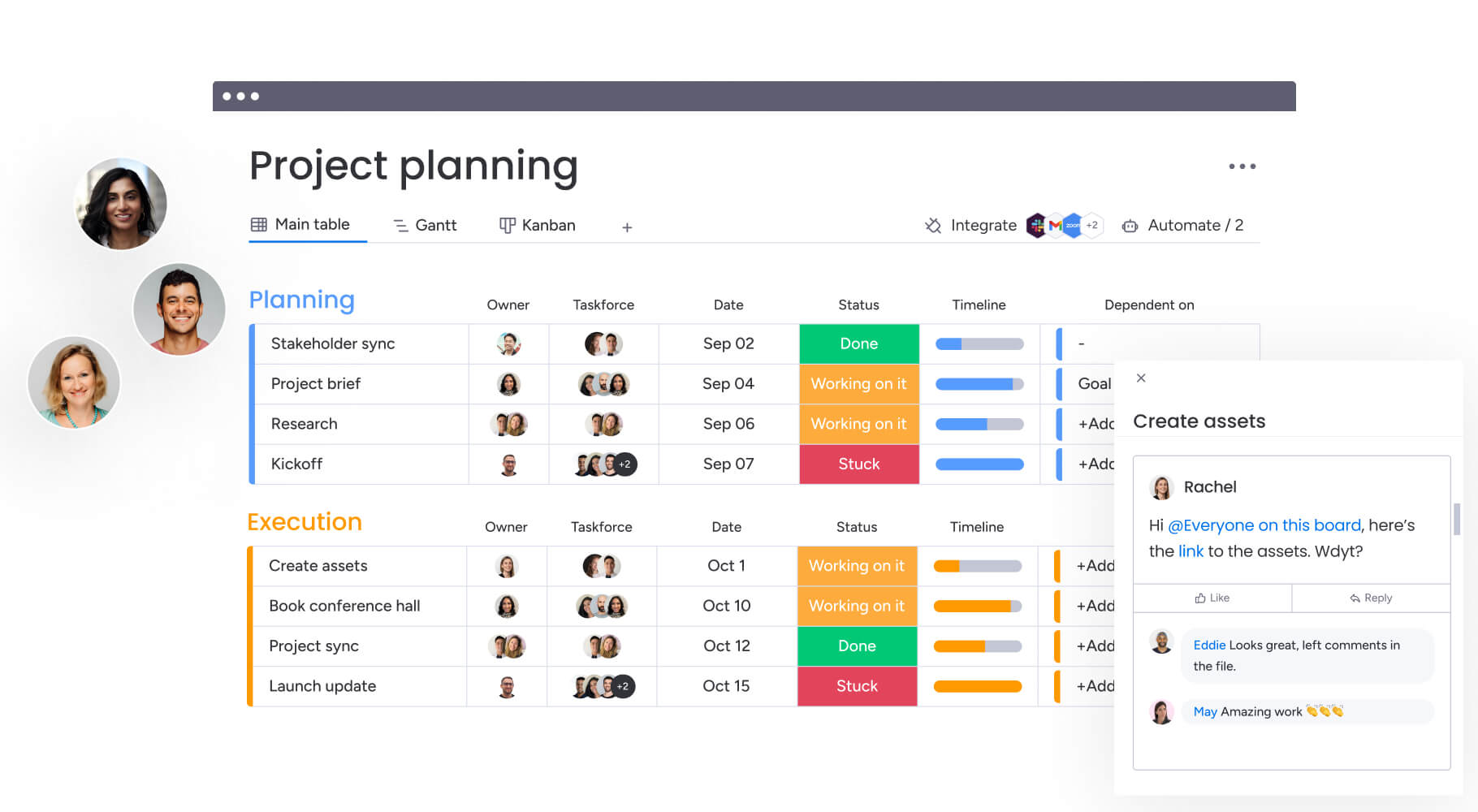
heads of marketing at tech companies with more than 1,000 employees face a familiar challenge: coordinating large teams across content, creative, acquisition, events, and operations while still keeping a clear view of campaign performance and ROI. When work is scattered across disconnected tools and processes, it becomes difficult to maintain momentum or demonstrate impact.
Teams in this position often turn to intuitive solution like monday work management for a single, reliable place to plan campaigns, track performance, and understand team capacity. The platform supports campaign management, creative production, marketing operations, resource planning, event coordination, and cross-functional collaboration with legal, product, and finance teams.
For marketing leaders who report regularly to executive teams, monday work management also provides real-time dashboards that bring key metrics into one view, including:
- Campaign performance: ROI, CAC, MQL-to-Customer rate.
- Operational efficiency: volume and performance of content/campaigns.
- Financial management: budget adherence and forecasting accuracy.
- Team productivity: resource utilization and time-to-launch.
- Delivery metrics: on-time delivery and stakeholder satisfaction.
With this level of insight, you can make faster decisions and show how marketing contributes to company goals. Standardized workflows, automation, and templates reduce the need to rebuild processes for every campaign, which helps teams stay focused on high-value work.
Further, capacity planning tools also support smarter resource allocation and reduce the risk of burnout. For leaders who need deeper oversight, resource management software capabilities make it easier to understand team capacity and plan work more effectively.
Try monday work managementmonday work management top features for project management
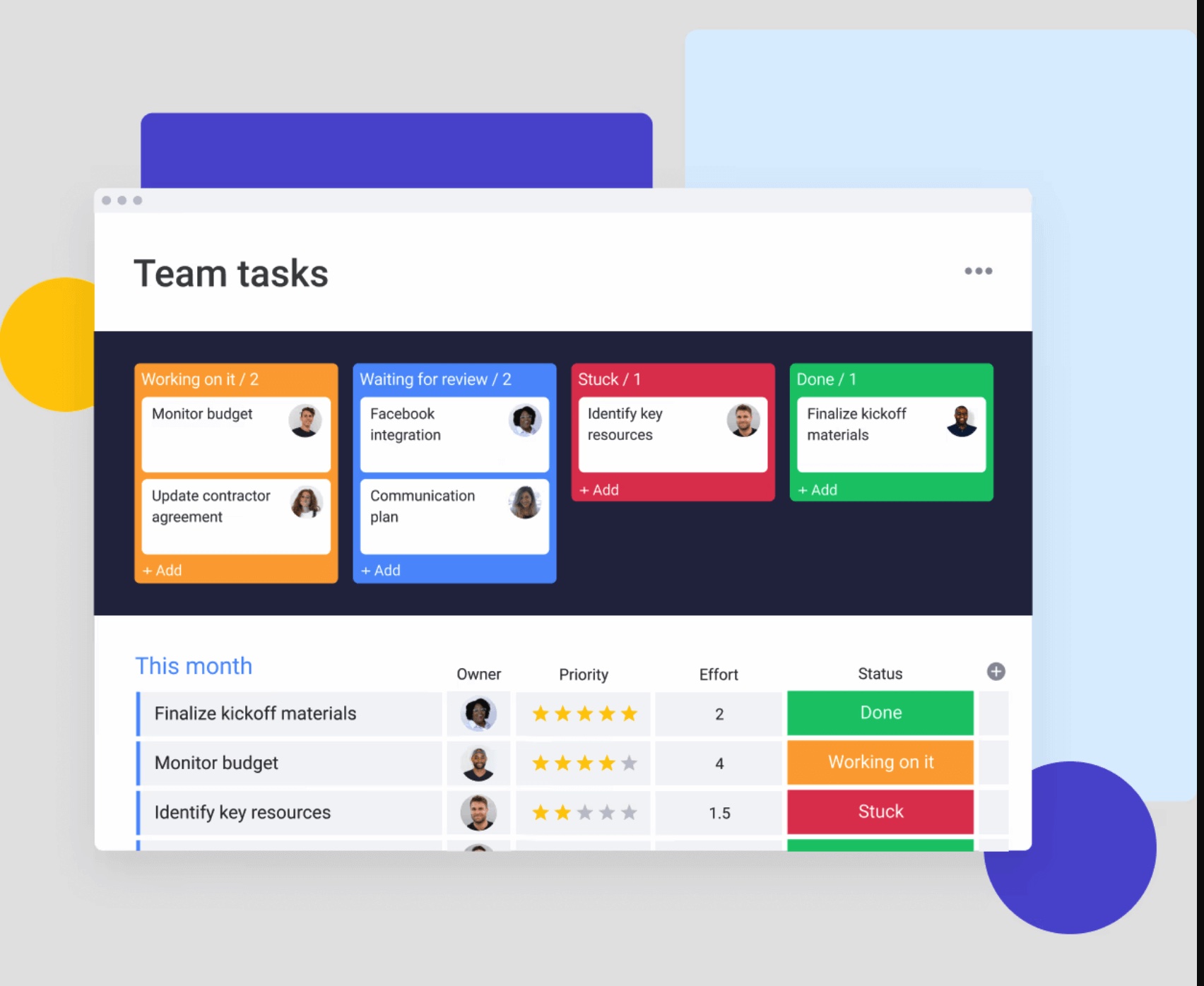
These five features fundamentally change the game for enterprise marketing teams struggling to coordinate work, allocate resources wisely, and prove their impact. Each feature addresses specific challenges that heads of marketing face when managing large, distributed teams across multiple campaigns and channels.
Workload management
Workload management capabilities within monday work management provide real-time visibility into team capacity across all 50-100+ marketing team members. The sophisticated platform displays each team member’s current assignments, availability, and bandwidth in visual workload views that update automatically as tasks are assigned or completed.
For heads of marketing managing large-scale teams, this visibility is essential for preventing burnout and ensuring strategic resource allocation. When launching multi-channel campaigns across regions, you can quickly identify which designers, content creators, or campaign managers have bandwidth to take on additional work.
Key benefits include:
- Real-time capacity tracking: visual workload views update automatically as tasks are assigned or completed.
- Proactive resource planning: forecast resource needs weeks or months in advance and make proactive staffing decisions.
- Burnout prevention: identify overallocated team members before issues arise.
These benefits become even more meaningful when applied at scale. For example, Genpact’s marketing team uses monday work management to manage capacity across a global operation, ensuring every campaign has the resources it needs to move forward.
According to Sarah Pharr, AVP Marketing at Genpact, clear visibility into team workloads helps them spot capacity issues early, rebalance responsibilities, and keep delivery on track without overextending their teams.
Automation and templates
The platform’s automation eliminates the tedious busywork that bogs down marketing teams and creates bottlenecks. No-code automation recipes trigger actions based on status changes, deadlines, or custom conditions.
When a campaign brief is approved, automations can notify the creative team, create subtasks for each deliverable, set deadlines based on the launch date, and assign owners — all without manual intervention.
For heads of marketing overseeing campaign planning and execution across multiple teams and regions, automation ensures standardization while allowing team flexibility.
Automation capabilities deliver:
- Workflow standardization: templates capture best practices for campaign types, event launches, or content production.
- Time savings: pre-configured automation recipes, approval workflows, and task dependencies reduce time-to-launch.
- Process consistency: teams no longer reinvent workflows for every campaign
These improvements are especially valuable in high-volume marketing environments. One company that puts this into practice is FARFETCH, whose marketing organization used automation to streamline its campaign brief submission and approval process by formalizing requests through forms and routing them with automated notifications. This shift reduced email exchanges and helped the team save 3,500 hours each month.
Real-time dashboards
Real-time dashboards pull everything that matters from your projects, campaigns, and teams into views that’ll impress even the most data-hungry executives. These dashboards update automatically as teams work, eliminating the manual data collection and spreadsheet compilation that consumes hours each week.
Heads of marketing can create dashboards that display:
- Performance metrics: campaign ROI, CAC, MQL-to-Customer rate.
- Operational data: volume and performance of content/campaigns.
- Financial tracking: budget adherence and forecasting accuracy.
- Team analytics: productivity and resource utilization.
- Delivery status: time-to-launch metrics and stakeholder satisfaction
You can filter dashboards by campaign type, region, team, or time period to answer specific questions from the C-suite. The visual format — with charts, graphs, and progress indicators — makes complex marketing data immediately understandable to non-marketing executives.
This real-time visibility enables proactive decision-making. Instead of waiting for weekly status meetings or monthly reports, you have continuous visibility into which campaigns are on track, which are at risk, and where intervention is needed.
Integration ecosystem
The platform integrates with 200+ marketing and business applications, creating a unified ecosystem where data flows seamlessly between platforms. Connect with the tools your team already lives in —from Salesforce and HubSpot for CRM to Adobe Creative Cloud for design work, and from Slack for communication to Marketo for automation.
For heads of marketing managing large teams across content, creative, acquisition, events, and operations, integrations eliminate the silos that scatter marketing impact. When your CRM, analytics platform, and project management system share data automatically, you gain the centralized visibility needed to understand how marketing activities drive business outcomes.
Integration benefits include:
- Unified data flow: eliminate manual data entry and sync issues between platforms.
- Cross-functional collaboration: legal, product, and finance teams can work in their preferred tools while updates sync automatically.
- Centralized visibility: connect marketing activities to business outcomes through automated data sharing.
Enterprise security
Security is a core requirement for tech companies managing sensitive marketing data, customer information, and confidential campaign plans. For teams operating at this scale, the controls built into monday work management help maintain compliance and protect information across the organization.
The platform includes:
- Access controls: IP restrictions and two-factor authentication.
- Authentication options: multiple SSO methods for seamless login.
- Encryption standards: BYOK and tenant-level encryption to safeguard data.
- Granular permissions: control access at the board, group, and column level.
Marketing teams often handle customer insights, competitive research, and product launch materials. With monday work management, advanced admin tools ensure only the right people can view or edit sensitive information, which supports secure and efficient collaboration across large teams.
How a head of marketing in tech benefits from monday work management
Marketing leaders in tech who switch to monday work management see real, measurable gains in everything that matters: time saved, costs reduced, compliance strengthened, productivity boosted, and quality improved.
These aren’t just operational wins: they’re competitive advantages that directly boost your bottom line and team morale. Some of the biggest benefits include:
Time and cost efficiency
Heads of marketing save 7,000+ hours per account monthly by eliminating manual status updates, spreadsheet compilation, and email-based project coordination. Automation handles repetitive tasks like brief routing, approval notifications, and deadline reminders, freeing marketing leaders to focus on strategy.
Teams achieve 6x ROI by optimizing resource allocation and preventing wasted effort on duplicated work:
- Time saved: 41% reduction in conference calls.
- Communication efficiency: communication becomes more centralized and efficient within the platform.
- Cost optimization: $118K saved per month through improved operational efficiency.
Compliance and productivity
Standardized workflows and approval processes ensure marketing campaigns meet legal, brand, and regulatory requirements before launch. Audit trails track every change, approval, and decision, providing the documentation needed for compliance reviews.
Process improvements include:
- Process standardization: 100% removal of spreadsheets eliminates version control issues.
- Cross-team collaboration: 40% improvement in collaboration metrics.
- Asset management: 62% improvement in assets and approvals.
Quality and visibility improvements
With ownership, standardized processes, and real-time visibility, marketing teams deliver higher quality campaigns that align with strategic objectives. The platform’s template library captures best practices, ensuring every campaign benefits from proven approaches.
Quality outcomes deliver:
- Creative output: teams report 3x creative output increase.
- Strategic alignment: real-time dashboards track progress toward OKRs.
- Risk management: identify risks before they impact deadlines.
- Business impact: demonstrate marketing’s contribution to business goals.
How to solve project management with monday work management
Let’s be honest — multi-channel campaigns can be a logistical nightmare without the right system. You’re juggling dozens of deliverables across teams who rarely talk to each other. Here’s exactly how to run campaigns from start to finish using monday work management (no more dropped balls or missed deadlines!).
Step 1: set up your campaign structure
Create a campaign board with groups for each campaign phase: strategy, creative development, production, launch, and measurement. Add custom columns to track campaign objectives, target audience, channels, budget allocation, and key performance indicators.
Use the timeline view to map campaign milestones against your launch date, ensuring all teams understand the critical path. This foundational structure provides the framework for all subsequent campaign activities and ensures nothing falls through the cracks.
Step 2: assign teams and resources
Assign ownership for each campaign deliverable to specific team members across content, creative, acquisition, events, and operations functions. Use the workload view to verify that assigned team members have capacity for the work.
Set dependencies between tasks so creative production cannot begin until strategy is approved, and launch activities cannot start until assets are finalized. This prevents teams from working on incomplete information and ensures logical workflow progression.
Step 3: automate workflows and approvals
Configure automation recipes to route campaign briefs to appropriate teams, notify stakeholders when approvals are needed, and update status automatically as work progresses. Create approval workflows for legal review, brand compliance, and executive sign-off that trigger based on task completion.
Set up automated reminders for approaching deadlines to keep campaigns on schedule. These automations eliminate manual coordination tasks and ensure consistent process execution across all campaigns.
Step 4: track performance in real-time
Connect your analytics tools so campaign performance data flows into your campaign board automatically. Create custom columns to track metrics like impressions, clicks, conversions, CAC, and ROI.
Use the dashboard view to visualize performance across all active campaigns, identifying which are exceeding targets and which need optimization. This real-time visibility enables immediate course corrections and data-driven decision making.
Step 5: report impact to leadership
Build executive dashboards that aggregate campaign data into the metrics leadership cares about: total campaigns launched, on-time delivery rate, budget adherence, and marketing’s contribution to pipeline and revenue. Filter dashboards by time period, region, or campaign type to answer specific questions.
Share dashboard links with executives so they have continuous visibility without requiring manual reports. This transparency builds trust and demonstrates marketing’s strategic value to the organization.
Step 6: optimize for future campaigns
After campaign completion, review timeline data to understand actual vs. planned duration for each phase. Document lessons learned and best practices directly in the campaign board.
Save successful campaign structures as templates that future campaigns can use, incorporating the automation recipes and approval workflows that proved effective. This continuous improvement approach ensures each campaign builds on previous successes.
Comparison: monday work management vs competing platforms for project management
Not all project management platforms are created equal — especially for marketing teams at scale. Here’s how monday work management stacks up against the competition on features, results, and what you’ll actually pay.
This table focuses mainly on features most important to heads of marketing managing large, distributed teams.
| Feature | monday work management | Wrike | Asana |
|---|---|---|---|
| Workload management for 100+ teams | Real-time capacity views across all team members | Available with Resource add-on | Limited to Premium/Business plans |
| Marketing-specific templates | 50+ pre-built marketing templates | Marketing templates available | Generic project templates |
| Real-time executive dashboards | Unlimited custom dashboards | Limited dashboards on lower tiers | Portfolios feature required |
| Automation recipes | 200+ no-code automations | Automation available | Rules limited by plan tier |
| Integration ecosystem | 200+ native integrations | 400+ integrations | 100+ integrations |
| Campaign ROI tracking | Built-in with custom formulas | Requires custom fields | Limited financial tracking |
| Price per user/month | From $9 (billed annually) | From $10 (billed annually) | From $10.99 (billed annually) |
| Implementation time | Less than 4 months (Forrester study) | 2-3 months typical | 1-2 months typical |
| G2 rating | 4.7/5 (12,000+ reviews) | 4.2/5 (3,500+ reviews) | 4.3/5 (12,000+ reviews) |
| Enterprise security | BYOK, tenant-level encryption, multiple SSO | Enterprise security available | Enterprise security on Enterprise plan |
| Resource forecasting | AI-powered resource forecasting | Manual resource planning | Limited forecasting capabilities |
| Multi-language support | 10+ languages | 8 languages | 9 languages |
It’s clear from the comparison that monday work management offers a strong fit for heads of marketing in tech. The combination of enterprise-grade security, unlimited custom dashboards for executive reporting, and marketing-specific templates helps teams get up and running quickly.
Additionally, the platform’s 4.7 out of 5 G2 rating also reflects high user adoption, which is essential when you need a 50–100 person marketing team to work in one system consistently.
How Genpact transformed their global marketing operations
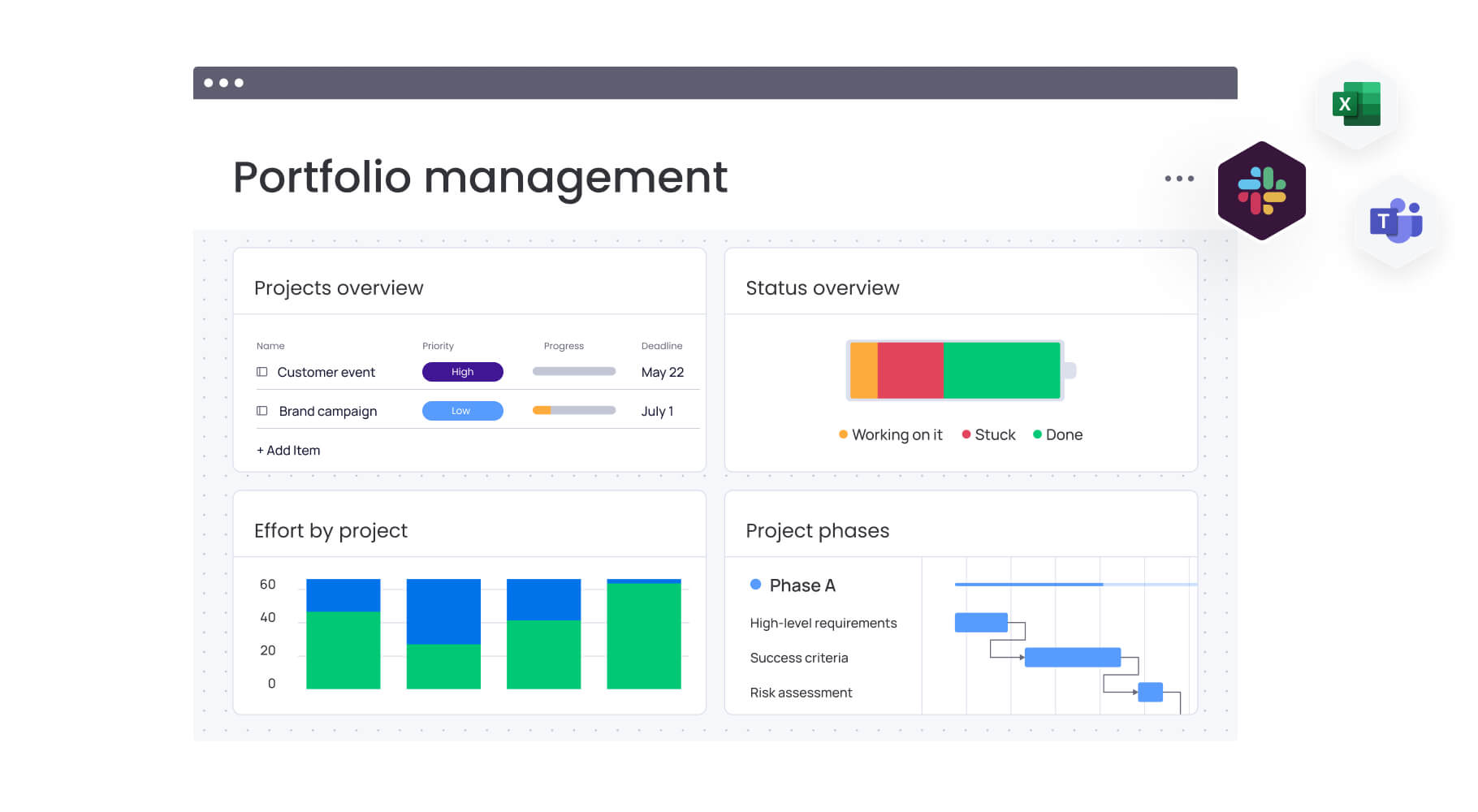
Large marketing teams often face the same challenge: coordinating high-volume work across channels, regions, and stakeholders without losing visibility. Genpact’s global marketing organization is a strong example of how a structured work management system can help teams move from scattered processes to coordinated execution.
Genpact’s marketing department runs 24 active campaigns at any given time, each with multiple cross-channel activations managed by campaign managers and channel owners. With so many contributors involved, the team struggled to maintain visibility across projects and keep work aligned.
Before adopting monday work management, campaign managers relied heavily on spreadsheets saved across personal desktops, emails, and Microsoft SharePoint folders. No one had a clear view of the latest updates or where to find key information. According to Sarah Pharr, AVP Marketing at Genpact, there was no single source of truth to track status, progression, or dependencies for each campaign.
Searching for campaign updates meant digging through emails or opening multiple versions of files. The team recognized that standardizing the end-to-end planning and execution process was essential for identifying bottlenecks, anticipating delays, and improving turnaround times.
The transformation with monday work management
To solve these challenges, Genpact implemented monday work management as a centralized platform for campaign planning, execution, and tracking. The team created workflow boards outlining the full activation process for each channel, including columns that compared target dates with actual timeframes.
This structure gave the team a reliable view of campaign progression. Using Timeline View, dashboards, and other visual tools, they could quickly see which items were outstanding and adjust priorities based on what mattered most each week.
Key implementation elements included:
- Workflow standardization: built boards for each channel’s end-to-end activation process.
- Performance tracking: added columns comparing target dates with actual timeframes.
- Process formalization: structured campaign brief submissions and approvals through forms.
- Automated notifications: routed requests and updates through automated alerts.
Measurable results achieved
Genpact’s shift to monday work management delivered meaningful operational improvements across their global marketing organization:
- 40% improvement in cross-team collaboration: for end-to-end campaign execution.
- 100% removal of spreadsheets: eliminating version-control issues and data inconsistencies.
- Significant reduction in email volume: as work coordination moved into the platform.
The team is also implementing Workload View to support smarter resource allocation. As Sarah Pharr explains, having visibility into each team’s workload helps them identify capacity issues early, prioritize effectively, and maintain delivery without overextending their teams.
Ready to transform your project management function?
Enterprise marketing teams using monday work management achieve remarkable results: 40% improvement in cross-team collaboration, 100% elimination of spreadsheet chaos, and 3x increase in creative output. These outcomes stem from centralized visibility, automated workflows, and real-time performance tracking that transforms scattered marketing efforts into coordinated execution.
By bringing together workload visibility, executive-ready dashboards, and connections to your entire tech stack, the connected platform tackles the exact pain points keeping marketing leaders up at night.
Further, as we touched on above, robust project management software is essential for aligning cross-functional teams on goals, timelines, and deliverables. When your teams can see capacity in real-time, automate repetitive tasks, and demonstrate ROI through data-driven dashboards, marketing becomes a strategic growth driver rather than a cost center.
Join 152,000+ marketing teams who trust monday work management to eliminate silos, optimize resources, and demonstrate marketing impact to executive leadership. With our 14-day free trial, you can experience real-time campaign visibility, workload management for your entire team, and executive dashboards with no risk.
The content in this article is provided for informational purposes only and, to the best of monday.com’s knowledge, the information provided in this article is accurate and up-to-date at the time of publication. That said, monday.com encourages readers to verify all information directly.
Frequently asked questions
How long does implementation take for enterprise marketing teams?
Implementation for enterprise marketing teams with 50-100+ members typically takes less than four months to achieve positive ROI, according to Forrester's Total Economic Impact study of monday work management.
What integrations are available with marketing tools?
monday work management integrates with 200+ marketing and business tools including CRM systems (Salesforce, HubSpot), analytics platforms (Google Analytics, Tableau), creative tools (Adobe Creative Cloud), communication platforms (Slack, Microsoft Teams), marketing automation (Marketo, Mailchimp), social media management tools, and email marketing platforms. The platform also offers an open API for custom integrations with proprietary or specialized marketing technology.
How does monday work management prevent team burnout?
The platform prevents team burnout through real-time workload visibility and capacity planning features. The workload view displays each team member's current assignments, availability, and bandwidth across all projects. heads of marketing can identify overallocated team members before burnout occurs and redistribute work to team members with capacity. Automation eliminates repetitive manual tasks that consume time without adding value.
Can I track marketing budget and ROI in the platform?
Yes, monday work management includes budget tracking and ROI measurement capabilities. You can create custom columns to track planned budget, actual spend, and variance for each campaign or project. Formula columns calculate ROI, CAC, and other financial metrics automatically based on spend and performance data. The platform integrates with financial systems to sync budget data, and dashboards can display budget adherence, forecasting accuracy, and marketing's contribution to revenue.
What security certifications does monday work management have?
monday work management maintains enterprise-grade security certifications including SOC 2 Type II, ISO 27001, ISO 27018, ISO 27017, and GDPR compliance. The platform offers IP restrictions, two-factor authentication, multiple SSO options (SAML, OIDC), BYOK (Bring Your Own Key) encryption, and tenant-level encryption. Advanced admin tools provide granular permission controls at the board, group, and column level.
How do I ensure adoption across global marketing teams?
Successful adoption across global marketing teams requires structured rollout, value demonstration, and ongoing support. Start with a pilot team to refine workflows and demonstrate quick wins before expanding to additional teams. Build out base structures and templates so teams can see what their work will look like on the platform. Provide training through interactive tutorials, documentation, and dedicated support resources.

 Get started