


Your marketing team just launched a holiday campaign across 200 stores. Three weeks later, you learn that many locations never received their promotional materials, digital ads are promoting out-of-stock items, and your creative team is overwhelmed with last-minute requests. It’s a familiar scene for retail marketing leaders.
The real challenge isn’t generating strong campaign ideas. It’s keeping every part of the execution aligned. Retail marketing involves physical stores, digital channels, large teams, shifting inventory, and seasonal pressure. Traditional project management solutions often can’t handle this level of complexity, and the result is fragmented campaigns and missed opportunities.
This guide focuses on what truly matters when choosing project management software for retail marketing. You’ll see how top platforms perform in real scenarios and what difference the right tool makes when managing campaigns across hundreds of locations.
Key takeaways
Choosing the right project management software transforms how retail marketing teams execute campaigns across hundreds of locations. The platform you select determines whether your team thrives with streamlined workflows or struggles with disconnected tools and missed deadlines.
Here’s what matters most when evaluating project management software for retail marketing:
- Enterprise-wide visibility: connect campaigns, creative production, and store execution in one unified workspace that scales from 10 to 1,000+ locations.
- AI-powered automation: reduce manual coordination by 40% through intelligent task routing, approval workflows, and campaign categorization.
- Resource optimization: nalance workloads across creative, content, and campaign teams to prevent burnout during peak retail seasons.
- Real-time performance tracking: monitor campaign ROI, budget adherence, and team productivity through customizable dashboards.
- Seamless integration: connect your existing martech stack — from Shopify to Salesforce — without disrupting current workflows.
What makes heads of marketing choose monday work management for retail marketing operations?
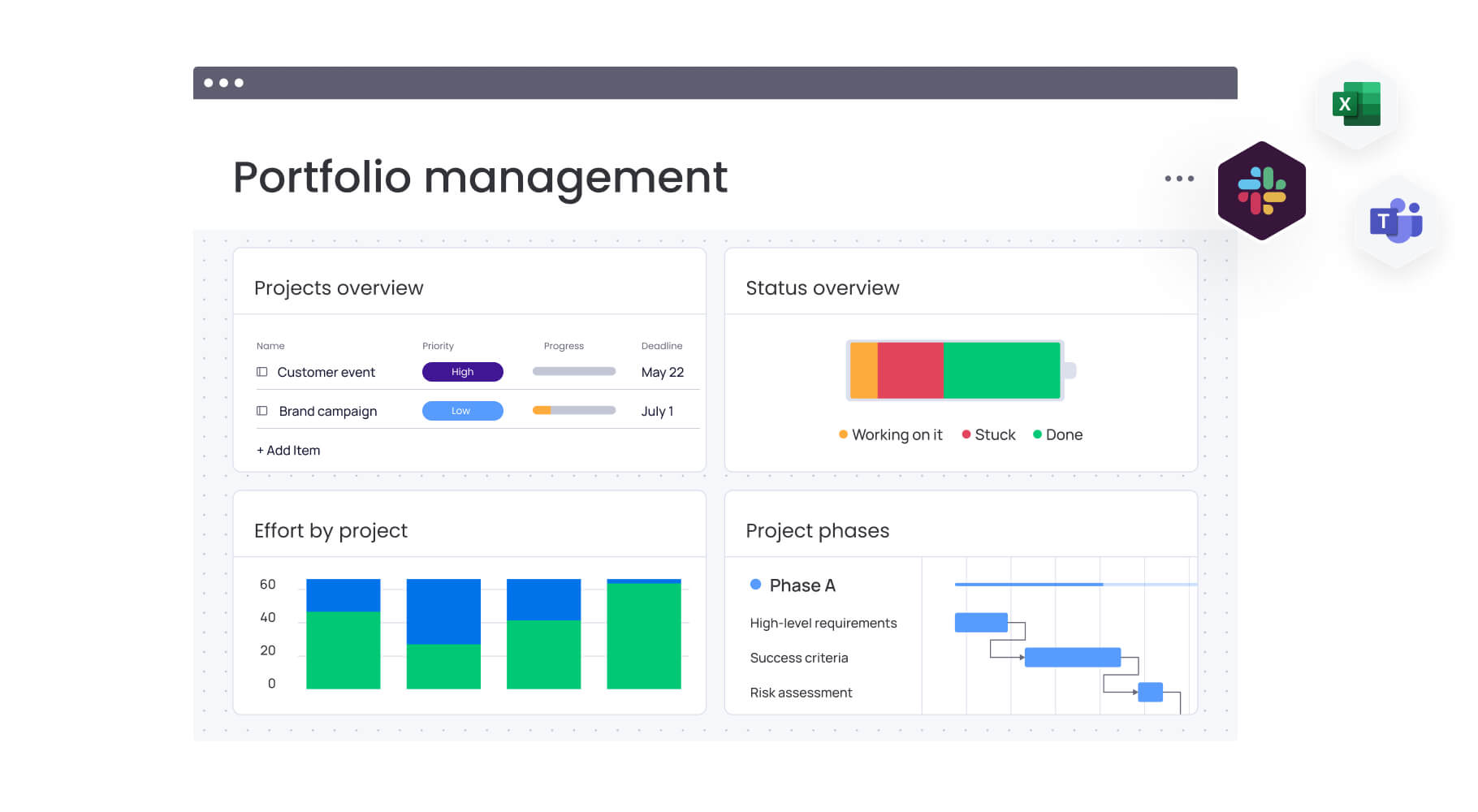
Retail marketing leaders face unique complexity that traditional project management tools weren’t built to handle. You’re coordinating campaigns across physical stores and digital channels, managing teams of 50-100+ people, and aligning marketing execution with inventory levels, seasonal promotions, and store operations.
The right platform addresses three critical needs that define retail marketing success. These foundational requirements separate effective retail marketing operations from chaotic, reactive coordination:
Core retail marketing requirements:
- Cross-functional coordination: marketing doesn’t operate in isolation — you need seamless collaboration with merchandising, store operations, and supply chain teams.
- Scalable standardization: templates and workflows that maintain brand consistency across locations while allowing local flexibility.
- Performance visibility: real-time insights into campaign performance, team capacity, and budget utilization across all channels.
When evaluating platforms, consider how they handle retail-specific scenarios. Can the system track in-store promotional materials alongside digital campaigns? Does it connect marketing timelines with inventory availability? Can you monitor both regional performance and individual store execution?
Platforms like monday work management address these challenges through its three core enterprise pillars:
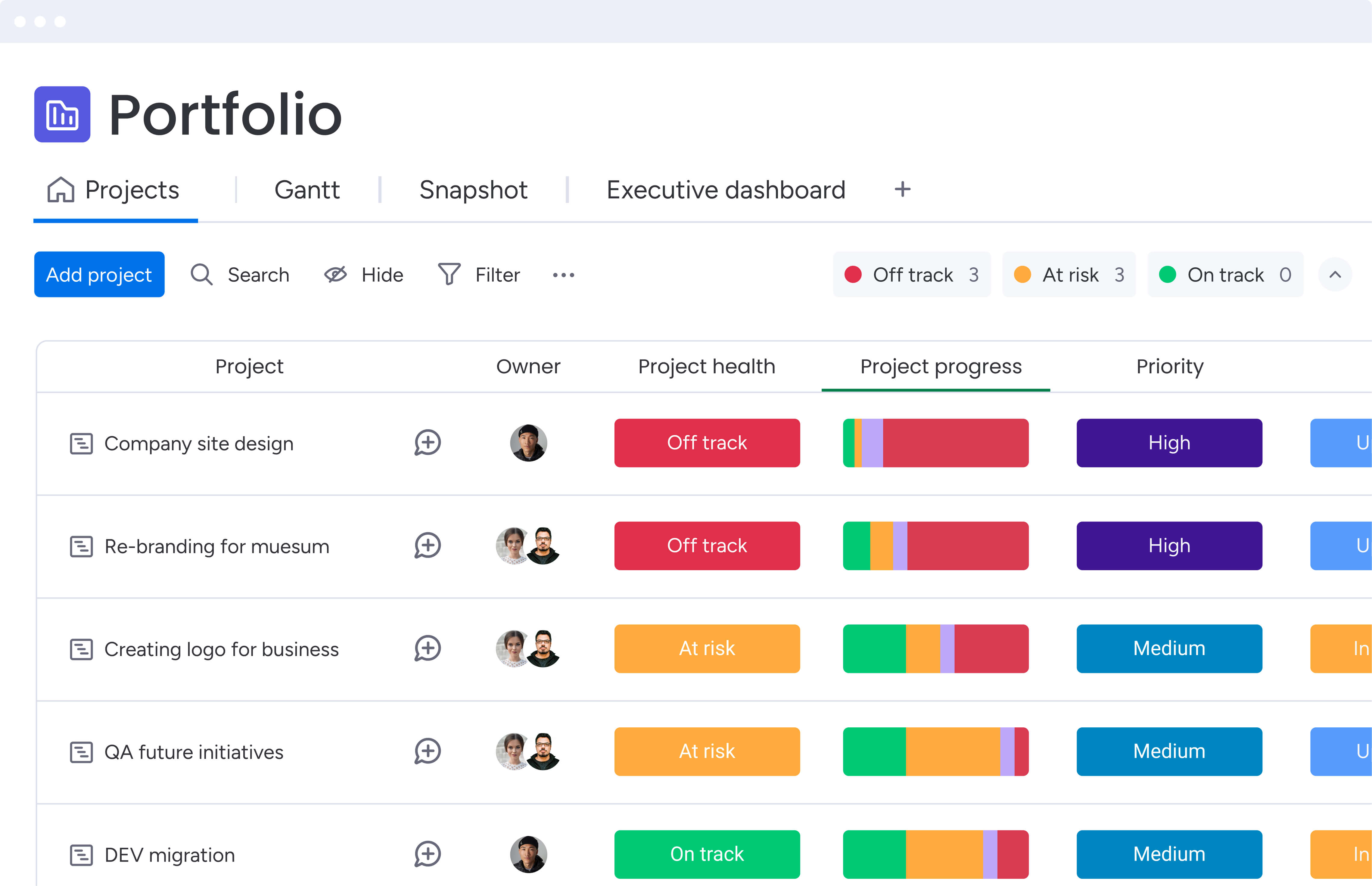
- Leadership visibility: AI-powered portfolio dashboards that track hundreds of campaigns simultaneously.
- Standardization and alignment: consistent execution through managed templates that scale across locations.
- Resource optimization: balanced team capacity during Black Friday rushes and seasonal peaks through intelligent workload management.
monday work management top features for retail marketing operations
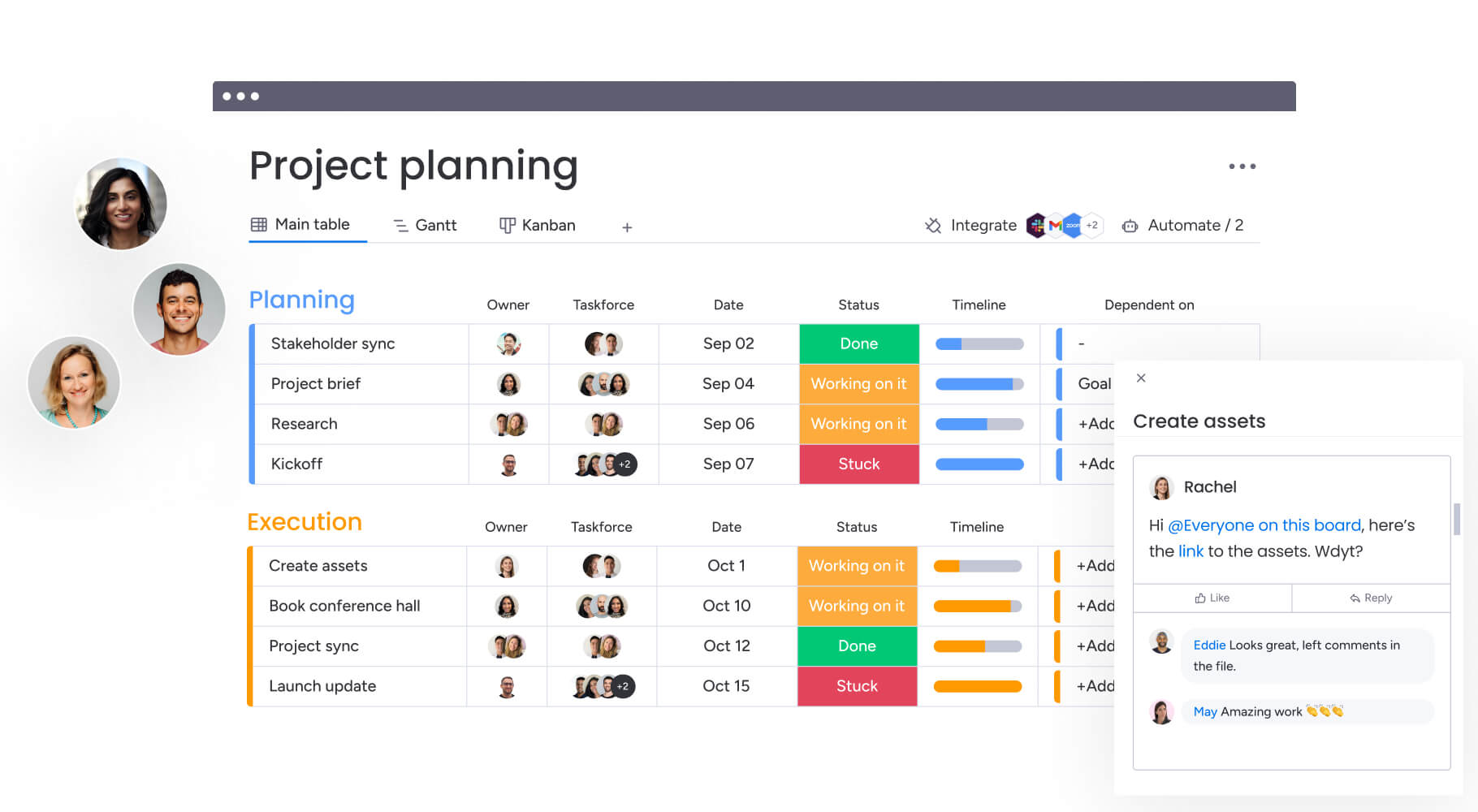
These five core capabilities below transform how retail marketing teams coordinate campaigns, leverage resource management software, and deliver results across multiple locations. Each feature addresses specific pain points that retail marketers face when scaling operations beyond traditional project management approaches.
Campaign management dashboard
The campaign management dashboard consolidates all marketing initiatives into a unified command hub. Track seasonal campaigns, product launches, and promotional events across every channel and location simultaneously. Visual widgets display real-time budget burn, performance metrics, and campaign status — eliminating the need for manual status reports.
Key dashboard capabilities:
- Custom views: monitor campaigns by region, store cluster, or product category.
- Dependency tracking: prevent promoting products before inventory arrives.
- Drill-down insights: move from portfolio-level insights to individual store execution in seconds.
Resource planning and workload view
Managing 50-100+ person teams requires precision resource allocation. The Workload View displays team bandwidth through color-coded capacity indicators — instantly showing who’s overbooked, available, or approaching burnout. This visibility becomes critical during peak retail seasons when creative production demands spike.
Resource management features:
- Resource Directory: centralized information about team skills, roles, and availability.
- Strategic allocation: match designers, copywriters, and campaign managers based on expertise and current workload.
- Automated alerts: flag capacity issues before they impact delivery timelines.
Marketing calendar
The marketing calendar synchronizes all campaign timelines, product launches, and in-store events across your entire retail ecosystem. Filter views by store location, product category, or campaign type to maintain clarity despite complexity. Dependencies ensure digital advertising aligns with inventory levels and store readiness.
Calendar automation capabilities:
- Automated triggers: notify store managers when promotional materials ship.
- Team alerts: alert merchandising teams about upcoming displays.
- System integration: connect with POS systems and inventory platforms to prevent out-of-stock promotions.
Custom automation recipes
Automation eliminates the repetitive coordination tasks that consume marketing teams’ time. Create if-this-then-that workflows that execute automatically based on your defined triggers. When campaign briefs are submitted, automation routes them through approval chains.
Further, when creative assets receive final approval, store managers get notified instantly.
Automation benefits:
- Process standardization: maintain consistency across regions while allowing local flexibility.
- Budget monitoring: trigger alerts when spending approaches thresholds.
- Status automation: flow updates automatically to stakeholders.
- Strategic focus: teams concentrate on marketing activities instead of administrative coordination.
AI-Powered insights and reporting
Transform raw campaign data into strategic insights through AI-powered analytics. The platform’s AI Blocks categorize incoming campaign requests by urgency, extract key information from creative briefs, and summarize complex performance reports into actionable recommendations.
AI capabilities include:
- Portfolio dashboards: display marketing performance across all retail locations.
- Drill-down analysis: segment by store cluster, demographic, or product category.
- Risk insights: scan campaign updates to flag potential issues before they impact launch dates.
- Predictive alerts: surface delayed creative production or budget overruns early.
How heads of marketing in retail benefit from monday work management
The right project management platform doesn’t just organize your work — it transforms your entire marketing operation with results you can actually measure. Here’s what retail customers see when they make the switch:
Operational efficiency gains include:
- 7,000+ hours saved monthly: on campaign coordination through centralized visibility.
- 40% reduction in time-to-market: for seasonal campaigns via standardized templates.
- 25% improvement in budget adherence: through real-time expense tracking.
Team performance improvements include:
- 3x creative output: during peak seasons by optimizing resource allocation.
- 50% better cross-functional collaboration: between marketing, merchandising, and operations.
- Reduced burnout: through balanced workload distribution and capacity planning.
Strategic advantages include:
- Scale without adding headcount: by automating coordination across 100+ locations.
- Instant executive reporting: with AI-generated portfolio summaries.
- Proactive risk management: through early warning systems for at-risk campaigns.
The enterprise features in the platform don’t force you to change how you work — they just make everything you’re already doing more visible and controllable. The result? You make decisions faster, execute campaigns without the usual headaches, and finally get marketing efforts that truly align with business goals.
Try monday work management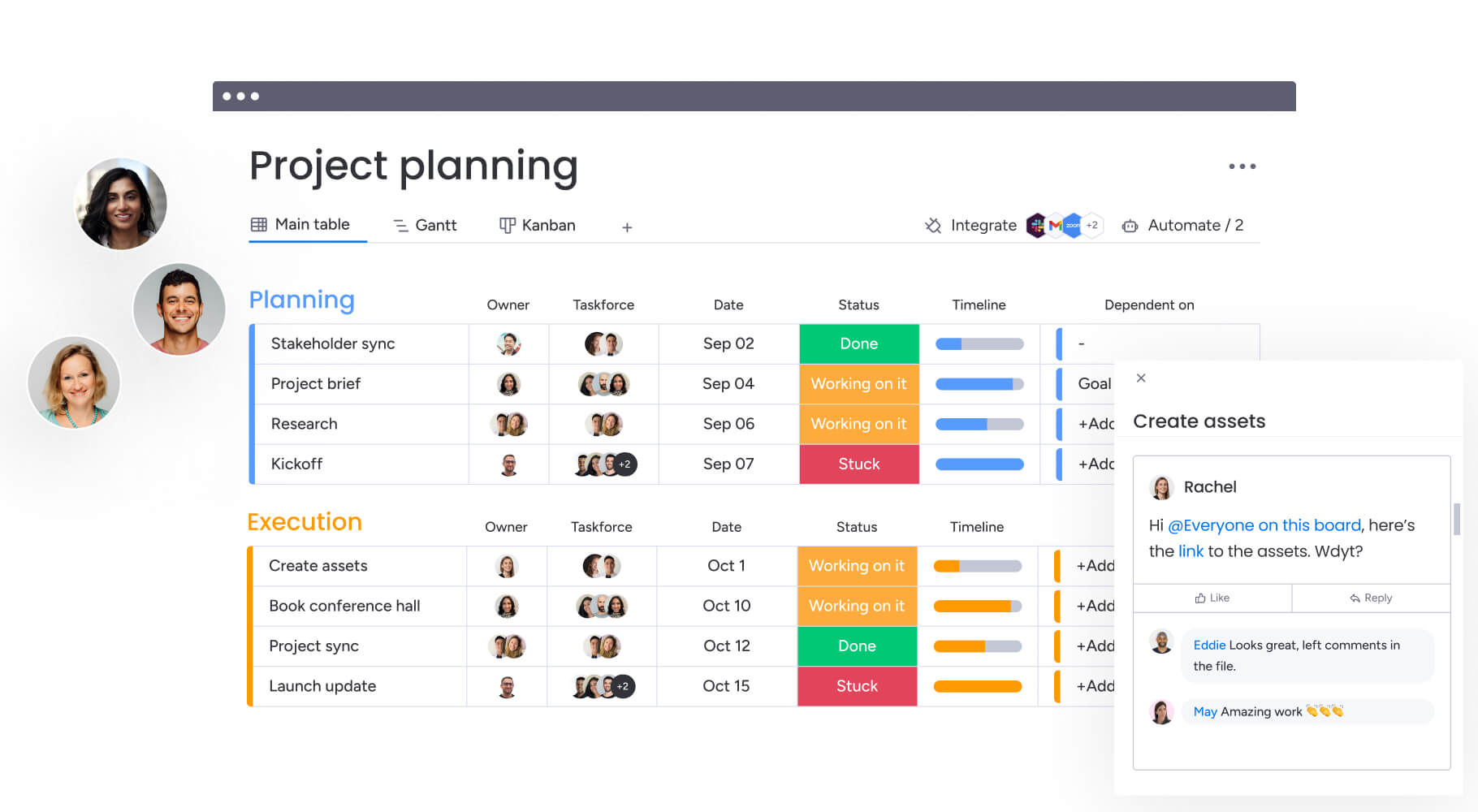
5 steps to solve retail marketing challenges with monday work management
Here’s your roadmap for turning chaos into clarity. Follow these five steps to build a marketing system that can handle everything from local store promotions to global product launches: without the usual coordination nightmares.
Step 1: centralize your marketing ecosystem
Create a unified workspace that connects all marketing functions — from creative production to campaign execution. Build dedicated boards for seasonal campaigns, ongoing promotions, in-store events, and digital initiatives.
Setup requirements:
- Custom columns: track store locations, campaign budgets, creative asset status, and inventory alignment.
- Managed templates: ensure consistency across teams while allowing customization for regional needs.
- Workspace hierarchy: mirror your organizational structure with portfolio-level visibility for leadership and detailed project views for execution teams.
Step 2: standardize workflows with retail-specific templates
Develop templates for recurring retail scenarios: Black Friday campaigns, seasonal launches, product promotions, and in-store events. Each template includes pre-built task lists, approval workflows, and automation recipes.
Template benefits:
- Reduced setup time: from days to minutes while ensuring nothing falls through the cracks.
- Approval workflows: route creative assets through brand, legal, and merchandising reviews.
- Escalation paths: handle time-sensitive campaigns with cross-project dependencies.
Step 3: connect your retail technology stack
Turn monday work management into the brain of your marketing operation by connecting it to everything else in your tech stack. Sync with your POS systems so campaigns only launch when products are actually in stock, and link to inventory platforms to avoid the embarrassment of promoting items you can’t deliver.
Integration capabilities:
- 200+ native integrations: connect existing martech stack without disrupting workflows.
- Custom API connections: build specific integrations for unique retail systems.
- Data elimination: remove manual data entry, reduce errors, and create single source of truth.
Step 4: implement AI-powered optimization
Deploy AI capabilities to enhance decision-making and reduce manual work. AI Blocks automatically categorize campaign requests, extract insights from performance data, and generate executive summaries.
AI optimization features:
- Digital Workforce: campaign manager assistant monitors campaign health and suggests optimizations.
- Resource matching: AI matches tasks with team members based on skills, availability, and capacity.
- Intelligent allocation: ensure critical campaigns get attention without overwhelming teams.
Step 5: scale with confidence
Growing from 50 to 500 stores? No problem. The portfolio dashboards stay lightning-fast even with thousands of projects running simultaneously, and when you update a template, those changes instantly flow to every campaign using it (whether that’s five or five hundred).
Enterprise scaling capabilities:
- Cross-account visibility: manage multiple brands or regions from single view.
- Enterprise security: SOC 2 certification, GDPR compliance, and granular permissions.
- External collaboration: secure data sharing with agencies and vendors.
Comparison: monday work management vs competing platforms for retail marketing
With so many tools available, it can be hard to know which one truly supports complex retail marketing operations. This side-by-side comparison highlights the features that influence efficiency, visibility, and campaign performance.
| Feature | monday work management | Asana | Wrike | ClickUp |
|---|---|---|---|---|
| Multi-location coordination | Custom views by store/region with cross-project dependencies | Limited location tracking | Basic location fields | Location tags only |
| Retail-specific templates | Seasonal campaigns, product launches, in-store events | Generic marketing templates | Generic templates | Basic retail options |
| AI capabilities | AI Blocks, Digital Workforce, risk insights | Basic AI features | AI in premium tiers | Limited AI tools |
| Resource management | Workload View, Resource Directory, Capacity Manager | Basic workload view | Advanced (higher tiers) | Resource views available |
| Integration ecosystem | 200+ integrations including retail systems | 100+ integrations | 400+ integrations | 1,000+ integrations |
| Portfolio visibility | Scales to 1,000+ projects with AI summaries | Limited scaling | Enterprise only | Performance issues at scale |
| Campaign budget tracking | Real-time with automated alerts | Basic tracking | Budget tracking available | Budget features included |
| Approval workflows | Multi-stage with version control | Simple approvals | Proofing add-on required | Approval automation |
| Implementation time | 2-4 weeks for enterprise | 1-2 weeks | 4-6 weeks | 2-3 weeks |
| Pricing (per user/month) | $12-$20 | $10.99-$24.99 | $10-$24.80 | $5-$19 |
How FARFETCH transformed their retail marketing operations
FARFETCH, the luxury fashion platform connecting 1,400+ brands across 190 countries, faced a critical challenge. Their marketing team of 400 people across 40 departments relied on scattered Google Docs and spreadsheets. Without centralized visibility, coordinating brand partnerships and promotional activities became increasingly complex.
The transformation began with implementing monday work management to create a master content calendar. The marketing planning team designed workflows with dependencies, automations, and integrations that unified each team’s work.
Implementation highlights:
- Content production board: connected to master calendar with automatic change reflection.
- CRM calendar: complex email marketing and push notification scheduling using Timeline views.
- Status columns: mirroring capabilities across all marketing functions.
The measurable impact:
- 6x ROI: through operational efficiency gains.
- $118K saved monthly: by eliminating manual coordination.
- 3,500 hours saved per month: on status updates and data entry.
- 100% spreadsheet elimination: replaced with automated workflows.
- 40% improvement: in cross-team collaboration.
Ready to transform your retail marketing function?
Success in retail marketing comes down to one thing: can you take a complex multi-channel campaign and make it happen without things falling apart? The right platform doesn’t just organize your work — it gives your team both the big picture and the daily details they need to drive real results across every location.
Intuitive solutions like monday work management gives retail marketing teams what they’ve been missing: a platform that actually handles the complexity of multi-location campaigns. Our AI spots potential disasters before they happen, our resource tools keep your team from burning out during peak seasons, and everything connects to your existing tech stack without forcing you to rebuild your processes from scratch.
Join 152,000+ organizations already using monday work management to centralize operations, optimize productivity, and deliver measurable results across their retail marketing operations. For a broader perspective on competing tools, consult a project management software list.
The content in this article is provided for informational purposes only and, to the best of monday.com’s knowledge, the information provided in this article is accurate and up-to-date at the time of publication. That said, monday.com encourages readers to verify all information directly.
Frequently asked questions
How does monday work management handle Black Friday campaign coordination?
To handle Black Friday campaign coordination, monday work management uses master campaign boards with sub-items for each store location. Timeline views map pre-campaign tasks, launch activities, and post-campaign analysis. Automations notify store managers when materials are ready and trigger inventory reorders when promotional items reach minimum thresholds. Dependencies ensure digital advertising launches only after in-store inventory is confirmed.
What's the typical implementation timeline for a retail marketing team?
The typical implementation timeline for a retail marketing team using monday work management is two to four weeks from setup to full adoption. Teams become comfortable with the platform within two weeks to a month. You can start with pilot campaigns in week one, expand to additional teams by week three, and achieve full rollout within six weeks with dedicated onboarding support.
Can the platform manage multiple retail brands simultaneously?
Yes, monday work management handles multi-brand portfolios through separate workspaces with portfolio-level visibility. Country Road Group manages 150+ projects across five brands using consolidated boards that provide brand-specific views while maintaining executive oversight. Each brand maintains unique creative requirements while following standardized processes.
How does AI improve retail marketing operations?
AI capabilities in monday work management automate campaign categorization, predict at-risk initiatives, and generate executive summaries instantly. AI Blocks extract insights from creative briefs, categorize feedback by sentiment, and summarize performance data. Digital Workers like the Campaign Manager monitor campaign health and recommend budget reallocations based on performance trends.
What security certifications protect retail customer data?
monday work management maintains SOC 2 Type II certification, ISO 27001 compliance, and GDPR adherence. The platform offers IP restrictions, two-factor authentication, SSO options, and tenant-level encryption. Granular permissions ensure store teams see only relevant campaign information while leadership maintains portfolio visibility.
How do you measure marketing ROI across channels?
Create unified dashboards that combine physical store metrics (foot traffic, in-store sales) with digital performance (website traffic, online conversions). Custom columns track channel-specific KPIs while calculating blended metrics like total campaign ROI and omnichannel customer journey performance. Automated reports deliver weekly performance summaries showing marketing's contribution to sales goals.

 Get started