


Retail PMOs (Project Management Offices) manage a level of complexity that would overwhelm most project managers. They coordinate store rollouts across hundreds of locations, orchestrate seasonal campaigns with tight deadlines, and manage vendor relationships. Maintaining visibility into every moving piece requires specialized capabilities that generic project management platforms simply cannot provide.
The stakes couldn’t be higher in retail. miss a store opening date? That’s immediate revenue down the drain. Launch your holiday campaign late, and you’ve lost your sales window. And when resources get misallocated, the bottlenecks don’t just affect one project — they cascade across your entire portfolio.
Retail project managers need platforms that understand these unique operational demands and provide the intelligence to prevent problems before they impact the bottom line.
This guide cuts through the noise to reveal which portfolio management software actually works for retail operations. You’ll discover what separates real retail-ready platforms from basic process trackers, see how the top solutions stack up, and learn how the right choice turns your chaotic project landscape into a revenue-driving machine.
Key takeaways
Retail PMOs operate in an environment where delays, resource conflicts, and fragmented visibility directly impact revenue. The right portfolio management software turns this complexity into coordinated, predictable execution. Here are the essential things to know:
- monday work management leads retail portfolio execution: delivers AI-powered risk identification and managed templates that scale across hundreds of locations.
- Centralize scattered retail projects: bring store rollouts, remodels, and seasonal campaigns into one platform for unified visibility.
- Gain real-time insights: use dashboards that track over 1,000 projects simultaneously without performance issues.
- Automate repetitive processes: streamline approvals, updates, and reporting to deliver projects faster with fewer errors.
- Standardize workflows across stores: maintain brand consistency while allowing regional teams to adapt processes locally.
What makes project managers choose monday work management for retail portfolio management?
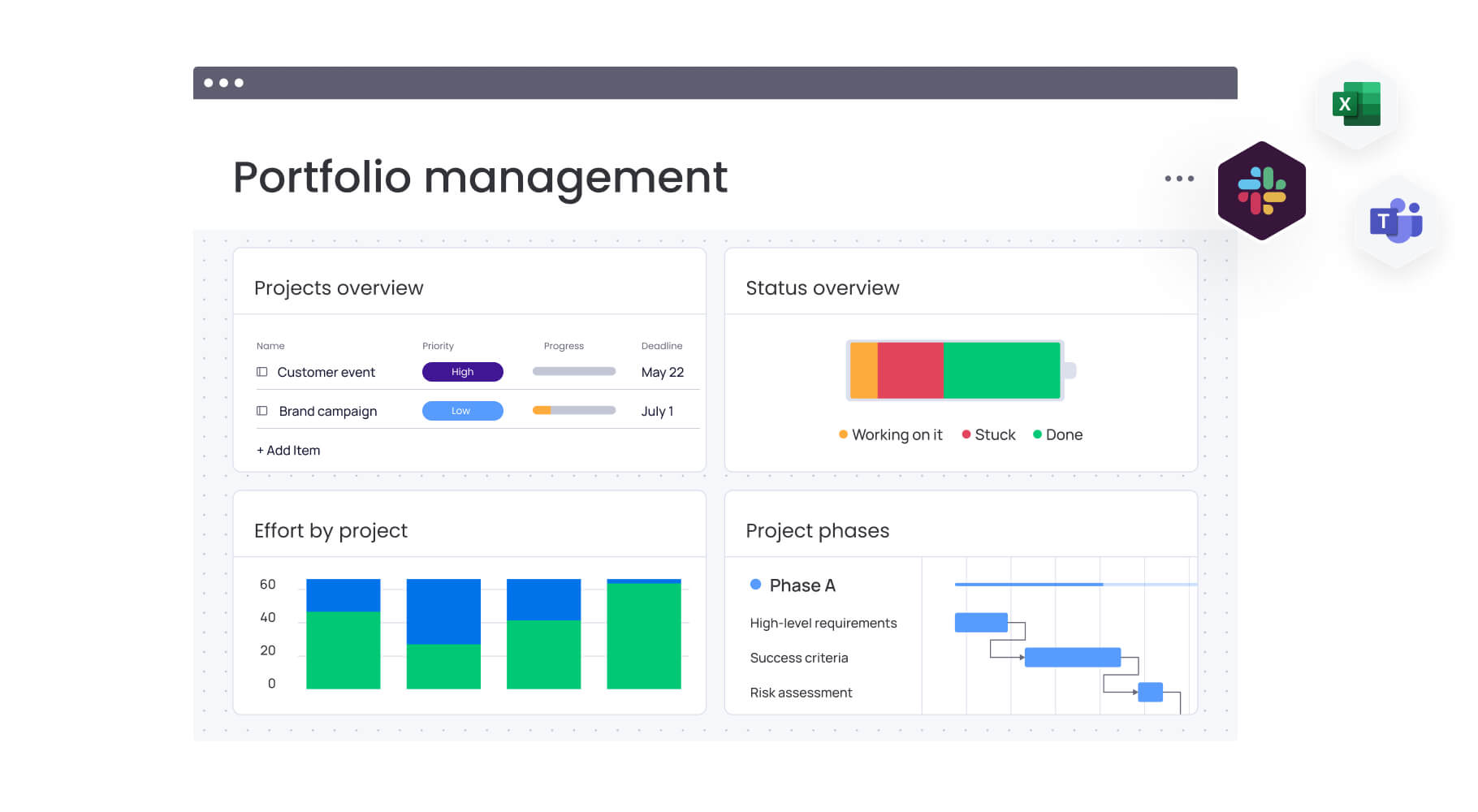
Retail project managers need more than basic task tracking: they really need platforms that understand the complexity of coordinating store launches, managing seasonal inventory cycles, and aligning cross-functional teams across multiple locations.
monday work management stands out by offering AI-powered risk identification across hundreds of retail projects simultaneously. The platform’s managed templates ensure consistency whether you’re rolling out a new store concept or launching a holiday campaign across 500 locations. The real differentiator lies in how teams actually adopt and use the platform.
With the highest user adoption rates for enterprises according to G2, monday work management ensures your retail data flows accurately because teams genuinely enjoy using it. This translates to reliable portfolio visibility that retail executives can trust for strategic decisions.
Why retail project managers need specialized PPM platforms
Drop a generic project platform into a retail environment and watch it crumble. Your team is spinning too many plates — launching time-sensitive campaigns, wrangling countless vendors, and keeping tabs on projects spanning hundreds of stores all at once.
Traditional tools force retail teams into rigid workflows that don’t account for seasonal fluctuations, regional variations, or the need to pivot quickly based on sales data. Without specialized portfolio management capabilities, retail project managers struggle with fragmented visibility across store initiatives, making it nearly impossible to identify resource conflicts or spot at-risk projects before they impact revenue.
When your tools can’t keep up, here’s what actually happens:
- Store openings get delayed: due to poor coordination.
- Seasonal campaigns launch late: missing critical sales windows.
- Inventory projects run over budget: without proper oversight.
Retail PMOs need purpose-built portfolio planning and management software that understands their specific challenges and provides the flexibility to adapt while maintaining enterprise-grade control and standardization.
Key features every retail portfolio management platform must have
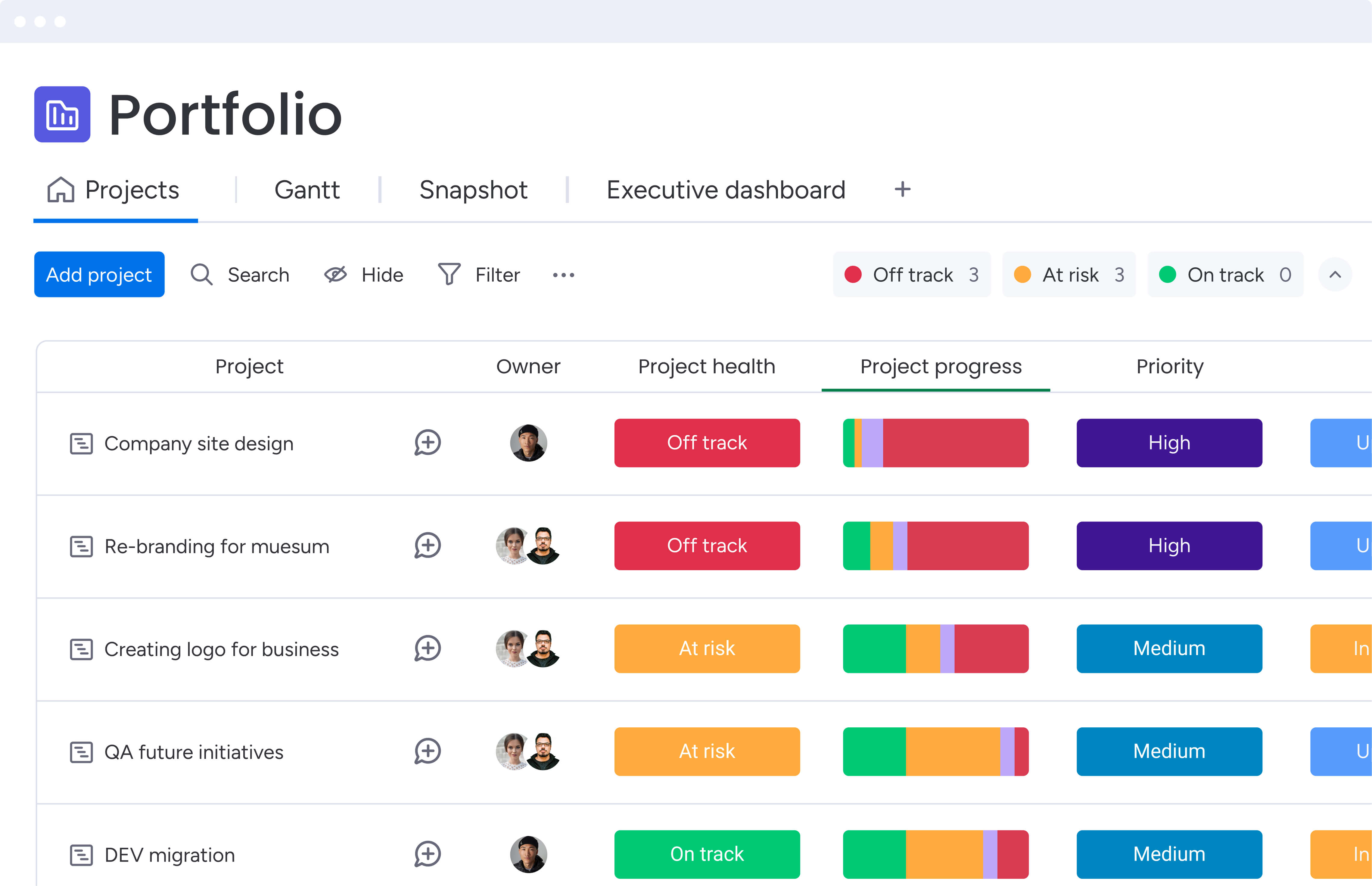
Retail operations have unique demands: multi-location visibility, seasonal campaign planning, vendor coordination, and complex resource distribution. That means your software can’t just offer generic “features”; it must support the core operational capabilities that retail PMOs rely on every day.
The steps below outline the five foundational capabilities your platform must support to successfully manage retail portfolios at scale.
Step 1: establish multi-location project visibility
When you’re running projects in 50+ stores at once, you need to see everything — both the big picture and the store-level details. Look for platforms with dashboards that instantly show you what’s happening by region, store format, or where you are in your campaign rollout.
Essential capabilities include:
- Heat maps showing project progress: across geographic regions.
- Drill-down functionality: from portfolio to individual store level.
- Automated status rollups: that eliminate manual reporting.
monday work management’s out-of-the-box portfolio dashboards scale to track over 1,000 projects simultaneously, giving retail PMOs instant visibility into store rollouts, remodels, and regional initiatives without performance degradation.
Step 2: implement seasonal campaign planning tools
In retail, nail your seasonal campaigns or miss your year. Your portfolio software needs to handle the predictable cycles of retail planning while letting you pivot fast when things change — because they always do.
Critical planning features include:
- Timeline views: that visualize overlapping campaigns
- Resource allocation tools that account for peak periods.
- Template libraries: for recurring seasonal initiatives.
The platform should enable teams to standardize campaign workflows while allowing regional customization. This balance ensures brand consistency without sacrificing local market responsiveness.
Step 3: configure resource allocation across stores
Retail PMOs constantly balance resources between competing priorities. Whether allocating visual merchandisers for store refreshes or coordinating IT resources for POS upgrades, visibility into capacity is essential.
Resource management must include:
- Skills-based allocation: considering expertise and location.
- Capacity planning: that accounts for travel time between stores.
- Placeholder functionality: for future hiring needs.
monday work management’s Resource Directory centralizes all team member attributes including skills, certifications, and regional assignments, while the Capacity Manager provides live visibility into utilization across the entire portfolio.
Step 4: enable vendor and supplier collaboration
Retail projects involve extensive external collaboration. From construction contractors for store buildouts to marketing agencies for campaign creative, vendor management capabilities are non-negotiable.
Vendor collaboration features include:
- Secure external access: with controlled permissions.
- Automated approval workflows: for vendor deliverables.
- Integration with procurement: including standard payment systems.
Platforms must also facilitate seamless communication while maintaining data security and compliance standards that protect sensitive retail information.
Step 5: activate real-time inventory project tracking
Inventory initiatives require precise coordination between stores, warehouses, and suppliers. Portfolio management software must track these complex projects while providing early warning signals for potential stockouts or overages.
Inventory project capabilities include:
- Integration with inventory management systems: for smoother workflow.
- Predictive analytics: for project impact on stock levels.
- Cross-functional visibility: for merchandising and operations teams.
The ability to connect inventory projects with sales forecasts and seasonal planning ensures retail PMOs make data-driven decisions that optimize both customer satisfaction and working capital.
Try monday work managementTop 12 portfolio management software for retail PMOs
There’s no shortage of portfolio tools claiming to handle retail needs, but they’re not all created equal. To find your perfect match, focus on how well each platform tackles what actually matters: coordinating across locations, managing seasonal madness, and keeping vendors in sync.
Here’s how the leading platforms stack up for retail project managers seeking enterprise-grade capabilities.
1. monday work management
monday work management delivers comprehensive portfolio management specifically designed for retail complexity. The platform’s AI-powered risk insights continuously scan hundreds of projects, flagging potential delays in store openings or campaign launches before they impact revenue.
Retail-specific strengths:
- Managed templates that standardize store rollout processes across entire portfolios.
- Cross-project dependencies that visualize how delays in one location affect others.
- AI-powered portfolio reports that generate executive summaries instantly.
The platform’s 346% ROI over three years, as documented by Forrester, reflects its ability to transform retail operations at scale. With deployment in under four months, retail PMOs achieve rapid time to value.
2. Wrike
Wrike offers robust project tracking with strong reporting capabilities. The platform provides customizable dashboards and workflow automation, though retail teams often find the interface requires significant training investment.
Key features include:
- Custom request forms: for project intake.
- Gantt charts: with dependency tracking.
- Time tracking: with budget management.
Wrike works well for structured retail environments but lacks the flexibility many retail teams need for rapid pivots during seasonal peaks.
3. Smartsheet
Smartsheet appeals to teams comfortable with spreadsheet interfaces. The familiar grid view reduces adoption barriers, though this approach can limit visualization options for complex retail portfolios.
Platform highlights include:
- Spreadsheet-style interface: with project management features.
- Automated workflows: and alerts.
- Integration: with Microsoft Office suite.
Retail PMOs managing smaller portfolios may find Smartsheet sufficient, but scaling beyond 100 active projects often reveals performance limitations.
4. ClickUp
ClickUp positions itself as an all-in-one workspace with extensive customization options. While feature-rich, retail teams frequently report feeling overwhelmed by the platform’s complexity.
Notable capabilities include:
- Multiple view types: including timeline and workload.
- Goal tracking: with OKR management.
- Built-in document collaboration: great for teams.
The platform’s strength in flexibility can become a weakness without strong governance and standardization practices.
5. Asana
Asana emphasizes team collaboration with an intuitive interface. The platform excels at task management but lacks advanced portfolio features required for enterprise retail operations.
Core features include:
- Timeline view: for project planning
- Workflow automation: with helpful rules.
- Forms: for standardized requests
Retail teams appreciate Asana’s user experience but often need additional tools for comprehensive portfolio management.
6. Microsoft Project
Microsoft Project remains a staple for organizations invested in the Microsoft ecosystem. The desktop-centric approach, however, creates challenges for distributed retail teams requiring real-time collaboration.
Traditional strengths include:
- Advanced scheduling: including resource leveling.
- Deep integration: handy integration with Microsoft 365.
- Comprehensive reporting: seamless capabilities that help deliver clear overviews.
The platform’s complexity and licensing model often deter retail organizations seeking agile, cloud-first solutions.
7. Planview
Planview targets enterprise portfolio management with sophisticated strategic planning tools. While powerful, the platform typically requires significant implementation investment and ongoing administration.
Enterprise features include:
- Strategic portfolio optimization.
- Capacity planning and scenario modeling.
- Financial management integration.
Retail organizations must weigh Planview’s capabilities against its complexity and total cost of ownership.
8. Celoxis
Celoxis provides comprehensive project portfolio management at a competitive price point. The platform offers strong analytics but lacks the intuitive interface retail teams need for rapid adoption.
Platform benefits include:
- Advanced resource management.
- Customizable KPI dashboards.
- Risk assessment tools.
Mid-market retail organizations may find Celoxis attractive, though enterprise scalability remains questionable.
9. Jira Align
Jira Align extends Atlassian’s ecosystem for enterprise planning. Originally designed for software development, the platform requires significant customization for retail use cases.
Technical capabilities include:
- Program increment planning.
- Value stream management.
- Dependency mapping.
Retail IT departments may advocate for Jira Align, but business users often struggle with its technical orientation.
10. Trello Enterprise
Trello Enterprise scales the popular card-based interface for larger teams. While visually appealing, the platform lacks sophisticated portfolio management features retail PMOs require.
Simple strengths include:
- Intuitive Kanban boards.
- Power-ups (extended functionality).
- Butler automation.
Trello works well for individual store projects but struggles with multi-location portfolio visibility.
11. Airtable
Airtable combines database functionality with project management features. The platform’s flexibility appeals to retail teams managing product launches and inventory projects.
Hybrid capabilities include:
- Database-project management fusion.
- Custom applications and interfaces.
- Extensive integration options.
Retail organizations often use Airtable for specific use cases rather than comprehensive portfolio management.
12. Plaky
Plaky offers unlimited users at a flat rate, making it attractive for large retail teams. However, the platform’s limited feature set restricts its utility for complex portfolio management.
Budget-friendly features include:
- Unlimited user model,
- Basic task and project tracking.
- Simple collaboration tools.
Plaky may serve small retail chains but lacks enterprise capabilities for major retail operations.
monday work management top features for retail portfolio management
monday work management is built for the operational complexity retail PMOs face daily. Its capabilities help teams manage multi-location rollouts, seasonal initiatives, and vendor-heavy workflows with clarity and control.
AI-powered risk identification
- Early risk alerts: the platform’s AI scans all project updates to surface issues before they escalate.
- Clear ownership: each risk is assigned to an owner with recommended mitigation steps.
- Proactive decision-making: PMOs can address potential delays in store openings or campaigns before they impact revenue.
Managed templates for retail standardization
- Consistent workflows: standardized templates align processes for store rollouts, campaigns, and inventory initiatives.
- Automatic cascading updates: corporate changes to templates update all active projects while preserving regional adjustments.
- Scalable governance: teams maintain brand and process consistency across hundreds of locations.
Cross-project dependency mapping
- Visual dependency chains: understand how delays in one store or initiative impact broader retail programs.
- Conflict identification: the platform flags scheduling and resource clashes automatically.
- Resolution guidance: project managers receive recommended steps to keep interconnected work on track.
Resource Directory and Capacity Manager
- Centralized resource data: skills, certifications, roles, and regional assignments are stored in one searchable directory.
- Real-time utilization insights: PMOs can see availability across all projects and teams instantly.
- Smarter allocation: capacity data supports resource planning during peak periods like holiday seasons.
Portfolio-level dashboards
- Scalable visibility: dashboards handle 1,000+ projects without performance issues.
- Executive-ready insights: leaders get instant clarity across regions, store types, and initiative categories.
- Drill-down access: users can jump from portfolio-level summaries to individual store metrics in seconds.
How a project manager in retail benefits from monday work management
Project managers in retail PMOs experience immediate improvements in their daily workflows when implementing monday work management. The platform addresses their core challenge of work scattered across tools by centralizing all retail initiatives in one unified workspace.
These benefits translate directly into measurable productivity gains and reduced stress for retail project managers:
- Eliminate Spreadsheet Chaos: replace dozens of disconnected Excel files with dynamic boards that update in real-time. Project managers report saving 15+ hours weekly on manual reporting and data consolidation.
- Accelerate Store Rollouts: standardized templates and automated workflows reduce new store opening timelines significantly. The platform’s managed templates ensure every location follows proven processes while allowing regional adaptations.
- Prevent Resource Conflicts: gain instant visibility into team capacity across all projects. The Resource Planner shows exactly who’s available for upcoming campaigns, eliminating double-booking and ensuring critical initiatives stay staffed.
- Proactive Risk Management: ai-powered insights flag at-risk projects before they derail. Project managers receive automated alerts about potential delays, budget overruns, or resource constraints with enough lead time to course-correct.
- Seamless Vendor Coordination: provide vendors secure access to relevant project information without exposing sensitive data. Automated approval workflows keep external partners aligned while maintaining governance standards.
Step-by-step guide: how to manage retail project portfolios with monday work management
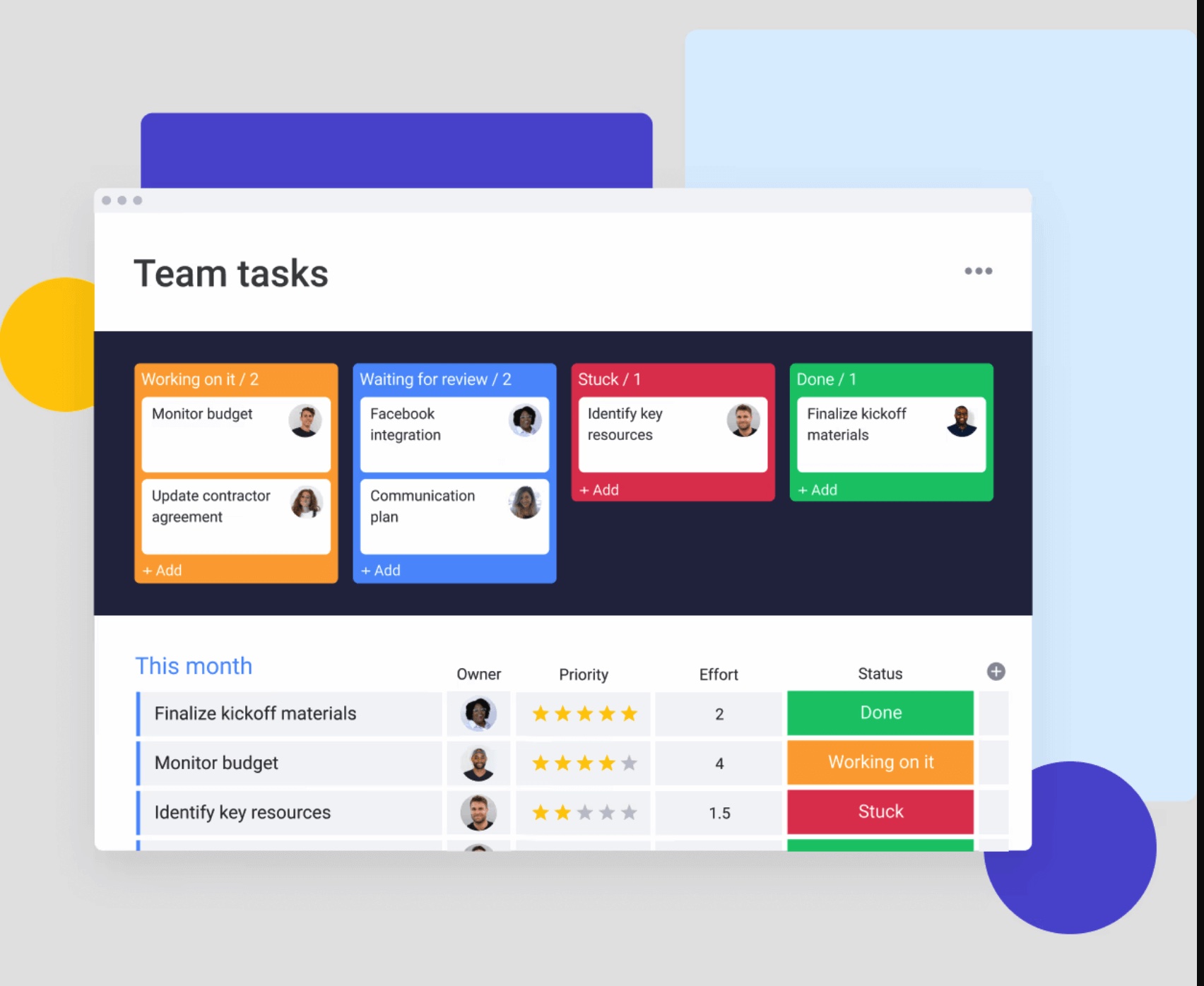
Getting retail portfolio management right means finding that sweet spot between consistent processes and the flexibility to adapt. Follow the steps below for guidance on how to manage portfolios with the platform and you will soon achieve maximum value while minimizing implementation risks.
Step 1: start with portfolio structure
Create a hierarchical organization that mirrors your retail operations. Set up portfolios for each region, with projects grouped by initiative type such as store openings, renovations, and seasonal campaigns. This structure provides instant visibility while maintaining granular control.
Step 2: deploy managed templates
Standardize core retail processes using managed templates that enforce consistency while allowing local adaptation. Create templates for store rollouts, inventory projects, and marketing campaigns that include pre-built automations, dashboards, and approval workflows.
Step 3: configure resource management
Build your Resource Directory with all team members, their skills, locations, and availability. Set up the Capacity Manager to visualize utilization across projects, enabling data-driven allocation decisions during resource planning sessions.
Step 4: establish governance workflows
Implement automated approval chains for project requests, budget changes, and timeline adjustments. Use cross-project dependencies to ensure changes in one initiative trigger appropriate reviews in related projects.
Step 5: activate AI-powered insights
Enable risk identification to continuously monitor project health. Configure AI-powered portfolio reports to automatically generate executive summaries that highlight trends, risks, and opportunities across your retail portfolio.
Comparison table: monday work management vs. competing platforms for retail portfolio management
When evaluating portfolio management software for retail operations, key differentiators emerge across critical capabilities. This comparison highlights how leading platforms address retail-specific requirements:
| Feature | monday work management | Wrike | Smartsheet | Asana |
|---|---|---|---|---|
| Multi-location visibility | AI-powered dashboards scale to 1,000+ projects | Limited to 500 projects effectively | Performance degrades beyond 100 projects | Basic portfolio views only |
| Seasonal planning tools | Managed templates with automated cascading updates | Manual template management | Spreadsheet-based planning | Limited template capabilities |
| Resource optimization | Centralized directory with live capacity management | Basic resource tracking | Manual resource allocation | No dedicated resource management |
| Vendor collaboration | Secure external access with granular permissions | Guest access available | Requires separate licensing | Limited external collaboration |
| Retail-specific AI | Risk identification and automated portfolio reports | No retail-specific AI | No AI capabilities | Basic AI for task suggestions |
| Time to value | Under 4 months with 346% ROI | 6-9 months typical | 3-6 months | 2-3 months for basic setup |
| User adoption rate | Highest for enterprises (G2) | Moderate adoption | High for spreadsheet users | High for small teams |
| Cross-project dependencies | Visual mapping with conflict resolution | Basic dependency tracking | Manual dependency management | No cross-project dependencies |
How Country Road Group transformed their retail project management
Country Road Group, a leading Australian fashion retailer operating multiple brands across hundreds of locations, faced mounting challenges coordinating store rollouts, seasonal collections, and digital initiatives. Their retail PMO struggled with fragmented visibility across projects, leading to resource conflicts and delayed store openings.
After implementing monday work management, Country Road Group achieved a remarkable transformation. The head of real estate, Melanie Green, reported that the platform reshaped their execution strategy by providing unified visibility across all retail projects.
Key outcomes achieved include:
- 2x faster digital project delivery through standardized workflows and automation
- Eliminated spreadsheet dependency with real-time collaborative boards
- Enhanced resource planning with clear visibility into project overlaps and capacity
Country Road Group now manages their entire retail portfolio including store renovations, inventory initiatives, and omnichannel campaigns on monday work management. The centralized visibility enables executives to make strategic decisions based on real-time data rather than outdated reports.
Transform your retail portfolio management with the right platform
As we’ve discussed, retail PMOs operate in one of the most complex project environments —managing store rollouts, seasonal cycles, digital initiatives, and vendor-heavy workflows all at once. The platforms that succeed in retail are the ones that provide clarity, scalability, and reliable portfolio-wide visibility without slowing teams down.
monday work management stands out because it combines these strengths in a single system built for real retail demands. Its AI-driven insights, standardized templates, and portfolio-wide dashboards give PMOs the oversight they need, while its flexibility ensures regional teams can still adapt workflows to local requirements. The result is a platform that supports both enterprise governance and day-to-day execution.
The outcomes speak for themselves: organizations using monday work management report a 346% ROI over three years and achieve full deployment in under four months. For retail PMOs ready to replace spreadsheet chaos with unified visibility—and gain the confidence to manage hundreds of projects simultaneously — monday work management offers a proven, scalable path forward.
The content in this article is provided for informational purposes only and, to the best of monday.com’s knowledge, the information provided in this article is accurate and up-to-date at the time of publication. That said, monday.com encourages readers to verify all information directly.
Frequently asked questions
What is the difference between retail project management and portfolio management?
Retail project management focuses on executing individual initiatives like store openings or campaigns, while portfolio management provides oversight across all projects to optimize resources, identify dependencies, and align initiatives with strategic goals. Portfolio management enables retail PMOs to see how individual projects impact overall business objectives and make trade-offs between competing priorities.
How much does portfolio management software cost for retail organizations?
Portfolio management software for retail typically ranges from $30-150 per user monthly, with enterprise platforms requiring additional investment in implementation and training. Total cost depends on user count, feature requirements, and integration needs, with most retail organizations seeing positive ROI within four to six months through improved efficiency and reduced project delays.
Can portfolio management software integrate with retail POS systems?
Yes, leading portfolio management platforms integrate with retail POS systems through APIs or pre-built connectors, enabling project teams to access sales data, inventory levels, and store performance metrics directly within their project workflows. monday work management offers 200+ integrations including retail-specific systems for seamless data flow.
How long does it take to implement PPM software in a retail environment?
Implementation timelines vary from two to six months depending on portfolio complexity and organizational readiness. monday work management typically deploys in under four months for retail organizations, with teams seeing initial value within two to four weeks through quick wins like standardized templates and automated reporting.
What ROI can retail PMOs expect from portfolio management software?
Retail PMOs typically achieve 200-350% ROI within three years through reduced project delays, improved resource utilization, and faster time-to-market for new initiatives. Organizations using monday work management report 346% ROI over three years according to Forrester research, with significant savings from eliminated manual processes.
Do I need different PPM tools for e-commerce and physical store projects?
No, comprehensive portfolio management platforms handle both digital and physical retail initiatives within the same system, providing unified visibility across omnichannel projects. monday work management enables teams to manage e-commerce launches, store rollouts, and integrated campaigns using consistent processes while maintaining channel-specific workflows where needed.

 Get started