


Marketing teams are drowning in disconnected platforms while leadership demands measurable results. Campaign briefs live in email, creative assets scatter across drives, and performance data sits trapped in separate dashboards. Meanwhile, deadlines slip, budgets blur, and cross-functional alignment becomes a daily struggle rather than a strategic advantage.
The solution isn’t another point tool. It’s comprehensive marketing strategy software that connects strategic goals to campaign execution in unified workspaces. The right platform transforms scattered marketing operations into measurable, coordinated execution that scales with your organization’s complexity and ambitions.
This guide cuts through the noise to show what actually matters in marketing strategy software, the must-have features that deliver results, and real examples of how teams use intelligent platforms like monday work management to collaborate better, work faster, and stay strategically aligned.
You’ll also discover implementation strategies, platform comparisons, and practical steps to transform your marketing operations from reactive coordination to proactive execution with a flexible work management platform.
Key takeaways
- Centralize all marketing work in one platform: stop juggling scattered tools and spreadsheets that create chaos — unify campaigns, teams, and data for complete visibility and control.
- Automate routine tasks to focus on strategy: eliminate manual status updates, approval chases, and repetitive processes that drain 40% of your team’s time from high-impact work.
- Connect marketing goals to daily execution: bridge the gap between OKRs and campaign tasks so every activity drives measurable business outcomes, not just busy work.
- Gain real-time visibility into team capacity: see exactly who’s overloaded and who has bandwidth before burnout happens — monday work management’s Workload View prevents resource disasters.
- Break down silos between marketing and other teams: create shared workflows with sales, product, and service delivery to ensure campaigns align with customer needs and business priorities.
What makes heads of marketing choose monday work management for marketing operations in the services industry?
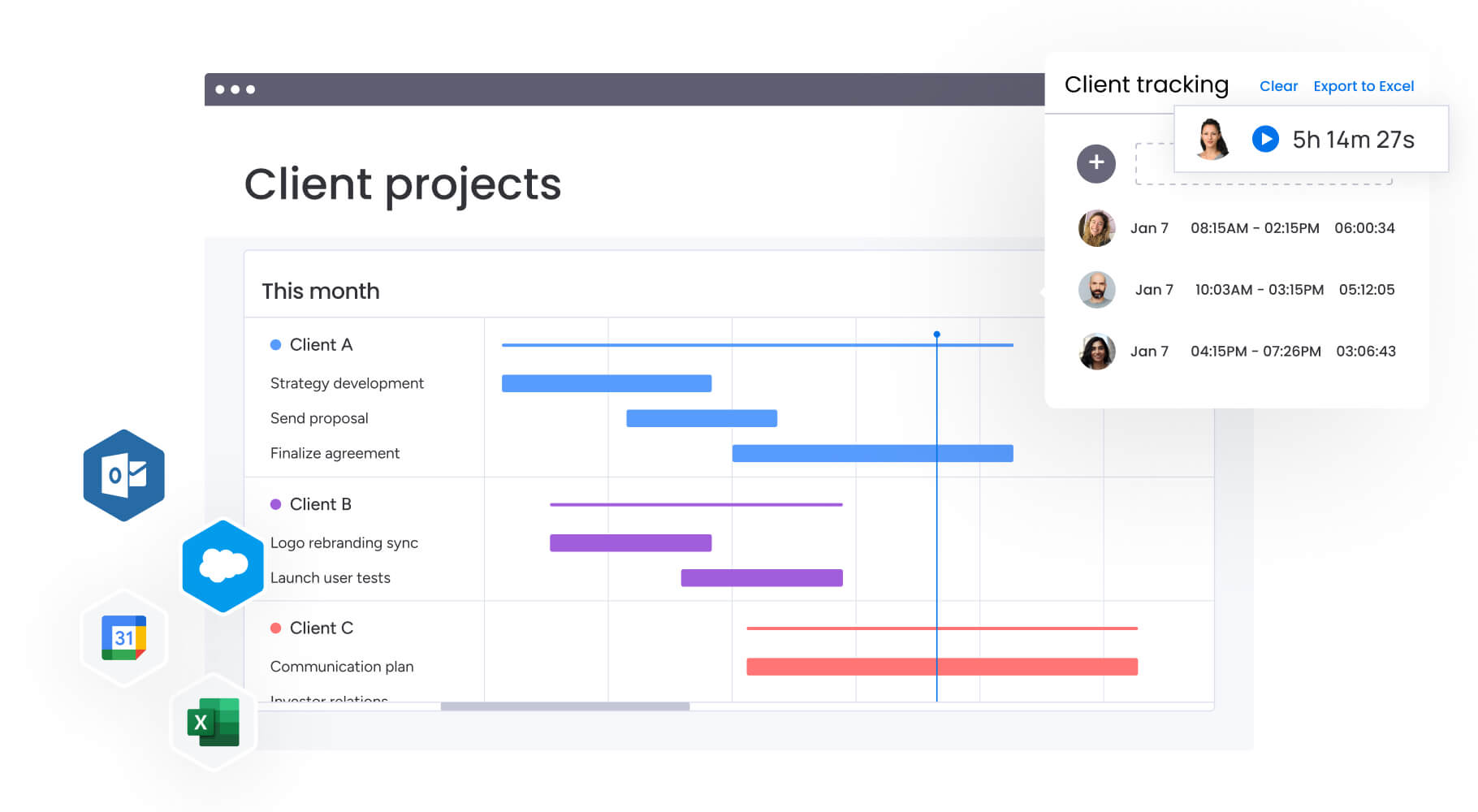
Marketing leaders at services companies juggle a special kind of chaos: coordinating campaigns across email, social, events, and content teams while somehow keeping everyone aligned and accountable. When your team spans content, creative, acquisition, events, and operations, disconnected tools and manual processes create chaos instead of clarity.
The right marketing strategy software solves this by creating a single source of truth for all marketing activities, so leveraging marketing planning software can further align campaign execution with overarching objectives.
This matters even more for services businesses, where marketing needs to work hand-in-glove with delivery teams to win clients and keep them happy.
For a real-life example of the difference the right platform could make, VML saved 7,000 hours per account monthly using monday work management. In another customer example, Further, Canva tripled their creative output.
Essential features marketing strategy software must have
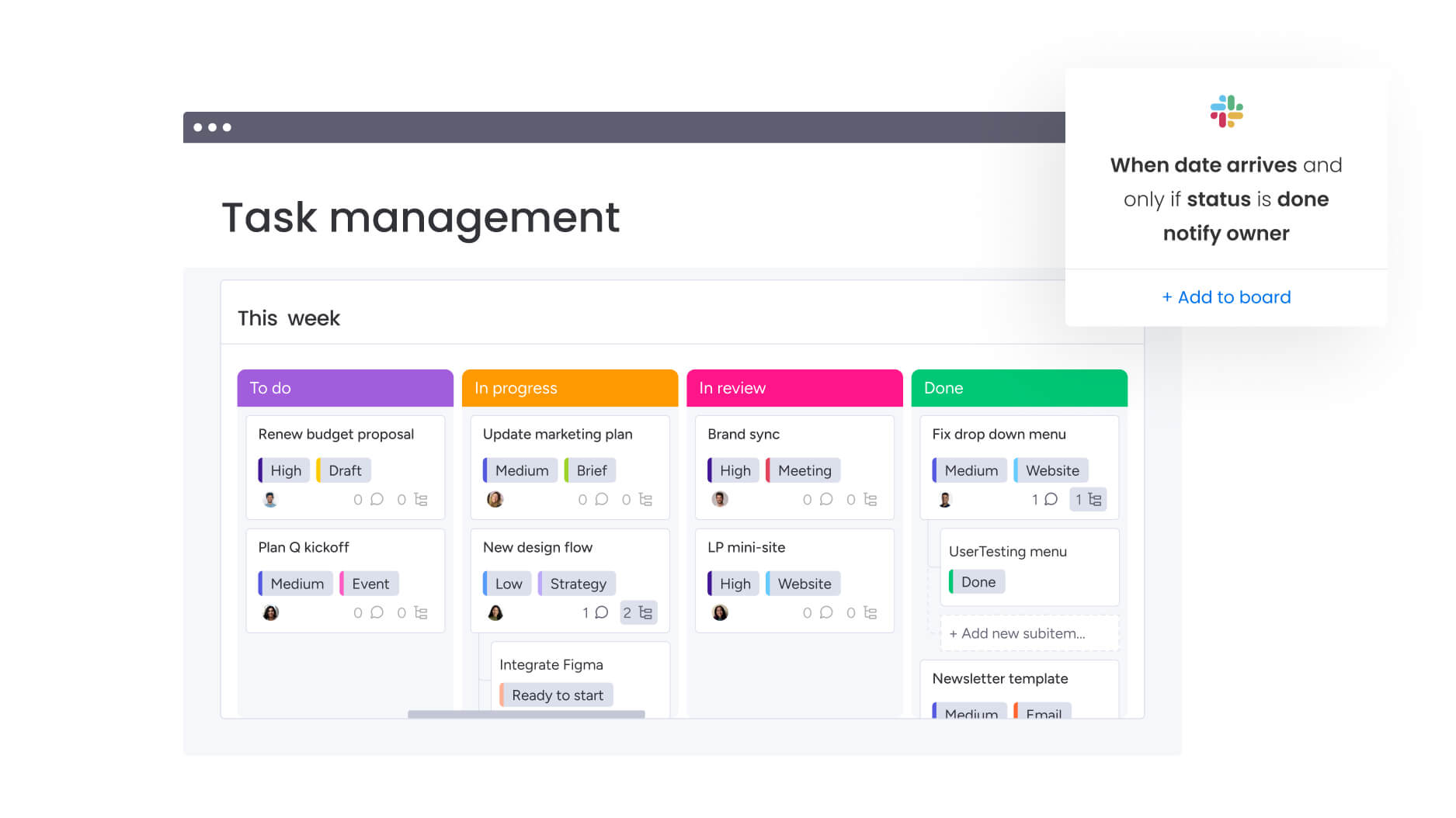
Today’s marketing teams need platforms that can manage everything from social campaigns to webinars to product launches — all while giving leaders a clear view of what’s happening and what’s next. The following features separate comprehensive marketing strategy software from basic project management platforms.
Campaign management capabilities
Campaign management is where the rubber meets the road. Your platform should handle campaigns from initial brief to final launch, keeping everyone in sync across all the moving pieces.
Essential campaign management features include:
- Multi-channel orchestration: manage email, social, content, and event campaigns from one workspace.
- Campaign brief management: standardized intake forms that capture requirements upfront.
- Timeline and calendar views: visual planning tools that show campaign schedules and dependencies.
- Performance tracking: real-time dashboards showing campaign ROI, CAC, and conversion metrics.
Intuitive platforms like monday work management delivers these capabilities through customizable campaign boards that adapt to your specific workflow: teams can track campaign status, manage approvals, and monitor performance metrics without jumping between tools.
Resource management and capacity planning
Understanding who’s working on what — and whether they have bandwidth for new projects — determines whether campaigns launch on time or fall behind. Marketing strategy software must provide direct visibility into team capacity and enable smart resource allocation.
Critical resource management features include:
- Workload visualization: see each team member’s current assignments and capacity.
- Skills-based allocation: match tasks to people based on expertise, not just availability.
- Capacity forecasting: predict future resource needs based on upcoming campaigns.
- Cross-team visibility: understand bandwidth across content, creative, and other functions.
The Workload View in monday work management shows exactly who’s at capacity and who has availability, enabling managers to balance assignments before burnout occurs.
Automation and workflow standardization
Effective automation frees your team from time-consuming manual processes. By automating approvals, status updates, and handoffs, your team can focus on high-impact strategic work and ensure greater accuracy.
Marketing platforms should automate these critical processes:
- Status updates: automatic notifications when tasks move between stages.
- Approval workflows: routing creative assets to the right stakeholders.
- Task assignments: distributing work based on rules and capacity.
- Recurring processes: templates for common campaign types and workflows.
Dashboards and real-time reporting
Marketing leaders can’t wait for monthly reports anymore. They need live dashboards showing how campaigns perform, where teams stand, and whether goals are on track — because opportunities don’t wait for your next status meeting.
Essential reporting capabilities include:
- Customizable dashboards: build views specific to different stakeholder needs.
- Real-time data updates: see current performance without waiting for reports.
- Cross-campaign analytics: aggregate metrics across multiple initiatives.
- Executive-ready visualizations: charts and graphs that communicate impact clearly.
Integration capabilities
Your team already has favorite tools for email, social, analytics, and design. Good strategy software connects with these tools instead of replacing them, so data moves automatically between systems without the copy-paste marathon.
Key integration requirements:
- CRM connections: sync with Salesforce, HubSpot, or other customer platforms.
- Marketing automation: connect to Marketo, Pardot, or similar tools.
- Creative tools: integrate with Adobe Creative Cloud, Figma, or Canva.
- Communication platforms: link with Slack, Teams, and email.
monday work management integrates with 200+ tools, ensuring marketing operations stay connected without forcing teams to abandon their preferred applications. This connectivity eliminates data silos and reduces manual data entry across systems.
How marketing teams benefit from unified strategy software
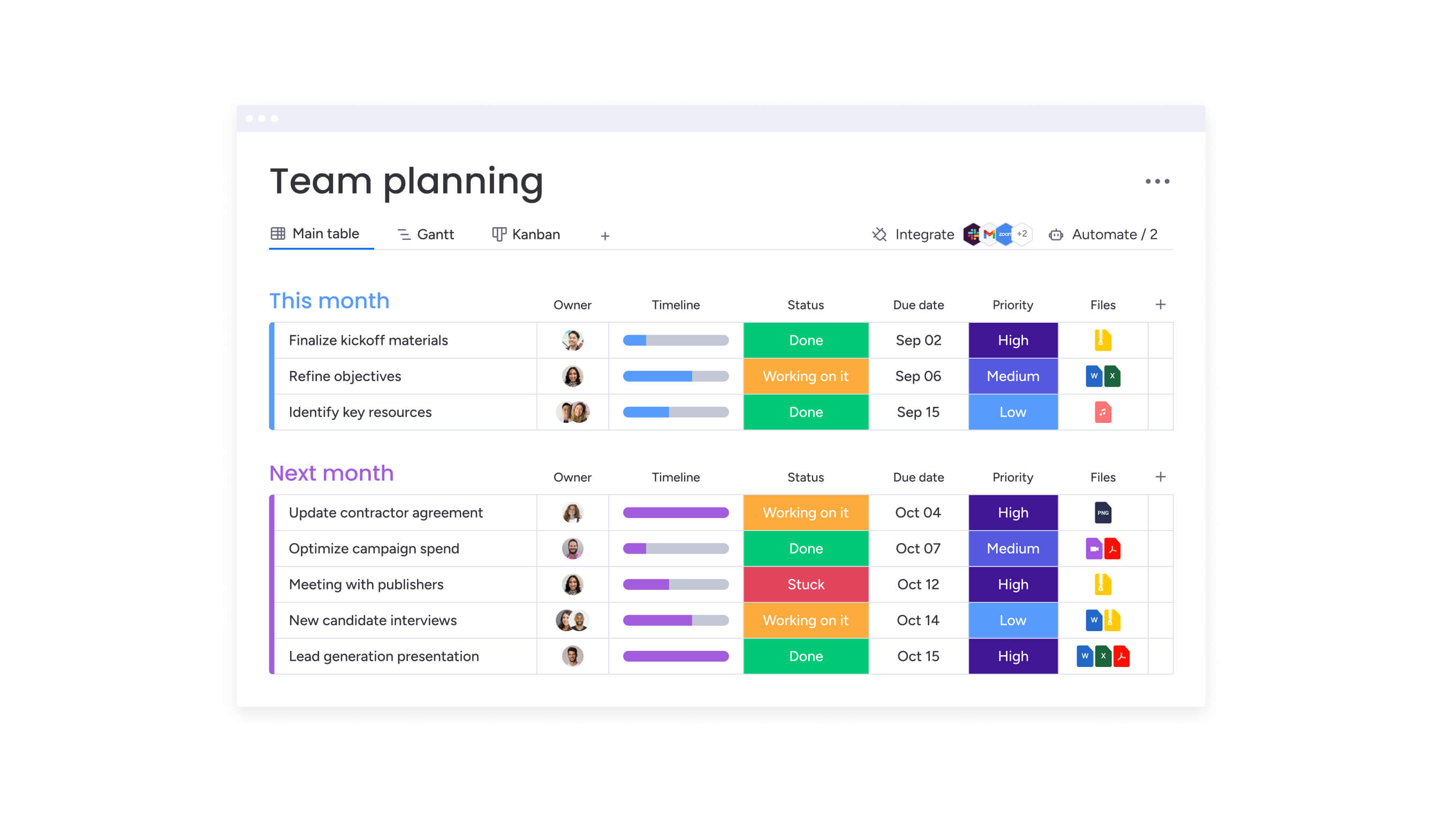
The right marketing platform delivers three major wins that show up on your bottom line. And these benefits only grow as your team builds smarter workflows and automates more of their routine work.
Time and cost savings
Marketing teams using comprehensive strategy software report dramatic reductions in time spent on administrative tasks. VML’s 7,000 hours saved monthly translates directly into capacity for strategic work. FARFETCH achieved $118K in monthly savings while delivering 6x ROI.
These savings come from four key areas:
- Reduced email volume: ThoughtWorks saw 55% fewer emails after implementation.
- Eliminated status meetings: automated updates replace weekly check-ins.
- Faster approvals: digital workflows cut review cycles from days to hours.
- Decreased rework: standardized processes reduce errors and miscommunication.
Improved collaboration and alignment
Siloed marketing teams create messaging that clashes, duplicate work without knowing it, and miss chances to build on each other’s wins. A unified platform puts everyone on the same page — literally — by showing the entire marketing picture in one place.
Genpact experienced a 40% improvement in cross-team collaboration after implementing monday work management. This enhanced coordination shows up in faster campaign launches, more consistent brand messaging, and better resource utilization across departments.
Enhanced visibility and decision-making
Real-time dashboards change the game for marketing leaders. No more waiting for last month’s numbers or playing detective to find out what’s happening. You see instantly which campaigns are crushing it, which teams are underwater, and where your resources are going.
This visibility enables:
- Proactive risk management: spot delays before they impact launch dates.
- Data-driven resource allocation: shift people to high-priority work based on actual capacity.
- Faster course correction: adjust campaigns based on performance data.
- Confident reporting: share accurate, up-to-date metrics with executives.
5 steps to implement marketing strategy software successfully
Successful implementation requires a structured approach that builds momentum while minimizing disruption to ongoing campaigns. These five steps ensure teams adopt the new platform effectively and realize benefits quickly.
Step 1: centralize all marketing work in one workspace
Start by creating a unified home for all marketing activities. Build boards for campaigns, projects, and ongoing processes. Connect related work through board relationships to maintain visibility across initiatives.
This centralization eliminates the scattered spreadsheets and disconnected documents that create confusion. Every team member knows where to find information and how their work connects to broader goals.
Step 2: standardize workflows with templates
Create templates for recurring campaign types like product launches, events, and content campaigns. Include all necessary phases, tasks, and approval steps. Configure automations to handle routine notifications and assignments.
Standardization doesn’t mean rigidity. Teams can adapt templates to specific needs while maintaining consistent structure and governance across the organization.
Step 3: set up resource management
Implement Workload View to visualize team capacity across all projects. Build a resource directory capturing skills, roles, and availability for every team member. Use this visibility to make informed decisions about task assignments and project timelines.
Regular capacity reviews help identify when teams approach overload, enabling proactive adjustments before burnout occurs.
Step 4: build executive dashboards
Create custom dashboards that aggregate data from all campaigns to show ROI, budget utilization, and progress toward OKRs. Configure different views for various stakeholders — detailed metrics for managers, high-level summaries for executives.
These dashboards should update automatically, eliminating the need for manual report compilation and ensuring everyone works from current data.
Step 5: connect with other teams
Marketing success depends on coordination with sales, product, finance, and service delivery. Create shared boards and workflows that enable seamless collaboration. Use forms for intake requests and configure approval workflows for stakeholder sign-offs.
Breaking down silos ensures marketing activities align with broader business objectives and customer needs.
Platform comparison: monday work management vs other marketing platforms
When evaluating marketing strategy software, understanding key differences helps inform your decision. The following comparison highlights how major platforms differ in their approach to marketing operations management.
| Feature | monday work management | Asana | Wrike |
|---|---|---|---|
| Campaign management with timeline views | Full campaign management with calendar, timeline, Gantt, and Kanban views | Timeline and calendar views available | Gantt charts and timeline views |
| Resource management & workload views | Built-in Workload view with capacity planning | Workload view in Business tier and above | Resource management in Business tier and above |
| Cross-board automations | 200+ automation recipes, unlimited automations on Pro+ | Rules available, limited on lower tiers | Automation engine available |
| Creative approval workflows | File proofing with on-asset annotations | Proofing available in Business tier | Proofing available in Business tier |
| OKR & goal tracking | Native Goals feature with progress tracking | Goals feature available | Goals available in higher tiers |
| Real-time dashboards | Unlimited dashboards with 30+ widget types | Dashboards in Business tier and above | Dashboards and reporting available |
| Marketing-specific templates | 200+ templates including marketing-specific | Template library available | Template library available |
| Implementation time | 1-4 weeks typical for enterprise marketing teams | 2-6 weeks typical | 4-8 weeks typical |
Lead services marketing with clarity using monday work management
Services marketing doesn’t fail because of bad ideas — it fails when execution breaks down. When campaigns, teams, and data live in different systems, even the strongest strategy gets diluted. monday work management gives heads of marketing a single operational backbone to run complex, service-driven marketing at scale.
Instead of adding more tools, monday work management replaces fragmentation with structure, visibility, and momentum:
- One source of truth for all marketing work: campaigns, resources, approvals, and performance live in one platform — eliminating the blind spots created by email, spreadsheets, and disconnected tools.
- Strategy connected directly to execution: goals, OKRs, and priorities link to real work, so every campaign, asset, and task clearly supports business outcomes.
- Real-time control over capacity and delivery: live workload views show where teams are stretched, where capacity exists, and how to rebalance before deadlines or quality slip.
- Automation that removes friction, not flexibility: approvals, handoffs, and reporting run automatically, freeing teams to focus on client value and strategic impact.
- Enterprise-ready without enterprise friction: teams configure workflows themselves — no heavy IT lift, no long change cycles, and adoption happens fast.
For services organizations where coordination, accountability, and speed directly impact revenue, monday work management turns marketing operations into a competitive advantage. Teams move faster, leaders gain confidence in execution, and marketing becomes a measurable driver of growth — not a constant firefight.
If you’re ready to replace reactive coordination with predictable execution, monday work management is built to support how services marketing actually works.
The content in this article is provided for informational purposes only and, to the best of monday.com‘s knowledge, the information provided in this article is accurate and up-to-date at the time of publication. That said, monday.com encourages readers to verify all information directly.
Frequently asked questions
What is the typical implementation timeline for 100+ person marketing teams using monday work management?
Implementation for 100+ person marketing teams typically takes two to four months. The timeline depends on complexity and scope, but organizations using monday work management achieve payback in under four months according to Forrester research. Success comes from phased rollouts: starting with pilot teams, standardizing core workflows, then expanding organization-wide.
What ROI can services companies expect from marketing strategy software?
Services companies report significant returns from marketing strategy software implementation. FARFETCH achieved 6x ROI saving $118K monthly, while McDonald's reached 615% ROI by saving 1,224 hours per month. These returns stem from eliminated manual processes, reduced tool costs, improved resource utilization, and increased team focus on strategic work.
How does marketing software handle multi-client campaign management?
Marketing strategy software manages multi-client campaigns through hierarchical board structures and portfolio views. Create separate boards for each client while maintaining portfolio-level visibility across all campaigns. Use subitems to show program hierarchies, board relationships to connect related work, and dashboards to aggregate performance data across your entire client portfolio.
Can marketing strategy software integrate with professional services automation tools?
Yes, comprehensive marketing platforms integrate with PSA tools through APIs and pre-built connectors. monday work management connects with 200+ tools including Salesforce, Microsoft Teams, Jira, and Google Workspace. These integrations ensure seamless data flow between marketing operations and other business functions without requiring developer resources.
What change management is needed for successful adoption?
Successful adoption requires executive sponsorship, clear communication, and structured training. Create a rollout plan with defined phases, build base templates so teams can visualize their workflows, and identify champions in each department. Genpact's approach included custom rollout planning, base structure creation, and continuous support throughout implementation.
How do enterprise pricing models work for large marketing teams?
Enterprise pricing typically uses tiered models based on team size and features. Plans start around $10/user/month when billed annually, with volume discounts for large teams. Enterprise plans include advanced features like portfolio management, dedicated customer success management, and custom onboarding. Most platforms use consumption-based models where you pay for active users with flexibility to adjust as teams grow.

 Get started