


Your marketing team’s juggling a plethora of different platforms right now, and it’s costing you big — about 20-30% of your team’s time is lost to context switching and manual data shuffling between systems.
As marketing operations scale beyond 50+ person teams, this fragmentation becomes more than an inconvenience — it becomes a barrier to measurable business impact. The challenge isn’t finding more tools; it’s finding the right marketing strategy software that connects strategy to execution without adding complexity.
The best marketing strategy software platforms have evolved beyond simple project tracking to become comprehensive operating systems for marketing organizations. They unify campaign planning, resource management, and performance measurement in ways that eliminate data silos while preserving team autonomy.
This guide cuts through the marketing hype to evaluate what actually matters for enterprise teams: how quickly you can deploy, whether your team will actually use it, AI that delivers real value, and collaboration features that connect departments without friction. You’ll also discover how to apply continuous improvement frameworks, identify essential ROI-driving features, and make strategic platform decisions that transform marketing operations.
Key takeaways
Marketing strategy software has evolved from simple task tracking to comprehensive platforms that connect strategy to execution. For heads of marketing managing 50-100+ person teams in financial services, keep in mind the following key points:
- Choose platforms that deploy in days, not months: rapid implementation with 85%+ adoption rates beats feature-heavy solutions that take quarters to show value.
- Apply the 1% rule for exponential growth: small daily improvements compound to 3,800% annual gains when tracked through automated dashboards and continuous optimization.
- Eliminate tool sprawl that wastes 20-30% of team time: unified platforms connect strategy to execution without forcing teams into rigid workflows or manual data transfers.
- Transform operations with monday work management’s AI-powered insights: digital Workers continuously monitor campaigns, suggest budget reallocations, and flag at-risk projects before they impact deadlines.
- Focus on three core capabilities that drive ROI: real-time performance visibility, workflow automation at scale, and cross-functional collaboration tools that connect marketing to business outcomes.
Understanding the marketing technology landscape
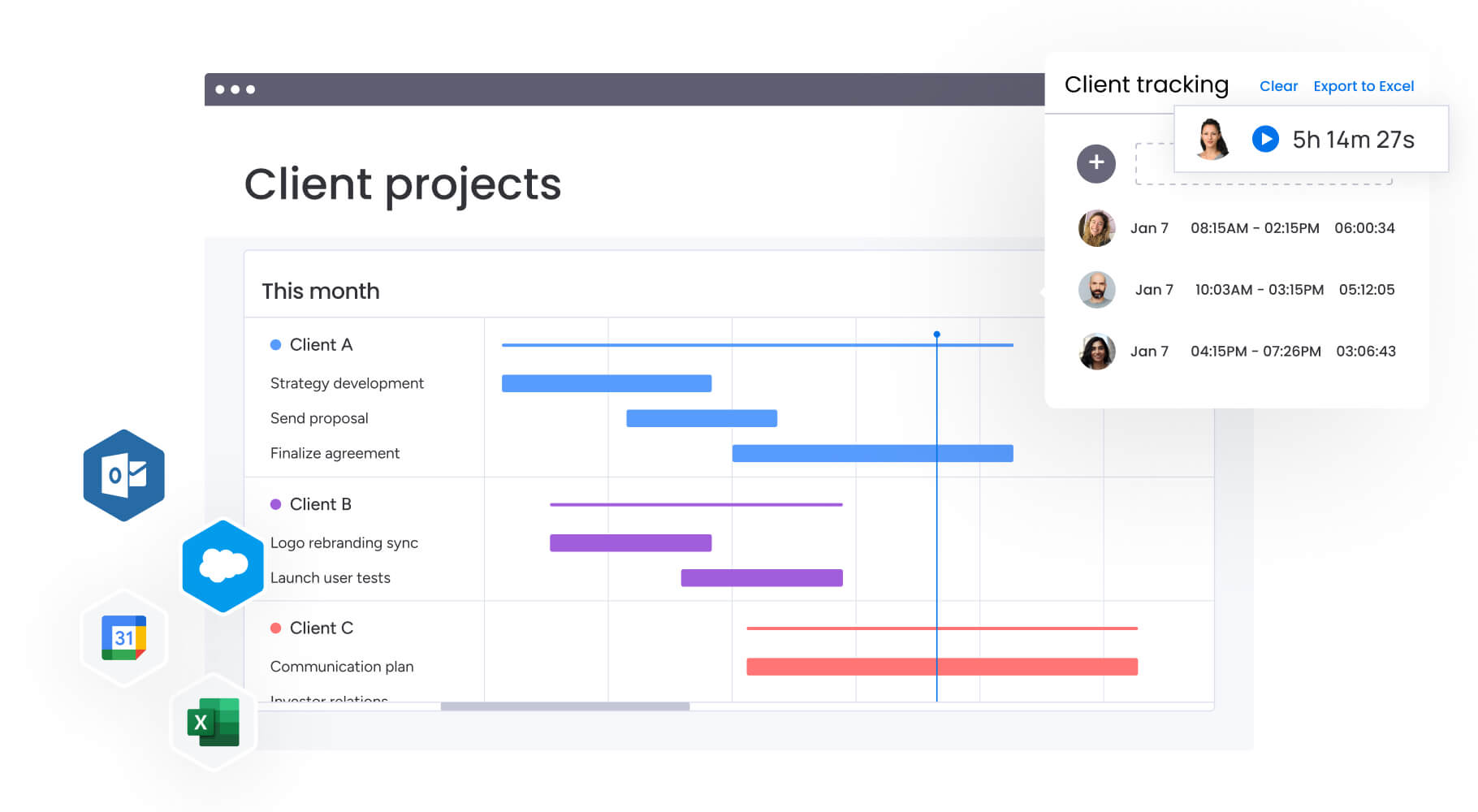
Marketing managers typically juggle over a dozen different platforms across their tech stack. This fragmentation creates a hidden tax on productivity — teams lose 20-30% of their time to context switching, manual data transfer, and chasing updates across disconnected systems.
Understanding this landscape helps identify where unified platforms deliver the most value.
The marketing technology landscape in 2026 essentially breaks down into these layers:
- Strategy and planning: OKR tracking, roadmapping, and portfolio management tools.
- Campaign execution: email platforms, social media schedulers, and content management systems.
- Creative production: design software, digital asset management, and proofing tools.
- Analytics and reporting: business intelligence platforms, attribution software, and spreadsheets.
- Collaboration: messaging apps, video conferencing, and document sharing.
This tool sprawl creates three critical problems:
- Data silos: information lives in isolated systems, making it nearly impossible to connect campaign activity to business outcomes.
- Manual inefficiencies: teams waste hours on manual handoffs and status updates between disconnected tools.
- Limited visibility: leadership lacks real-time insight into what’s actually happening across the organization.
Smart teams are ditching the dozens of disconnected tools and rallying around platforms that tie everything together — from initial planning to final measurement, all in one place. These platforms serve as the connective tissue between strategy and daily work, ensuring alignment without sacrificing team autonomy.
How leading marketing strategy platforms compare in 2026
Not all marketing strategy software is built for the realities of 50–100+ person finance marketing teams. Below, we compare the most common enterprise platforms against the capabilities that actually matter at scale — implementation speed, AI maturity, governance, and real-world adoption.
Use this table and the info below to better understand where monday work management stands out, and where other tools may fall short for regulated, high-complexity environments.
| Feature | monday work management | Wrike | Smartsheet | Asana |
|---|---|---|---|---|
| Multi-brand campaign coordination | Hierarchical programs/campaigns/activations | Folders and projects | Workspaces | Limited hierarchy |
| Real-time workload balancing | Built-in Workload view | Resource management add-on | Resource views | Basic workload view |
| Visual dashboard customization | Unlimited custom dashboards | Limited on lower tiers | Dashboards available | Reporting dashboards |
| Creative approval workflows | Forms + automation recipes | Proofing tool (add-on) | Limited proofing | Basic approvals |
| AI-powered capabilities | AI Blocks, risk identification, Digital Workers | AI features in development | Limited AI | Limited AI features |
| Implementation time (100+ users) | 2 weeks to 1 month | 1-2 months | 1-2 months | 2-4 weeks |
| Enterprise security | IP restrictions, SSO, BYOK, tenant encryption | Enterprise security | Enterprise security | Enterprise security |
monday work management
monday work management stands out for its ability to connect strategy to execution without months of implementation. Marketing teams can deploy standardized workflows in days using pre-built templates for campaign planning, content calendars, and event management.
Key strengths for marketing teams:
- AI-powered resource management: AI Blocks automatically match work items to team members based on skills, availability, and current workload.
- Portfolio-level visibility: out-of-the-box portfolio dashboards track performance across hundreds of campaigns simultaneously.
- Cross-functional workflows: each department works in their preferred view while maintaining unified visibility.
- Enterprise governance: managed templates ensure consistency across regions while allowing local customization.
The platform’s Digital Workforce features AI assistants that work continuously in the background. The Campaign Manager analyzes performance data and suggests budget reallocations, while the Project Analyzer flags at-risk initiatives before they impact deadlines.
Best for: organizations seeking rapid deployment with high adoption rates (85%+) and minimal IT dependency.
Asana
Asana provides structured project management with strong visualization capabilities. Its portfolios feature helps marketing leaders track multiple campaigns, though advanced resource management requires higher-tier plans.
Marketing-specific features:
- Timeline view for campaign planning.
- Forms for creative briefs and requests.
- Workload management in Premium+ plans.
- Custom fields for campaign metadata.
Limitations: requires third-party integrations for budget tracking and financial reporting. Automation capabilities limited to 25,000 actions monthly on Enterprise plans.
Wrike
Wrike offers robust proofing and approval workflows particularly suited for creative teams. Its custom workflows support complex review cycles common in regulated industries.
Standout capabilities:
- Built-in proofing with markup tools.
- Custom request forms with conditional logic.
- Resource management in Business+ tiers.
- Gantt charts with dependency tracking.
Considerations: implementation typically takes four to eight weeks. Unlimited automation only available in top-tier Pinnacle plan.
Smartsheet
Smartsheet appeals to teams comfortable with spreadsheet interfaces. It bridges the gap between Excel and modern work management with familiar grid views enhanced by automation.
Enterprise features:
- Control Center for scaling processes.
- Dynamic View for stakeholder reporting.
- Bridge for workflow automation.
- DataMesh for cross-sheet connections.
Trade-offs: less intuitive for non-technical users. Limited native AI capabilities compared to newer platforms.
ClickUp
ClickUp positions itself as an all-in-one workspace with extensive customization options. Marketing teams can build highly specific workflows, though this flexibility can increase complexity.
Marketing toolkit:
- Goals tracking with progress roll-ups.
- Docs for campaign briefs and strategies.
- Multiple view types including Mind Maps.
- Time tracking and estimates.
Reality check: feature depth can overwhelm new users. Performance can lag with large datasets.
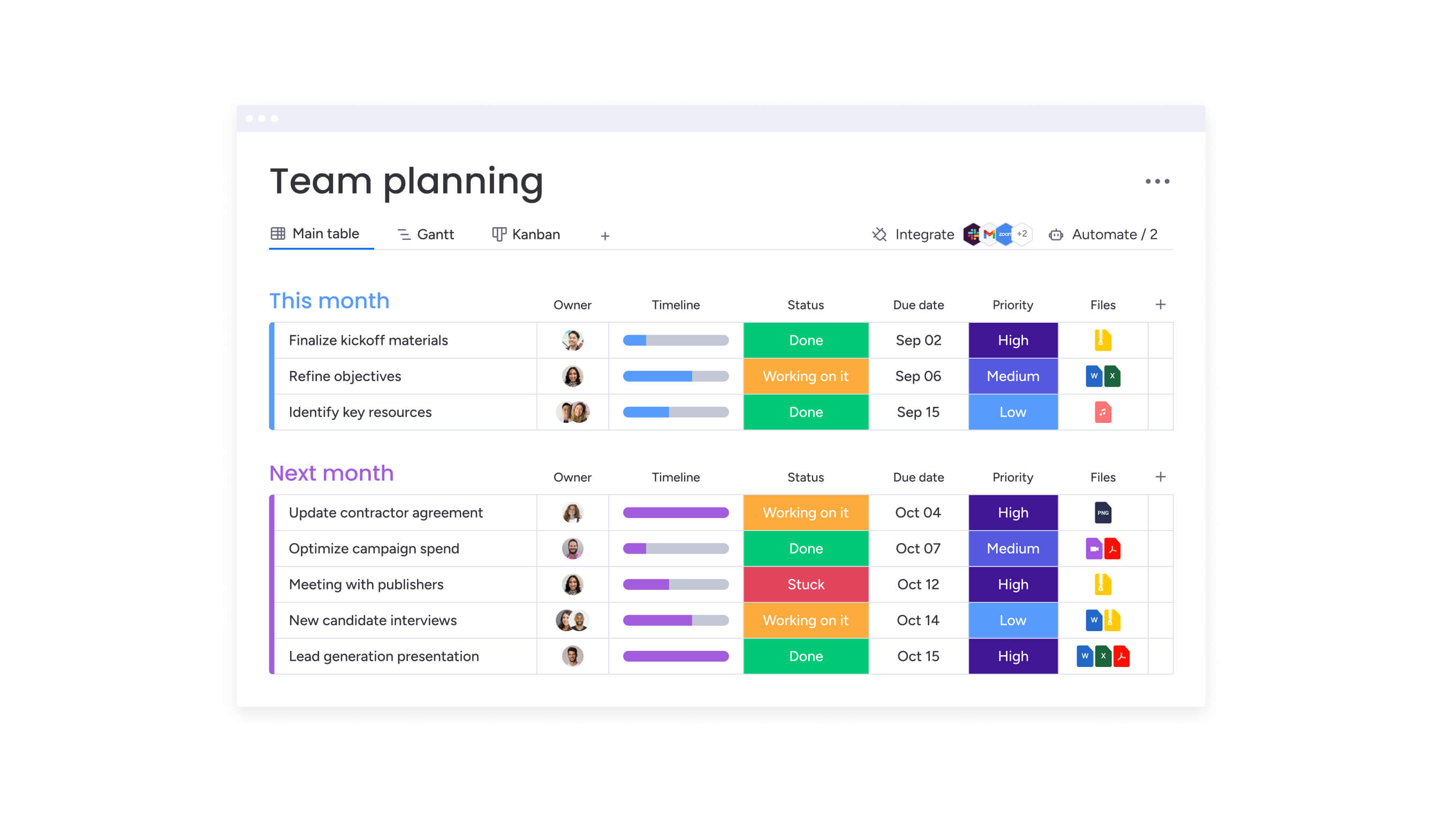
How to identify essential features for maximizing marketing ROI
Successful marketing strategy software must deliver three core capabilities that directly impact ROI: real-time performance visibility, workflow automation at scale, and cross-functional collaboration tools. Understanding these features helps teams evaluate platforms based on business impact rather than feature lists.
Real-time performance visibility
Marketing leaders need instant answers to critical questions. Leading platforms provide live dashboards that eliminate the weekly scramble to build executive reports.
What to look for:
- Automated data aggregation: pull metrics from multiple sources without manual exports.
- Drill-down capabilities: move from portfolio views to campaign details in one click.
- Custom KPI tracking: define metrics that matter to your business, not generic benchmarks.
- Predictive insights: AI that flags trends before they become problems.
Workflow automation at scale
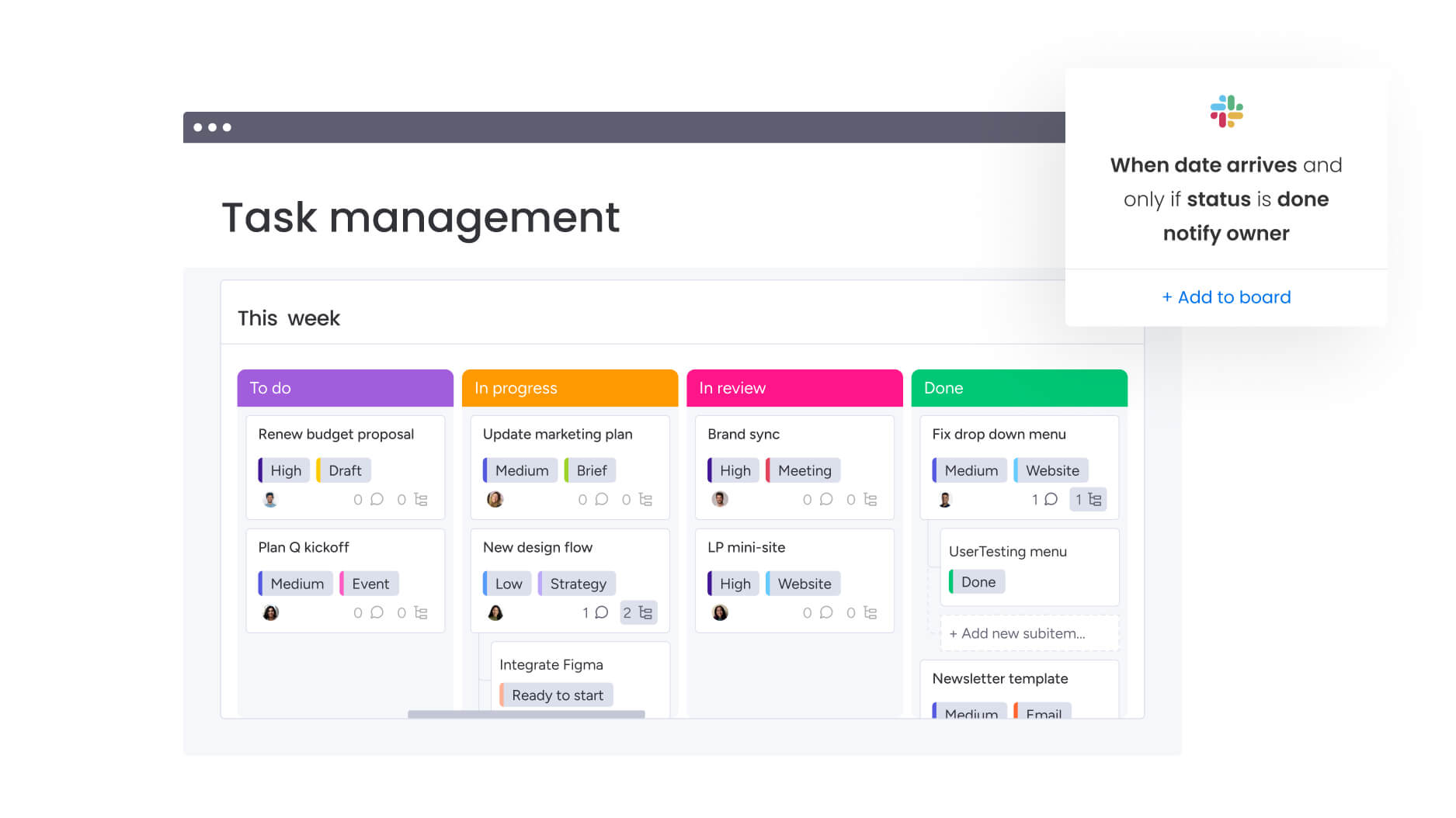
Automation transforms marketing operations by eliminating repetitive tasks that consume hours weekly. You need automation anyone can set up — not just your tech team — that still works flawlessly when you’re running hundreds of campaigns across multiple regions.
High-impact automation examples:
- Approval routing: automatically send creative assets through review chains based on project type.
- Status updates: trigger notifications when campaigns move between stages.
- Resource rebalancing: shift assignments when team members reach capacity.
- Report generation: schedule and distribute performance summaries without manual compilation.
Cross-functional collaboration tools
Marketing success depends on coordination with sales, product, finance, and legal teams. Platforms must enable collaboration without forcing everyone into marketing-specific workflows.
Collaboration essentials:
- Flexible permissions: control access at project, board, and field levels.
- External stakeholder portals: share specific views with agencies or vendors.
- Contextual communication: comments, mentions, and updates tied to specific work items.
- Audit trails: track decisions and approvals for compliance.
The 1% rule: how incremental improvement compounds marketing performance
The 1% rule in marketing represents the power of continuous, incremental improvement. Improving any metric by just 1% daily compounds to 3,800% annual growth. This approach lets you forget about massive, risky overhauls and instead focus on steady improvements you can actually measure and build upon week after week.
Consider email open rates. A team can track each percentage gain effectively with enterprise marketing planning software that surfaces micro-improvements easily. Applied to conversion rates, customer retention, or content engagement, these small gains create exponential impact over time.
Here’s how the right software turns this 1% philosophy into real results:
- Granular tracking: dashboards surface micro-improvements that might otherwise go unnoticed.
- Automated testing: continuous A/B tests identify incremental wins without manual effort.
- Progress visualization: oKR tracking shows how daily improvements ladder up to strategic goals.
Platforms like monday work management rank among the best marketing planning software options, supporting this approach with milestone tracking and trend analysis. Teams can set 1% improvement targets, monitor progress through custom formulas, and automatically flag when metrics plateau.
The platform’s AI capabilities also identify which optimizations drive the most impact, helping teams focus their 1% improvements where they matter most.
This philosophy aligns with modern marketing operations where small, rapid iterations outperform lengthy planning cycles. By using comprehensive marketing planning software, teams can continuously ship, measure, and improve initiatives in real time.
Transforming marketing operations with integrated platforms like monday work management
Advanced solutions like monday work management addresses the specific challenges of enterprise marketing through three core pillars that work together to create operational excellence. Understanding how these pillars integrate helps teams maximize platform value from day one.
Leadership visibility that drives decisions
The platform’s AI-powered risk insights scan updates across all projects, surfacing potential issues with urgency levels and suggested mitigations. Marketing leaders gain instant visibility into progress and risks throughout their portfolio without manual status collection.
Out-of-the-box portfolio dashboards analyze performance across hundreds of campaigns simultaneously. These aren’t static reports — they’re live views that update as work happens, enabling real-time course correction.
Standardization without rigidity
Managed templates standardize entire workspaces including projects, automations, and workflows. When best practices evolve, changes cascade across hundreds of instances automatically. This ensures consistency while preserving team flexibility.
Cross-project dependencies visualize connections between campaigns, product launches, and content initiatives. Marketing operations can spot conflicts before they impact delivery and adjust timelines proactively.
Resource optimization through AI
The resource directory centralizes information about team members’ skills, roles, and expertise. When new projects launch, AI Blocks suggest optimal assignments based on availability and past performance.
The capacity manager provides live views of resource utilization across the entire marketing organization. Leaders can make informed decisions about new initiatives, knowing exactly who has bandwidth and where bottlenecks exist.
These capabilities integrate directly into existing workflows. Teams don’t learn a new system — they gain a layer of intelligence and control where they already work.
Lead finance marketing operations forward with monday work management
For heads of marketing in financial services, marketing strategy software isn’t just a planning tool — it’s the operational backbone that determines how effectively teams execute, optimize, and prove impact. As teams scale past 50+ people, fragmented tools slow delivery, obscure ROI, and increase operational risk.
monday work management brings strategy, execution, and optimization into a single platform designed for enterprise marketing teams, helping leaders replace tool sprawl with clarity and control.
With monday work management, finance marketing teams can:
- Unify strategy and execution by managing campaigns, resources, and performance in one system instead of scattered tools
- Deploy quickly and drive adoption with days-to-weeks implementation and workflows that mirror how marketers actually work
- Use AI to stay ahead of risk as Digital Workers monitor campaigns, flag issues early, and suggest smarter adjustments
- Standardize without slowing teams down through managed templates, approvals, and dependencies that scale across regions
- Maintain enterprise-grade governance with permissions, audit trails, and security built for regulated environments
The result is faster campaign delivery, balanced team workloads, and real-time visibility into marketing ROI — without adding complexity or administrative overhead.
For marketing leaders ready to consolidate operations and operate with confidence at scale, monday work management provides a proven foundation to support both immediate wins and long-term growth.
The content in this article is provided for informational purposes only and, to the best of monday.com‘s knowledge, the information provided in this article is accurate and up-to-date at the time of publication. That said, monday.com encourages readers to verify all information directly.
Frequently asked questions
What are the top marketing strategy software platforms for large teams?
The top marketing strategy software platforms for large teams include monday work management, Asana, Wrike, Smartsheet, and ClickUp. Each offers enterprise-grade features, but monday work management stands out for rapid deployment and 85%+ adoption rates without extensive training.
How does marketing strategy software help align campaigns with business goals?
Marketing strategy software connects daily execution to strategic objectives through OKR tracking, portfolio views, and automated progress reporting. Platforms like monday work management link every campaign and task to specific business goals with real-time progress calculation.
Which marketing platforms offer AI-powered planning and reporting?
monday work management leads with AI Blocks for task assignment and Digital Workers for continuous optimization. Wrike and Asana offer limited AI features, while traditional platforms like Smartsheet require third-party AI integrations.
What features maximize campaign ROI and team productivity?
Key features include automated workflow routing, real-time resource management, integrated dashboards, and cross-functional collaboration tools. The ability to eliminate manual status updates and reporting can save marketing teams 7,000+ hours monthly.
How do marketing platforms support cross-team collaboration?
Modern platforms enable collaboration through shared workspaces, customizable permissions, and flexible views. monday work management allows each department to work in their preferred structure while maintaining unified visibility across marketing, sales, product, and finance teams.
What is the typical implementation timeline for marketing strategy software?
Implementation varies significantly by platform. monday work management deploys in days to weeks, Asana takes two to four weeks, while Wrike typically requires four to eight weeks. Traditional enterprise platforms often need three to six months for full deployment.

 Get started