


Marketing teams generate massive amounts of data across dozens of platforms, yet most retail marketing leaders still struggle to answer basic questions about campaign performance, team capacity, and budget allocation. When creative teams use one platform, content teams another, and performance metrics live scattered across analytics dashboards, ad accounts, and spreadsheets, the ability to make informed decisions about where to invest time and resources disappears.
The best marketing reporting software connects these fragmented data sources while providing the operational layer that tracks campaign execution, team workloads, and strategic alignment in real-time. Unlike basic analytics dashboards that only show what happened, comprehensive reporting platforms enable retail marketing leaders to see what’s happening now and what’s coming next across all campaigns and channels.
This guide explores why true marketing reporting goes beyond basic analytics, what features actually matter for retail marketing teams juggling multiple channels, and how connecting data properly can turn marketing from a cost center into a growth engine.
Key takeaways
Modern marketing reporting platforms connect your entire workflow, from campaign brief to final results, in one place. For retail marketing leaders managing 50-100+ person teams, the real challenge isn’t tracking metrics. It’s gaining visibility when disconnected tool sand siloed teams hide your marketing impact.
Here are the key points to takeaway from this article:
- Connect all your marketing tools in one place: stop jumping between Google Analytics, ad platforms, and spreadsheets — unified dashboards show real campaign performance without manual data compilation.
- See team capacity before burnout hits: visual workload views reveal who’s overloaded and who has bandwidth, preventing missed deadlines and quality issues during peak retail seasons.
- Transform marketing from cost center to growth driver: real-time visibility into campaign ROI, budget utilization, and team productivity gives executives the data they need to increase marketing investments.
- Eliminate 25+ hours of weekly reporting: automated dashboards provided by solutions like monday.com pull live data from your entire marketing stack, replacing manual status meetings and PowerPoint compilation with real-time insights.
- Launch campaigns 40% faster with standardized workflows: pre-built templates and automations ensure every campaign follows the same proven process from brief to analysis, reducing time-to-market.
What makes heads of marketing choose monday.com for marketing reporting?
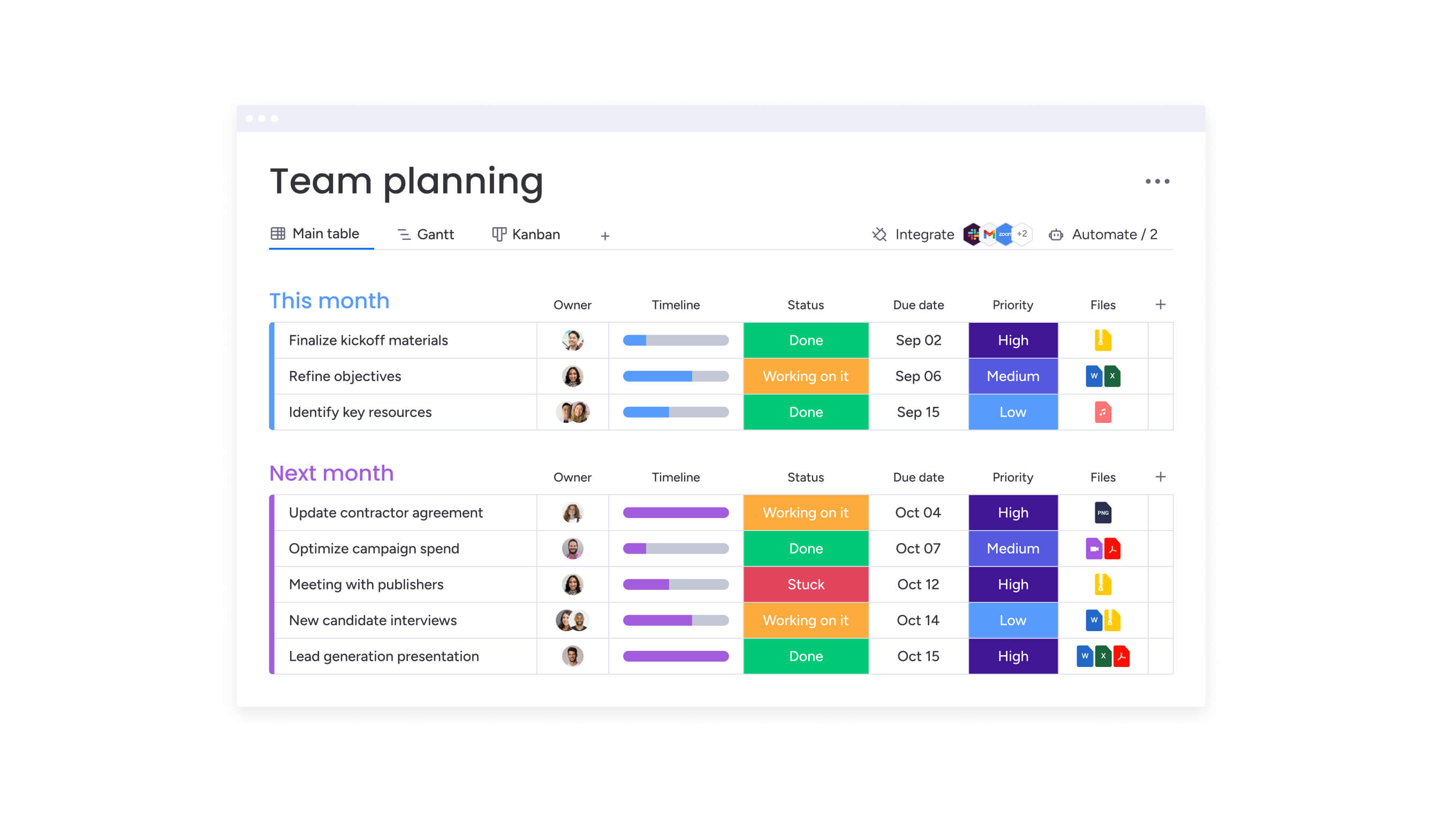
As a retail marketing leader, you know the problem: your social team can’t see what your events team is doing, your creative team is using different tools entirely, and nobody can tell if campaigns are actually working. When your creative team uses one tool, your content team another, and your performance data lives in spreadsheets, you lose the ability to make informed decisions about resource allocation and campaign optimization.
The platform connects all your marketing tools while adding something crucial: visibility into who’s working on what, which deadlines are approaching, and whether your campaigns will actually launch when they should. What spreadsheets and disconnected point solutions cannot deliver, monday.com can: centralized visibility into all campaigns, performance metrics, and team workloads without requiring teams to abandon their existing marketing stack.
In retail, missing a back-to-school campaign deadline by even a week means lost sales you can’t recover. Real-time visibility into team capacity and budget spend lets you adjust quickly and allocate resources where they’ll have the most impact. With monday.com, retail marketing leaders gain the operational intelligence to drive growth across multiple channels while maximizing budget and team effectiveness.
monday.com top features for marketing reporting
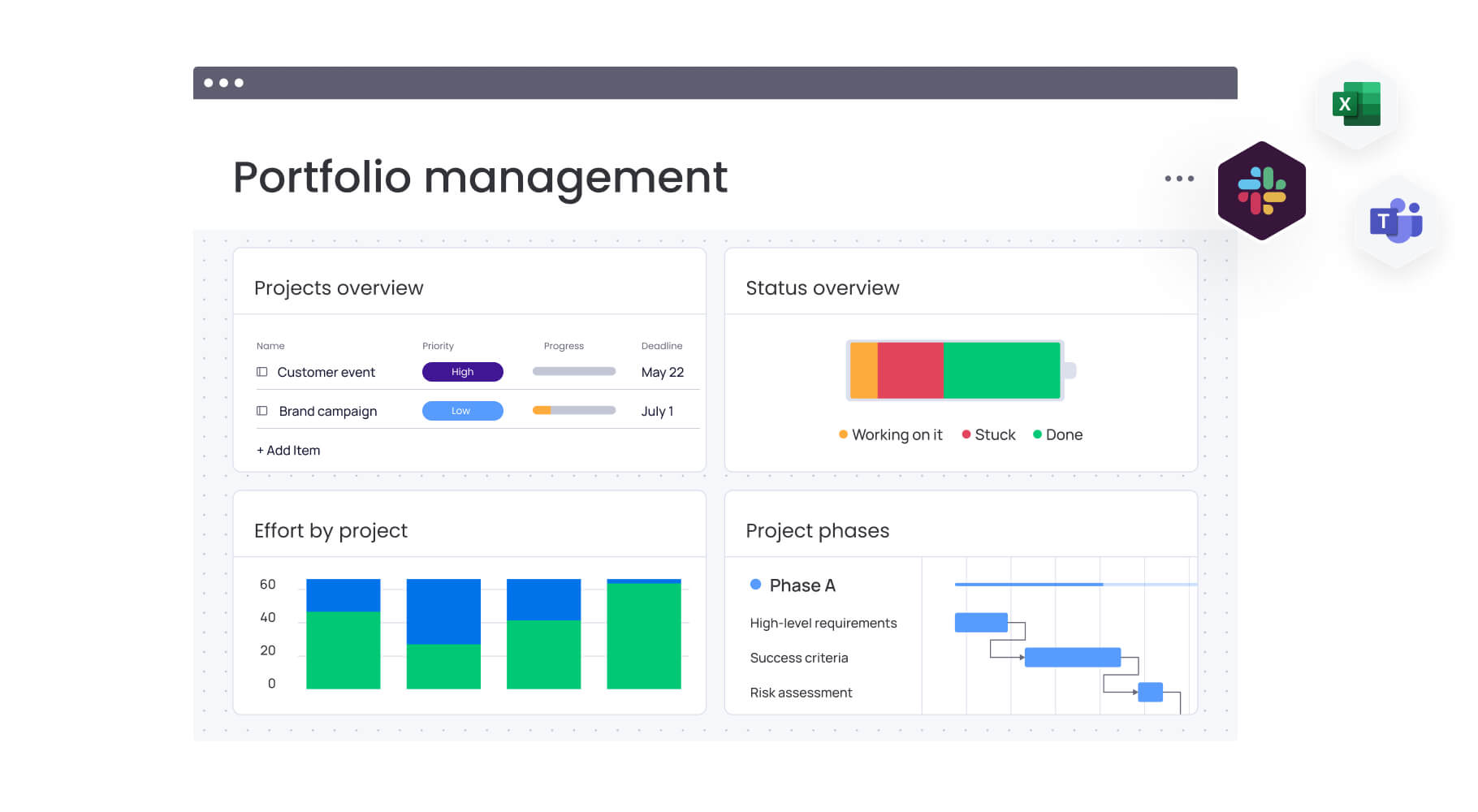
The following features demonstrate how monday.com transforms marketing operations from fragmented processes into unified, strategic execution. Each capability addresses specific pain points that retail marketing leaders face when managing large teams across multiple channels and campaigns.
Campaign management
Campaign management on monday.com gives your team one place to track everything, whether you’re planning holiday promotions or product launches. You’ll see timelines, budgets, and results all in a single view. You can track campaigns from the first brief to final results with boards you customize for different campaign types, whether that’s your holiday push, back-to-school season, or always-on brand campaigns.
Key campaign management capabilities include:
- Lifecycle tracking: monitor campaigns from brief to analysis.
- Timeline visualization: see all campaign dependencies and deadlines.
- Budget monitoring: track spend against allocations in real-time.
- Performance integration: connect execution data to results metrics.
Built-in automations notify stakeholders when campaigns hit key milestones, budgets approach thresholds, or deadlines are at risk, eliminating the manual status update meetings that consume hours each week. This directly addresses the pain point of siloed teams and duplicative processes by creating a single workspace where content, creative, acquisition, events, and operations teams can see how their work connects to campaign goals.
When your team launches 15+ campaigns simultaneously across multiple regions and channels, the ability to visualize all campaign timelines, dependencies, and resource allocations in one place transforms your capacity to deliver marketing initiatives on time.
Dashboards & reporting
Dashboards and reporting in monday.com transform raw marketing data into executive-ready insights through customizable dashboards that pull real-time information from across your marketing operations. The platform offers pre-built dashboard widgets for tracking campaign ROI, budget utilization, team productivity, content volume, and time-to-launch metrics — the exact KPIs that retail marketing leaders need to report to executive leadership.
You can create multiple dashboard views tailored to different audiences:
- Operational dashboards: team leads view task completion rates and resource allocation.
- Strategic dashboards: c-suite stakeholders see campaign performance against revenue targets.
- Performance dashboards: track MQL-to-Customer rates, CAC, and campaign ROI across channels.
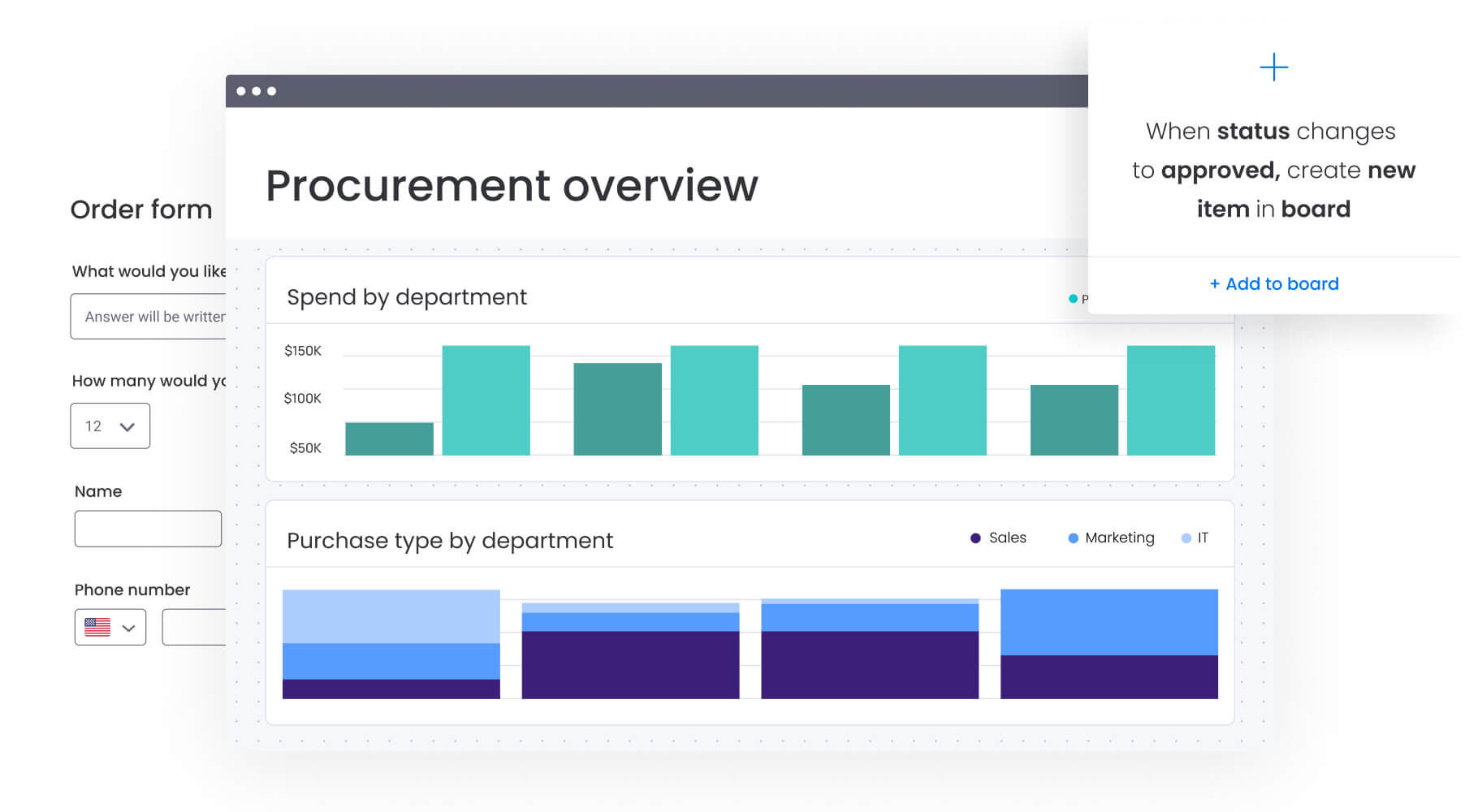
This feature solves the critical pain point of lack of visibility that prevents retail marketing leaders from tracking progress, capacity, and ROI in real-time, as explained in our reporting tools guide. Instead of spending hours each week manually compiling data from Google Analytics, ad platforms, social media tools, and project spreadsheets into PowerPoint presentations, you build dashboards once and they update automatically as work progresses and campaigns deliver results.
The platform’s chart widgets visualize trends over time, battery widgets show progress toward goals, and number widgets highlight key metrics, all pulling from the same underlying data that your teams use to manage their daily work.
Resource management
Resource management in monday.com provides retail marketing leaders with visibility into team capacity, workload distribution, and resource allocation across all marketing initiatives through dedicated workload views and resource planning boards. The platform’s workload view displays each team member’s assigned tasks across a timeline, color-coded by capacity so you can immediately identify who’s overloaded and who has bandwidth to take on additional work.
Key resource management capabilities include:
- Project-level allocation: track time estimates against actual time spent.
- Dynamic assignment: adjust resources as priorities shift.
- Skills-based planning: match work to team members based on expertise.
- Capacity visualization: see team workloads across timelines with color-coded indicators.
This solves a common problem: your design team is overwhelmed with requests while your content team has available capacity, but this imbalance only becomes apparent when deadlines start slipping. When you can’t see that your creative team is working 60-hour weeks while your content team is underutilized, or when you assign a major campaign to a team that’s already at capacity, you create the conditions for missed deadlines and quality issues.
The platform enables capacity planning that prevents the feast-or-famine cycles common in retail marketing, where teams are overwhelmed during peak seasons and underutilized during slower periods.
Automations
Automations eliminate the tedious, repetitive work that consumes your team’s time, like manually sending status updates or chasing approvals. And you don’t need to code anything to set them up. The platform offers 200+ pre-built automation templates for common marketing workflows.
Essential automation capabilities include:
- Status notifications: alert stakeholders when campaigns move to review.
- Deadline reminders: send alerts when deadlines approach.
- Recurring tasks: create tasks for ongoing activities automatically.
- Cross-board updates: sync status across connected boards when dependencies complete.
- Budget alerts: trigger notifications when spend approaches thresholds.
You can build custom automations using simple if-this-then-that logic without requiring technical skills, enabling standardization of processes across your marketing organization while maintaining the flexibility to adapt workflows as needs evolve. This directly solves the pain point of inefficient processes where teams reinvent workflows and lack standardization across marketing functions.
Automations ensure that routine tasks happen consistently without requiring human intervention: creative briefs automatically route to the right reviewers, budget alerts trigger when spend approaches thresholds, and stakeholders receive updates without anyone needing to remember to send them.
Goals & OKRs
Goals and OKRs in monday.com connect day-to-day marketing execution to company-level strategic objectives through a dedicated goals module that tracks progress toward key results in real time based on the actual work your teams are completing. The platform enables you to define company goals, break them down into team-level objectives, and link specific campaigns, projects, and tasks to those objectives so everyone understands how their work contributes to business outcomes.
Strategic alignment features include:
- Goal cascading: break company OKRs down to team-level objectives.
- Real-time tracking: monitor progress based on actual work completion.
- Automatic updates: eliminate manual status reporting for executives.
- Impact visibility: show how individual campaigns contribute to business outcomes.
Progress toward goals updates automatically as teams complete work, providing executive leadership with real-time visibility into whether marketing is on track to deliver against its commitments without requiring manual status reports. This addresses the critical pain point of inability to align marketing strategy with company goals that prevents retail marketing leaders from demonstrating impact to executive leadership.
When the CEO asks whether marketing is on track to support the company’s expansion into new markets, you can pull up a goals dashboard that shows real-time progress based on actual campaign delivery, not subjective assessments or lagging indicators.
Integrations
Integrations in monday.com connect your marketing reporting platform to 200+ tools across your marketing technology stack through native integrations, pre-built connectors, and open APIs that enable bidirectional data flow. The platform integrates directly with essential marketing tools across multiple categories.
Core integration categories include:
- Analytics tools: Google Analytics, Adobe Analytics.
- Advertising platforms: Google Ads, Facebook Ads.
- Marketing automation: HubSpot, Marketo.
- Social media management: Hootsuite, Sprout Social.
- Email marketing: Mailchimp, Klaviyo.
- Business intelligence: Looker, Power BI.
This feature solves the pain point of disconnected execution where marketing data lives in siloed tools with no unified view of marketing impact. When your web analytics live in Google Analytics, your ad performance lives in various ad platforms, your email metrics live in your ESP, and your social media data lives in separate tools, you spend hours each week manually compiling data into spreadsheets.
The integration capabilities eliminate that manual work by pulling data from all those sources into unified dashboards that update in real time, giving you a single source of truth for marketing performance across all channels.
How a head of marketing in retail benefits from monday.com
Retail marketing leaders implementing monday.com experience measurable improvements across six key areas that directly impact team performance, budget efficiency, and strategic execution. These benefits compound over time as teams become more aligned and processes become more standardized.
Time savings
Retail customers report saving 20+ hours per week by eliminating status meetings, reducing time spent locating files across multiple systems, and automating routine follow-up communications. The platform eliminates the need for lengthy status meetings by providing real-time visibility into campaign progress, upcoming deliverables, and potential bottlenecks across all marketing initiatives.
Cost efficiency
Organizations implementing monday.com for marketing operations achieve strong ROI through reduced software costs from consolidating point solutions, decreased reliance on external agencies for coordination work, and improved marketing efficiency that enables teams to deliver more campaigns with the same headcount.
The platform’s resource management capabilities also prevent costly over-allocation of team members and identify opportunities to reallocate the budget from under performing to high-performing initiatives.
Compliance and accuracy
The platform’s audit trails, approval workflows, and automated documentation ensure that retail marketing campaigns comply with brand guidelines, legal requirements, and regulatory standards without requiring manual oversight. Automated workflows ensure that every campaign follows required approval processes, while version control and change tracking provide the documentation needed for compliance audits.
Productivity improvements
Retail marketing teams using monday.com increase campaign output through standardized workflows, reduced context-switching between tools, and elimination of duplicative work across siloed teams. The platform’s templates and automations enable teams to launch campaigns faster by eliminating the need to recreate processes for each initiative.
Output quality improvements
Organizations report significant increases in creative output and improvements in cross-team collaboration, leading to higher-quality campaigns that align with strategic objectives. The platform’s centralized feedback and approval processes ensure that stakeholder input is captured and addressed systematically rather than lost in email threads.
Visibility and tracking improvements
Real-time visibility into campaign ROI, CAC, MQL-to-Customer rates, budget adherence, team productivity, and time-to-launch metrics that were previously available only through manual reporting becomes accessible with monday.com for retail marketing leaders. The platform’s dashboards enable proactive management by surfacing risks and bottlenecks early enough to address them.
How to solve marketing reporting with monday.com
Getting monday.com up and running for your marketing team isn’t complicated, but it does take some planning to make sure your data is accurate, your team actually uses it, and your executives get what they need. The following six-step process guides retail marketing leaders through a successful implementation that delivers results within the first month.
Step 1: audit your current marketing data sources and reporting needs
Begin by documenting all the tools where your marketing data currently lives including analytics platforms, ad accounts, social media tools, email systems, and any spreadsheets your team maintains. Identify which metrics matter most for your executive reporting and which stakeholders need access to which views.
Key audit activities include:
- Tool inventory: list all platforms containing marketing data.
- Stakeholder mapping: define who needs which reports and dashboards.
- Metric prioritization: identify the ten-15 KPIs that matter most to leadership.
- Integration requirements: determine which tools need to connect to monday.com.
This audit reveals the integration requirements and dashboard designs you’ll need to implement in monday.com.
Step 2: connect your marketing technology stack through integrations
Use monday.com’s 200+ native integrations to connect your marketing analytics tools, advertising platforms, and marketing automation systems to the platform. Configure bidirectional data flows so that campaign performance metrics automatically populate your boards while campaign metadata enriches your analytics tools.
Step 3: build your campaign tracking and workflow boards
Create standardized board templates for your common campaign types that track both execution details and performance metrics. Structure boards to reflect your actual workflows from brief through execution to measurement, ensuring that teams can manage their work in the same place where leadership tracks performance.
Step 4: design executive dashboards for real-time visibility
Build customized dashboards for different stakeholder groups using the platform’s widget library. Configure dashboards to pull data from your campaign boards and integrated tools so they update automatically as work progresses, eliminating manual report compilation.
Step 5: implement automations for consistent reporting
Create automation recipes that ensure reporting happens consistently without manual intervention. Set up automated campaign status updates, weekly performance summaries, budget threshold alerts, and recurring reports for executive meetings.
Step 6: train teams and establish governance
Roll out monday.com to your marketing teams with training on how to update campaign boards, where to find the information they need, and which fields are required for accurate reporting. Establish governance processes that define data standards, approval workflows, and reporting cadences.
Comparison: monday.com vs competing platforms for marketing reporting
The following comparison highlights how monday.com stands apart from other marketing reporting platforms in addressing the unique needs of retail marketing leaders.
| Feature | monday work management | HubSpot Marketing Hub |
|---|---|---|
| Campaign workflow management | Native workflow boards with timeline, Gantt, and workload views | Limited to HubSpot campaigns only |
| Real-time performance dashboards | Customizable dashboards with 20+ widget types | Pre-built marketing dashboards |
| Team resource management | Built-in workload view and capacity planning | No native resource management |
| Multi-channel data integration | 200+ native integrations plus open API | Strong for HubSpot ecosystem, limited external |
| Automation capabilities | 200+ no-code automation recipes | Marketing automation focused on customer journeys |
| Cross-functional collaboration | Unified workspace for marketing, product, finance, legal | Marketing-focused, limited cross-functional features |
| Price per user/month | From $10/seat (scales with team size) | From $800/month + $45/seat |
| Implementation time | Two to four weeks for 100+ person teams | Four to eight weeks with required onboarding |
How FARFETCH transformed their marketing operations
FARFETCH, the leading global retail platform for luxury fashion, faced a critical challenge as their marketing planning team brought together 400 people from 40 different teams to execute extensive global marketing campaigns. The team led key brand and marketing activations including brand partnerships, customer experiences, and trade promotions that required support from every marketing function.
Teams across the business were constantly involved in business-as-usual activities and bespoke campaigns. With their department size and growing number of initiatives, their existing toolset began creating siloed teams and processes, leading to tracking, communication, and reporting difficulties. The team housed everything in countless Google Docs and Google Sheets in numerous folders and spent hours chasing updates and last-minute changes, with no single source of truth for campaign status.
FARFETCH implemented monday.com as their centralized platform for marketing operations, starting with their master content calendar that housed all key dates and milestones. The Marketing Planning team designed workflows with dependencies, automations, and integrations so each team’s work could come together effortlessly in one place.
The results transformed their marketing operations:
- 6x ROI: on their monday.com investment.
- $118K saved per month: through operational efficiencies.
- 3.5K hours saved per month: across marketing teams.
- 100% removal of spreadsheets: from marketing operations.
- 25% decrease in email exchanges: through centralized communication.
The platform enabled FARFETCH to connect teams from very different worlds — commercial teams, fashion teams, editorial — in one place where everyone could establish common workflows and work together.
Transform your marketing operations with unified reporting
Marketing reporting software has evolved beyond simple analytics dashboards to become the operational backbone that connects strategy to execution for retail marketing leaders. The challenge isn’t just tracking metrics, but creating the visibility and alignment that enables teams to deliver consistent results at scale.
The fundamental pain points that prevent retail marketing teams from reaching their potential — disconnected tools, siloed teams, manual processes, and lack of real-time visibility into campaign performance and team capacity — require a unified solution. Platforms like monday.com address these challenges by combining workflow management with robust reporting capabilities, enabling retail marketing leaders to drive growth through data-driven decision-making and operational excellence.
The benefits extend beyond efficiency gains to strategic advantages: faster campaign launches, better resource allocation, improved cross-team collaboration, and the real-time visibility that executives need to make informed decisions about marketing investments. For retail marketing leaders managing large teams across multiple channels and campaigns, the right operational intelligence platform transforms marketing from a cost center into a growth driver.
Ready to transform your marketing operations? Start by auditing your current tools and reporting needs, then explore how a unified platform like monday.com can bring your marketing technology stack together into a single source of truth that drives results.
The content in this article is provided for informational purposes only and, to the best of monday.com’s knowledge, the information provided in this article is accurate and up-to-date at the time of publication. That said, monday.com encourages readers to verify all information directly.
Frequently asked questions
How long does it take to implement marketing reporting software for a 100+ person retail marketing team?
For a 100+ person retail marketing team, implementation timelines with monday.com typically range from two to four weeks, depending on the complexity of your existing tool stack and the number of integrations required. The platform's intuitive interface means teams can start using basic functionality within days, while more sophisticated implementations involving custom automations, complex integrations, and extensive dashboard configurations may take four to six weeks.
Can marketing reporting software integrate with retail-specific tools like POS systems and inventory management platforms?
Yes, through its open API and custom integration capabilities, monday.com can integrate with retail-specific systems, enabling you to connect marketing reporting to point-of-sale data, inventory management systems, and merchandising platforms. While the platform offers 200+ native integrations with common marketing tools, retail organizations often require connections to specialized systems like Shopify POS, Square, Oracle Retail, or SAP.
What's the typical ROI timeline for marketing reporting software in retail organizations?
Retail marketing organizations typically see measurable ROI within three to four months of implementing monday.com, with some organizations reporting positive returns within the first month. The platform delivers ROI through multiple sources including time savings from eliminating manual reporting, cost savings from consolidating multiple point solutions, and productivity improvements from better resource allocation.
How do I migrate from 600+ spreadsheets to unified reporting without disrupting ongoing campaigns?
Migrating from spreadsheet-based reporting to a unified platform like monday.com requires a phased approach that maintains business continuity while gradually transitioning teams to the new system. Start by identifying your most critical reporting needs and building those dashboards first, running them in parallel with your existing spreadsheets until you validate that the data matches and stakeholders trust the new reports.
Which platforms combine workflow management with reporting capabilities?
Among marketing reporting platforms, monday.com is unique in combining comprehensive workflow management with robust reporting and analytics capabilities in a single unified platform. While tools like HubSpot Marketing Hub offer some workflow features, they're limited to marketing automation workflows rather than the broader operational workflows that retail marketing teams need.
How much should retail companies budget for marketing reporting software?
Budget requirements for marketing reporting software vary significantly based on team size, feature requirements, and integration complexity. Retail marketing organizations should expect to invest $15,000–$100,000+ annually for enterprise-grade solutions serving 100+ person teams. With monday.com, pricing starts at approximately $10–$24 per seat per month depending on the plan tier, meaning a 100-person marketing team would invest roughly $12,000–$28,800 annually for platform licenses.

 Get started