


Marketing teams in finance face a relentless challenge: late nights exporting data, wrestling with Excel, and struggling to demonstrate how campaigns drive revenue. Managing campaigns across 15+ platforms becomes exponentially harder when leadership demands clear attribution between marketing spend and business outcomes.
The right reporting software transforms this reality. It consolidates scattered data into a unified view, automates tedious number-crunching, and reveals exactly how campaigns impact the bottom line. Modern platforms transcend basic analytics dashboards, delivering real-time visibility, cross-functional collaboration, and the governance controls enterprise teams require. For heads of marketing overseeing distributed teams across content, creative, acquisition, and operations, the right solution fundamentally changes how impact gets demonstrated and performance gets optimized.
This practical post sheds light on why enterprise marketing teams need specialized reporting tools, which features actually matter, and how to choose a platform that proves departmental impact on revenue. It covers implementation strategies, platform comparisons, and the specific capabilities that help marketing leaders prove their value while reclaiming time from manual work.
Key takeaways
Today’s marketing reporting tools barely resemble the basic dashboards of the past. They’ve transformed into command centers that bring everything together including your data, your workflows, and your results, in one place.
For heads of marketing managing 50-100+ person teams across multiple functions, the right reporting solution transforms how you prove impact, optimize campaigns, and align teams around shared goals.
- Connect marketing activities directly to business outcomes: track campaign ROI, budget adherence, and revenue attribution in real-time dashboards that prove marketing’s impact to leadership.
- Eliminate manual reporting that consumes two to three days per week: automate data collection from 15+ marketing tools and generate executive-ready reports without spreadsheet compilation.
- Unify campaign execution and performance tracking in one platform: monday work management combines project management with reporting, eliminating the disconnect between planning and measuring results.
- Gain cross-functional visibility into team capacity and workloads: see exactly who’s working on what across content, creative, and acquisition teams to optimize resource allocation strategically.
- Implement enterprise-grade compliance and security controls: maintain SOC 2 certification, GDPR compliance, and data governance standards required in regulated industries like finance.
What drives heads of marketing to choose specific reporting software?
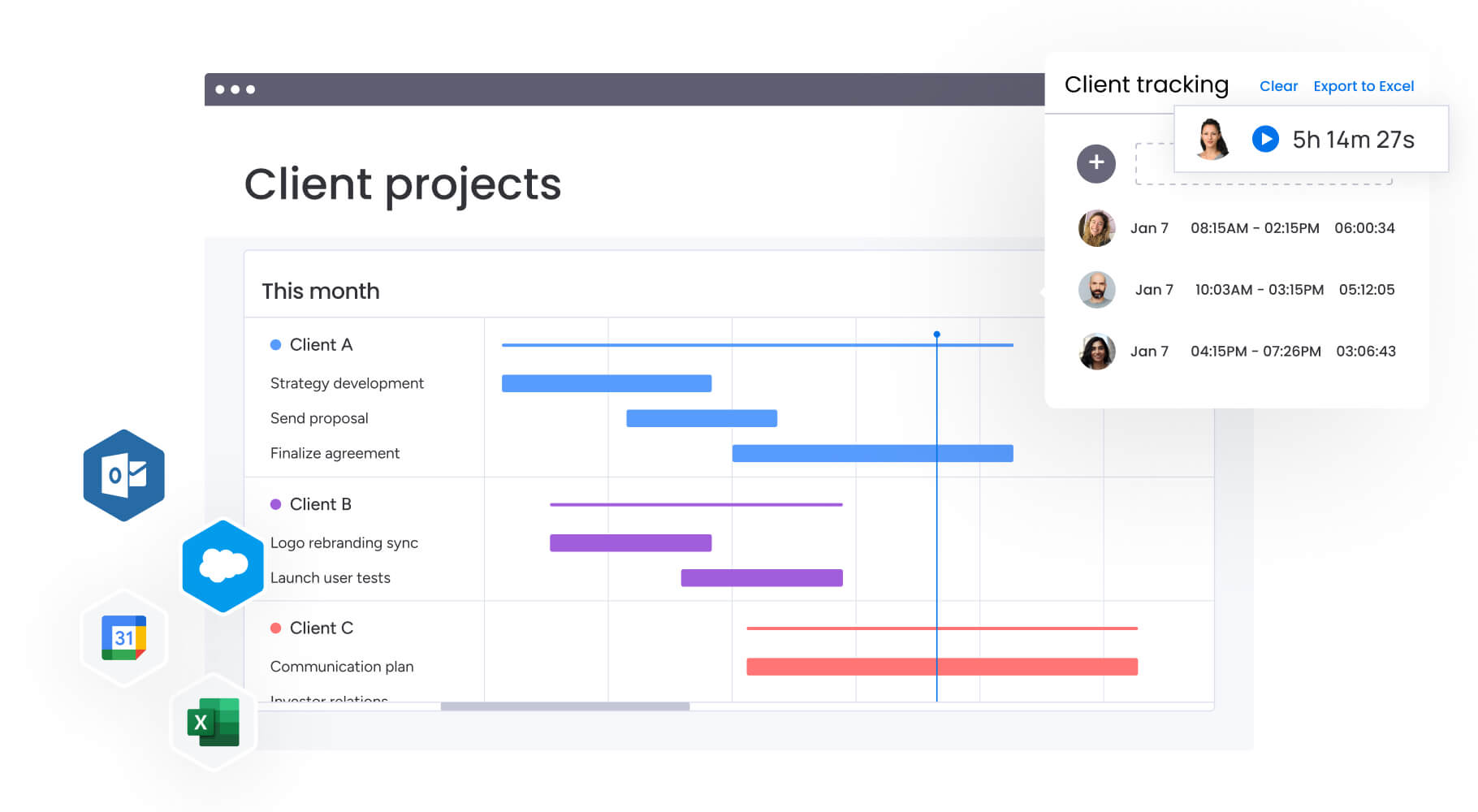
As a marketing leader in finance, you’re juggling stricter compliance requirements, longer approval cycles, and higher scrutiny on every dollar spent. You’re managing distributed teams across content, creative, acquisition, events, and operations while proving marketing’s impact to the CFO and board. The right reporting software addresses these specific challenges by connecting campaign execution directly to performance tracking.
Marketing teams require more than enhanced visualizations. They need to reclaim the two to three days lost weekly to manual report compilation, a process that modern platforms automate entirely. These solutions provide centralized visibility into all campaigns, performance metrics, and team workloads — essential capabilities when overseeing campaign planning and execution across multiple regions.
Enterprise platforms earn their keep by doing two things exceptionally well: streamlining how your team works while keeping you compliant with industry regulations. The best solutions enable standardization through templates and automation while maintaining the governance and security controls required in regulated industries. This approach can deliver significant improvements in cross-team collaboration and eliminate spreadsheet-based tracking entirely.
Core features that transform marketing reporting
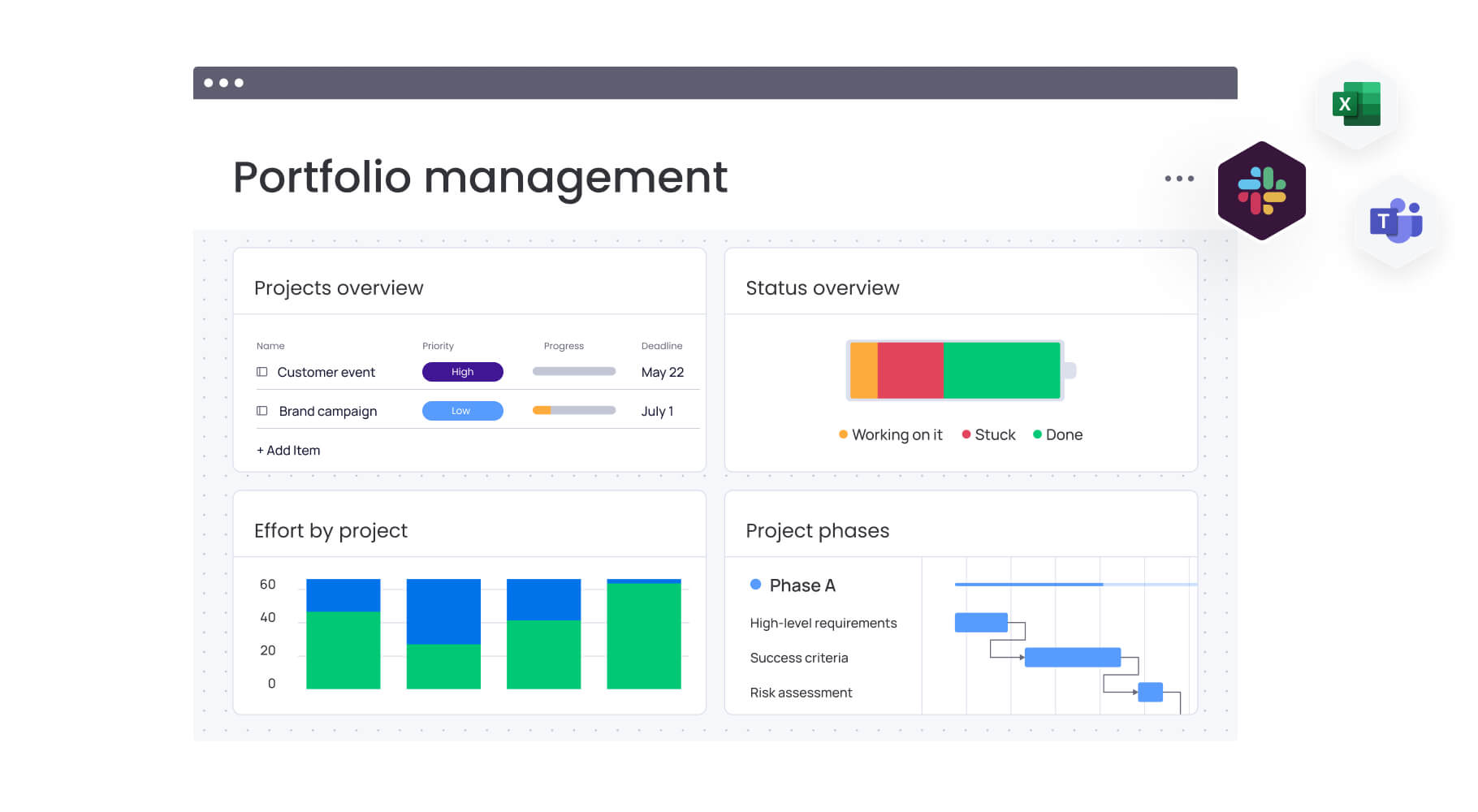
The best reporting platforms tackle the real challenges enterprise teams face with three game-changing capabilities. These features work together to create a unified system that connects strategy to execution while maintaining the visibility and control marketing leaders need.
Real-time dashboards and performance tracking
Top reporting platforms give you customizable dashboards that show everything that matters, including campaign results, team capacity, and budget status, updated in real time. These dashboards pull data from across your marketing operations: from campaign status and content production to resource allocation and OKR progress.
For heads of marketing in finance, this real-time visibility proves essential for demonstrating marketing’s impact to leadership. Instead of spending days compiling reports from multiple reporting tools, you can instantly generate executive-ready dashboards showing:
- Campaign ROI: direct connection between spend and revenue.
- Budget adherence: real-time tracking against allocated budgets.
- Performance trends: historical and predictive analytics.
- Team capacity: workload distribution across departments.
When your CEO asks about that spike in lead costs? You can click straight from your summary view to the campaign details and answer on the spot. Customizable views ensure each audience sees the metrics that matter most to them.
Automated workflow integration
Automation ends the Friday afternoon scramble to update dashboards before the Monday executive meeting. You can create custom automation recipes that trigger actions based on status changes, deadlines, or dependencies, automatically notifying stakeholders when campaigns move to review, updating budget trackers when spend thresholds are reached, or generating weekly performance summaries.
For teams of 50+ people, automation isn’t just convenient; it’s the difference between spending your time on strategy versus spreadsheets. By automating campaign workflows, approval processes, and reporting distribution, you free your team to focus on strategic and creative work.
The platform’s ability to connect workflow automation with performance tracking means reports stay current without constant manual updates. This integration ensures data accuracy while reducing the administrative burden on your team.
Cross-functional collaboration and workload management
The best platforms bring your marketing, finance, and legal teams onto the same page — literally — with shared workspaces where everyone sees the same information. Workload views provide real-time visibility into team capacity across content, creative, acquisition, events, and operations functions, enabling strategic resource allocation.
Key collaboration capabilities include:
- Capacity planning: visual representation of team bandwidth and availability.
- Work distribution: assignment based on skills and current workload.
- Progress tracking: real-time updates on deliverable status.
- Stakeholder alignment: transparent communication on priorities and timelines.
For heads of marketing overseeing 40+ concurrent campaigns, this cross-functional visibility transforms execution. You can see exactly who’s working on what, where capacity exists for new initiatives, and how workload is distributed across regions and functions.
How to automate campaign performance tracking
Automation changes the game: instead of looking backward at what happened, you’re spotting opportunities and fixing issues while campaigns are still running. Modern platforms use intelligent triggers, predictive analytics, and workflow enhancements to transform how teams track and optimize performance across all marketing activities.
Automated data collection connects directly to your marketing stack, pulling metrics from advertising platforms, marketing automation systems, CRM tools, and analytics platforms. This eliminates manual data exports and ensures reporting accuracy. Scheduled report generation and distribution mean stakeholders receive updates automatically, formatted for their specific needs.
Advanced capabilities that enhance automation include:
- Anomaly detection: AI-driven alerts when metrics deviate from expected ranges.
- Predictive insights: forecasting based on historical performance patterns.
- Smart recommendations: suggested optimizations based on campaign data.
- Triggered workflows: automatic task creation when performance thresholds are met.
Teams recover substantial time each week while improving data accuracy and currency, eliminating manual copy-paste errors and outdated information. Marketing teams implementing comprehensive automation report significant time savings per week, enabling reallocation of resources toward strategic planning and creative development.
Which platforms deliver real-time dashboards and AI-powered insights?
The difference between good and great reporting tools? Real-time data and AI that tells you what needs your attention right now. These features enable marketing leaders to move from reactive reporting to proactive optimization, making data-driven decisions as campaigns unfold rather than after they conclude.
Real-time reporting means data updates as campaigns run, not weekly or monthly snapshots. Leading platforms provide live dashboards that reflect current performance, enabling immediate optimization decisions. This real-time capability proves critical when managing multi-channel campaigns where timing affects outcomes.
AI-powered insights represent the next evolution in marketing reporting. Rather than just displaying data, these platforms analyze patterns, predict outcomes, and suggest actions. AI capabilities in modern reporting software include:
- Predictive analytics: forecasting campaign performance and identifying risks.
- Automated insights: surfacing important trends without manual analysis.
- Risk flagging: proactive alerts about underperforming campaigns.
- Optimization suggestions: data-driven recommendations for improvement.
Advanced platforms like monday work management incorporate AI through features like Digital Workers — autonomous assistants that monitor campaign performance, identify underperforming segments, and suggest budget reallocations without manual intervention. This shifts reporting from reactive to proactive, helping marketing leaders stay ahead of issues rather than discovering them in retrospective reports.
How reporting software aligns marketing with business goals
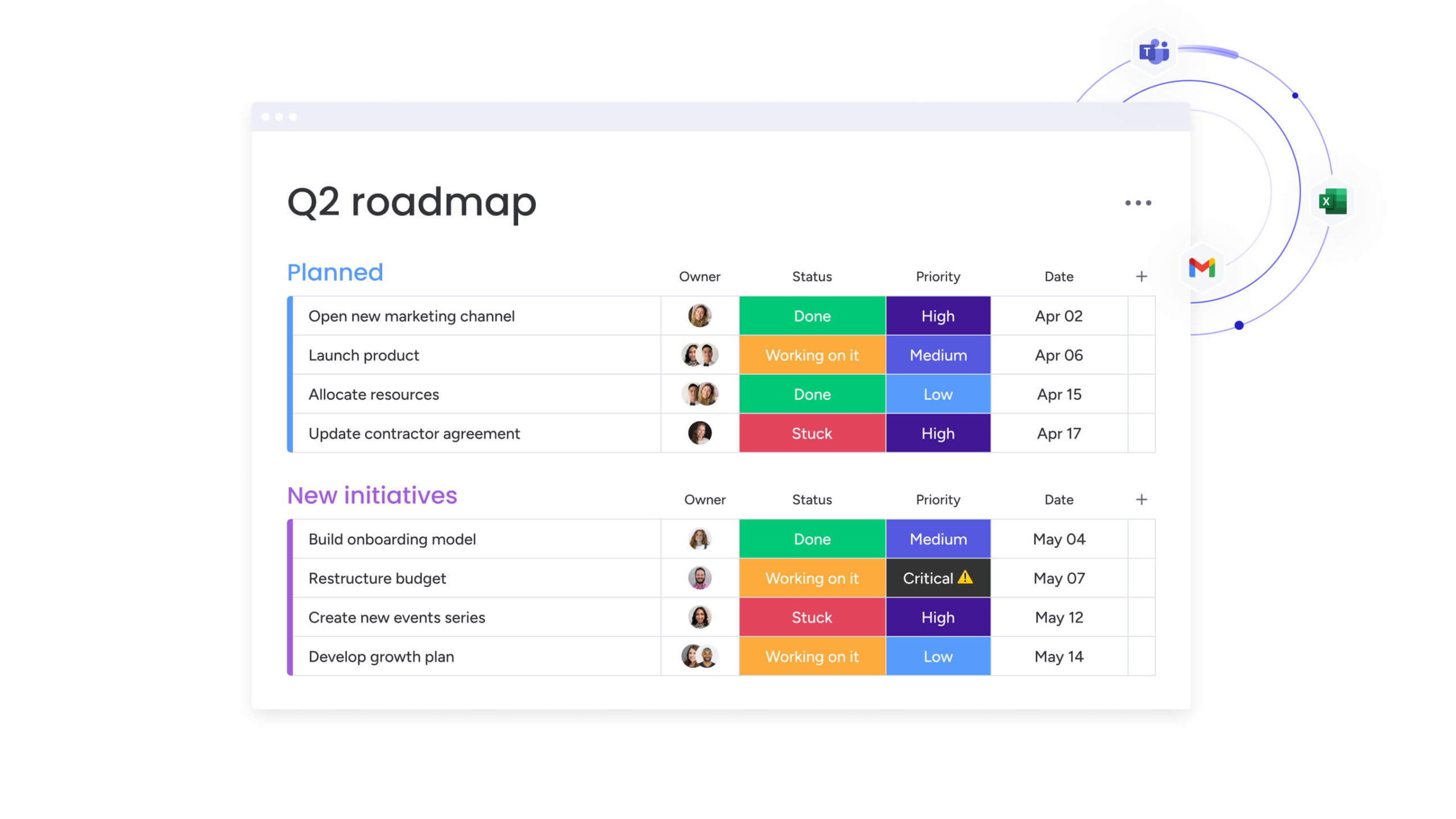
Effective reporting for executive leadership extends beyond standard metrics such as clicks and conversions to demonstrate direct connections between campaigns and revenue objectives. Modern platforms enable marketing leaders to align campaign execution with OKRs and strategic goals, providing visibility into business impact rather than activity metrics alone.
This alignment happens through several key mechanisms. OKR integration allows you to set company-level objectives and track how individual campaigns contribute to these goals. Custom metrics reflect business priorities beyond standard marketing KPIs, connecting marketing activities to revenue, pipeline, and customer acquisition costs.
Executive-level reporting capabilities transform how marketing demonstrates value:
- Revenue attribution: clear line from campaigns to closed deals.
- Pipeline contribution: marketing’s role in opportunity creation.
- Customer lifecycle impact: influence across the entire journey.
- Strategic initiative tracking: progress toward company-wide objectives.
Cross-functional visibility ensures marketing metrics align with sales, product, and customer success outcomes. This comprehensive view strengthens marketing’s position as a strategic business driver rather than a cost center.
Essential integrations for enterprise marketing teams
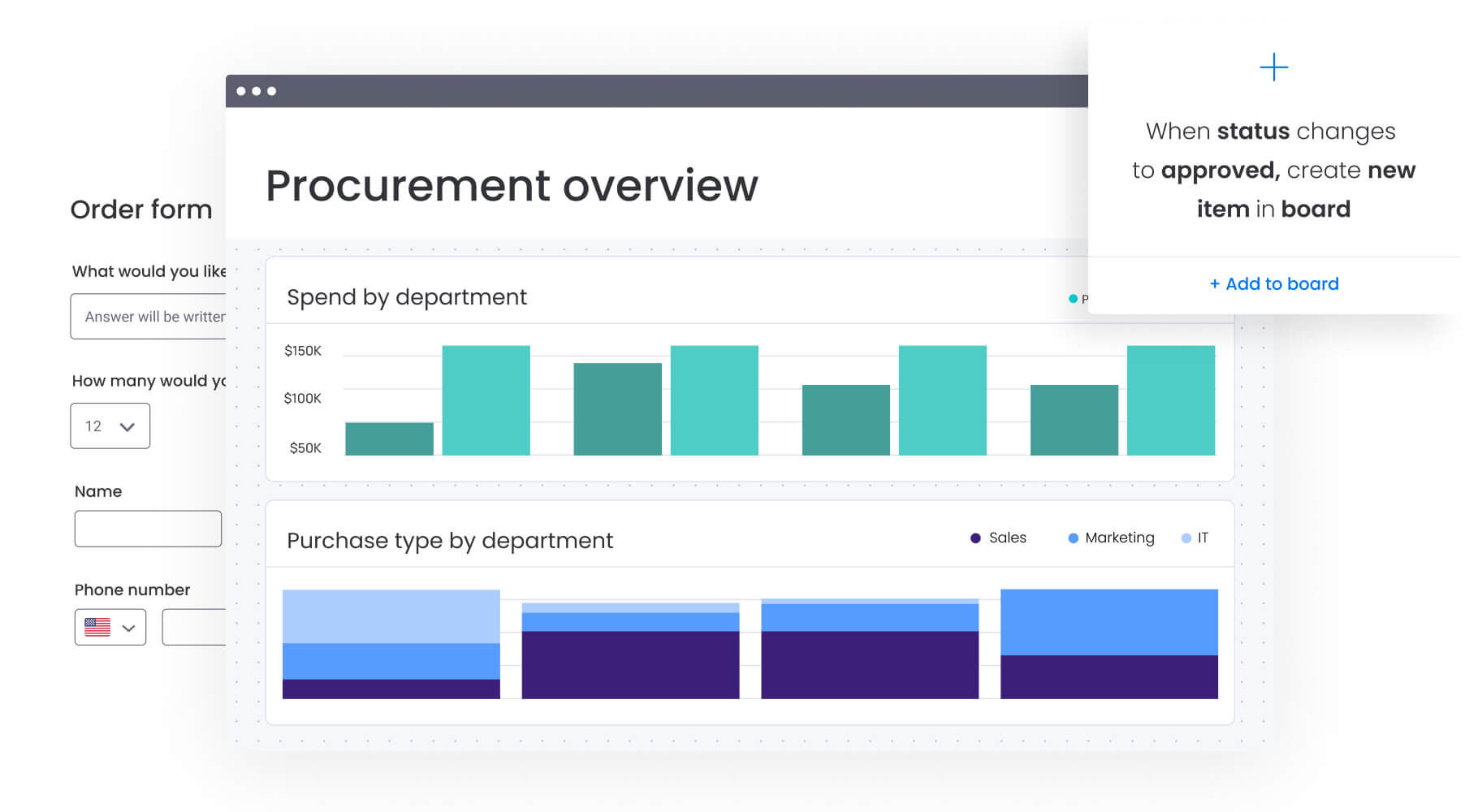
Your stack includes 15+ tools that don’t naturally talk to each other. The right reporting platform bridges these gaps without requiring your team to become data engineers. Effective reporting requires seamless integration with this existing stack to create a unified data view that eliminates manual data transfer and ensures accuracy across all marketing activities.
Critical integrations for finance marketing teams include:
- Marketing automation platforms: like HubSpot and Marketo provide campaign execution data, lead scoring, and nurture program performance. These integrations ensure your reporting reflects actual marketing activities, not just high-level metrics.
- Advertising platforms: including Google Ads, LinkedIn Ads, and programmatic systems deliver spend and performance data. Direct integration eliminates manual data entry and ensures budget tracking accuracy.
- CRM systems: such as Salesforce connect marketing efforts to sales outcomes. This integration proves essential for demonstrating marketing’s revenue impact and tracking the full customer journey.
- Analytics tools: like Google Analytics 4 and Adobe Analytics provide website and digital experience data. Combining this with campaign data creates a complete picture of marketing performance.
- Financial systems: for budget tracking and ROI calculation ensure marketing metrics align with company financial reporting. This integration supports compliance requirements and executive reporting needs.
Beyond native integrations, enterprise platforms should offer robust API capabilities for custom connections. This flexibility ensures your reporting platform can adapt as your tech stack evolves, without requiring extensive IT resources for implementation.
Step-by-step implementation roadmap for marketing reporting
Rolling out new reporting solutions doesn’t have to derail your current campaigns. This roadmap provides a proven framework for enterprise teams to deploy reporting platforms effectively, get your team up and running quickly with minimal headaches, and achieve measurable results within the first quarter.
Step 1: audit your current reporting infrastructure
Document all marketing tools, data sources, and existing reporting processes to establish your baseline. Identify where data lives, who owns each report, and how long reporting currently takes. This audit reveals disconnected systems, manual processes, and visibility gaps that your new platform must address.
Create an inventory of:
- Current marketing tools and their data outputs: catalog every platform and the metrics it generates.
- Manual reporting processes and time requirements: document how long each report takes to compile.
- Stakeholder reporting needs and frequency: identify who needs what information and when.
- Data quality issues and integration challenges: pinpoint where data breaks down or systems don’t connect.
Step 2: define KPIs with stakeholders
Collaborate with the CFO, board members, and department heads to establish the marketing metrics that matter most. Prioritize metrics like campaign ROI, customer acquisition cost, MQL-to-customer rate, and contribution to revenue goals. Ensure alignment on how marketing performance will be measured and reported.
Focus on metrics that:
- Connect directly to business outcomes: prioritize revenue attribution, pipeline contribution, and customer acquisition metrics that demonstrate marketing’s financial impact.
- Support compliance and governance requirements: ensure tracking aligns with regulatory standards and audit requirements specific to financial services.
- Enable cross-functional collaboration: select metrics that create shared understanding between marketing, sales, finance, and leadership teams.
- Provide actionable insights for optimization: focus on metrics that inform strategic decisions and enable real-time campaign adjustments.
Step 3: connect your martech stack
Integrate existing marketing platforms, analytics tools, and financial systems using native integrations or API connections. Centralize data from advertising platforms, marketing automation, CRM, and budget management tools to create a unified performance view.
Prioritize integrations based on:
- Data volume and reporting frequency: connect high-traffic platforms that require daily or real-time updates first.
- Business impact of the metrics: prioritize systems that track revenue-critical activities and executive-level KPIs.
- Complexity of manual processes being replaced: target integrations that eliminate the most time-consuming data compilation tasks.
- Stakeholder visibility requirements: ensure leadership and cross-functional teams have access to the metrics they need for decision-making.
Step 4: build standardized templates
Create reusable templates for campaign planning, execution tracking, and performance reporting. Include automated workflows for approvals, status updates, and stakeholder notifications. Design dashboard templates that provide consistent views across campaigns and teams.
Template categories should include:
- Campaign planning and brief templates: standardize how campaigns are scoped, approved, and launched across all marketing functions.
- Performance tracking dashboards: create consistent views for monitoring campaign metrics, budget adherence, and timeline progress.
- Executive reporting formats: design templates that present marketing impact in business terms leadership understands and values.
- Cross-functional collaboration workflows: establish standardized processes for working with sales, product, legal, and compliance teams.
Step 5: implement phased rollout
Start with two to three high-priority campaigns to test workflows, dashboards, and reporting processes. Gather feedback from campaign managers and stakeholders to refine templates and automation. Use this pilot phase to demonstrate quick wins and build momentum.
Pilot phase objectives:
- Validate workflow efficiency improvements: measure time savings and process improvements compared to previous methods.
- Test data accuracy and integration reliability: ensure all connected systems sync correctly and metrics align across platforms.
- Gather user feedback for optimization: collect insights from team members on usability, pain points, and feature requests.
- Document best practices for broader rollout: capture lessons learned and successful approaches to guide enterprise-wide implementation.
Step 6: train teams and establish governance
Provide role-based training for different user groups: from campaign managers to executives. Establish governance processes for data entry, status updates, and reporting cadences. Create a center of excellence to support ongoing optimization and share best practices.
Training should cover:
- Platform navigation and core features: ensure all users understand fundamental capabilities and how to access the tools they need.
- Role-specific workflows and responsibilities: provide targeted training on processes relevant to each team member’s function and authority level.
- Data quality standards and processes: establish clear guidelines for maintaining accurate, consistent information across all campaigns and reports.
- Troubleshooting and support resources: equip teams with knowledge of where to find help and how to resolve common issues independently.
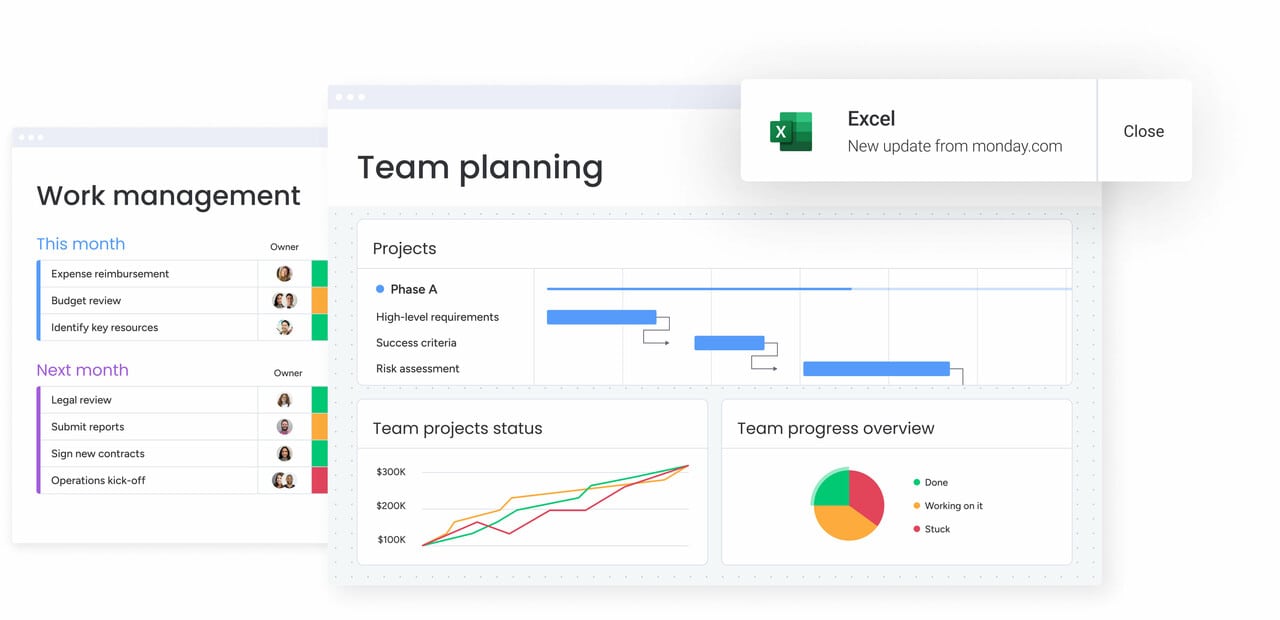
Platform comparison: marketing reporting solutions for enterprise teams
When considering platforms, it’s really important to weigh up how each addresses enterprise-specific needs across execution, reporting, and collaboration capabilities.
This comparison below highlights key differences that impact long-term success for marketing teams managing complex, multi-regional operations.
| Feature | monday work management | Tableau | Looker Studio | Domo |
|---|---|---|---|---|
| Campaign execution + reporting | Unified platform | Reporting only | Reporting only | Reporting only |
| Real-time dashboards | Customizable, no-code | Advanced, technical | Basic capabilities | Advanced, complex |
| Workload management | Built-in resource planning | Not included | Not included | Not included |
| Marketing automation | 200+ integrations | Limited connectors | Limited options | 1,000+ connectors |
| Compliance features | SOC 2, GDPR, BYOK | Enterprise security | Basic security | Enterprise security |
| Implementation time | Two to four weeks | Eight to twelve weeks | One to two weeks | 12–16 weeks |
| Best for | Teams needing execution + reporting | Data analysts | Budget-conscious teams | Enterprise BI teams |
Transform marketing operations with unified reporting
View reporting software as the backbone of how your marketing team works, makes decisions, and proves its worth to the business. The platforms that succeed at enterprise scale unify fragmented operations, automate manual work, offer robust marketing planning software capabilities, and connect marketing activities to business outcomes while maintaining the governance and compliance standards required in regulated industries.
For heads of marketing in finance, the right platform addresses specific challenges: proving ROI to leadership, maintaining compliance, and coordinating distributed teams. Solutions like monday work management combine execution and reporting in one platform, eliminating the disconnect between planning and performance tracking that creates inefficiency and reduces visibility.
The platform’s enterprise capabilities, including AI-powered risk insights, portfolio dashboards scaling to 1,000+ projects, and managed templates for standardization, provide the governance layer marketing leaders need. Resource optimization features like the capacity manager and resource directory ensure teams stay aligned and productive without burnout.
When evaluating solutions, remember to look beyond feature lists to strategic capabilities. The right platform helps you understand what’s working, what needs adjustment, and what to do next. It empowers your entire team, not just analysts. Most importantly, it demonstrates marketing’s business impact with confidence and provides the foundation for sustainable growth.
The content in this article is provided for informational purposes only and, to the best of monday.com‘s knowledge, the information provided in this article is accurate and up-to-date at the time of publication. That said, monday.com encourages readers to verify all information directly.
Frequently asked questions
How long does implementation take for enterprise marketing teams?
Implementation for enterprise marketing teams typically takes two to four weeks, depending on workflow complexity and integration requirements. Most teams see value within the first week through quick wins like automated reporting and centralized dashboards.
What integrations are critical for financial services marketing?
Critical integrations for finance marketing teams include marketing automation platforms, advertising systems, CRM tools, analytics platforms, and financial systems for budget tracking. These connections ensure comprehensive reporting while maintaining compliance requirements.
How does marketing reporting software handle GDPR and compliance?
Enterprise platforms provide SOC 2 certification, GDPR compliance, data residency options, and advanced security features like BYOK and tenant-level encryption. These capabilities ensure marketing operations meet regulatory requirements while maintaining operational flexibility.
Can reporting platforms connect budget tracking with ROI forecasting?
Yes, modern platforms enable budget tracking, expense monitoring, and ROI forecasting within the same system. Custom columns track allocation and spend while integration with financial systems ensures data synchronization across departments.
How do platforms support multi-regional marketing teams?
Enterprise platforms support multi-regional teams through workspace organization, customizable permissions, and flexible templates. Region-specific boards roll up into global dashboards while maintaining local autonomy for market-specific needs.
What's the expected ROI timeline for marketing reporting tools?
Most enterprise marketing teams see measurable ROI within three to four months, with full value realization by month six. Early wins include time savings from automated reporting and improved campaign coordination through centralized visibility.

 Get started