


Tech marketing teams juggle dozens of campaigns across multiple channels and stakeholders — all while leadership wants ROI and delivery dates they can count on. The challenge isn’t strategy or creativity — it’s operational execution. When teams centralize coordination in a single platform instead of relying on individual spreadsheets and email threads, even well-planned campaigns can deliver on time and on budget more consistently.
Great marketing project management software closes this execution gap with a single view of your entire marketing operation — from the first brief to final performance metrics. These platforms centralize campaign coordination, automate routine workflows, and connect daily tasks to strategic objectives. The result is marketing operations that scale without proportional increases in coordination overhead.
We’ll show you what actually works for enterprise marketing teams in this helpful guide — from resource planning to cross-team collaboration to the reporting that proves your value. We’ll further dive in to how leading platforms handle complex marketing workflows, and reveal how teams achieve measurable improvements in collaboration, efficiency, and strategic alignment.
Key takeaways
Tech marketing leaders face a tough reality: you need to show clear ROI while your team handles more campaigns, more channels, and more stakeholders every quarter.
Here’s what matters most when evaluating marketing project management software:
- Stop wasting time in status meetings: get real-time visibility into all campaigns, budgets, and team capacity so you can answer executive questions instantly instead of scrambling for updates.
- Prevent team burnout before it happens: use workload views to spot capacity issues early and redistribute work automatically, keeping your best people productive without overwhelming them.
- Connect daily work to business results: track campaign ROI, customer acquisition costs, and team productivity in live dashboards that show exactly how marketing drives revenue growth.
- Scale operations without adding chaos: monday work management’s templates and automation handle routine coordination automatically, letting teams focus on strategy and creative work instead of manual processes.
- Break down silos between marketing teams: centralize creative approvals, campaign planning, and resource allocation so content, creative, and campaign teams work from the same timeline and priorities.
What makes heads of marketing choose monday work management?
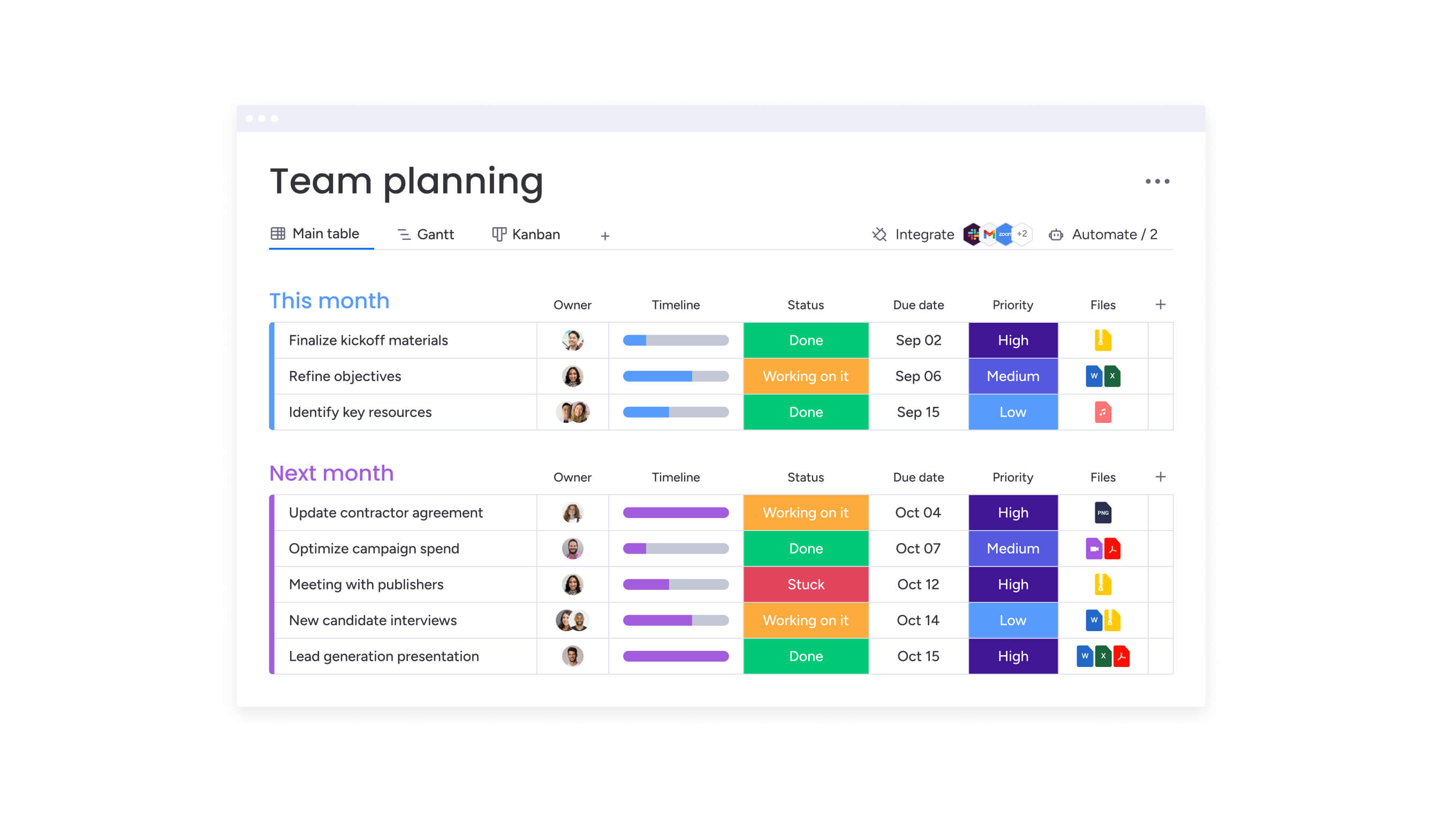
Marketing directors at tech companies with 100+ employees face a perfect storm of challenges. You’re managing campaigns across content, creative, acquisition, events, and operations while teams use different tools and priorities shift weekly. Yet executives expect clear ROI reporting and predictable delivery.
The real problem isn’t strategy — it’s execution. Without a unified view of all projects, your team wastes hours in status meetings. Work gets duplicated across departments. And when the CEO asks about impact? You’re scrambling for answers. For actionable guidance, these marketing project management tips can help teams optimize their processes. Manual processes for creative approvals create bottlenecks while resource allocation happens in spreadsheets, leading to burnout in some teams while others sit idle.
Platforms like monday work management tackles these headaches head-on, giving you one place to see every campaign from planning to performance. For deeper strategic focus, marketing planning software helps unify goals, budgets, and execution.
Automated workflows also help to standardize processes like creative intake and approvals while real-time dashboards track campaign ROI, customer acquisition costs, and team productivity. This operational foundation lets marketing leaders focus on strategy instead of firefighting.
Top features for marketing project management
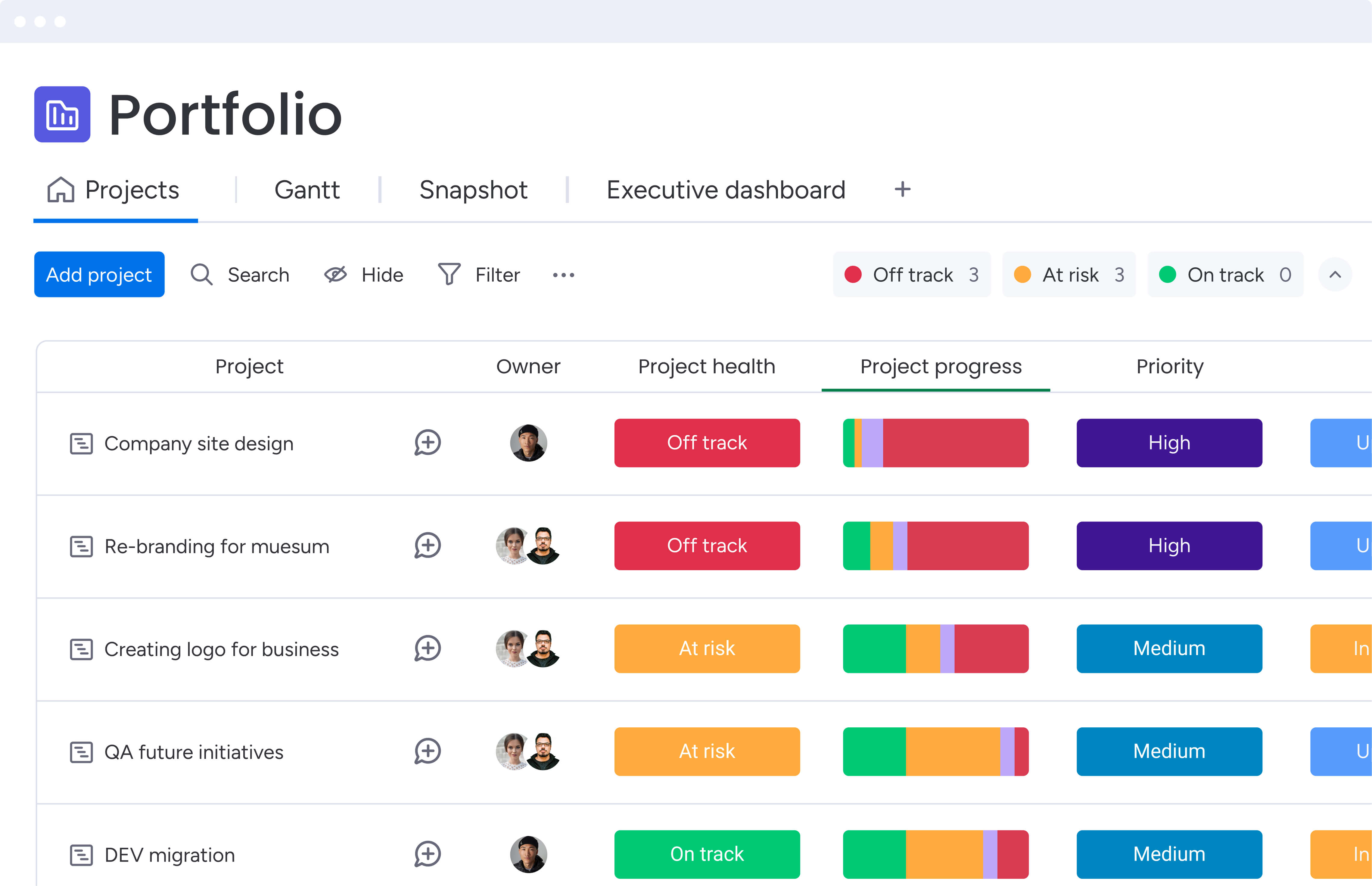
These capabilities will change how your team plans, executes, and measures results. They solve today’s operational problems while building a foundation for more strategic marketing.
By adopting them, you can give your team the operational structure needed to perform at its best.
Campaign management capabilities
Campaign management in monday work management turns your chaotic campaign process into a clear, trackable workflow from initial brief to final delivery. The platform offers calendars and timelines that show exactly where each campaign stands while tracking multiple campaigns simultaneously across channels and regions with clear ownership.
Complementing these views, a marketing Gantt chart can further highlight dependencies and milestones.
Marketing leaders managing 20+ concurrent campaigns find this particularly valuable through:
- Visual campaign hierarchies: show how programs, campaigns, and activations connect.
- Centralized coordination: eliminates scattered spreadsheets and email threads.
- Instant snapshots: leadership gets updates without scheduling status meetings.
- Performance insights: built-in analytics help identify what’s working and adjust quickly.
- Dependency tracking: prevents conflicts and resource clashes between campaigns.
Resource management and capacity planning
Resource management gives you X-ray vision into your team’s capacity — so you can spot burnout before it happens and allocate talent where it matters most. The platform shows real-time visibility into bandwidth, skills, and workload across your entire marketing organization, letting you see who’s overloaded before it becomes a problem.
Key capabilities include:
- Workload view: reveals capacity across multiple projects in real-time.
- Immediate redistribution: when someone approaches their limit, redistribute work instantly.
- Resource directory: centralizes information about each team member’s department, role, and expertise.
- Availability matching: match the right people to the right projects based on actual availability, not assumptions.
- Proactive flagging: platform identifies capacity issues early, allowing adjustments rather than last-minute scrambles.
Marketing strategy and OKR tracking
Strategic alignment isn’t just a buzzword when you can trace every campaign task directly back to your quarterly objectives. monday work management links company-level objectives to the actual work being done, ensuring every campaign and project shows how it contributes to broader business goals.
Custom dashboards track the metrics that matter to leadership:
- Campaign ROI: direct line from spend to revenue.
- Customer acquisition cost: true cost per new customer.
- MQL-to-customer rates: conversion through the funnel.
- Budget adherence: real-time spend tracking.
- Team productivity: output and efficiency metrics.
This visibility transforms how marketing leaders report to executives by providing live data at your fingertips instead of scrambling to compile reports.
Automation and workflow standardization
Automation in monday work management eliminates the manual coordination that slows marketing teams down, making automation software integral to streamlined workflows. No-code automation recipes handle repetitive tasks automatically — when a creative brief gets submitted, the right people receive notifications; when a status changes, dependent tasks update; when deadlines approach, reminders go out.
Standardization happens through templates that embed best practices:
- Reusable templates: create once for campaign launches, content production, event planning, creative approvals.
- Built-in automations: each template includes automation recipes for routine tasks.
- Flexible consistency: teams maintain their preferred working style while following consistent processes.
- Complex workflows: build sophisticated processes without technical resources.
- Streamlined intake: forms capture all necessary information upfront.
Dashboards and real-time reporting
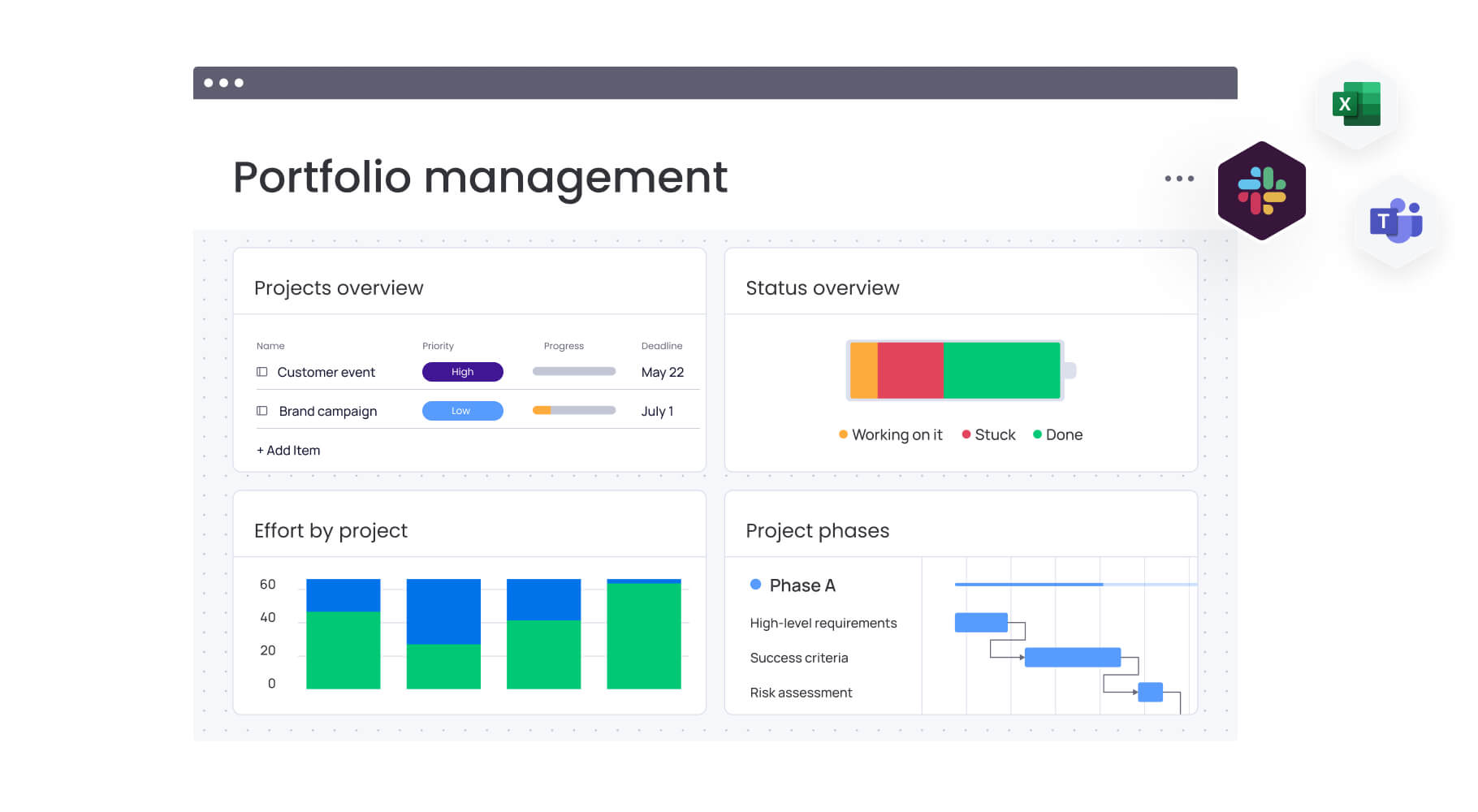
Dashboards turn your project data into answers you can act on — showing exactly how campaigns perform across channels, teams, and objectives. Marketing leaders can filter information to uncover trends, identify bottlenecks, and track progress against goals with live data that flows directly from projects.
Advanced capabilities include:
- Portfolio visibility: drill down from high-level views to individual task details.
- Instant answers: respond to executive questions on the spot instead of promising follow-up.
- AI-powered alerts: platform monitors your portfolio continuously, flagging risks before they derail campaigns.
- Real-time updates: know immediately when timelines slip, budgets exceed limits, or teams approach capacity.
Creative requests and approval workflows
Creative workflows often create the biggest bottlenecks in marketing operations. monday work management streamlines the entire process from intake through delivery by capturing creative requests with all relevant details through forms, ensuring nothing gets lost in email threads.
The complete workflow includes:
- Automated routing: sends requests to appropriate team members based on type, priority, or other criteria.
- Clear queues: creative teams see what’s coming and when it’s due for better planning.
- Centralized approval: reviewers see assets in context with all feedback in one place.
- Version control: everyone works from the latest iteration.
- Specific feedback: comments attach to specific assets, eliminating confusion.
How heads of marketing benefit from monday work management
monday work management delivers much more than basic project tracking — leaders see real improvements in team collaboration, campaign quality, and marketing ROI. These benefits compound over time, creating sustainable competitive advantages.
Time savings
Time savings compound quickly when manual processes become automated. Teams eliminate hours spent on status updates, searching for information, and coordinating handoffs, with recovered time reinvested in strategic and creative work that drives business results.
Cost efficiency
Cost efficiency benefits derive from multiple sources:
- Optimized resource allocation: accomplish more without adding headcount.
- Reduced rework: fewer missed deadlines eliminate expensive rush jobs.
- Prevented duplication: clear visibility stops duplicate efforts across teams.
Quality improvements
The improvements show up in both process and output through proper review cycles built into workflows, fewer errors, template-driven brand consistency, and time for iteration instead of rushing to meet deadlines.
The platform delivers measurable improvements in:
- Collaboration: teams work together seamlessly across departments.
- Productivity: more campaigns delivered with the same resources.
- Visibility: real-time insights into all marketing activities.
- Alignment: clear connection between daily work and strategic goals.
- Satisfaction: reduced stress from better workload balance.
How to manage marketing projects at scale
To scale your marketing operations without creating chaos, you need a system that standardizes the routine stuff while giving your team room to be creative. The following steps provide a proven framework for transforming scattered marketing activities into unified, high-performing operations.
Step 1: centralize all marketing workflows
Start by bringing your scattered marketing operations into monday work management through a master workspace for all programs, campaigns, and activations. Build hierarchies that show how individual projects connect to strategic initiatives while consolidating the chaos of spreadsheets, emails, and disconnected tools into one unified system.
Step 2: standardize with templates and automation
Develop reusable templates for common marketing processes including campaign launches, content production, event planning, and creative approvals. Each template should embed your best practices and include automation recipes for routine tasks, ensuring consistency while allowing teams to customize for specific needs.
Step 3: implement resource planning
Configure workload views and resource directories for real-time visibility into team capacity while setting thresholds that flag when someone becomes overallocated. Use this insight to make confident commitments about deadlines and prioritize initiatives based on actual availability rather than assumptions.
Step 4: connect cross-functional teams
Break down silos by establishing shared boards and integrations that connect marketing with product, sales, finance, and legal teams. Use permissions to give stakeholders appropriate visibility without exposing internal details, ensuring everyone works from aligned timelines and shared objectives.
Step 5: build executive dashboards
Create custom dashboards that aggregate data across your marketing portfolio to track campaign ROI, customer acquisition costs, MQL-to-customer rates, budget adherence, and team productivity. Configure these dashboards to update automatically, giving you instant answers to leadership questions.
Step 6: scale through continuous optimization
Roll out the platform in phases, starting with one high-impact team while providing structured training and support to ensure adoption. Build a foundation that teams can see working, then expand based on feedback using monday work management’s flexibility to continuously refine workflows as your team grows.
Comparison: monday work management vs. other platforms
When researching and debating which marketing project management software to opt for, understanding key differences helps you make an informed decision.
Here’s how platforms compare on capabilities that matter most to enterprise marketing teams:
| Feature | monday work management | Tableau | Looker Studio | Domo |
|---|---|---|---|---|
| Campaign execution + reporting | Unified platform | Reporting only | Reporting only | Reporting only |
| Real-time dashboards | Customizable, no-code | Advanced, technical | Basic capabilities | Advanced, complex |
| Workload management | Built-in resource planning | Not included | Not included | Not included |
| Marketing automation | 200+ integrations | Limited connectors | Limited options | 1,000+ connectors |
| Compliance features | SOC2, GDPR, BYOK | Enterprise security | Basic security | Enterprise security |
| Implementation time | 2-4 weeks | 8-12 weeks | 1-2 weeks | 12-16 weeks |
| Best for | Teams needing execution + reporting | Data analysts | Budget-conscious teams | Enterprise BI teams |
How Genpact transformed their marketing operations
This real-world example demonstrates how a global organization successfully implemented monday work management to solve complex marketing coordination challenges. The transformation shows measurable improvements across collaboration, efficiency, and visibility.
The challenge
Genpact’s globally distributed marketing department runs approximately 24 ongoing large-scale campaigns simultaneously, with each campaign including multiple cross-channel activations managed jointly by campaign managers and channel owners across 40 different teams.
The team relied on spreadsheets saved across desktops, emails, and SharePoint folders with no single source of truth for campaign status, progression, or key information. Finding the status of a campaign meant sifting through emails and searching SharePoint folders.
The solution
Genpact implemented monday work management to standardize their campaign planning and execution by building workflow apps outlining the entire activation process for each channel. Columns track target dates versus actual timeframes, revealing trends and bottlenecks.
Key implementation elements included:
- High-level GTM calendar: created with subitems showing hierarchy of programs, campaigns, and activations.
- Leadership visibility: instant access to all marketing initiatives.
- Formalized processes: monday work management forms standardized brief submission and approval.
- Automated routing: notifications direct requests to the right people with status visibility.
The results
The transformation was immediate and measurable:
- 40% improvement in cross-team collaboration for end-to-end campaign planning and execution.
- Complete elimination of spreadsheets from marketing operations.
- 25% decrease in email exchanges through centralized communication.
- Enhanced visibility: campaign managers can set realistic expectations with stakeholders.
- Streamlined workflow: clear queue for incoming requests eliminates creative production bottlenecks.
Level up your marketing operations today
In 2026, the reality is that marketing operations will get more complex every quarter as you add channels, campaigns, and stakeholders. The teams getting ahead aren’t working harder — they’re working smarter. Teams that build the right operational foundation now will outperform those still coordinating through spreadsheets and status meetings.
Intelligent solutions like monday work management provide that foundation by unifying your marketing operations in one accessible system. From campaign planning through performance tracking, the platform delivers real-time visibility, intelligent automation, and enterprise-grade governance that give you the control and flexibility modern marketing demands.
The results speak for themselves: teams report 40% improvements in collaboration, eliminated spreadsheets, reduced email volume, and the ability to scale operations without proportional increases in coordination overhead. J
oin thousands of marketing teams already transforming how they work and experience how unified visibility, automated workflows, and intelligent resource management can elevate your marketing operations.
The content in this article is provided for informational purposes only and, to the best of monday.com’s knowledge, the information provided in this article is accurate and up-to-date at the time of publication. That said, monday.com encourages readers to verify all information directly.
Frequently asked questions
How long does implementation take for a 100+ person marketing team?
Implementation for a 100+ person marketing team typically takes two to four weeks. Success comes from a structured rollout approach. Start by creating a base structure so teams can visualize their work in the platform. Roll out in phases with a defined order. Provide ongoing support throughout the process.
Can the software handle multiple brands and regions?
Yes, monday work management handles multi-brand and multi-region operations at scale. Yes, monday work management handles multi-brand and multi-region operations at scale. The platform's hierarchical structure lets you organize work by program, campaign, and activation, so you can manage different brands or regional initiatives while maintaining portfolio visibility.
What's the real ROI of marketing project management software?
ROI typically becomes measurable within the first quarter. Time savings from eliminating manual status updates and information searches justify the investment quickly. Preventing costly mistakes through improved visibility and coordination delivers additional value. Optimizing resource utilization helps avoid unnecessary hiring. Accelerating time-to-market through streamlined workflows drives revenue impact.
How does the platform integrate with existing marketing tech stacks?
monday work management connects with over 200 applications across your martech stack through native integrations and APIs. Common integrations include creative platforms like Adobe Creative Cloud and Figma, CRM and automation platforms like Salesforce and HubSpot, analytics platforms like Google Analytics and Tableau, and communication tools like Slack and Microsoft Teams.
What security features are essential for tech companies?
Enterprise tech companies require robust security including IP restrictions, two-factor authentication, SSO options, and encryption controls. monday work management provides these capabilities along with ISO/IEC 27001:2013 and SOC two Type two certifications. Advanced admin features enable granular permission controls for managing access across internal teams and external partners.
How do you ensure adoption across different marketing teams?
Successful adoption requires addressing different working styles. Creative teams value visual interfaces and flexibility. Analytical teams prioritize data accuracy and reporting. monday work management bridges this gap with an intuitive interface that creative teams embrace, combined with robust analytics for data-driven marketers. Show immediate value to each team through relevant use cases and quick wins.

 Get started