


Marketing teams at enterprise organizations manage hundreds of campaigns simultaneously while coordinating across content, creative, events, and digital teams. The challenge isn’t just project management — it’s orchestrating complex workflows that span departments, timelines, and stakeholders while maintaining brand consistency and strategic alignment. When campaigns involve legal approvals, budget tracking, creative production, and cross-functional collaboration, basic project management platforms quickly become inadequate.
The right marketing project management software doesn’t just manage complexity — it turns it into your edge over competitors who are still juggling spreadsheets and disconnected tools.
These intelligent platforms go beyond just task tracking to provide unified campaign orchestration, real-time ROI visibility, automated approval workflows, and enterprise-grade governance that scales with your organization.
Take a few minutes to explore our guide as we’ll show you what sets enterprise marketing platforms apart from basic project tools, highlight the features that actually move the needle, and share how companies like Genpact rebuilt their marketing operations from the ground up.
Key takeaways
Marketing teams at enterprise organizations face a big challenge in 2026: coordinating hundreds of campaigns across multiple teams while maintaining visibility, consistency, and strategic alignment. The right marketing project management software transforms this complexity into competitive advantage.
Here’s what sets enterprise marketing platforms apart from basic project management tools:
- Centralize campaign visibility across 100+ person teams: connect content, creative, events, and digital teams in one workspace so everyone sees real-time progress instead of chasing updates through email chains.
- Automate manual handoffs that slow campaign delivery: eliminate approval bottlenecks and status update meetings that add weeks to campaign timelines and drain team productivity.
- Track campaign ROI and performance metrics instantly: monitor CAC, MQL-to-Customer rates, and budget adherence through real-time dashboards that update automatically as work progresses.
- Transform resource planning from guesswork to strategy: use monday work management’s workload views and capacity planning to prevent team burnout while maximizing campaign output across multiple service lines.
- Bridge silos between marketing, legal, product, and finance: create shared workspaces with customizable permissions that enable seamless collaboration without compromising sensitive information or strategic planning.
What makes a head of marketing choose monday work management for enterprise marketing operations?
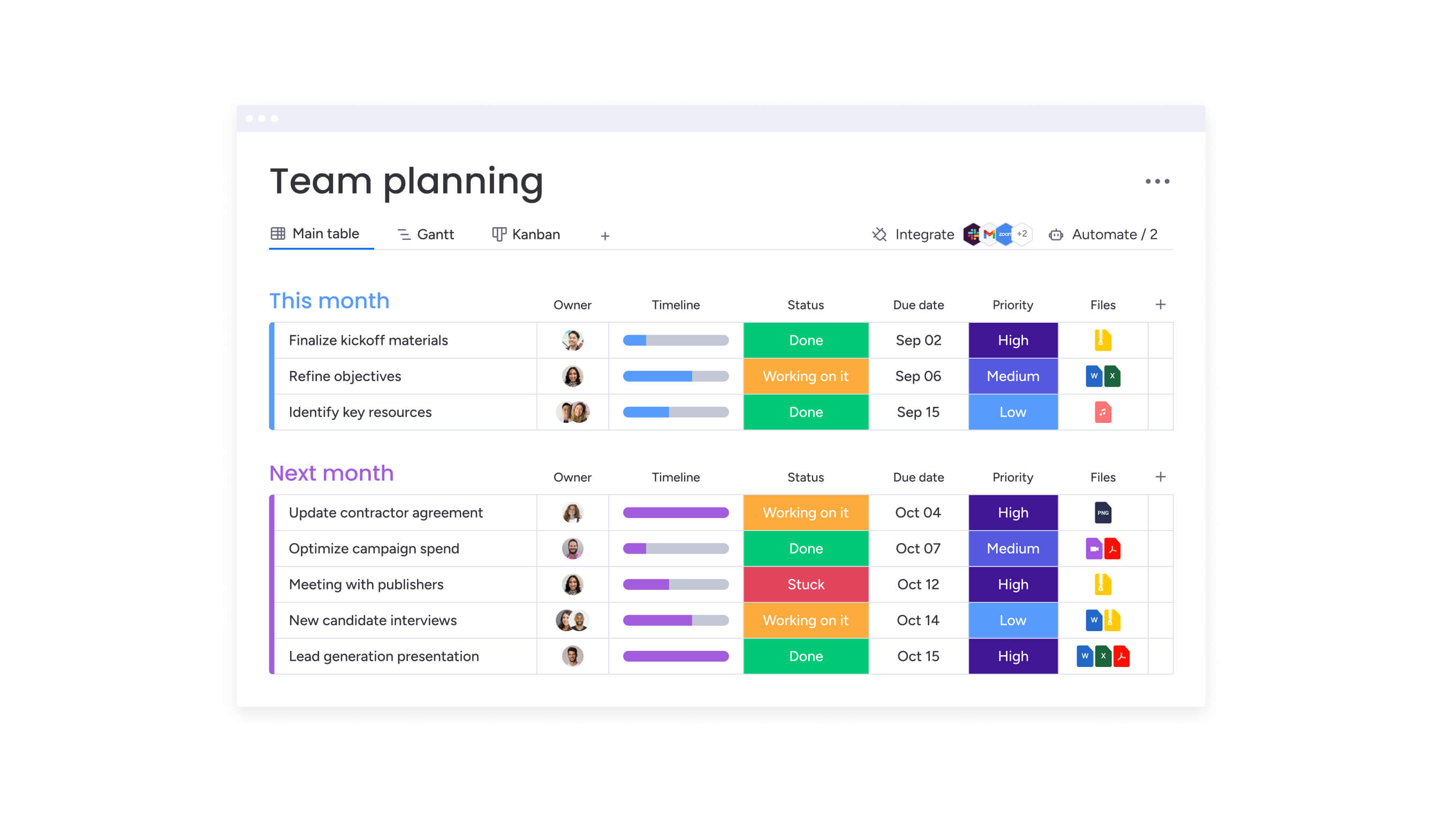
If you’re leading marketing at a services company, you’re constantly asking: “Do I actually know what my 100+ team members are working on right now, and does any of it align with our business priorities?” Pick the wrong platform, and you’re stuck with siloed teams creating disconnected campaigns. Choose the right one, and suddenly your team is delivering coordinated campaigns that executives can actually see driving revenue.
For marketing leaders managing teams across content, creative, acquisition, events, and operations, monday work management delivers the operational foundation needed to standardize workflows without sacrificing flexibility, making it a robust marketing planning software solution.
Capacity planning features reveal exactly who’s overloaded before they burn out, while automation kills those manual processes that have your team rebuilding workflows from scratch for every campaign.
Services industry marketing leaders specifically benefit from monday work management’s ability to track campaign ROI, CAC, and MQL-to-Customer rates through real-time dashboards that executive leadership can access instantly. To demonstrate the impact, companies like VML saved 7,000 hours per account monthly and achieving 2x faster delivery, while Canva increased creative output by 3x.
As a Leader in the 2024 Gartner® Magic Quadrant™ for Marketing Work Management, monday work management delivers the enterprise-grade capabilities that services industry marketing teams need to drive growth through multi-channel marketing strategies.
monday work management top features for enterprise marketing operations
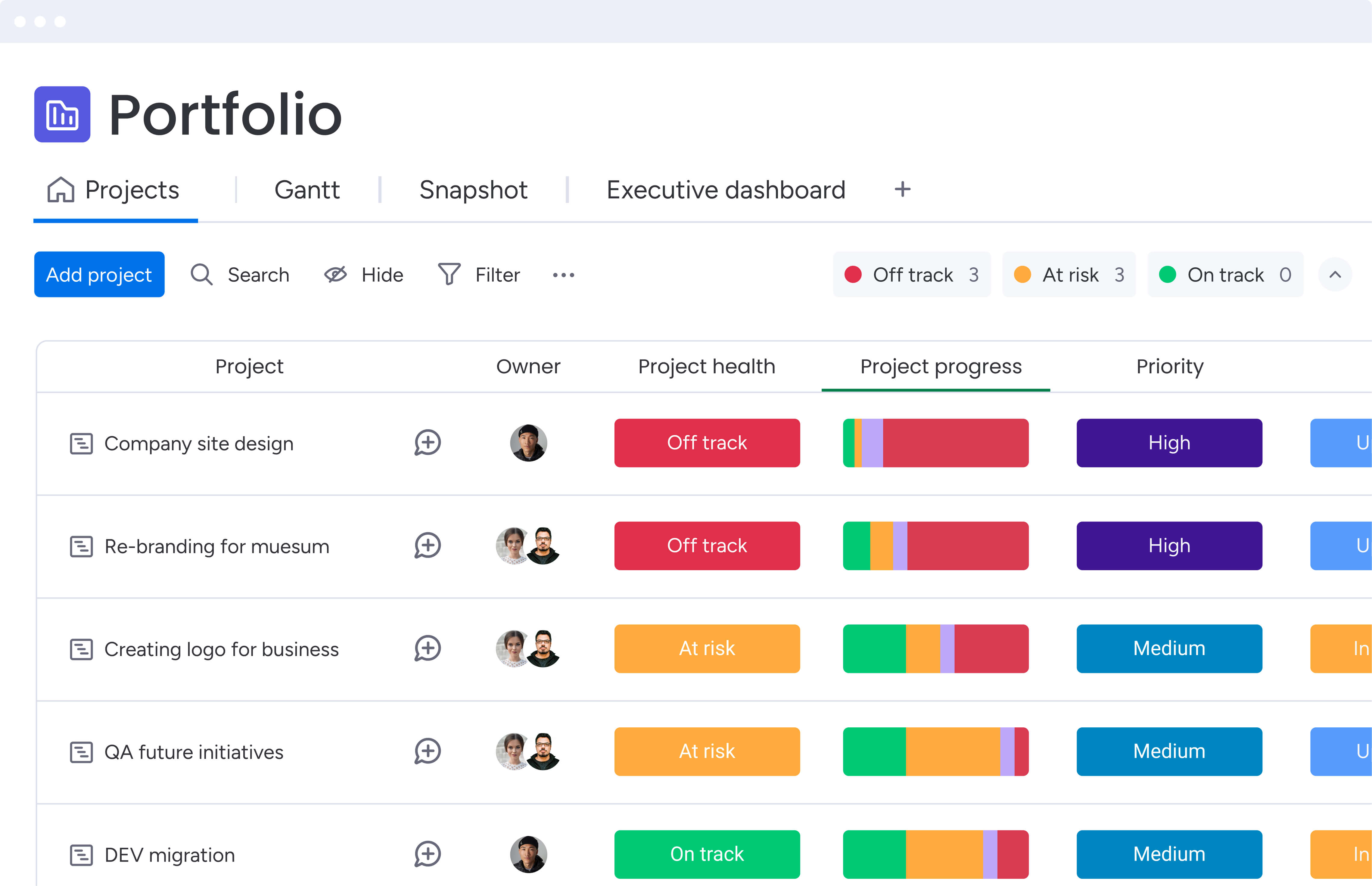
The following features transform how enterprise marketing teams coordinate campaigns, manage resources, and deliver measurable results. Each capability addresses specific challenges that marketing leaders face when scaling operations across large, distributed teams.
Campaign management and execution tracking
You can finally plan, run, and track every campaign — across all your teams and regions — without jumping between a dozen different applications. Build boards that match your actual campaign stages, set up automated updates so stakeholders aren’t chasing you for status, and see exactly how creative, content, and distribution work connects in our timeline view.
For heads of marketing managing 24+ ongoing campaigns simultaneously, this feature provides a single source of truth that closes visibility gaps. You can:
- Track campaign progression: monitor campaigns from brief to launch.
- Monitor cross-channel activations: coordinate work between campaign managers and channel owners.
- Identify bottlenecks: use target date versus actual completion tracking.
- Enable proactive adjustments: drill down into critical work items for any given week or month.
Resource planning and workload management
Real-time visibility into team capacity, workload distribution, and resource allocation transforms how your marketing resource management operates. Built-in workload views show which team members are over capacity, who can take on additional work, and how resources are distributed across campaigns and projects.
For services industry marketing teams managing 50-100+ people across multiple service lines, workload management ensures consistent delivery of marketing plans without overcommitting resources. Key capabilities include:
- Capacity monitoring: flag when specific teams are over capacity.
- Strategic prioritization: prioritize work based on strategic importance.
- Resource optimization: allocate resources strategically to maximize both team productivity and campaign impact.
Creative production and asset management
Creative production workflows become seamless with intake forms, brief management, approval processes, and asset tracking that connect creative teams with campaign managers and stakeholders.
The platform supports automated brief submission processes that replace email attachments and shared file links, providing campaign managers with visibility into request queues, status updates, and turnaround times.
This addresses the complex digital and creative processes that involve multiple stakeholders including editorial teams, creative departments, and external agencies, highlighting the need for enterprise workflows at scale.
Marketing leaders can:
- Formalize submission processes: standardize campaign brief submission and approval workflows.
- Manage creative workflows: track requests from submission through completion.
- Ensure transparency: use workflow apps as centralized queues for the creative production pipeline.
- Automate notifications: alert the right team members when new requests arrive.
Cross-functional collaboration and alignment
Seamless collaboration with legal, product, and finance teams happens through shared workspaces, connected workflows, and centralized communication that breaks down departmental silos, promoting cross-functional alignment across the organization. Marketing leaders can create high-level campaign calendars with subitems showing the hierarchy of programs, campaigns, and activations, providing leadership teams with snapshots of key marketing initiatives.
For services companies where marketing impact depends on collaboration across business units, this feature ensures alignment around shared goals. Teams can:
- Establish common workflows: connect commercial teams, creative departments, and operational functions in one place.
- Support dual-level planning: enable both strategic planning at the leadership level and tactical execution at the team level.
- Control access: use customizable permissions that control what each stakeholder can view and edit.
Dashboards and performance analytics
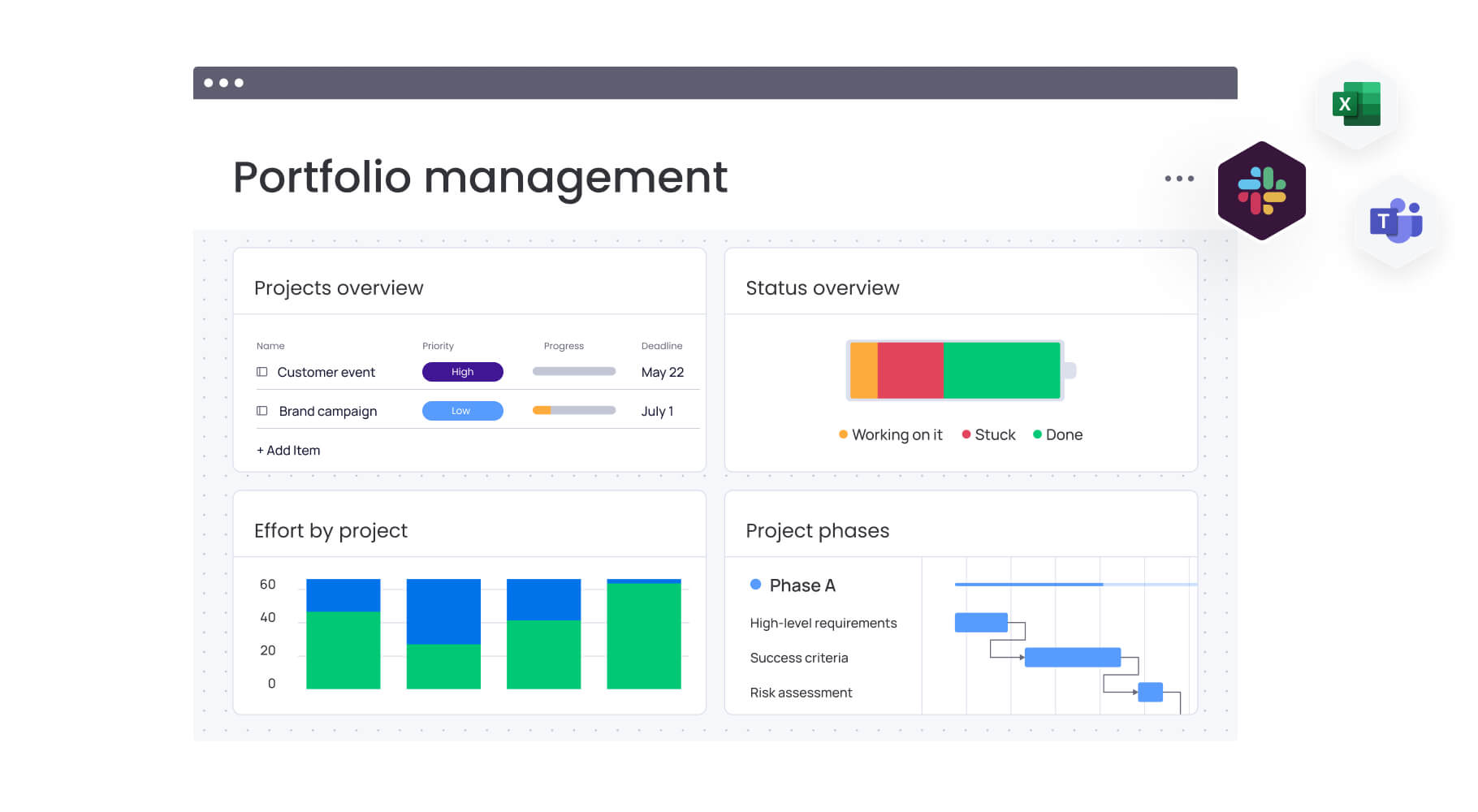
Real-time dashboards and reporting capabilities provide the data-driven insights marketing leaders need to track campaign performance, team productivity, budget adherence, and strategic goal progress. The platform consolidates data from multiple boards and workflows into customizable dashboards that display:
- Campaign ROI: track return on marketing investment across channels.
- CAC metrics: monitor customer acquisition costs by segment.
- MQL-to-Customer rates: measure conversion effectiveness.
- Content volume and performance: analyze output and engagement.
- Stakeholder satisfaction: track internal collaboration metrics.
These dashboards update automatically as work progresses, eliminating manual reporting overhead. For Heads of Marketing responsible for reporting impact to executive leadership, these KPI dashboards transform how you demonstrate marketing value.
Workflow automation and standardization
Automation capabilities eliminate manual processes and standardize workflows across your marketing organization, ensuring teams don’t reinvent processes for each campaign. You can create templated project boards for recurring campaign types, set up automated approvals and reminders, and establish notification rules that keep work moving without constant manual intervention.
The intelligent platform supports both simple automations (like moving tasks when status changes) and complex workflow logic that routes work based on campaign type, service line, or stakeholder requirements. For services industry marketing teams managing multiple client accounts or service offerings, this standardization ensures:
- Consistent quality: maintain standards across all campaigns.
- Reliable delivery: meet deadlines through automated processes.
- Customization flexibility: allow adaptation for specific client needs.
Event coordination and management
Comprehensive event management capabilities support planning, tracking, and executing both in-person and virtual events critical to services industry marketing strategies. Marketing teams can create event boards that track contracted commitments, budget allocations, attendee management, promotional timelines, and cross-functional coordination between marketing, sales, and operations teams.
For services companies that attend major industry events throughout the year, this feature centralizes all event-related information and decision-making. You can:
- Monitor event status: track which events are confirmed, postponed, or canceled.
- Manage contracts: track contract negotiations and cancellation feasibility.
- Support strategic decisions: provide CMOs with current information for making decisions about event participation and budget reallocation.
Marketing operations and process governance
Marketing operations capabilities include roadmapping, OKR tracking, reporting, and process governance that align marketing execution with strategic business objectives. The platform enables marketing leaders to translate strategic marketing plans into execution with connected workflows that link daily tasks to quarterly OKRs and annual goals.
This operational foundation is essential for services industry marketing teams that must demonstrate how marketing initiatives contribute to business growth and client satisfaction. You can:
- Create strategic roadmaps: show planned initiatives across quarters.
- Track objective progress: monitor progress toward strategic objectives with automated updates.
- Generate executive reports: communicate marketing’s impact in terms that resonate with leadership.
How a head of marketing in the services industry benefits from monday work management
Marketing leaders in services organizations experience transformative improvements across multiple dimensions when they implement monday work management. These aren’t just one-time wins — they stack up over time, putting your team miles ahead of competitors who are still struggling with disconnected tools and manual processes.
Time savings through automation and centralization
Marketing teams using monday work management report significant time savings through automation and centralized communication. The platform delivers measurable efficiency gains that allow marketing leaders to redirect effort from administrative coordination to strategic initiatives:
- Email reduction: 25-55% decrease in email exchanges.
- Meeting reduction: 41% fewer conference calls needed.
- Manual work elimination: 100% removal of spreadsheet tracking.
- Process acceleration: 2x faster campaign delivery.
These time savings compound across teams, freeing up hours each week that can be reinvested in creative strategy, market analysis, and team development.
Cost efficiency and ROI impact
The platform delivers measurable cost efficiency through improved resource utilization and reduced manual overhead. Organizations report:
- Monthly savings: $118K per month through workflow optimization.
- Hourly savings: 1,224-3,500 hours saved monthly.
- ROI achievement: 346-615% return on investment.
- Resource optimization: equivalent of adding seven full-time employees without hiring.
For services industry marketing budgets, these savings can be reinvested in campaign execution, technology upgrades, and team development initiatives.
Enhanced compliance and accuracy
Centralized workflows and automated quality assurance processes reduce errors and ensure compliance with brand standards and approval requirements. The platform eliminates spreadsheet version control issues that previously made it impossible to know who had the latest campaign information, while automated quality review processes create significantly lower margins of error.
This accuracy is critical for services companies managing client-specific requirements and regulatory considerations across multiple markets and service lines.
Productivity and output improvements
Marketing teams experience substantial productivity gains through streamlined workflows and reduced friction:
- Creative output: 3x increase in creative deliverables.
- Asset approvals: 62% improvement in approval processes.
- Campaign velocity: 142% more weekly campaigns launched.
- Time to market: 28% faster campaign launches.
These improvements translate directly to competitive advantage in services markets where time to market and quality determine success.
Visibility and tracking enhancements
Real-time visibility into campaign progress, team capacity, and performance metrics enables proactive management and faster decision-making. Marketing leadership can get high-level snapshots of campaigns at any time, while team leads instantly see what tasks each member is working on to determine capacity and timelines.
This visibility eliminates hours previously spent tracking down information and enables data-driven resource allocation that maximizes impact while preventing burnout.
How to manage enterprise marketing operations with monday work management
Want to roll out monday work management without disrupting your marketing team? Start with the basics, get everyone comfortable, then layer in the advanced stuff. This step-by-step process ensures smooth adoption across large teams while maintaining operational continuity.
Step 1: centralize your marketing workflows and campaign tracking
First, move your campaign plans, content calendars, and project trackers out of those scattered spreadsheets and into monday work management. Create a master marketing board structure that reflects your organization’s hierarchy of programs, campaigns, and activations.
Key actions:
- Audit existing tools: identify all current tracking systems and data sources.
- Design board hierarchy: map your organizational structure to board layouts.
- Create subitems: show relationships between strategic initiatives and tactical execution.
- Establish naming conventions: ensure consistency across all boards and projects.
This foundation provides the visibility needed to understand how daily work connects to broader marketing objectives.
Step 2: implement standardized intake and approval processes
Set up intake forms for campaign briefs, creative requests, and cross-functional project submissions that automatically create workflow items and notify relevant stakeholders. Establish approval workflows that route requests through appropriate reviewers based on campaign type, budget level, or service line.
Implementation focus:
- Design intake forms: create standardized forms for different request types.
- Configure approval routing: set up automated workflows based on request criteria.
- Define notification rules: ensure the right people are alerted at the right time.
- Test approval flows: validate workflows with sample requests before full rollout.
This eliminates email-based approval processes that create visibility gaps and ensures nothing falls through the cracks during critical campaign phases.
Step 3: configure resource planning and capacity management
Activate workload views and resource allocation features to gain visibility into team capacity across your 50-100+ person marketing organization. Set up capacity thresholds that flag when teams are over-committed, and create resource allocation processes that balance workload across content, creative, acquisition, events, and operations teams.
Configuration steps:
- Set up workload views: enable capacity tracking across all team members.
- Define capacity thresholds: establish limits that trigger alerts.
- Configure the Resource Directory: centralize information about team members’ skills, roles, and availability.
- Implement the Capacity Manager: provide live visibility into resource utilization across your entire portfolio.
Step 4: build cross-functional collaboration frameworks
Create shared workspaces that connect marketing teams with legal, product, and finance departments, establishing common workflows that enable seamless collaboration. Configure permissions that allow appropriate visibility for each stakeholder group while maintaining governance over sensitive information and strategic planning.
Framework elements:
- Design shared workspaces: create collaborative environments for cross-functional teams.
- Establish common workflows: connect different departments through standardized processes.
- Configure permissions: control access levels for different stakeholder groups.
- Set up cross-project dependencies: ensure automatic notifications when timelines shift.
Step 5: establish performance dashboards and reporting
Design executive dashboards that track campaign ROI, CAC, MQL-to-Customer rates, budget adherence, team productivity, and time-to-launch metrics. Set up automated reporting that delivers stakeholder-appropriate updates to executive leadership.
Dashboard development:
- Identify key metrics: define the most important performance indicators for your organization.
- Design executive views: create high-level dashboards for leadership consumption.
- Configure automated reporting: set up regular report delivery to stakeholders.
- Implement AI-powered portfolio reports: use automated executive summaries with trends, risks, and actionable insights.
Step 6: scale with templates and automation
Create reusable templates for recurring campaign types, event management, and content production workflows that maintain consistency while allowing customization. Implement automation recipes that handle routine tasks like status notifications, deadline reminders, and workflow transitions.
Scaling strategies:
- Develop template library: create standardized templates for common campaign types.
- Implement automation recipes: set up automated workflows for routine tasks.
- Use managed templates: standardize entire workspaces including projects and automations at scale.
- Enable bulk updates: apply changes across hundreds of instances simultaneously.
Comparison: monday work management vs competing platforms
To understand where monday work management stands in the market, it’s helpful to compare it directly with other leading platforms. The table below highlights how each solution compares across enterprise marketing capabilities critical to services organizations.
| Feature | monday work management | Asana | Wrike |
|---|---|---|---|
| Marketing-specific workflows | Pre-built templates for campaigns, creative, events | General templates requiring customization | Marketing templates in higher tiers |
| Resource capacity planning | Built-in workload view with capacity thresholds | Business tier and above | Business tier and above |
| Cross-functional collaboration | Unlimited guest access, granular permissions | Limited guest access on lower tiers | Guest access with restrictions |
| Automation capabilities | 250+ no-code automation recipes | Premium tier required | Business tier required |
| Real-time dashboards | Unlimited dashboards with 30+ widgets | Business tier and above | Business tier and above |
| Implementation time | 2-4 weeks for 100+ person teams | 2-3 months typical | 3-4 months typical |
| Enterprise features | AI risk insights, managed templates, cross-project dependencies | Limited enterprise governance | Basic portfolio management |
How Genpact transformed their campaign operations
Genpact’s globally distributed marketing department runs approximately 24 ongoing, large-scale marketing campaigns at any given time, each with several cross-channel activations jointly managed by campaign managers and channel owners. The team previously relied heavily on spreadsheets saved across personal desktops, emails, and Microsoft SharePoint folders, making it impossible to know who had the latest campaign information.
Challenge
Genpact faced significant operational challenges that hindered their marketing effectiveness:
- Information fragmentation: critical campaign data scattered across multiple systems.
- Version control issues: no single source of truth for campaign status.
- Limited visibility: inability to track progress across multiple concurrent campaigns.
- Manual coordination: time-intensive processes that slowed campaign execution.
Solution
By implementing the advanced monday work management platform, the organization standardized their end-to-end campaign planning and execution process. The team created workflow apps outlining complete activation processes for each channel, with columns tracking target dates versus actual completion times to identify trends and bottlenecks.
Timeline views and dashboards also enabled monitoring of outstanding campaign aspects, enabling drill-downs into critical activities.
Results
- Collaboration improvement: 40% increase in cross-team collaboration.
- Spreadsheet elimination: 100% removal of tracking spreadsheets.
- Email reduction: 25% decrease in email exchanges.
- Visibility gains: full transparency into campaign timelines.
- Agile response: quick adaptation during market disruptions.
Transform your marketing operations with proven results
Marketing teams that switch to monday work management see the difference immediately: faster campaign launches, fewer coordination headaches, and results they can actually show to leadership. The platform’s comprehensive feature set addresses the unique challenges of coordinating complex campaigns across large, distributed teams while providing the visibility and control that marketing leaders need.
Whether you need more efficient campaign coordination, smarter resource planning, seamless cross-team collaboration, or real-time performance tracking — monday work management connects all the dots so your marketing efforts drive business results instead of just creating busy work.
The proven results from organizations like Genpact, VML, and Canva demonstrate the platform’s ability to scale with enterprise requirements while maintaining the flexibility that marketing teams need to adapt to changing market conditions.
Ready to experience the transformation that comes from unified marketing operations? Join the 100,000+ marketing teams who trust monday work management to centralize visibility, eliminate disconnected execution, and drive measurable impact across their organizations.
The content in this article is provided for informational purposes only and, to the best of monday.com’s knowledge, the information provided in this article is accurate and up-to-date at the time of publication. That said, monday.com encourages readers to verify all information directly.
Frequently asked questions
How long does implementation take for a 100+ person marketing team?
To answer how long implementation takes for a 100+ person marketing team, timelines typically range from two weeks to one month for full adoption. The key to successful implementation involves creating a structured rollout plan that includes building base structures for teams to visualize their work, providing support through both internal champions and monday.com customer success resources, and phasing adoption across different marketing functions.
What security and compliance features does monday work management provide?
monday work management offers enterprise-grade security protocols including IP restrictions, two-factor authentication, multiple SSO options, BYOK (Bring Your Own Key), and tenant-level encryption. The platform maintains compliance certifications relevant to services industry requirements and provides advanced admin tools for managing access and permissions with confidence.
How does monday work management handle billable versus non-billable marketing work?
monday work management allows teams to distinguish between billable and non-billable marketing work using custom fields, time tracking, and reporting. Teams can tag tasks, projects, or campaigns as billable or non-billable, track time spent on each, and view resource allocation in real time through dashboards.
Can monday work management support multi-level permissions for client access?
The platform provides granular permission controls that allow you to create client-specific workspaces where external stakeholders can view project progress, provide feedback, and access deliverables without seeing other client accounts or internal strategic planning. You can configure view-only access for clients who need visibility, comment permissions for those providing feedback, and edit access for external partners actively contributing to campaigns.
How does the platform scale from 50 to 500+ team members?
monday work management is built for scalability, supporting organizations from small teams to enterprise deployments with 500+ users across multiple departments and regions. The platform's architecture allows you to add users, create new workspaces, and expand workflows without breaking existing processes or requiring migration to different software.
What integrations are essential for services industry marketing tech stacks?
monday work management integrates with 200+ applications commonly used in services industry marketing operations, including CRM systems (Salesforce, HubSpot), communication tools (Slack, Microsoft Teams), creative applications (Adobe Creative Cloud), analytics platforms (Google Analytics, Tableau), and marketing automation systems (Marketo, Mailchimp).

 Get started