


Retail marketing teams manage campaigns that span dozens of channels, hundreds of team members, and thousands of moving pieces. Black Friday promotions coordinate creative assets, inventory updates, store displays, and digital campaigns across multiple time zones. Product launches require merchandising, operations, and marketing teams to execute in perfect sequence.
When these complex workflows live in scattered spreadsheets, email chains, and disconnected systems, even small delays cascade into missed deadlines and revenue opportunities.
The best marketing project management software transforms this complexity into coordinated execution. These platforms centralize campaign visibility, automate routine workflows, and provide real-time insights that keep cross-functional teams aligned.
Throughout this practical guide, we’ll cut through the noise to show what actually matters in marketing platforms (hint: it’s more than task lists). You’ll see the must-have features for retail teams, how the top solutions stack up, and the real stories behind how FARFETCH and Officeworks are saving thousands of hours while launching campaigns faster than their competitors.
Key takeaways
Retail marketers juggle physical stores, e-commerce, and dozens of digital channels simultaneously. When your campaign lives in fifteen different systems, things break. The right platform turns this chaos into a coordinated machine that actually delivers on your revenue targets.
Here’s the key points for heads of marketing in retail to keep in mind:
- Unify scattered marketing operations across all channels: connect seasonal campaigns, store launches, and digital initiatives in one workspace where creative, merchandising, and operations teams collaborate seamlessly instead of working in silos.
- Automate repetitive workflows to reclaim strategic time: eliminate manual approvals, status updates, and coordination tasks that drain thousands of hours monthly from high-value creative and strategic work.
- Gain real-time visibility into campaign performance and team capacity: monitor ROI, project health, and resource utilization through dashboards that surface insights when decisions matter most, especially during peak retail seasons.
- Scale marketing operations with monday work management’s retail-specific features: leverage campaign templates, resource planning tools, and 200+ integrations that connect your marketing platform to POS systems, e-commerce platforms, and inventory management.
- Demonstrate measurable marketing impact to leadership: track how campaigns contribute to revenue goals and business objectives with automated reporting that connects daily marketing work to strategic outcomes.
Why heads of marketing choose monday work management for retail operations
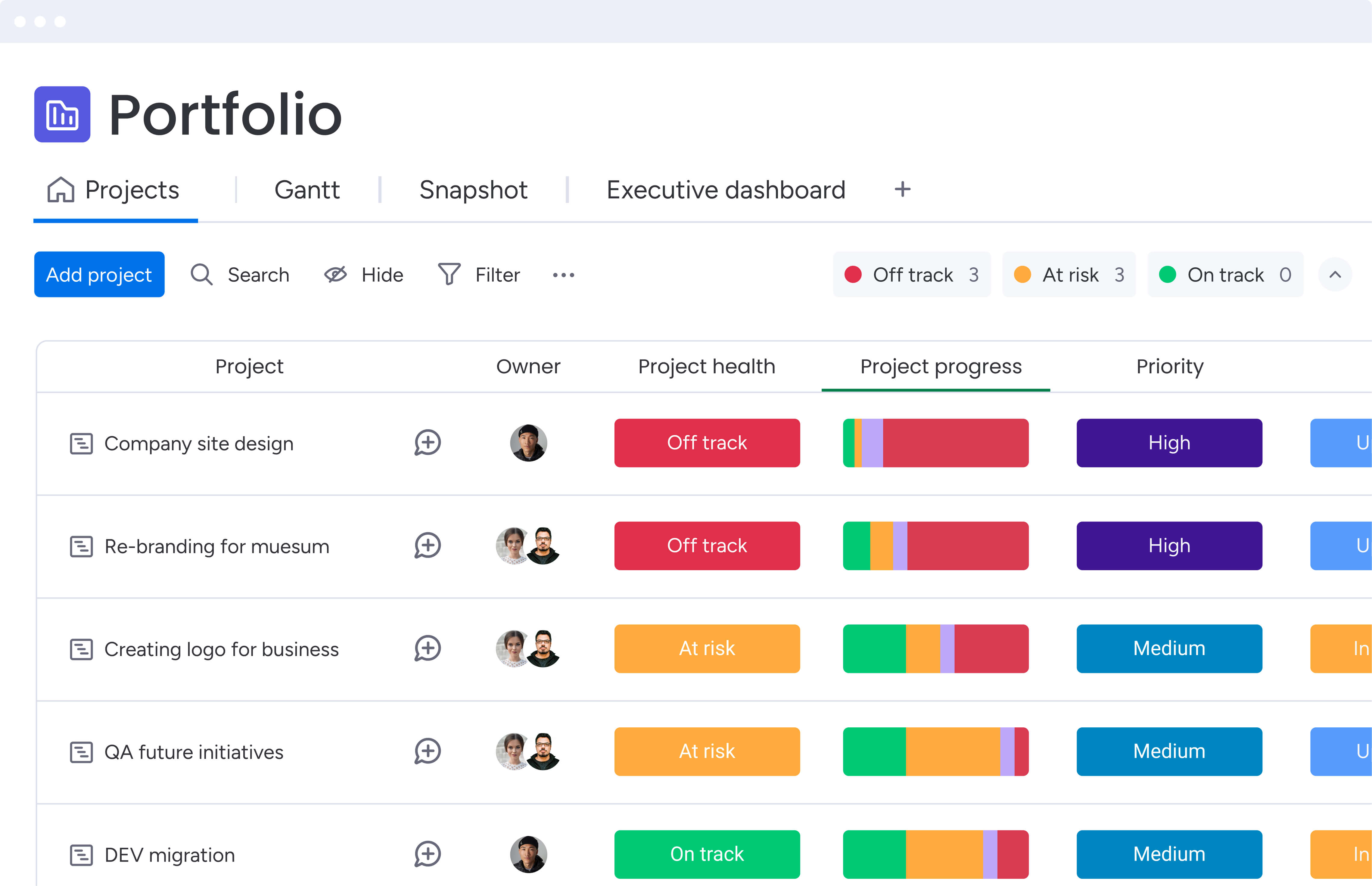
Marketing leaders at retail organizations need more than task tracking — they need a platform that unifies execution across complex, multi-channel operations. When you’re managing 100+ person teams across creative, campaigns, merchandising, and events, disconnected workflows create costly delays and missed opportunities.
Here’s the reality in most retail marketing departments: your creative team lives in Adobe, your campaign managers live in spreadsheets, and your store ops team uses something else entirely. The result? Duplicate work, constant confusion about who owns what, and no clear picture of what’s actually happening when deadlines approach.
Intuitive platforms such as monday work management, a Leader in the 2024 Gartner® Magic Quadrant™ for Marketing Work Management, unify creative, commerce, and operations in one digital workspace. For marketing leaders managing seasonal pushes, product drops, and omnichannel campaigns, this unlocks three game-changing capabilities:
- Leadership visibility: AI-powered portfolio insights that surface risks and opportunities across hundreds of campaigns.
- Standardization and alignment: managed templates and cross-project dependencies that ensure consistency while maintaining flexibility.
- Resource optimization: capacity planning tools that prevent team overload during Black Friday, holiday seasons, and other peak periods.
Essential features for retail marketing operations
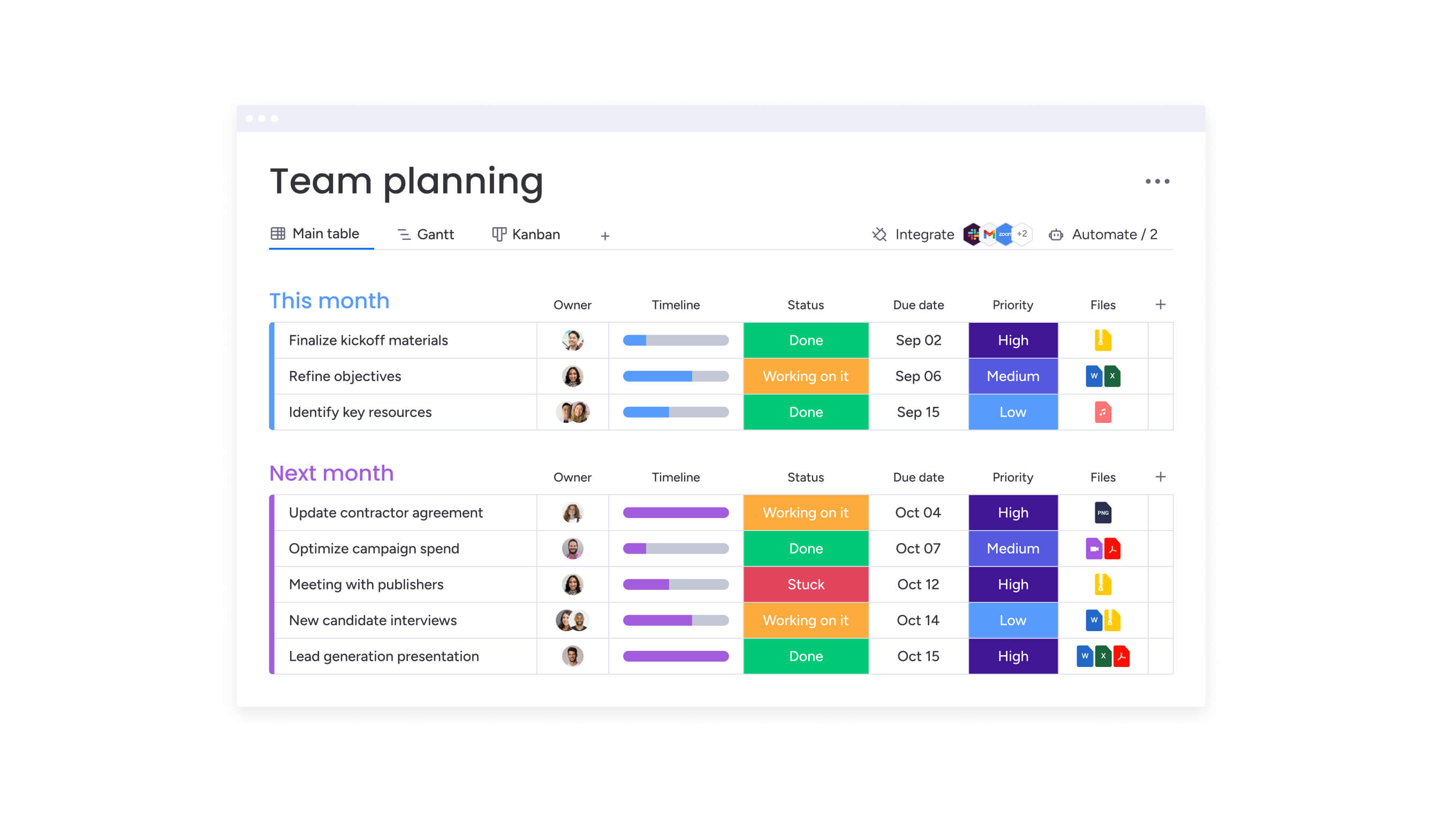
Retail marketing teams require specialized capabilities to manage the complexity of multi-channel campaigns, seasonal demands, and cross-functional coordination. The following platform features form the foundation of effective retail marketing operations, enabling teams to execute at scale while maintaining visibility and control.
Campaign management with unified visibility
Managing integrated campaigns across stores, e-commerce, and digital channels requires more than spreadsheets and status meetings. Retail marketing teams need real-time visibility into every campaign element — from creative production to store execution.
The campaign management capabilities in monday work management provide several key advantages for retail organizations:
- Unified campaign calendars: view all marketing activities across channels, regions, and teams in one place.
- Cross-functional timelines: connect dependencies between creative, merchandising, and operations teams.
- Performance tracking: monitor campaign metrics and ROI from a single, unified view.
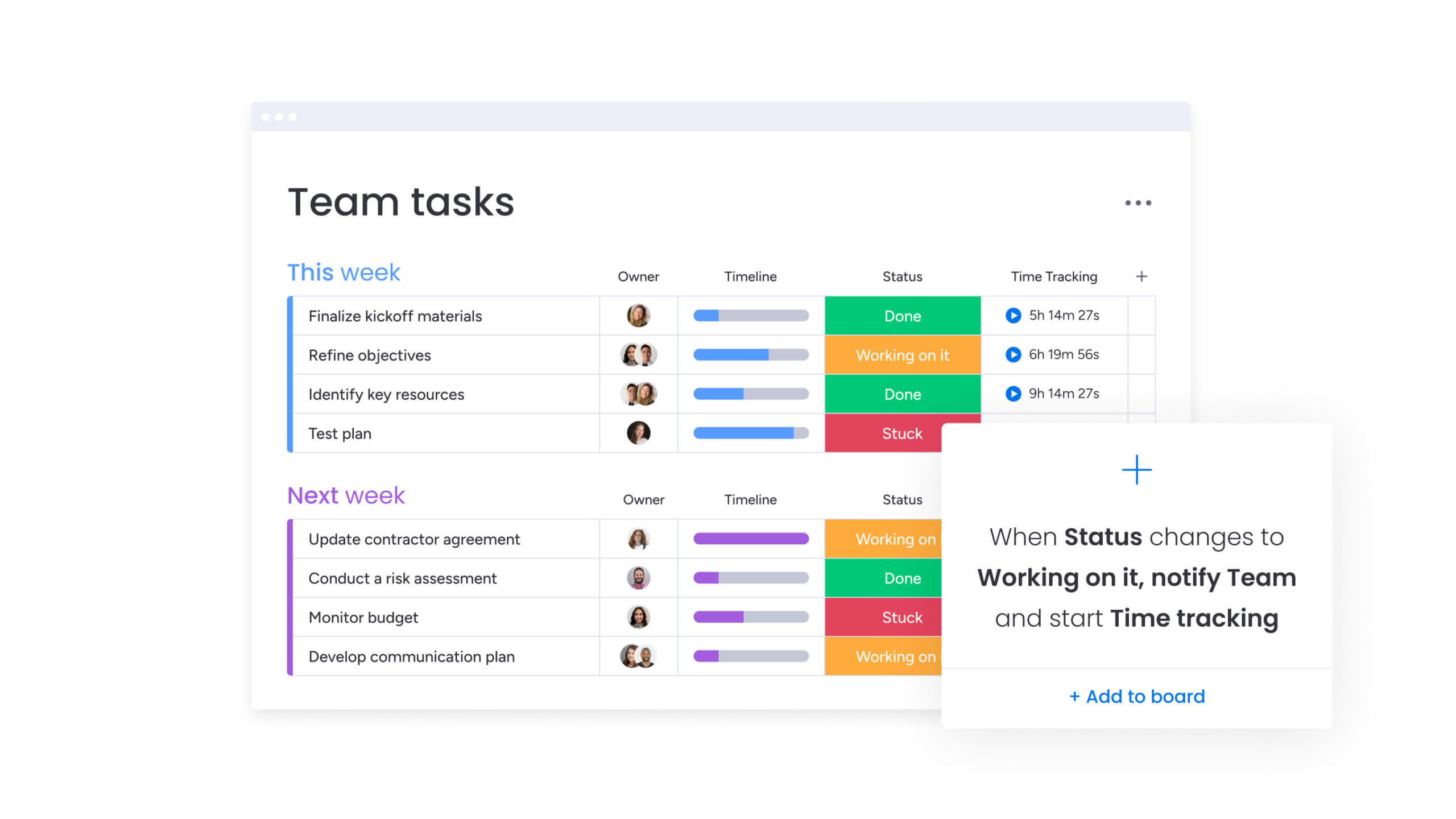
- Automated workflows: trigger notifications and task assignments based on campaign milestones.
FARFETCH leveraged these capabilities to transform their global marketing operations, utilizing the a calendar to connect commercial teams, fashion teams, and editorial. The result was 3,500 hours saved monthly and 6x ROI through centralized campaign management.
Resource management for peak retail seasons
Retail marketing operates on intense seasonal cycles. Black Friday, back-to-school, and holiday campaigns create resource crunches that can overwhelm teams without marketing planning software.
The platform’s resource management features address these challenges through:
- Real-time workload visibility: see exactly who’s working on what across all teams and projects.
- Skills-based allocation: match tasks to team members based on expertise, not just availability.
- Capacity forecasting: anticipate resource needs weeks in advance to ensure smooth execution and proactive planning.
- Cross-team balancing: shift resources between teams to address urgent priorities.
Genpact’s marketing team uses these capabilities to manage 24 large-scale campaigns simultaneously. The impact: 40% improvement in cross-team collaboration and complete elimination of spreadsheet-based planning.
Automation that scales marketing operations
Manual processes drain time from strategic work. Retail marketing teams spend hours on approvals, status updates, and routine coordination that automation can handle instantly.
monday work management automates critical workflows including:
- Creative request intake: standardized forms capture requirements and route to creative teams automatically.
- Approval routing: multi-stage approvals flow through stakeholders without manual handoffs.
- Status notifications: teams receive updates when dependencies are complete or deadlines approach.
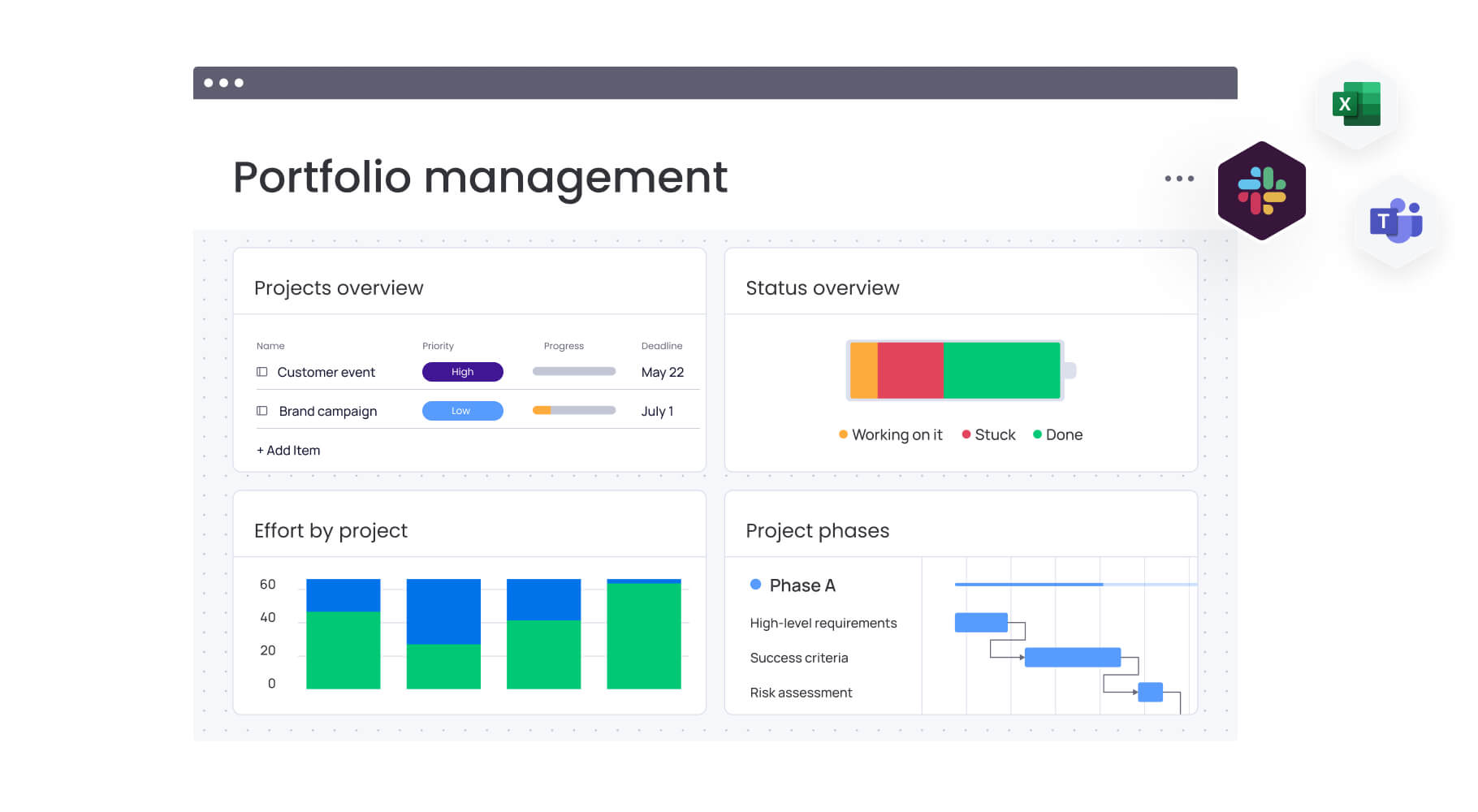
- Report generation: dashboards update automatically with real-time campaign performance data.
Officeworks transformed their product marketing workflows through automation: the team eliminated 635+ spreadsheets and reduced emails by 10,000+ annually.
Real-time dashboards for data-driven decisions
Marketing leaders need instant visibility into campaign performance, team productivity, and resource utilization. Static reports and weekly updates can’t keep pace with retail’s speed.
The platform’s dashboard capabilities deliver:
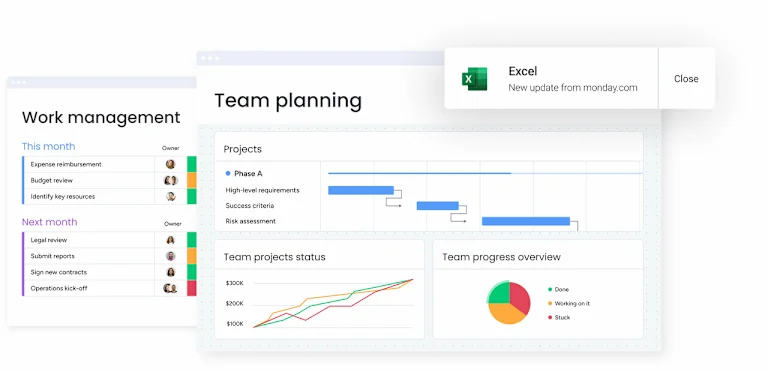
- Portfolio-level insights: view performance across all campaigns with drill-down capabilities.
- AI-powered alerts: receive notifications when campaigns are at risk or metrics shift.
- Custom reporting: build dashboards specific to your KPIs and stakeholder needs.
- Mobile accessibility: check campaign status and make decisions from anywhere.
Country Road Group relies on these dashboards for managing 150 projects across fashion brands. The enhanced visibility enabled 25% efficiency gains while empowering teams to focus on strategic goals rather than data collection.
Strategic alignment through OKR tracking
Connecting daily marketing work to business objectives ensures every campaign drives measurable impact. Retail marketing teams need to demonstrate how their efforts contribute to revenue, market share, and customer acquisition goals.
monday work management enables strategic alignment through:
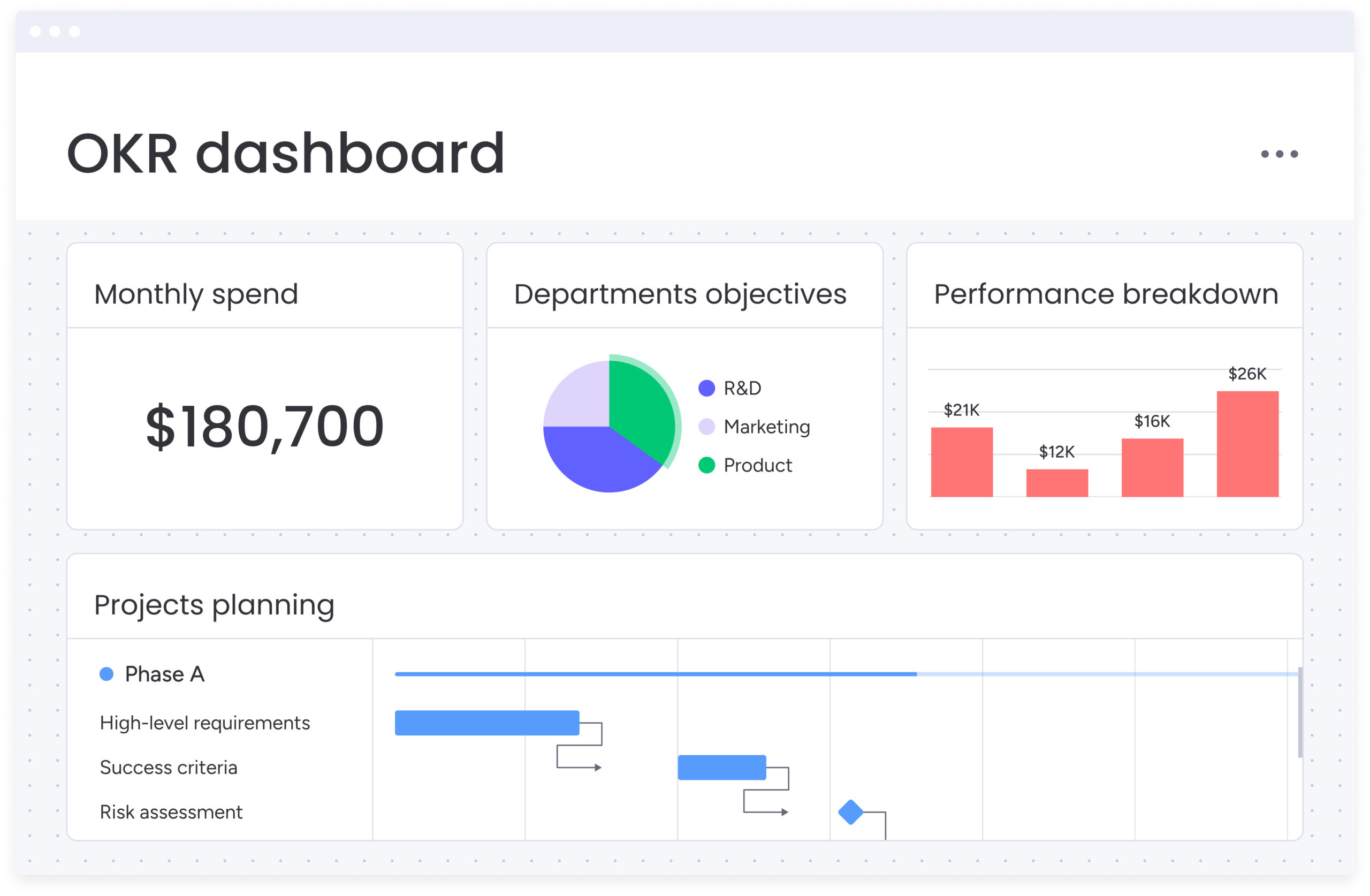
- Goal hierarchies: link campaigns to department and company-level OKRs.
- Progress tracking: monitor advancement toward objectives in real time.
- Impact measurement: connect marketing metrics to business outcomes.
- Executive reporting: generate leadership-ready summaries of marketing’s strategic contribution.
Creative production workflows
Creative teams in retail face constant pressure to produce assets for multiple channels, seasonal campaigns, and last-minute promotions. Disconnected briefs, unclear feedback, and manual approvals slow production when speed matters most.
The platform streamlines creative workflows with:
- Automated request processing: intake forms capture requirements and route to creative teams instantly.
- Centralized feedback: all stakeholders provide input in one location with version control.
- Approval acceleration: multi-stage reviews flow automatically through required approvers.
- Asset management: track creative files from concept through final delivery.
FARFETCH formalized their creative brief process using these capabilities. Previously, campaign managers couldn’t see where requests stood in the queue. Now, the workflow provides complete visibility into status and turnaround times, enabling realistic stakeholder expectations and eliminating bottlenecks.
Integration with retail technology
Your marketing team doesn’t exist on an island. When your latest promotion goes live, it needs to talk to your POS systems, sync with inventory levels, and pull from customer data — without someone manually connecting those dots.
monday work management provides comprehensive integration through:
- 200+ native connectors: link with Salesforce, Adobe Creative Cloud, Shopify, and other retail platforms.
- Open API: build custom integrations with proprietary systems.
- Two-way data sync: keep information current across all connected platforms.
- Automated data flows: eliminate manual data entry between systems.
Benefits for heads of marketing in retail
When you get this right, everything changes. Teams save hundreds of hours, campaigns hit the market faster, and your marketing dollars work harder. Best of all, these wins stack on top of each other, giving you an edge your competitors can’t easily match.
Time savings through intelligent automation
Retail marketing teams reclaim thousands of hours by eliminating manual coordination. The impact is immediate and measurable across organizations:
- VML: saves 7,000 hours per account monthly through automated workflows.
- FARFETCH: saves 3,500 hours per month by centralizing campaign management.
- Officeworks: eliminated 635+ spreadsheets and reduced email volume by 10,000+ messages annually.
These time savings come from automating repetitive tasks like status updates, approval routing, and report generation. The project coordinator managing Officeworks’ back-to-school promotion reclaims a full day each week, redirecting that time from manual administration to high-value strategic activities. T
Teams can also redirect this recovered time toward strategic planning, creative development, and campaign optimization.
Measurable ROI and cost efficiency
The financial impact extends beyond time savings. FARFETCH achieved 6x ROI and saves $118K monthly through operational improvements. The Total Economic Impact™ Forrester study shows organizations achieve payback in less than four months.
Marketing leaders gain real-time visibility into campaign ROI, customer acquisition costs, and budget adherence. This data-driven approach enables smarter resource allocation decisions that maximize marketing spend effectiveness. Teams identify underperforming campaigns early and reallocate budget to higher-impact initiatives.
Enhanced team productivity
Marketing teams achieve dramatically higher output when workflows are optimized:
- Canva: increased creative production by 3x.
- VML: delivers campaigns 2x faster.
- Genpact: improved cross-team collaboration by 40% while reducing email exchanges by 25%.
Country Road Group manages 150 projects with 25% greater efficiency through streamlined workflows. The combination of automation, clear ownership, and real-time visibility eliminates the friction that slows teams down. Marketing professionals spend less time in status meetings and more time on work that drives results.
Complete visibility across operations
Heads of marketing gain unprecedented insight into campaign performance, team capacity, and project health. Live dashboards surface critical metrics including:
- Campaign volume and performance trends.
- Team productivity and resource utilization.
- Project health and risk indicators.
- Budget adherence and ROI tracking.
This visibility enables proactive management rather than reactive firefighting. Leaders spot capacity constraints before they impact deadlines. They identify at-risk campaigns early enough to course-correct. They can confidently report marketing’s impact to executive leadership with data-backed insights.
Optimized resource utilization
The platform prevents the burnout and misalignment that plague retail marketing teams during peak seasons. Marketing leaders see exactly who’s working on what, allowing them to balance workloads before teams become overwhelmed.
Resource planning capabilities are particularly valuable during Black Friday, holiday campaigns, and product launches when demand spikes. Teams can anticipate capacity needs, bring in additional support proactively, and ensure the right people work on the right priorities.
Accelerated campaign delivery
Retail marketing moves fast, and delays mean missed opportunities. VML’s 2x faster campaign delivery demonstrates what’s possible when workflows are optimized. Teams track time-to-launch metrics and continuously improve their processes.
Standardized workflows, automated handoffs, and clear dependencies ensure campaigns launch on schedule. The ability to manage complex, multi-channel campaigns without last-minute surprises gives retail marketers the confidence to commit to aggressive timelines.
How to implement marketing project management software
Nailing your implementation means balancing quick victories with long-term vision. Follow these six steps to get your team seeing results fast — without falling into the traps that derail most rollouts.
Step 1: centralize your marketing initiatives
Start by migrating campaigns, projects, and workflows from scattered tools into one unified workspace. Create dedicated boards for seasonal campaigns, product launches, store events, and digital initiatives. Import existing project data from spreadsheets and legacy systems to establish your baseline.
This centralization immediately eliminates version control issues and gives everyone visibility into active work. Teams stop asking “where’s the latest file?” and start collaborating in real time. Set up your workspace structure to mirror how your marketing organization actually operates — by channel, region, or campaign type.
Step 2: map and standardize workflows
Document how work currently flows from brief to delivery across your marketing teams. Identify handoff points between creative, campaigns, merchandising, and operations. Look for bottlenecks, duplicated efforts, and unclear ownership that slow execution.
Build workflow templates for recurring campaign types like seasonal promotions, product launches, and store events. Define clear stages, owners, and approval points. These templates ensure consistency while still allowing flexibility for unique requirements. Teams know exactly what happens next without reinventing the process each time.
Step 3: configure resource management
Set up your team directory with all marketing personnel, including their roles, skills, and standard availability. Include contractors and agency partners who contribute to campaigns. This becomes your single source of truth for capacity planning.
Establish workload views showing real-time capacity across teams. Set thresholds for when individuals or teams approach overload. This visibility helps you make informed decisions about task assignments and identify when you need additional resources before deadlines are at risk.
Step 4: implement automation workflows
Start with high-impact automation opportunities that save the most time. Common starting points include creative request intake, approval routing, status notifications, and deadline reminders. Build automation rules that trigger based on status changes, dates, or form submissions.
For example, when a creative brief is submitted, automation can assign it to the right team, set due dates based on complexity, and notify stakeholders. When work is ready for review, it automatically routes to approvers in sequence. These automations eliminate hours of manual coordination weekly.
Step 5: build performance dashboards
Create executive dashboards tracking your most critical metrics: campaign ROI, project delivery rates, team productivity, and resource utilization. Configure different views for various stakeholders — detailed operational metrics for managers, high-level KPIs for leadership.
Set up automated reporting that delivers insights on schedule. Weekly team performance summaries, monthly campaign reports, and quarterly business reviews become effortless. AI-powered alerts flag issues immediately so you can address problems before they escalate.
Step 6: connect to strategic objectives
Link your marketing work to company-level goals and OKRs. Map campaigns to revenue targets, market share objectives, or customer acquisition goals. This connection ensures every project contributes to strategic priorities, not just tactical execution.
Track progress in real time, showing how marketing initiatives advance business objectives. This alignment helps you demonstrate marketing’s value to leadership and make data-driven decisions about where to focus resources for maximum impact.
Comparison: monday work management vs other platforms
When weight up different marketing project management software, retail teams need platforms that handle complex, multi-channel operations at scale.
Here’s how some of the leading solutions on the market today compare:
| Feature | monday work management | Wrike | Asana |
|---|---|---|---|
| Enterprise team support | 100+ users with unlimited boards | 25 user maximum on team tier | Unlimited users on paid plans |
| Resource & workload management | Built-in workload view with capacity planning | Available in business tier ($24.80/user/month) | Available in advanced tier ($24.99/user/month) |
| Marketing-specific templates | Campaign management, content calendar, creative requests | Marketing calendars, request forms | Portfolio management, goal tracking |
| Automation capabilities | Included in professional tier ($9/user/month) | Included in business tier | Included in advanced tier |
| Real-time dashboards | Customizable dashboards with portfolio views | Dashboard widgets in higher tiers | Reporting dashboards in advanced tier |
| Cross-functional collaboration | Shared workspaces with customizable permissions | Project sharing with guest access | Portfolio management across departments |
| Implementation time | 2 weeks to 1 month for full adoption | Varies by complexity | 2-4 weeks typical |
| Price per user/month | From $9/user/month (billed annually) | From $10/user/month (billed annually) | From $10.99/user/month (billed annually) |
| G2 rating | 4.7/5 (12K+ reviews) | 4.2/5 | 4.3/5 |
How FARFETCH transformed retail marketing operations
FARFETCH, the global luxury fashion platform, faced mounting complexity managing campaigns across 400 people from 40 different teams. Marketing planning coordinated brand partnerships, customer experiences, and promotional activities requiring support from retention, acquisition, product, and analytics teams.
The challenge was scale
Teams housed everything in countless Google Docs and Sheets across numerous folders. Hours were spent chasing updates and managing last-minute changes. “With our department size and growing initiatives, our existing toolset created siloed teams and processes, leading to tracking, communication, and reporting difficulties,” explains Tati Yanchologo.
The solution: unified platform implementation
FARFETCH implemented monday work management as their centralized platform, starting with a master content calendar housing all key dates and milestones. The team designed workflows with dependencies, automations, and integrations that connected previously disconnected processes.
Automated content production: the marketing planning team created an automated content production process. The content production board connected to the master calendar, so changes automatically reflected across boards and notify relevant teams. This eliminated the confusion of multiple versions and missed updates.
Integrated quality assurance: the CRM team built a sophisticated calendar for email and push notifications using timeline views, status columns, and mirroring capabilities. The team also integrated monday with Slack for quality assurance, automatically triggering messages when content enters review. This approach made the process much more secure and reliable with a lower margin of error.
Remarkable results delivered
The transformation delivered measurable impact:
- 6x ROI: achieved through operational improvements.
- $118K monthly savings: from streamlined processes.
- 3,500 hours saved per month: through automation.
- 100% elimination: of campaign management spreadsheets.
- 25% reduction: in email exchanges through centralized communication.
Completely revolutionize your retail marketing operations today
The world’s most successful retailers rely on monday work management to keep their marketing machine running smoothly. They’ve ditched the fragmented tools that created constant bottlenecks and replaced them with a single platform that shows them exactly what’s happening, automates the tedious stuff, and keeps everyone moving in the same direction — even when managing hundreds of campaigns.
From seasonal promotions to omnichannel campaigns, monday work management gives marketing leaders the infrastructure to manage complexity without chaos. Teams save thousands of hours through automation, achieve higher creative output, and deliver campaigns faster — all while maintaining visibility into what matters most.
With AI that spots problems before they happen, security that keeps your data locked down, and ROI you can actually measure, monday work management has become the go-to platform for retail marketers who refuse to settle for chaos.
Ready to join Officeworks, FARFETCH, and Country Road Group in taking your marketing operations to the next level?
The content in this article is provided for informational purposes only and, to the best of monday.com’s knowledge, the information provided in this article is accurate and up-to-date at the time of publication. That said, monday.com encourages readers to verify all information directly.
Frequently asked questions
How does monday work management handle seasonal retail campaigns?
To handle seasonal retail campaigns, monday work management provides customizable templates, automated workflows, and resource capacity planning designed for high-volume periods. You create reusable templates for Black Friday, holiday promotions, and back-to-school campaigns that include all workflows, dependencies, and approval stages.
Can the platform integrate with retail-specific systems?
Yes, monday work management integrates with retail-specific systems through 200+ native integrations and an open API that enables custom connections. monday work management connects with POS systems, inventory management platforms, e-commerce solutions like Shopify, and merchandising systems to ensure data flows across your entire retail technology stack.
What's the typical implementation timeline for large retail teams?
The typical implementation timeline for large retail marketing teams follows a phased approach that delivers value quickly. The Total Economic Impact™ Forrester study reports less than four months for full payback, indicating rapid deployment and value realization. Most organizations start with a pilot team or specific campaign type, refine workflows based on feedback, then expand to the broader organization.
How does the platform support cross-functional collaboration?
The platform supports cross-functional collaboration by breaking down silos through centralized visibility, shared boards, and automated workflows that connect marketing with merchandising and operations teams. All teams work in a single workspace where they can see campaign timelines, product launch schedules, and store execution plans. You create boards spanning departments, assign work to cross-functional team members, and use automations to notify stakeholders when action is needed.
What security features protect retail customer data?
monday work management provides enterprise-grade security protocols including IP restrictions, two-factor authentication, multiple SSO options, BYOK (Bring Your Own Key), and tenant-level encryption. The platform is built for compliance, privacy, and peace of mind with advanced admin features that let you manage access and permissions with confidence. For retail marketing teams handling customer data, campaign strategies, and competitive information, these security features ensure sensitive data remains protected while maintaining the flexibility needed for external collaboration with agencies and partners.
How does the platform track marketing ROI and performance?
The platform tracks marketing ROI and performance through customizable dashboards that connect data from multiple projects and campaigns in real time. You build executive dashboards displaying campaign ROI, customer acquisition costs, MQL-to-Customer rates, content performance metrics, budget adherence, team productivity, resource utilization, and time-to-launch metrics. AI-powered portfolio insights surface trends and risks across your entire marketing portfolio, while automated reporting delivers these insights to stakeholders on schedule.

 Get started