


Marketing teams at enterprise organizations juggle dozens of campaigns across multiple channels and stakeholders — all while constantly proving ROI to leadership. When you’re coordinating dozens of initiatives across content, creative, acquisition, and operations teams, the platform you choose becomes the foundation for execution. The best marketing project management software doesn’t just organize tasks — it connects strategy to delivery, provides real-time visibility across departments, and scales with your organization’s growth.
Sure, most software has features — but what you really need is a platform built for marketing’s unique demands: teams collaborating across functions, creative workflows that don’t stall, campaign tracking that actually works, and smarter resource allocation. Marketing leaders need visibility into team capacity, campaign performance, and budget allocation while maintaining the flexibility to adapt when priorities shift. The right platform transforms scattered processes into streamlined execution.
Let’s dig into what actually makes marketing project management software work for enterprise teams. We’ll also dive in to some real examples from media organizations that have scaled their operations, and discover how the right platform enables marketing teams to coordinate complex initiatives while maintaining quality.
Key takeaways
Marketing teams at enterprise organizations face a unique challenge: coordinating dozens of campaigns across multiple brands, channels, and regions while maintaining visibility and proving ROI. The right project management software transforms this complexity into efficient, connected execution.
When evaluating platforms for your marketing team, keep in mind these key points:
- Centralized visibility drives marketing success: connect content, creative, acquisition, and operations teams in one platform so everyone sees campaign progress, team capacity, and budget status in real time.
- AI-powered automation scales teams without adding headcount: use intelligent resource allocation and automated workflows to manage 50-100+ campaigns while reducing manual coordination tasks by 40%.
- monday work management transforms enterprise marketing operations: gain end-to-end campaign visibility, workload optimization, and custom dashboards that help media companies manage hundreds of campaigns across multiple brands.
- Integration ecosystems determine long-term platform value: choose platforms that connect seamlessly with your creative tools, analytics systems, and marketing automation to eliminate context switching.
- User adoption directly impacts ROI: prioritize intuitive interfaces and fast time-to-value over complex features — teams achieve 6x ROI when platforms are easy to use and deliver quick wins.
What makes a head of marketing choose monday work management for enterprise media operations?
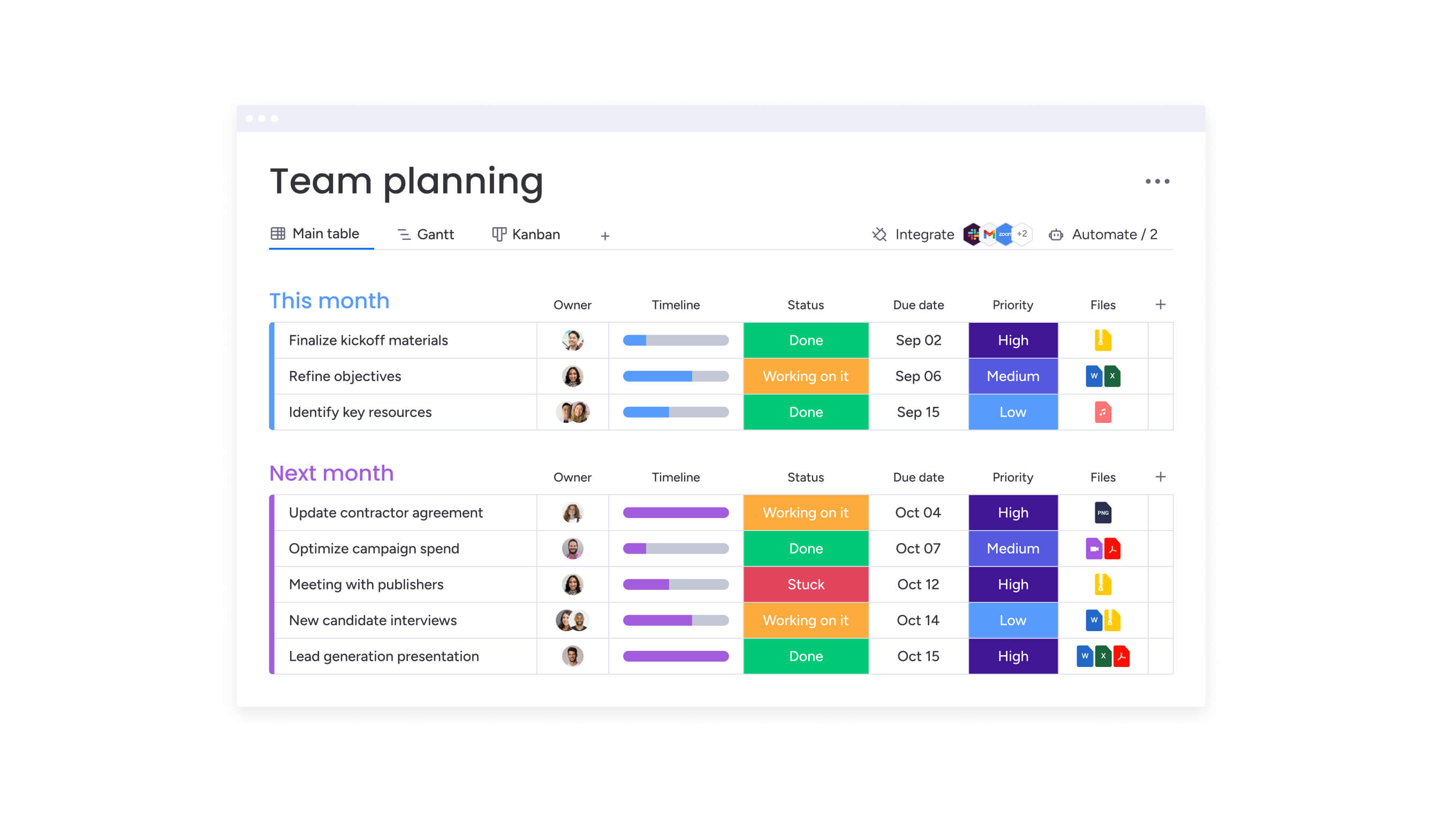
As media marketing teams grow, three problems get worse: teams work in silos, nobody sees the full picture, and processes break down. When you’re managing 50-100+ team members across content, creative, acquisition, events, and operations, these issues create significant operational friction.
Platforms like monday work management cut through this mess by putting all your campaigns, metrics, and team workloads in one place everyone can see. The platform enables operational efficiency through:
- Standardization: consistent processes across departments.
- Automation: reduced manual coordination tasks.
- Templates: scalable workflows that grow with your organization.
For media marketing teams managing multi-brand portfolios and high-volume content production, a marketing planning software solution breaks down silos between creative, editorial, commercial, and operations teams. This transparency enables faster decision-making, reduces duplicative processes, and creates ownership across complex initiatives.
Marketing leaders gain real-time insights into campaign ROI and team productivity through customizable dashboards. OKR tracking ensures marketing strategy aligns with company goals. Most importantly, the platform provides the visibility needed to report impact to executive leadership with confidence.
monday work management top features for enterprise media marketing
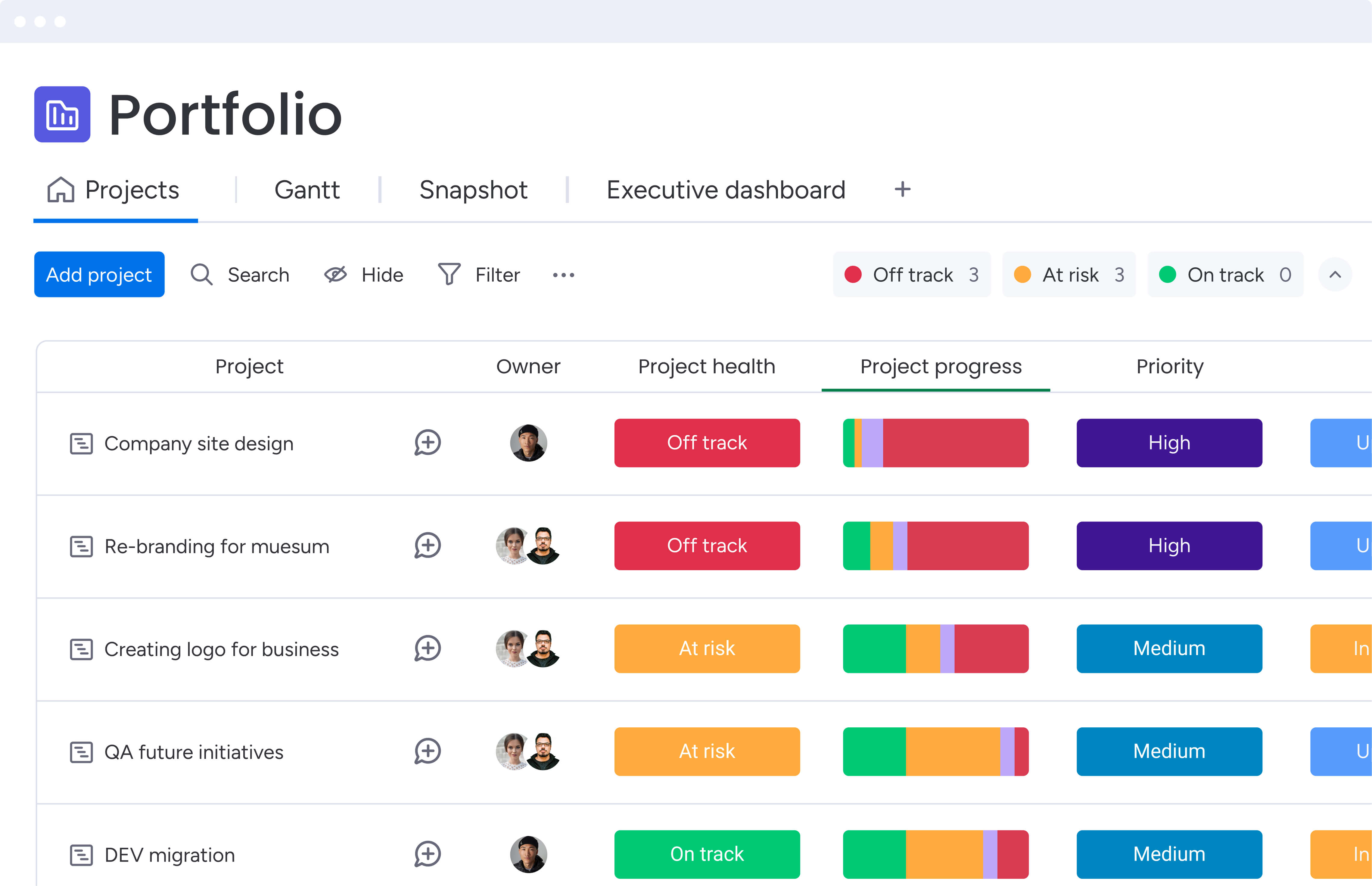
These features tackle the real headaches media marketing teams face when running complex operations — and they all work together as your team grows.
Campaign management with real-time visibility
Seeing your entire campaign from kickoff to results changes how your team plans, executes, and improves every marketing initiative. monday work management provides calendars, timelines, and performance insights that ensure nothing slips through the cracks.
Custom dashboards aggregate data from multiple campaigns, giving instant visibility into:
- Campaign status: track progress across all active initiatives.
- Budget burn: monitor spending against allocated budgets.
- Team progress: see who’s working on what across regions and brands.
When you’re juggling two dozen campaigns across channels, having everything in one view means you’ll finally stop wondering about progress and ROI. You can drill down into specific activations or zoom out to view portfolio-level performance.
All campaign information is also centralized in a visual timeline that shows exactly where every initiative stands.
Workload view for resource optimization
The Workload view provides real-time visibility into team capacity, bandwidth, and allocation across all marketing projects. This feature visualizes:
- Team availability: see who has capacity for additional work.
- Resource distribution: understand how effort spreads across initiatives.
- Skill-based allocation: match tasks to team members based on expertise.
If you’re running a team of 100+ people, this view helps you spot burnout before it happens. You’ll see who’s drowning in work and can shift assignments before you miss deadlines.
Sarah Pharr, AVP Marketing at Genpact, notes: “This project will provide visibility into each team’s workload and ensure timely delivery of our marketing plans without overworking or over-committing our resources.”
Automation center for marketing workflows
The Automation Center lets anyone (no coding required) wipe out the repetitive busywork that eats up time during campaign execution, creative reviews, and team handoffs. Marketing teams can:
- Create automated notifications: alert teams when briefs are submitted.
- Trigger status updates: move creative assets through review stages automatically.
- Assign tasks intelligently: route work based on campaign type or channel.
For media marketing operations managing high volumes of content, automation reduces administrative coordination and accelerates campaign velocity. Automated workflows ensure consistent processes for creative briefs, approval routing, and stakeholder notifications.
Custom dashboards and analytics
Custom dashboards aggregate real-time data from across your marketing portfolio, providing visual insights that drive decision-making. Pre-built widgets and custom reporting capabilities enable you to track:
- Campaign ROI: measure return on marketing investment.
- Customer acquisition costs: monitor CAC across channels.
- Content performance: track volume and engagement metrics.
- Team productivity: assess resource utilization and output.
These dashboards transform complex data into actionable insights you can confidently present to the C-suite. You can monitor budget forecasting accuracy, time-to-launch metrics, and resource utilization in a single view.
Integration hub for marketing tech stack
monday work management connects with over 200 apps, so information moves automatically between your tools without manual copying and pasting. Key integrations include:
- Creative tools: adobe Creative Cloud, Figma, Canva.
- Analytics platforms: google Analytics, marketing attribution tools.
- Communication: slack, Microsoft Teams.
- File storage: google Drive, Dropbox.
The open API enables custom integrations with proprietary systems. For media marketing teams using specialized tools for content management and multi-channel publishing, these connections eliminate context switching.
How a head of marketing in media benefits from monday work management
Teams that switch to monday work management see real results in the metrics that actually matter. Research shows that increasing time in flow from 5% to 20% of the workday could create $60,000 in annual value per knowledge worker, demonstrating the significant impact of optimized workflow management on productivity.
These benefits build as teams scale and workflows become more complex, creating sustainable competitive advantages for media organizations.
Operational efficiency gains
- Time savings and efficiency gains: teams save thousands of hours monthly by eliminating manual status updates and reducing email exchanges. Automated notifications and dependencies keep projects moving without constant coordination. Templates and standardized processes reduce campaign setup time significantly.
- Cost efficiency and ROI: organizations achieve substantial ROI through improved resource utilization and reduced administrative overhead. By preventing over-commitment of resources and identifying bottlenecks early, teams deliver more campaigns without increasing headcount. Optimized budget allocation ensures marketing spend generates maximum impact.
Quality and compliance improvements
- Compliance and brand consistency: centralized workflows with built-in approval processes ensure brand consistency across all marketing channels. Version control and audit trails provide governance for creative assets. Standardized templates enforce best practices across teams and regions, critical for maintaining brand integrity at scale.
- Enhanced team productivity: cross-team collaboration improves dramatically when everyone works from a single source of truth. Asset approval processes become faster and more transparent. Teams can iterate quickly with clear feedback loops and version tracking, resulting in higher-quality deliverables.
Strategic visibility and control
- Strategic visibility and tracking: real-time dashboards provide instant visibility into campaign progress, team workloads, and budget status across the entire marketing portfolio. Leaders can track performance against OKRs, identify risks before they impact delivery, and make data-driven decisions about resource allocation.
Step-by-step guide: transform media marketing operations with monday work management
This step-by-step approach works even for the largest marketing teams. Each phase sets you up for the next, creating lasting change that grows with your business.
Step 1: audit your current marketing workflow challenges
First, map out how your team currently handles campaigns, creative work, and collaboration. Look for the bottlenecks that keep slowing you down:
- Disconnected tools: where information gets lost between systems.
- Visibility gaps: what you can’t see about team capacity or project status.
- Manual processes: repetitive tasks that consume time without adding value.
Map out which teams are involved in each workflow and where handoffs create bottlenecks. This baseline helps you prioritize which processes to transform first.
Step 2: map your team structure and collaboration needs
Define exactly how your content, creative, acquisition, event, and operations teams need to collaborate. Consider:
- Cross-functional dependencies: which teams rely on each other’s outputs.
- Information flow: what data each stakeholder group needs to access.
- Permission requirements: who needs visibility versus editing rights.
Determine the governance structure that maintains control while enabling collaboration. This mapping ensures your platform configuration reflects real-world workflows.
Step 3: design your custom marketing workspace
Start with monday work management’s templates to build your perfect setup:
- Master content calendar: centralize all marketing activities in one view.
- Campaign tracking boards: monitor progress across initiatives.
- Creative request forms: standardize intake processes.
Set up connected boards that link strategic planning to execution. Changes in one area automatically update dependent workflows, maintaining alignment across teams.
Step 4: implement automation and templates
Configure automations for recurring tasks to reduce manual work:
- Status notifications: alert teams when action is needed.
- Approval routing: move work through review stages automatically.
- Deadline reminders: keep projects on track without manual follow-up.
Build standardized templates for common campaign types, creative briefs, and event management. Set up integrations with your marketing tech stack to ensure data flows automatically between systems.
Step 5: roll out with structured adoption plan
Create a phased rollout that builds momentum:
- Start with high-impact use cases: choose processes that deliver quick wins.
- Provide targeted training: offer resources specific to each team’s needs.
- Build champion network: identify power users who can support peers.
Show teams what their work will look like on the platform before full deployment. Leverage both internal champions and monday.com customer success resources to ensure sustained engagement.
Step 6: track performance and optimize
Monitor key metrics to measure success and identify optimization opportunities:
- Adoption metrics: user engagement and feature utilization.
- Workflow efficiency: time-to-launch and cycle times.
- Business outcomes: campaign ROI and team productivity.
Use dashboard analytics to identify which processes deliver the most value. Continuously reassess and improve workflows based on team feedback and changing business requirements.
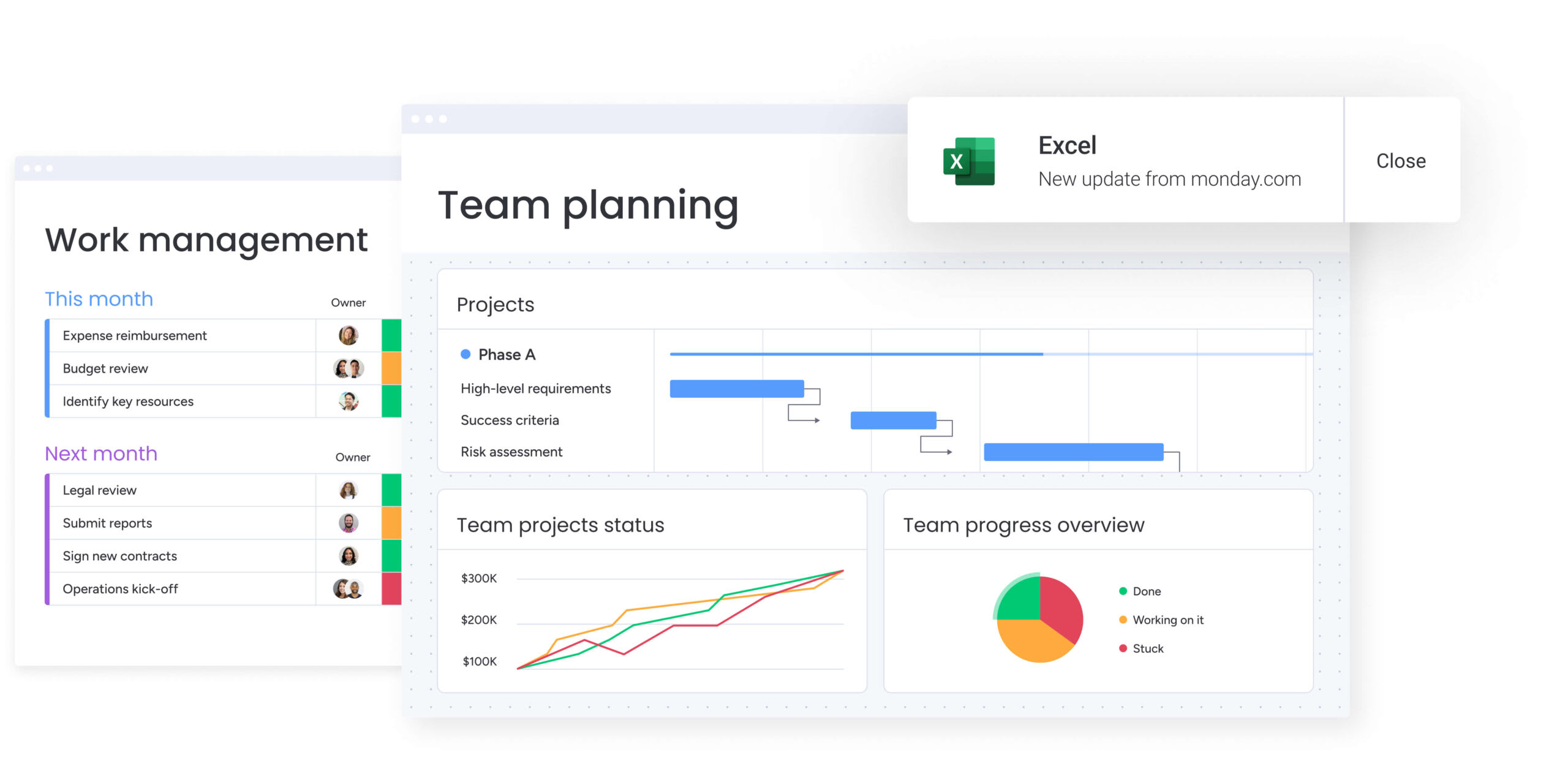
Platform comparison: monday work management vs competing solutions
When choosing your marketing project management software, you need to know how these platforms stack up on the features that actually matter.
This comparison highlights features that matter most for enterprise media marketing teams.
| Feature | monday work management | Asana | Wrike |
|---|---|---|---|
| Campaign management | Customizable boards with retail templates | Basic campaign tracking | Campaign features with limited retail focus |
| Resource planning | Built-in capacity views and workload management | Workload management (Business tier+) | Resource management (Business tier+) |
| Real-time dashboards | Pre-built and custom dashboards with AI alerts | Custom dashboards (Business tier+) | Custom dashboards and reports |
| Automation | 200+ automation recipes, no-code builder | Rules and automation (Premium tier+) | Automation engine (Business tier+) |
| Retail integrations | 200+ native integrations + open API | 200+ integrations | 400+ integrations |
| Creative workflows | Proofing and approval with version control | Proofing (Business tier+) | Proofing and approval workflows |
| Strategic alignment | Native goals feature with OKR tracking | Goals feature (Business tier+) | Goals tracking available |
| Implementation time | Less than 4 months (Forrester study) | Varies by organization | Varies by organization |
| G2 rating | 4.7/5 (12,000+ reviews) | 4.3/5 (9,000+ reviews) | 4.2/5 (3,000+ reviews) |
Case study: how SPH Media transformed their media campaign delivery
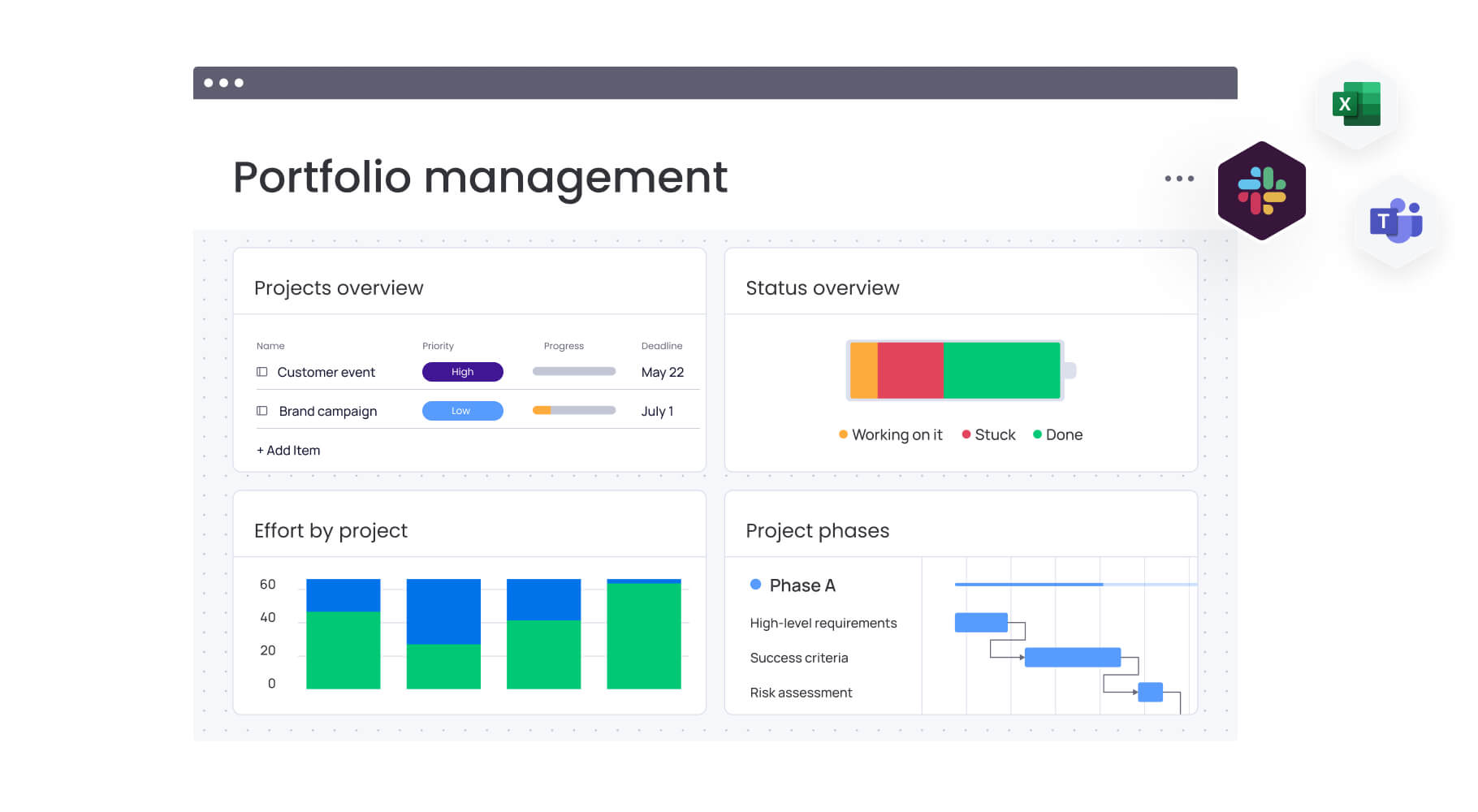
This real-world example demonstrates how a major media organization used monday work management to scale operations while maintaining quality and efficiency across multiple brands and channels.
The challenge
SPH Media’s Content Lab manages advertising services for 20,000+ brands across 40+ media properties. The team produces campaigns across digital, social, print, broadcast, and out-of-home channels.
Managing this volume created a complex operation requiring coordination between creative, content, sales, and ad operations teams. The existing process relied heavily on manual work. As the business expanded, managing campaigns became increasingly unsustainable without restricting growth.
The solution
SPH Media implemented monday work management to create a centralized platform offering both high-level and granular views of every project. The team developed a customized solution that enables stakeholders to understand campaign status at a glance.
Bookings from advertisers automatically synchronize with creative production processes using monday.com’s customizable API. Automated alerts trigger at every project phase, with task reminders as deadlines approach.
The results
The transformation delivered measurable impact across the organization:
- Centralized tracking: hundreds of campaigns managed in one platform.
- Team collaboration: 130+ people working collaboratively across teams.
- Brand reach: 40 brands reaching audiences across Asia.
- Operational efficiency: faster campaign delivery through automated workflows.
Level up your media marketing operations with monday work management
There’s a reason media marketing leaders pick monday work management: it fixes what breaks as you grow — siloed teams, workflow blindspots, and processes that waste time. The platform brings AI-powered insights, real-time dashboards, and automated workflows into one unified workspace where marketing teams already work.
The evidence speaks for itself — organizations achieve 40% improvement in cross-team collaboration and 6x ROI while managing hundreds of campaigns in a single platform. Media companies like SPH Media have transformed operations for 130+ team members across 40 brands, proving the platform scales with enterprise needs.
With monday work management, your marketing team stops putting out fires and starts driving results. Join the media marketing professionals who trust the platform to centralize campaigns, optimize resources, and drive measurable impact across their organizations.
The content in this article is provided for informational purposes only and, to the best of monday.com’s knowledge, the information provided in this article is accurate and up-to-date at the time of publication. That said, monday.com encourages readers to verify all information directly.
Frequently asked questions
How long does it take to implement monday work management for a 100+ person marketing team?
For a 100+ person marketing team, implementing monday work management typically takes two to four weeks to reach meaningful adoption. Most teams see value within the first week by launching a core use case such as campaign planning or content calendars, then expand from there.
What is the typical ROI for enterprise marketing project management platforms?
Organizations using monday work management for marketing operations report 6x ROI. Media companies specifically see hundreds of campaigns tracked in one platform, 40% time savings in production workflows, and 25% reduction in email exchanges. The Total Economic Impact study by Forrester reports a payback period of less than four months.
How does monday work management handle multi-brand management in media companies?
The platform supports multi-brand management through customizable workspaces, boards, and dashboards configured for each brand while maintaining portfolio-level visibility. You can create brand-specific templates, workflows, and approval processes while using connected boards to track cross-brand initiatives. Permission controls ensure brand teams access only relevant information while marketing leadership maintains oversight.
Can monday work management integrate with digital asset management systems?
Yes, monday work management integrates with leading DAM systems and creative tools through 200+ native integrations and an open API. You can connect platforms like Adobe Creative Cloud, Figma, Google Drive, and Dropbox to access creative assets directly within project boards. Custom API integrations support connections with proprietary DAM systems.
What security features are essential for media companies using project management software?
monday work management provides enterprise-grade security including SOC two Type 2, ISO 27001, GDPR, and HIPAA compliance. Security features include IP restrictions, two-factor authentication, multiple SSO options, and tenant-level encryption. Advanced admin controls enable you to manage access permissions, audit logs, and data residency requirements.
How much training is required for marketing teams to adopt monday work management?
Training requirements are minimal due to the platform's intuitive interface. Most teams become comfortable within two weeks to one month. The platform provides interactive product tours, video tutorials, and template libraries. For enterprise implementations, dedicated customer success managers provide customized training sessions tailored to your team's needs.

 Get started