


Enterprise marketing teams often struggle with data silos and operational friction caused by managing hundreds of projects across dozens of disconnected applications. Because this complexity slows execution when speed is critical, leaders need a way to consolidate fragmented workflows and provide executives with real-time ROI visibility.
By pulling campaign management and performance tracking into a single home base, the best marketing ops software replaces tool-juggling with centralized orchestration. Consequently, teams can better manage capacity and budget, allowing them to scale cross-functional initiatives while demonstrating measurable impact.
Let’s dive into what actually separates enterprise-grade marketing ops platforms from the basic applications you’ve outgrown. We’ll examine key capabilities like AI-powered risk detection and real-time dashboards, thereby helping large teams achieve the unified visibility and streamlined execution they need.
Key takeaways
Enterprise teams thrive with solid marketing ops software, especially when juggling complex campaigns across multiple departments. The right platform turns chaos into a structured system, giving marketing leaders the visibility they need to prove ROI and drive business growth.
- Unify scattered marketing workflows into one platform: stop juggling 15-20 different tools and connect campaign planning, execution, and reporting in a single workspace that gives everyone real-time visibility.
- Focus on enterprise-ready features that scale: look for platforms with campaign orchestration, resource management, creative workflows, and executive dashboards — not just basic project tracking.
- Let AI handle routine coordination while you drive strategy: monday work management’s Digital Workers monitor campaigns, flag risks, and suggest optimizations so your team spends time on high-impact work instead of administrative tasks.
- Implement in phases to ensure adoption success: start with one high-impact team, automate core workflows, then scale across departments while maintaining governance and consistency.
- Measure what matters for executive buy-in: track time to market, resource utilization, and campaign ROI to demonstrate concrete business impact and justify continued investment in operations technology.
What does a head of marketing operations do?
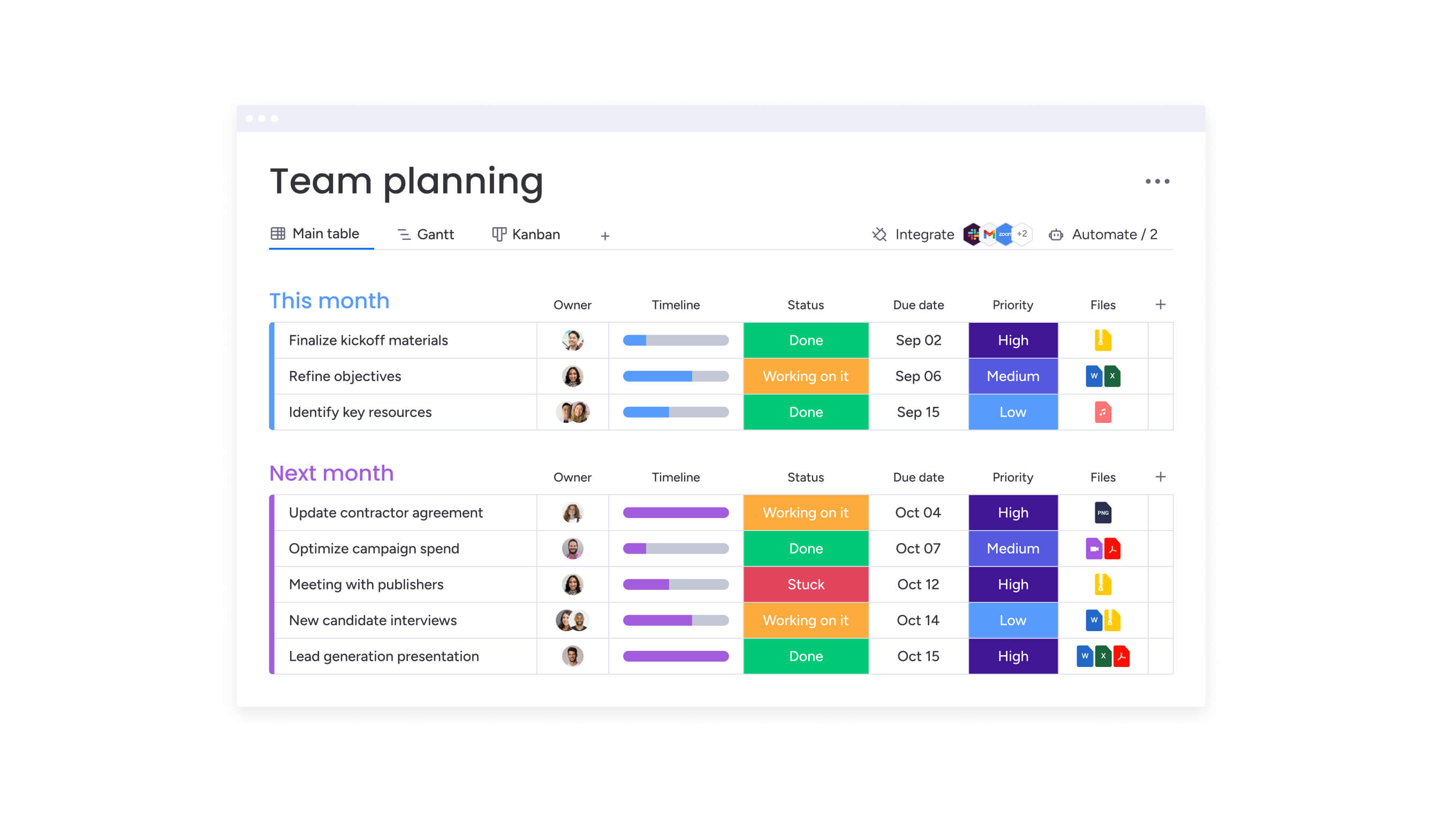
A head of marketing operations builds the engine that powers your marketing machine by owning the processes, tech stack, and operational framework required for results. Ultimately, this role bridges the gap between strategy and execution, ensuring teams have the systems and visibility needed to deliver measurable outcomes.
The position requires both strategic thinking and tactical expertise. Heads of marketing operations are responsible for five core areas that directly impact organizational performance:
- Process standardization: creating repeatable workflows that scale across teams and regions.
- Technology integration: managing the martech stack and ensuring seamless data flow.
- Performance measurement: establishing KPIs and reporting frameworks for executive visibility.
- Resource optimization: balancing team capacity and preventing burnout.
- Cross-functional alignment: connecting marketing with sales, product, and finance teams.
In organizations with 100+ marketing professionals, this role becomes critical for maintaining operational efficiency. Strong marketing operations leadership empowers teams to break down silos, eliminate duplicate efforts, and effectively demonstrate marketing’s contribution to business outcomes.
What software do marketing managers use?
Marketing teams typically juggle multiple point solutions across different functions, creating operational complexity that slows execution and reduces effectiveness. The average enterprise marketing department uses 15-20 different tools, creating fragmentation and data silos that slow execution.
Common tool categories include:
- Email and marketing automation: platforms for campaign execution and lead nurturing.
- Analytics and reporting: tools for tracking performance and attribution.
- Creative and design: software for content creation and asset management.
- Social media management: platforms for scheduling and monitoring social channels.
- Project management: systems for tracking tasks and deadlines.
Since this fragmented approach wastes hours on manual data entry and platform jumping, it inherently hinders your team’s productivity. However, marketing operations software solves this by providing a unified platform that connects all activities, thereby allowing your team to focus on driving campaigns forward instead of managing spreadsheets.
Moving from a dozen disconnected tools to one integrated platform fundamentally changes how your team works. They’ll spend their time driving campaigns forward instead of performing manual data entry in spreadsheets.
Essential features for enterprise marketing operations
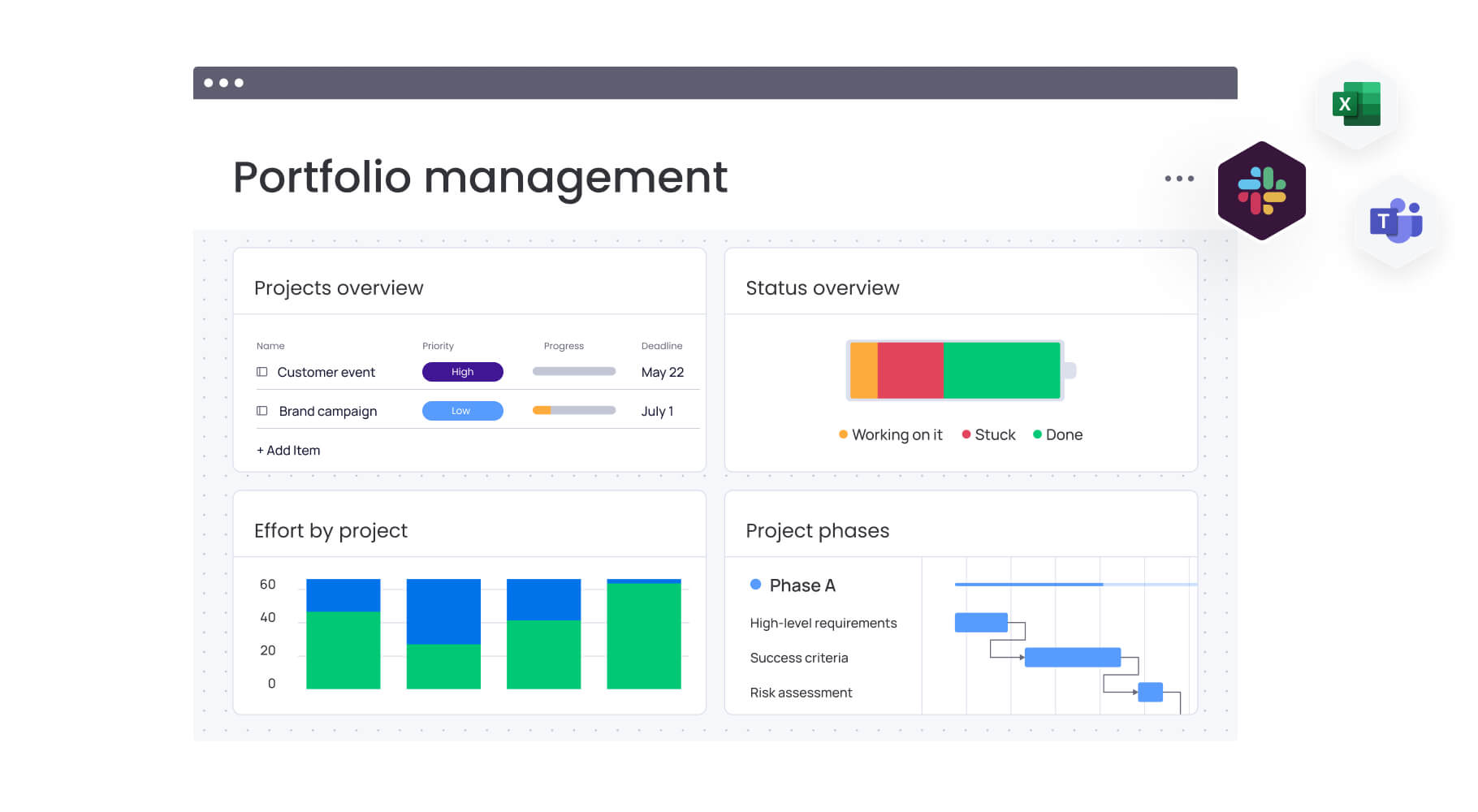
Enterprise-level complexity requires marketing platforms with specialized, scalable capabilities. While simple tools might track a to-do list, enterprise-grade solutions tackle your biggest headaches: siloed teams, clunky processes, and a frustrating lack of visibility into concurrent projects. Understanding these requirements helps marketing leaders select platforms that scale with their organization’s complexity.
Feature 1: campaign management and planning
Enterprise marketing teams need more than task tracking — they need comprehensive campaign orchestration with marketing planning software. Look for platforms that provide:
- Unified campaign views: see all campaigns across teams and regions in one place.
- Timeline and calendar visualization: track campaign schedules and identify conflicts.
- Performance tracking: monitor ROI, CAC, and conversion metrics in real time.
- Budget management: track spend and forecast accuracy across campaigns.
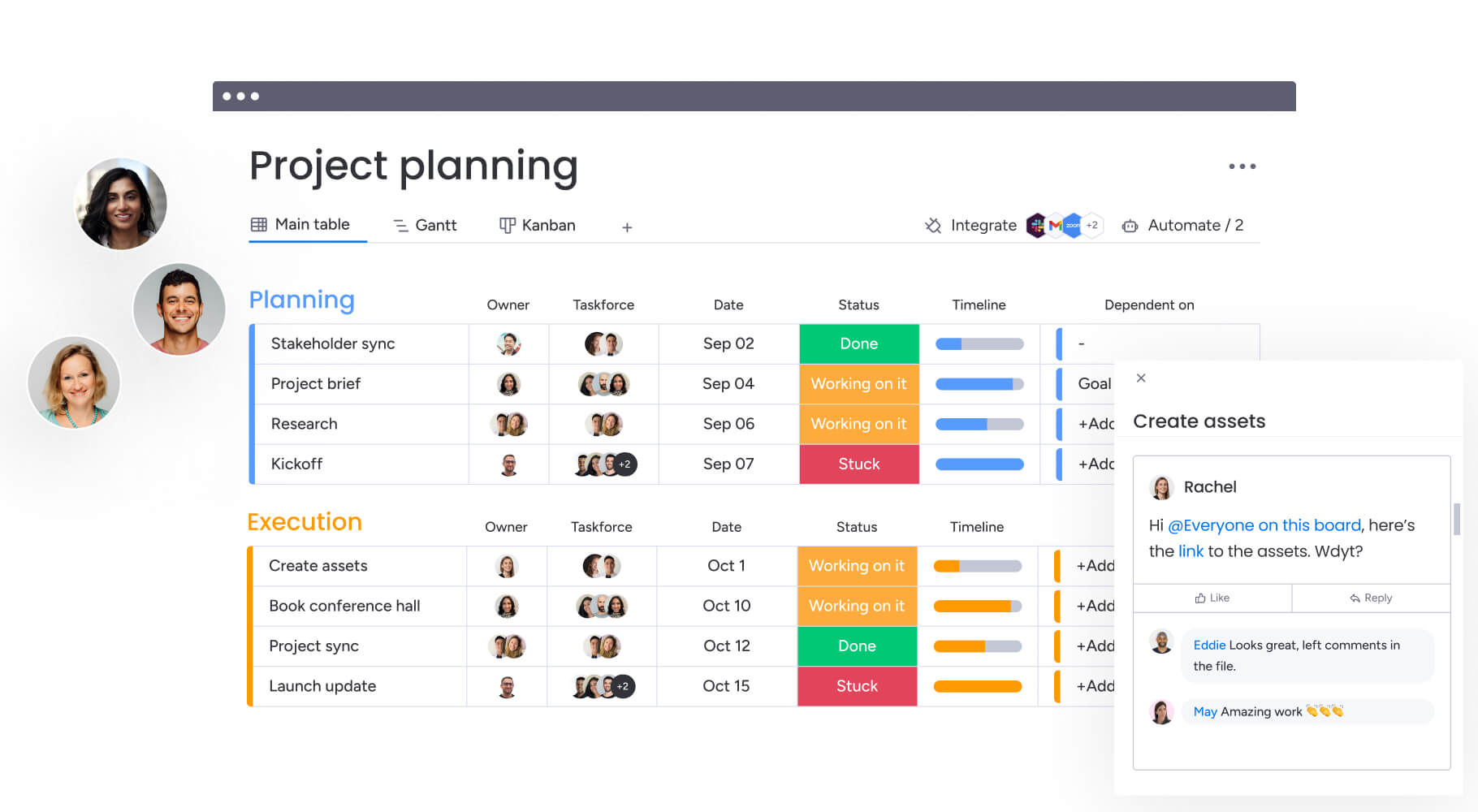
Solutions like monday work management solve these problems with campaign boards you can tailor to your needs, insightful timeline views, and dashboards that show you what’s happening right now — connecting your plans to actual execution. Teams gain centralized visibility into all campaigns, eliminating the scattered impact that comes from siloed work.
Feature 2: resource management and capacity planning
Poor resource utilization leads to burnout, missed deadlines, and misaligned priorities. Essential resource management features include:
- Workload visualization: see team capacity across multiple projects.
- Skills-based allocation: match tasks to team members based on expertise.
- Capacity forecasting: predict future resource needs based on pipeline.
- Real-time adjustments: rebalance workloads as priorities shift.
The platform’s Workload View and resource planning capabilities help marketing leaders optimize talent allocation. Teams can see who’s overloaded, who has capacity, and make adjustments before burnout occurs.
Feature 3: marketing operations and process governance
Standardization without rigidity is crucial for scaling marketing operations. Key governance features include:
- Template libraries: standardize workflows while allowing customization.
- Approval workflows: automate review and approval processes.
- Process documentation: maintain clear SOPs and guidelines.
- Cross-team collaboration: enable seamless handoffs between departments.
Modern platforms like monday work management enable this through managed templates, custom automations, and collaborative workflows. Marketing operations teams can drive cross-team collaboration through connected workflows and centralized planning, ensuring marketing runs as one unified function.
Feature 4: creative production workflows
Creative teams need streamlined intake, production, and approval processes. Critical features include:
- Request management: standardize creative briefs and intake forms.
- Asset management: organize and track creative assets.
- Review and approval: automate feedback cycles and approvals.
- Version control: maintain clear versioning and revision history.
The platform accelerates creative workflows through automated request processes that connect teams to the right information in real time. This eliminates duplicative processes and provides clarity on ownership throughout the creative production pipeline.
Feature 5: dashboards and real-time reporting
Executive visibility requires more than weekly status reports. Enterprise platforms should provide:
- Customizable dashboards: build views tailored to different stakeholders.
- Real-time data: access live performance metrics without manual updates.
- AI-powered insights: surface risks and opportunities automatically.
- Executive reporting: generate board-ready reports instantly.
Dashboard capabilities provide full visibility across campaigns with AI-powered alerts that help teams catch risks early, respond quickly, and keep execution on track. Marketing leaders gain the centralized visibility they need to report impact to executive leadership with confidence.
Try monday work managementHow AI transforms marketing operations at scale
For modern marketing teams, AI is no longer a nice-to-have; it’s a core component of high-performing operations. The best platforms now use it to spot problems, suggest fixes, and help you make smarter decisions faster. The most impactful applications go beyond basic automation to provide intelligent insights and proactive recommendations.
AI capability 1: risk detection and mitigation
Leading marketing operations platforms use AI to identify potential campaign delays, budget overruns, and resource conflicts before they impact delivery. AI analyzes patterns across projects to flag risks early, giving teams time to course-correct.
For instance, monday work management’s AI-powered risk insights scan updates across portfolios to surface risks with urgency levels, owners, and mitigation options. This proactive approach helps marketing leaders maintain control even as complexity grows.
AI capability 2: intelligent resource allocation
AI can analyze team capacity, skills, and past performance to recommend optimal task assignments. This ensures the right people work on the right projects at the right time, improving both efficiency and quality.
The platform’s AI capabilities help assign the right people to the right projects based on availability, skills, and workload. This intelligent allocation prevents burnout while maximizing team productivity.
AI capability 3: automated workflow optimization
AI identifies bottlenecks in workflows and suggests process improvements. By analyzing how work actually flows through the organization, AI can recommend automations, template updates, and process changes that drive efficiency.
Digital Workers in monday work management operate in the background, monitoring workloads, flagging issues, and suggesting reassignments based on real-time data. These AI assistants help teams focus on strategic work rather than administrative coordination.
Comparison: top marketing operations platforms
Selecting the right marketing operations platform requires understanding how different solutions address enterprise needs. This comparison highlights the strengths and limitations of leading platforms to help marketing leaders make informed decisions.
| Platform | Best for | Key strength | Primary limitation |
|---|---|---|---|
| monday work management | Enterprise teams (100+ people) | Unified visibility with AI-powered insights | Requires initial setup investment |
| Salesforce Marketing Cloud | Large enterprises with Salesforce CRM | Deep CRM integration | Complex implementation (six to twelve months) |
| HubSpot Marketing Hub | Growing companies | All-in-one marketing suite | Limited customization for complex workflows |
| Adobe Workfront | creative-heavy teams | Strong creative workflow tools | Steep learning curve |
| Asana | Small to mid-size teams | User-friendly interface | Limited enterprise governance features |
Each platform has strengths, but monday work management’s combination of flexibility, enterprise governance, and AI capabilities makes it particularly suited for large marketing organizations seeking to unify fragmented workflows while maintaining agility.
Try monday work managementImplementation strategies for marketing operations software
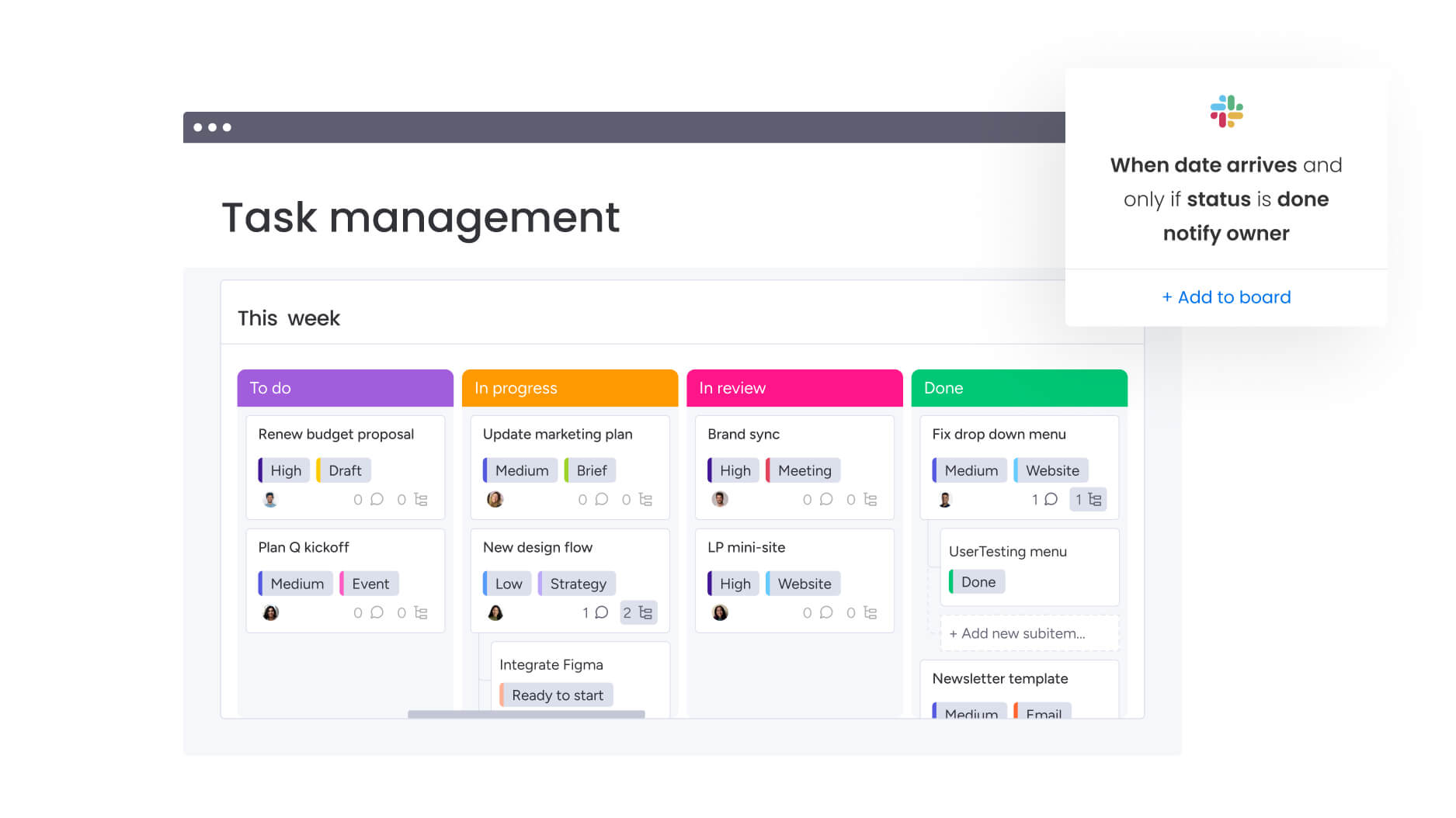
To implement a new system without derailing existing campaigns, you must focus on achieving quick wins while building toward comprehensive transformation. By following this strategic approach, you can ensure high adoption rates while minimizing disruption to your ongoing marketing initiatives.
Step 1: centralize and standardize
Begin by consolidating disconnected tools and spreadsheets into a unified workspace. Focus on:
- Data migration: import existing campaign data and team structures.
- Process mapping: document current workflows before optimization.
- Template creation: build standardized templates for common processes.
- Team onboarding: start with one high-impact team as champions.
Since monday work management typically shows measurable results in less than four months, teams can start using core features immediately while gradually adopting more advanced capabilities.
Step 2: automate and optimize
Once foundational processes are in place, focus on efficiency gains through:
- Workflow automation: eliminate manual handoffs and status updates.
- Integration setup: connect existing martech tools to the platform.
- Dashboard creation: build real-time visibility for different stakeholders.
- Process refinement: use data to identify and fix bottlenecks.
The platform’s 200+ integrations and no-code automation capabilities enable teams to streamline workflows without IT dependency. Marketing operations teams can focus on strategic work rather than manual coordination.
Step 3: scale and govern
With core teams successful, expand across the organization while maintaining control:
- Cross-functional expansion: extend to creative, events, and regional teams.
- Governance frameworks: implement approval hierarchies and permissions.
- Performance measurement: establish KPIs and reporting cadences.
- Continuous improvement: regular optimization based on data and feedback.
Enterprise features like managed templates, cross-project dependencies, and portfolio dashboards ensure consistency and visibility even as usage scales across departments and regions.
Measuring marketing operations success
Tracking the right metrics helps demonstrate the value of marketing operations software and identify areas for improvement. Focus on metrics that reflect real business impact rather than vanity metrics. These KPIs provide concrete evidence of operational improvements and help justify continued investment in marketing operations technology.
Key performance indicators include:
- Time to market: reduction in campaign launch cycles.
- Resource utilization: percentage of time spent on strategic vs. administrative work.
- Campaign ROI: improvement in return on marketing investment.
- Team productivity: number of campaigns delivered per quarter.
- Process efficiency: reduction in approval cycles and rework.
- Cross-team collaboration: decrease in email volume and meeting time.
With a unified platform, your teams can achieve real, measurable wins. For example, organizations often save thousands of hours monthly through automation and gain the visibility needed to improve performance continuously. Their teams save thousands of hours every month through smarter automation, while finally getting the visibility they need to keep improving their performance.
The platform’s real-time dashboards and AI-powered insights make it easy to track these KPIs without manual reporting. Leaders can see progress at a glance and drill down into specific areas for deeper analysis.
Transform your marketing operations with unified visibility
For enterprise teams, marketing ops software is no longer optional — it’s the backbone of the entire marketing function. It’s the backbone of your entire marketing function. The ability to unify workflows, automate processes, and gain real-time visibility determines whether marketing can demonstrate its value and drive business growth.
The right platform eliminates the disconnected execution that plagues large marketing organizations. It provides the structure needed for consistency while maintaining the flexibility required for creative work. Most importantly, it connects everyday marketing activities to strategic business outcomes.
For marketing leaders managing complex, cross-functional teams, the choice of operations platform directly impacts team productivity, campaign effectiveness, and strategic alignment. Organizations that invest in comprehensive marketing operations software gain competitive advantages through faster execution, better resource utilization, and data-driven decision making.
The necessary capabilities come together in one unified platform with monday work management. By combining AI-powered risk detection with intelligent resource allocation, the system provides the visibility and control marketing leaders need to execute with total confidence.
Try monday work managementThe content in this article is provided for informational purposes only and, to the best of monday.com‘s knowledge, the information provided in this article is accurate and up-to-date at the time of publication. That said, monday.com encourages readers to verify all information directly.
Frequently asked questions
What is the best marketing operations software for enterprise teams?
The best marketing operations software for enterprise teams is one that provides unified visibility, scalable workflows, and enterprise-grade governance. monday work management excels in these areas, offering AI-powered insights, customizable workflows, and the ability to manage hundreds of projects across large, distributed teams while maintaining real-time visibility and control.
How long does it take to implement marketing operations software?
Implementation timelines vary based on team size and complexity. Most enterprise teams can achieve initial value within weeks, with full deployment typically taking three to four months. monday work management's intuitive interface and template library accelerate adoption, with many teams seeing productivity gains within the first month of use.
Can marketing operations software integrate with existing martech tools?
Yes, modern marketing operations platforms are designed to connect with your existing technology stack. monday work management offers 200+ native integrations including Salesforce, HubSpot, Adobe Creative Cloud, Slack, and Microsoft Teams, plus an open API for custom connections, ensuring seamless data flow across your martech ecosystem.
What's the difference between marketing operations software and project management platforms?
Marketing operations software goes beyond basic project tracking to address marketing-specific needs like campaign management, creative workflows, and performance reporting. While project management tools handle tasks and deadlines, marketing operations platforms like monday work management provide strategic alignment, resource optimization, and the specialized workflows marketing teams need to demonstrate ROI.
How does AI improve marketing operations?
AI enhances marketing operations by automating routine tasks, predicting risks, and providing intelligent recommendations. In monday work management, AI capabilities include risk detection across portfolios, intelligent resource allocation, automated reporting, and Digital Workers that monitor campaigns and suggest optimizations, helping teams work more efficiently and make data-driven decisions.
What ROI can organizations expect from marketing operations software?
Organizations typically see ROI through time savings, improved resource utilization, and faster campaign delivery. Companies using monday work management report saving thousands of hours monthly, reducing email volume by 25-50%, improving cross-team collaboration by 40%, and achieving two to threex faster campaign delivery while maintaining quality standards.

 Get started