


Your marketing team is juggling more campaigns, channels, and stakeholders than ever. But let’s be honest — spreadsheets, endless email chains, and disconnected platforms aren’t cutting it anymore. The fallout? Missed deadlines, duplicated work, and that dreaded moment when leadership questions what marketing is actually contributing to growth.
Great marketing operations software solves this mess by pulling campaign management, resource planning, and performance tracking into a single collaborative workspace where everything connects. These platforms eliminate the chaos of tool sprawl while providing the visibility and automation that marketing leaders need to demonstrate measurable impact.
This guide identifies the core drivers of effective marketing operations, moving beyond basic project management to focus on high-impact results. You’ll see the capabilities that deliver real results, learn how top companies transformed their marketing ops, and get practical advice for evaluating platforms based on business outcomes, not just feature checklists.
Key takeaways
- The backbone of modern marketing: marketing operations software is no longer a luxury; it is the essential framework that separates scattered efforts from cohesive, powerful execution as complexity grows.
- Unified workspace over tool sprawl: the most effective platforms bring campaign management, creative production, resource planning, and performance tracking into one collaborative environment.
- AI that democratizes advanced capabilities: leading solutions make AI accessible to all team members — not just data scientists — enabling smarter automation and insights at scale.
- Enterprise standardization with team flexibility: top platforms balance consistent processes and governance with the adaptability teams need for creative work.
- Rapid time-to-value: the best marketing operations software delivers measurable impact within months, not years, with adoption rates that prove teams actually use the platform.
What makes heads of marketing choose monday.com for marketing operations?
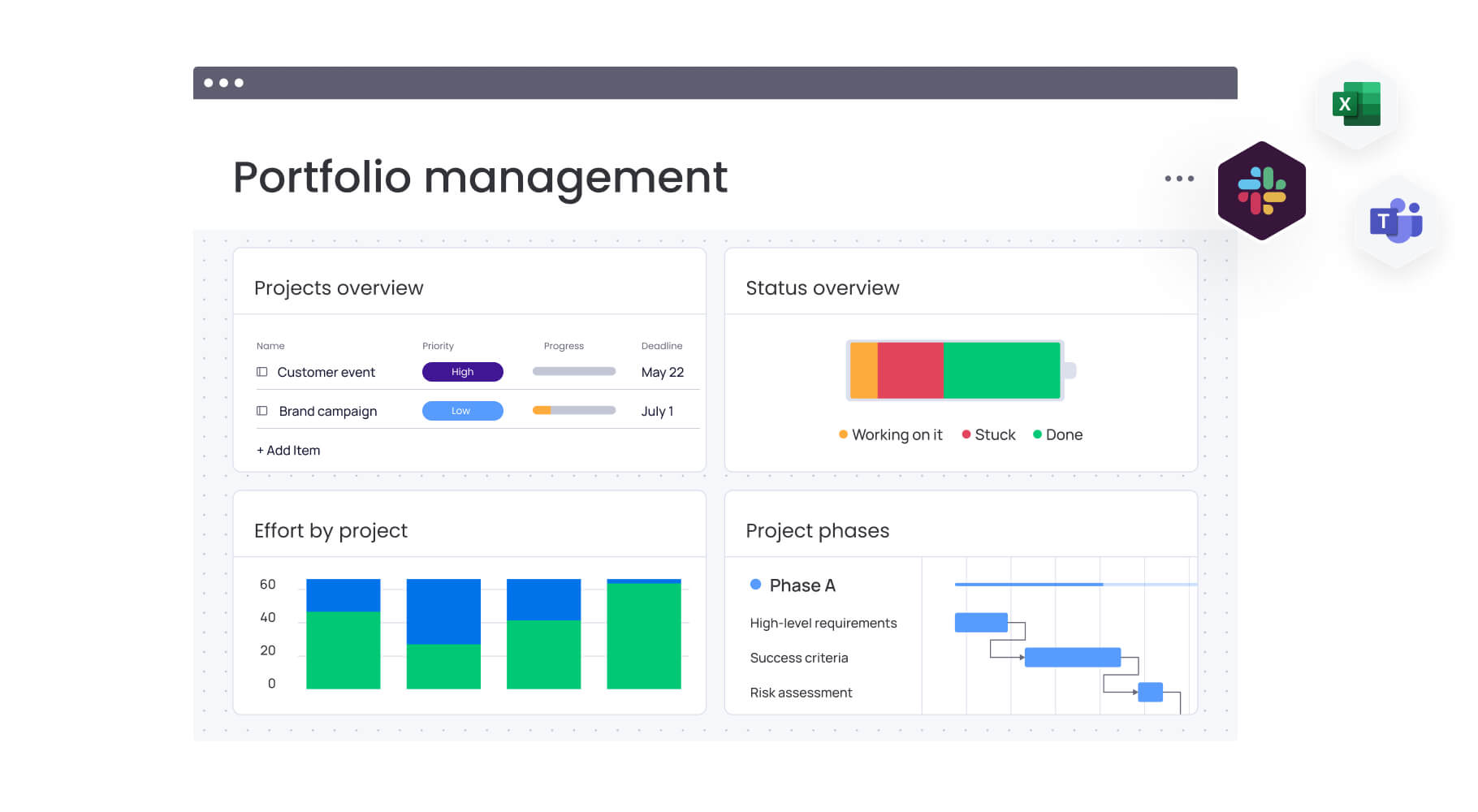
Leading a marketing department in a services organization often involves a constant struggle: coordinating complex campaigns across scattered teams while justifying every dollar to leadership. This gap between high-level strategy and daily execution frequently results in blind spots and misaligned resources that dilute your overall impact.
By turning this chaos into a streamlined operation, monday.com provides a complete view of every campaign, performance metric, and team workload. Whether you are overseeing designers, acquisition specialists, or event planners, the platform unifies these functions into one strategic workflow.
High-level visibility is delivered through AI-powered portfolio dashboards that surface risks and opportunities across hundreds of active campaigns. By leveraging managed templates and automation, marketing leaders can drive growth through multi-channel strategies while ensuring global teams maintain consistent, efficient processes without technical friction.
Strategic allocation becomes much simpler for those managing 50–100+ team members, as monday.com offers essential resource optimization tools:
- Resource directory: centralizes team skills and availability.
- Capacity manager: prevents burnout through intelligent workload balancing.
- Proven results: vML saved 7,000 hours per account monthly and achieved 2x faster delivery, while Canva increased creative output by 3x.
monday.com's top features for marketing operations
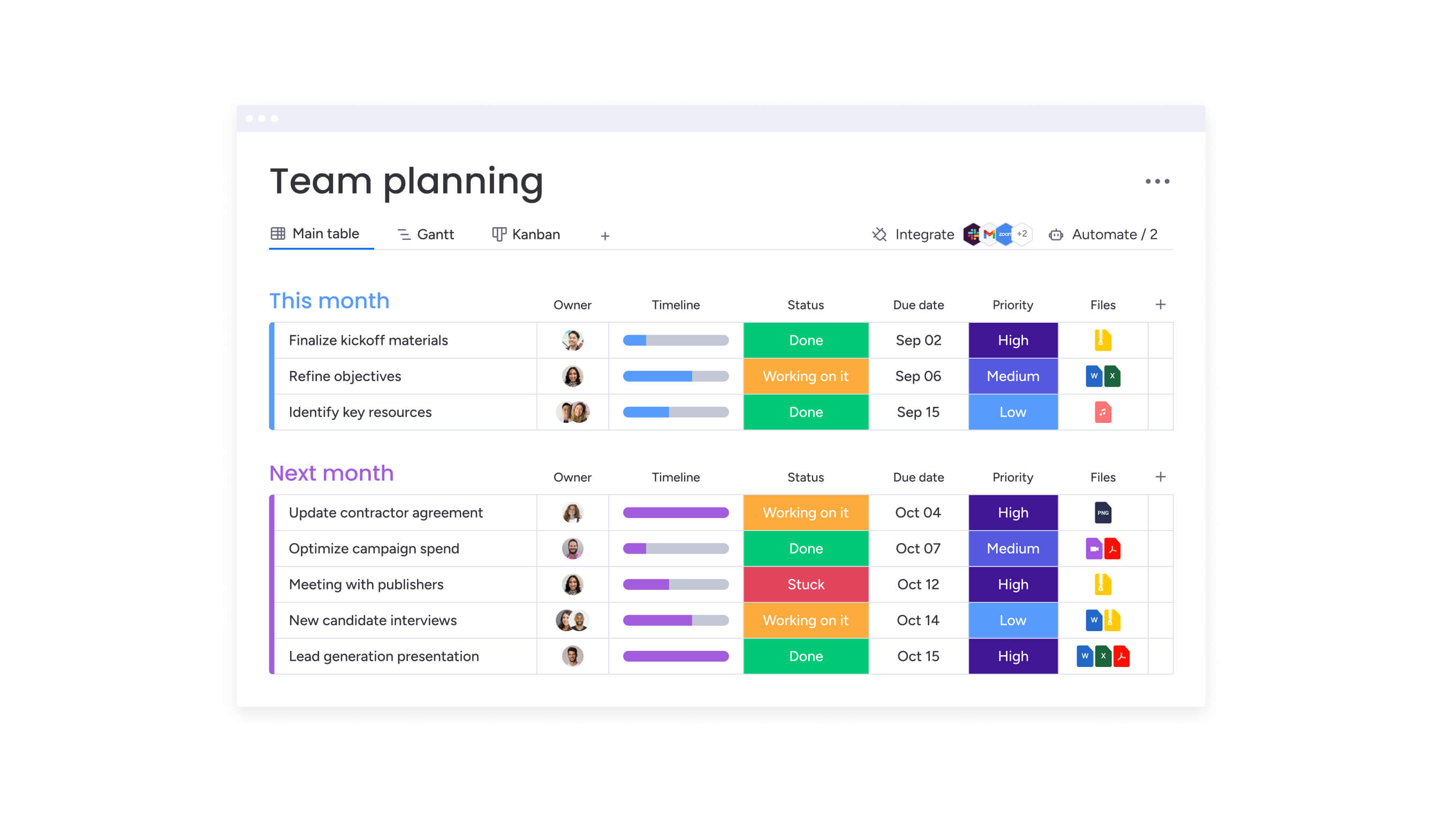
The following features demonstrate how monday.com addresses the core operational challenges that marketing leaders face daily. Each capability is designed to eliminate inefficiencies while providing the visibility and control needed to scale marketing impact.
1. Centralized campaign orchestration
The campaign management capabilities on monday.com provide comprehensive orchestration that allows you to plan, execute, and track campaigns across teams and regions from a single centralized platform.
Key capabilities include:
- Customizable boards: track campaign status with visual progress indicators.
- Automated workflows: move campaigns through stages without manual intervention.
- Timeline views: visualize all activities, deadlines, and dependencies in one place.
- Cross-project dependencies: automatically adjust connected work when campaign elements shift.
For heads of marketing, this eliminates the need to chase updates across email threads and provides real-time visibility into strategic goals.
To manage 24 large-scale campaigns simultaneously, Genpact’s marketing team utilizes end-to-end workflows tailored to each activation channel. By tracking target dates against actual timeframes within the platform, they can effectively identify trends and resolve bottlenecks that would otherwise cause delays.
2. Strategic resource and workload planning
Maintaining real-time visibility into team bandwidth and skill sets is essential for managing workload distribution across an entire marketing organization. Through the workload view, leaders can monitor individual capacity and current assignments, ensuring that resources are allocated effectively while preventing burnout.
This strategic approach to assignment keeps teams engaged and ensures that complex projects remain on schedule.
Core resource management features are:
- Resource planner: enable strategic allocation across content production, creative development, and campaign execution.
- Workload visibility: maintain clear sight into who’s working on what.
- Capacity manager: identify when teams are approaching their limits for proactive rebalancing.
ThoughtWorks utilized these capabilities to transform their request allocation process. By gaining instant visibility into specific tasks and timelines, their team leads can now accurately determine individual capacity and distribute new work more effectively.
3. Performance visibility and executive reporting
Customizable dashboards and AI-powered reporting transform raw data into compelling narratives that demonstrate marketing’s impact on business growth. Leaders can build executive-level views that aggregate data from multiple boards to track ROI, customer acquisition costs, and budget adherence in real time.
Reporting capabilities include:
- AI-powered portfolio reports: instantly generate executive summaries with trends, risks, and recommendations.
- Custom dashboards: track specific KPIs your leadership cares about with automatic updates.
- Multi-board aggregation: combine data from various campaigns and teams into unified views.
FARFETCH’s marketing team uses dashboards to maintain visibility across 400 people from 40 different teams, saving $118K per month and achieving a 6x ROI. The platform’s reporting capabilities helped them shift from reactive to proactive decision-making.
4. Operational standardization via automation
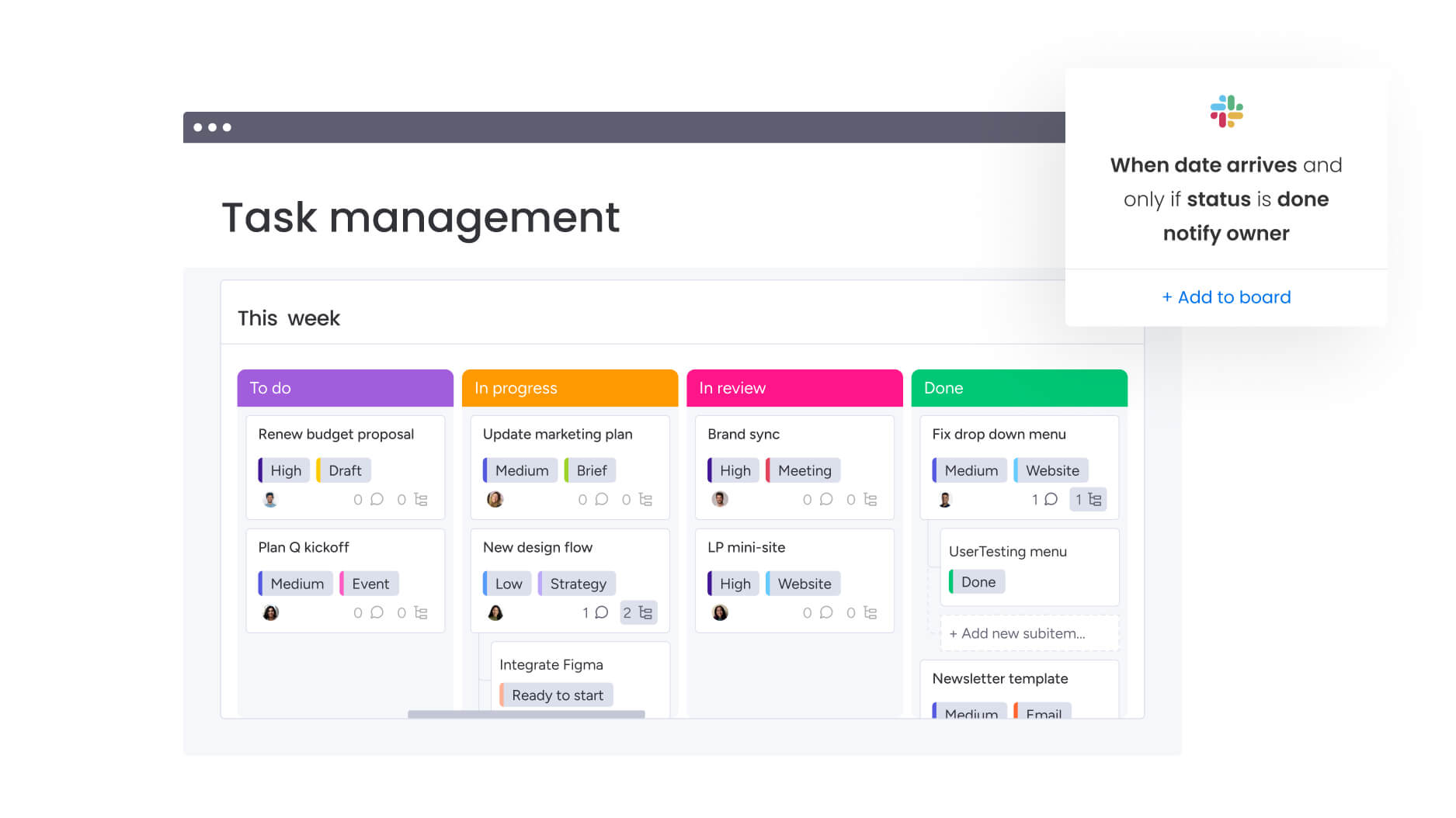
Automation and managed templates in monday.com enable you to standardize processes across your marketing organization without sacrificing flexibility, highlighting the power of marketing automation. By setting up triggers that assign tasks or move items between boards based on status changes, teams can build upon proven workflows instead of starting from scratch.
Automation features deliver:
- Workflow standardization: deploy proven templates for campaign launches, event planning, and creative production.
- Intelligent triggers: automate notifications and task assignments based on status changes.
- Local adaptation: maintain ability to customize standardized workflows for specific needs.
McDonald’s Australia leveraged these capabilities to eliminate constant email follow-ups and replicate successful processes across the brand. This transition resulted in 1,224 hours saved and 20,000 fewer emails sent every month.
5. Integrated creative and approval workflows
The platform provides dedicated workflows to manage the creative lifecycle from initial intake to final sign-off. By centralizing creative briefs and stakeholder feedback, marketing leaders can maintain a clear audit trail of all decisions across multiple channels.
Creative management includes:
- Centralized briefs: capture all necessary information upfront through creative request forms.
- Multi-stage approvals: ensure nothing falls through the cracks with structured approval processes.
- Stakeholder coordination: manage approval workflows involving legal, product, and finance teams.
- Progress tracking: route requests to appropriate designers and monitor production stages.
To resolve a lack of visibility into the production queue, Genpact formalized their brief submission process. This now provides campaign managers with total clarity regarding the status and expected turnaround time of every creative request.
Try monday.comHow marketing operations software addresses core challenges
The right marketing ops platform tackles the core problems that keep your team from executing at their best. When you understand these pain points and how software actually solves them, you’ll know exactly what to look for. Let’s break down the three biggest challenges and their solutions.
Challenge 1: breaking down silos between marketing teams
In many organizations, content, creative, and acquisition teams operate in isolation, using disparate tools and disconnected processes. This lack of integration leads to duplicated efforts, inconsistent brand messaging, and missed opportunities for collaboration. High-performing teams use monday.com to bridge these gaps by providing:
- Shared visibility: all teams work from the same boards and dashboards, ensuring everyone sees the full picture.
- Cross-functional workflows: automated handoffs between teams eliminate manual coordination.
- Unified communication: comments, updates, and feedback live alongside the work itself.
Challenge 2: standardizing processes without stifling creativity
While consistency is required for scaling, overly rigid processes can stifle the innovation and agility that marketing teams need. The goal is to establish a framework that provides structure without becoming a bottleneck. Through a flexible architecture, the platform enables you to:
- Deploy managed templates: roll out standardized workflows that teams can adapt to their needs.
- Build custom automations: create rules that enforce consistency while allowing creative freedom.
- Maintain governance: set permissions and approval flows that protect brand standards without creating bottlenecks.
Challenge 3: gaining real-time visibility into performance
Marketing leaders often struggle to prove ROI or assess team capacity when data is scattered across disconnected systems. Without a single source of truth, making informed, proactive decisions is nearly impossible. Effective software centralizes this data to offer:
- AI-powered insights: automatically surface trends, risks, and opportunities across campaigns.
- Customizable dashboards: track the exact metrics that matter to your organization.
- Portfolio-level views: see performance across all marketing initiatives in one place.
What software do marketing managers use?
Today’s marketing managers typically juggle between 10 and 15 different platforms, creating a fragmented landscape that breeds data silos and complexity.
While specialized tools for email, social media, and analytics may excel individually, the lack of cohesion between them makes maintaining a clear view of all marketing activities nearly impossible.
This fragmentation leads to several critical operational hurdles:
- Time waste: teams spend valuable time switching between platforms and manually transferring data.
- Incomplete visibility: difficulty piecing together a complete picture of marketing performance.
- Data silos: information trapped in individual tools prevents holistic analysis.
- Coordination overhead: manual effort required to keep teams aligned across multiple platforms.
To combat these issues, unified marketing operations platforms are rapidly gaining traction. By consolidating workflows into integrated marketing planning software, leaders can manage campaign orchestration, resource planning, and creative production in a single location. This shift toward total operational visibility is exemplified by monday.com, which provides a workspace where strategy and execution meet through built-in automation and AI.
Try monday.com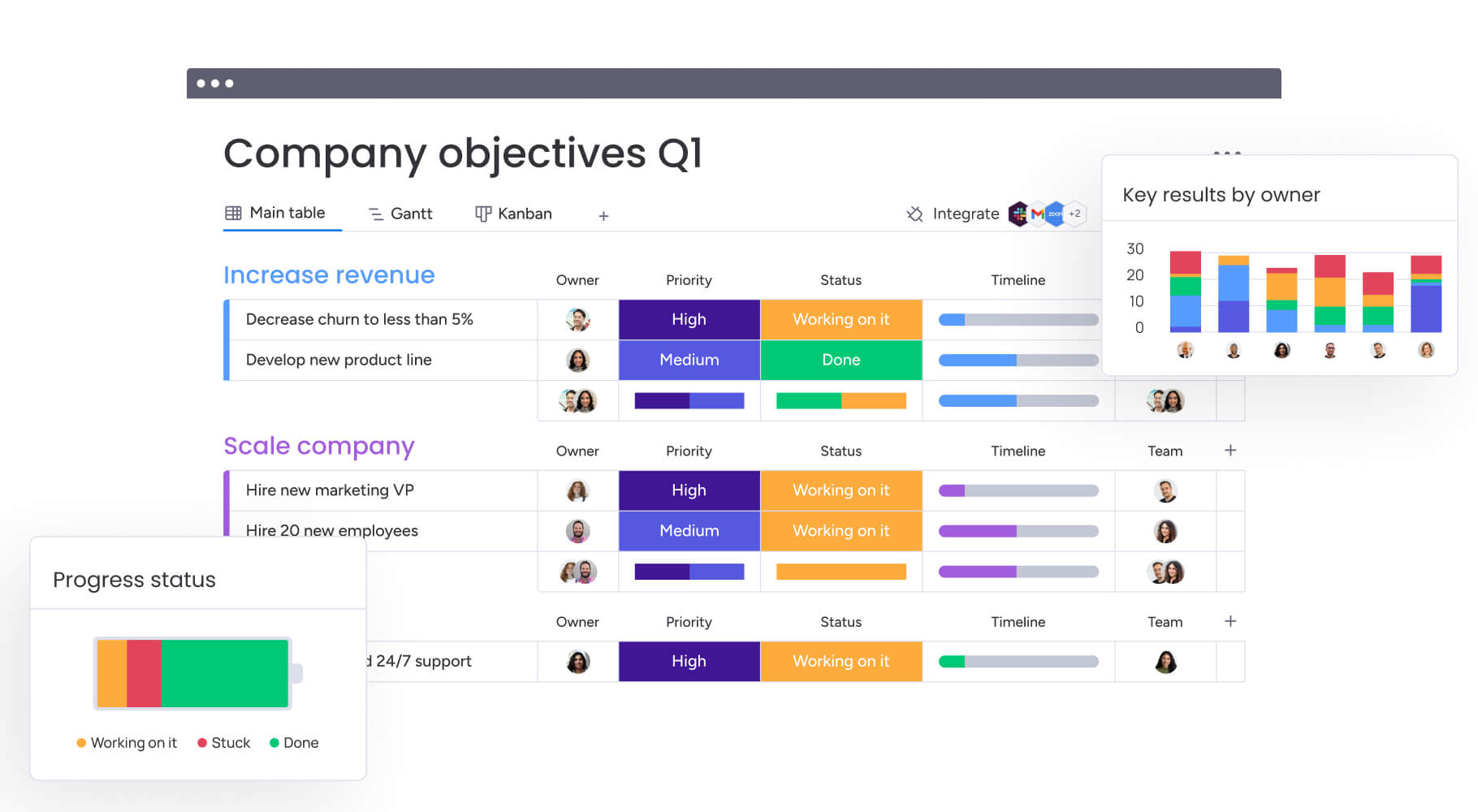
Which is the best software for marketing?
The best marketing operations software depends on your organization’s specific needs, team size, and strategic priorities. However, certain evaluation criteria help identify platforms that will deliver lasting value rather than becoming another underutilized tool.
When evaluating marketing operations platforms, consider these critical factors:
- Integration capabilities: the platform should connect seamlessly with your existing martech stack.
- AI accessibility: look for AI features that empower all team members, not just technical users.
- Cross-functional support: ensure the platform facilitates collaboration beyond marketing teams.
- Scalability: verify the solution can grow with your organization while maintaining performance.
- Time-to-value: prioritize platforms with proven rapid implementation and adoption rates.
For enterprise marketing teams managing complex, multi-channel campaigns, monday.com stands out through its combination of flexibility and standardization. The platform’s managed templates enable consistent processes across global teams while allowing local adaptation.
Key differentiators include:
- Rapid ROI: less than four-month payback period.
- High adoption: industry-leading user adoption rates on G2.
- Cross-functional capabilities: seamless coordination with other departments.
- Extensive integrations: 200+ integrations ensure marketing work stays connected to broader business context.
What is the most effective marketing tool?
Beyond technical features, the value of a marketing operations platform lies in its ability to drive tangible business results. Effective solutions deliver concrete returns, enabling teams to increase output, accelerate launch timelines, and maintain tight alignment with overarching corporate goals.
Key indicators of an effective marketing operations platform include:
- User adoption rates: high adoption signals that teams actually use and value the platform.
- Time-to-value metrics: faster payback periods indicate quicker realization of benefits.
- Efficiency gains: measurable improvements in time saved and output increased.
- Business outcomes: direct connection between platform use and strategic KPIs.
monday.com demonstrates effectiveness through concrete customer results:
- Genpact: 40% improvement in cross-team collaboration.
- ThoughtWorks: 55% reduction in email communication.
- McDonald’s: 1,224 hours saved monthly.
These gains represent more than just efficiency; they provide the capacity for teams to redirect their energy toward high-value strategic initiatives. By utilizing AI blocks to automate feedback categorization and Digital Workers to proactively flag campaign risks, monday.com further amplifies this impact.
How Genpact transformed their global marketing operations
Genpact’s global marketing department faced the daunting task of managing 24 large-scale campaigns across fragmented spreadsheets and email threads. Without a central repository, tracking progress required manual searches through SharePoint folders, leading to significant visibility gaps.
Implementation approach: the team implemented monday.com to standardize their end-to-end campaign planning and execution. They created workflow apps outlining the complete activation process for each channel, with columns tracking both target dates and actual time frames. This visibility helped identify trends and bottlenecks that were previously invisible.
The marketing team also formalized their campaign brief submission process using forms and automated workflows. When forms are submitted, team members receive automated notifications through the workflow app, providing campaign managers with visibility into request status and turnaround times.
Measurable transformation results:
- 40% improvement in cross-team collaboration for campaign planning and execution.
- 100% removal of spreadsheets from marketing operations.
- 25% decrease in email exchanges across the department.
By transitioning to monday.com, Genpact replaced a disconnected system with a synchronized, strategic model of execution.
Try monday.comWhat does a head of marketing operations do?
A head of marketing operations serves as the strategic architect who connects marketing activities to business outcomes. This role has evolved from managing martech tools to orchestrating the entire operational framework that enables marketing to deliver measurable impact at scale.
Modern marketing operations leaders focus on four core responsibilities:
- Process optimization: design and refine workflows that balance efficiency with creativity.
- Resource management: ensure optimal allocation of budget, talent, and time across initiatives.
- Cross-functional coordination: bridge gaps between marketing, sales, product, and finance teams.
- Performance measurement: connect marketing activities to revenue and strategic business goals.
Marketing operations software amplifies the strategic impact of this role. With monday.com, operations leaders can standardize processes through managed templates while maintaining flexibility for local teams.
Platform capabilities that enhance the role:
- AI-powered risk insights: identify potential issues across hundreds of campaigns before they impact delivery.
- Resource optimization features: ensure teams aren’t overwhelmed while critical initiatives receive adequate support.
- Governance frameworks: provide structure needed for consistency without constraining innovation.
The role increasingly requires balancing standardization with agility. Marketing operations leaders must create frameworks that scale across global teams while enabling rapid response to market changes.
Transform your marketing operations with unified execution
Marketing operations software has evolved into a strategic foundation rather than a mere project tracking tool. By bringing teams together and establishing consistent processes, the right platform provides the visibility needed to demonstrate exactly how marketing efforts drive business growth.
By combining campaign management, resource optimization, and performance tracking, monday.com enables seamless cross-departmental collaboration. Integrated AI and automation handle the manual heavy lifting, allowing teams to focus on high-impact campaigns that drive business growth.
The platform’s proven rapid time-to-value and industry-leading adoption rates mean your team will see real results quickly — not someday. Organizations like Genpact, ThoughtWorks, and McDonald’s have already transformed their marketing operations, achieving measurable improvements in collaboration, efficiency, and strategic impact.
Try monday.comThe content in this article is provided for informational purposes only and, to the best of monday.com’s knowledge, the information provided in this article is accurate and up-to-date at the time of publication. That said, monday.com encourages readers to verify all information directly.
FAQs
How long does it take to implement marketing operations software for a 100+ person team?
Implementation timelines for large marketing teams typically range from two weeks to one month for core functionality with platforms like monday.com. The platform's intuitive interface allows teams to start using basic features immediately, with more complex workflows and integrations added progressively. Teams can begin with pilot projects and expand usage as they gain confidence with the system.
Can marketing operations platforms integrate with existing CRM and analytics tools?
Yes, comprehensive marketing operations platforms integrate with the full martech stack. monday.com offers 200+ native integrations including Salesforce, HubSpot, Google Analytics, Marketo, Adobe Creative Cloud, Slack, and Microsoft Teams. The platform also provides an open API for custom integrations with proprietary systems or specialized marketing tools.
What's the realistic ROI timeline for marketing operations software?
Marketing teams typically see measurable ROI within three to six months of implementation. The Forrester Total Economic Impact study reports a payback period of less than four months for implementations on the platform. FARFETCH achieved 6x ROI with $118K saved monthly, while McDonald's realized 615% ROI through efficiency gains.
How does marketing operations software handle remote and distributed teams?
Modern platforms are built for distributed collaboration. monday.com provides cloud-based access, real-time updates, and asynchronous collaboration features that keep global teams aligned. Features like automated notifications, shared dashboards, and integrated communication tools ensure remote team members stay connected to work and each other.
What security features are essential for enterprise marketing teams?
Enterprise marketing teams require robust security including SSO, two-factor authentication, and role-based permissions. monday.com provides SOC two Type II compliance, GDPR compliance, ISO 27001 certification, and enterprise-grade encryption. These features ensure marketing data, campaign information, and customer insights remain protected while enabling necessary collaboration.
How do marketing operations platforms support agile marketing practices?
Agile marketing requires flexibility, visibility, and rapid iteration. Platforms like monday.com support agile practices through sprint planning boards, customizable workflows, and real-time progress tracking. Teams can quickly adjust priorities, redistribute work based on capacity, and maintain transparency across all marketing initiatives while following agile methodologies.

 Get started