


Large marketing teams often struggle with fragmented channels and siloed data, leading to missed deadlines and duplicated effort. When core functions use disconnected systems, the resulting lack of coordination wastes budget and makes it difficult to prove marketing’s actual impact.
The best operations software solves this by centralizing planning and resource tracking into a single source of truth. This provides the infrastructure needed to prove measurable results, giving leaders real-time visibility into capacity and budget while allowing teams to remain agile.
The path to operational excellence lies in three areas: platform capabilities that drive results, enterprise-scale scalability, and implementation strategies that deliver real transformation. Below, you will find the mechanics for shifting from reactive coordination to strategic growth.
Key takeaways
- Eliminate disconnected execution across marketing teams: centralize campaign planning, resource allocation, and cross-team collaboration in one platform to prevent duplicative work and missed deadlines.
- Gain real-time visibility into team capacity and campaign performance: track workloads, budget adherence, and ROI across all marketing initiatives to make informed decisions and prevent burnout.
- Transform marketing operations with a unified platform: monday work management streamlines workflows through automation, standardized templates, and visual dashboards that connect daily work to strategic goal.
- Achieve measurable operational improvements within months: organizations save thousands of hours monthly and increase creative output by 3x through centralized work management and automated processes.
- Scale marketing operations without losing control: standardize workflows for consistency while maintaining flexibility to adapt quickly to changing retail dynamics and seasonal campaigns.
Our customers say it best
As a Leader in the 2024 Gartner® Magic Quadrant™ for Marketing Work Management, monday work management has earned recognition that validates its position as the platform of choice for enterprise marketing teams managing complex, multi-channel operations.
Leading organizations trust the platform to deliver measurable results:
- VML: saves 7,000 hours per account monthly while achieving 2x faster delivery.
- Canva: increased creative output by 3x.
- FARFETCH: achieved 6x ROI with substantial monthly savings.
These results show exactly how the platform solves the real challenges marketing leaders face when coordinating large, distributed teams.
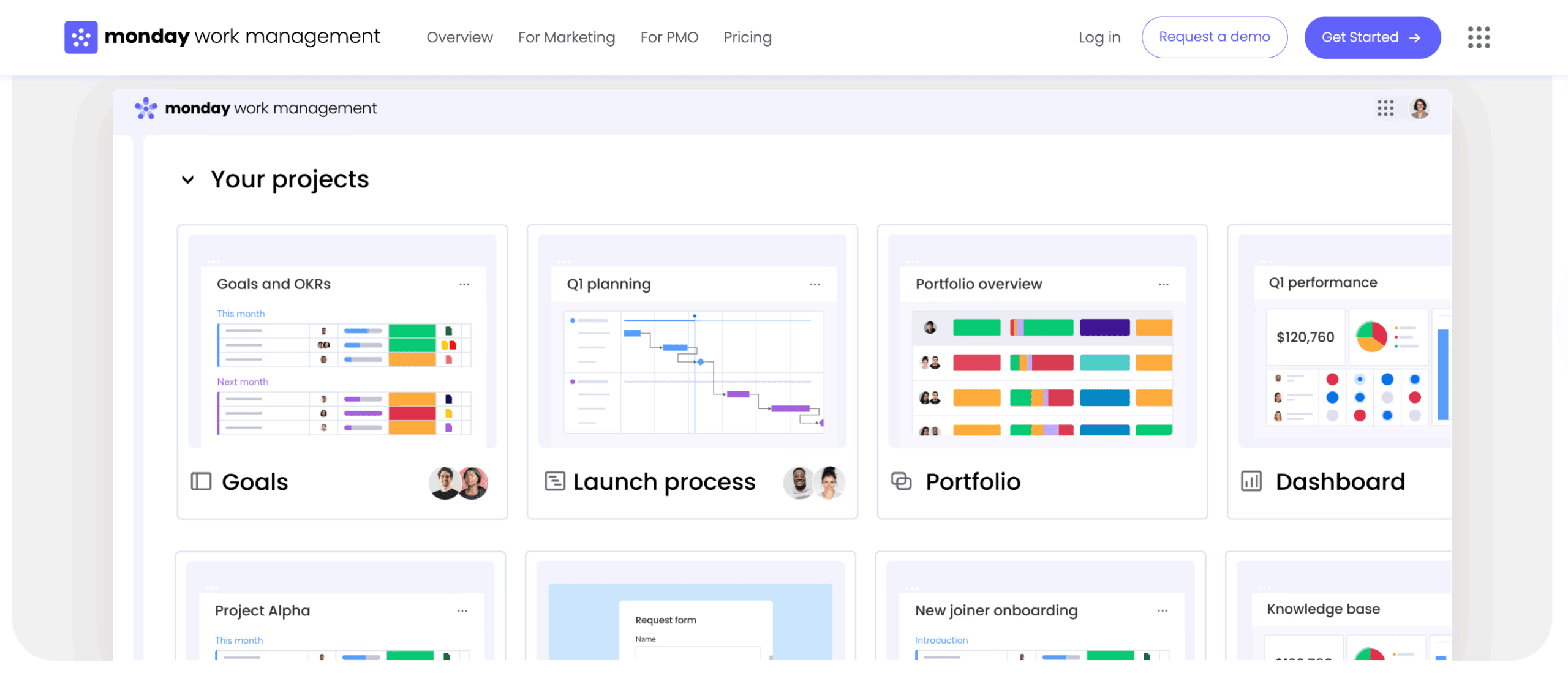
What makes heads of marketing choose monday work management for marketing operations?
Marketing leaders choose monday work management to solve their most persistent operational headaches. By centralizing everything from campaign planning to creative production, the platform provides a single source of truth for all marketing operations, from campaign planning and execution to creative production and cross-functional collaboration.
Key benefits for large teams include:
-
Real-time visibility: track performance, workloads, and ROI across all channels simultaneously.
-
Retail-specific agility: simplify the chaos of seasonal campaigns, flash sales, and multi-location coordination.
-
Standardized flexibility: use templates for consistency while leveraging no-code customization to adapt to shifting market trends.
-
Burnout prevention: automate routine busywork and use precise capacity planning to keep teams balanced.
By providing strategic resource allocation and clear workload visibility, leaders can ensure budgets are used effectively while reporting impact to the C-suite with total confidence.
monday work management top features for marketing operations
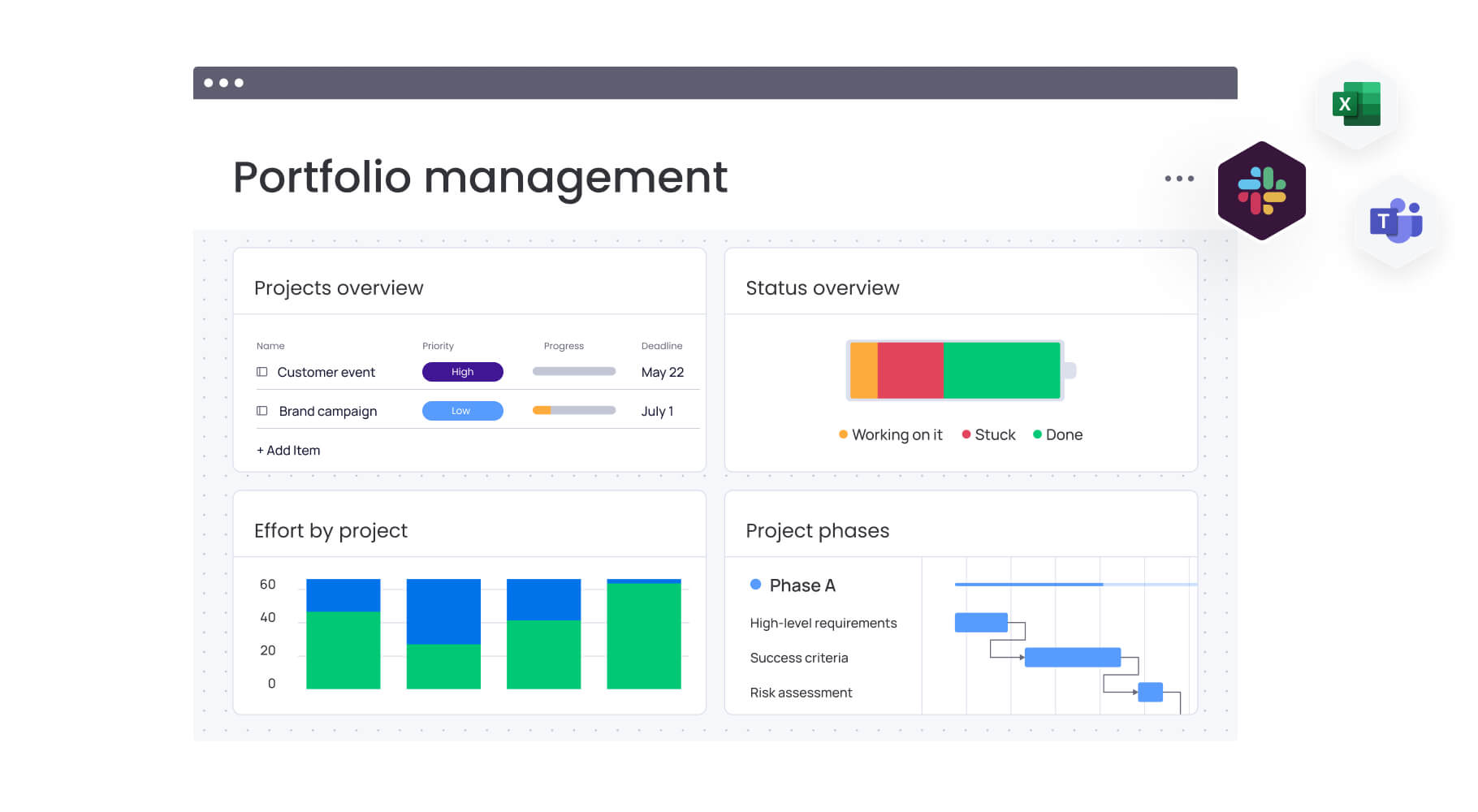
Enterprise teams use monday work management to solve complex operational challenges, from eliminating silos to delivering measurable ROI. The platform is designed to provide the visibility and control marketing leaders need at scale.
Campaign management
The campaign hub centralizes planning and optimization across every channel. By utilizing integrated calendars and timelines, it ensures every detail is tracked during high-stakes multi-channel retail initiatives, making it an effective marketing planning software solution.
Teams can visualize complex dependencies and monitor deliverables in real time, eliminating the disconnected execution that often plagues large departments. By connecting execution directly to strategic goals and OKRs, leaders gain the transparency needed to report ROI to executive leadership with confidence.
Resource management
Gain a real-time view of availability and expertise to ensure the right talent is assigned to the right tasks. The platform’s Workload view provides a high-level look at capacity and remaining availability at both individual and team levels, preventing burnout and missed deadlines.
Key resource management capabilities include:
- Individual capacity tracking: monitor workload at the person level.
- Team-level visibility: see department capacity and availability.
- Skills-based allocation: match projects to team member expertise.
- Workload balancing: prevent burnout and optimize productivity.
The resource management features integrate directly into project workflows, creating a unified and seamless experience.
Marketing automation and workflow standardization
Eliminate manual busywork with no-code automation recipes that trigger actions based on status changes or deadlines. Standardized templates capture best practices, ensuring consistent data collection for every campaign.
The automation capabilities extend across the entire marketing workflow:
- Automated reminder notifications: keep campaigns on track.
- Status update triggers: notify relevant stakeholders automatically.
- Dependency management: ensure tasks flow smoothly between teams.
This reduces the email volume and meeting time required to coordinate work, directly addressing the communication overhead that bogs down large marketing teams.
Dashboards and real-time reporting
Dashboards offer full visibility with AI-powered alerts that catch risks before they impact delivery. Custom views connect data from multiple projects, allowing leaders to monitor budget adherence, team productivity, and resource utilization in real time.
The reporting features support the specific metrics retail marketing leaders need to track:
- Campaign ROI and customer acquisition cost: track return on marketing investment.
- Volume and performance metrics: monitor content and campaign output.
- Budget adherence: ensure spending stays within allocated resources.
- Team productivity: measure resource utilization and efficiency.
- Time-to-launch: track on-time delivery rates.
These metrics can be visualized in multiple formats and shared with executive leadership to demonstrate marketing’s business impact.
Cross-functional collaboration tools
Align your organization around shared goals with collaborative briefs and connected workflows. The platform provides a single workspace where marketing interacts seamlessly with legal, product, and finance. For leaders managing large, multi-functional teams, this is essential for driving maximum impact.
The collaboration features extend beyond internal marketing teams to include external partners and agencies:
- Dedicated agency workspaces: manage external collaborator relationships.
- Controlled information sharing: maintain security while enabling collaboration.
- Approval workflow coordination: route work to the right stakeholders at the right time.
Goals and OKRs tracking
Goals and OKRs tracking translates strategic plans into execution through dashboards and roadmaps that drive measurable results. The platform enables leaders to set company-level objectives and ensure every project contributes directly to their success.
For heads of marketing, this provides the visibility needed to align all activities with corporate priorities. Leaders can track progress in real time, identify high-impact initiatives, and reallocate resources to the work that moves the needle most.
These capabilities integrate directly with daily campaign management, showing teams exactly how their tasks support broader goals. By cascading objectives into team-level key results, the platform ensures organizational alignment at every level.
How heads of marketing in retail benefit from monday work management
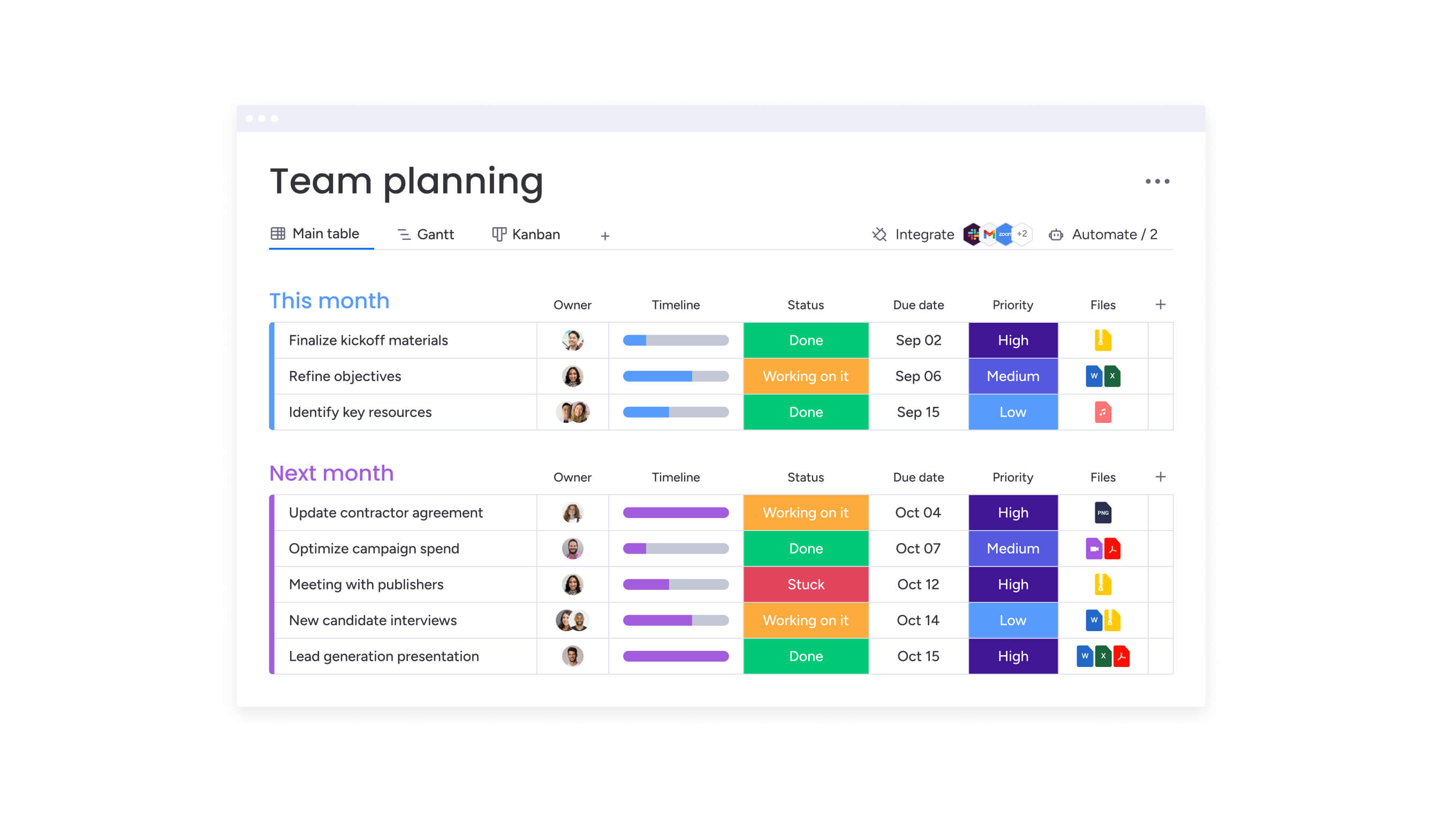
Marketing teams using monday work management achieve significant operational improvements across multiple dimensions. These benefits directly address the core challenges that heads of marketing face when managing large, distributed teams. The following outcomes demonstrate the platform’s impact on real marketing operations.
Time savings and efficiency gains
VML saves 7,000 hours per account monthly through automation and streamlined workflows. FARFETCH saves 3,500 hours per month across their marketing operations. Officeworks eliminated one full day per week of manual administration work for their project coordinator managing seasonal promotions.
These time savings come from:
- Eliminating manual status updates: automated reporting reduces administrative overhead.
- Reducing email volume: centralized communication cuts email traffic significantly.
- Automating repetitive tasks: workflows handle routine processes without human oversight.
Cost efficiency and ROI
The platform delivers measurable ROI through improved resource utilization and reduced operational overhead. FARFETCH achieved a 6x ROI while saving substantial amounts monthly.
The cost efficiency comes from:
- Preventing wasted effort: eliminate duplicative processes across teams.
- Optimizing team capacity: avoid both burnout and underutilization.
- Consolidating tools: reduce the need for multiple point solutions.
Compliance and accuracy improvements
Data accuracy and process compliance are ensured through standardized workflows and automated governance in monday work management. The platform replaced hundreds of working spreadsheets at Officeworks, establishing a single source of truth for consistent and reliable data.
Standardized templates ensure consistent data collection across campaigns, while automated approval workflows ensure proper governance without slowing down execution. This accuracy is essential for retail marketing leaders who must report reliable metrics to executive leadership.
Productivity and output quality
Teams achieve higher productivity through visibility, reduced context-switching, and elimination of manual coordination work. Genpact saw a 40% improvement in cross-team collaboration, while Country Road Group achieved greater efficiency managing 150+ projects simultaneously.
The productivity gains come from:
- Eliminating information search time: centralized data reduces wasted effort.
- Reducing meeting overhead: asynchronous communication improves efficiency.
- Enabling strategic focus: teams spend time on creative work rather than administration.
Canva achieved 3x creative output using the platform, demonstrating that it enables both quantity and quality improvements.
How to manage marketing operations with monday work management
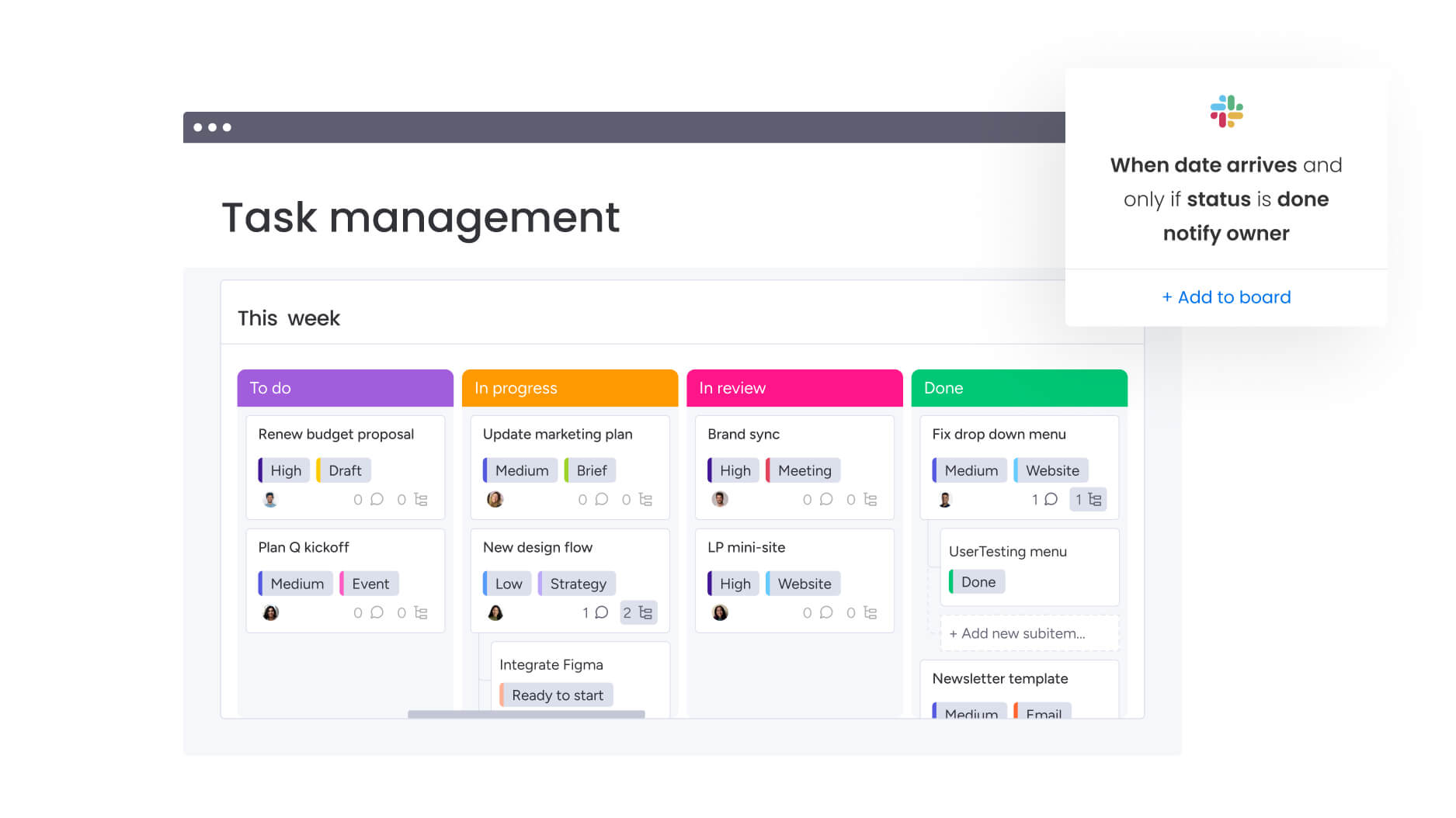
The following implementation approach ensures successful adoption of monday work management across large marketing teams. This step-by-step process addresses the specific challenges heads of marketing face when transitioning from disconnected tools to a unified platform.
Step 1: centralize all marketing work in a single platform
Begin by consolidating your marketing operations from scattered spreadsheets, emails, and disconnected tools into monday work management. Create dedicated workspaces for different marketing functions while maintaining visibility across all areas.
Import existing campaign data, team structures, and workflow documentation to establish your single source of truth. This centralization immediately addresses the disconnected execution problem where siloed teams create duplicative processes.
Step 2: standardize workflows with templates and automation
Once centralized, build standardized templates for your most common campaign types. Capture your best practices in these templates, including task sequences, approval workflows, and required deliverables.
Set up automation recipes to trigger notifications, update statuses, and move work between teams automatically. It eliminates the inefficient processes where teams constantly reinvent workflows for each campaign.
Step 3: implement resource management and capacity planning
Next, configure the Workload view to show team capacity, scheduled hours, and availability across your marketing team. Set up resource allocation processes that consider skills, availability, and workload balance when assigning work.
By establishing allocation processes based on skills and availability, you gain the visibility needed to balance workloads effectively, directly addressing the poor resource utilization that causes burnout.
Step 4: create executive dashboards for real-time visibility
Build dashboards that track the metrics executive leadership cares about. Configure these dashboards to pull data automatically from your campaign boards, eliminating manual reporting work.
Set up alerts for campaigns at risk of missing deadlines or exceeding budgets. This visibility enables you to track progress, capacity, and ROI in real time across all initiatives.
Step 5: connect marketing work to strategic goals and OKRs
To ensure daily efforts drive business value, link these campaigns directly to company-level marketing goals and OKRs.
This connection provides clear visibility into how each initiative contributes to the bottom line, helping marketing maintain its credibility as a strategic business function.
Step 6: enable cross-functional collaboration with stakeholders
Finally, extend the platform’s reach by setting up workflows that connect marketing with legal, finance, and product departments.
Establishing dedicated workspaces for agencies and external partners ensures secure, seamless collaboration that eliminates silos and maximizes organizational impact.
Comparison table: monday work management vs. competing platforms
The following comparison highlights how monday work management stands out against other marketing operations platforms. The following comparison highlights how it differentiates itself from common alternatives through a unique blend of visual coordination, integrated resource planning, and rapid time-to-value.
| Feature | monday work management | Salesforce Marketing Cloud | Adobe Marketo Engage |
|---|---|---|---|
| Team size support | Optimized for 50-100+ person teams | Enterprise-focused | Enterprise-focused |
| Campaign management | Visual boards with 15+ views | Email-centric workflows | Lead-focused campaigns |
| Resource management | Built-in Workload view with capacity planning | Requires additional tools | Limited native capabilities |
| Automation capabilities | No-code automation recipes | Complex setup required | Marketing automation focused |
| Real-time dashboards | Pre-built and custom dashboards | Requires configuration | Analytics-focused |
| Cross-team collaboration | Native collaboration tools | Requires Slack integration | Limited collaboration features |
| Implementation time | Less than four months | Six to twelve months typical | Six to twelve months typical |
| Retail-specific features | Seasonal campaign templates, multi-location coordination | Limited retail focus | B2B-focused |
| G2 rating | 4.7/five (12,000+ reviews) | 4.0/5 | 4.1/5 |
With high user adoption, rapid implementation, and flexibility that doesn’t compromise standardization, monday work management differentiates itself from competing platforms. The platform supports over 200 use cases across 190 industries, enabling retail marketing teams to customize workflows without coding while maintaining governance and control.
How Officeworks transformed their retail marketing operations
Officeworks, Australia’s leading retailer for office and school supplies with 165+ stores and 40,000+ products, faced severe operational challenges managing their diverse product range. The Space Planning team relied on scattered communication across separate folders, calendars, emails, and manually-updated spreadsheets with over 100 tabs.
Without a single source of truth for product information, schedules, and related communication, teams struggled to see which product categories had the most frequent updates. This meant some teams were overloaded while others had spare capacity.
After implementing monday work management, Officeworks achieved:
- 10,000+ fewer emails: through centralized communication and automated notifications.
- 635+ working spreadsheets replaced: with structured workflows and real-time data.
- One full day per week saved: for the project coordinator managing annual promotions.
- Balanced workloads: across stores and departments, avoiding team burnout.
The transformation demonstrates how monday work management addresses the core challenges heads of marketing face. By providing a single platform for planning, execution, and reporting, Officeworks achieved the operational efficiency needed to manage complex retail operations at scale.
Improve your marketing operations with confidence
The operational foundation that heads of marketing need to coordinate large, distributed teams effectively comes from monday work management. The platform eliminates the disconnected execution, poor resource utilization, and lack of visibility that plague enterprise marketing operations.
Through centralized campaign management, real-time resource planning, and automated workflows, marketing leaders gain the control and insight needed to demonstrate measurable business impact. The combination of standardization and flexibility ensures teams maintain consistent processes while adapting quickly to changing market demands.
Organizations like VML, Canva, and Officeworks have achieved significant operational improvements, from saving thousands of hours monthly to increasing creative output by 3x. These results reflect the platform’s ability to address the specific challenges that come with managing complex, multi-channel marketing operations at scale.
Try monday work managementThe content in this article is provided for informational purposes only and, to the best of monday.com‘s knowledge, the information provided in this article is accurate and up-to-date at the time of publication. That said, monday.com encourages readers to verify all information directly.
Frequently asked questions
How long does it take to implement marketing operations software for a team of 50-100 people?
Implementation timelines typically range from two to four months for teams of 50-100+ people, depending on workflow complexity and integration requirements. The process includes platform setup and configuration, team training and onboarding, pilot campaign launch, and full rollout with optimization. Dedicated onboarding support and implementation packages from monday work management ensure successful adoption across large enterprise teams.
What's the difference between marketing operations and marketing automation software?
Marketing operations software like monday work management focuses on managing the people, processes, and workflows that enable marketing execution including campaign planning, resource allocation, cross-team collaboration, and performance tracking. Marketing automation software handles repetitive tasks like email campaigns, lead scoring, and customer journey triggers. While marketing automation manages technical execution, marketing operations software coordinates the strategic planning and team collaboration that makes campaigns successful.
Can marketing operations software integrate with retail POS systems?
Yes, monday work management integrates with retail POS systems and other retail-specific technology through its extensive integration marketplace and open API. The platform connects with over 200 applications including Salesforce, HubSpot, Google Workspace, Microsoft Teams, and custom retail systems. These integrations enable marketing teams to pull sales data from POS systems into campaign performance dashboards, coordinate promotions with inventory systems, and align marketing activities with retail operations.
How do you measure ROI from marketing operations software?
ROI from marketing operations software is measured through both hard cost savings and productivity improvements. Hard cost savings include reduced software costs from consolidating multiple tools, decreased labor costs from automation, and lower agency costs from improved internal coordination. Productivity improvements include time saved on manual coordination, increased campaign velocity, improved resource utilization, and enhanced campaign performance through better execution.
What training is required for marketing operations software adoption?
The platform requires minimal training due to its intuitive interface and visual design. Most users become comfortable with monday work management within two to four weeks. The platform provides interactive product tours, video tutorials, live training sessions, and dedicated onboarding support for enterprise teams. For large marketing teams, the recommended approach includes starting with a pilot team to refine workflows, providing hands-on training for power users, creating internal champions, and rolling out gradually across departments.
Do marketing operations platforms support seasonal retail campaigns?
Yes, monday work management specifically supports seasonal retail campaigns through features designed for high-volume, time-sensitive marketing execution. The platform provides seasonal campaign templates that capture best practices for recurring promotions, visual calendars showing all seasonal activities and dependencies, resource planning tools to allocate team capacity for peak seasons, and automation that accelerates execution during compressed timelines. Retail marketing teams can create templates for major retail seasons that include all required tasks, approval workflows, and deliverables.

 Get started