


For enterprise marketing teams, coordinating strategy is one thing; executing it is another. When campaigns span multiple departments and data lives in a dozen different systems, maintaining alignment and proving ROI becomes a monumental task. The key isn’t just better planning but building an operational backbone that connects every moving part.
The right marketing operations software turns this chaos into coordinated execution across entire teams. Instead of jumping between specialized platforms for campaign planning, creative production, and performance tracking, teams need comprehensive systems that connect strategy to daily work while maintaining the governance and compliance requirements that enterprise organizations demand.
The following article cuts through the noise to show what actually matters: which capabilities deliver real results, how the top platforms stack up, and exactly how to implement the right solution to unify teams and show concrete ROI.
Key takeaways
- Choose platforms that unify your entire marketing workflow: connect campaign planning, creative production, and performance tracking in one system instead of juggling multiple disconnected tools.
- Prioritize features that scale with enterprise complexity: look for automated approval workflows, resource capacity planning, and real-time dashboards that reliably handle hundreds of concurrent campaigns at scale.
- Transform marketing operations through AI-powered insights and unified visibility: monday work management delivers instant campaign health monitoring, predictive resource planning, and automated risk detection that keeps large teams aligned and productive.
- Plan implementation strategically to ensure adoption success: start with workflow audits, configure compliance requirements first, then scale gradually across teams with proper training and quick wins.
- Measure both operational efficiency and business impact: track campaign launch velocity and approval cycle times alongside marketing-attributed revenue and resource utilization to prove platform ROI.
What makes marketing operations software effective for enterprise teams?
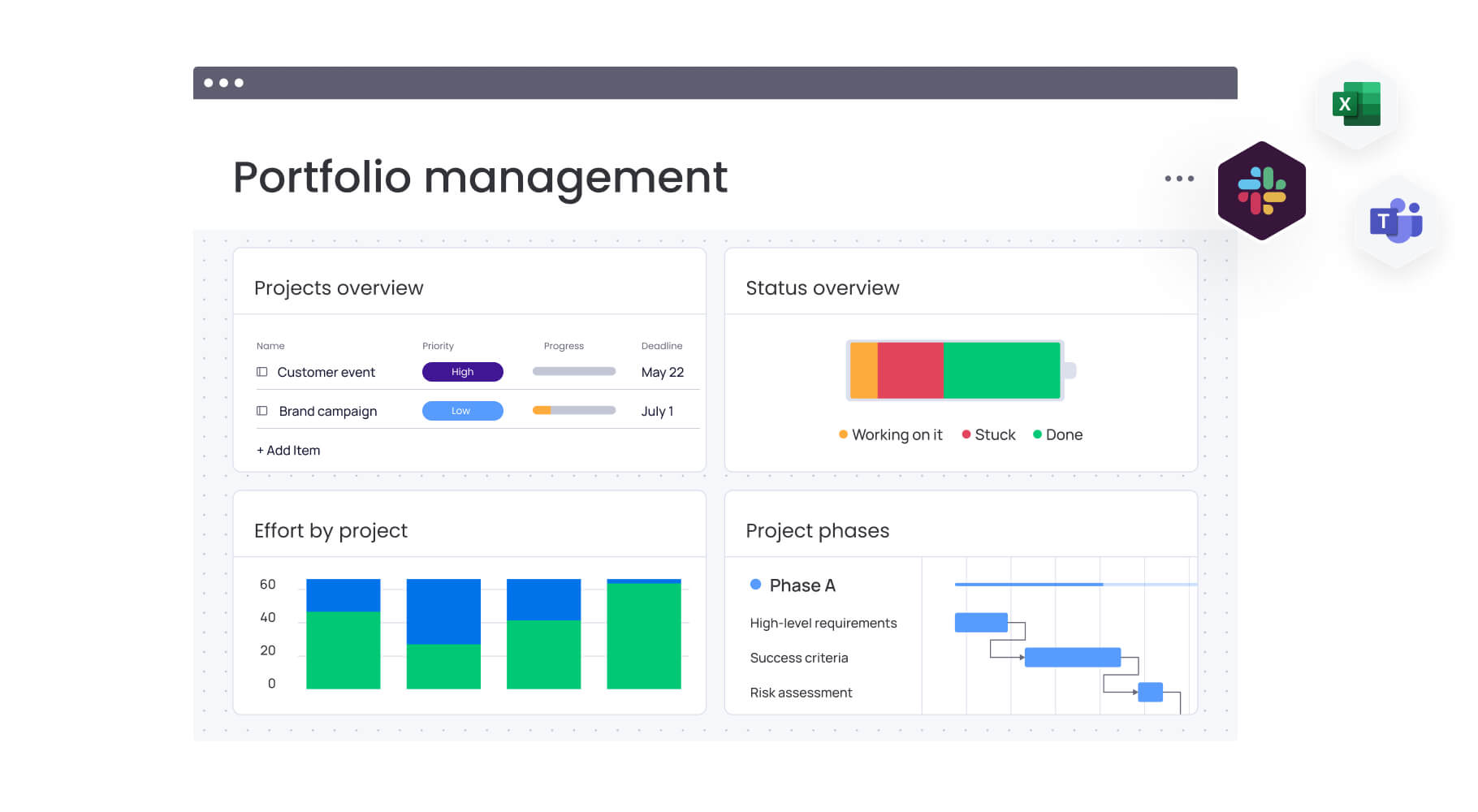
Even the best platform is only as good as its adoption. Success occurs when a system pulls scattered workflows together, accelerates execution speed, and provides real-time visibility across every department. The most effective platforms go beyond simple task management to connect high-level strategy with daily execution.
Effectiveness starts with user embrace; if your team doesn’t use the platform, accurate data and measurable results remain out of reach. This requires an intuitive interface and flexible workflows that can adapt without heavy IT involvement.
Consequently, many marketing teams are ditching the patchwork of specialized tools in favor of complete systems that handle the entire lifecycle, from campaign planning to creative production, seamlessly in one place.
Essential features for large marketing teams
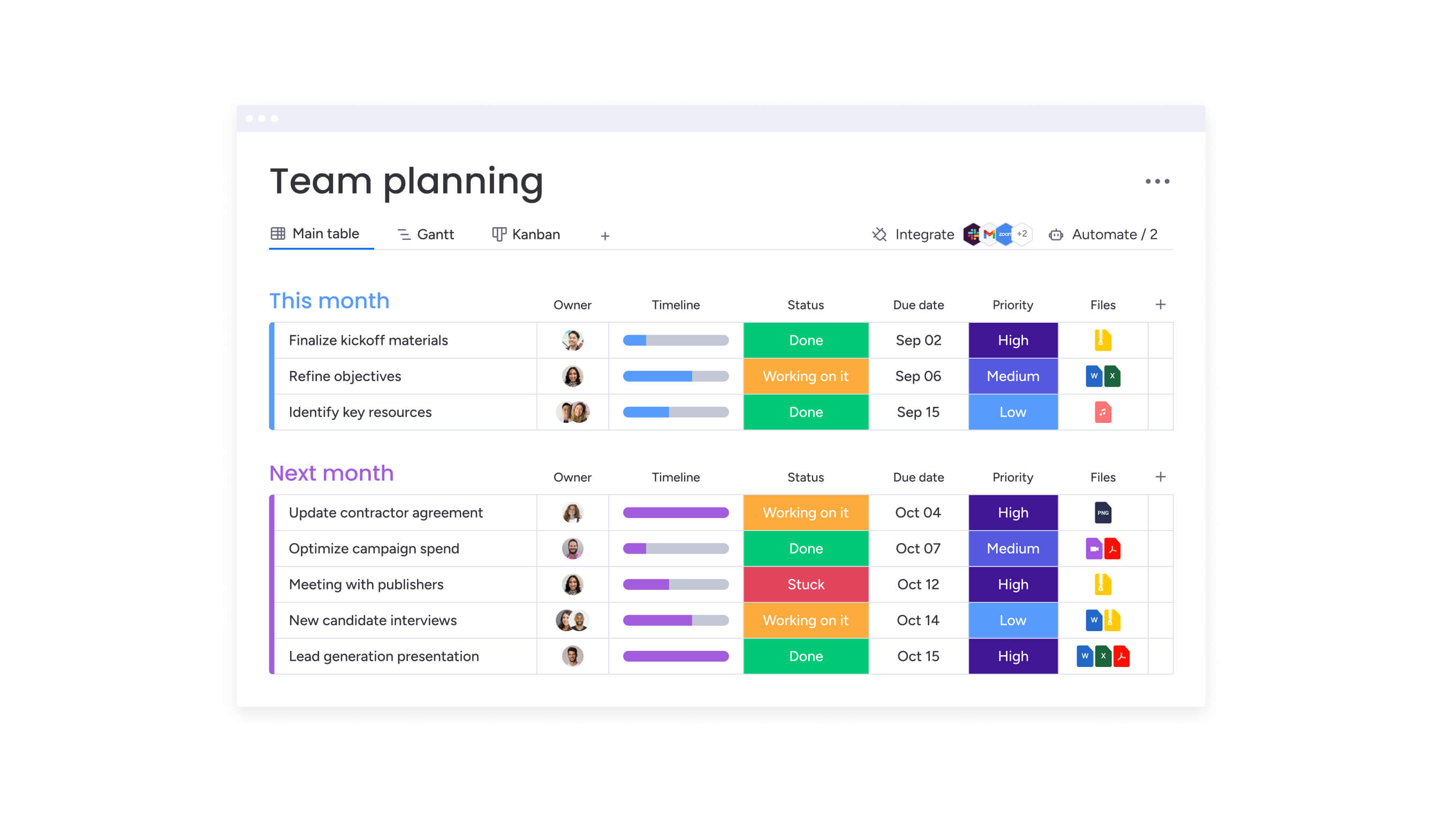
The difference between a basic tool and a transformative platform comes down to specific capabilities that function at scale. These features tackle the biggest enterprise headaches: managing hundreds of simultaneous campaigns, navigating compliance, and syncing teams that rarely interact. Focus on platforms that provide functionality across four critical areas explained below.
Campaign planning and execution
Enterprise marketing requires sophisticated marketing planning software that goes beyond simple task tracking. Therefore, look for platforms that provide:
- Visual campaign timelines: see dependencies, milestones, and resource allocation across multiple campaigns simultaneously.
- Approval workflows: route creative assets and campaign materials through legal, compliance, and brand teams automatically.
- Template standardization: deploy proven campaign structures while maintaining flexibility for customization.
Resource management and capacity planning
As your team expands, you must move away from manual tracking to ensure you know exactly who is handling what before assigning new work. Maintaining high velocity without burnout requires these essential capabilities:
- Workload visualization: real-time views of team capacity across projects and timelines.
- Skills-based allocation: match team members to work based on expertise, not just availability.
- Predictive capacity planning: forecast resource needs based on upcoming campaigns and historical data.
Real-time reporting and dashboards
Effective leadership depends on instant access to performance data, removing the need for time-consuming manual compilation. To keep stakeholders informed, prioritize features that include:
- Customizable dashboards: track campaign ROI, CAC, MQL-to-customer rates, and other KPIs specific to your business.
- Automated reporting: generate executive-ready summaries without pulling data from multiple sources.
- Drill-down capabilities: move from high-level metrics to granular campaign details in seconds.
Integration and automation
Your operations platform should serve as a central hub that connects seamlessly with your existing stack to eliminate manual labor. To build a truly cohesive ecosystem, ensure your solution meets these requirements:
- Native integrations: direct connections to CRM, marketing automation, analytics, and creative tools.
- API flexibility: build custom integrations for proprietary or specialized systems.
- Workflow automation: eliminate repetitive tasks like status updates, handoffs, and data entry.
How monday work management transforms marketing operations
These enterprise challenges get tackled head-on with monday work management, giving you a single platform that’s both flexible enough for creative teams and structured enough to satisfy your compliance team. The platform is built around three principles that solve the scaling problem: you grow your marketing operation without losing control or flying blind.
-
Leadership visibility: gain instant insight into portfolio health through AI-powered risk detection and automated reporting. Leaders can monitor campaign status and potential bottlenecks across hundreds of concurrent projects in real time.
-
Standardization and alignment: ensure consistency without sacrificing agility. Managed templates propagate best practices while cross-project dependencies maintain coordination between interconnected campaigns.
-
Resource optimization: transform how you allocate talent. A centralized resource directory tracks skills and availability, while the capacity manager provides live visibility into workload distribution to prevent burnout
Comparison: leading marketing operations platforms
Understanding how different platforms approach marketing operations helps identify the right fit for your organization. This comparison focuses on enterprise-critical capabilities and implementation considerations that directly impact your team’s success.
| Feature | monday work management | Salesforce Marketing Cloud | Adobe Experience Cloud | Asana | Wrike |
|---|---|---|---|---|---|
| Implementation time | Weeks to months | Six to twelve months | Six to twelve+ months | Two to four months | Three to six months |
| Compliance automation | Native approval chains with audit trails | Configuration required | Configuration required | Limited | Basic workflows |
| Resource management | Built-in capacity planning and allocation | Additional modules needed | Additional modules needed | Basic workload view | Resource add-on required |
| AI capabilities | AI Blocks, Digital Workers, risk insights | Einstein AI (additional cost) | Sensei AI (premium tier) | Limited AI features | AI project risk prediction |
| Visual workflow builder | Intuitive drag-and-drop | Complex setup | Steep learning curve | Simple boards | Moderate complexity |
| Integration ecosystem | 200+ native integrations + API | Salesforce ecosystem | Adobe ecosystem | 100+ integrations | 400+ integrations |
| User adoption (G2) | Highest for enterprises | Moderate | Lower due to complexity | High | Moderate |
| Pricing transparency | Scalable per-user pricing | Custom enterprise pricing | Custom enterprise pricing | Per-user tiers | Per-user tiers |
Implementation roadmap for finance marketing teams
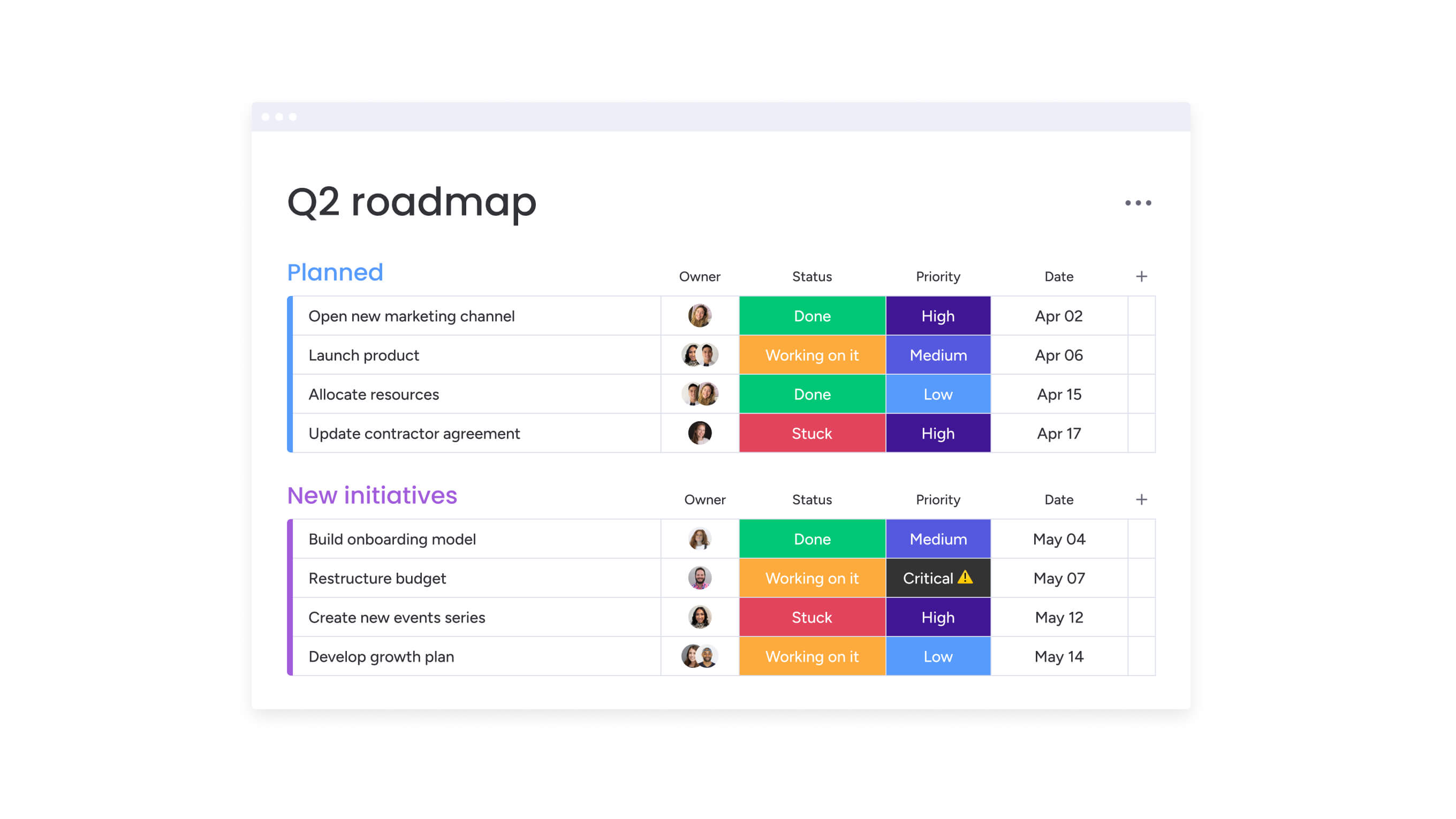
Successfully deploying marketing operations software requires more than technical setup. It demands strategic planning, stakeholder alignment, and a marketing management process. By following these progressive steps, you can ensure the system is tailored to your unique requirements while maximizing long-term adoption.
Step 1: audit current marketing workflows
Start with mapping your existing processes to identify inefficiencies and compliance requirements. Document approval chains, identify bottlenecks, and assess which workflows are standardized versus ad-hoc. This baseline informs how you’ll configure the platform to match your organization’s specific needs.
Key activities include:
- Process documentation: create visual maps of current campaign workflows.
- Compliance review: identify regulatory requirements and approval gates.
- Bottleneck analysis: pinpoint delays and manual handoffs that slow execution.
Step 2: configure compliance and governance
Next, set up automated workflows that route campaigns through required approvals based on type, budget, or regulatory requirements. Configure notification triggers, escalation paths, and audit trails to maintain complete documentation while accelerating review cycles.
Essential configurations include:
- Approval routing: automatic assignment based on campaign parameters.
- Audit trails: complete documentation for regulatory compliance.
- Escalation protocols: automated notifications for delayed approvals.
Step 3: integrate your marketing tech stack
After that, connect your CRM with marketing automation, analytics platforms, and financial reporting systems to create unified data flow. Use native integrations where available and leverage APIs for custom connections to proprietary systems. This eliminates data silos and manual transfers between platforms.
Integration priorities:
- CRM synchronization: bidirectional data flow for lead tracking.
- Analytics platforms: automated performance data collection.
- Financial systems: budget tracking and ROI measurement.
Step 4: build executive dashboards
Create real-time views of metrics that matter to leadership: campaign ROI, customer acquisition costs, pipeline contribution, and budget adherence. Configure automated reports that provide current data for board meetings and executive reviews without manual compilation.
Dashboard components:
- Performance metrics: real-time campaign ROI and conversion rates.
- Resource utilization: team capacity and allocation visibility.
- Budget tracking: spend versus plan across all campaigns.
Step 5: scale across teams and regions
Finally, roll out standardized templates and workflows across your entire marketing organization. Adapt for regional requirements while maintaining global consistency. Train teams on best practices and continuously optimize based on usage data and feedback.
Scaling considerations:
- Template standardization: consistent processes with regional flexibility.
- Training programs: role-specific onboarding and ongoing education.
- Continuous optimization: regular review and refinement based on usage data.
Measuring success and ROI
Effective measurement serves two critical purposes: demonstrating platform ROI and identifying optimization opportunities. Track both operational efficiency metrics and their connection to tangible business outcomes that resonate with financial leadership.
Operational metrics to track
Time savings are your quickest win. Track these metrics to show exactly how many hours you’re saving and where you can streamline even further:
- Campaign launch velocity: reduction in time from brief to market.
- Approval cycle time: hours saved in review and sign-off processes.
- Manual task reduction: percentage of work automated versus manual.
- Cross-team collaboration time: decrease in coordination overhead.
Business impact measurements
Translate those efficiency gains into results your C-suite actually cares about. Here’s how to prove your new system is driving real money and results:
- Marketing-attributed revenue: improved tracking and attribution accuracy.
- Resource utilization rates: percentage of capacity deployed on high-value work.
- Campaign performance: increase in successful campaigns meeting objectives.
- Compliance adherence: reduction in regulatory issues or delayed approvals.
Organizations using solutions like monday work management report significant improvements across these metrics. Marketing teams achieve faster campaign delivery through automation and streamlined workflows, while gaining the visibility needed to optimize resource allocation and demonstrate marketing’s strategic value.
Advanced capabilities for scaling marketing operations
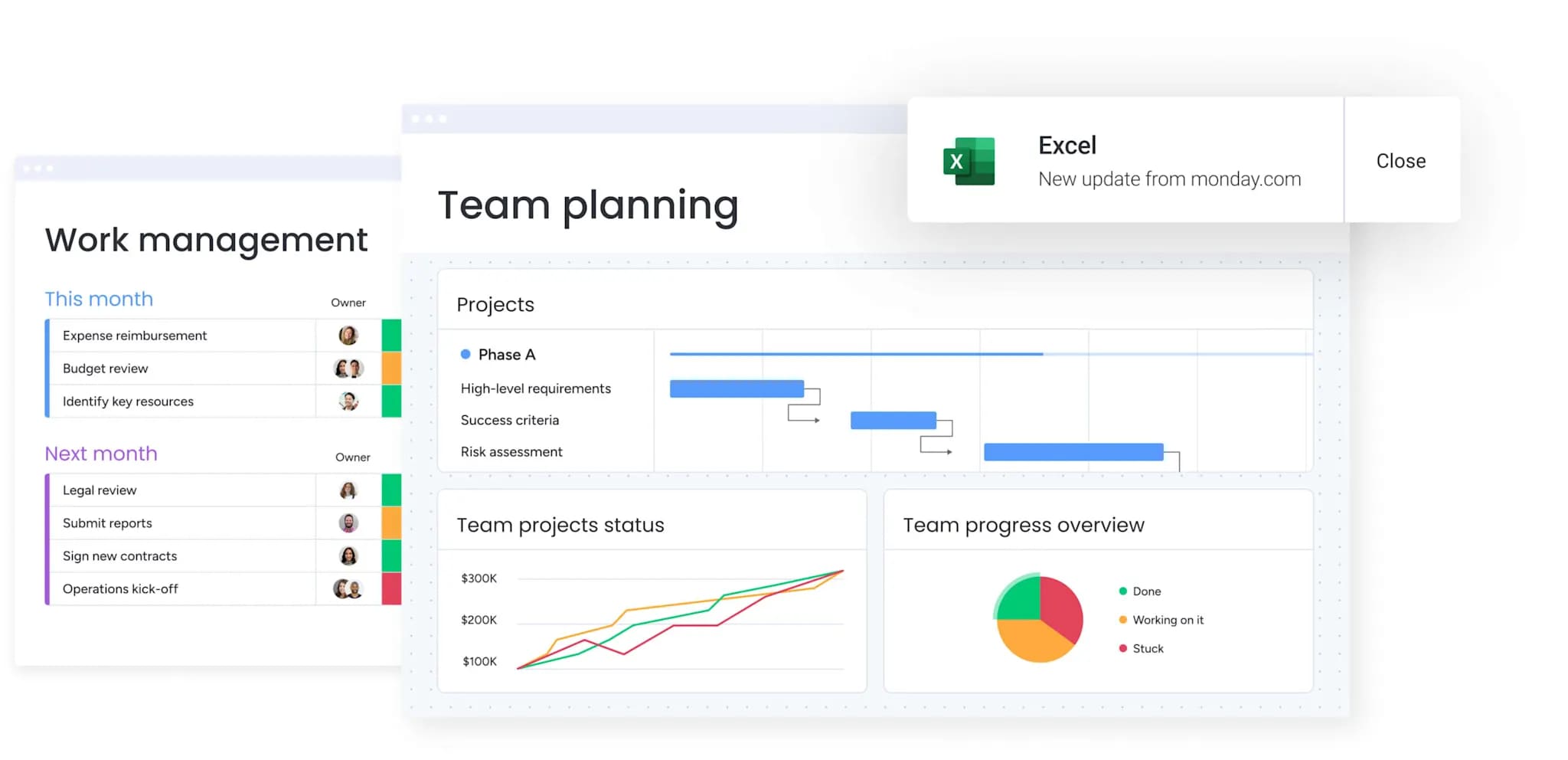
Growing marketing teams eventually outgrow basic workflow tools. You’ll need advanced features to handle the complexity that comes with scale. The best platforms handle your most complicated processes without becoming a nightmare to use. These power features are what separate serious enterprise platforms from the basic tools that fall apart at scale.
AI-powered optimization
AI does the heavy lifting that used to consume hours of your team’s time: spotting hidden opportunities and flagging risks before they become problems. AI blocks within monday work management categorize incoming requests, extract insights from campaign data, and summarize complex information into actionable recommendations.
Digital Workers operate continuously in the background, monitoring campaign health, flagging potential issues, and suggesting resource reallocations based on real-time performance data.
Cross-functional orchestration
Marketing success requires coordination across multiple departments. Sales, product, legal, and finance teams must work in alignment to execute campaigns effectively.
Effective platforms provide shared workspaces where cross-functional teams collaborate without switching tools. Automated handoffs, permission-based access, and role-specific views ensure everyone has the information they need without overwhelming them with irrelevant details.
Predictive planning and forecasting
Understanding future capacity needs helps marketing leaders make proactive decisions about hiring, outsourcing, and project prioritization. Advanced platforms analyze historical data to predict resource requirements, identify seasonal patterns, and forecast campaign outcomes based on current trajectory.
Common implementation challenges and solutions
Implementing a new platform often involves navigating cultural and technical hurdles before reaching full efficiency. By anticipating potential roadblocks early, you can maintain momentum and accelerate your path to a measurable return on investment.
Challenge: resistance to new processes
Teams comfortable with existing workflows may resist change, even when current methods are inefficient.
- Solution: start with pilot groups who can demonstrate early wins. Use their success stories to build momentum and address concerns with concrete examples of improvement.
Challenge: data migration complexity
Moving historical data from multiple systems creates technical and organizational challenges.
- Solution: prioritize active campaigns and recent data for initial migration. Archive historical information separately and migrate selectively based on actual need.
Challenge: maintaining flexibility while standardizing
Marketing teams need consistency for efficiency but flexibility for creativity and market responsiveness.
- Solution: create modular templates that enforce critical steps while allowing customization. Use managed templates in monday work management to propagate updates without disrupting active work.
Modernize your marketing operations today
Selecting the right software fundamentally reshapes how your team executes and delivers value. Your choice determines how effectively your organization collaborates, how quickly initiatives reach the market, and whether you can substantiate marketing’s influence on the bottom line.
For leaders overseeing complex departments and rigorous requirements, monday work management provides the unified visibility and intelligent automation necessary to excel. These enterprise capabilities allow teams to accelerate production while maintaining total governance and control.
Investing in a comprehensive platform yields significant returns through heightened efficiency and superior resource allocation. Teams that adopt these systems experience faster delivery cycles and gain clear insight into how marketing efforts drive overall business growth.
The content in this article is provided for informational purposes only and, to the best of monday.com‘s knowledge, the information provided in this article is accurate and up-to-date at the time of publication. That said, monday.com encourages readers to verify all information directly.
Frequently asked questions
How does marketing operations software differ from project management tools?
Marketing operations software differs from project management tools by providing specialized capabilities for campaign planning, creative production, and performance measurement. While project management tools focus on task completion, marketing operations platforms connect strategy to execution with features like campaign templates, approval workflows, and marketing-specific integrations.
What security certifications should marketing operations software have?
Marketing operations software should maintain SOC two Type II, ISO 27001, and GDPR compliance certifications at minimum. For financial services, look for platforms offering additional controls like SSO, audit trails, IP restrictions, and role-based permissions that satisfy regulatory requirements.
How long does implementation typically take?
Implementation typically takes four to twelve weeks for initial deployment, with full adoption across large organizations occurring over three to six months. Platforms with intuitive interfaces and strong onboarding support achieve faster adoption than complex enterprise systems.
Can marketing operations software integrate with proprietary systems?
Marketing operations software can integrate with proprietary systems through open APIs and custom connectors. Platforms like monday work management provide extensive API documentation and support for building secure, bidirectional integrations with internal tools.
What's the typical ROI timeline for marketing operations software?
The typical ROI timeline for marketing operations software ranges from three to six months, with some organizations seeing returns within weeks through immediate efficiency gains. Factors affecting timeline include team size, implementation scope, and current process maturity.
How do you ensure user adoption across large marketing teams?
Ensuring user adoption across large marketing teams requires intuitive design, comprehensive training, and visible quick wins. Choose platforms with high user satisfaction ratings, provide role-specific onboarding, and celebrate early successes to build momentum across the organization.

 Get started