


Marketing teams are often overwhelmed by their tech stack. Look at any enterprise marketing department and you’ll find 15-20 different platforms juggling campaigns, metrics, and workflows. Email automation handles customer journeys. Project management tools track deadlines. Analytics platforms measure results. Creative tools manage assets. Each platform solves a specific problem, but together they create significant coordination challenges that slow execution and fragment visibility.
Finding software that sends emails or scores leads isn’t the hard part. That’s baseline functionality now. The real challenge is finding platforms that can orchestrate the complex, cross-departmental workflows that make campaigns possible. Enterprise marketing teams need systems that connect strategy to execution, provide real-time visibility into capacity and performance, and enable seamless collaboration between marketing, creative, legal, and finance teams.
This guide reviews the top marketing automation software for enterprise teams, specifically platforms that handle both customer-facing campaigns and the behind-the-scenes operational chaos. It also delves into the key differences between traditional email automation and comprehensive work management platforms.
Key takeaways
Marketing automation has evolved far beyond email campaigns and lead scoring. Today’s enterprise marketing teams need platforms that orchestrate complex, cross-departmental workflows while maintaining visibility and control at scale. When you find the right marketing automation software, it bridges the gap between big ideas and actual results.
Here are some of the most important points to take away from this guide:
- Choose platforms that orchestrate teams, not just campaigns: enterprise marketing needs work management platforms that coordinate cross-departmental workflows, not just email automation that works in isolation.
- Unify fragmented marketing operations in one workspace: connect strategy, planning, and execution so teams can work from a single source of truth and gain real-time visibility into all campaigns and resources.
- Scale coordination without adding headcount: use AI-powered automation and visual workflows to manage complex campaigns across regions while preventing team burnout through smart capacity planning.
- Transform marketing operations: orchestrate cross-functional campaigns, automate approval workflows, and connect daily execution to strategic goals through customizable dashboards and AI-driven insights with monday work management.
- Integrate existing tools rather than replacing them: build a unified tech stack by connecting your CRM, analytics, and creative platforms through a central orchestration layer that eliminates data silos.
What is the best marketing automation software?
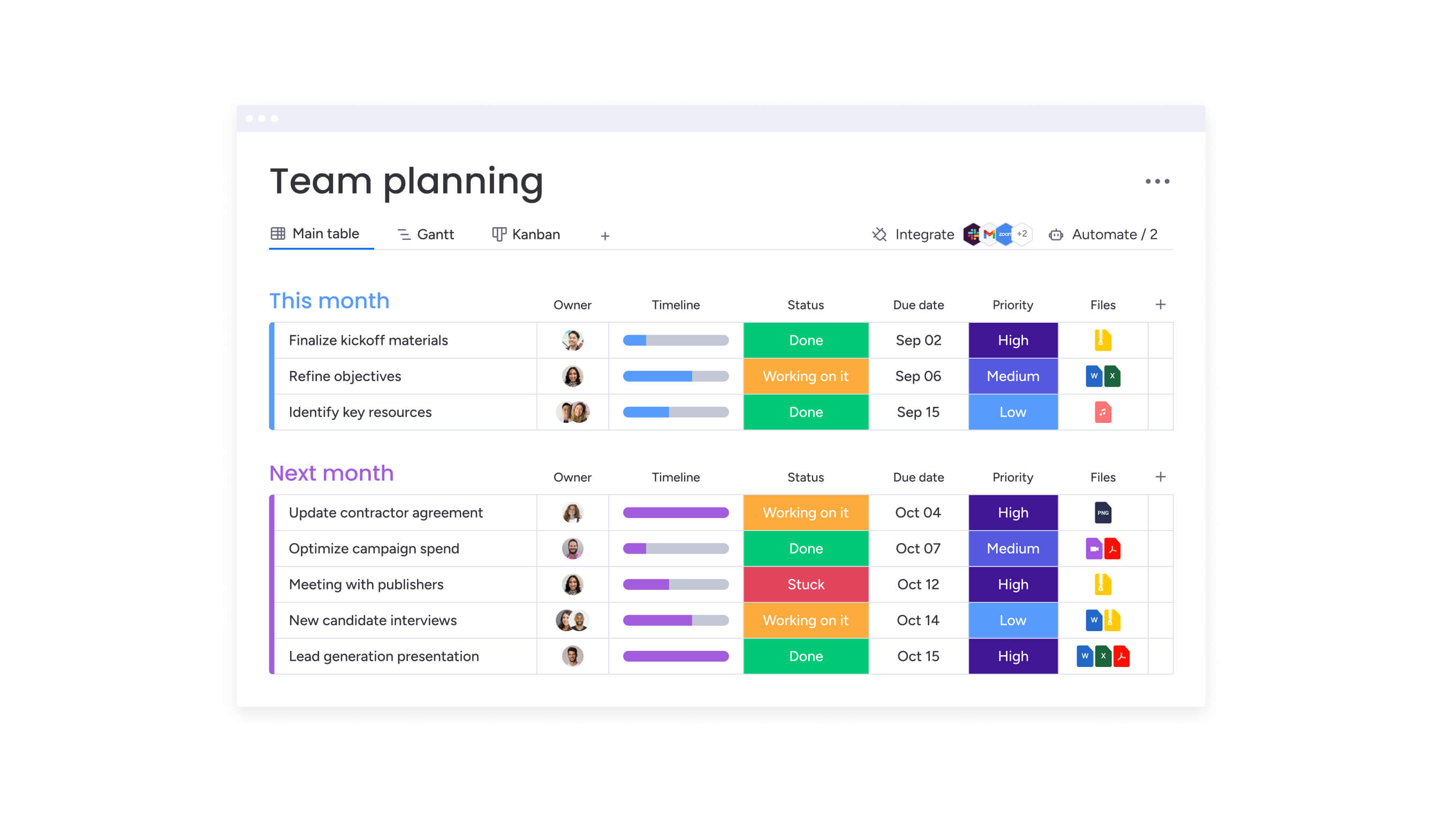
Your perfect marketing automation match hinges on three things: how big your team is, how complicated your campaigns get, and what you’re actually trying to achieve. For enterprise marketing teams managing 50-100+ people across multiple departments, “best” means a platform that goes beyond tactical automation to address operational orchestration.
Old-school marketing automation zeroes in on customer touchpoints: your emails, lead nurturing, journey mapping. Sure, these tools nail the repetitive stuff, but they completely miss how teams actually coordinate to make campaigns happen in the first place. Enterprise teams need both: specialized tools for customer engagement and comprehensive platforms for team coordination.
When evaluating marketing automation software, consider these critical factors:
- Unified workflows: can the platform connect planning, execution, and reporting in one workspace?
- Cross-team orchestration: does it enable seamless collaboration between marketing and other departments?
- AI capabilities: are AI features limited to email optimization, or do they orchestrate workflows at scale?
- Integration ecosystem: how well does it connect with your existing marketing tech stack?
- Enterprise scalability: can it balance team flexibility with organizational governance?
The evolution from basic email blasts to full-blown marketing command centers reflects the increasing complexity of modern marketing teams over the last decade. Teams no longer work in isolation. Campaign launches involve creative, legal, product, and finance teams. Success requires platforms that bridge these connections.
Top marketing automation platforms for enterprise teams
The following platforms represent the leading options for enterprise marketing teams, each with distinct strengths and ideal applications. Understanding these differences helps organizations select the right solution for their specific operational needs and strategic goals.
| Platform | Best for | Key strengths | Primary limitations |
|---|---|---|---|
| HubSpot Marketing Hub | Mid-market companies with integrated sales/marketing | User-friendly interface, native CRM integration | Expensive at enterprise scale, limited cross-departmental workflows |
| Marketo Engage (Adobe) | Large B2B organizations with complex sales cycles | Robust analytics, enterprise scalability, ABM features | Steep learning curve, requires technical expertise |
| Salesforce Marketing Cloud | Enterprises invested in Salesforce infrastructure | Deep CRM integration, journey builder, AI insights | Complex implementation, high total cost |
| monday work management | Enterprise teams managing cross-departmental campaigns | Unified work management, AI orchestration, flexible governance | Focused on operations vs. customer engagement |
| ActiveCampaign | Growing businesses transitioning to enterprise scale | Affordable pricing, intuitive automation, built-in CRM | Limited enterprise governance, basic reporting |
| Braze | B2C companies with mobile-first strategies | Real-time personalization, cross-channel orchestration | Customer engagement focus, not internal operations |
HubSpot Marketing Hub
HubSpot Marketing Hub provides comprehensive inbound marketing automation with strong CRM integration. The platform excels at email marketing, landing pages, and lead nurturing workflows.
- Best for: mid-market companies with integrated sales and marketing teams.
- Key strengths: user-friendly interface, extensive educational resources, native CRM integration.
- Limitations: can become expensive at enterprise scale, limited cross-departmental workflow capabilities.
Marketo Engage (Adobe)
Marketo Engage delivers sophisticated B2B marketing automation with advanced lead scoring and account-based marketing capabilities. The platform integrates deeply with Adobe’s creative suite.
- Best for: large B2B organizations with complex sales cycles.
- Key strengths: robust analytics, enterprise-grade scalability, ABM features.
- Limitations: steep learning curve, requires technical expertise for setup.
Salesforce Marketing Cloud
Salesforce Marketing Cloud offers multi-channel campaign management with powerful personalization capabilities. The platform leverages Salesforce’s extensive ecosystem for data integration, elevating sales automation tools for enterprise teams.
- Best for: enterprises already invested in Salesforce infrastructure.
- Key strengths: deep CRM integration, journey builder, AI-powered insights.
- Limitations: complex implementation, high total cost of ownership.
monday work management
Marketing operations transform when you connect strategy, planning, and execution in one collaborative workspace with monday work management. Unlike traditional marketing automation, it orchestrates the operational workflows that make campaigns possible.
The platform addresses the coordination challenge that email automation platforms miss. Marketing teams gain centralized visibility into all campaigns, performance metrics, and team workloads through customizable dashboards and AI-powered insights. With features like the Workload View and Resource Planner, teams can balance capacity and prevent burnout while maintaining delivery speed.
- Best for: enterprise marketing teams (50-100+ people) managing complex, cross-departmental campaigns.
- Key strengths: unified work management, AI-powered orchestration, enterprise flexibility with governance.
- Unique value: connects high-level strategy to daily execution while automating operational workflows.
ActiveCampaign
ActiveCampaign combines email marketing, automation, and CRM in an accessible package. The platform focuses on customer experience automation with machine learning capabilities.
- Best for: growing businesses transitioning to enterprise scale.
- Key strengths: affordable pricing, intuitive automation builder, built-in CRM.
- Limitations: limited enterprise governance features, basic reporting capabilities.
Braze
Braze specializes in real-time, cross-channel customer engagement with strong mobile messaging capabilities. The platform excels at personalization across email, push, SMS, and in-app channels.
- Best for: B2C companies with mobile-first strategies.
- Key strengths: real-time personalization, cross-channel orchestration, developer-friendly APIs.
- Limitations: focused on customer engagement, not internal marketing operations.
What software do marketing managers use?
Marketing managers typically juggle a complex tech stack that includes CRM with marketing automation, email marketing tools, analytics systems, project management software, and creative tools. This fragmentation creates significant challenges where data lives in silos, teams work in isolation, and managers spend hours compiling reports from disconnected systems, emphasizing the need for sales automation to unify workflows.
The typical marketing tech stack includes these essential categories:
- CRM systems: Salesforce, HubSpot, or Microsoft Dynamics for customer data.
- Email platforms: Mailchimp, Klaviyo, or Braze for campaign execution.
- Analytics tools: Google Analytics, Tableau, or Looker for performance tracking.
- Creative tools: Adobe Creative Cloud, Canva, or Figma for asset creation.
- Project management: various tools for task tracking and collaboration.
The tool chaos creates serious drag. You’re checking six platforms just for basic updates, planning resources in endless spreadsheets, and hunting down campaign timelines that live nowhere near your creative briefs.
Unified work management platforms reduce this complexity by serving as the orchestration layer that connects existing tools. Instead of replacing specialized platforms, they provide the connective tissue that makes everything work together. Teams using monday work management integrate their marketing stack through 200+ native integrations, creating a single source of truth for marketing operations.
When you finally bring everything under one roof, you’ll immediately notice:
- Real-time visibility: marketing managers gain campaign progress updates without chasing status reports.
- Visual resource allocation: capacity planning happens through intuitive tools rather than spreadsheets.
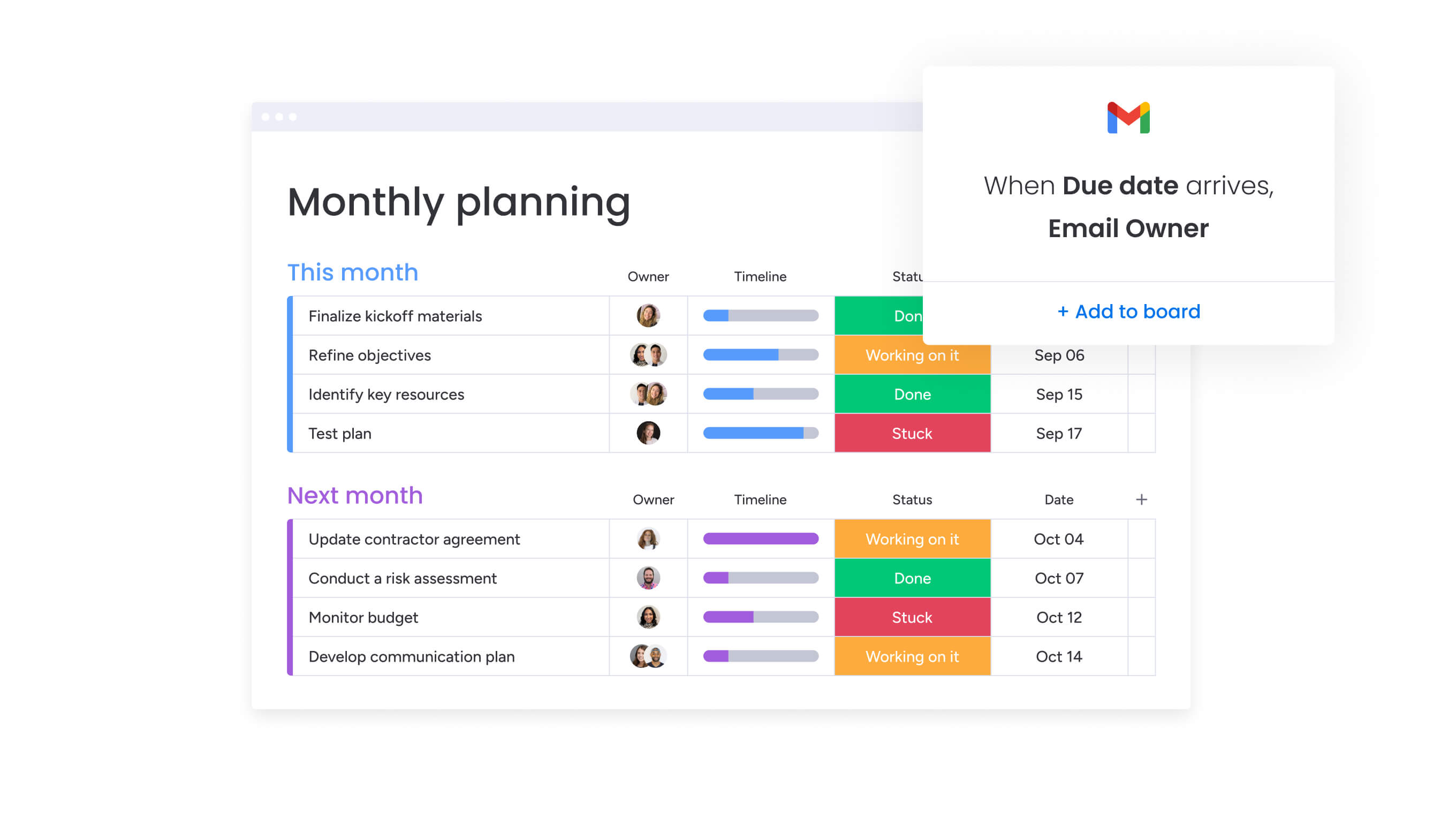
- Automated workflows: approvals route automatically, and notifications trigger across integrated systems.
How monday work management transforms marketing operations
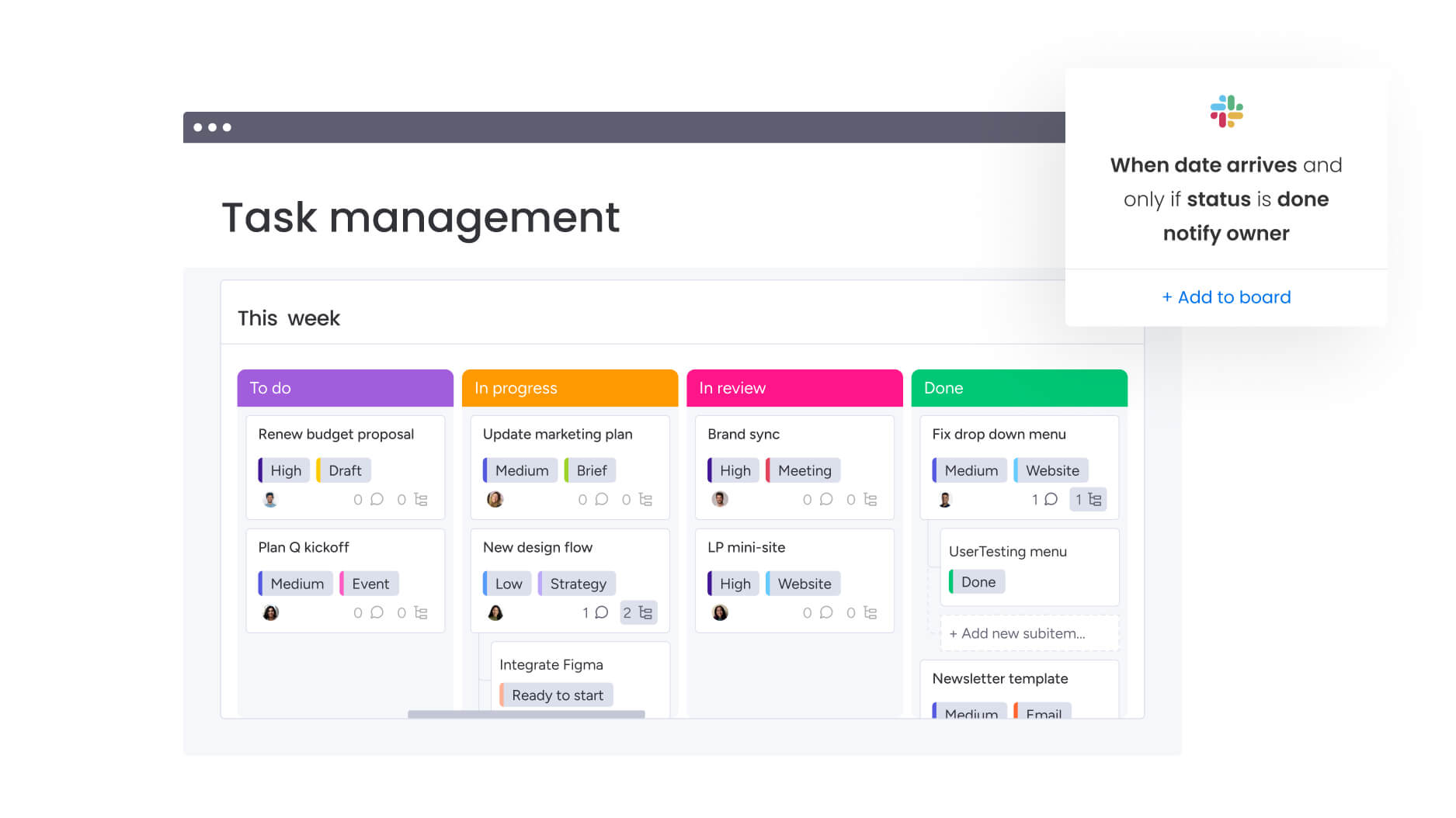
Teams that switch to monday work management finally tackle the messy operational problems that regular automation tools completely miss. The platform provides the infrastructure for managing complex, cross-functional campaigns at scale through five key transformation areas.
Step 1: scale campaign management with visual coordination
Plan campaigns visually with Gantt charts, timelines, and calendars that show exactly how your multi-channel initiatives fit together, even when you’re coordinating across different regions. Teams see exactly which campaigns are running, who owns each deliverable, and how everything connects to broader marketing strategy.
Dependencies between project items ensure creative assets get approved before media buys go live, while automated notifications keep everyone aligned without manual follow-up.
Step 2: gain real-time resource visibility
The Workload View shows team capacity across multiple projects, enabling managers to balance assignments before burnout happens. The Resource Directory brings together key data about talent across the organization including department, roles, and expertise.
This visibility helps assign the right people to the right projects based on skills and availability, not just who’s closest.
Step 3: accelerate creative workflows
Customizable forms streamline creative brief submissions, automatically routing requests to appropriate team members while providing visibility into queue status. This transparency sets realistic expectations with stakeholders and ensures creative resources focus on the highest-priority work.
Automated approval workflows eliminate the bottleneck of manual reviews.
Step 4: create dashboards that demonstrate impact
Custom dashboards visualize campaign ROI, customer acquisition costs, and team productivity without manual compilation. These executive-ready views enable marketing leaders to demonstrate impact and make data-driven budget decisions.
Real-time data means leadership sees what they need at a glance rather than waiting for weekly reports.
Step 5: deploy AI orchestration at scale
AI Blocks and Digital Workers handle routine coordination tasks. They categorize incoming requests, summarize meeting notes into action items, and flag at-risk campaigns based on update patterns.
This AI-powered orchestration goes beyond email optimization to manage complex, cross-team workflows automatically.
Try monday work managementWhich CRM is best for marketing?
Before you build your tech stack, you need to get clear on what CRMs do versus what marketing automation platforms handle. CRMs manage customer data and relationships, while marketing automation platforms execute campaigns and manage workflows.
CRMs excel at:
- Customer data management: storing contact information, interaction history, and account details.
- Sales pipeline tracking: managing leads through conversion stages.
- Relationship insights: providing unified customer views across touchpoints.
Marketing automation platforms focus on:
- Campaign execution: automating email sends, social posts, and multi-channel campaigns.
- Workflow management: coordinating team activities and approval processes.
- Performance tracking: measuring campaign effectiveness and ROI.
Leading marketing CRMs include:
- Salesforce: comprehensive platform with extensive customization options.
- HubSpot: integrated CRM with native marketing automation features.
- Microsoft Dynamics: enterprise solution with strong Microsoft ecosystem integration.
Effective marketing operations require both customer data systems and work management platforms. The CRM stores customer information while the work management platform orchestrates how teams plan, create, and deliver campaigns using that data, bridging CRM marketing automation for seamless execution.
As the orchestration layer connecting CRM for marketing automation to marketing execution, monday work management enables seamless data flow through native integrations. Customer insights flow directly into campaign planning workflows. Teams access the data they need without switching platforms, while maintaining a single source of truth for marketing operations.
Which is the best software for automation?
Marketing automation represents one component of broader organizational workflow management. While marketing-specific tools excel at customer-facing automation, organizations increasingly need platforms that automate work across departments.
Marketing-specific automation handles:
- Email triggers: sending messages based on customer behavior.
- Lead scoring: automatically qualifying prospects.
- Journey mapping: creating multi-touch campaign sequences.
Enterprise workflow automation addresses:
- Cross-departmental processes: connecting marketing with creative, legal, and finance.
- Resource allocation: automatically assigning work based on capacity and skills.
- Approval workflows: routing content through review cycles.
- Status updates: triggering notifications when project phases complete.
This distinction matters because marketing doesn’t operate in isolation. Campaign launches require coordination with product teams. Budget approvals involve finance. Creative production spans multiple departments.
Comprehensive work management platforms enable automation across marketing and adjacent functions. They provide the infrastructure for scaling operations without adding headcount. Teams automate repetitive coordination tasks, standardize processes through templates, and trigger actions based on complex conditions.
Organizations using monday work management leverage cross-departmental automation capabilities to connect marketing execution with broader business operations. The platform’s no-code automation builder enables teams to create sophisticated workflows without IT involvement, accelerating time to value.
Transform your marketing operations with the right platform
Marketing automation has evolved beyond email campaigns and lead scoring. Today’s enterprise marketing teams need platforms that connect strategy to execution while orchestrating complex, cross-departmental workflows.
The right platform depends on your organizational context and priorities. Email-focused tools excel at customer engagement. Comprehensive work management platforms excel at operational orchestration. Most enterprises need both, working together through smart integrations.
Your marketing team isn’t getting any simpler. As you add specialists, channels, and regions, your ability to coordinate all those moving parts will make or break your campaigns. Platforms that provide visibility into capacity, automate operational workflows, and connect daily execution to strategic goals will differentiate high-performing marketing organizations.
Moving from a dozen disconnected tools to one unified system isn’t just a tech upgrade — it completely changes how marketing teams work together. Organizations that embrace this evolution position themselves for sustained growth and competitive advantage.
The content in this article is provided for informational purposes only and, to the best of monday.com’s knowledge, the information provided in this article is accurate and up-to-date at the time of publication. That said, monday.com encourages readers to verify all information directly.
Frequently asked questions
How does monday work management differ from traditional marketing automation platforms?
The primary difference between monday work management and traditional marketing automation platforms is their focus. Traditional platforms automate customer-facing activities like email campaigns, while monday work management automates the internal operations and team coordination that make those campaigns possible, handling the "how" teams work together to plan, create, and execute campaigns.
Can monday work management integrate with my existing marketing technology stack?
Yes, monday work management integrates with 200+ applications including HubSpot, Salesforce, Google Analytics, Slack, and major advertising platforms. The open API enables custom integrations with proprietary systems, allowing you to connect the platform to your existing tools without forcing teams to abandon familiar workflows.
What's the typical ROI for marketing teams using monday work management?
Organizations typically see measurable returns through time savings and improved productivity. Marketing teams report saving thousands of hours annually by eliminating manual status updates and automating workflows. The payback period is often less than four months for enterprise marketing organizations.
How long does it take to implement monday work management for a large marketing team?
Most enterprise marketing teams achieve full adoption within two to four weeks. The intuitive interface requires minimal training, and teams can start with templates that match their existing workflows. This rapid time to value contrasts with complex enterprise software requiring months of implementation.
How does monday work management help prevent marketing team burnout?
The platform provides real-time visibility into team workload through the Workload View, enabling managers to identify capacity issues before they become critical. Automated workflows eliminate repetitive manual tasks, freeing teams to focus on creative and strategic work rather than administrative coordination.
What size marketing team benefits most from monday work management?
Enterprise marketing teams with 50-100+ people across multiple departments see the greatest impact. These organizations typically struggle with coordination challenges that smaller teams don't face, making the operational orchestration capabilities particularly valuable for complex, cross-functional campaigns.

 Get started