


Media marketing leaders operate in constant motion. Campaigns run across multiple channels, creative cycles overlap, and priorities shift weekly based on performance, audience trends, and revenue pressure. Even the most well-funded teams struggle to maintain focus when strategy and execution live in different places.
When goals sit in decks and execution happens across spreadsheets, inboxes, and disconnected tools, visibility disappears. Leaders can’t see what’s truly on track, which teams are overloaded, or how daily work connects back to business outcomes, until it’s too late.
That’s where modern goal tracking software makes the difference. The right platform connects high-level objectives to live campaign execution, giving marketing leaders clarity without slowing creative momentum. This guide breaks down what heads of Marketing in media actually need from goal tracking software in 2026.
Key takeaways
Modern media marketing teams operate at a scale and speed where goals can easily drift from execution. The following takeaways summarize the core insights heads of marketing should consider when evaluating goal tracking software for complex, multi-channel environments.
- Strategic goals must stay connected to daily execution: goal tracking is only effective when company objectives, marketing OKRs, and campaign-level work are directly linked, ensuring teams understand how their output drives business outcomes.
- Real-time visibility prevents delays and misalignment: centralized views into campaign performance, capacity, and progress help leaders identify risks early and make informed decisions before deadlines or budgets are impacted.
- Standardization enables scale without limiting creativity: reusable workflows, templates, and automation reduce operational friction while still allowing creative teams the flexibility they need to produce high-quality work.
- Enterprise marketing teams need built-in resource management: live workload and capacity tracking helps prevent burnout, balance priorities across teams, and ensure the right skills are applied to the right initiatives at the right time.
- Platforms like monday work management unify goals, execution, and reporting: by connecting campaign management, OKRs, dashboards, and automations in one system, marketing leaders can maintain alignment, improve efficiency, and measure impact across 50–100+ team members.
How marketing leaders drive results with monday work management
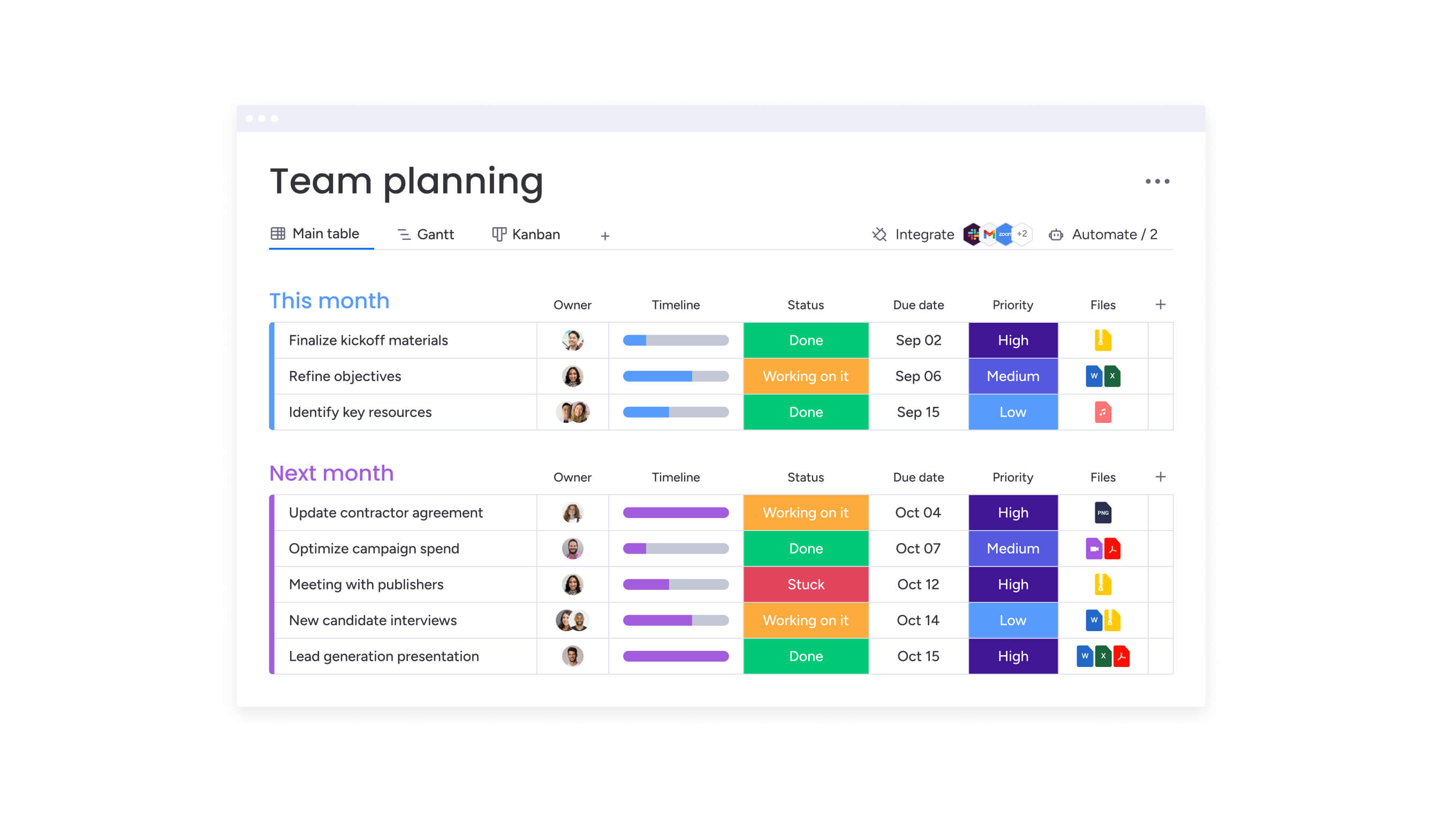 Marketing leaders at enterprise media organizations rely on monday work management to transform how teams plan, execute, and measure results. When overseeing 50 to 100+ team members across content, creative, acquisition, and events, visibility and alignment become essential to delivering consistent outcomes.
As marketing operations scale, disconnected workflows and limited oversight slow execution. Centralized planning and real-time insight allow leaders to stay focused on performance while teams move quickly without losing clarity or control.
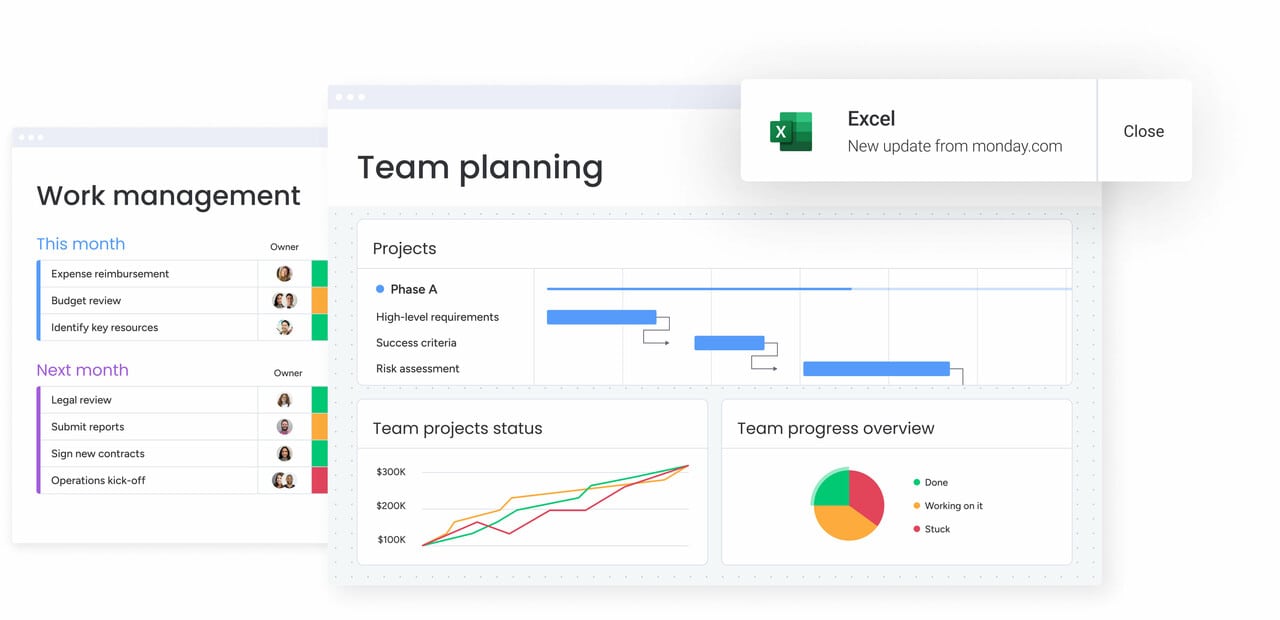
What makes heads of marketing choose monday work management for goal tracking?
Marketing leaders managing enterprise-scale teams need more than updates and meetings to stay informed. They need continuous visibility into execution across content, creative, acquisition, events, and operations without slowing teams down.
The challenge of siloed execution: As teams scale, siloed workflows quickly become a barrier to performance. Processes are duplicated, ownership becomes unclear, and leaders lose real-time insight into progress, capacity, and return on investment. Without shared visibility, resources are misallocated, timelines slip, and teams experience unnecessary strain.
Three core pillars of transformation: monday work management brings order to this mess through three essential enterprise features:
- Leadership visibility: AI-powered risk insights scan updates to surface risks with urgency, owners, and mitigation options.
- Standardization and alignment: managed templates standardize entire workspaces at scale while maintaining flexibility.
- Resource optimization: the resource directory and capacity manager provide live views of resource capacity across projects.
Real-time marketing management: for you, this means you can ensure deadlines are met, priorities are aligned, and teams work in unison toward shared goals. You can track campaign ROI, CAC, and MQL-to-Customer rates in real time. You monitor the volume and performance of content and campaigns while ensuring budget adherence and forecasting accuracy.
Marketing leaders love that they can give their creative teams room to innovate while keeping processes consistent enough to track and measure. With proven results like VML’s 7,000 hours saved per account monthly and recognition as a Leader in the 2024 Gartner® Magic Quadrant™ for Marketing Work Management, monday work management delivers the enterprise-grade capabilities that Heads of Marketing need to drive growth and brand awareness.
monday work management top features for goal tracking
.jpg)
The platform’s capabilities are designed to work together as marketing organizations grow, reducing the need to rebuild processes as complexity increases.
Campaign management
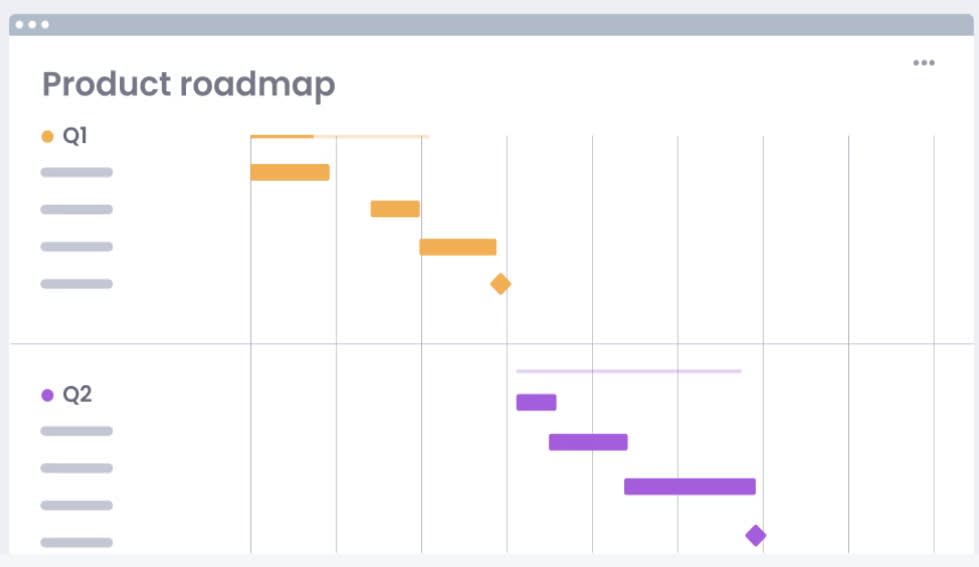
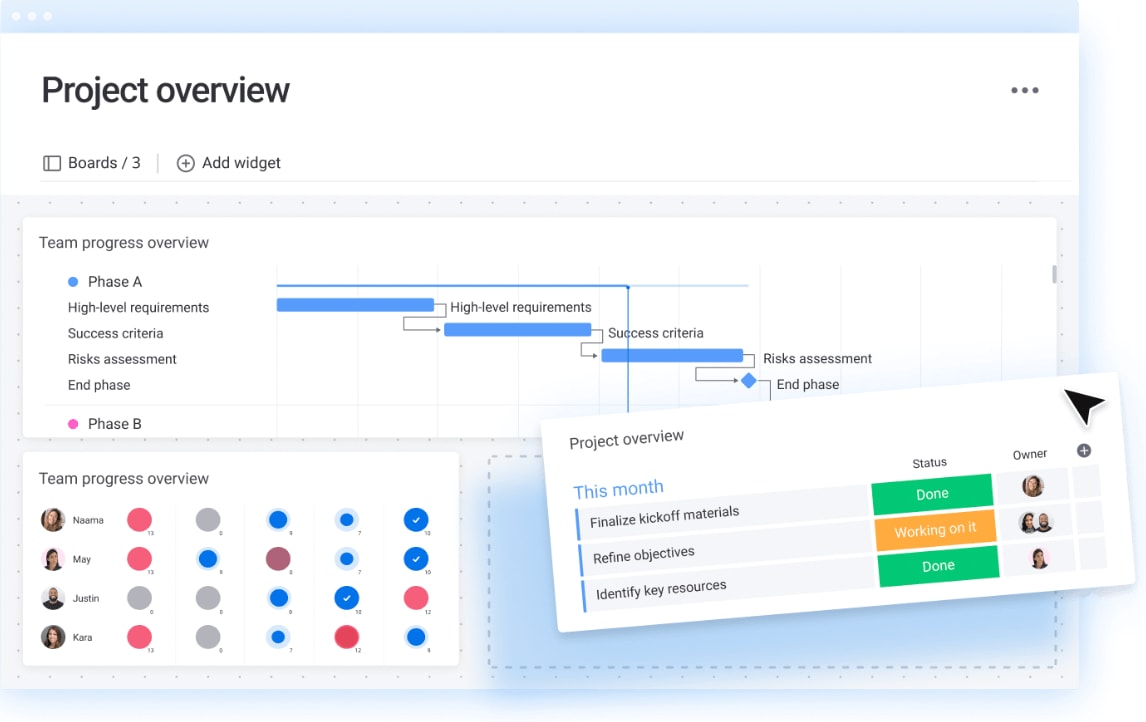
Campaign management enables leaders to plan, launch, and optimize integrated campaigns with full visibility across timelines, deliverables, and performance. Calendars, Timeline View, and dashboards ensure campaigns stay aligned from planning through execution.
For teams managing 50 to 100+ contributors, centralized campaign oversight replaces fragmented execution. Leaders can track ROI, customer acquisition cost, and conversion metrics while maintaining budget control and forecasting accuracy.
At Genpact, this structure supports the management of dozens of concurrent campaigns, each with multiple cross-channel initiatives coordinated by campaign owners and channel leads.
Goals and OKRs
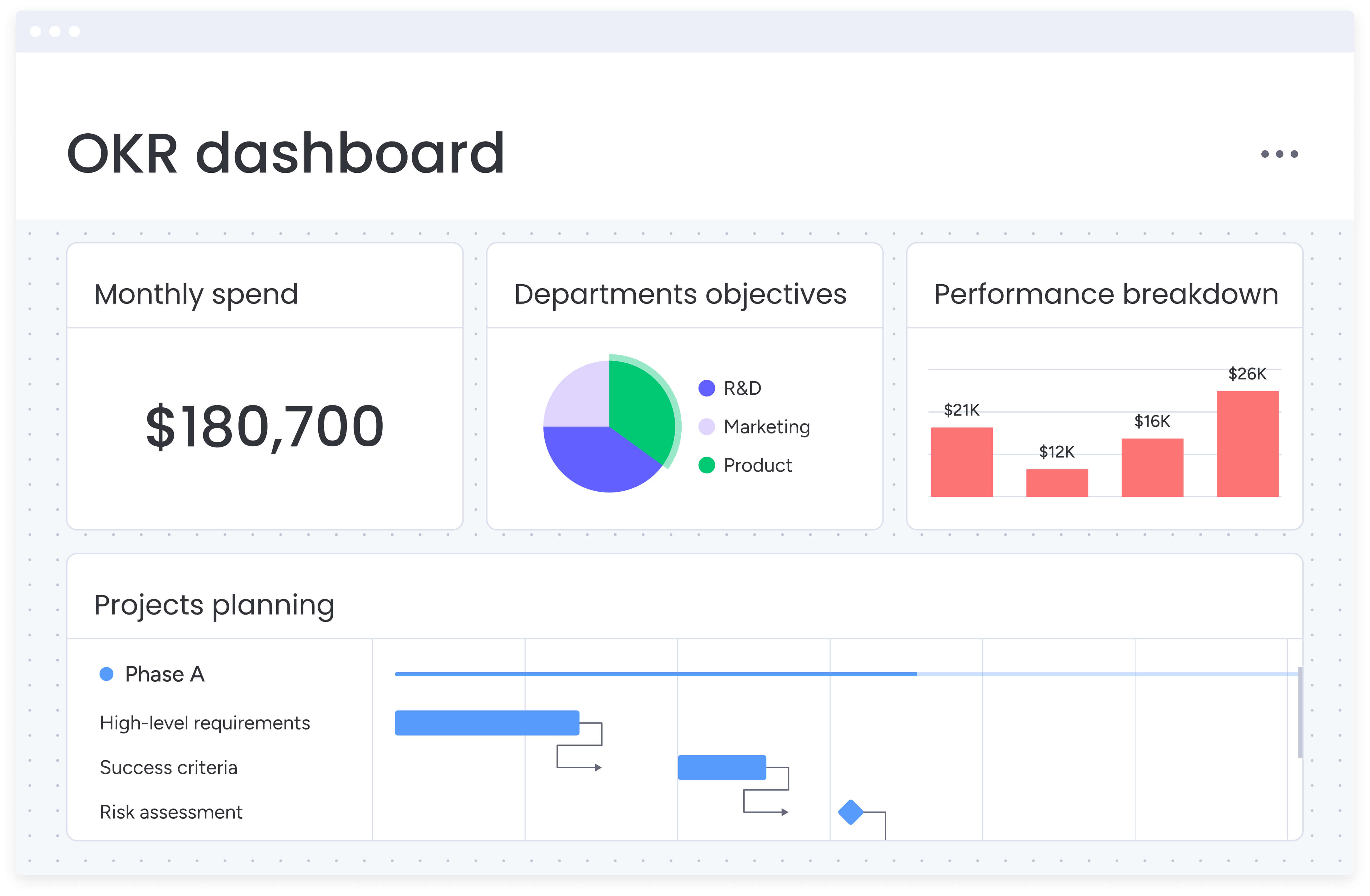
Goals and OKRs functionality enables you to set and track company-level goals and objectives while ensuring that projects and campaigns contribute directly to their success. The platform aligns marketing strategy with company goals, providing the strategic alignment that heads of marketing need to drive maximum impact.
Addressing critical pain points: the right goal management software addresses one of the most critical pain points for Heads of Marketing: the inability to track progress, capacity, and ROI in real time while maintaining alignment with business goals, timelines, and budgets. You can connect daily marketing activities to strategic objectives, ensuring that your 50-100+ team members understand how their work contributes to organizational success.
Strategic framework: for marketing leaders in media companies managing multi-channel marketing strategies, Goals and OKRs provide the framework to oversee campaign planning, execution, and performance while ensuring effective use of budget and team resources. The platform’s visual progress tracking and automated reporting capabilities reduce manual reporting, giving you more time for strategic planning.
Resource management
Resource management provides visibility into workloads across teams and enables allocation based on skills and availability. Capacity views help leaders balance priorities and avoid overcommitting high performers.
Key capabilities include:
- Resource directory: centralized insight into roles, departments, and expertise.
- Capacity manager: real-time views of workload distribution across initiatives.
These capabilities support sustainable delivery while maintaining consistency across marketing functions.
Marketing operations
Marketing operations features support cross-team collaboration through shared briefs, connected workflows, and centralized planning. Managed templates standardize execution across workspaces while maintaining flexibility for different teams and campaigns.
For large in-house marketing organizations, this level of standardization reduces duplication and ensures initiatives are delivered on time without unnecessary friction.
Dashboards and reporting
Dashboards and reporting bring performance data together in one place. Leaders gain real-time insight into campaign metrics, content volume, budget tracking, and team capacity through customizable views.
- Critical metrics tracking: for marketing leaders reporting to executive leadership, the ability to track these metrics becomes critical:
- Campaign performance: ROI, CAC, MQL-to-Customer rates.
- Content and campaign volume: production rates and performance metrics.
- Budget tracking: adherence and forecasting accuracy.
- Advanced reporting capabilities: the AI-powered portfolio report instantly generates executive-level summaries with trends, risks, and charts. Out-of-the-box portfolio dashboards provide real-time analysis across hundreds of projects, scaling to 1,000+ projects.
Automations
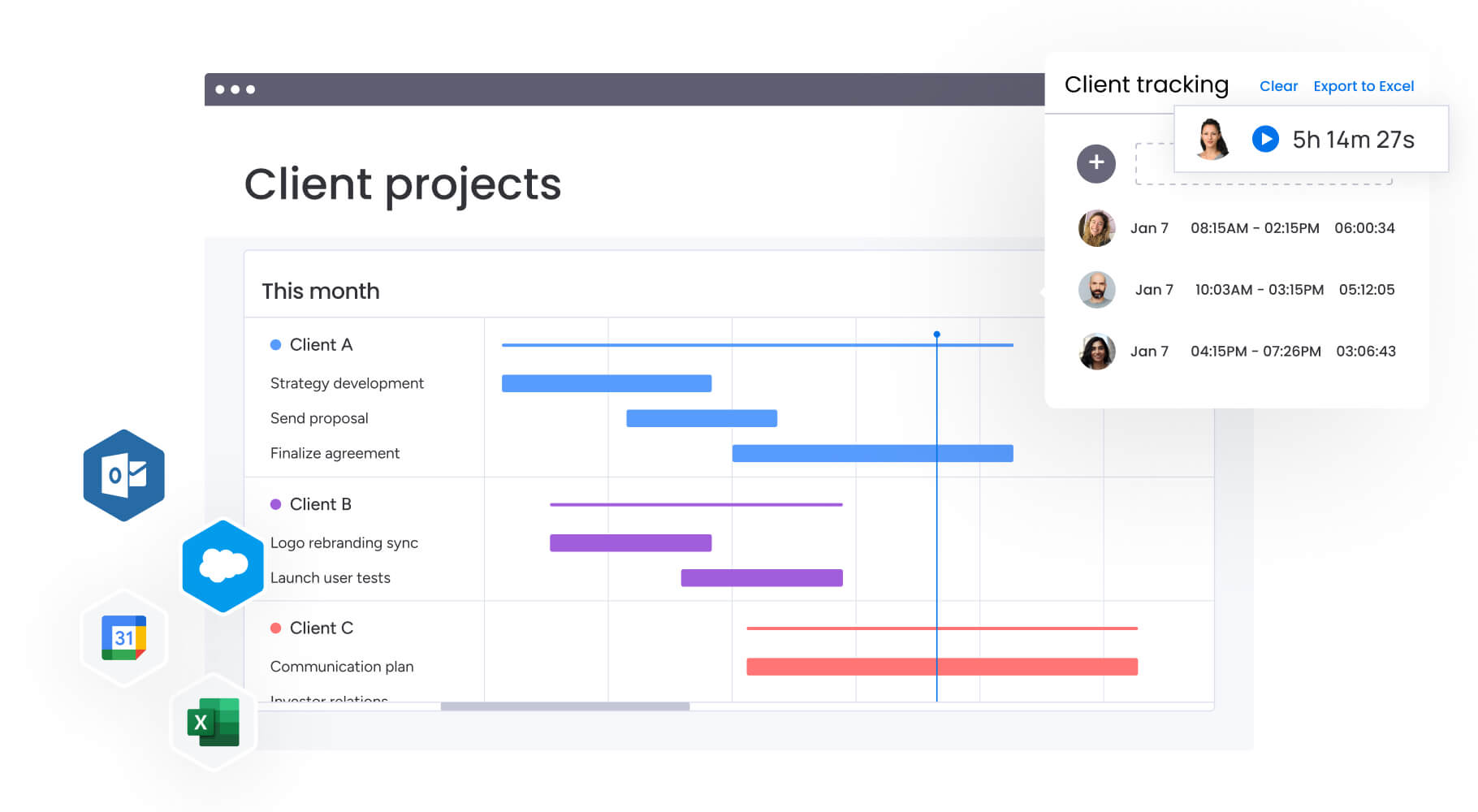
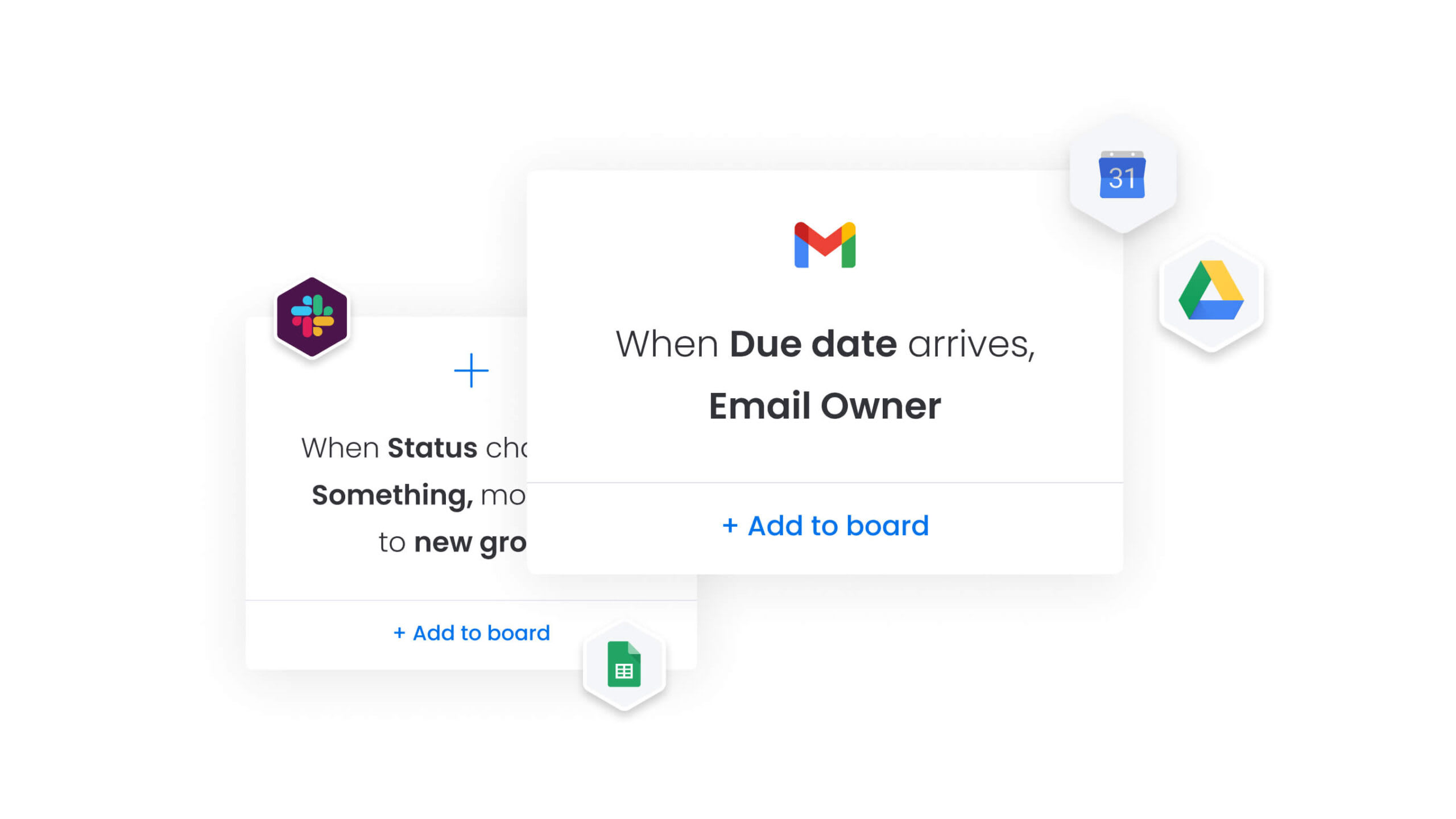
Automations reduce manual work by standardizing recurring processes and updates. No-code automation supports consistent execution across large teams while allowing contributors to focus on creative and strategic work.
At FARFETCH, connected boards ensure changes to the content calendar are automatically reflected across production workflows, reducing coordination effort and delays.
AI-powered insights
AI-powered insights harness AI to analyze org-wide data, flag risks early, and power faster, smarter decisions across every project, team, and timeline. While 88% of organizations have adopted AI, effective implementation requires moving beyond basic adoption to meaningful value capture. The platform’s AI capabilities help you identify risks across your portfolio, categorize project requests at scale, and instantly create detailed project plans with AI-suggested tasks and phases.
For heads of marketing managing complex multi-channel marketing strategies across 50-100+ team members, AI-powered insights provide visibility that goes beyond human capacity. This capability becomes critical when considering that only 6% of organizations qualify as high performers in capturing measurable value from AI implementations.
The AI-powered risk insights scan updates to surface risks with urgency, owners, and mitigation options. This capability directly supports your need to track progress, capacity, and ROI in real time while preventing the poor resource utilization that leads to burnout.
How a head of marketing in media benefits from monday work management
Heads of Marketing in media companies experience transformative benefits when implementing monday work management across their 50-100+ person teams. The platform delivers measurable improvements in time savings, cost efficiency, productivity, output quality, and visibility that directly impact your ability to drive growth and brand awareness.
Time savings and efficiency gains
Automation and standardized workflows reduce time spent on status updates and reporting. Teams focus more on execution and less on coordination overhead.
Proven results:
- VML: saves 7,000 hours per account monthly while delivering campaigns 2x faster.
- FARFETCH: saves 3.5K hours per month.
- Genpact: reduced email exchanges and improved cross-team collaboration.
Cost efficiency and ROI
Improved resource allocation and reduced duplication lower operational costs. Consolidating workflows into a single digital workspace eliminates the need for multiple disconnected platforms while improving forecasting accuracy.
Productivity and output improvements
Centralized execution and shared visibility reduce confusion and delays. Teams operate from a common framework, improving delivery speed and output quality across campaigns.
Measurable outcomes:
- Genpact: achieved 100% removal of spreadsheets and 40% improvement in cross-team collaboration.
- Canva: achieved 3x creative output.
- SPH Media: tracks hundreds of campaigns across 40 brands with 130+ people.
Visibility and tracking capabilities
Leaders gain real-time insight into performance metrics, capacity, and progress, enabling confident reporting to executive stakeholders and faster strategic decisions.
How to track marketing goals with monday work management
Managing marketing goals across 50-100+ team members requires a systematic approach that connects daily execution to strategic objectives. This step-by-step implementation guide shows you how to establish effective goal tracking that aligns your teams with company OKRs while maintaining the visibility you need to drive results.
Step 1: audit your current marketing workflows and identify disconnected processes
Start by documenting current planning, execution, and reporting processes across teams. Identify areas where workflows are fragmented and visibility is limited.
Key areas to examine:
- Current campaign planning and execution processes.
- Communication channels and approval workflows.
- Reporting methods and data sources.
- Resource allocation and capacity planning approaches.
This audit reveals the gaps in visibility and standardization that monday work management will address. Document your current pain points including lack of real-time visibility into progress and ROI, poor resource utilization leading to burnout, and scattered marketing impact with no visibility into team priorities.
Step 2: define your marketing goals and connect them to company OKRs
Establish a clear hierarchy that connects company objectives to marketing goals and campaign-level metrics. Use structured goal frameworks to ensure teams understand how daily work contributes to organizational success.
Essential metrics to define:
- Campaign performance metrics (ROI, CAC, conversion rates).
- Content volume and quality indicators.
- Budget adherence rates.
- Team productivity measurements.
- Stakeholder satisfaction scores.
This structure ensures that every team member understands how their work contributes to organizational success.
Step 3: build standardized workflows and templates for campaign execution
Create reusable templates for your most common marketing activities including campaign planning, content production, creative requests, event management, and cross-functional collaboration. Use managed templates to standardize entire workspaces including projects and automations at scale.
Template categories to develop:
- Campaign planning and launch sequences.
- Content creation and approval workflows.
- Creative brief and asset management processes.
- Event planning and execution timelines.
- Cross-functional collaboration frameworks.
Build workflows that connect intake, briefs, approvals, and asset management in a single system. This standardization eliminates the inefficient processes where teams reinvent workflows and provides the operational efficiency you need to scale.
Step 4: implement resource management and capacity planning
Configure monday work management’s resource management features to gain visibility into workloads and allocate resources based on skills and availability. Set up the workload widget to track team capacity across content, creative, acquisition, events, and operations teams.
Implementation priorities:
- Configure the resource directory to centralize talent data.
- Set up workload tracking across all team functions.
- Establish capacity planning processes.
- Create resource allocation workflows.
Use the resource directory to centralize key data about talent across the organization. Establish processes for proactive resource allocation that prevent burnout while ensuring the right people work on the right priorities at the right time.
Step 5: create dashboards for real-time visibility and executive reporting
Build customizable dashboards that provide both team-level operational views and executive-level strategic insights. Configure pre-built widgets or create custom visualizations that track your key metrics in real time.
Dashboard types to create:
- Executive summary dashboards for leadership reporting.
- Operational dashboards for team leads and managers.
- Campaign-specific performance tracking views.
- Resource utilization and capacity monitoring displays.
Set up the AI-powered portfolio report to instantly generate executive-level summaries with trends, risks, and charts. Create different dashboard views for different audiences, detailed operational dashboards for team leads and high-level strategic dashboards for executive leadership.
Step 6: integrate with your existing MarTech stack and enable cross-functional collaboration
Connect monday work management with your existing marketing tools using the platform’s 200+ integrations. Link your CRM, marketing automation, analytics, and creative tools to create a unified marketing ecosystem.
Integration priorities:
- CRM and marketing automation platforms.
- Analytics and reporting tools.
- Creative and design software.
- Communication and collaboration platforms.
Enable seamless collaboration with legal, product, and finance teams by providing them with appropriate access and views into marketing workflows. Set up cross-project dependencies to visualize and resolve conflicts between teams.
Comparison table: monday work management vs. competing platforms
When evaluating goal tracking software for enterprise marketing teams, comparing features, pricing, and proven results helps inform your decision. This table provides a comprehensive comparison of monday work management against leading alternatives.
| Feature | monday work management | Asana | Wrike |
|---|---|---|---|
| Campaign management with visual timelines | Customizable boards, timeline, calendar, and Gantt views with drag-and-drop interface | Timeline and calendar views with limited customization | Gantt charts and timeline views with moderate customization |
| Goals and OKRs tracking | Native Goals feature with progress tracking and alignment to company objectives | Goals feature available in Business tier and above | Goals available in higher-tier plans only |
| Resource management and workload balancing | Built-in workload widget with capacity planning and skills-based allocation | Workload view available in Business tier | Resource management available in Business tier |
| Marketing-specific templates | 200+ pre-built templates including campaign management, content calendar, creative requests | General project templates with limited marketing focus | Marketing templates available with customization required |
| Automation capabilities | 250+ automation recipes with no-code builder, unlimited automations on Pro tier | Rules-based automation with limits on lower tiers | Automation available with usage limits on lower tiers |
| Dashboards and reporting | Unlimited customizable dashboards with 30+ widget types, real-time data, AI insights | Portfolios and reporting available in Business tier | Custom dashboards available in Business tier |
| AI-powered features | AI for risk identification, project planning, request categorization, and insights | AI features in limited beta | AI features available in higher tiers |
| Price per user/month | $10-$24 depending on tier (billed annually) | $10.99-$24.99 depending on tier (billed annually) | $10-$24.80 depending on tier (billed annually) |
| G2 rating | 4.7/five based on 12,000+ reviews | 4.3/five based on 9,000+ reviews | 4.2/five based on 3,000+ reviews |
| Enterprise customer examples | VML (7,000 hrs saved/month), Canva (3x creative output), Genpact (40% collaboration improvement) | Limited marketing-specific case studies | Limited marketing-specific case studies |
How Genpact's global marketing team transformed their campaign operations
This case study demonstrates how a global marketing organization successfully implemented monday work management to solve complex operational challenges and achieve measurable results across their enterprise team.
The challenge
Genpact’s globally distributed marketing department runs multiple large-scale marketing campaigns within defined programs for Global Fortune 500 companies. Sarah Pharr, AVP Marketing, leads the team planning, building, and activating these campaigns with Global Marketing Campaign Manager Galina Donea.
Scale and complexity: the team manages about 24 ongoing large-scale marketing campaigns at any given time, with each campaign containing several cross-channel activations jointly managed by campaign managers and channel owners.
Critical operational issues: the challenge was that campaign managers relied heavily on spreadsheets to manage the go-to-market planning process. Those spreadsheets were saved everywhere, personal desktops, emails, Microsoft SharePoint folders. No one knew who had the latest version or where to find it.
The solution
Galina found monday.com through a Google search and started a free trial after trying other less-than-ideal platforms.
Key workflow implementations:
- GTM campaign calendar: high-level view with subitems showing the hierarchy of programs, campaigns, and activations.
- Workflow apps: outlined the entire end-to-end activation process for each channel.
- Timeline and dashboards: visibility into outstanding aspects of campaigns with ability to drill down.
Process automation: for the digital team managing paid media campaigns, they formalized the campaign brief submission and approval process using monday.com forms. When a new form is submitted, specific team members receive automated notifications through the workflow app that serves as the queue for requests.
The results
The transformation delivered measurable impact across the marketing organization. The team achieved significant improvements in collaboration, efficiency, and operational excellence.
Measurable outcomes:
- 40% improvement in cross-team collaboration for successful end-to-end campaign planning and execution.
- 100% elimination of spreadsheets from the campaign management process.
- Reduced email exchanges across the marketing department.
Plan and execute your business strategies with monday work management
Heads of marketing in media face constant challenges: fragmented workflows, misaligned goals, unclear visibility into campaign performance, and the risk of team burnout. In fast-moving, multi-channel environments, traditional tools and spreadsheets simply cannot keep up.
monday work management addresses these challenges by:
- Connecting strategy to execution: goals and OKRs are tied directly to daily campaign tasks, ensuring every team member understands how their work drives business outcomes.
- Providing real-time visibility: dashboards, AI-powered insights, and portfolio reporting allow leaders to track progress, capacity, and ROI without manual reporting.
- Optimizing resources: built-in workload and capacity management prevent over-commitment while allocating the right skills to the right projects.
- Standardizing workflows at scale: managed templates and automation reduce operational friction while maintaining creative flexibility.
- Enhancing collaboration and efficiency: centralized campaign management and integrations unify marketing operations across 50–100+ team members.
By consolidating goals, execution, and reporting in one platform, monday work management empowers media marketing teams to deliver measurable results faster, maintain alignment, and scale strategically, all without adding unnecessary complexity.
Frequently asked questions
How does monday work management help track campaign ROI and marketing performance metrics?
monday work management provides customizable dashboards that connect data from multiple campaigns and channels to track campaign ROI, CAC, MQL-to-Customer rates, and other key performance metrics in real time. The platform's reporting capabilities enable you to track volume and performance of content, budget adherence, team productivity, and stakeholder satisfaction metrics, all in dashboards that update automatically.
Can monday work management integrate with our existing MarTech stack?
Yes, monday work management offers 200+ native integrations, including connections with major marketing platforms like HubSpot, Salesforce, Google Workspace, Adobe Creative Cloud, Slack, Microsoft Teams, and many others. The platform also provides an open API that enables custom integrations with proprietary systems or specialized tools in your MarTech stack.
How long does it take to implement monday work management across a 50-100+ person marketing team?
Implementation timelines for enterprise marketing teams typically range from two to four weeks, depending on the complexity of your workflows and the number of integrations required. The platform's intuitive interface and pre-built marketing templates accelerate adoption, teams find it "really easy to use from the start" without needing new skills.
How is the Goals feature in monday work management different from traditional OKR software?
monday work management's Goals feature integrates goal tracking directly into your operational workflows rather than maintaining goals in a separate system. Progress toward goals updates automatically as teams complete work, providing real-time visibility into goal achievement without manual updates or separate check-ins.
How does monday work management prevent team burnout and improve resource allocation?
monday work management provides a built-in workload widget that gives you real-time visibility into team capacity across all projects and campaigns. The platform allows you to allocate resources based on skills, availability, and current workload, ensuring the right people work on the right priorities while preventing overcommitment.
What level of customization does monday work management offer for marketing workflows?
monday work management offers extensive customization through its no-code interface, enabling you to build workflows that match your specific marketing processes without requiring technical resources. You can create custom boards, columns, and views tailored to campaign management, content production, and creative requests while maintaining standardization across your team.

 Get started